Teen with suicidal behavior needed mental health parity laws enforced : Shots

Teen with suicidal behavior needed mental health parity laws enforced : Shots
A teen's relieved parents finally saw hopeful signs when she got residential treatment. But the family's insurance stopped paying after about two months.

If you or someone you know may be considering suicide, contact the 988 Suicide & Crisis Lifeline by calling or texting 9-8-8, or the Crisis Text Line by texting HOME to 741741.

Rose had already attempted suicide at least half a dozen times before the teenager’s parents found an appropriate residential care facility for her, three states and more than 500 miles away.

Rose, then 15, had been in and out of the emergency department at Nationwide Children’s Hospital in Columbus, Ohio. She had tried two residential programs and one partial hospitalization program in two separate states. But nothing had eased her suicidal urges.

Finally, she was getting a treatment that was helping at Rogers Behavioral Health in Oconomowoc, Wis., a small town 35 minutes west of Milwaukee.

But a little over two months into her stay, just as Rose was starting to feel better, the family’s health insurance – Medical Mutual of Ohio – declined to cover any further treatment.

“I was in my office when we got an email from Rogers that included a copy of the fax denial,” says Rose’s father, Michael. “I was shocked.”

The denial of health insurance coverage for mental health treatment continues to be extremely common, despite federal and state parity laws that are supposed to ensure fairness. But as Rose’s parents discovered, the parity laws are rarely enforced and people with severe mental illness often must rely on their own resources to get care.

(NPR has agreed to use middle names only for the family since this story involves a minor with mental illness.)

A long road to effective care

Rose’s life-threatening depression, anxiety and chronic suicidality consumed her parents’ focus. Michael, a corporate lawyer, took on navigating insurance hurdles and figuring out how to pay for her treatment. Her mother, Rochelle, quit her job as a school counselor, to keep a close eye on her daughter.

She also became Rose’s care coordinator, making appointments, getting her there, researching treatment options. When outpatient treatment didn’t help, Rochelle found residential alternatives for kids with more serious symptoms.

And the family had already spent thousands of dollars on treatments that were unsuccessful in addressing the range of Rose’s symptoms that started when she was 13 years old.

“The vast majority of [providers] do not accept private insurance,” says Michael. “We pay for that on an hourly basis, and it’s added up to tens of thousands of dollars over a period of a couple of years.”

Then, in the summer of 2020, Rochelle stumbled upon an evidence-based form of treatment for suicide that they hadn’t tried yet: Dialectical Behavioral Therapy, or DBT. It’s a form of talk therapy designed specifically for people with chronic suicidality. She learned that Rogers Behavioral Health offered a residential DBT program for adolescent girls. Luckily, they also had a spot open for Rose.

The denial of health insurance coverage for mental health treatment continues to be extremely common, despite federal and state parity laws that are supposed to ensure fairness. But as Rose's parents discovered, the parity laws are rarely enforced and people with severe mental illness often must rely on their own resources to get care.

When Michael and Rochelle met the attending psychiatrist at the program at Rogers, they felt a sense of hope and relief for the first time in two years.

It was “the first connection that I had personally with a therapist who said, ‘I have seen this before. These are the kids that we work with,'” recalls Rochelle.

Hearing that, “my stress levels just dropped,” she says.

DBT is a structured form of treatment which includes individual, group and family therapy (for kids) and teaches people to accept their circumstances, while giving them key skills to help them change their thought patterns and behaviors. The skills help them manage their distress and regulate their emotions.

A large clinical trial published in 2018 in JAMA Psychiatry showed that DBT is more effective in helping teens with repeat suicide attempts and self-harm compared to more general therapeutic approach.

A six-month, outpatient DBT treatment is “sort of the starting point,” for kids with moderate to severe suicidality, says Dr. Vera Feuer, the director of the emergency psychiatry division at Northwell Health in New York. “Usually six months is a decent amount of time to learn the skills, to integrate them.”

However, residential treatment usually yields results faster, says Dr. Stephanie Eken, chief medical officer at Rogers Behavioral Health. “Residential gives results in about three months,” she says, “because it’s a more intense level of care, more treatment around the clock.”

Getting better, then getting denied

About two months into the DBT program, Rose began to show signs of improvement.

“She started connecting with her therapist finally,” says Rochelle. “We’re having good once-a-week family therapy calls, where she’s telling us some of the things that are working for her, and that she’s starting to look at things a little bit differently.”

And most importantly, Rose was starting to talk about wanting to live again, which “we hadn’t heard her do in a couple of years,” Rochelle says.

Michael remembers seeing those changes, too: “That was really the first glimmer of hope that we had seen in probably two years, so we thought we were on the right track.”

But soon, the insurance company wanted to move her to a lower level of care, like a partial hospitalization program.

“It didn’t make sense to me,” says her father Michael. “And more importantly, it made no sense to her treating psychiatrist and the treatment team. They said, ‘it was unworkable, it was extremely dangerous, and would likely lead to a worsening of her symptoms.'”

An internal appeal later filed by Rogers Behavioral Health to Medical Mutual states that discontinuing Rose’s treatment “could interrupt recovery gains” and prove harmful to her.

Medical Mutual of Ohio declined an interview request from NPR. A company spokesperson said in an e-mail statement that their decision to deny further coverage “was made with the guidance of industry-leading, evidence-based guidelines and the review of board-certified physicians trained in the area of medicine” related to Rose’s care.

‘A long history of discriminating’

Families routinely get denied access to mental health coverage, especially when on private insurance, says Ellen Weber, vice president for health initiatives at Legal Action Center, a non-profit that works on improving health equity.

“Private insurance has never treated mental health and substance use services in an equitable, fair way,” she says.

“This goes back to a long history of discriminating against mental illnesses, patients with mental health disorders,” says Meiram Bendat, founder and president of Psych-Appeal, a law firm that helps patients and providers fight denials by insurance companies.

Health insurance policies used to have “limited mental health benefits,” explains Dr. Joseph Parks, a psychiatrist and medical director at the National Council for Mental Wellbeing. “You only got so many days. And when the days were up, the days were up.”

Then in 1998, Congress passed the Mental Health Parity and Addiction Equity Act, which requires insurance companies to cover mental health treatment no differently than how they cover physical health. Several states also have similar laws in place.

So, Parks says, insurance companies were forced to change their contracts and remove previous limitations they had for mental health conditions. But little has changed in practice, he adds.

Insurance companies don’t “know what to do with people that have much longer term needs,” he says.

So, they continue to violate parity laws, says the Legal Action Center’s Weber. And they do this by treating mental health conditions as acute health issues, and not the chronic conditions they really are.

For example, if a suicidal patient is past a suicidal crisis, insurance plans often try to move them to a lower level, and “a much less expensive level of care,” she explains.

And that’s what happened in Rose’s case.

A string of denials and review calls

Michael’s high deductible health plan posed hurdles to Rose’s treatment right from the beginning. For one, they required the treatment to be pre-approved by the insurance company.

Prior-authorizations are widely used by health plans to examine whether a certain drug or treatment plan is medically necessary, a practice that has come under increasing scrutiny in recent years for delaying care and hurting the health of patients. On the mental and behavioral health side, states and the federal government are increasingly requiring health plans to eliminate prior-authorizations to better comply with the federal parity law.

After initially approving Rose’s treatment for a few weeks, Medical Mutual of Ohio declined coverage a few times. However, each time Rogers Behavioral Health appealed that decision on behalf of Rose’s parents and succeeded in extending her treatment.

“Our experience is that Medical Mutual is always looking for any excuse and opportunity to deny coverage at the residential level and urging and insisting that they try something different, something less expensive,” adds Michael.

NPR obtained recordings of a phone call between Rose’s psychiatrist on October 30, 2020, and a reviewer – a physician – from Medical Mutual of Ohio. (NPR is not naming the physicians because neither had permission to speak to NPR, and we could not give them the chance to follow up.)

Listen to tape from Rose’s insurance review

The call began with the Medical Mutual physician suggesting Rose be transitioned to a “lower level” of care – like a partial hospitalization program or virtual DBT sessions that she could do from home. “[It’s] so hard to find the right time to transition to a lower level,” the reviewer said, “but I felt like that this wasn’t a bad time.”

The reviewer repeatedly raises the need to step Rose down to a lower level of care, even as Rose’s psychiatrist stresses that it would be unsafe to send her home, or move her to another program.

“She’s at a point where if she were at home,” he said, “I could expect an attempt, I would expect ongoing self-harm behaviors.”

But the Medical Mutual physician insists on getting an estimated end date for Rose’s treatment, stating that “Medical Mutual’s never approved” such “a long treatment” plan before.

“The insurer was making decisions on what appear to be time-based expectations,” says Psych-Appeal’s Bendat. “In other words, we’ve paid for a month, two months, and we think that your child should either be better by now or attempt and possibly fail at another [lower] level of care that’s less restrictive. Then, if things go awry and your child survives to tell about it, maybe we’ll put that kid again in residential treatment.”

Such treatment time frames imposed by private insurers are a “vestige” of how insurance companies approached mental health care before there were parity laws, he explains.

During the phone call with Rose’s psychiatrist, the insurance company physician also asks: “So when will it go well for her? When will she ever go home?”

This kind of language and approach is discriminatory, says Parks of the National Council for Mental Wellbeing. NPR shared the recording of the calls with Dr. Parks.

“Most of the reviewer’s questions didn’t really reference the patient’s condition,” he says.

Besides, he adds, the reviewer doesn’t use any medical/psychiatric criteria to guide the discussion about Rose’s treatment. “The provider’s saying ‘They need more [time], they’re not doing that well, they’re not ready yet.’ And the reviewer is saying, ‘But they have to go home some day.”

It’s a clear failure to comply with mental health parity, he adds. A patient recovering from a recent heart attack, for example, would never be sent home if they were still having chest pains and shortness of breath.

$40,000 out-of-pocket

When Medical Mutual finally cut off coverage in November, 2020, Michael and Rochelle were faced with a tough choice. They could take their daughter home despite the treatment team saying she wouldn’t be safe at home, or keep her in the program and pay out of pocket.

They chose to pay $1,000 per day to keep their daughter in the program.

“Luckily we could do that,” says Rochelle. “I’m imagining most people just go pick up their kid and try to figure it out at home.”

But in January, when they ran out of funds – Rose’s stay at Rogers had cost them more than $40,000 out-of-pocket – they “fast-forwarded her release,” says Rochelle.

Despite all the progress Rose had made in the program, the transition proved rough on her.

“Two and a half weeks later, we’re back in the emergency department,” says Rochelle, because Rose had once again attempted suicide.

While Rochelle busied herself with watching Rose and connecting her to outpatient care, Michael filed an external appeal with the Ohio Department of Insurance.

In 2022, the department received a total of 18 requests for external reviews related to mental health and substance use treatment, according to a department spokesperson. Eight of those cases were upheld in the company’s favor, 7 were overturned in the consumer’s favor and 3 cases are still pending.

As for Rose’s case, the Ohio Department of Insurance assigned an independent organization called Lumetra Healthcare Solutions to review it. In August 2021, the organization overturned Medical Mutual of Ohio’s denial of coverage for Rose’s treatment at Rogers.

In its report, the reviewer at Lumetra wrote that the insurance company’s denial was “not appropriate,” because all of Rose’s medical records show that she was at high risk for self-harm and suicide.

The report also concluded that Rose’s ongoing treatment at Rogers was medically necessary, and Medical Mutual of Ohio was required to cover the remainder of Rose’s treatment at Rogers Behavioral Health.

“They didn’t pay me,” says Michael. “They paid Rogers, and then I had to go collect from Rogers.”

Michael says he’s relieved that the external review worked in the family’s favor, but it shouldn’t have taken nine months of red tape.

“It just doesn’t seem right the way they were treating me,” he says, “the way I know they’re probably treating other people in similar circumstances, but don’t have the means to pay out of pocket and don’t have the time, energy, knowledge or resources to hold the insurance company accountable.”

Michael and Rochelle still worry about Rose, who’s now 17. She is stable but still struggles.

“She still has a high level of depression and anxiety and high level suicidal ideation,” says Michael. “So it’s sort of day by day, week by week.”

But she’s made significant progress, he adds. Rose currently takes courses, works with animals she loves and even makes plans for the future. And for that, he says, he is grateful.

This story was edited by Diane Webber. Visuals were produced by Meredith Rizzo.

Visuals editor: Meredith Rizzo

Some state tax forms now help people sign up for health insurance : Shots

Some state tax forms now help people sign up for health insurance : Shots

Your tax form could be a rapidly observe to acquiring signed up for subsidized health and fitness insurance policies or Medicaid in particular states.

d3indicator/Getty Photographs


conceal caption

toggle caption

d3sign/Getty Visuals


Your tax type could be a quick track to having signed up for sponsored well being insurance policy or Medicaid in sure states.

d3indication/Getty Visuals

Many of her clientele really don’t think it when Maryland-based tax preparer Diana Avellaneda tells them they might qualify for low-price wellbeing coverage. Or they consider she’s striving to provide them a little something. But in truth, she’s supporting her buyers just take edge of an underused aspect of her state’s tax forms: A way to get money help for well being insurance coverage.

Avellaneda states she just needs people today to stay clear of the economical threat of a health-related emergency: “I have health insurance policies ideal now, and I sense really, really tranquil. So I want my group to know that.”

KHN logo

The course of action is easy: By examining a box, taxpayers set off what is actually identified as a qualifying party that permits them to indicator up for coverage outside the classic open enrollment period and entry subsidies that can convey the price of that insurance coverage down, if their revenue is small ample. It also lets Maryland’s comptroller to share a person’s income information and facts with the state’s insurance coverage trade, created by the Cost-effective Treatment Act.

Then folks receive a letter giving an estimate of the sort of money assistance they qualify for, be that subsidies on an exchange-centered approach, Medicaid or, for their baby, CHIP. A well being treatment navigator may well also contact taxpayers offering them enrollment aid.

In Maryland — and several other states — 2022 tax forms include things like a checkbox to allow for the point out comptroller to share cash flow information and facts with the state’s wellness positive aspects arm in order to prequalify individuals for reduced or no value health and fitness care.

Comptroller of Maryland/Screenshot by NPR


cover caption

toggle caption

Comptroller of Maryland/Screenshot by NPR

Avellaneda suggests most of her consumers who implement conclusion up qualifying for sponsored insurance plan – many are amazed since they experienced assumed fiscal aid is only accessible to these with very small incomes. In point, Avellaneda thought this as perfectly till she did her have taxes a couple decades ago.

“I was just one of the persons that assumed that I could not qualify mainly because of my profits,” explained Avellaneda, with a chuckle.

An outreach product that is spreading

A increasing variety of states – together with Colorado, New Mexico and Massachusetts – are working with tax types to point people today toward the lower-price tag coverage readily available as a result of point out insurance plan marketplaces by upcoming calendar year, it will be at least ten, including Illinois, Maine, California and New Jersey.

“We all file taxes, ideal? We all know we’re filling out a bazillion sorts. So what’s a person much more?” mentioned Antoinette Kraus, executive director of the Pennsylvania Overall health Access Network, who advocated for Pennsylvania to develop a software that is centered on Maryland’s, which it did last calendar year.

Frequently, attempts to enroll men and women in health insurance policy are scattershot since the datasets of uninsured folks are incomplete for illustration outreach staff may well be attempting to arrive at out to persons who have submitted unfinished Medicaid applications to try out and sign them up for protection. But all people has to fork out taxes, and that existing infrastructure will help states link the dots and come across individuals who are open to signing up for insurance plan but have not yet.

“It’s tricky to think about extra specific outreach than this. I feel which is 1 reason it’s turn into well-liked,” stated Rachel Schwab, who researches the effect of state and federal plan on personal insurance policy high-quality and access at Georgetown University.

Overall health coverage changes

The rise of these initiatives, recognized as quick enrollment, is happening at a time of unbelievable churn for health insurance coverage. The close of COVID-19 era guidelines are forcing people to reenroll in Medicaid or find new insurance policies if they make as well a great deal revenue. At the very same time, marketplace subsidies that were being designed in reaction to the pandemic have been extended via the conclusion of 2025, through the Inflation Reduction Act.

So possessing a uncomplicated way to hook up people to overall health treatment protection and make the most of these federal pounds is a good thought, suggests Coleman Drake, a wellness plan researcher at the College of Pittsburgh. But he cautions, these initiatives will not likely get everyone coated.

Information bears this out: Only about 10,000 Marylanders have gotten insurance coverage this way considering that 2020, less than 3{08cd930984ace14b54ef017cfb82c397b10f0f7d5e03e6413ad93bb8e636217f} of that state’s uninsured populace. The number in Pennsylvania is believed to be compact much too. Continue to, it can be a phase in the suitable direction.

“Uninsurance in general, is really high priced to culture,” stated Drake. “Whichever we can do listed here to make signing up for wellbeing insurance policy uncomplicated, I consider, is an advantage.”

There is lower-price insurance obtainable for shoppers, and, in some states, having this coverage is now easier than quite a few know.

This tale arrives from a partnership with WESA, NPR and KHN. The world wide web variation was edited by Carmel Wroth of NPR, and the broadcast version was edited by Will Stone of NPR and Taunya English of KHN.

Some ACA health insurance plans have lots of enrollees, few providers : Shots

Some ACA health insurance plans have lots of enrollees, few providers : Shots

The Affordable Care Act saw a record number of sign ups this year, but some people are having trouble finding doctors in their health plan networks.

Getty Images


hide caption

toggle caption

Getty Images


The Affordable Care Act saw a record number of sign ups this year, but some people are having trouble finding doctors in their health plan networks.

Getty Images

The Affordable Care Act may be struggling with its own success.

Record enrollment over the last two years brought more consumers into the health insurance market. At the same time, many insurers began offering smaller networks of doctors and hospitals, partly to be price competitive.

That combination left some patients scrambling to find an available in-network physician or medical facility. That can be a challenge, especially when enrollees must rely on inaccurate provider lists from their insurance company. A recent federal report found that 243 out of 375 insurance company plans reviewed by regulators failed to meet network standards.

‘The last thing she needed’

Take what happened to a central Pennsylvania policyholder, who in January fell and broke her arm and a bone near her eye.

She was directed by the hospital that provided her emergency care to follow up with an orthopedist, recounted Kelly Althouse, the patient’s insurance agent, who works near Reading, Pa. Althouse’s client spent hours calling orthopedic doctors listed in the provider directory of her new health plan from insurer Ambetter Health, a national carrier that in 2019 started offering ACA plans in Pennsylvania. Several doctors said they weren’t part of the network, despite being listed by the company, Althouse said. It took about 15 tries before her client found an in-network doctor who would see her.

That “was the last thing she needed when she was already feeling terrible,” said Althouse.

It’s a story that has been repeated to her multiple times since January, when the new plan year began. Her clients have “bombarded” her with calls, saying a range of physicians and other providers were not accepting the insurance, even if that provider was listed in the plan’s own directory. “The thing that shocked me was how many offices told my clients, ‘We have never heard of this company,'” Althouse said.

For its part, Ambetter officials said in a written statement to KHN that their network in Pennsylvania “meets or exceeds regulatory standards.”

The size of insurers’ networks of contracted doctors and hospitals, particularly in ACA plans, has long drawn concern. In recent years, insurers have trended toward offering smaller networks, in part to cut costs and keep premiums in check.

Problems arise when patients cannot find local in-network providers and must either pay more, for out-of-network care, if that’s even an option in their plans, or travel farther for in-network care.

It wasn’t supposed to be that way anymore, after new rules kicked in this year to address such issues.

More oversight, but is it enough?

For one, federal regulators are again checking whether insurers have enough providers. That comes after a 2021 court ruling that reversed a Trump administration move to eliminate such federal oversight.

In addition, new “time and distance” standards went into effect, requiring insurers to make available, within certain driving distances, at least one provider for each of a variety of physician specialties. For example, a large metro area must have enough endocrinologists for at least 90 percent of enrollees to be able to find one within 15 miles or a 30-minute drive.

Yet insurance brokers in multiple states told KHN that many clients are having trouble finding in-network providers across a variety of health plans. Even when they do, patients on some plans face “a four- to five-month wait to see a primary care doctor,” said Tracy McMillan, president of Marketplace Insurance Exchange, an insurance brokerage in the Dallas-Fort Worth area.

Under the Affordable Care Act, insurers must “ensure a sufficient choice of providers.” But there is no single nationwide standard on what to measure to determine network adequacy, and both federal and state regulators have authority to oversee the plans.

“These exchange networks have never had much rigorous oversight,” said Karen Pollitz, a senior fellow at KFF.

But access is still limited in some areas and even the standards themselves may not be tough enough, say policy experts and brokers.

“We have insurers that don’t even have a hospital in some counties,” said Lauren Jenkins, owner of Native Oklahoma Insurance, a brokerage based near Tulsa. “How do they even get approved to be in these counties?”

In a metro area no more than 40 miles across, a plan could theoretically have as few as 10 doctors and three facilities in network and still meet these standards, Pollitz said.

In Texas, North Carolina, and other parts of the country, new companies, often charging lower premiums, have entered the ACA market. Some have networks “that are very, very tiny,” said Don Hilke, owner of ClearBenefits Group in Durham, N.C. Even larger carriers are either squeezing their networks to compete on price or enrolling so many customers that they are stretching their existing networks.

‘Everyone in a pickle’

In Texas, two smaller insurance companies left the market, leaving the remaining insurers without enough doctors to absorb the policyholders who had to find other coverage, said Ronnell Nolan, president and CEO of Health Agents for America, a membership association for independent brokers. “It left everyone in a pickle.”

Federal regulators propose more changes for next year, including requiring insurers to meet appointment wait-time standards.

More has been done this year too, including reviewing insurer networks, said Ellen Montz, deputy administrator and director of the federal Center for Consumer Information and Insurance Oversight, part of the Centers for Medicare & Medicaid Services.

Insurers pegged as having a shortfall in their networks must now report monthly to CMS their “good faith efforts to fill those gaps” and how many complaints they get from consumers about access, she wrote.

Montz did not say how many insurers have fallen short, but the December report from the U.S. Government Accountability Office noted that CMS found the majority of insurance companies whose medical or dental plans were reviewed by federal regulators in August failed to meet network adequacy standards. CMS told the GAO that all plans eventually satisfied the requirements or provided “an acceptable justification as to why they were unable to meet the standards.”

Creating networks and keeping lists of participating providers up to date pose ongoing challenges, said Jeanette Thornton, executive vice president of policy and strategy at AHIP, the health insurance industry’s leading lobbying group. Those include the need to rely on providers to inform insurers when they move, retire, or stop accepting new patients.

Questions about the accuracy of provider directories persist. Dr. Neel Butala, an assistant professor at the University of Colorado School of Medicine, found that fewer than 20{08cd930984ace14b54ef017cfb82c397b10f0f7d5e03e6413ad93bb8e636217f} of more than 449,000 physician listings had consistent address and specialty area information across five large insurers’ directories, according to a research letter published in the Journal of the American Medical Association on March 14.

A lawsuit filed in August 2022 in the U.S. District Court for the Northern District of Illinois alleges the provider networks for Centene’s Ambetter plans “are simply false and are often just copies of physician directories from other sources.”

Without accurate directories, the lawsuit alleges, patients face “delays in treatment, inability to get treatment, traveling to see an in-network provider who is hundreds of miles away, and paying out-of-pocket for out-of-network providers.” Similar allegations are included in ongoing lawsuits first filed in 2021 by the San Diego City Attorney against three California insurers.

The “No Surprises Act,” which went into effect more than a year ago, requires insurers to update their provider directories every 90 days. No insurers have yet been penalized for failing to update theirs, said CMS’s Montz. The law also stipulates that if patients get hit with an out-of-network charge because they relied on inaccurate information, the insurer can charge the patient only the in-network rate.

In October, CMS published an official query asking for comment on whether the federal government should create its own national database of in-network medical providers, an inquiry that drew hundreds of responses, both for and against.

There has been no indication whether such a plan will move forward.

KHN (Kaiser Health News) is a national newsroom that produces in-depth journalism about health issues. Together with Policy Analysis and Polling, KHN is one of the three major operating programs at KFF (Kaiser Family Foundation). KFF is an endowed nonprofit organization providing information on health issues to the nation.

Recovery high schools build a culture of mental health to help kids thrive : Shots

Recovery high schools build a culture of mental health to help kids thrive : Shots

5280 High School in Denver is one of 43 secondary schools in the U.S. with a program designed for students recovering from substance use disorder and related mental health disorders.

Stephanie Daniel/KUNC


hide caption

toggle caption

Stephanie Daniel/KUNC


5280 High School in Denver is one of 43 secondary schools in the U.S. with a program designed for students recovering from substance use disorder and related mental health disorders.

Stephanie Daniel/KUNC

Every weekday at 5280 High School in Denver starts the same way.

Students in recovery from drug and alcohol addiction gather on the steps of the school’s indoor auditorium to discuss a topic chosen by staff members. One recent morning, they talked about mental health and sobriety. A teenage boy dressed in tan corduroys, a black hoodie, and sneakers went first.

“I didn’t want to have, like, any emotion,” he said. “So I thought, like, the best way to, like, put it down would be to do more and more and more drugs.”

A classmate said she started doing drugs for fun and then got hooked. Another student said his addiction negatively impacts his mental health. A third announced an upcoming milestone.

“In, like, two days, I’ll be six months sober,” she said, as her classmates cheered.

The students attend Colorado’s only recovery high school — one of 43 nationwide. These schools are designed for students who are recovering from substance use disorder and might also be dealing with related mental health disorders. The Denver school opened in 2018 as a public charter school that today enrolls more than 100 students.

KHN logo

One of those cheering classmates was sophomore Alexis Castillo, 16, who listened supportively during that recent morning meeting. She is in recovery for alcohol and fentanyl addictions. Several of her friends attended the school when she enrolled during her freshman year and initially loved it. But after a while some of Castillo’s friends left and she grew disillusioned. She stopped going to class and wasn’t motivated to work her recovery steps.

“They give you a lot of accountability,” she said. “That was not something I wanted.”

Castillo relapsed and school staffers helped her get into rehab. Three months later she was back at the school, in recovery and ready to do the work.

The school’s mission is to help kids learn to live a substance-free life while receiving an education. This includes attending recovery meetings and wellness activities, and taking traditional high school classes like English, math, and Spanish.

“They can go on to college or a career and really handle anything that life throws at them,” said 5280’s founder and executive director, Dr. Melissa Mouton.

In 2022, nearly a third of 12th graders and 1 in 5 10th graders reported using an illicit drug in the previous year, according to a national survey from the Monitoring the Future project conducted by the University of Michigan Survey Research Center. Those numbers have steadily decreased over the past 25 years. However, data from UCLA shows overdose deaths among teens doubled in the first year of the pandemic, mainly attributed to the increased prevalence of fentanyl-laced drugs.

The first recovery high school opened in Silver Spring, Md., in 1979 and similar programs now operate in 21 states. Compared with their peers at regular schools who have gone through treatment, recovery high school students have better attendance and are more likely to stay sober, and their graduation rate is at least 21{08cd930984ace14b54ef017cfb82c397b10f0f7d5e03e6413ad93bb8e636217f} higher, according to one study.

A mosaic in the computer lab at 5280 High School in Denver. Colorado’s only high school with a recovery program opened in 2018 as a public charter school and today enrolls more than 100 students.

Stephanie Daniel/KUNC


hide caption

toggle caption

Stephanie Daniel/KUNC


A mosaic in the computer lab at 5280 High School in Denver. Colorado’s only high school with a recovery program opened in 2018 as a public charter school and today enrolls more than 100 students.

Stephanie Daniel/KUNC

“For this particular group of young people who have these disorders, this can be a lifesaver,” said John Kelly, director of the Recovery Research Institute at Massachusetts General Hospital. “It can help them create a social norm of recovery.”

There are three components to effective drug and alcohol treatment, according to Dr. Sharon Levy, a pediatrician and addiction medicine specialist at Boston Children’s Hospital. The first part is medical, which includes seeing a doctor, drug testing, and using medications like buprenorphine to treat opioid addiction. The second is emotional support from counseling to address co-occurring mental health disorders. And there is a behavioral component that, for kids, can include receiving positive feedback from parents, peer support and recovery schools.

“Recovery schools offer an opportunity really for peer support and mutual aid in a kind of a supervised and structured way,” Levy said.

Recovery high schools often weave components of treatment into the school day — activities like 5280’s daily recovery program meeting. In the afternoon, the school offers wellness electives such as spiritual principles and journaling. The school also employs a director of recovery and recovery coach to work with and counsel the students individually.

Recovery schools do face challenges. Most are publicly funded charter or alternative schools that carry a higher cost of educating students than traditional schools do. This is due to a smaller enrollment, the need for mental health and recovery personnel, higher faculty-to-student ratios, and other factors.

The Denver school enrolls about 100 students annually, making it one of the biggest recovery high schools in the nation. This year, the per-pupil cost is about $25,000 per student but the school receives only about $15,000 from federal, state, and local funding, according to Mouton. The remaining money comes from donors.

Given the complex needs of the students, “recovery schools will always be small,” she said.

Pooling such students together may also raise a concern that students will trigger one another to use drugs and alcohol and relapse, but, Levy said, that’s a risk with any social interaction.

“So, if you’re in an environment where the recovery is kind of front and center and people are watching and monitoring and supervising,” she said, “I think that’s helpful for a lot of kids.”

The school in Denver purposely keeps enrollment under capacity so additional teens can enroll anytime during the school year. A student won’t get kicked out if they relapse, but there are two requirements: They must want to be sober and attend an outside recovery program.

“The No. 1 step is just letting them know out of the gate, no matter what’s going on, that we love them,” said Brittany Kitchens, the school’s recovery coach. “We are here for them.”

Kitchens teaches students how to navigate recovery and regulate their emotions. She likens herself to a hall monitor, constantly checking in with students and looking for changes in behavior.

“I tend to be the first kind of line that the kids will come to when they’re experiencing something that is just a little bit too big for them to process,” she said.

Some of these difficulties stem from traumas students have experienced, including sex and drug trafficking, and abandonment. Students also deal with traumas they have caused, Kitchens said, actions that landed them in jail or on probation.

Kitchens, who is in recovery herself, shares coping mechanisms with the students.

“A lot of times it just starts with, ‘Hey, take a breath, breathe in through the nose and out through the mouth,'” she said.

Alexis has been in recovery for nearly a year, she said. The morning meetings where she and her classmates talk about mental health, sobriety, and other topics are an opportunity to build a community of friends who support one another, something she said she didn’t have when she was using drugs.

“It’s really hard to get sober young,” she said.

This article is part of a partnership that includes KUNC, NPR, and KHN.

KHN (Kaiser Health News) is a national newsroom that produces in-depth journalism about health issues. Together with Policy Analysis and Polling, KHN is one of the three major operating programs at KFF (Kaiser Family Foundation). KFF is an endowed nonprofit organization providing information on health issues to the nation.

Inflation and money woes are forcing Americans to delay medical care : Shots

Inflation and money woes are forcing Americans to delay medical care : Shots

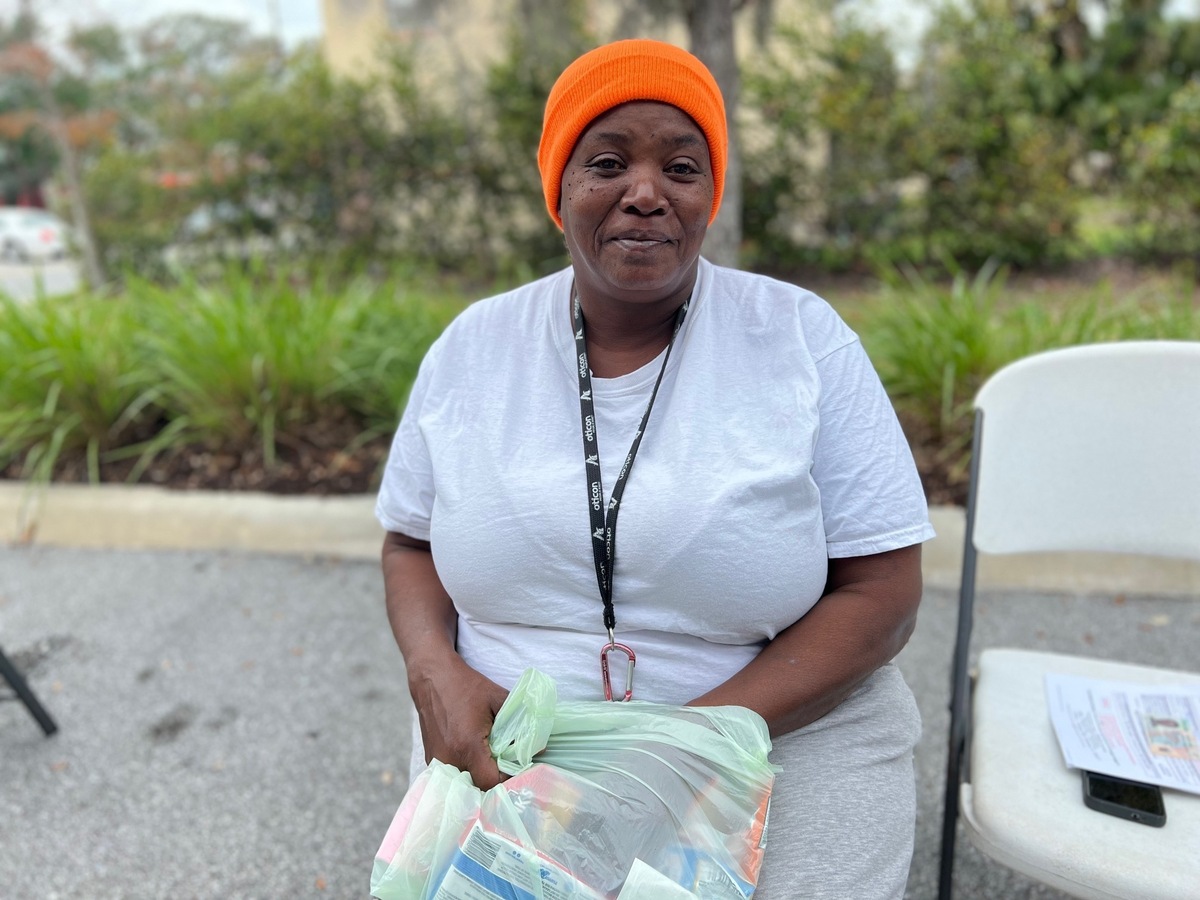
Substitute teacher Crystal Clyburn, 51, doesn’t have health insurance. She got her blood pressure checked at a health fair in Sarasota, Fla.

Stephanie Colombini/WUSF


hide caption

toggle caption

Stephanie Colombini/WUSF


Substitute teacher Crystal Clyburn, 51, doesn’t have health insurance. She got her blood pressure checked at a health fair in Sarasota, Fla.

Stephanie Colombini/WUSF

At a health-screening event in Sarasota, Florida, people milled around a parking lot waiting their turn for blood pressure or diabetes checks. The event was held in Sarasota’s Newtown neighborhood, a historically Black community.

Local resident Tracy Green, 54, joined the line outside a pink and white bus offering free mammograms.

“It’s a blessing, because some people, like me, are not fortunate and so this is what I needed,” she said.

Green said she wanted the exam because cancer runs in her family. And there’s another health concern: her breasts are large and cause her severe back pain. A doctor once recommended she get reduction surgery, she said, but she’s uninsured and can’t afford it.

In a recent Gallup poll, 38{08cd930984ace14b54ef017cfb82c397b10f0f7d5e03e6413ad93bb8e636217f} of Americans surveyed said they had put off medical treatment last year due to cost, up from 26{08cd930984ace14b54ef017cfb82c397b10f0f7d5e03e6413ad93bb8e636217f} in 2021. The new figure is the highest since Gallup started tracking the issue in 2001.

A survey by The Kaiser Family Foundation last summer showed similar results. It found people were most likely to delay dental care, followed by vision services and doctor’s office visits. Many didn’t take medications as prescribed.

The health screening event is part of an ongoing effort provide health services to low-income Floridians who are uninsured. Attendees could have their blood pressure checked or receive screenings for diabetes. A bus also delivered mammogram services.

Stephanie Colombini/WUSF


hide caption

toggle caption

Stephanie Colombini/WUSF


The health screening event is part of an ongoing effort provide health services to low-income Floridians who are uninsured. Attendees could have their blood pressure checked or receive screenings for diabetes. A bus also delivered mammogram services.

Stephanie Colombini/WUSF

The neighborhood screening event in Newtown — organized by the non-profit Multicultural Health Institute in partnership with a local hospital and other health groups — is part of an effort to fill in the coverage gap for low-income people.

Tracy Green explained that her teeth are in bad shape too, but dental care will also have to wait. She doesn’t have health insurance or a stable job. When she can, she finds occasional work as a day laborer through a local temp office.

“I only make like $60 or $70-something a day. You know that ain’t making no money,” said Green. “And some days you go in and they don’t have work.”

If she lived in another state, Green might have been able to enroll in Medicaid. But Florida is one of eleven remaining states that haven’t expanded the program to cover more working-age adults. With rent and other bills to pay, Green says her health is taking a backseat.

“I don’t have money to go to the dentist, nothing, it’s so expensive,” she said. “Now, to get one extraction, one tooth pulled, it’s like $200-300 that you don’t have. So I don’t know what to do. It’s like fighting a losing battle right now.”

Tracy Green, 54, joined the line outside a pink and white bus that offered free mammograms. Green said she wanted the exam because cancer runs in her family.

Stephanie Colombini/WUSF


hide caption

toggle caption

Stephanie Colombini/WUSF


Tracy Green, 54, joined the line outside a pink and white bus that offered free mammograms. Green said she wanted the exam because cancer runs in her family.

Stephanie Colombini/WUSF

In the Kaiser poll, 85 percent of uninsured adults said they found it difficult to pay for health care. Nearly half of insured respondents said they struggled with affordability as well.

The U.S. experienced record high inflation rates last year, and parts of Florida, including the nearby Tampa metro area, often fared even worse.

“We see an increasing desperation,” said Dr. Lisa Merritt, executive director of the Multicultural Health Institute.

The Institute, which helps people access low-cost care, is based in Newtown. The neighborhood, inland from Sarasota’s lavish beach communities, has many residents who live below the poverty line, lack insurance and face other barriers to consistent and affordable care.

“It’s very difficult for people to be concerned about abstract things like getting screenings, getting regular health maintenance, when they’re contending with the challenges of basic survival: food, shelter, transportation often,” Merritt said.

‘Horrible’ housing costs put squeeze on health needs

Merritt and her team of volunteers work to build trust with community residents who may not be aware that support is available. They help people apply for low-cost insurance coverage, free medication programs and other resources that can reduce treatment costs.

Volunteer Bonnie Hardy said the people she serves have many financial worries, but one thing tops the list.

“Right now? A place to stay,” said Hardy. “Housing is horrible.”

High housing costs have started to ease in recent months, but data shows rent in Sarasota has gone up nearly 50 percent since the pandemic began in 2020.

Hardy helps people find housing and connects them with programs that cover costs like utilities and security deposits. The goal is to help people stabilize their day-to-day lives, and that in itself can improve health, she said.

“Because they’re more comfortable now,” she said. “They feel like, hey the rent is paid, I can let my guard down, maybe I can go get the medical attention I need.”

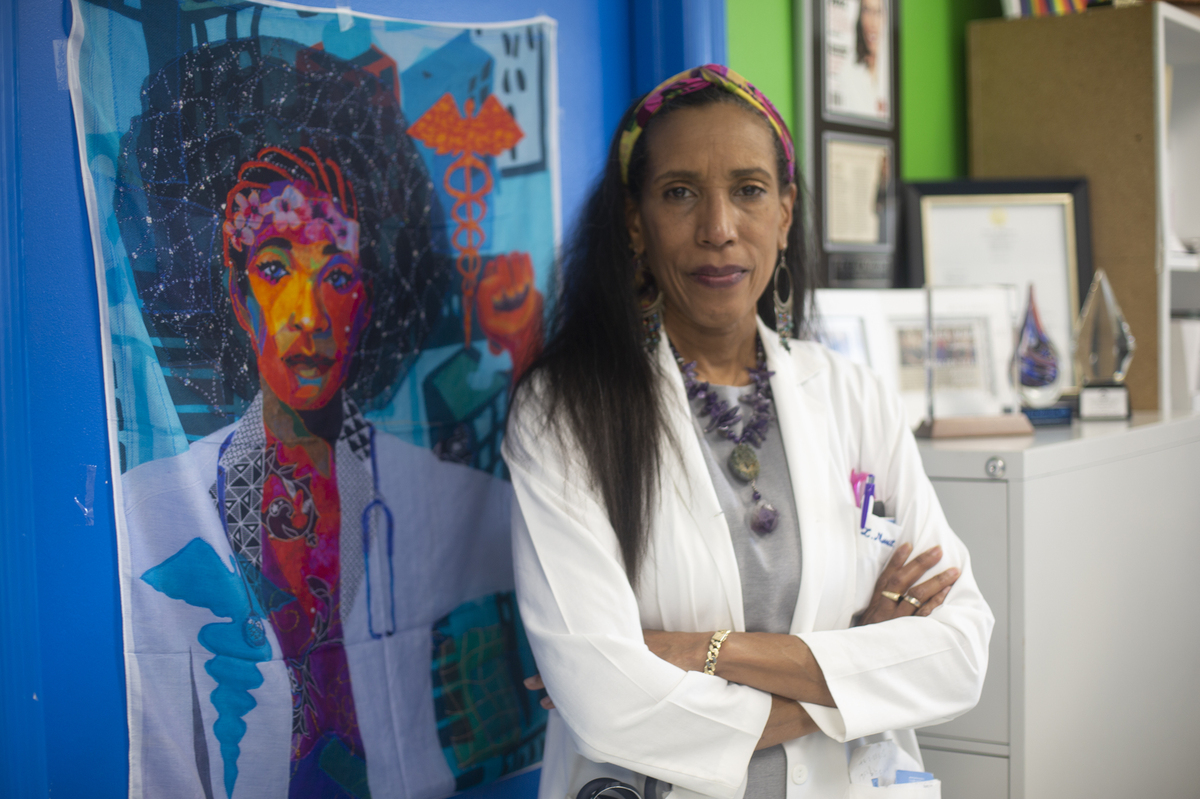
Dr. Lisa Merritt and her team of volunteers work to build trust with community residents who are uninsured but may not be aware that support is available.

Daylina Miller/WUSF


hide caption

toggle caption

Daylina Miller/WUSF


Dr. Lisa Merritt and her team of volunteers work to build trust with community residents who are uninsured but may not be aware that support is available.

Daylina Miller/WUSF

Research shows putting off health care can lead to bigger problems.

The Gallup poll found 27{08cd930984ace14b54ef017cfb82c397b10f0f7d5e03e6413ad93bb8e636217f} of respondents delayed treatment due to costs even for “very or somewhat serious” conditions.

Another reason people may be holding off on treating medical issues is that they already have health care debt. An investigation from NPR and Kaiser Health News found about 100 million people in America had medical debt. About 1 in 8 owe more than $10,000, according to a KFF poll.

Treating cancers or chronic conditions like diabetes early can not only save lives, it can also be less expensive than treating advanced-stage illnesses, according to the Centers for Disease Control and Prevention.

Doctors at the health screening event in Newtown said it’s critical to help residents access preventive care.

At the health fair, substitute teacher Crystal Clyburn, 51, got a mammogram on the pink-and-white mobile bus and had her blood pressure checked. Clyburn doesn’t have health insurance and she relies on events like this to stay on top of her health.

“I just try to take advantage of whatever that’s out there, whatever that’s free,” she said. “You have to take care of yourself because you can look healthy and not even know you’re sick.”

After the cuff came off, a doctor told Clyburn her blood pressure was a little high. But then the doctor kept talking, and she smiled.

Although her pressure was high, it wasn’t high enough that she needed to take medication. She thanked him and left, relieved to know that was one expense she wouldn’t have to worry about. Not yet, anyway.

Health care capitalists want to see profits, not just cool ideas : Shots

Health care capitalists want to see profits, not just cool ideas : Shots

The Westin St. Francis San Francisco on Union Square hotel hosted this year’s JPMorgan Health care Conference — the first due to the fact the onset of the coronavirus pandemic. (Darius Tahir/KHN)

Darius Tahir/KHN


hide caption

toggle caption

Darius Tahir/KHN


The Westin St. Francis San Francisco on Union Square lodge hosted this year’s JPMorgan Healthcare Convention — the very first considering that the onset of the coronavirus pandemic. (Darius Tahir/KHN)

Darius Tahir/KHN

SAN FRANCISCO — Health and fitness care’s business enterprise course returned to its San Francisco sanctuary very last week for JPMorgan’s once-a-year wellness care confab, at the gilded Westin St. Francis resort on Union Square. Right after a two-year pandemic pause, the temper amid the executives, bankers and startup founders in attendance experienced the aura of a reunion — as they gossiped about promotions, function-from-residence routines, who’s obtaining what investments. Dressed in their capitalist very best — ranging from fantastic-blue or pastel-purple blazers to puffy-coat stylish — they thronged to significant events held in artwork galleries and dining places.

But the social gathering was tinged with new anxiousness: Would the huge revenue invested in health care thanks to COVID-19 continue to circulation? Would traders request to see outcomes — meaning revenue — rather than just cool thoughts?

The buzzy meeting had just as quite a few phrases about revenue as about sufferers. The primarily maskless crowd spoke English, French, Japanese — and, of training course, cash.

Other than the corporate and expense varieties, attendees routinely noticed astonishing characters — like celebrity doctor Mehmet Oz, new off his Senate loss, holding court docket in the lobby on Jan. 10.

If the vibe in the hotel’s congested halls was upbeat — or, at least, cheery — beneath there was a frisson of nervousness as all were aware that the wellness care organization bonanza appears to be slowing down.

The conference started out with a sidewalk protest of pharmaceutical company Gilead Sciences, whose drugs combating HIV and hepatitis C are fabulously helpful — and fabulously costly. Throughout the pandemic, Congress for the initial time has set up a program to allow Medicare to negotiate U.S. drug price ranges, which are by much the best in the earth. In a statement, company spokesperson Catherine Cantone stated Gilead is the premier personal funder of HIV programs in the U.S., introducing, “Gilead’s role in ending the HIV and hepatitis epidemics is to discover, acquire, and make sure access to our lifetime-preserving medications.”

‘A tricky year’

Then there is the economic environment, which is turning treacherous. Journalists at financial publication Bloomberg diagnosed a lack of thrilling discounts. Startup executives — who previously observed tens of millions of pounds in investments simple to come by — seemed obligated to present final results in their impromptu pitches in bars and coffee outlets. Small business executives of all stripes promised they either presently manufactured profits or were being about to … shortly.

“I think this is a tough calendar year,” mentioned Hemant Taneja, CEO of the undertaking money organization Normal Catalyst, in the course of one particular panel. He suggested that big swaths of well being tech startups ended up overvalued and that their customers will be much more fascinated in no matter whether they are basically delivering beneficial expert services.

The new concept from prospective traders was very clear. “The plan you could mature and not be financially rewarding is dead, absent,” explained Dr. Jon Cohen, CEO of the psychological wellness startup Talkspace, in an job interview.

Some experimented with to celebrate both equally money and humanitarian accomplishment. BioNTech co-founder Uğur Şahin was interrupted by applause during a presentation as the developer, with Pfizer, of the mRNA vaccine recounted the shots’ position in fighting the pandemic. And that was in advance of he touted his company’s function in decreasing infectious sickness, preserving life, and assembly world-wide health requires for tuberculosis and malaria.

The dialogue later turned to the pricing of his firm’s flagship vaccine — which it truly is jockeying to set at a lot more than $100 a dose, up from an typical governing administration obtain cost of $20.69. A hundred bucks is a good price tag thinking of the “wellbeing economics,” BioNTech’s main approach officer, Ryan Richardson, argued: the hospitalizations and significant results averted.

A mind-bending comment

There was some cognitive dissonance at the convention. Contemplate drugstore huge CVS — which is steadily increasing over and above its retail roots into health and fitness coverage and principal treatment. CVS Health and fitness CEO Karen Lynch claimed that as section of its health business enterprise the organization is seeking at all the variables that underlie currently being properly. “Wellness isn’t really just about the engagement with the service provider it really is about all the other components — which include housing and nutrition,” she claimed. Remaining unaddressed was the sight frequently greeting CVS clients on getting into a retailer: candy, chips, and other processed food items.

For critics, it was a head-bending remark. “The final I listened to, CVS was a for-income business, not a social welfare company,” claimed Marion Nestle, a researcher who is a longtime critic of the foodstuff marketplace. “It sells junk meals that make men and women unwell and medication to deal with people diseases. How’s that for a nifty enterprise product!”

CVS spokesperson Ethan Slavin made available a pretty different eyesight, one in which CVS is trying to get to be a leading overall health and wellness destination. “We are often evolving our food and beverage assortment to supply healthier, on-trend merchandise.” It is also supporting applications to bolster food stuff availability in underserved parts, he added.

Some techies encountered new skepticism about “artificial intelligence.” Ginkgo Bioworks co-founder Jason Kelly mentioned for the duration of his presentation that people at the convention read so significantly about synthetic intelligence in the course of the conferences, “they want to stop hearing it.” (Ginkgo’s AI, made use of to assist pharmaceutical and biotech analysis, he stated, was unique than the rest.)

A person surgeon, Dr. Rajesh Aggarwal, located conversations with financiers about the stealth startup he founded, which focuses on metabolic wellness, were focused on silver bullets. “Explain to me if I invest in this, I’ll 10x” the outlay, he said, paraphrasing the bankers. Many, he reported, needed to “do some very good as well” for clients.

Aggarwal felt the buyers had been seeking for uncomplicated answers to health issues. And one particular product match that monthly bill: a new course of medication — GLP-1 agonists, a style of medication that aids in body weight decline but will very likely have to be taken for extended periods. Some analysts are projecting these medicines will be worth $50 billion. The bankers, Aggarwal felt, are not “contemplating about health and fitness care,” they are “thinking about the bucks attached to the tablet.”

KHN (Kaiser Wellbeing Information) is a countrywide, editorially impartial plan of the Kaiser Loved ones Basis.