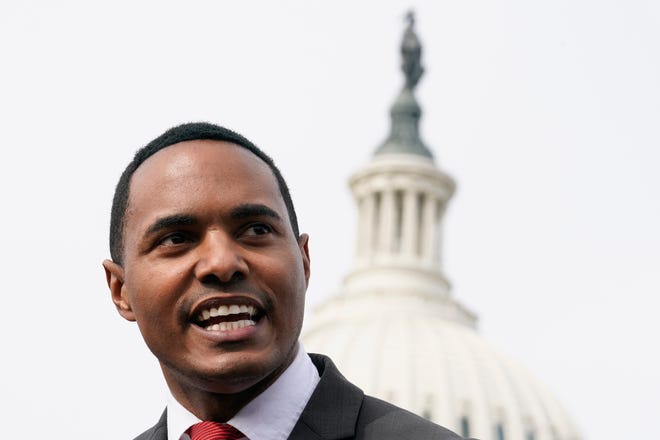
With Fetterman in hospital, politicians share mental health stories

With Fetterman in hospital, politicians share mental health stories

3 Healthcare Experts Share Their Career Stories

3 Healthcare Experts Share Their Career Stories

Studies show that when a patient is treated by a medical professional who looks like them, they’re more likely to trust the healthcare advice and follow recommendations. Yet in every corner of healthcare people from historically marginalized communities aren’t equally represented in the medical science workforce.

Indeed, when it comes to achieving an advanced degree and a successful career in healthcare, the playing field is far from level. School, exam fees and books are expensive, and admission requires a series of steps that can feel overwhelming to someone without a connection who can help them navigate the system.

“Lack of support and mentorship can leave a Black medical student feeling like they don’t belong,” says Jamarcus Brider, D.O., a cardiology resident preparing to begin his fellowship. “Eventually, those feelings can lead people to give up.”

Equity-focused career support and development programs are designed to address these complex, too-common barriers to professional achievement, offering mentorship, financial assistance, tutoring and invaluable networking opportunities.

In November 2020, Johnson & Johnson pledged $100 million as part of its Our Race to Health Equity initiative to help resolve the systemic health inequities that contribute to a lower standard of care for people in historically marginalized communities. This effort includes partnering with and supporting programs—such as the Scientist Mentoring & Diversity Program (SMDP) and the American College of Cardiology (ACC) Foundation’s “Change the FIELD,” initiative—that bolster the higher education and career development of individuals from underrepresented backgrounds.

This commitment to creating opportunities for young people to forge career paths that might be out of reach dates back to 1969, when six Black Johnson & Johnson employees in Chicago took over the management of and greatly expanded a job bank that served as an employment center to help place Black college graduates in professional positions. It eventually grew to become the Equitable Employment Resources Bank, and it matched Black college graduates with jobs not only at Johnson & Johnson but at other Fortune 500 companies.

Today, three medical and science professionals share how programs like these helped shape their careers.

“A Sense of Belonging Motivated Me to Keep Going”

Jamarcus Brider, D.O.

Jamarcus Brider’s journey toward becoming a cardiology fellow began, fittingly enough, in a doctor’s office.

Raised in part by his grandparents, Dr. Brider would accompany his grandfather to cardiology appointments in high school. While Dr. Brider tagged along for moral support, he began to realize that the visits also ignited an intense curiosity. “I always wanted to know more about the science—how heart disease develops and how it’s treated,” he says. “A seed was planted.”

Share

Did you like reading this story? Click the heart to show your love.

Empty Heart Icon

8

expand

Dr. Brider and his grandfather (right)

But as a pre-med undergrad at a predominately white university, an advisor told Dr. Brider that he just “didn’t feel like a fit” for medical school. However, being underestimated only served to steel his resolve, and Dr. Brider went on to get his medical degree. “I wanted to prove that advisor wrong, because I knew that I had something greater in me that he obviously didn’t see.”

And he likely isn’t alone in his experience of being underestimated.

According to the ACC, just 3{08cd930984ace14b54ef017cfb82c397b10f0f7d5e03e6413ad93bb8e636217f} of cardiologists are Black. Regardless of specialty, the number of Black male physicians hasn’t increased at all since 1940, per a 2021 UCLA study.

As a resident, Dr. Brider was accepted into ACC Foundation’s African American/Black Cohort Internal Medicine Cardiology Program, which Johnson & Johnson partners with (other ACC equity programs aid other historically underrepresented groups, including Hispanic/Latinx and LGBTQ+ interns and residents).

ACC Foundation mentors meet with mentees virtually and on-site at conferences and other professional events, tackling topics such as how to respectfully navigate the myriad microaggressions that cardiologists of color often experience at work. Dr. Brider says that his primary mentor “has been helpful in every way imaginable,” collaborating on research projects and guiding him through writing abstracts and interpreting data. Mentors also help participants navigate the fellowship application process, reviewing resumes and personal statements and holding informational programs specific to each section of the application.

Dr. Brider will begin his fellowship at the University of Tennessee in Chattanooga this July. His passion lies in transplant cardiology and how to prevent congestive heart failure, the condition both of his grandfathers had. “I’d like to be able to care for patients much sooner,” he adds, to save more lives in the future.

These days, Dr. Brider mentors two interns where he works as a resident, after experiencing how transformative mentorship can be. “The ACC Foundation’s program provided a sense of belonging—which motivated me to keep going.”

“It’s Not That We Can’t Do It. It’s That There’s a Lack of Support.”

Donna Febres, M.S., Ph.D., Principal Medical Science Liaison in Rheumatology, Johnson & Johnson

Share

Did you like reading this story? Click the heart to show your love.

Empty Heart Icon

8


expand

Many of Donna Febres’ childhood neighbors at the Dorie Miller Houses, New York City’s first racially integrated co-op, were Black professionals. But her father, who held a biochemistry degree, wasn’t able to pursue his dream of becoming a doctor.

“He was a Black man in the early 1940s,” says Febres. “He didn’t have a network or money for med school applications.”

But Febres’ father did become a successful businessman and was appointed commissioner on the Landmarks Preservation Commission for the City of New York—and he was determined to give his daughter positive role models and instill in her a sense of determination.

Febres let that feeling of possibility fuel her own career path.

After attending an underserved public elementary school, Febres was bussed to a predominately white, better-funded district, where she needed to work hard and adjust—both socially and academically. In high school, a dedicated chemistry teacher bolstered Febres’ confidence with a mantra: This is not hard. You can do this.

“That’s where my love for science really developed,” Febres says.

She went on to pursue a chemistry degree in college, where a National Institutes of Health (NIH) program funded her studies. The program prepared students from underrepresented groups to attain doctorate degrees in biomedical and behavioral sciences, offering tutoring, financial assistance and travel to conferences.

Quote icon (top)

“The NIH invited diverse experts to speak to our program, so we saw physicians and scientists who looked like us.”

Quote icon (bottom)

Share

Did you like reading this story? Click the heart to show your love.

Empty Heart Icon

8

Crucially, Febres adds, “They invited diverse experts from the NIH and other institutions to speak to our program, so we saw physicians and scientists who looked like us.”

She was accepted to both medical school and a Ph.D. program, but based on her passion for molecular biology, Febres ultimately chose the Ph.D. program—and eventually received an American Association for Cancer Research Award for her work.

The NIH continued to provide financial support and helped Febres hone critical research skills as she earned her Ph.D. and did postdoctoral training.

Febres began her career as a medical consultant at Johnson & Johnson, and then nine years later became a Medical Science Liaison in the company’s immunology group.

“It’s not that we can’t do it,” Febres says of Black Americans’ continued underrepresentation in medical science. “It’s the lack of support. And without programs like the ones I participated in, I wouldn’t be here at Johnson & Johnson.”

In addition to her duties in the field supporting new drug research, she currently leads initiatives as part of Janssen’s Immunology Diversity, Equity & Inclusion Working Group. Its goal is to help close the racial health gap so the color of one’s skin does not determine access to care, quality of care or health outcomes.

Today, Febres visits nearby schools to speak about her career journey—showing students that scientists come from all different backgrounds.

“Application Fees Can Deter People From Applying to School at All”

Ashley Orillion, Ph.D., Principal Scientist, Janssen

Ashley Orillion had never heard of a Ph.D. before she arrived at college.

Raised well below the poverty line in South Carolina, Orillion’s high school guidance counselor tried to dissuade her from setting her sights too high. “The concept was always, ‘You could go to college, but good luck finding your own way, because there’s no support,” she recalls. Today, she’s a principal scientist in immunology translational science at the Janssen Pharmaceutical Companies of Johnson & Johnson.

Share

Did you like reading this story? Click the heart to show your love.

Empty Heart Icon

8

expand

Orillion at work in the lab (right)

Orillion always knew she wanted a career that would let her help people. The Ronald E. McNair Post-Baccalaureate Achievement Program scholarship supported her growth to do just that.

The McNair program is designed to prepare college students from underrepresented backgrounds—Orillion is Cajun and Hispanic and was a first-generation college student. In addition to financial aid, it provides mentorship, tutoring, and GRE training. When Orillion applied for a master’s in deaf education her mentor was there to support and guide her through every step—same goes for when she got her Ph.D.

McNair also pays for GRE and graduate school applications, an essential benefit. As Orillion puts it: “Those fees for applications and tests can derail someone from applying at all.”

Having come to love the lab environment, Orillion discovered that she wanted to study disease. While earning her Ph.D., a one-year fellowship in the Johnson & Johnson-sponsored SMDP, which pairs ethnically diverse students who are interested in a career in biotech, consumer health or medtech with industry professionals as mentors, opened a door to her career at Janssen.

Her assigned mentor helped her explore her options and ultimately land a postdoctoral fellowship at the company in 2017.

Since 2019, Orillion has worked full-time at Janssen as a translational scientist in immunology. Her current role falls on “the more exploratory side of clinical trials,” she explains, and partly entails identifying biomarkers that can inform future research. “If we can find a specific marker for a very rare disease, we can develop a clinical trial to treat those patients.” Orillion also has a leadership role in Janssen’s Immunology DE&I Working Group and is a member of the newly formed Our Race to Health Equity STEM & Scientific Collaborations and Partnerships Enduring Alliances teams.

The network she developed in the SMDP program continues to be a mutually supportive one. “There’s probably between 20 to 30 SMDP alumni at Johnson & Johnson,” Orillion says. “It’s really important to have those special connections.”

5 Must-Read Technology Stories for Nurse Leaders

5 Must-Read Technology Stories for Nurse Leaders

Continue to keep on major of evolving tech developments in client treatment.

Technological innovation presents quite a few options for nurse leaders and their workers to offer improved healthcare to their people.

Progression in technologies permits nurse leaders to plan staffing far more effectively, enhance clinical outcomes, decrease human error, keep track of data, and increase nurses’ perfectly-becoming, to name just a several.

These five modern engineering tales from HealthLeaders will assist nurse leaders hold on prime of evolving industry developments in patient treatment:

1. New Jersey Overall health Techniques Launch Electronic Wellbeing Coalition to Deal with Maternity Treatment

With New Jersey’s maternal mortality fee rating 47th in the nation— with 46.5 fatalities for each 100,000 live births—First Girl Tammy Murphy introduced Nurture NJ to slash that charge in half inside 5 several years.

The HTC-Wildflower Wellness partnership aims to deliver electronic health and fitness assets to bear, addressing crucial social determinants of wellbeing that lead to these fatalities, and build a price-centered care software that benefits suppliers for outcomes.

The bundle contains prenatal and postnatal companies and encompasses equally the mom and infant and presents suppliers accessibility to digital health and fitness means, like education and learning, virtual visits, and distant individual monitoring equipment.

2. Hospitals Flip to Technological innovation to Bridge the Conversation Barrier

With so numerous languages spoken throughout the place, conversation troubles are frequent, but nowhere is that a lot more perilous than in a healthcare facility, exactly where an incorrect translation could have an effect on medical outcomes.

When dealing with a patient talking Mandarin, Bengali, or any other language, companies ordinarily look for a multilingual relatives member, obtain the nearest workers member who just took place to communicate that language, or contact the hospital’s translation assistance and hope an individual knows that language.

Digital well being technologies has created that method much easier. Care teams can now use a smartphone or pill to link by means of an mHealth app with an interpreter in serious time, even by online video, on a platform that specializes in translation products and services. Manhattan Eye, Ear, and Throat Clinic (MEETH), for case in point, utilizes LanguageLine companies on tablets furnished by Equiva Health and fitness, a electronic wellbeing client engagement firm.

3. Hospitals Glimpse to Make improvements to Wound Treatment With Application

Electronic wellness instruments these types of as sensible bandages and sensors and reporting equipment inside the EHR that include illustrations or photos can support care teams maintain shut tabs on wounds and prevent clinic-acquired stress accidents (HAPIs).

Northwell Overall health has partnered with Pittsburgh-based mostly digital well being firm Web Wellness to deploy its Tissue Analytics (TA) computer software for wound care management. The technologies is built-in into the health and fitness system’s EHR system to give clinicians extra exact wound details and enable for actual-time checking.

At Excellent Samaritan Healthcare facility Healthcare Middle on New York’s Lengthy Island, part of the Catholic Overall health method, exact and/or progressing wounds that are in question can be better monitored with the know-how, in accordance to a wound treatment expert there.

4. Baptist Overall health Puts ‘Moxi’ to Function

Baptist Wellbeing in Jacksonville, Florida, is utilizing Moxi, a robot, to aid personnel and treatment suppliers with responsibilities that may well normally take up time away from clients, this sort of as transporting equipment and lab samples and even buying up merchandise still left for people at the entrance desk.

The robotic relieves personnel from collecting materials and treatment, in accordance to Tammy Daniel, DNP, Baptist Health’s senior vice president and main nursing officer. “Moxi’s guidance will allow for them to concentration on people today as opposed to jobs, and on what they do ideal: individual care.”

The grownup-sized robot, geared up with a gripper at the conclude of an arm, takes advantage of AI engineering and an array of sensors to navigate active hallways without the need of bumping into objects or people today, can maneuver by way of doors and elevators, and learns as it goes.

5. EHR Research Finds Value in Time Spent on the Personal computer

A lot more time spent on the electronic wellbeing document platform can boost high quality results in main care, however vendors however need to make absolutely sure they are not overdoing it, according to analysis out of Brigham and Women’s Clinic.

“It is notable that between all metrics of EHR time examined, there was the greatest numerical affiliation concerning day-to-day time on the in-basket and day by day time on medical review and ambulatory quality outcomes,” the research noted. In-basket operate is carried out in addition to check out-centered, profits-producing do the job, typically outside of scheduled clinic hrs.

More time invested on the EHR “might symbolize a level of thoroughness, focus to detail, or client and staff conversation that finally boosts specific results,” according to the analysis team. The obstacle, then, is to come across a equilibrium concerning expending significant time on the EHR and guaranteeing it isn’t negatively influencing treatment high quality or the caregiver’s wellbeing.

The Education Stories That Stuck With Us

The Education Stories That Stuck With Us

Education Week publishes thousands of stories, opinion pieces, and videos every year. And every year, we find ourselves rereading some of the ones that stick with us. The ones that spoke the loudest. The stories that haunt us.

This year, I asked our reporters, editors, and members of our visual teams to do a bit of reflecting: What story did you work on this year that continues to resonate? How did it add to our understanding of a problem at large? Can you share any insights about the reporting?

In this two-part series, we give you a look under the hood. In part 1, we’ll hear from reporters talking about the stories they worked on. Stay tuned for part 2, where we’ll get additional insights from newsroom leaders.

Crystal Curtis and her son, Jordan Curtis, outside their home in Plano, Texas. Crystal, a healthcare professional whose son attends school in Plano talks about the challenges of ensuring quality schooling, her discomfort with the state and district’s rollback of mandatory masking, and the complications of raising a Black child in a suburban district as policies shift.

“ ‘COVID Is Not Over Us’: As Pandemic Lingers, a Texas Mother’s Dismay Deepens”

Early in 2022, schools were wracked with closures due to dozens of staff members contracting the highly contagious omicron variant of COVID-19. Outages were so widespread that it posed a difficult reporting challenge—how do you cover something that’s happening everywhere while distinguishing your work and your insights from everyone else’s?

The answer came when I found Crystal Curtis, a health care worker who, in a fit of pique, had posted on social media about her frustrations navigating her school district’s changing policies about masking and her son’s experiences in school.

Talking to Curtis threw a few things I’d been thinking about into relief. One was that the debates about masking and in-person schooling had been flattened into binary frames. In fact, as her experience showed, people’s feelings about these things were deeply personal, shaped by their own encounters with school systems. Curtis’ own decision was complicated by the fact that her son is Black—she wanted him to wear masks for his protection but was also afraid people would see his choice of masks as threatening.

The interview also illuminated the fact that even when kids were back to in-person schooling, the quality of instruction hadn’t always returned to what it could or should be. We may be, at least theoretically, in a different place now that boosters aimed at omicron have available for a while. But the themes that that this piece illuminated stay with me: which people do schools serve well and which ones aren’t served well? And how does that shape how we engage with schools?

—Stephen Sawchuk, assistant managing editor

Jacquelyn Mancinelli in the angel garden at Virtua Hospital in Vorhees, NJ, on Aug. 4, 2022. Mancinelli is a teacher and the founder of Start Healing Together.

”Inside the Push to Include Miscarriages and Stillbirths in Teachers’ Leave Policies”

While at the National Education Association’s annual meeting this summer, I was struck by the teacher who stood up in front of everyone to advocate for paid time off for miscarriages and stillbirths. She had learned firsthand that those losses don’t usually qualify for bereavement leave in school districts. I began looking into the issue and found so many heart-wrenching stories: One teacher was actively miscarrying while teaching elementary students; another was told that she didn’t qualify for parental leave after her stillbirth because she was “only caring for [her]self.”

Even though teaching is a predominately female profession, there are so many barriers in place to parenthood. Few school districts offer paid parental leave, and most schools don’t accommodate teachers who are breastfeeding. The lack of bereavement leave for pregnancy loss is yet another grievance.

At a time when teachers are feeling disrespected and demoralized, and are considering leaving the profession, these workplace challenges are important to shed light on.

—Madeline Will, staff writer

Larry Zurcher, sustainability teacher on special assignment for the Lake Oswego School District, prepares students to audit their school building's food waste on Dec. 9, 2021.

“ ‘It Has to Be a Priority’: Why Schools Can’t Ignore the Climate Crisis”

Covering the devastating effects of climate change can feel like shouting into a void that’s rapidly closing. The tenor of the outrage doesn’t come close to matching the scale of the problem.

That’s why I was proud to collaborate this year with my colleague Madeline Will on this pair of pieces that outlines how climate change is affecting schools; how schools are contributing to climate change; and how schools can fight climate change.

The biggest thing I took away, aside from an impending feeling of doom that probably will never fully abate, is how much school districts can do right now—not eventually—to make fighting climate change an active priority—and how much more they could do with more robust financial support for those efforts. It’s never too late to start.

—Mark Lieberman, staff writer

An aerial view of Robb Elementary School in Uvalde, Texas, on July 20, 2022.

“In Uvalde, Pain Where There Once Was Pride”

If there was a story of the year in 2022, it surely was the horrific mass shooting at Robb Elementary in Uvalde, Texas. The shooting added another tragic chapter to the national narrative around school safety and gun laws.

For the town’s Mexican and Mexican American families, it also marked a dark end to Robb Elementary, the school that for years served as a reminder of both a painful past of segregation and how families and students worked to overcome it.

Education Week covered the tragedy as a hard news event, but we knew we wanted to go further than that. My story highlighted the connections between past and present, drawing on archival documents and interviews with residents who were there in the 1970s and who once again have to wrestle with the school’s legacy.

—Ileana Najarro, staff writer

Image of dissatisfied, neutral, satisfied.

ThitareeSarmkasat/iStock/Getty

“School Psychologists Remain Scare Even As Needs Rise”

Nearly 40 percent of all school districts nationally, enrolling 5.4 million students, did not have a single school psychologist in the first full year of the pandemic.

And while most districts did have a school counselor in the 2020-21 school year, only 14 percent met the ratio of one school counselor to 250 students recommended by the American School Counselor Association. And the whiter a district’s student population, the more likely it was to meet the recommended ratios of school-based mental health professionals.

Those frankly startling stats come from an original analysis by my co-reporter, EdWeek librarian and data specialist, Maya Riser-Kositsky. The story started (as they often do), with Maya poking around in some federal databases. After a preliminary analysis, we knew we had something that would be highly relevant to Education Week readers and dove in.

What we published is an in-depth exploration of the massive shortages of school counselors and psychologists in schools when students needs are arguably at their greatest and the very real consequences of those shortages, as told to us by students, teachers, principals, counselors, psychologists, and nurses.

—Arianna Prothero, staff writer