How brain blast injuries hurt soldiers’ mental health.

How brain blast injuries hurt soldiers’ mental health.

Welcome to State of Mind, a section from Slate and Arizona State University dedicated to exploring mental health. Follow us on Twitter.

I’ll never forget the way my body felt after that blast inside a dugout trench in northern Iraq. It was 2016, and I was there as my unit’s journalist, accompanying Sgt. Joshua James and the seven other men in his team. Each time James and his section fired their artillery piece—a long-range cannon that could shoot high-explosive rounds for miles—the force of the explosion was so strong it knocked the breath out of me and caused a shudder in my bones. As the dust cloud began to form from the sand blown off the walls and ground, filling our noses and staining our uniforms, I also felt a dull pain in my head, like I had just gotten hit in the face.

Blast overpressure, it’s called: the “near-instantaneous pressure rise” in the area around an explosion, according to researchers. The men in James’ unit experienced it each time they stood feet away from their gun as it fired. During their nine-month deployment, the unit would launch shells toward their enemies around 6,000 times. As a result, some incurred noticeable concussions, and each blast had the potential to cause what the Centers for Disease Control now call “primary blast injury of the brain,” with symptoms similar to other types of mild traumatic brain injuries, or mTBIs: headaches, irritability, cognitive deficits, and even death.

Each brain injury suffered from blast exposure also increases the chances of a service member developing symptoms akin to those seen in Chronic Traumatic Encephalopathy, or even developing CTE itself. CTE, a degenerative brain disease, is understood as a driver behind negative mental health outcomes for NFL players, including Andre Waters, Junior Seau, and Aaron Hernandez. For the thousands of military personnel who serve in units like James’, the threat to brain health comes not only from IEDs or incoming artillery fire, but from their own weapons systems.

The Department of Defense has estimated that more than 380,000 personnel have suffered some sort of mTBI since the start of the War on Terror in 2001. Over that same period, the suicide rate among service members has skyrocketed. More than 30,177 service members and veterans who served during the War on Terror alone have died due to suicide, four times the number of troops lost in combat during that period. Importantly, not all these deaths are related to blast injuries—the military’s mental health crisis is complex and involves factors including military sexual trauma, poor leadership, combat exposure, quality of life issues, and many others. But medical research released in March found military personnel with mTBIs have a suicide rate that is almost three times the national average, and that risk is even higher if they seek care through the VA.

When they returned home from Iraq, half of the men in James’ eight-man section found themselves with mental health conditions such as depression and PTSD. One of them was James himself; on Nov. 15, 2022, James, age 35, died by suicide, the second in five years from his platoon of fewer than 30 people, leaving behind his wife and two young children. We may never know the exact role multiple blast overpressure events played in deaths like James’—in large part due to military failures which continue today.

The DoD has not properly documented the role of blast-related brain injuries in the military’s mental health crisis. This is despite explicit instruction by Congress to do so; for example, in 2020 Congress required the agency to include detailed records of troops’ blast exposure in their medical records. This tracking is critical for service members and veterans who want to receive treatment for their injuries. In February, the DoD released the findings from its Suicide Prevention and Response Independent Review Committee, a research program mandated by Congress. The report highlighted a lack of mental health workers and issues with the military’s promotion system and suicide prevention training, among other problems. But in discussing the next steps to be taken in light of the findings, the DoD did not highlight the effect of TBIs on suicide risk at all.

This omission is especially glaring because the DoD has known for years about the risks from blast exposure. In 2017, the same year James’ unit returned home, a Marine artillery unit in Syria found itself with multiple members stumbling around in a daze from concussions at times. Others began literally bleeding from their ears during the fighting. The DoD grew so concerned by the prevalence of these injuries that it conducted a study the following year on the Marines.

Their findings were startling: Based on the rate of head injuries the Marines in Syria suffered, the DoD estimated that an artillery crew firing at the same rate would find themselves with degraded combat abilities within three weeks and be almost totally ineffective in two months.
Furthermore, the report (based on service members’ medical records) highlighted that head injuries among these personnel began to occur during training, before they even got into combat. The DoD calculated that in a larger unit with similar demands, brain injuries could disable hundreds of personnel, and replacements could not be trained fast enough to make up for the losses.

The Syria report suggested having Marines wear devices that would notify a service member when they reached the maximum level of blast exposure in a 24-hour period, but that suggestion has effectively gone nowhere. In fact, simple helmet sensors that gather, monitor, record, and maintain data on blast pressure exposure have been available since at least 2009. But James and his unit weren’t even given these before they deployed. Put simply: Tech that could help aid in the diagnosis of concussions and TBIs should be widely distributed. It isn’t.

Two soldiers stand next to a smoking cannon as sand swirls around them dramatically.
U.S. soldiers in Iraq on Nov. 29, 2016.
Spc. Christopher Brecht/U.S. Army

This wasn’t the only way the DoD failed James and his unit. Although the soldiers underwent a pre-Iraq health assessment that looked at neurological health, they told me there was no follow-up upon their return to analyze potential damage incurred during their deployment. (Pentagon policy requires such a follow-up if servicemembers display signs of a brain injury). Soldiers in James’ unit also told me that they were rebuffed or ignored when they asked their superiors about the post-deployment assessment, even as the military continued to send artillery units to the Middle East with combat tempos that were just as high as before. I had a similar experience: Three years after I returned from Iraq, I attempted to go to an on-base TBI clinic after suffering from headaches and dizziness, but I was refused treatment and analysis because I hadn’t “underwent evaluation in time,” the medical personnel at my unit told me. When I asked a Department of Defense spokesperson about these experiences in a telephone interview, they were surprised to hear the issues we had obtaining access to these assessments and told me the agency was moving toward a more holistic continuous evaluation system that isn’t just based on pre- and post-deployment health assessments.

As for the status of military brain-health initiatives, in the same interview the Department of Defense pointed me to interim guidance on managing brain risk from blast overpressure, which is meant to raise awareness of the issue among military personnel (there is no ETA for when this text will be finalized). This guidance, on one page, suggests units and commanders follow rules about explosive safety that have been in place for more than a decade. (These rules, the Syria report shows, have done little to keep service members truly safe from blasts.) Making potential interventions trickier, each service branch has different safety requirements—and in an email exchange, the DoD did not answer my question about what is being done to standardize policy.

In response to congressional efforts in 2018 and 2020, there has been some attempt to better document cognitive health. The DoD added a specific diagnostic code for primary blast injuries to the brain, which the DoD spokesperson said in the email would make such injuries easier to track. Before that change, blast history was regularly documented “as a mechanism of injury in the medical record, but no diagnostic code existed for blast injury to the brain specifically,” the spokesperson wrote. This progress is admirable, but the Pentagon’s own December 2022 statement to Congress acknowledges that lawmakers requested more than just a diagnostic code. The congressional correspondence also explained that monitoring and documentation of blast events had “not routinely included a measure of blast pressure” or tracked blast exposure history as the 2020 law had requested, and that there was no current ETA for when it would.

The science behind blast brain injuries is still developing, alongside knowledge of TBIs from other “physical” events, such as tackles, car accidents, or punches. Research suggests the recurrence of exposure matters. Injuries caused by objects around the blast are important, in addition to the pressure itself. And these injuries are hard to recover from. Although PTSD symptoms and TBIs are often concurrent, they are two separate phenomena with unclear influences on each other.

Further research, enabled by routine and widespread blast-pressure tracking, is especially urgent as militaries domestically and abroad shift toward relying more on artillery in current and potential future conflicts, including in the war in Ukraine.

The DoD often cites prospective recruits fearing for their safety—such as the expectation that they will develop mental health or other health issues due to military service—as a reason that it finds itself in a recruiting crisis, and this is a legitimate fear. By failing to complete even the bare minimum task given to it by Congress three years ago to begin tracking blast exposure correctly, the DoD has not fully supported service members like Joshua James and his unit. All the soldiers in the firing pit with me that day in northern Iraq were in their 20s or even teens. None had any idea that they were trading a piece of their future each time they fired.

The research is far enough along that the next generation of service members shouldn’t have to face such a destructive bargain.

​​If you need to talk, or if you or someone you know is experiencing suicidal thoughts, text the Crisis Text Line at 741-741 or call or text 988 to reach the Suicide & Crisis Lifeline.

Anti-trans bills take toll on mental health of LGBTQ+ community

Anti-trans bills take toll on mental health of LGBTQ+ community
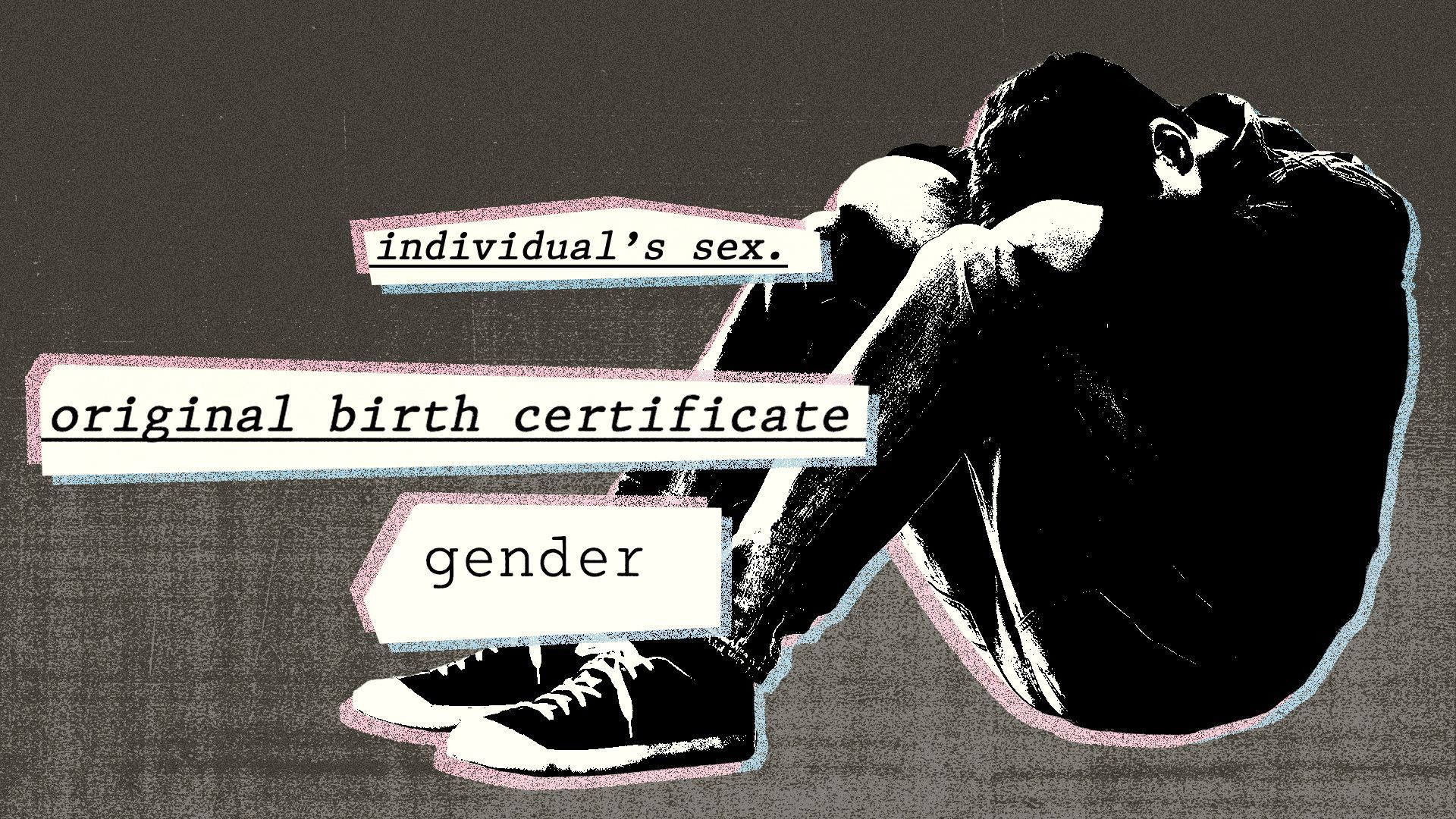
Photo illustration featuring a teenager with their knees drawn into their chest, their head hidden, and snippets of anti-trans bills.

Illustration: Maura Losch/Axios

The report-setting variety of payments focusing on the transgender group is presently harming trans’ youths psychological wellbeing, industry experts and advocates alert.

Why it matters: Advocates and the mother and father of transgender youngsters say lives are at stake.

  • The LGBTQ+ local community is currently at larger chance for problems like stress and depression, stated Joshua Goodman, assistant professor of psychology at Southern Oregon University who scientific tests concerns relevant to the LGBTQ+ group and identifies as bisexual.
  • This is specially true for LGBTQ+ youth, who continuously report higher fees of depression and suicidal ideation than their straight and cisgender peers.

By the quantities: In poll unveiled before this yr by the Trevor Challenge, 86{08cd930984ace14b54ef017cfb82c397b10f0f7d5e03e6413ad93bb8e636217f} of transgender and nonbinary youth reported the current debates about condition legal guidelines restricting the legal rights of transgender men and women have negatively impacted their mental wellbeing.

  • Among all LGBTQ+ youth, 1 in 3 described cyberbullying or on the internet harassment, 1 in 4 reported that they stopped speaking to a family member or relative, and 1 in 5 documented bullying.

Point out of play: Extra than 400 costs focusing on LGBTQ+ rights have been introduced this calendar year, and even the consideration of those people actions can harm the psychological overall health of people in that community.

  • Payments to ban gender-affirming care for minors, restrict which pronouns lecturers can use for transgender little ones and regulate which bathrooms transgender persons can use are amongst these that have been submitted in a number of states this calendar year.

Threat degree: The Trevor Project’s 2022 Nationwide Survey on LGBTQ Youth Mental Well being uncovered that suicidal views have trended upward in excess of the last 3 several years.

  • Previous calendar year, 45{08cd930984ace14b54ef017cfb82c397b10f0f7d5e03e6413ad93bb8e636217f} of LGBTQ+ youth noted severely taking into consideration a suicide attempt. That range was better for gender-diverse youth, peaking at nearly 60{08cd930984ace14b54ef017cfb82c397b10f0f7d5e03e6413ad93bb8e636217f} for transgender boys and youthful males.
  • “If this monthly bill passes, transgender children will die,” Leonardo Hinnant, a freshman faculty pupil and transgender guy from Georgia, a short while ago explained to state lawmakers, who finally handed a ban on hormone remedy and changeover-linked operation for minors.

The large photograph: Virtually a decade soon after the Supreme Court built exact same-sexual intercourse marriage legal nationwide, this new and concerted hard work to roll back legal rights has also been re-traumatizing for older customers of the LGBTQ+ group, reported Sherril Wayland, director of distinctive initiatives at SAGE, an advocacy organization representing more mature LGBTQ+ men and women.

  • Phone calls to SAGE’s psychological health and fitness hotline have found a practically two-fold boost in calls given that January.

What they’re declaring: “Remember to vote ‘no’ so I never have to prepare my son’s funeral,” mentioned Larisha Hanks, the mother of a 14-year-previous transgender boy in Indiana in which the governor just lately signed a regulation banning gender-affirming overall health care for minors.

  • Hanks’ son told Indiana lawmakers that becoming element of the gender clinic and commencing hormone remedy has been lifetime-changing. Under the law, which goes into outcome July 1, young children on puberty blockers and hormone therapy will have 6 months to transition off of the medications.
  • “I feel like I have anything to are living for,” he claimed. “And now what? You might be just heading to just take it all away with this monthly bill?”

The other aspect: Proponents of expenditures like Indiana’s say they are required to secure small children from generating everyday living-altering decisions that they’re not outdated ample to totally understand.

  • Travis Weber, the Relatives Research Council’s vice president for coverage and govt affairs, explained Christian activists are not trying to find to impose their beliefs on others — they’re battling versus beliefs becoming imposed on them, Axios’ Russell Contreras experiences.
  • “These strategies are offered to their young children with out their consent,” Weber explained. “People in america are reacting to what they are looking at, and it is really currently being mirrored in some of these rules transferring.”

Sure, but: Some dad and mom argue that professional medical conclusions for their young children should really be made involving mother and father, kids and their medical doctors — not the government.

  • Gender-affirming treatment is commonly supported as acceptable and medically essential by important overall health teams, which includes the American Medical Association, American Psychological Affiliation and the American Academy of Pediatrics.

Go deeper:

If you are contemplating about harming you — get speedy aid.

  • LGBTQ+ youth can join to a crisis counselor with The Trevor Venture at any time, from wherever in the U.S. by calling 1-866-488-7386 or texting ‘START’ to 678-678. It is free of charge and confidential.
  • If you are an LGBTQ+ elder or care for just one, you can contact the no cost SAGE Hotline at 877-360-LGBT(5428). It is readily available 24 hrs a working day, 7 days a week, in English and Spanish, with translation in 180 languages.
  • You can also call 988 to reach the countrywide Suicide & Disaster Lifeline and discuss with a properly trained disaster specialist 24/7.

CRE’s Mental Health Struggles Hit Early Career Workers Hard

CRE’s Mental Health Struggles Hit Early Career Workers Hard

Around the program of her business genuine estate occupation so significantly, Outside of Professional founder Amy Calandrino has felt the pressure of hustling in her early yrs, launching her have small business, and navigating the troubles of preserving a job whilst elevating small children and tackling postpartum depression. 

The Orlando, Florida-centered Calandrino realized in new a long time that she was regularly chasing far more volume and a lot more specials, aggressively growing her boutique firm and doubling deal quantity in a calendar year, still that pursuit was not bringing her achievement or joy.

“I did not want to go to my church due to the fact I did not want folks to come across out how disappointed I was,” she claimed. “I wasn’t getting sincere even with my ideal mates about how unhappy I was. The more and much more I did, the far more sad I was, and I had to make a alter.” 

Placeholder

She found that placing much more boundaries all-around time, for her and her staff members, and getting extra selective about who she works with helped minimize strain and burnout without having, in the close, sacrificing a great deal business.  

“Early in your profession, you really feel like you have to do all the things,” Calandrino said. “And there is a cost to it.”

Calandrino’s working experience is a common a single for business genuine estate experts, specifically young kinds, who are facing psychological health and fitness worries as they search for good results in the notoriously grinding job that is CRE.

Through the early interval of the pandemic, when specials dried up and operating from household induced sizeable pressure and isolation, many companies in CRE responded with more advantages, staff support, and a larger awareness of psychological overall health and operate-everyday living equilibrium, primarily for their more recent team members. 

The marketplace was reflecting extra on the classic gung-ho, “always be closing” broker mantra, which can interfere with specialist achievements and private health and fitness in the best of periods. Organizations started wanting at and then raising added benefits as a necessary recruitment and attraction software, Keller Augusta Senior Taking care of Director Kaitlin Kincaid explained. Candidates weren’t just searching at titles but also at the supportive surroundings of a company.

But now, throughout a interval of career losses and belt-tightening, some of the gains all around office mental health and fitness are in danger of currently being lost. 

“It’s unavoidable that it truly is not heading to get the awareness it requirements simply because a large amount of folks in our line of perform are in survival mode,” claimed Isabella Zellinger, a 28-12 months-previous senior adviser and broker at Cresa’s Orange County business office.

And in accordance to CRE gurus interviewed for this posting, this is happening just as a varied group of personnel starting up out in the industry requirements direction, assistance and — what could be regarded a challenge to the industry’s recruitment prospective customers — a explanation to keep or look at CRE professions in the initial area.  

“Young pros are weighing an chance,” Kincaid explained. “They want to know what the path is before they have arrive in and tested themselves.”

Approximately 1 in 4 staff in the sector suffer psychological overall health troubles, in accordance to new joint study by Cambridge College and University University London that surveyed 20,000 Britons. A Baylor University report broadly classified the myriad sector and transaction stressors at participate in in the CRE ecosystem, especially for brokers and individuals operating on fee, this kind of as market place cycles, negotiating, “long hrs dealing with psychological, tense clients” and “external activities that, even though out of your control, establish your skill to entire a transaction.” 

“It’s effortless to begin contemplating, ‘Am I failing? Am I performing this correct? Am I heading to make it?’” Zellinger said. “Especially if you never have a mentor who’s coaching you. That is why folks depart the small business, because they can’t mentally weather conditions that.”

Placeholder

Generational dissimilarities typically make it tough for youthful staff to talk up about psychological overall health concerns. Normally in American society, a tide is turning towards more open up conversation about these concerns, but for a lot of older folks, the instinct continues to be to simply just be peaceful and drive through — to toughen up.

“Old-time individuals will say, ‘Well, they just did not have what it usually takes. They didn’t have the endurance,’” Zellinger mentioned, referring to critiques of young CRE personnel burning out and abandoning the industry. “I beg to differ. I assume a large amount of the people who ‘weathered it’ prior to, maybe they had a help technique wherever they had moms and dads who were being paying their bills while they had been figuring it out.”

The silence of substantial sectors of older CRE personnel around psychological health and the unwillingness to go over what some see as a weak spot is harmful, mentioned Casey Flannery, senior affiliate at Nashville, Tennessee-based industrial brokerage Foundry Commercial and co-host of #CREChat on Twitter. Youthful personnel tactic their roles with a better sense of perform-lifetime equilibrium, she claimed, and unfortunately, they typically get place in a put wherever they have to have to advocate for adjust. 

“Big groups in CRE need to apply modifications to accommodate extra staff and get younger employees into commercial serious estate,” Flannery reported. “It’s heading to be tough to keep the expertise if they have a top-quality who expects them to work 24/7.”

The sorts of place of work stressors described only make it more difficult to recruit and retain young employees in the job. Individuals who have begun in latest a long time, during abrupt modifications in workplace procedures and remote do the job, have had it even harder. 

In distinct, mentorship and guidance were being cited by organizations like the Industrial Actual Estate Females Community as issues and barriers to women’s success in CRE. The group’s very last report located that although 76{08cd930984ace14b54ef017cfb82c397b10f0f7d5e03e6413ad93bb8e636217f} of respondents said their providers have procedures or advantages to guidance worker mental wellness and properly-getting, the overwhelming majority continue to wished their workplaces would give much more psychological health added benefits, adopted by mental wellbeing times and remedy. 

Zellinger, who mentioned she had the benefit of a superior mentor, reported it was however incredibly demanding to come to feel successful early in her vocation. A self-described “competitive and self-motivated” employee, she experienced several moments early in her career wherever she shed a deal to another person who could have seemed extra like the customer or experienced many years of organization expertise. In all those circumstances, it is straightforward to go household and “feel like the sport is rigged,” she claimed. 

“We have a enormous difficulty in how we converse to new younger expertise what our organization is,” Zellinger said. “And for a extensive time, the industrial serious estate sector acquired by on choosing out of interactions, which is why you see a substantial, systematic problem. Everyone’s fraternity brothers employ the service of their fraternity brothers, young ones, and it just was a negative cycle.”

It also exacerbates thoughts of isolation and lack of mentorship for much more assorted customers of the serious estate occupation, making it more challenging for the industry to make long-term progress towards a a lot more pluralistic, consultant staff base.  

Repairing these difficulties necessitates extra support throughout the board for more youthful staff in CRE. Flannery explained her current and prior firms presented private numbers to connect with and reach counselors, which was a valuable useful resource. Some therapists counsel providing flexible, on-line expert services, which are greater aligned with the shifting schedules of CRE industry experts. But Flannery reported to actually make that motivation to improve adhere, management and leadership in the course of the corporation desired to become additional at ease chatting about these challenges, recognizing struggling staff, and getting them the awareness and assist they will need. 

But it is just not extremely hard for firms to revert to the development they have been making a several many years ago, even nevertheless the field is in survival manner.

A lot more companies are spending further methods instruction young employees, in particular all those who commenced through the pandemic. Mandira Mehra, the chief internet marketing officer at MRI Computer software, a proptech firm centered on multifamily, said several more youthful hires who began in current many years did so at property, and when places of work reopened, they essential supplemental time to alter and learn office environment etiquette.  

And others have altered how they help and reward young workforce. That features more regular evaluations and feed-back, moreover far more coaching, mentorship and assist means, Keller Williams’ Kincaid claimed.

There are also altering place of work dynamics supporting much more collaborative groups. Brokerages, particularly significant kinds, have been shifting their organization types toward more knowledge-oriented, services-concentrated, extensive-phrase relationships with clients. This tends to make it more of a precedence to eliminate office toxicity, usually sparked by competitors, emotions of unwelcomeness and a deficiency of collaboration, which Cindy Spivack, a genuine estate consultant and mentor, said is the leading reason brokers truly feel compelled to go away their companies. 

This tactic is also a massive recruitment advantage. Quite a few brokers Spivak has worked with are inclined to take important fork out cuts and change their payment programs in trade for a more healthy workplace. 

“I’ve experienced individuals go from 80{08cd930984ace14b54ef017cfb82c397b10f0f7d5e03e6413ad93bb8e636217f} or 90{08cd930984ace14b54ef017cfb82c397b10f0f7d5e03e6413ad93bb8e636217f} to 50{08cd930984ace14b54ef017cfb82c397b10f0f7d5e03e6413ad93bb8e636217f} fee, and the reaction is, ‘I really do not care about the funds in the prolonged run,’” she stated. “‘I am in a far better ecosystem, and I’ll make up the funds.’”

Like employees somewhere else, they crave a much more empowering, collaborative and safer atmosphere with popular ambitions and a a lot more family-like environment. As younger millennial and Generation Z staff are likely to take a a lot more holistic seem at their lives and crave far more perform-life stability, the limiting perception that success only will come from remaining cutthroat and doing the job 80 hours a 7 days won’t get the job done. 

“Now, I assume the industrial serious estate sector isn’t going to have more than enough fantastic young talent coming in,” Zellinger explained. “Now, the genuine estate sector definitely demands to go out and recruit expertise. And which is seriously shifting the paradigm.

“There has been a wholesome shake-up in the business, and it’s up to people today like me, we have been carrying out it this way forever, and possibly we should not do it this way. Just for the reason that I struggled my initially 4 a long time, why does the future human being coming up need to go via the exact same issue?”

Counseling centers triage students by mental health needs

Counseling centers triage students by mental health needs

Hannah Nunez’s career at Northern Arizona College calls for her to be a handful of various matters at once: an advocate, a compassionate ear, a repository of info about campus methods. As a behavioral overall health coordinator, element of her position incorporates screening potential counseling individuals. Throughout a roughly 20-moment appointment—either in particular person or just about, relying on customer preference—students explain the dilemma they are facing, and she allows them make your mind up the ideal study course of motion, which, she suggests, is not generally counseling.

“They may well point out they are struggling academically, and that could possibly be a flag for: we’re heading to talk to them about tutoring,” she stated.

Some pupils feel to be searching for anyone to discuss to, and people are the college students Nunez ordinarily refers to counseling. But prior to she does, she attempts to determine out if they have a problem that can be solved alternatively by accessing any of the other comprehensive on-campus means at NAU.

Inside Higher Ed Careers

Look for in excess of 40,000 Occupation Chances in Greater Education and learning
We have served a lot more than 2,000 institutions hire the ideal bigger schooling expertise.

Search all occupation openings »

“It can come to feel actually validating for people to come in with what could be an overpowering, scary, overwhelming truly feel, like there is not actually any hope … and then to stroll absent with very tangible steps—‘I can be a part of this club, I have an intake appointment,’” she stated.

Triaging Pupils

The theory powering these screening processes is substantially the exact same as triage in a clinic emergency place, where clinical professionals assess the mother nature and urgency of a patient’s requirements.

However diverse institutions have distinctive names for the process—triage, screening or “Route to Treatment,” as Northern Arizona calls it—they all do the job in a similar manner. Rather than sit via a traditional hourlong intake appointment, each new shopper who methods the counseling centre is scheduled for a brief appointment, which differs in size according to the establishment but is typically considerably less than fifty percent an hour. (Some universities precede these appointments by inquiring pupils to fill out on the web questionnaires such as a depression screening, for instance.)

Through the appointment, which is generally held in excess of the mobile phone, learners present the triage counselor with the very same variety of facts they could deliver for the duration of a complete-size ingestion appointment: demographic specifics, their reasons for trying to find enable, their historical past of psychological wellbeing treatment method, danger things and a lot more.

The counselors then use that facts to ascertain whether, when and from whom the college student should get counseling, as very well as no matter if they should be directed to any other campus resources—say, a tutoring middle if their principal supply of worry is an impending organic and natural chemistry test. The appointment can also be made use of to give pupils supplemental information about what counseling will entail at Northern Arizona, that includes data about the expense of an appointment ($25 for an person session) and how a lot of periods they are permitted for every semester.

Faculties and universities that benefit from triage say the target is to evaluate students extensively, but in less time. One particular of the challenges of employing these devices is education counseling heart employees in how to finish limited, rapidly-paced evaluations.

“It took a minor little bit of consolation-setting up for our staff to notice they could get all of that info in that quick quantity of time,” mentioned Natalie Hernandez DePalma, the senior director of counseling and psychological providers at Pennsylvania Condition University, which has integrated some variation of triage in its counseling products and services because 2009.

Nunez said it can also be hard to train new staff members about all the campus’s sources, which she mostly is familiar with from doing work at NAU for about 10 a long time.

Getting rid of Waits

But some establishments that have applied these triage systems have enormously improved the top quality and arrive at of their mental health and fitness treatment. The counseling centre at NAU, a large college with more than 20,000 students on its key campus, launched a triage approach about two several years ago and is presently working with no hold out listing for the first time in at least 10 decades, according to Carl Dindo, director of NAU’s counseling products and services.

As requests for psychological health and fitness solutions have skyrocketed on campuses, triage techniques have develop into a common tool for controlling desire. In 2020, the Centre for Collegiate Psychological Health’s once-a-year report, which incorporated information from 567 counseling centers, confirmed that 42 percent utilized some form of brief screening appointment as their very first medical call with sufferers.

Necessitating pupils to undertake a quick assessment ahead of they can sit down with a counselor enables much more students to get care—and the suitable variety of care—more rapidly. In addition, triage appointments from time to time direct students toward methods that the counselors feel will assistance extra than therapy, that means that learners who won’t always gain from counseling really do not require a number of hourlong periods to figure that out.

Some school psychological well being authorities say higher education counseling centers have extensive promoted them selves as a capture-all resource, overburdening their staffs by drawing pupils who may be greater served in other places on campus.

In the same way, Nunez said, pupils have historically been funneled into counseling simply because it didn’t manifest to staff members to direct them elsewhere.

Now screenings make that a basic aspect of the course of action.

Even so, facilities that use screenings are rapid to take note that the objective is not to force pupils away from counseling.

“Most of the college students who come that ask for counseling and want counseling, we connect them just by virtue of the actuality that they want it,” stated Dindo. “When you have anyone who just received to school and maybe they are not acquainted with what sources exist … I imagine you have a large amount of persons form of telling them probably what they have to have or what they feel they should entry. I assume we’ve had a lot of encounters of college students coming in stating, ‘My professor explained to me I must occur communicate to somebody’ or ‘My mom is involved about me and she explained to me I should look at out counseling.’ In people instances—both at the Route to Treatment screening appointment, but also even in counseling—we’ll have really intentional, meaningful discussions about, ‘Well, what do you think you will need?’”

Some industry experts also express problems about the additional stress that triaging obligation spots on generally-overworked counseling centre workforce. At each Northern Arizona and Penn Condition, screening appointments are unfold among the quite a few employees associates every worker at NAU is needed to do about five hours a 7 days of triaging, even though each and every Penn State personnel does about two and a half hours. (Triaging at Penn Point out is completed by counselors, although at NAU it is executed by both of those counseling products and services staff and behavioral health and fitness staff customers, who primarily do the job on the overall health side of the university’s built-in wellness and psychological well being method.)

Extra Added benefits

Advocates for psychological well being triage units say they also aid counselors determine out which people to prioritize: who would profit from obtaining a counseling appointment tomorrow and who can wait around right until following 7 days.

“I’m a student and I get in touch with up and I say, ‘I have to have an appointment,’ and they say, ‘OK, the initial obtainable consumption or the first time is two months down the road.’ Perfectly, if I’m suicidal, if I’m getting homicidal thoughts, waiting two months is not a good notion at all,” reported Marcus Hotaling, director of Union College’s counseling heart and president of the Association for University and Faculty Counseling Center Directors. “So which is why a whole lot of centers now, such as our very own, have moved to a exact same-working day appointment or identical-working day triage, so that we can at minimum get eyes on you.”

Nunez explained there are unintended benefits of a shorter screening, as properly. College students who are new to treatment typically struggle or come to feel awkward chatting about on their own for an hour at a time. Shorter screenings permit all those nervous students “test the waters a tiny little bit,” ideally generating for a greater counseling expertise all all around.

Taraji P. Henson Fights for Mental Health

Taraji P. Henson Fights for Mental Health

Taraji P. Henson’s skill to realize her psychological overall health struggles has only made her more powerful.


The Oscar-nominated actress has been vocal about suffering from hardships in the earlier, even contemplating having her possess lifestyle. Now, she’s been equipped to get better — and has a continued willingness to battle for herself.


“I unplug. I just unplug,” Henson, 52, solely tells Persons. “I have obtained a new dog. He delivers me joy. I veg out and check out Tv. I like to prepare dinner. I go on holidays with my ladies. We do girl’s excursions.”


Henson provides: “I fight for my mental well being since I want to are living. I am deciding upon to want to stay. I want to stay.”


And with that drive to fight, Henson has come to recognize the a lot of points that have benefitted her mental well being — and what has finally held her heading.


“Getting genuine with myself and not remaining so damn strong all the time,” she shares. “Folding my arms like a kid in the corner declaring, ‘I you should not want to be powerful right now. I have to have enable.’ ‘I will not come to feel very good.’ ‘No, I am not likely to do this career. I really don’t come to feel very good now.’ Speaking up for myself. And my psychological wellness.”


Henson also helps make time to nurture her psychological health by means of solo vacation. “When I felt myself strike a wall in my profession and in lifetime, I selected to do something about it. I unplugged,” she suggests. “I took myself to Bali by myself. Yeah. And I virtually did try to eat, pray, love by myself, and I am not the same. I’m a a lot much better person considering the fact that that trip.”


While Henson has located several strategies to get as a result of her psychological well being struggles, she wishes to aid many others to do the exact same.


Henson’s Boris Lawrence Henson Basis is an organization that aims to break down the stigma surrounding mental wellness in the Black group. Presently, they’re teaming up with Kate Spade New York for its freshly-launched She Care Wellness Pods.


The system is aiming to get to a lot more than 25,000 Black women of all ages on the campuses of traditionally Black colleges and universities (HBCUs), giving them with frontline mental health and fitness care like totally free therapy periods and yoga lessons in the wellness pods.


“We chose Kate Spade as our 1st spouse for the She Care Wellness Pod mainly because of their deep determination to aiding women reside their fullest lives. And they identify a crucial part that mental overall health performs in that,” Henson points out.


Taraji P. Henson Boris Lawrence Henson Foundation’s psychological health pods.
Boris Lawrence Henson Basis


Also talking very of the partnership is Kate Spade New York CEO and Model President Liz Fraser.


“Our social affect mission is to empower gals and ladies across the world by putting psychological well being at the heart of our solution. Females and girls’ mental wellness has prolonged been underfunded, undervalued and less than-acknowledged, and we are so happy of our partnership with Taraji, [Boris Lawrence Henson Foundation Executive Director] Tracie [Jade Jenkins] and The Boris Lawrence Henson Basis,” says Fraser.


Taraji P. Henson Boris Lawrence Henson Basis mental overall health pods.
Boris Lawrence Henson Basis

Hardly ever miss a story — sign up for PEOPLE’s totally free every day publication to stay up-to-day on the ideal of what People today has to present, from juicy celebrity news to powerful human interest stories.


“Over the previous 10 a long time, we have noticed firsthand how interconnected a woman’s beneficial mental wellness is to her empowerment, and as we kick off our 30th anniversary this calendar year, we’re doubling down on our motivation to access additional ladies and ladies with immediate entry to methods and aid,” she adds. “As a result of our partnership, we are going to do the job with the Boris Lawrence Henson Foundation to provide available sources to about 25,000 young females across HBCU campuses by the She Treatment system and make a tangible variation in their each day lives.”


If you or someone you know is thinking about suicide, you should get hold of the 988 Suicide and Disaster Lifeline by dialing 988, text “Strength” to the Crisis Textual content Line at 741741 or go to 988lifeline.org.

Opinion: When it comes to happiness, Jewel says society has it all wrong

Opinion: When it comes to happiness, Jewel says society has it all wrong

Editor’s Notice: Jewel Kilcher is a singer, songwriter and author residing in the Rockies. She’s an advocate for psychological wellness aid and will help give cost-free sources by way of NotAloneChallenge.org. Her Inspiring Little ones Basis performs to rework the lives of at-chance youth battling with anxiousness and depression. And she lately co-launched Innerworld, a peer-to-peer digital psychological health neighborhood. Adhere to her on Twitter, Instagram and TikTok @jewel. The sights expressed right here are her very own. Study additional viewpoint on CNN.


CNN
 — 

Just around two years in the past now, I shed my expensive good friend Tony Hsieh, the longtime visionary CEO of Zappos. The corporation, mainly simply because of Tony, was renowned for its aim on employee effectively-getting and consummate customer provider.

Jewel Kilcher

Shedding Tony was a shock to the globe. He died from difficulties of smoke inhalation, having been trapped in a fireplace. Tragically, the information of his loss of life was accompanied by revelations of his psychological wellness struggles.

Tony and I have been creating a organization collectively when he died. It was aimed at generating the subsequent frontier of corporate tradition, just one that would assistance produce long lasting pleasure by offering psychological health resources for the office. It was the kind of undertaking that, I think, could have assisted him.

Mental wellbeing troubles like the kinds Tony faced are considerably way too common in today’s modern society. Psychological health is a non-partisan, international challenge that is not nevertheless extensively regarded or acknowledged. In the meantime, a 2022 CNN-Kaiser Relatives Basis study identified that 90{08cd930984ace14b54ef017cfb82c397b10f0f7d5e03e6413ad93bb8e636217f} of US adults feel the nation is going through a psychological health and fitness crisis, and just one out of four grown ups thinks function is a main resource of tension. And in accordance to the Entire world Health and fitness Firm, melancholy prices the world wide economic system $1 trillion each and every year in missing productivity.

In our collective hurry to embrace intellect and conquer new territory and frontiers, it appears to be too quite a few in corporate The us have neglected mental and emotional health and fitness — critical components for long-phrase achievement.

In the not-so-distant long run, each individual family members, group, university and company should have a main psychological health officer, or a strategic program for the mental health and fitness of individuals in their treatment. This is how we can not only spend in people as learners and workers, but as individuals with brains and emotions. And it is how we can make excellent on the traditional financial commitment we, as a culture, have made in identifying and cultivating unusual abilities by not only encouraging them have the methods they require in school or get the job done to excel, but, extra importantly, the resources they need to have to be happy.

When I was increasing up, I undoubtedly did not have obtain to those methods. I moved out on my personal when I was 15, understanding complete effectively that statistically, young ones like me stop up repeating the cycle of abuse and dependancy that prompted me to go away household in the very first put. To be delighted, someone who is caught up in a cycle of misery — whether it will involve mental health and fitness, dependancy or poverty — has to discover a new way of getting. I could see that just as I had a genetic inheritance that may possibly predispose me to diabetes, I also had an psychological inheritance that may possibly predispose me to mental health issues.

I wished to think I could defeat the odds. But that intended I desired a system that may idea the scales in my favor. I needed to master a new psychological language, but unfortunately I didn’t have the means for satisfactory mental wellness treatment or a college to instruct me. So I set off on my own to see if contentment was without a doubt a learnable skill.

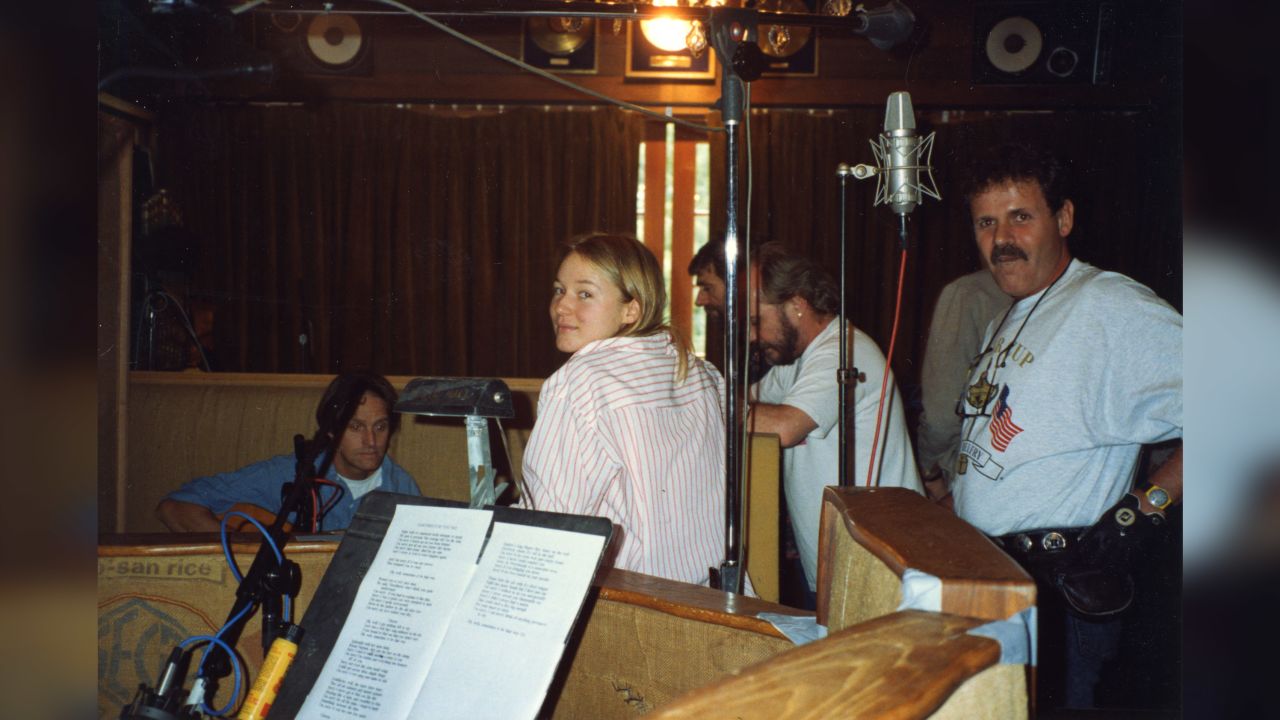
Jewel's recordings at Neil Young's personal studio in Redwood City, California in 1994.

I began to produce a set of practicable expertise to practice my mind to behave differently — starving aged patterns, though building new ones. I wrote tracks like “Who Will Save Your Soul,” about my life’s mission to find out about getting responsible for my have happiness. And I wrote “Hands” in an try to stop shoplifting, and when my fingers arrived at out to steal, or my concern of likely hungry and homeless took maintain, I realized to place pen to paper and write alternatively. Even although I found these capabilities on my have, I hope that in the in close proximity to long term, firms will be equipped to present methods that supply a wide variety of resources to help staff members cope with mental wellbeing problems.

Twenty-one a long time back, I produced the nonprofit Inspiring Small children Basis to assist little ones who slide by means of the cracks of traditional psychological wellness units. Under the oversight of a clinician, the method delivers behavioral wellbeing applications and a extensive prepare to inspire children to determine out who they are and who they want to become. And Innerworld, an additional corporation I just lately co-founded, offers mental wellbeing methods available to everybody. People today from all walks of lifetime can locate helpful psychological health and fitness assistance for a large vary of difficulties, from generalized stress to social panic, worry, grief and depression, between other people.

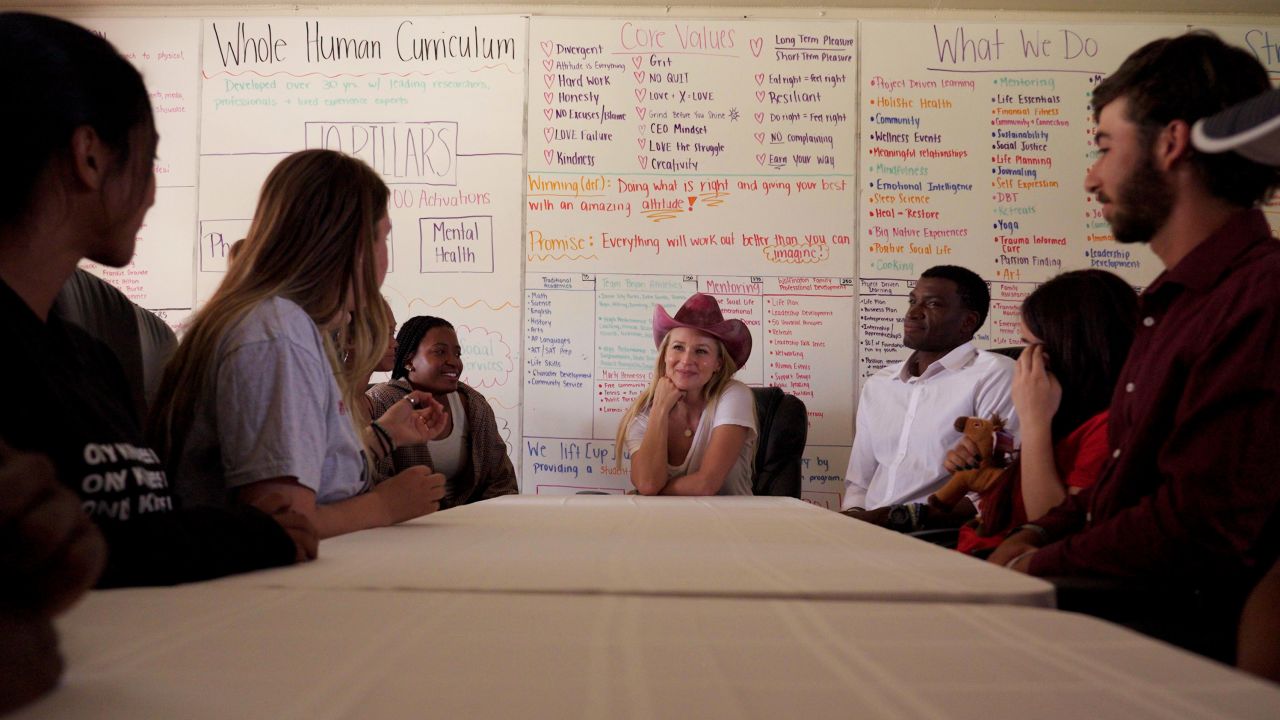
Jewel with a group of youth from her Inspiring Children Foundation in 2022.

It turns out that, certainly, joy is a learnable skill. No subject our histories, we can all heal, increase and be substantial-doing people today in healthy methods. But it undoubtedly helps to have an employer’s support.

It’s time for a lot more leaders in corporate America to incorporate a new line merchandise to their earnings and loss statements. The mental wellness and very well-becoming of each worker, from the mailroom to the C-suite, is paramount.