
Teen with suicidal behavior needed mental health parity laws enforced : Shots

Teen with suicidal behavior needed mental health parity laws enforced : Shots
A teen's relieved parents finally saw hopeful signs when she got residential treatment. But the family's insurance stopped paying after about two months.

If you or someone you know may be considering suicide, contact the 988 Suicide & Crisis Lifeline by calling or texting 9-8-8, or the Crisis Text Line by texting HOME to 741741.

Rose had already attempted suicide at least half a dozen times before the teenager’s parents found an appropriate residential care facility for her, three states and more than 500 miles away.

Rose, then 15, had been in and out of the emergency department at Nationwide Children’s Hospital in Columbus, Ohio. She had tried two residential programs and one partial hospitalization program in two separate states. But nothing had eased her suicidal urges.

Finally, she was getting a treatment that was helping at Rogers Behavioral Health in Oconomowoc, Wis., a small town 35 minutes west of Milwaukee.

But a little over two months into her stay, just as Rose was starting to feel better, the family’s health insurance – Medical Mutual of Ohio – declined to cover any further treatment.

“I was in my office when we got an email from Rogers that included a copy of the fax denial,” says Rose’s father, Michael. “I was shocked.”

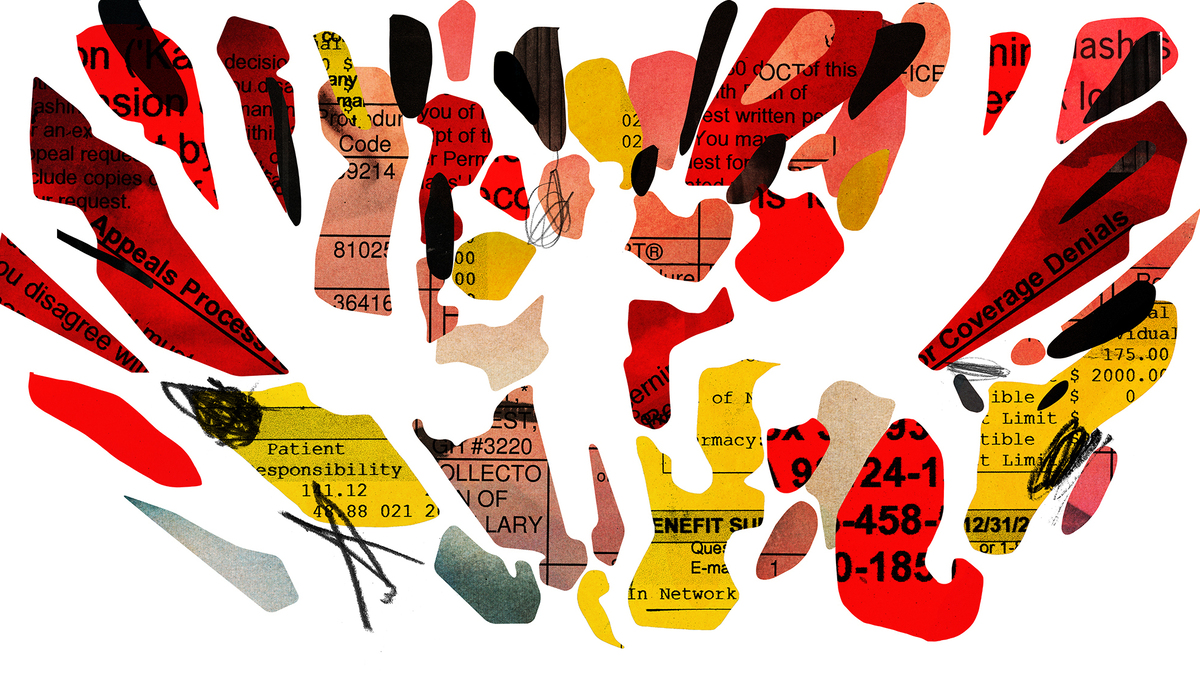
The denial of health insurance coverage for mental health treatment continues to be extremely common, despite federal and state parity laws that are supposed to ensure fairness. But as Rose’s parents discovered, the parity laws are rarely enforced and people with severe mental illness often must rely on their own resources to get care.

(NPR has agreed to use middle names only for the family since this story involves a minor with mental illness.)

A long road to effective care

Rose’s life-threatening depression, anxiety and chronic suicidality consumed her parents’ focus. Michael, a corporate lawyer, took on navigating insurance hurdles and figuring out how to pay for her treatment. Her mother, Rochelle, quit her job as a school counselor, to keep a close eye on her daughter.

She also became Rose’s care coordinator, making appointments, getting her there, researching treatment options. When outpatient treatment didn’t help, Rochelle found residential alternatives for kids with more serious symptoms.

And the family had already spent thousands of dollars on treatments that were unsuccessful in addressing the range of Rose’s symptoms that started when she was 13 years old.

“The vast majority of [providers] do not accept private insurance,” says Michael. “We pay for that on an hourly basis, and it’s added up to tens of thousands of dollars over a period of a couple of years.”

Then, in the summer of 2020, Rochelle stumbled upon an evidence-based form of treatment for suicide that they hadn’t tried yet: Dialectical Behavioral Therapy, or DBT. It’s a form of talk therapy designed specifically for people with chronic suicidality. She learned that Rogers Behavioral Health offered a residential DBT program for adolescent girls. Luckily, they also had a spot open for Rose.

The denial of health insurance coverage for mental health treatment continues to be extremely common, despite federal and state parity laws that are supposed to ensure fairness. But as Rose's parents discovered, the parity laws are rarely enforced and people with severe mental illness often must rely on their own resources to get care.

When Michael and Rochelle met the attending psychiatrist at the program at Rogers, they felt a sense of hope and relief for the first time in two years.

It was “the first connection that I had personally with a therapist who said, ‘I have seen this before. These are the kids that we work with,'” recalls Rochelle.

Hearing that, “my stress levels just dropped,” she says.

DBT is a structured form of treatment which includes individual, group and family therapy (for kids) and teaches people to accept their circumstances, while giving them key skills to help them change their thought patterns and behaviors. The skills help them manage their distress and regulate their emotions.

A large clinical trial published in 2018 in JAMA Psychiatry showed that DBT is more effective in helping teens with repeat suicide attempts and self-harm compared to more general therapeutic approach.

A six-month, outpatient DBT treatment is “sort of the starting point,” for kids with moderate to severe suicidality, says Dr. Vera Feuer, the director of the emergency psychiatry division at Northwell Health in New York. “Usually six months is a decent amount of time to learn the skills, to integrate them.”

However, residential treatment usually yields results faster, says Dr. Stephanie Eken, chief medical officer at Rogers Behavioral Health. “Residential gives results in about three months,” she says, “because it’s a more intense level of care, more treatment around the clock.”

Getting better, then getting denied

About two months into the DBT program, Rose began to show signs of improvement.

“She started connecting with her therapist finally,” says Rochelle. “We’re having good once-a-week family therapy calls, where she’s telling us some of the things that are working for her, and that she’s starting to look at things a little bit differently.”

And most importantly, Rose was starting to talk about wanting to live again, which “we hadn’t heard her do in a couple of years,” Rochelle says.

Michael remembers seeing those changes, too: “That was really the first glimmer of hope that we had seen in probably two years, so we thought we were on the right track.”

But soon, the insurance company wanted to move her to a lower level of care, like a partial hospitalization program.

“It didn’t make sense to me,” says her father Michael. “And more importantly, it made no sense to her treating psychiatrist and the treatment team. They said, ‘it was unworkable, it was extremely dangerous, and would likely lead to a worsening of her symptoms.'”

An internal appeal later filed by Rogers Behavioral Health to Medical Mutual states that discontinuing Rose’s treatment “could interrupt recovery gains” and prove harmful to her.

Medical Mutual of Ohio declined an interview request from NPR. A company spokesperson said in an e-mail statement that their decision to deny further coverage “was made with the guidance of industry-leading, evidence-based guidelines and the review of board-certified physicians trained in the area of medicine” related to Rose’s care.

‘A long history of discriminating’

Families routinely get denied access to mental health coverage, especially when on private insurance, says Ellen Weber, vice president for health initiatives at Legal Action Center, a non-profit that works on improving health equity.

“Private insurance has never treated mental health and substance use services in an equitable, fair way,” she says.

“This goes back to a long history of discriminating against mental illnesses, patients with mental health disorders,” says Meiram Bendat, founder and president of Psych-Appeal, a law firm that helps patients and providers fight denials by insurance companies.

Health insurance policies used to have “limited mental health benefits,” explains Dr. Joseph Parks, a psychiatrist and medical director at the National Council for Mental Wellbeing. “You only got so many days. And when the days were up, the days were up.”

Then in 1998, Congress passed the Mental Health Parity and Addiction Equity Act, which requires insurance companies to cover mental health treatment no differently than how they cover physical health. Several states also have similar laws in place.

So, Parks says, insurance companies were forced to change their contracts and remove previous limitations they had for mental health conditions. But little has changed in practice, he adds.

Insurance companies don’t “know what to do with people that have much longer term needs,” he says.

So, they continue to violate parity laws, says the Legal Action Center’s Weber. And they do this by treating mental health conditions as acute health issues, and not the chronic conditions they really are.

For example, if a suicidal patient is past a suicidal crisis, insurance plans often try to move them to a lower level, and “a much less expensive level of care,” she explains.

And that’s what happened in Rose’s case.

A string of denials and review calls

Michael’s high deductible health plan posed hurdles to Rose’s treatment right from the beginning. For one, they required the treatment to be pre-approved by the insurance company.

Prior-authorizations are widely used by health plans to examine whether a certain drug or treatment plan is medically necessary, a practice that has come under increasing scrutiny in recent years for delaying care and hurting the health of patients. On the mental and behavioral health side, states and the federal government are increasingly requiring health plans to eliminate prior-authorizations to better comply with the federal parity law.

After initially approving Rose’s treatment for a few weeks, Medical Mutual of Ohio declined coverage a few times. However, each time Rogers Behavioral Health appealed that decision on behalf of Rose’s parents and succeeded in extending her treatment.

“Our experience is that Medical Mutual is always looking for any excuse and opportunity to deny coverage at the residential level and urging and insisting that they try something different, something less expensive,” adds Michael.

NPR obtained recordings of a phone call between Rose’s psychiatrist on October 30, 2020, and a reviewer – a physician – from Medical Mutual of Ohio. (NPR is not naming the physicians because neither had permission to speak to NPR, and we could not give them the chance to follow up.)

Listen to tape from Rose’s insurance review

The call began with the Medical Mutual physician suggesting Rose be transitioned to a “lower level” of care – like a partial hospitalization program or virtual DBT sessions that she could do from home. “[It’s] so hard to find the right time to transition to a lower level,” the reviewer said, “but I felt like that this wasn’t a bad time.”

The reviewer repeatedly raises the need to step Rose down to a lower level of care, even as Rose’s psychiatrist stresses that it would be unsafe to send her home, or move her to another program.

“She’s at a point where if she were at home,” he said, “I could expect an attempt, I would expect ongoing self-harm behaviors.”

But the Medical Mutual physician insists on getting an estimated end date for Rose’s treatment, stating that “Medical Mutual’s never approved” such “a long treatment” plan before.

“The insurer was making decisions on what appear to be time-based expectations,” says Psych-Appeal’s Bendat. “In other words, we’ve paid for a month, two months, and we think that your child should either be better by now or attempt and possibly fail at another [lower] level of care that’s less restrictive. Then, if things go awry and your child survives to tell about it, maybe we’ll put that kid again in residential treatment.”

Such treatment time frames imposed by private insurers are a “vestige” of how insurance companies approached mental health care before there were parity laws, he explains.

During the phone call with Rose’s psychiatrist, the insurance company physician also asks: “So when will it go well for her? When will she ever go home?”

This kind of language and approach is discriminatory, says Parks of the National Council for Mental Wellbeing. NPR shared the recording of the calls with Dr. Parks.

“Most of the reviewer’s questions didn’t really reference the patient’s condition,” he says.

Besides, he adds, the reviewer doesn’t use any medical/psychiatric criteria to guide the discussion about Rose’s treatment. “The provider’s saying ‘They need more [time], they’re not doing that well, they’re not ready yet.’ And the reviewer is saying, ‘But they have to go home some day.”

It’s a clear failure to comply with mental health parity, he adds. A patient recovering from a recent heart attack, for example, would never be sent home if they were still having chest pains and shortness of breath.

$40,000 out-of-pocket

When Medical Mutual finally cut off coverage in November, 2020, Michael and Rochelle were faced with a tough choice. They could take their daughter home despite the treatment team saying she wouldn’t be safe at home, or keep her in the program and pay out of pocket.

They chose to pay $1,000 per day to keep their daughter in the program.

“Luckily we could do that,” says Rochelle. “I’m imagining most people just go pick up their kid and try to figure it out at home.”

But in January, when they ran out of funds – Rose’s stay at Rogers had cost them more than $40,000 out-of-pocket – they “fast-forwarded her release,” says Rochelle.

Despite all the progress Rose had made in the program, the transition proved rough on her.

“Two and a half weeks later, we’re back in the emergency department,” says Rochelle, because Rose had once again attempted suicide.

While Rochelle busied herself with watching Rose and connecting her to outpatient care, Michael filed an external appeal with the Ohio Department of Insurance.

In 2022, the department received a total of 18 requests for external reviews related to mental health and substance use treatment, according to a department spokesperson. Eight of those cases were upheld in the company’s favor, 7 were overturned in the consumer’s favor and 3 cases are still pending.

As for Rose’s case, the Ohio Department of Insurance assigned an independent organization called Lumetra Healthcare Solutions to review it. In August 2021, the organization overturned Medical Mutual of Ohio’s denial of coverage for Rose’s treatment at Rogers.

In its report, the reviewer at Lumetra wrote that the insurance company’s denial was “not appropriate,” because all of Rose’s medical records show that she was at high risk for self-harm and suicide.

The report also concluded that Rose’s ongoing treatment at Rogers was medically necessary, and Medical Mutual of Ohio was required to cover the remainder of Rose’s treatment at Rogers Behavioral Health.

“They didn’t pay me,” says Michael. “They paid Rogers, and then I had to go collect from Rogers.”

Michael says he’s relieved that the external review worked in the family’s favor, but it shouldn’t have taken nine months of red tape.

“It just doesn’t seem right the way they were treating me,” he says, “the way I know they’re probably treating other people in similar circumstances, but don’t have the means to pay out of pocket and don’t have the time, energy, knowledge or resources to hold the insurance company accountable.”

Michael and Rochelle still worry about Rose, who’s now 17. She is stable but still struggles.

“She still has a high level of depression and anxiety and high level suicidal ideation,” says Michael. “So it’s sort of day by day, week by week.”

But she’s made significant progress, he adds. Rose currently takes courses, works with animals she loves and even makes plans for the future. And for that, he says, he is grateful.

This story was edited by Diane Webber. Visuals were produced by Meredith Rizzo.

Visuals editor: Meredith Rizzo

As gun violence reaches record levels in the US, an underlying trauma may be building up

As gun violence reaches record levels in the US, an underlying trauma may be building up


CNN
 — 

As much more communities reel from lethal mass shootings – like Dadeville, Alabama, in which four folks were being killed and 28 wounded at a Sweet 16 birthday social gathering more than the weekend – there is evidence that the trauma of gun violence in the United States is getting a collective toll on the nation’s mental wellbeing.

Exploration revealed this 12 months suggests that the negative consequences that mass shootings can have on psychological overall health might prolong past the survivors and local community instantly affected to a substantially broader population.

In the days immediately after a faculty taking pictures in Uvalde, Texas, in Could, a mental health and fitness disaster line obtained a spike in messages that referenced guns and other relevant firearm-linked terms, according to a research funded by the US Facilities for Disorder Manage and Prevention. Even though the analyze did not monitor the specific locale of the messages coming in, Disaster Textual content Line – a nonprofit firm featuring no cost private disaster intervention – serves men and women nationwide.

Mass shootings have escalated to a report pace in the US, with at least 162 now reported in 2023. It has been a week due to the fact the fatal mass shooting at a bank in Louisville, Kentucky, and there have been much more than a dozen given that, according to the Gun Violence Archive.

The devastating frequency implies additional and far more folks are instantly impacted, and the general community is regularly uncovered to the oblique impacts.

“We know that exposure by way of the media – which can come about across quite a few distinct outlets, with the swipe of a finger or a ding on your phone – to some variety of traumatic occasion can end result in someone experiencing an acute stress response and can induce underlying submit-traumatic worry they may perhaps have from anything else,” claimed Leah Brogan, a psychologist who is effective at each the Centre for Violence Avoidance and the Center for Harm Investigation and Avoidance at the Children’s Hospital of Philadelphia.

“So certainly, that continuous publicity can be escalating and activating people even when they never experience one thing instantly.”

A the latest study from the Kaiser Family Foundation found that gun violence much more broadly has afflicted most family members in the US in a single way or yet another. Virtually 1 in 5 grownups has experienced a spouse and children member killed by a gun, together with in homicide and suicide, and about 1 in 6 has witnessed an damage from a gun.

Brogan performs as a trauma therapist for youth who land in the emergency department soon after a violence-related harm. Normally, she claims, beneath the incident that introduced them to the medical center is a history of trauma that has instilled damaging thoughts similar to decline of control, decline of predictability and helplessness.

“Many are returning to communities exactly where gun violence is, unfortunately, a fact. And that actuality can be rather triggering,” she explained. “And so a lot of operate is done to validate that reality for them and also consider to recognize the place they might have some diploma of regulate in just their own lifetime.”

As mass shootings and gun-relevant deaths reach history degrees in the US, an fundamental trauma may possibly be making up in the broader population that could be generating all those exact feelings of helplessness at the national stage.

Right after the Uvalde school shooting, the review uncovered, grief grow to be a central position for a appreciably bigger share of the firearm-associated conversations that had been coming into the Crisis Text Line.

“People are reaching out so that they can establish a sense of stability and tranquil in their possess life,” said Dr. Shairi Turner, an internist and pediatrician who is also the chief wellness officer for Disaster Text Line.

Irrespective of whether they are customers of the local community affected or just knowledgeable of a tragedy that transpired across the state, immediate relationship aids people today locate link and deal with whatever thoughts they may perhaps have, she explained.

Public health interventions that concentrate on emotions of grief exclusively could help lower acute psychological overall health crises that come up speedy immediately after mass shootings, in accordance to authors of the examine.

Disaster Textual content Line mostly serves little ones and youthful grown ups, and the huge greater part of messages that the psychological wellbeing aid line receives are from persons who are more youthful than 25.

The CDC and some others have named focus to the nation’s youth psychological well being disaster, and gurus say that this team is especially at danger to the adverse impacts of a mass capturing.

“Under the age of 20 or 22, our brains are still acquiring, and we’re nonetheless formulating our being familiar with of the earth,” Turner reported. “Children and younger grown ups start off to build narratives about their have safety, the basic safety of their colleges and homes and communities based mostly on what they are witnessing. Tragedies can tend to make them believe that the world is an unsafe area.”

But the adolescent brain is also very malleable, and children are remarkably resilient, Brogan claimed.

“What I generally pressure is that negative matters can occur to us, but they really do not will need to determine us,” she explained. “It goes back again to being familiar with that there are items out of our manage, and we’re actually spinning our wheels when we try out to control them. What we do have command about is the way we react to it.”

Looking for assist by achieving out to a disaster hotline is 1 way to do that.

“It can choose days to months to months to method tragedy,” Turner reported. “Reach out for guidance, hear to each and every other’s thoughts, and established boundaries around how much you are getting in of current crises.”

‘Buckling’ NHS fails to treat 250,000 children with mental health problems | Mental health

‘Buckling’ NHS fails to treat 250,000 children with mental health problems | Mental health

A quarter of a million children in the UK with mental health problems have been denied help by the NHS as it struggles to manage surging case loads against a backdrop of a crisis in child mental health.

Some NHS trusts are failing to offer treatment to 60{08cd930984ace14b54ef017cfb82c397b10f0f7d5e03e6413ad93bb8e636217f} of those referred by GPs, the research based on freedom of information request responses has found.

The research carried out by the House magazine and shared with the Guardian also revealed a postcode lottery, with spending per child four times higher in some parts of the country than others, while average waits for a first appointment vary by trust from 10 days to three years.

In 2021-22, trusts were forced to raise the threshold at which they would offer support to tackle backlogs, which resulted in hundreds of thousands of children being turned away or abandoning treatment after long waits.

The total represents 32{08cd930984ace14b54ef017cfb82c397b10f0f7d5e03e6413ad93bb8e636217f} of all referrals, up from a quarter the previous year, according to the FoI requests sent to 70 UK trusts and boards providing children and adolescent mental health services (CAMHS).

Previous studies have shown that many of the NHS’s 54 mental health trusts in England have raised the threshold of how ill under-18s have to be before they get treatment, in response to the major and ongoing increase in demand for care, which Covid has exacerbated.

That has sparked complaints from the troubled young people affected, their families and GPs who have referred to Camhs that even under-18s who are seriously unwell and have self-harmed or considered suicide are being denied care because they are deemed not ill enough. Mental health services are also struggling with major shortages of psychiatrists and specialist nurses.

Former children’s commissioner Anne Longfield said long waits are resulting in only the worst crises being prioritised. She has heard repeated stories of children who had attempted suicide failing to be offered support because they did not meet a threshold of multiple attempts. “First there is a judgment of whether they actually meant it,” she said, adding: “the threshold is so high because the system is buckling. It was struggling pre-Covid but the pandemic poured rocket fuel on it.”

Olly Parker, head of external affairs at YoungMinds, said the FoI findings showed a “system is in total shutdown” with “no clear government plan to rescue it”, after the 10-year mental health plan was scrapped.

“In the meantime, young people are self-harming and attempting suicide as they wait months and even years for help after being referred by doctors,” he said. “This is not children saying ‘I’m unhappy.’ They are ill, they are desperate and they need urgent help.”

Average waiting lists rose by two-thirds over two years in England, meaning children are waiting on average 21 weeks for a first appointment in England, although the figure drops to just three weeks in Wales. Only 12{08cd930984ace14b54ef017cfb82c397b10f0f7d5e03e6413ad93bb8e636217f} of the trusts which responded to the FoI have met a four-week government target for first appointments.

Almost three-quarters of the English trusts surveyed said they had at least one young person who had been waiting at least a year to be seen, and two-fifths had someone waiting at least two years. The longest wait was 217 weeks, with the average longest wait at all trusts currently 87 weeks across the UK.

This has been Roanna Brewer’s experience. She has two children, 15 and 11, who have been diagnosed with ADHD and autism, and have other mental health problems including self-harm. She has spent more than four years on a CAMHS waiting list for her son, who is still waiting for his formal ADHD assessment, while her daughter has only been offered online group therapy, which is inappropriate for her.

“No parent wants to do what I’ve done, which is lie on the floor of my child’s bedroom every night because they are so terrified and so anxious. They’ve been traumatised enough,” she said.

She has had to take her children out of school due to the lack of support, and despite being a low earner has spent thousands of pounds on private doctors, who have prescribed her children SSRIs.

skip past newsletter promotion

She believes that CAMHS lumps all her daughter’s mental health problems under the umbrella of autism, which has made it hard to get targeted support, despite promises from before the pandemic of a new funded neurodiversity pathway at the trust which would speed up progress through the waiting list. “We still haven’t seen anyone,” she said.

The figures are echoed in a recent report from the children’s commissioner for England, which warned that too many children are being seen in crisis and hospitalised, which earlier intervention could have prevented.

Dame Rachel de Souza, the children’s commissioner, said children’s mental health was a “key pillar” of her work. “I am particularly concerned to see such a surge in demand for help in my recent research. We’re seeing waiting times increase for the first time in years, and evidence of an increasing postcode lottery for children referred for treatment.”

She urged the government to roll out mental health support teams in every school by the end of 2025, and for any mental health investment to target children. “It is vital that this support is available – without it, too many children may end up in crisis.”

Responding to the FoI findings, a Department of Health and Social Care spokesperson said: “We’re determined to do everything we can to support children and young people with their mental health, no matter their background or location.

“Support in school is vital and that’s why we are increasing the number of school mental health teams to almost 400 by April 2023, providing support to 3 million children and young people.

“We’re also working closely with NHS England to introduce new access and waiting time standards for mental health services, ensuring quicker access to high-quality care across the country.”

‘Vanderpump Rules’ star Raquel Leviss checks into mental health treatment facility

‘Vanderpump Rules’ star Raquel Leviss checks into mental health treatment facility
WATCH WHAT HAPPENS LIVE WITH ANDY COHEN -- Episode 20041 -- Pictured: Raquel Leviss -- (Photo by: Charles Sykes/Bravo via Getty Images)

Raquel Leviss has checked into a facility for psychological wellbeing treatment in wake of her affair with Tom Sandoval becoming exposed. (Picture: Charles Sykes/Bravo via Getty Images)

Raquel Leviss — the Vanderpump Principles personality, whose affair with co-star Tom Sandoval has been splashed all over the internet for the very last thirty day period — has checked into a psychological overall health remedy facility.

“Raquel and her loved ones made the decision just before the connection was found that she would enter a voluntary facility for mental health and fitness counseling,” a rep for the Bravo identity said in a statement acquired by many news retailers. “She was scheduled to go in pre-reunion,” which taped on March 23, “but made a decision she preferred to complete her filming determination. Bravo and generation ended up knowledgeable and in guidance of her journey toward superior mental wellness.”

The rep extra that Leviss is not in rehab for substance abuse problems but in a plan concentrated on “psychological well being and trauma therapy.”

Leviss’s spokesperson has not but responded to Yahoo Entertainment’s ask for for remark.

In early March, it was exposed that Leviss and Sandoval carried on a months-extensive affair though he was in a 9-calendar year partnership with Ariana Madix. Madix uncovered the romance after seeing a sexually explicit video clip of Leviss on Sandoval’s cellphone and scrolling via their chat history. Madix broke up with the TomTom bar operator and musician.

Equally Leviss and Sandoval apologized for their roles in the cheating scandal. For her portion, Leviss apologized “for my steps and my decisions foremost to Ariana, and to my mates and the followers so invested in our associations. There is no excuse, I am not a victim and I should possess my steps and I deeply regret hurting Ariana.”

Leviss went on to expose that she experienced been in counseling understanding about her “patterns of codependency and dependancy to getting and emotion liked.” She mentioned she was hopeful therapy would assistance to stop her “unhealthy behavioral cycle” and vowed to make it a precedence to “shield” her mental wellbeing and “understand” from these blunders.

Before this 7 days, Sandoval gave his very first interview amid the scandal dubbed “Scandoval” on the Howie Mandel Does Things podcast. In it, he in depth his initially kiss with the SUR server — last calendar year in the backyard of the home he shared with Madix.

“We just kissed,” he explained. “It was magnetic. We were being talking, moving nearer, and as we were being chatting, as time went on, we would just get started speaking closer and closer, and then all of a unexpected, we’re kissing.”

Of the spark, he explained, I felt some thing that I hadn’t felt in so extended, like, emotionally.” He went on to phone Leviss “awesome,” kind,” “intelligent,” witty,” fun,” “lovely” and “f***ing amazing.”

He also stated that before issues took a intimate transform, Leviss was “a resource of energy” for him as he navigated his allegedly unsatisfied and unhealthy marriage with Madix.

Comedian Maz Jobrani on Mental Health, Grief & Masculinity

Comedian Maz Jobrani on Mental Health, Grief & Masculinity

If Maz Jobrani is superior at 1 thing, it’s creating men and women giggle. The comedian, actor, and podcaster is a home identify in comedy, touring the place and starring in specials like his recent YouTube exclusive The Birds & The Bees. While you may possibly know Jobrani as a humorous man, you may well not know him as a guy grappling with his personal mortality and mental wellness. But which is about to transform.

Jobrani lately appeared on the Men’s Overall health Instagram Stay sequence Friday Periods exactly where he talked over his knowledge with psychological wellbeing. In discussion with host and psychiatrist Dr. Drew Ramsey, Jobrani mentioned anything from masculinity to laughter to loss of life. Of course, points received a contact morbid.

Jobrani, who is now 51 years previous, says turning 50 inspired him to reframe his everyday living and psychological health and fitness, partially owing to his developing awareness of his individual mortality. The milestone birthday, he stated, prompted him to confront the inevitability of dying. But as an alternative of getting confused by the notion, Jobrani used this new-uncovered consciousness as encouragement to be far more current in existence.


preview for Men's Health US Section - All Sections & Videos

“Once I strike 50, I imagined, ‘Oh my god, I will be passing absent.’ We all will pass absent. That instant will occur,” he explained to Dr. Ramsey. “I’ve shed my sister to breast most cancers and my brother to dependancy. And so these moments will arrive. When I understood that, it served me reiterate this notion in my head that you have to live your existence. You have to live your everyday living for activities, you have to stay your lifestyle for recollections, and you have to are living your life for beloved kinds.”

Shedding beloved types has been an unlucky fact of Jobrani’s daily life, and a little something that he’s tried to cope with in a balanced way. Aside from attending grief counseling and honoring his emotions, Jobrani claims connecting with many others who have professional loss served him occur to phrases with dying.

“We all have these pains and we have them and we have to discover nutritious techniques to deal with them,” he reported, including, “I check out to remind myself of that.”

But it isn’t really usually as uncomplicated as it appears. Just after all, lots of adult males are inspired to suppress their thoughts to conform to so-called “masculine benchmarks.” As an Iranian immigrant, Jobrani knows the specific problems faced by immigrant guys when grappling with mental health and fitness and masculinity,

“A lot of the Iranian men that I know, or even some other immigrant adult males, they arrive from a extremely macho history,” he claimed. “These immigrant cultures, I imagine, put a great deal of tension on males to respond to and solve every single challenge. But the fact is that we just can’t for the reason that we are mortal beings. We just can’t do miracles. Regrettably in our lifestyle, it’s not encouraged to request help and speak to others.”

Rather of subsequent these cultural norms, Jobrani mentioned he embraces his organic desire in all factors psychology, working with it as a way to far better have an understanding of himself.

“I’m always seeking to realize why I am the way I am,” he stated. “One matter I learned about myself not too long ago is that I’m a pleaser. I like to please folks. I like to say sure and that places me in scenarios that I never want to be in. So I’m hoping to get the job done on that a little bit and I’m trying to get the job done on prioritizing myself, my spouse and children, and my tasks that I come to feel are necessary to me 1st just before I say sure to other factors.”

All round, Jobrani prides himself on owning a superior deal with on his psychological and psychological health—and he partly credits comedy for his healthier outlook.

“Part of becoming a comic that will help me is I get to go on phase a large amount of situations and really rant about some thing that was on my mind to a complete viewers,” he claimed. “If I’m on stage conversing about something that occurred in my everyday living, prospects are there’s someone in that audience who can relate — and we snicker jointly. And I think which is a sort of its have remedy.”

Check out the full discussion underneath:

Men’s well beingMen’s wellbeing Lettermark symbol

Katie Dupere is an editor and writer in New York City specializing in id, net tradition, social very good, way of living and attractiveness subjects. 

Digital Mental Health Company Spring Health Raises $71M, Hits $2.5B Valuation

Digital Mental Health Company Spring Health Raises M, Hits .5B Valuation

Digital behavioral overall health benefits company Spring Overall health has lifted $71 million in a new funding spherical. This provides the unicorn’s valuation to a whopping $2.5 billion.

New York-based Spring Wellness is a B2B behavioral wellbeing firm that groups up with companies and health and fitness programs to provide electronic help, meditation routines, coaching, therapy and treatment. Its consumers consist of Microsoft, The Hershey Corporation, JB Hunt, Bumble and Fujifilm. 

The new spherical comes much less than two several years right after the enterprise closed a $190 million Series C funding round. In full, the organization has lifted more than $370 million in enterprise funding.

Though the enterprise has not unveiled the names of the investors contributing to this new round, it did be aware that its present traders needed to improve their possession stake.

“Our traders ended up so psyched by the development and results of our business that they were keen to ‘double down’ by increasing their possession in what they explain as a single of the most prosperous portfolio providers they have ever invested in,” Spring Well being wrote in a website post. 

Kinnevik, Guardian Lifestyle Insurance policies Business of The united states, Tiger World, GingerBread Money, Operator Associates, Northzone, Rethink Impact, William K. Warren Foundation, Perform-Bench, SemperVirens, In a position Partners and Genuine Money have previously backed Spring Overall health. 

Launched in 2016, the startup has been centered on growth of late. It introduced that the organization doubled its headcount in 2022. 

Spring Wellbeing has also expanded through M&A. In Might of 2022, it declared the acquisition of family wellness-concentrated startup Weldon for an undisclosed quantity. This offer extra a lot more family-targeted behavioral wellbeing services. These choices incorporated helping families deal with sleep, habits, conflicts, grief, progress, neurodiversity and monitor-time troubles.

Total, digital behavioral well being funding has dipped around the very last year. In 2022, digital behavioral wellbeing corporations lifted $2.1 billion in funding, considerably less than fifty percent of the $4.8 billion lifted in 2021, according to Rock Overall health. 

New digital behavioral well being unicorns have become a rarity in 2023. Apart from reports that Headway shut a $100 million expense, mega deals were just about nonexistent in the digital mental wellness space through Q1.

Nevertheless, traditionally B2B behavioral well being startups have productively caught investor consideration. Lyra Wellness, which sells businesses psychological wellness benefits for their staff members, nabbed $235 million in Collection F funding in 2022.

On top of that, B2B mental well being corporation Modern Well being raised $74 million in Sequence D funding in 2021, earning itself unicorn status.