Government must make its review of Relationships, Sex and Health Education a top priority

Government must make its review of Relationships, Sex and Health Education a top priority

&#13
Sarah Champion MP&#13

&#13
5 min browse&#13
&#13

We have an unmissable chance to guidance our younger people this calendar year.

In 2023, the governing administration will assessment its advice on Associations, Intercourse and Overall health Instruction (RSHE), three decades on from the begin of obligatory lessons in schools throughout England. On the other hand, investigate released yesterday by the Intercourse Instruction Forum finds stressing gaps in RSHE, with a lot of younger people nevertheless to obtain the superior-excellent curriculum they have been promised and a disconnect amongst pledged financial commitment and the assistance academics are getting on the ground. The assessment is a probability for us to correct this dire oversight.

The potential risks our youthful individuals experience currently are unparalleled, and the critical to safeguard our little ones the two on and offline is just as powerful as it was when RSHE advice for colleges was released with frustrating cross-occasion assist in 2019. This week, the PM defended the need to have for high quality RSHE, saying, “We do hope educational institutions to just take liable and wise decisions on their RHSE curriculum, making positive that those people materials are age-proper, appropriate, politically impartial and price for revenue.”

In simple fact, worries about young people’s publicity to harmful information online have only intensified. Latest study from the Children’s Commissioner identified 27{08cd930984ace14b54ef017cfb82c397b10f0f7d5e03e6413ad93bb8e636217f} of 11-year-olds had noticed pornography, and 79{08cd930984ace14b54ef017cfb82c397b10f0f7d5e03e6413ad93bb8e636217f} encountered violent pornography just before the age of 18. Larger frequency of pornography use is tied to a larger likelihood of engaging in sexual violence, and unfettered entry to specific and intense sexual substance on the internet is distorting teenagers’ expectations. Worse, it’s implicated in lasting emotional and actual physical trauma to innumerable younger folks.

Although steps this sort of as the On-line Security Monthly bill provide the likelihood to handle some of these risks, we would be letting our students down if we did not also give a strong tactic to prevention by means of education.

Where by much better to get started than listening to what youthful men and women have to say about their activities in the classroom – and what they really feel they will need to learn in get to develop respectful and healthier associations. Investigate out today, commissioned by the Intercourse Instruction Forum, reveals what youthful people actually come to feel about RSHE.  Only forty percent of respondents amount the high quality of their faculty RSE as ‘good’ or ‘very superior,’ which is on par with the 2019 pre-required RHSE poll. This tells us that the top quality RSHE we promised our pupils has not however turn out to be a actuality.

&#13

Reversing the tendencies of misogyny, online damage and a long time of concealed kid sexual abuse will hardly ever be brief or quick

&#13

The report reveals that critical matters included in the unique obligatory curriculum are nevertheless currently being skipped. For illustration, 58{08cd930984ace14b54ef017cfb82c397b10f0f7d5e03e6413ad93bb8e636217f} of respondents learnt not plenty of or nothing at all about pornography and 54{08cd930984ace14b54ef017cfb82c397b10f0f7d5e03e6413ad93bb8e636217f} learnt not adequate or practically nothing about how to inform if a marriage (which includes individuals on line) is healthful), with information related to folks who are LGBTQ+ equally neglected. The additional organic facets of RSHE are currently being included – with only 30{08cd930984ace14b54ef017cfb82c397b10f0f7d5e03e6413ad93bb8e636217f} of respondents stating they learned not sufficient or practically nothing about puberty, for illustration – but we are continue to leaving youthful people today unprepared on matters this kind of as abusive associations, attitudes toward girls and id.

At a time when the government has often referred to RSHE as integral to their tackling violence in opposition to women of all ages and girls tactic and as a basic section of safeguarding little ones, it is horrifying that youthful persons come to feel these subject areas are staying overlooked. Research shows us that instruction programmes definitely do function in lessening sexual violence and bad sexual health. Still to make these programmes work, we want to contain youthful persons and recognize what topics they feel they have to have to learn much more about.

We also will need to assistance our faculties and our academics in providing these lessons. 5 hundred and 30-eight MPs voted to help mandatory RSHE in 2019, and the Section of Training pledged £6 million in funding. We read a large amount of talk about supporting colleges, but only £3.2 million of that funding was ever put in, and the promised teaching for lecturers didn’t scratch the area. How can we assume academics to tackle concerns like violent on the internet written content if they are largely left to their individual units, and 46{08cd930984ace14b54ef017cfb82c397b10f0f7d5e03e6413ad93bb8e636217f} of secondary faculty academics say they absence self esteem with RSHE? (NSPCC and NASUWT)

The govt, moms and dads and students count on a good deal out of RSHE – but to make it the capture-all we hope for, we have to have to make huge adjustments. Firstly, youthful people’s sights and encounters must be central to the generation of the programme. Learners are vital for checking RSHE and flagging if critical topics are remaining missed. Both of those authorities and universities on their own would do properly to check with young people routinely for responses, reply to the superb recommendations from pupils about how to satisfy their needs and be accountable when RSHE does not fulfill our benchmarks. Secondly, we need a lengthy-expression and correctly funded strategy to practice and guidance a generation of professional RSHE academics. Now is the second to give RSHE the sort of professionalisation we hope of any other required subject matter. 

Reversing the traits of misogyny, on the internet damage and a long time of concealed youngster sexual abuse will under no circumstances be rapid or quick. We have to have to use each and every instrument we can to continue to keep youngsters harmless, empower them to be lively allies for equality, and to look for and give help when essential. All this is dependent on giving youthful men and women a voice and lecturers the expertise and training to open up up relevant, significant conversations.

This is the calendar year we can make a difference for how young children and young folks prepared them selves to grow to be respectful, upstanding associates of culture and how safely and securely and confidently they navigate contemporary realities.  I labored closely with Parliamentarians throughout get-togethers to convey about the landmark improve in laws as a result of the Youngsters and Social Get the job done Act 2017, and via cross-get together aid we can see this by way of. It is in everyone’s pursuits that we do.

PoliticsHome Newsletters

Get the inside of keep track of on what MPs and Friends are speaking about. Indication up to The House’s early morning e-mail for the most current perception and response from Parliamentarians, policy-makers and organisations.

Education Department to review rules for online program providers

Education Department to review rules for online program providers

The Education Division is planning to enhance oversight of the outside contractors that faculties and universities use to enable operate online plans.

The on the internet software management organizations, or OPMs, have developed in the last decade, but critics have accused the business of participating in aggressive recruiting methods and questioned the legality of the OPMs’ business practices. Supporters of the providers say they have helped grow online offerings in larger education and learning at a time when institutions lacked the potential to produce systems and that even more regulation would dampen innovation.

OPMs have confronted escalating scrutiny in the latest a long time from congressional Democrats and customer groups, which have criticized the Education Department’s oversight of the industry. Previous year, the Government Accountability Office environment reviewed the companies and urged more scrutiny from the Training Department, finding that the agency did not have ample information to gauge the scale or legality of the companies’ agreements with establishments.

To deal with that discovering, the office explained in steering issued Wednesday that OPMs and any entity that provides recruitment services for a school are viewed as 3rd-bash servicers, subjecting the companies’ contracts with institutions to normal audits. Schools and universities are demanded to report details of their agreements to the office by May 1.

“That will supply important transparency into what’s going on,” reported Robert Shireman, who worked in the Instruction Division throughout the Obama administration and is now a senior fellow at the Century Basis, a progressive consider tank. “The Department of Education and then the rest of us will learn a lot more about the contracts that institutions have, and there will be increased scrutiny and accountability for the OPM contractors if they are concerned in recruiting learners.”

A key problem for critics and the Training Office is the earnings-sharing agreement concerning the OPMs and schools, in which the company receives a share of the programs’ tuition revenue. Federal legislation prohibits establishments of larger education and learning from delivering a fee or bonuses to individuals or entities primarily based on securing enrollment or financial assist.

Nevertheless, third events are exempt from the ban on incentive compensation if they deliver a bundled established of providers, as outlined in direction issued in 2011. That way, a enterprise could receive fiscal gains for enrolling learners as extended as it also pays for other solutions, these types of as technological innovation assistance, in addition to college student recruitment.

Shireman, who worked in the Obama administration when the 2011 direction was issued and who has considering the fact that called for it to be rescinded, said he sees the department’s evaluation as a feasible first step in rescinding that 2011 guidance.

“We think it is now vital for the OPM corporations to put ahead their proposals, as perfectly as establishments, faculties and universities, about how considerably of their tuition can they deliver to a recruiter off-internet site without having violating the incentive-payment ban,” he stated.

OPMs have commenced to go absent from the income-sharing product, charging fixed charges for certain expert services as an alternative subsequent the elevated scrutiny and changing training landscape.

Section officers stated in a information launch that “the number of college students recruited by entities operating less than this exception has increased” because the advice was issued. To learn far more about how that exception has impacted greater instruction and whether updates are necessary, the department will maintain two listening sessions on March 8 and 9.

‘Online instruction has the possible to satisfy the requires of quite a few pupils and decrease prices,” Less than Secretary James Kvaal explained in a assertion. “But we are concerned about the growth in personal loan debt and want to make certain college students get benefit for their money. These listening sessions are element of the department’s determination to undertake a careful, truthful, and thorough evaluation of the rules about how contractors recruit learners for on the net packages.”

Pearson and 2U—two of the larger sized on-line method companies—said in statements that they appeared forward to doing the job with the section and supported greater transparency measures.

“Innovation in instruction is vital to our place, and 2U and organizations like us have come to be a critical component of driving innovation, obtain, and affordability in the greater education ecosystem,” a 2U spokesperson stated in a assertion. “Safeguarding and protecting college students is an important part of the equation, and we appear forward to operating with the division to help guarantee that our business is serving the very best pursuits of students, universities and taxpayers.”

Shopper teams and consider tank analysts normally applauded the department’s announcement.

“The bundled-services loophole to the incentive-payment ban has led to the subsequent frontier of predatory practices in larger training,” said Aaron Ament, president of the Countrywide Scholar Lawful Protection Community. “This has ripened the ailments for misleading and defrauding college students, and we have already viewed proof of damage induced by this lack of oversight.

The network and Tycko & Zavareei LLP sued 2U and the College of Southern California late last yr, alleging that both entities significantly misled college students. The lawsuit is continue to pending.

North Carolina agent Virginia Foxx, the Republican who chairs the Dwelling Committee on Education and the Workforce, criticized the conclusion and mentioned in a assertion that she hoped the Biden administration was ready to pay attention to all the points.

“While I share the belief that we must ensure programs supply worth to students and taxpayers, it is under no circumstances likely to get the job done for the section to drive blanket compliance procedures onto entities, especially those businesses that support learners comprehensive their education by means of productive retention techniques,” her assertion stated.

Overreach or Needed Oversight?

Trace Urdan, handling director at Tyton Partners, claimed the assistance designating OPMs as third-celebration servicers was “potentially alarming” and an overreach of the department’s authority.

Any entity involved with the administration of an institution’s federal university student aid is viewed as a third-social gathering servicer. That incorporates contracts that manage college student loans or operate economical help functions.

Urdan explained that underneath the latest guidance, any company that contracts with an establishment that participates in the federal economic aid system could be issue to federal regulation.

“This definition is growing to enable for immediate regulation of a 3rd occasion, and I assume the problem is that there is no genuine restricting basic principle there,” he stated, introducing that these a modify could discourage outside the house investment in better instruction.

Ben Kennedy, a consultant who advises colleges on their on the web approach, stated the change in third-occasion servicers will likely be an administrative inconvenience but not the loss of life knell for OPMs.

If the 2011 advice is rescinded, that would be a big acquire for institutions currently in a revenue-sharing arrangement, for the reason that they could renegotiate contracts, he mentioned. But he doesn’t consider the department has to go that much. Alternatively, the company could include disclosure prerequisites and other stipulations to make them unpalatable.

Additional facts about the contracts also would profit establishments, he claimed.

Stephanie Hall, a senior fellow at the Centre for American Development who’s researched OPMs and been vital of the preparations, mentioned that bringing OPMs underneath the 3rd-occasion-servicer umbrella will at minimum increase oversight. That modify also would make the businesses and establishments “jointly and severally liable” for any violation.

“Third-occasion OPMs have been equipped to conceal guiding seriously crafty language in their contracts that keeps them from getting responsible for any violations,” she explained. “It locations all the duty on the institution.”

She’s thrilled to listen to from learners and institutions, especially people that are locked in extensive-term contracts, all through the listening classes subsequent month.

“Hopefully it’s a possibility for the department to hear what some of the impacts are and how common those impacts are,” she mentioned. “One detail that I would hope will come out of that is that the office will get details so they can shift forward with both rescinding or revising that bundled provider steerage.”

Equity within digital health technology within the WHO European Region: a scoping review – World

Equity within digital health technology within the WHO European Region: a scoping review – World

Attachments

Digital health and fitness not accessible by everybody similarly, new analyze finds

A new WHO/Europe examine has located that digital wellbeing technologies are not obtainable to all communities and places in Europe equally, increasing considerations over the equitable use of electronic tools for health and fitness. The study reveals that folks with lousy overall health are among the kinds struggling the most in accessing these tools.

The research was carried out jointly with the Public Well being Data, Information and Research Directorate of Public Wellness Wales. It summarizes the evidence from 2016 to 2022 on inequity in access, use and engagement with electronic health systems.

“These conclusions are important, because they mail a warning signal. Despite the fact that we know that electronic instruments can go a extended way in improving people’s obtain to overall health and well being workers’ means to care for people today, we are now discovering that the applications are not offered to all people similarly, particularly to people with fundamental wellbeing disorders,” suggests Dr David Novillo-Ortiz, Regional Adviser on Data and Digital Wellbeing at WHO/Europe.

“We need a far better knowledge of why this inequity persists, and how we can boost people’s means to accessibility, use and interact with digital overall health instruments. That is the only way we can really leverage the electrical power of digital solutions so that a extra equitable potential for digital health and fitness can be developed, ensuring no one particular is remaining at the rear of,” he factors out.

Digital technologies are sensible devices and related machines that strengthen wellness. They include things like artificial intelligence, electronic platforms, software, wearable products, and equipment that seize and share data and pertinent health details throughout units. These technologies can assistance overall health workers and increase prognosis, procedure and quality of care.

Main drivers of inequity in obtain to and use of electronic health and fitness instruments

The examine notes that patterns in entry, use and engagement with digital systems differ across populations. Digital well being systems are likely to be applied additional commonly in city places, and a lot less by people from ethnic minorities and those people experiencing language boundaries.

The research also found better use of digital wellness equipment by people with far more advanced instruction degrees and better economic status. Younger people had been also uncovered to use tools additional than more mature grownups.

Professor Alisha Davies, Head of Analysis and Analysis at Public Health and fitness Wales, describes, “This is just one of the most extensive scoping assessments of equity in electronic wellbeing systems in the WHO European Location. The conclusions highlight vital evidence gaps across 10 domains of equity, and the significance of embedding fairness into the improvement and integration of digital technological know-how in well being to be certain gains are maximized and unintended implications are prevented.”

The study warns that, while quite a few health-care vendors are more and more making use of electronic health and fitness technologies to enable people and the general public to far better handle their well being, a emphasis on these technologies “may inadvertently widen current inequities in wellbeing, if recognized inequalities in access, use and engagement with digital technological know-how are not deemed and addressed”.

Some of the ways in which these worries can be addressed consist of:

  • getting a popular framework to monitor engagement with digital technological know-how for health across fairness domains
  • mapping inequities in electronic infrastructure
  • addressing barriers to entry digital overall health
  • locating the most productive ways to make digital skills for people most in want and
  • addressing obtain for individuals with disabilities or language boundaries. 

Regional digital wellness motion prepare

The uptake and advancement of digital health and fitness systems have the possible for prevalent added benefits by way of far more economical and qualified health treatment. Equitable, patient-centred approaches are at the centre of WHO/Europe’s regional digital health and fitness action approach.

WHO/Europe encourages nations around the world in the Location to develop repositories of great tactics, fortify health fairness approaches and gender equality, and acquire integrated answers to keep track of and consider digital wellbeing guidelines and interventions.

2022 Health Sciences Year in Review: UNM Newsroom

2022 Health Sciences Year in Review: UNM Newsroom

The University of New Mexico’s Health Sciences Center (HSC) had quite a year as reflected by several construction projects including the new Critical Care Tower and the College of Nursing and Population Health Building. Not only were construction workers busy throughout the year, but so were HSC scientists conducting research involving the hazards of wildfire smoke to non-invasive brain stimulation to a new MRI technique to create time-lapse images as the brain responds to experiences and the arrival of the Omicron variant in New Mexico. In addition, several HSC staff members were recognized for a variety of achievements from retirement to leadership.

Below is a select list based of HSC’s 2022 Year in Review highlighting UNM students, faculty, and staff accomplishments. Click on the headline to read the full story for each listing.

New Hospital Tower

In 2021, UNM Hospital broke ground on a seven-level, 96-bed critical care tower. Over a decade in the making, this contemporary medical facility will help UNMH further its mission of caring for more New Mexicans in New Mexico when it debuts in 2024. Now, UNMH is taking construction on the tower to new heights. Earlier this year, the New Mexico Higher Education Department and State Board of Finance gave UNMH the green light to move forward with a vertical expansion of the new tower. This ambitious development adds two additional floors and even more hospital beds to the tower.

Studying the Hazards of Wildfire Smoke

University of New Mexico researchers have received federal funding to study how exposure to wildfire smoke creates signs of premature aging in the brain – and look for ways to inhibit the process. Thanks to a five-year, $3.7 million grant from the National Institute on Aging and the National Institute of Environmental Health Sciences, a multi-disciplinary team led by Matthew Campen, Regents’ professor in the UNM College of Pharmacy, will investigate how inhaled smoke particles travel from the lungs to erode the blood-brain barrier.

College of Nursing’s MSN Program Highly Ranked

The University of New Mexico College of Nursing’s master of science in nursing and doctor of nursing practice are again ranked among the best nursing programs in the nation and the top in New Mexico, according to the latest ranking from U.S. News & World Report’s 2023 edition of America’s Best Graduate Schools. UNM’s master of science in nursing program is ranked 61st in the nation and fourth in the Mountain West. The doctor of nursing practice program is ranked 80th nationally and fifth in the Mountain West. Both programs earned the top spot in the state of New Mexico.

Physical Therapy Student Jessica Yeaton Competes in the Winter Olympics

Whenever she takes a break from her studies in The University of New Mexico Physical Therapy program, Jessica Yeaton likes to strap on her cross-country skis and head to the snowy upper reaches of the Sandia Mountains for a workout. But this week, Yeaton will heading to Beijing for the 2022 Winter Olympics as a member of Australia’s cross-country ski team. It’s the 30-year-old’s second Olympic appearance: in 2018 she was in South Korea for the winter games.

Researchers Study Non-Invasive Brain Stimulation for Mild Traumatic Brain Injury

University of New Mexico researchers are leading a multi-center study to see whether noninvasive brain stimulation can improve the cognitive symptoms of traumatic brain injury in veterans. The three-year $4 million trial, funded by the U.S. Department of Defense, will recruit participants from Veterans Affairs hospitals in Albuquerque and Minneapolis, said Davin Quinn, professor in the UNM Department of Psychiatry & Behavioral Sciences, who serves as principal investigator.

Project ECHO Launches Program to Boost Vaccine Confidence in Rural New Mexico

Project ECHO at The University of New Mexico Health Sciences Center is launching a new program to increase COVID-19 vaccination rates in New Mexico’s rural and underserved communities. The program will help front-line health workers gain essential skills in listening techniques, motivational interviewing and effective messaging. They will also learn how to help their clients find vaccination sites and transportation, overcoming some of the difficulties in accessing vaccines in rural areas.

UNM Health Sciences Received Record $239 in External Research Funding in FY 2022

The University of New Mexico Health Sciences was awarded nearly $239 million in external funding in FY 2022, a new record that builds on year-over-year increases in grant funding for 17 of the past 18 years. In addition, UNM Health Sciences researchers have for the first time collectively received more than 1,000 active grants.

UNM Health Sciences Receives Grant to Support Diversity in Young Biomedical Researchers

The University of New Mexico’s Biomedical Sciences Graduate Program (BSGP) has been awarded a five-year $2.71 million grant from the National Institute of General Medical Sciences to develop a diverse pool of Ph.D. researchers. The Initiative to Maximize Student Development (IMSD) program is part of the National Institutes of Health T32 funding mechanism. It joins three other UNM Health Sciences T32 awards, said Nancy Kanagy, chair of the Department of Cell Biology & Physiology and principal investigator for the new grant.

UNM Health Sciences Redesignated a World Health Organization Collaborating Center

The Office of International Health at The University of New Mexico Health Sciences has been redesignated as a collaborating center by the World Health Organization/Pan American Health Organization (WHO/PAHO). Arthur Kaufman, vice president for Community Health, and Amy Clithero, principal lecturer in the Department of Family & Community Medicine, will serve as co-directors of the Collaborating Center for Innovative Health Workers Education, Service and Research Models

UNM Sandoval Regional Medical Center Designated a Level III Trauma Center

The New Mexico Department of Health EMS Bureau has certified The University of New Mexico Sandoval Regional Medical Center (SRMC) as a Level III trauma center. Going forward, SRMC will be equipped to handle the needs of lower-level trauma patients whose injuries can be treated by a general surgeon or an orthopedic surgeon. Patients with traumatic brain injury and other acute conditions would be transported to the Level I trauma center at UNM Hospital.

UNM Physician Volunteers in Ukraine to Help with Refugee Crisis

More than two million people have fled the Russian invasion of Ukraine over the past two weeks, pouring into neighboring central European countries. University of New Mexico physician Matthew Wilks, chief medical officer and chief quality officer at Sandoval Regional Medical Center in Rio Rancho, has headed in the opposite direction, crossing into Ukraine to establish aid stations manned by volunteer health providers. Wilks belongs to Team Rubicon, an international disaster relief organization

UNM Scientists Use New MRI Technique to Create Time-Lapse Images as the Brain Responds to Experiences

Magnetic resonance imaging (MRI) has transformed the field of neuroscience over the past 40 years, enabling scientists to create clear snapshots of living brain structures and even detect functional changes associated with certain activities. Unlike X-rays or CT scans, MRI does not rely on beams of radiation. Instead, powerful magnetic fields and radio waves are used to temporarily align the hydrogen atoms in the body’s water molecules, meaning it can create a clear picture of soft tissues, like the brain.

More Rodent Species in New Mexico Found to Carry Deadly Hantavirus

Each spring, as rodents emerge from their burrows, Four Corners residents cleaning out storage sheds or woodpiles know to be on the lookout for tiny deer mice, which can carry the deadly Sin Nombre hantavirus. Steven Bradfute, an associate professor in The University of New Mexico Center for Global Health and Department of Internal Medicine, and an expert in virology, immunology and microbiology, has spent years teasing out the secrets of the virus, which kills nearly 40{08cd930984ace14b54ef017cfb82c397b10f0f7d5e03e6413ad93bb8e636217f} of those who become infected.

UNM Cancer Center Participates in National Bladder Cancer Clinical Trial

Bladder cancer affects nearly 84,000 people in the United States each year, making it the sixth most common cancer. Most people survive it, but unfortunately, many lose their bladders. Dr. Neda Hashemi, and her team at The University of New Mexico Comprehensive Cancer Center are now offering several clinical trials, including one that will give people with bladder cancer a chance to fight their disease and keep their bladders.

UNM Among First to Receive ACGME Accreditation for Neuro-Critical Care Fellowship

The University of New Mexico Department of Neurology is among the first programs in the nation to receive full accreditation for a fellowship in neurocritical care. Recognition of UNM’s two-year fellowship program by the Accreditation Council for Graduate Medical Education (ACGME) is a major accomplishment because “neurocritical care is a subspecialty that has been in existence for 30 years, but has had to tackle many hurdles as it grew beyond the major coastal universities,” said fellowship program director Dr. Diana Greene-Chandos, associate professor of Neurology.

UNM Health Extension Regional Officers Assist People Displaced By Massive Northern New Mexico Blaze

Within a moment’s notice, they knew it was their responsibility to act. Now, in the thick of it, some Health Extension Regional Officers (HEROs) from The University of New Mexico Office for Community Health (OCH) are on the front lines, helping people afflicted from the Hermit’s Peak-Calf Canyon wildfire that is burning through the southern reaches of the Sangre de Cristo range. Many people living in rural communities near Las Vegas, N.M., have been displaced from their homes and are having to stay at evacuation sites.

UNM Center for Native American Health Joins National Network of Public Health Institutes

The University of New Mexico Center for Native American Health (CNAH) has been approved as a public health institute by the National Network of Public Health Institutes (NNPHI). CNAH will further expand its public health activities in its new PHI, the Public Health Institute for Indigenous Knowledge and Development. CNAH becomes the third indigenous PHI nationally and the second program in New Mexico to join the NNPHI network, said CNAH director Tassy Parker, professor in the UNM Department of Family & Community Medicine.

UNM Division of Physical Therapy Creates Women’s Health Residency Program

Across New Mexico, people with pelvic floor disorders who need help managing pain and discomfort are on a months-long waiting list to see a specialized physical therapist. To help address this growing need, The University of New Mexico Division of Physical Therapy recently announced a new residency program. The UNM Women’s Health Physical Therapy Residency Program, which was granted candidacy from American Board of Physical Therapy Fellowship and Residency Education (ABPTFRE) this summer.

UNM Scientists Detect Arrival of Omicron in New Mexico

Detecting new COVID-19 variants as they start to spread is a massive scientific and logistical challenge. But thanks to two University of New Mexico scientists who have studied and tracked the spread of SARS-CoV-2 (the virus that causes COVID-19) since the beginning of the pandemic, genomic surveillance is how we knew when the Omicron variant was first brought into New Mexico.

Groundbreaking for UNM College of Nursing and Population Health Building

The University of New Mexico Health Sciences hosted a groundbreaking ceremony in August for the new College of Nursing and Public Health Excellence Building (CON-PHE), which will enable the capacity to graduate more students. The 93,740-gross-square-foot building will be located on Tucker Avenue, just west of the Domenici Center for Health Sciences Education, on what is currently the M-Family Practice parking lot. The three-story building will include classrooms, offices, community hubs and a research wet lab.

UNM ASAP Clinic Treats Substance Use Disorders with Medication, Therapy and Empathy

Substance use is a significant public health issue in New Mexico, which for decades has ranked among the worst states in the nation for alcohol- and drug-related deaths. Cases of substance use disorders continued to skyrocket in 2020 during the COVID-19 pandemic, where the isolation and loneliness that accompanied lockdowns, often exacerbated people’s mental health challenges.

NOTABLE NEWSMAKERS

Ava Lovell Retires as Health Sciences Senior Executive Officer

“Doing the work and being a part of something that makes a difference is where the fun is.” This joy in advancing the operations and growth of The University of New Mexico has been a defining characteristic of Ava Lovell’s career. After nearly 28 years of service to UNM, Lovell, who is currently the HSC Senior Executive Officer for Finance & Administration, has announced her retirement. She has been at the helm of the UNM Health Sciences finances and operations since 2007.

Emeritus UNM Professor Robert “Bob” Otto Valdez Named to Head Agency for Healthcare Research & Quality

Robert “Bob” Otto Valdez, an emeritus professor of Family & Community Medicine and Economics at The University of New Mexico, has been appointed director of the federal Agency for Healthcare Research and Quality (AHRQ). In 2008, Valdez was the founding executive director of the Robert Wood Johnson Foundation Center for Health Policy at UNM. He previously had served as founding dean at the Drexel University School of Public Health.

Patricia Finn Named New Dean of UNM School of Medicine

Dr. Patricia W. Finn, professor, head of the Department of Medicine, associate dean for Strategic Initiatives and associate program director for the Medical Scientist Training Program (MSTP) at the University of Illinois College of Medicine in Chicago, has been named dean of The University of New Mexico School of Medicine. In addition to her leadership roles, Finn is a noted clinician, teacher and physician scientist. 

Dr. Steve McLaughlin Named Chief Medical Officer at UNM Hospital

Dr. Steve McLaughlin will assume the role of chief medical officer at The University of New Mexico Hospital, starting Jan. 1, 2023. McLaughlin is currently chair of the UNM Department of Emergency Medicine, as well as the interim senior associate dean for Clinical Affairs in the UNM School of Medicine.

Gina Urias-Sandoval Named a Woman of Influence by Albuquerque Business First

Gina Urias-Sandoval, chief of staff for The University of New Mexico Health Sciences, has been named one of 24 Women of Influence by Albuquerque Business First. The honorees, selected from a list of more than 100 nominees, were recognized at an awards ceremony on Feb. 28 at Sandia Resort & Casino.

School-based peer education interventions to improve health: a global systematic review of effectiveness | BMC Public Health

School-based peer education interventions to improve health: a global systematic review of effectiveness | BMC Public Health
  • Fazel M, Hoagwood K, Stephan S, Ford T. Mental health interventions in schools 1: Mental health interventions in schools in high-income countries. Lancet Psychiatry. 2014;1(5):377–87.

    Article 
    PubMed 
    PubMed Central 

    Google Scholar
     

  • McKeganey SP, Neil. The rise and rise of peer education approaches. Drugs. 2000;7(3):293–310.


    Google Scholar
     

  • Houlston C, Smith PK, Jessel J. Investigating the extent and use of peer support initiatives in English schools. Educ Psychol. 2009;29(3):325–44.

    Article 

    Google Scholar
     

  • Winterton CI, Dunk RD, Wiles JR. Peer-led team learning for introductory biology: relationships between peer-leader relatability, perceived role model status, and the potential influences of these variables on student learning gains. Discipli Interdisciplin Sci Educ Res. 2020;2(1):1–9.

    Article 

    Google Scholar
     

  • Blakemore SJ, Robbins TW. Decision-making in the adolescent brain. Nat Neurosci. 2012;15(9):1184–91.

    Article 
    CAS 
    PubMed 

    Google Scholar
     

  • Lam CB, McHale SM, Crouter AC. Time with peers from middle childhood to late adolescence: developmental course and adjustment correlates. Child Dev. 2014;85(4):1677–93.

    Article 
    PubMed 
    PubMed Central 

    Google Scholar
     

  • NHS Digital. Mental Health of Children and Young People in England, 2020: Wave 1 follow up to the 2017 Survey. England: Health and Social Care Information Centre; 2020. Available online: https://digital.nhs.uk/data-and-information/publications/statistical/mental-health-of-children-and-young-people-in-england/2020-wave-1-follow-up#. Accessed 01 Aug 2022.

  • Johnson EC, Robbins BA, Loui M. What do students experience as peer leaders of learning teams? What Do Students Experience as Peer Leaders of Learning Teams? 2015.


    Google Scholar
     

  • Morgan D, Robbins J, Tripp J. Celebrating the Achievements of Sex and Relationship Peer Educators: The Development of an Assessment Process. Sex Educ. 2004;4(2):167–83.

    Article 

    Google Scholar
     

  • King T, Fazel M. Examining the mental health outcomes of school-based peer-led interventions on young people: A scoping review of range and a systematic review of effectiveness. PLoS One. 2021;16(4):e0249553.

    Article 
    CAS 
    PubMed 
    PubMed Central 

    Google Scholar
     

  • Boyle J, Mattern CO, Lassiter JW, Ritzler JA. Peer 2 peer: Efficacy of a course-based peer education intervention to increase physical activity among college students. J Am Coll Heal. 2011;59(6):519–29.

    Article 

    Google Scholar
     

  • Tolli MV. Effectiveness of peer education interventions for HIV prevention, adolescent pregnancy prevention and sexual health promotion for young people: a systematic review of European studies. Health Educ Res. 2012;27(5):904–13.

    Article 
    CAS 
    PubMed 

    Google Scholar
     

  • Topping KJ. Peer Education and Peer Counselling for Health and Well-Being: A Review of Reviews. Int J Environ Res Public Health. 2022;19(10):6064.

    Article 
    PubMed 
    PubMed Central 

    Google Scholar
     

  • Dennison S. Peer mentoring: Untapped potential. J Nurs Educ. 2010;49(6):340–2.

    Article 
    PubMed 

    Google Scholar
     

  • Thalluri J, O’Flaherty JA, Shepherd PL. Classmate peer-coaching:” A Study Buddy Support scheme”. J Peer Learn. 2014;7(1):92–104.


    Google Scholar
     

  • Boulton MJ. School peer counselling for bullying services as a source of social support: a study with secondary school pupils. Bri J Guidance Counsel. 2005;33(4):485–94.

    Article 

    Google Scholar
     

  • Abdi F, Simbar M. The peer education approach in adolescents-narrative review article. Iran J Public Health. 2013;42(11):1200.

    PubMed 
    PubMed Central 

    Google Scholar
     

  • Mahat G, Scoloveno MA. Effectiveness of adolescent peer education programs on reducing HIV/STI risk: an integrated review. Res Theory Nurs Pract. 2018;32(2):168–98.

    Article 
    PubMed 

    Google Scholar
     

  • MacArthur GJ, Harrison S, Caldwell DM, Hickman M, Campbell R. Peer-led interventions to prevent tobacco, alcohol and/or drug use among young people aged 11–21 years: a systematic review and meta-analysis. Addiction. 2016;111(3):391–407.

    Article 

    Google Scholar
     

  • Siddiqui M, Kataria I, Watson K, Chandra-Mouli V. A systematic review of the evidence on peer education programmes for promoting the sexual and reproductive health of young people in India. Sex Reprod Health Matters. 2020;28(1):1741494.

    Article 
    PubMed 
    PubMed Central 

    Google Scholar
     

  • Kim CR, Free C. Recent evaluations of the peer-led approach in adolescent sexual health education: A systematic review. Perspect Sex Reprod Health. 2008;40(3):144–51.

    Article 
    PubMed 

    Google Scholar
     

  • Maticka-Tyndale E, Barnett JP. Peer-led interventions to reduce HIV risk of youth: a review. Eval Program Plann. 2010;33(2):98–112.

    Article 
    PubMed 

    Google Scholar
     

  • Mellanby AR, Rees JB, Tripp JH. Peer-led and adult-led school health education: a critical review of available comparative research. Health Educ Res. 2000;15(5):533–45.

    Article 
    CAS 
    PubMed 

    Google Scholar
     

  • Harden A, Oakley A, Oliver S. Peer-delivered health promotion for young people: a systematic review of different study designs. Health Educ J. 2001;60(4):339–53.

    Article 

    Google Scholar
     

  • Yogev A, Ronen R. Cross-age tutoring: Effects on tutors’ attributes. J Educ Res. 1982;75(5):261–8.

    Article 

    Google Scholar
     

  • Song Y, Loewenstein G, Shi Y. Heterogeneous effects of peer tutoring: Evidence from rural Chinese middle schools. Res Econ. 2018;72(1):33–48.

    Article 

    Google Scholar
     

  • Ellis LA, Marsh HW, Craven RG. Addressing the challenges faced by early adolescents: a mixed-method evaluation of the benefits of peer support. Am J Community Psychol. 2009;44(1–2):54–75.

    Article 
    PubMed 

    Google Scholar
     

  • Shah S, McCallum GB, Wilson C, Saunders J, Chang AB. Feasibility of a peer-led asthma and smoking prevention program (ASPP) in australian schools with high indigenous youth. Respirology. 2017;22:35.


    Google Scholar
     

  • Moher D, Shamseer L, Clarke M, Ghersi D, Liberati A, Petticrew M, et al. Preferred reporting items for systematic review and meta-analysis protocols (PRISMA-P) 2015 statement. Syst Rev. 2015;4(1):1.

    Article 
    PubMed 
    PubMed Central 

    Google Scholar
     

  • Parwej S, Kumar R, Walia I, Aggarwal AK. Reproductive health education intervention trial. Indian J Pediatr. 2005;72(4):287–91.

    Article 
    PubMed 

    Google Scholar
     

  • Rotz D, Goesling B, Manlove J, Welti K, Trenholm C. Impacts of a School-Wide, Peer-Led Approach to Sexuality Education: A Matched Comparison Group Design. J Sch Health. 2018;88(8):549–59.

    Article 
    PubMed 

    Google Scholar
     

  • Mellanby AR, Newcombe RG, Rees J, Tripp JH. A comparative study of peer-led and adult-led school sex education. Health Educ Res. 2001;16(4):481–92.

    Article 
    CAS 
    PubMed 

    Google Scholar
     

  • Timol F, Vawda MY, Bhana A, Moolman B, Makoae M, Swartz S. Addressing adolescents’ risk and protective factors related to risky behaviours: Findings from a school-based peer-education evaluation in the Western Cape. SAHARA J. 2016;13(1):197–207.

    Article 
    PubMed 
    PubMed Central 

    Google Scholar
     

  • Aten MJ, Siegel DM, Enaharo M, Auinger P. Keeping middle school students abstinent: outcomes of a primary prevention intervention. J Adolesc Health. 2002;31(1):70–8.

    Article 
    PubMed 

    Google Scholar
     

  • Caron F, Godin G, Otis J, Lambert LD. Evaluation of a theoretically based AIDS/STD peer education program on postponing sexual intercourse and on condom use among adolescents attending high school. Health Educ Res. 2004;19(2):185–97.

    Article 
    CAS 
    PubMed 

    Google Scholar
     

  • Ebreo A, Feist-Price S, Siewe Y, Zimmerman RS. Effects of peer education on the peer educators in a school-based HIV prevention program: where should peer education research go from here?…including commentary by Main DS. Health Educ Behav. 2002;29(4):411–24.

    Article 
    PubMed 

    Google Scholar
     

  • Mason-Jones AJ, Flisher AJ, Mathews C. Who are the peer educators? HIV prevention in South African schools. Health Educ Res. 2011;26(3):563–71.

    Article 
    PubMed 

    Google Scholar
     

  • Menna T, Ali A, Worku A. Effects of peer education intervention on HIV/AIDS related sexual behaviors of secondary school students in Addis Ababa, Ethiopia: a quasi-experimental study. Reprod Health. 2015;12(1):84.

    Article 
    PubMed 
    PubMed Central 

    Google Scholar
     

  • Siegel DM, Aten MJ, Roghmann KJ, Enaharo M. Early effects of a school-based human immunodeficiency virus infection and sexual risk prevention intervention. Arch Pediatr Adolesc Med. 1998;152(10):961–70.

    Article 
    CAS 
    PubMed 

    Google Scholar
     

  • Siegel DM, Aten MJ, Enaharo M. Long-term effects of a middle school- and high school-based human immunodeficiency virus sexual risk prevention intervention. Arch Pediatr Adolesc Med. 2001;155(10):1117–26.

    Article 
    CAS 
    PubMed 

    Google Scholar
     

  • Stephenson JM, Strange V, Forrest S, Oakley A, Copas A, Allen E, et al. Pupil-led sex education in England (RIPPLE study): cluster-randomised intervention trial. Lancet. 2004;364(9431):338–46.

    Article 
    CAS 
    PubMed 

    Google Scholar
     

  • Stephenson J, Strange V, Allen E, Copas A, Johnson A, Bonell C, et al. The long-term effects of a peer-led sex education programme (RIPPLE): a cluster randomised trial in schools in England. PLoS Med. 2008;5(11):224 discussion e.

    Article 

    Google Scholar
     

  • Strange V, Forrest S, Oakley A. What influences peer-led sex education in the classroom? A view from the peer educators. Health Educ Res. 2002;17(3):339–49.

    Article 
    PubMed 

    Google Scholar
     

  • Borgia P, Marinacci C, Schifano P, Perucci CA. Is peer education the best approach for HIV prevention in schools? Findings from a randomized controlled trial. J Adolesc Health. 2005;36(6):508–16.

    Article 
    PubMed 

    Google Scholar
     

  • Fisher JD, Fisher WA, Bryan AD, Misovich SJ. Information-motivation-behavioral skills model-based HIV risk behavior change intervention for inner-city high school youth. Health Psychol. 2002;21(2):177–86.

    Article 
    PubMed 

    Google Scholar
     

  • Huang H, Ye X, Cai Y, Shen L, Xu G, Shi R, et al. Study on peer-led school-based HIV/AIDS prevention among youths in a medium-sized city in China. Int J STD AIDS. 2008;19(5):342–6.

    Article 
    PubMed 

    Google Scholar
     

  • Mahat G, Scoloveno MA. HIV peer education: Relationships between adolescents’ HIV/AIDS knowledge and self-efficacy. J HIV AIDS Soc Serv. 2010;9(4):371–84.

    Article 

    Google Scholar
     

  • Merakou K, Kourea-Kremastinou J. Peer education in HIV prevention: an evaluation in schools. Eur J Pub Health. 2006;16(2):128–32.

    Article 

    Google Scholar
     

  • Michielsen K, Beauclair R, Delva W, Roelens K, Van Rossem R, Temmerman M. Effectiveness of a peer-led HIV prevention intervention in secondary schools in Rwanda: results from a non-randomized controlled trial. BMC Public Health. 2012;12(1):729.

    Article 
    PubMed 
    PubMed Central 

    Google Scholar
     

  • Ozcebe H, Akin L, Aslan D. A peer education example on HIV/AIDS at a high school in Ankara. Turk J Pediatr. 2004;46(1):54–9.

    PubMed 

    Google Scholar
     

  • Visser MJ. HIV/AIDS prevention through peer education and support in secondary schools in South Africa. Sahara J. 2007;4(3):678–94.

    Article 
    PubMed 

    Google Scholar
     

  • Jennings JM, Howard S, Perotte CL. Effects of a school-based sexuality education program on peer educators: the Teen PEP model. Health Educ Res. 2014;29(2):319–29.

    Article 
    CAS 
    PubMed 
    PubMed Central 

    Google Scholar
     

  • Cohen RY, Felix MR, Brownell KD. The role of parents and older peers in school-based cardiovascular prevention programs: implications for program development. Health Educ Q. 1989;16(2):245–53.

    Article 
    CAS 
    PubMed 

    Google Scholar
     

  • Lytle LA, Murray DM, Perry CL, Story M, Birnbaum AS, Kubik MY, et al. School-based approaches to affect adolescents’ diets: results from the TEENS study. Health Educ Behav. 2004;31(2):270–87.

    Article 
    PubMed 

    Google Scholar
     

  • Shankar P, Sievers D, Sharma R. Evaluating the Impact of a School-Based Youth-Led Health Education Program for Adolescent Females in Mumbai, India. Ann Glob Health. 2020;86(1):57.

    PubMed 

    Google Scholar
     

  • Forneris T, Fries E, Meyer A, Buzzard M, Uguy S, Ramakrishnan R, et al. Results of a rural school-based peer-led intervention for youth: goals for health. J Sch Health. 2010;80(2):57–65.

    Article 
    PubMed 

    Google Scholar
     

  • Foley BC, Shrewsbury VA, Hardy LL, Flood VM, Byth K, Shah S. Evaluation of a peer education program on student leaders’ energy balance-related behaviors. BMC Public Health. 2017;17(1):695.

    Article 
    CAS 
    PubMed 
    PubMed Central 

    Google Scholar
     

  • Cui Z, Shah S, Yan L, Pan Y, Gao A, Shi X, et al. Effect of a school-based peer education intervention on physical activity and sedentary behaviour in Chinese adolescents: a pilot study. BMJ Open. 2012;2(3):e000721.

    Article 
    PubMed 
    PubMed Central 

    Google Scholar
     

  • Ishak SIZS, Siew CY, Mohd Shariff Z, Mun CY, Moh TN. Effectiveness of a school-based, peer-led intervention program on the adolescents’ body composition, eating behaviors and health-related quality of life. Ann Nutr Metab. 2019;75(3):359.


    Google Scholar
     

  • Tamiru D, Argaw A, Gerbaba M, Ayana G, Nigussie A, Jisha H, et al. Enhancing Personal Hygiene Behavior and Competency of Elementary School Adolescents through Peer-Led Approach and School-Friendly: A Quasi-Experimental Study. Ethiop J Health Sci. 2017;27(3):245–54.

    Article 
    PubMed 
    PubMed Central 

    Google Scholar
     

  • Bogart LM, Elliott MN, Cowgill BO, Klein DJ, Hawes-Dawson J, Uyeda K, et al. Two-Year BMI Outcomes From a School-Based Intervention for Nutrition and Exercise: A Randomized Trial. Pediatrics. 2016;137(5):e20152493.

    Article 
    PubMed 
    PubMed Central 

    Google Scholar
     

  • Shrewsbury VA, Venchiarutti RL, Hardy LL, Foley BC, Bonnefin A, Byth K, et al. Impact and cost of the peer-led Students As LifeStyle Activists programme in high schools. Health Educ J. 2020;79(1):3–20.

    Article 

    Google Scholar
     

  • Bell SL, Audrey S, Cooper AR, Noble S, Campbell R. Lessons from a peer-led obesity prevention programme in English schools. Health Promot Int. 2017;32(2):250–9.

    Article 
    PubMed 

    Google Scholar
     

  • Bogart LM, Cowgill BO, Elliott MN, Klein DJ, Hawes-Dawson J, Uyeda K, et al. A randomized controlled trial of students for nutrition and eXercise: a community-based participatory research study. J Adolesc Health. 2014;55(3):415–22.

    Article 
    PubMed 
    PubMed Central 

    Google Scholar
     

  • Ajuwon GA, Ajuwon AJ. Teaching high school students to use online consumer health resources on mobile phones: outcome of a pilot project in Oyo State, Nigeria. J Med Lib Assoc. 2019;107(2):194–202.


    Google Scholar
     

  • Haleem A, Siddiqui MI, Khan AA. School-based strategies for oral health education of adolescents–a cluster randomized controlled trial. BMC Oral Health. 2012;12:54.

    Article 
    PubMed 
    PubMed Central 

    Google Scholar
     

  • Vangipuram S, Jha A, Raju R, Bashyam M. Effectiveness of peer group and conventional method (Dentist) of oral health education programme among 12-15 year old school children – A randomized controlled trial. J Clin Diagn Res. 2016;10(5):ZC125–ZC9.

    PubMed 
    PubMed Central 

    Google Scholar
     

  • Sebire SJ, Jago R, Banfield K, Edwards MJ, Campbell R, Kipping R, et al. Results of a feasibility cluster randomised controlled trial of a peer-led school-based intervention to increase the physical activity of adolescent girls (PLAN-A). Int J Behav Nutr Phys Act. 2018;15(1):50.

    Article 
    PubMed 
    PubMed Central 

    Google Scholar
     

  • Ping HU, Lingli HAN, Manoj S, Huan Z, Yong Z, Hui LI, et al. Evaluation of Cognitive and Behavioral Effects of Peer Education Model-Based Intervention to Sun Safe in Children. Iran J Public Health. 2014;43(3):300–9.


    Google Scholar
     

  • Perry CL, Grant M, Ernberg G, Florenzano RU, Langdon MC, Myeni AD, et al. WHO Collaborative Study on Alcohol Education and Young People: outcomes of a four-country pilot study. Int J Addict. 1989;24(12):1145–71.

    Article 
    CAS 
    PubMed 

    Google Scholar
     

  • Weichold K, Silbereisen RK. Peers and teachers as facilitators of the life skills program IPSY – Results from a pilot study. Sucht. 2012;58(4):247–58.

    Article 

    Google Scholar
     

  • Lachausse RG. The effectiveness of a multimedia program to prevent fetal alcohol syndrome. Health Promot Pract. 2008;9(3):289–93.

    Article 
    PubMed 

    Google Scholar
     

  • Erhard R. Peer-led and adult-led programs–student perceptions. J Drug Educ. 1999;29(4):295–308.

    Article 
    CAS 
    PubMed 

    Google Scholar
     

  • Audrey S, Holliday J, Campbell R. It’s good to talk: adolescent perspectives of an informal, peer-led intervention to reduce smoking. Soc Sci Med. 2006;63(2):320–34.

    Article 
    PubMed 

    Google Scholar
     

  • Bloor M, Frankland J, Langdon NP, Robinson M, Allerston S, Catherine A, et al. A controlled evaluation of an intensive, peer-led, schools-based, anti-smoking programme. Health Educ J. 1999;58(1):17–25.

    Article 

    Google Scholar
     

  • Campbell R, Starkey F, Holliday J, Audrey S, Bloor M, Parry-Langdon N, et al. An informal school-based peer-led intervention for smoking prevention in adolescence (ASSIST): a cluster randomised trial. Lancet. 2008;371(9624):1595–602.

    Article 
    CAS 
    PubMed 
    PubMed Central 

    Google Scholar
     

  • Lotrean LM, Dijk F, Mesters I, Ionut C, De Vries H. Evaluation of a peer-led smoking prevention programme for Romanian adolescents. Health Educ Res. 2010;25(5):803–14.

    Article 
    CAS 
    PubMed 

    Google Scholar
     

  • Mall ASK, Bhagyalaxmi A. An Informal School-based, Peer-led Intervention for Prevention of Tobacco Consumption in Adolescence: A Cluster Randomized Trial in Rural Gandhinagar. Indian J Community Med. 2017;42(3):143–6.

    Article 
    PubMed 
    PubMed Central 

    Google Scholar
     

  • Mohammadi M, Ghaleiha A, Rahnama R. Effectiveness of a peer-led behavioral intervention program on tobacco use-related knowledge, attitude, normative beliefs, and intention to smoke among adolescents at Iranian Public High Schools. Int J Prev Med. 2019;10(1):260245.

    Article 

    Google Scholar
     

  • Murray DM, Richards PS, Luepker RV, Johnson CA. The prevention of cigarette smoking in children: two- and three-year follow-up comparisons of four prevention strategies. J Behav Med. 1987;10(6):595–611.

    Article 
    CAS 
    PubMed 

    Google Scholar
     

  • Perry CL, et al. Peer Teaching and Smoking Prevention among Junior High Students. Adolescence. 1980;15(58):277–82.

    CAS 
    PubMed 

    Google Scholar
     

  • Botvin GJ, Baker E, Filazzola AD, Botvin EM. A cognitive-behavioral approach to substance abuse prevention: one-year follow-up. Addict Behav. 1990;15(1):47–63.

    Article 
    CAS 
    PubMed 

    Google Scholar
     

  • Demirezen D, Karaca A, Konuk Sener D, Ankarali H. Agents of change: the role of the peer education program in preventing adolescent substance abuse. J Child Adolesc Subst Abuse. 2019;28(5):376–87.

    Article 

    Google Scholar
     

  • Severson HH, Glasgow R, Wirt R, Brozovsky P, Zoref L, Black C, et al. Preventing the use of smokeless tobacco and cigarettes by teens: results of a classroom intervention. Health Educ Res. 1991;6(1):109–20.

    Article 

    Google Scholar
     

  • Aslan D, Sahin A. Adolescent peers and anti-smoking activities. Promot Educ. 2007;14(1):36–40.

    Article 
    PubMed 

    Google Scholar
     

  • Wyman PA, Brown CH, LoMurray M, Schmeelk-Cone K, Petrova M, Yu Q, et al. An outcome evaluation of the Sources of Strength suicide prevention program delivered by adolescent peer leaders in high schools. Am J Public Health. 2010;100(9):1653–61.

    Article 
    PubMed 
    PubMed Central 

    Google Scholar
     

  • Ciao AC, Latner JD, Brown KE, Ebneter DS, Becker CB. Effectiveness of a peer-delivered dissonance-based program in reducing eating disorder risk factors in high school girls. Int J Eat Disord. 2015;48(6):779–84.

    Article 
    PubMed 

    Google Scholar
     

  • Eisenstein C, Zamperoni V, Humphrey N, Deighton J, Wolpert M, Rosan C, et al. Evaluating the peer education project in secondary schools. J Public Ment Health. 2019;18(2):58–65.

    Article 

    Google Scholar
     

  • Kaveh MH, Hesampour M, Ghahremani L, Tabatabaee HR. The effects of a peer-led training program on female students’ self-esteem in public secondary schools in Shiraz. J Adv Med Educ Prof. 2014;2(2):63–70.

    PubMed 
    PubMed Central 

    Google Scholar
     

  • Parikh SV, Taubman DS, Antoun C, Cranford J, Foster CE, Grambeau M, et al. The Michigan Peer-to-Peer Depression Awareness Program: School-Based Prevention to Address Depression Among Teens. Psychiatr Serv. 2018;69(4):487–91.

    Article 
    PubMed 

    Google Scholar
     

  • Isik M, Set T, Khan AS, Avsar UZ, Cansever Z, Acemoglu H. Prevalence of Blood Brotherhood among High School Students in Erzurum and the Effect of Peer-led Education on this Practice. Eurasian J Med. 2013;45(2):83–7.

    Article 
    PubMed 
    PubMed Central 

    Google Scholar
     

  • Sadoh AE, Okonkwo C, Nwaneri DU, Ogboghodo BC, Eregie C, Oviawe O, et al. Effect of peer education on knowledge of human papilloma virus and cervical cancer among female adolescent students in Benin city, Nigeria. Ann Global Health. 2018;84(1):121–8.

    Article 

    Google Scholar
     

  • Acemoglu H, Palanci Y, Set T, Vancelik S, Isik M, Polat H. An intervention study for viral hepatitis: Peer-led health education among high school students. Saudi Med J. 2011;32(2):183–7.

    PubMed 

    Google Scholar
     

  • Liu Q, Liu L, Vu H, Liu X, Tang S, Wang H. Comparison between peer-led and teacher-led education in tuberculosis prevention in rural middle schools in Chongqing, China. Asia Pac J Public Health. 2015;27(2):NP2101–NP11.

    Article 
    PubMed 

    Google Scholar
     

  • Al-sheyab N, Gallagher R, Crisp J, Shah S. Peer-led education for adolescents with asthma in Jordan: a cluster-randomized controlled trial. Pediatrics. 2012;129(1):e106–12.

    Article 
    PubMed 

    Google Scholar
     

  • Al-sheyab NA, Alomari MA, Shah S, Gallagher R. “Class smoke-free” pledge impacts on nicotine dependence in male adolescents: A cluster randomized controlled trial. J Subst Abus. 2016;21(6):566–74.


    Google Scholar
     

  • Gibson PG, Shah S, Mamoon HA. Peer-led asthma education for adolescents: impact evaluation. J Adolesc Health. 1998;22(1):66–72.

    Article 
    CAS 
    PubMed 

    Google Scholar
     

  • McCallum GB, Chang AB, Wilson CA, Petsky HL, Saunders J, Pizzutto SJ, et al. Feasibility of a Peer-Led Asthma and Smoking Prevention Project in Australian Schools with High Indigenous Youth. Front Pediatr. 2017;5:33.

    Article 
    PubMed 
    PubMed Central 

    Google Scholar
     

  • Shah S, Peat JK, Mazurski EJ, Wang H, Sindhusake D, Bruce C, et al. Effect of peer led programme for asthma education in adolescents: cluster randomised controlled trial. BMJ. 2001;322(7286):583–5.

    Article 
    CAS 
    PubMed 
    PubMed Central 

    Google Scholar
     

  • Palladino BE, Nocentini A, Menesini E. Evidence-based intervention against bullying and cyberbullying: Evaluation of the NoTrap! program in two independent trials. Aggress Behav. 2016;42(2):194–206.

    Article 
    PubMed 

    Google Scholar
     

  • Zambuto V, Palladino BE, Nocentini A, Menesini E. Why do some students want to be actively involved as peer educators, while others do not? Findings from NoTrap! Anti-bullying and anti-cyberbullying program. Eur J Dev Psychol. 2019;16(4):373–86.

    Article 

    Google Scholar
     

  • Tavousi M, Ebadi M, Fattahi E, Jahangiry L, Hashemi A, Hashemiparast M, et al. Health literacy measures: A systematic review of the literature. 2015.


    Google Scholar
     

  • Wei Y, McGrath PJ, Hayden J, Kutcher S. Mental health literacy measures evaluating knowledge, attitudes and help-seeking: a scoping review. BMC Psychiatry. 2015;15(1):291.

    Article 
    PubMed 
    PubMed Central 

    Google Scholar
     

  • Kaminski J. Diffusion of innovation theory. Can J Nurs Inform. 2011;6(2):1–6.


    Google Scholar
     

  • Bandura A, Walters RH. Social learning theory: Englewood cliffs Prentice Hall; 1977.


    Google Scholar
     

  • Bandura A. The evolution of social cognitive theory. In: Smith KG, Hitt MA, editors. Great Minds in Management. Oxford: Oxford University Press; 2019. p. 9–35.


    Google Scholar
     

  • Milburn K. A critical review of peer education with young people with special reference to sexual health. Health Educ Res. 1995;10(4):407–20.

    Article 
    CAS 
    PubMed 

    Google Scholar

     

  • Unsupervised Home Exercises Versus Formal Physical Therapy After Primary Total Hip Arthroplasty: A Systematic Review

    Unsupervised Home Exercises Versus Formal Physical Therapy After Primary Total Hip Arthroplasty: A Systematic Review

    Formal physical therapy (PT) after total joint arthroplasty (TJA) is commonly recommended and is often thought to be indispensable to favorable patient outcomes [1,2]. In contrast to the modern era, these surgeries were performed on older, less active patients with more severe diseases and deformities [3]. These earlier surgeries were more extensive, and weight bearing was often limited postoperatively [4,5]. Modern total hip arthroplasty (THA), however, is characterized by a younger, more active patient population along with dramatic advances in pain control and rapid recovery [4,5]. Despite the changing landscape, formal PT has maintained its status amongst providers and patients as an integral component to improving outcomes [2,6].

    Several studies over the past few years have demonstrated that formal PT, whether inpatient or outpatient, may not have any benefit over home-based unsupervised exercise programs [7-9]. While this has led to a shift away from formal PT utilization by some, there are no guidelines to assist in determining which patients may benefit [7]. Reducing the routine use of formal PT to only those patients for whom it is warranted may offer several benefits. The responsibility of copays and transportation is often placed on the patient and, for many, can be a significant burden [10,11]. Additionally, with the increased interest in alternative healthcare models, the focus has shifted to finding methods to reduce episode-of-care costs [12,13]. The costs associated with formal PT after discharge are not trivial, comprising up to 8{08cd930984ace14b54ef017cfb82c397b10f0f7d5e03e6413ad93bb8e636217f} of total costs for TJA episodes of care [9].

    The goal of this review was to assess the existing literature comparing outcomes of primary THA patients undergoing formal supervised PT to those with unsupervised home exercise programs through a systematic review and meta-analysis of randomized controlled trials (RCTs). To avoid intervention bias towards supervised home programs, we chose to only include studies that explicitly described unsupervised home exercise regimens. The primary aim was to assess changes in lower extremity strength (LES), aerobic capacity, and patient-reported physical outcome and quality of life (QoL) scores at zero to six months and six months to one year.

    This systematic review and meta-analysis were conducted in accordance with the PRISMA (Preferred Reporting Items for Systematic Reviews and Meta-Analyses) guidelines and were registered in the PROSPERO International Prospective Register of Systematic Reviews (PROSPERO Identifier CRD42021228071).

    Inclusion criteria

    This review considered all English-language RCTs that compared objective measures and patient-reported outcomes (PROs) from patients with formal postoperative PT or supervised exercise programs to those with unsupervised home exercise interventions (defined as an explicitly stated form of home exercise program to be performed without direct supervision of a health professional). This also included written exercise instructions, video programs demonstrating exercises, or phone applications containing directions for exercises). The time period of interventions was limited to the period between discharge from hospitalization and six months postoperatively. Studies involving comparisons between only supervised cohorts, unsupervised cohorts, or without clear delineation of what each exercise intervention consists of were excluded, as were those involving preoperative exercise programs as the primary intervention.

    Search strategy and study screening

    With the assistance of an informationist, an electronic search was conducted of all published literature from database inception to December 14, 2020 from the following databases: PubMed, EMBASE, Web of Science, Scopus, Cochrane Library, and ClinicalTrials.gov. MeSH and Emtree terms were used alongside free text to enhance search sensitivity. Studies were screened based on titles and abstracts initially, with relevant studies subjected to full-text review. All screening was performed independently by two authors (YPC and HH). All disagreements were resolved through discussion, with input from the senior author (CAD) on an as-needed basis.

    Quality appraisal

    The Cochrane Risk of Bias Tool 2.0 was utilized to assess the five domains of potential bias: randomization process, deviations from intended intervention, missing outcome data, outcome measurement, and selection of reported results. The result for each domain was assigned risk scores of “low,” “some concern,” or “high.” A risk of bias assessment was made for each outcome measurement. The GRADE (Grading of Recommendations Assessment, Development, and Evaluation) system was utilized to appraise the quality of evidence included in this meta-analysis to ensure the reliability of its results.

    Data extraction and statistical analysis

    Data extraction was performed manually by three reviewers (YPC, HH, and ZW). Extracted descriptive variables included journal, year, and country of publication, number of cases, age, gender, body mass index, inclusion criteria, follow-up, type of intervention, time from discharge to intervention initiation, and intervention length. The outcomes of interest in this study changed from baseline data in LES (measured with a timed up-and-go test (TUG), sit-to-stand test, or hip abduction strength as measured by a dynamometer), aerobic capacity, and patient-reported physical function and QoL. Each outcome measure was divided into short-term recovery (<6 months from surgery; if multiple time points were observed <6 months from surgery, the closest one to the three-month postoperative point was chosen) and long-term recovery (≥6 months from surgery; if multiple time points were observed ≥6 months from surgery, the closest one to the one-year postoperative point was chosen) windows. Changes from baseline values were collected in the form of a mean and standard deviation (SD). When not available for change from baseline scores, they were imputed using previously established methods from the Cochrane Handbook for Systematic Reviews of Interventions [14]. For studies involving more than one outcome measure for each of the above categories, only one outcome measure was included. Outcome measures were pooled for meta-analysis if there were at least three studies with reported results. All the outcomes in this study consisted of continuous variables. Effect sizes were assessed using random effect models to calculate standardized mean differences (SMD) and 95{08cd930984ace14b54ef017cfb82c397b10f0f7d5e03e6413ad93bb8e636217f} confidence intervals (CI). Heterogeneity was tested using the I2 statistic. All meta-analysis calculations and subsequent forest plots were generated using Review Manager Software Version 5.4.1 (Copenhagen: The Nordic Cochrane Center, The Cochrane Collaboration, 2020).

    Characteristics of included studies

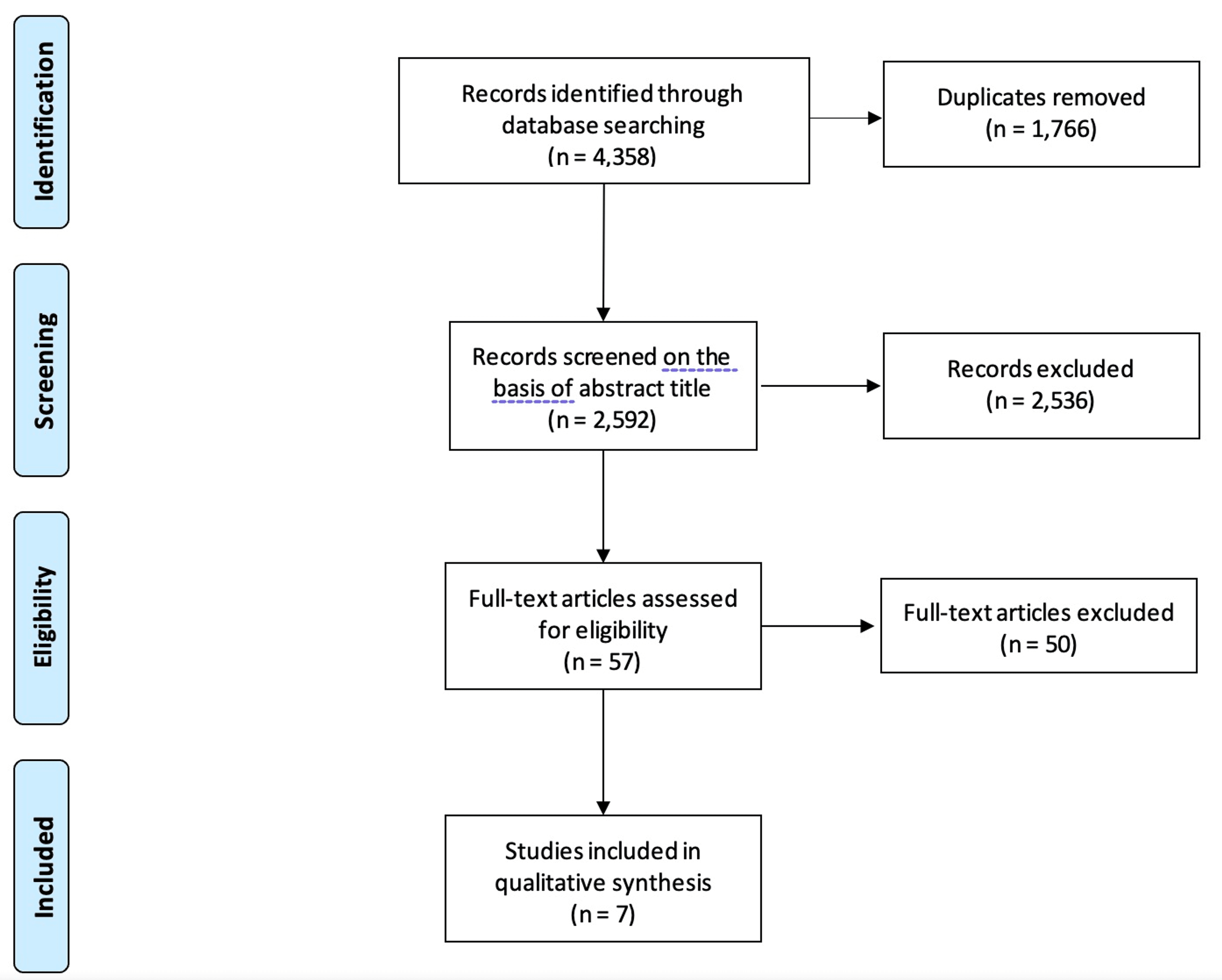
    A total of 4,358 citations were identified (Figure 1). After removing 1,766 duplicate citations, a total of 2,592 studies were assessed for eligibility based on title and abstract. Fifty-seven studies were eligible for full-text review. Ultimately, seven studies (n=398 cases) were included in this review.

    A descriptive summary of the included studies can be found in Tables 1–2. All studies were performed within the last ten years, except for one conducted in 2008 [15]. Three of the seven studies began their intervention programs upon discharge; two in the first week after surgery, one six weeks after, and one program at 12 weeks postoperatively. The mean program length was 8.0 ± 2.8 weeks. Six studies reported outcomes in the short-term period, and five reported outcomes in the long-term period.

    References Country N Mean Age (years) {08cd930984ace14b54ef017cfb82c397b10f0f7d5e03e6413ad93bb8e636217f} Female Mean BMI (kg/m2) Inclusion/exclusion
    Austin et al. [7] USA 108 62 44 29 Inclusion: age 18-80 years, primary unilateral THA for OA. Exclusion: inflammatory or post-traumatic arthritis, history of septic arthritis, revision or conversion THA, patients requiring discharge to skilled facility.
    Beaupre et al. [8] Canada 21 53 52 NR Inclusion: age <65 years, primary unilateral THA with lateral approach. Exclusion: history of developmental dysplasia of the hip.
    Coulter et al. [16] Australia 95 64a 58 NR Inclusion: age > 18 years, primary elective THA, patient lives locally. Exclusion: metastatic disease, pathologic fractures, infection, acute trauma, revision THA, inability to provide informed consent, UCLA scale < 2 preoperatively, unable to bear weight postoperatively, requiring inpatient rehabilitation postoperatively.
    Galea et al. [15] Australia 23 68 30 29 Inclusion: primary THA for OA, ability to walk 45 minutes independently with mobility aid, independence in sit to stand transfer, adequately comprehends written/verbal instructions. Exclusion: uncontrolled systemic disease, pre-existing neurologic/other orthopedic condition affecting walking, more than four weeks physiotherapy postoperatively, revision surgery or significant postoperative complications
    Mikkelsen et al. [17] Denmark 62 65 42 29 Inclusion: primary unilateral THA for OA, preoperative HOOS ADL < 67, age > 18 years, live within 30 km from hospital, willing to participate. Exclusion: BMI > 35, pre-planned supervised rehabilitation, pre-planned contralateral THA within six months, inability to speak or read Danish, mental or physical conditions impeding intervention
    Monaghan et al. [18] Ireland 63 68 32 27 Inclusion: primary THA for OA, age > 50 years, able to read/understand English, willing to participate. Exclusion: medical instability, underlying terminal disease, suspicion of infection following THA
    Okoro et al. [19] United Kingdom 26 64 58 NR Inclusion: unilateral THA for OA via posterior approach with 26/28/32 mm femoral head, joint affected is only arthritic joint, no evidence of inflammatory arthropathy. Exclusion: dementia, neurological impairment, cancer or other muscle wasting illness, unstable chronic or terminal illness, any co-morbid disease that contraindicates resistance training
    Total   398 64 46b 29c  
    References Cohorts Time from discharge to start Program length (weeks) Outcomes assessed Follow-Up Findings
    Austin et al. [7] C: 10 weeks unsupervised home exercise based on manual. I: 2 weeks in-home PT followed by 8 weeks outpatient PT 2-3x per week. Upon discharge 10 HHS, WOMAC, SF-36 Physical and Mental 1 month, 6-12 months No significant difference in any of measured outcomes
    Beaupre et al. [8] C: home exercise instructions for 4-6 weeks. I: outpatient rehabilitation 2x per week for 3 months. 6 weeks postoperatively 12 WOMAC, SF-36, 6MWT, gait analysis 4 months, 12 months No significant difference in any of measured outcomes
    Coulter et al. [16] C: continue exercises from hospital at home, gradually increasing number of repetitions. I: supervised program 1x per week involving circuit exercises for 4 weeks. Upon discharge 4 WOMAC, SF-36, TUG, UCLA activity index 5 weeks, 12 weeks, 26 weeks No significant difference in any of measured outcomes
    Galea et al. [15] C: illustrated guide of prescribed home exercises. I: 45 minute sessions 2x per week in supervised rehabilitation center-based program. First week after surgery 8 TUG, stair climb performance, 6MWT, WOMAC 8 weeks C: with faster TUG. No significant difference in other measures.
    Mikkelsen et al. [17] C: home-based exercises done 7x per week. I: home-based exercises done 5x per week with additional supervised resistance training sessions 2x per week. First week after surgery 10 Leg extension power, isometric hip muscle strength, STS, stair climb, 20 minute walking speed, HOOS 6 monthsb I: with larger increase in maximal walking speed and stair climb performance. No significant difference in other measures
    Monaghan et al. [18] C: postoperative home exercise booklet, advised to walk daily with crutches until review at 6 weeks. I: 35 minute class 2x per week for 6 weeks, no additional home exercises. 12 weeks postoperatively 6 WOMAC, VAS, 6MWT, SF-12, hip abduction strength 18 weeks I: with better improvement in 6MWT, WOMAC function, and SF-12 Physical. No significant differences in WOMAC pain or stiffness, SF-12 mental health score, VAS, or hip abduction strength
    Okoro et al. [19] C: unsupervised home exercises. I: weekly PT sessions for 6 weeks. Upon discharge 6 Maximum voluntary contraction of operated leg quad, STS, TUG, stair climb, 6MWT, lean mass of operative leg (DEXA) 6 weeks, 6 months, 9-12 months No significant difference in any of measured outcomes
    Total     8a      

    Data synthesis and meta-analysis

    Summaries for all outcome assessments are summarized in Table 3. No meta-analysis was conducted for long-term aerobic capacity as there were fewer than three studies with available data.

    Outcome Risk of bias Directness of evidence Heterogeneity Precision Publication bias Overall quality
    LE strength short term No downgrade No downgrade. No evidence of indirectness. I2 = 66{08cd930984ace14b54ef017cfb82c397b10f0f7d5e03e6413ad93bb8e636217f}, moderate heterogeneity. Downgraded one level Rated down one level. Moderate imprecision. No assessment of publication bias conducted. Low
    LE strength long term Downgraded by one level. Limitation primarily in selection of reported result. No downgrade. No evidence of indirectness. I2 = 22{08cd930984ace14b54ef017cfb82c397b10f0f7d5e03e6413ad93bb8e636217f}, low heterogeneity Rated down one level. Moderate imprecision. No assessment of publication bias conducted. Low
    Aerobic capacity short term No downgrade No downgrade. No evidence of indirectness. I2 = 12{08cd930984ace14b54ef017cfb82c397b10f0f7d5e03e6413ad93bb8e636217f}, low heterogeneity Rated down two levels. Significant imprecision. Very wide confidence interval. Well underneath suggested sample size. No assessment of publication bias conducted. Low
    Self-reported physical outcome short term Downgraded by one level. Limitation primarily in measurement of outcome. No downgrade. No evidence of indirectness. No downgrade. I2 = 0{08cd930984ace14b54ef017cfb82c397b10f0f7d5e03e6413ad93bb8e636217f}, low heterogeneity Rated down one level. Moderate imprecision. No assessment of publication bias conducted. Low
    Self-reported physical outcome long term Downgraded by one level. Limitation primarily in measurement of outcome. No downgrade. No evidence of indirectness. I2 = 0{08cd930984ace14b54ef017cfb82c397b10f0f7d5e03e6413ad93bb8e636217f}, low heterogeneity Rated down one level. Moderate imprecision. No assessment of publication bias conducted. Low
    Self-reported QoL short term Downgraded by one level. Limitation primarily in measurement of outcome. No downgrade. No evidence of indirectness. I2 = 0{08cd930984ace14b54ef017cfb82c397b10f0f7d5e03e6413ad93bb8e636217f}, low heterogeneity Rated down one level. Moderate imprecision. No assessment of publication bias conducted. Low
    Self-reported QoL long term Downgraded by one level. Limitation primarily in measurement of outcome. No downgrade. No evidence of indirectness. I2 = 0{08cd930984ace14b54ef017cfb82c397b10f0f7d5e03e6413ad93bb8e636217f}, low heterogeneity Rated down one level. Moderate imprecision. No assessment of publication bias conducted. Low

    Short-Term Outcomes

    Of the six studies included in the short-term outcome analysis, five found both interventions to be equivocal. One study found a statistically significant difference in physical function scores favoring the supervised cohort but was unable to determine if this difference was clinically significant. Based on five studies and a low level of certainty, no differences in short-term LES were found (SMD −0.04 [−0.50, 0.41]; I2=66{08cd930984ace14b54ef017cfb82c397b10f0f7d5e03e6413ad93bb8e636217f}; p=0.85) (Figure 2). There was no significant difference in short-term aerobic capacity based on three studies and a low level of certainty (SMD −0.50 [−36.88, 35.89]; I2=12{08cd930984ace14b54ef017cfb82c397b10f0f7d5e03e6413ad93bb8e636217f}; p=0.98) (Figure 3). Compared with unsupervised home exercise, the supervised exercise regimen was associated with improved self-reported physical function outcome scores based on six studies and a low level of certainty (SMD 0.23 [95{08cd930984ace14b54ef017cfb82c397b10f0f7d5e03e6413ad93bb8e636217f} CI, 0.02-0.44]; I2=0{08cd930984ace14b54ef017cfb82c397b10f0f7d5e03e6413ad93bb8e636217f}; p=0.04) (Figure 4). According to Cohen’s work [20,21], an SMD of 0.23 is considered a small effect size. No differences were found between the two cohorts with regard to short-term QoL scores based on six studies and a low level of certainty (SMD 0.15 [−0.07, 0.36]; I2=0{08cd930984ace14b54ef017cfb82c397b10f0f7d5e03e6413ad93bb8e636217f}; p=0.18) (Figure 5).

    Long-Term Outcomes

    No long-term outcome differences were identified between the unsupervised and supervised cohorts in this study. There was no significant difference observed with regards to long-term LES, based on four studies and a low level of certainty (SMD −0.19 [−0.52, 0.13]; I2=22{08cd930984ace14b54ef017cfb82c397b10f0f7d5e03e6413ad93bb8e636217f}; p=0.24) (Figure 6). Similarly, no differences were observed with regards to long-term patient-reported physical outcome scores, based on four studies and a low level of certainty (SMD 0.11 [−0.13, 0.36]; I2=0{08cd930984ace14b54ef017cfb82c397b10f0f7d5e03e6413ad93bb8e636217f}; p=0.37) (Figure 7), or long-term QoL scores based on four studies and a low level of certainty (SMD 0.19 [−0.06, 0.43]; I2=0{08cd930984ace14b54ef017cfb82c397b10f0f7d5e03e6413ad93bb8e636217f}; p=0.14) (Figure 8).

    Risk of bias

    The results of the quality appraisal are summarized in risk of bias summary plots in the appendices (Appendix Figures 9–15). The self-reported scores all had a high risk of bias, primarily due to bias in outcome measurement (Table 3). All outcomes were rated as low-quality evidence (Table 4). The primary reasons for the downgrade in quality were the risk of bias and imprecision. Publication bias was not assessed as there were fewer than 10 studies involved in each outcome.

    Outcome Supervised participants (n) Unsupervised participants (n) SMD/MD (95{08cd930984ace14b54ef017cfb82c397b10f0f7d5e03e6413ad93bb8e636217f} CI) Risk of bias Certainty of evidence
    LE strength short term 142 (5) 121 (5) −0.04 (−0.50, 0.41)a Some concerns Low ⨁⨁◯◯
    LE strength long term 112 (4) 95 (4) −0.19 (−0.52, 0.13)a High Low ⨁⨁◯◯
    Aerobic capacity short term 54 (3) 49 (3) −0.50 (−36.88, 35.89)b Some concerns Low ⨁⨁◯◯
    Self-reported physical outcome short term 176 (6) 169 (6) 0.23 (0.02, 0.44) a High Low ⨁⨁◯◯
    Self-reported physical outcome long term 133 (4) 126 (4) 0.11 (−0.13, 0.36)a High Low ⨁⨁◯◯
    Self-reported QoL short term 176 (6) 166 (6) 0.15 (−0.07, 0.36)a High Low ⨁⨁◯◯
    Self-reported QoL long term 133 (4) 126 (4) 0.19 (−0.06, 0.43)a High Low ⨁⨁◯◯

    Discussion

    Despite the historical emphasis on the importance of formal PT as a critical intervention after THA, this meta-analysis fails to demonstrate any benefit for PT over unsupervised home exercises aside from a small increase in short-term self-reported physical function scores. No significant differences were found with regards to short- and long-term changes from baseline for LES, aerobic capacity, and self-reported QoL scores, as well as long-term self-reported physical outcome scores. The results of our meta-analysis suggest that arthroplasty providers should question the routine use of formal PT for all primary THA patients.

    Other reviews conducted on formal PT programs following THA provide mixed results. Reviews conducted by Lowe et. al. [22] and Wijnen et. al. [23] did not perform a meta-analysis of physical function due to considerable variation in their included studies and were unable to provide a definitive conclusion; however, the latter reported an association with increased hip abductor muscle strength. A review conducted by Fatoye et al. [24] including RCTs and retrospective cohorts found that formal PT improved both physical function scores and hip abduction strength, but did not differentiate between short- or long-term follow-up points (follow-up ranged from 2 weeks to 12 months). Finally, Sauressig et al. [25] similarly conducted a meta-analysis and found no differences in self-reported physical function at 4 weeks, 12 weeks, 26 weeks, and one year.

    An important aspect of the current review separating it from these prior studies is the use of a clearly defined home exercise regimen, postoperative instructions, or a booklet on discharge as inclusion criteria, excluding those studies that did not specify any form of intervention for their control groups. This is important to ensure a low-cost, standardized control group to allow providers to understand the true effect of trained therapist-led PT for their patients. Without this aspect, studies with controls consisting of no intervention could potentially be included in this review, which could bias results toward the formal therapy groups and may not reflect the current state of most practices.

    Although postoperative rehabilitation has long been linked to a successful outcome following THA, the use of supervised PT has several drawbacks. Copay affordability, scheduling outpatient appointments, and arranging transportation have been demonstrated to be legitimate barriers to accessibility to outpatient PT for THA patients after discharge [10,11]. PT exercises can also be painful, as one of the most commonly asked questions regarding PT in the postoperative period after THA is about pain expectations [26]. Additionally, Yayac et al. demonstrated that TJA patients who underwent supervised PT had a significantly higher readmission rate than those who were discharged with self-directed home exercise regimens [9]. After controlling for patient demographics and comorbidities, they found that patients who had supervised home PT were over three times more likely to be readmitted in the 90-day postoperative period. Finally, the added cost associated with it must be considered. Yayac et al. [9] analyzed costs and outcomes in their retrospective study; while no clinically significant difference was found between function or quality of life between groups at two years, they concluded that formal therapy costs included 8{08cd930984ace14b54ef017cfb82c397b10f0f7d5e03e6413ad93bb8e636217f} of a 90-day episode of care costs for those receiving supervised home PT and outpatient PT and 3{08cd930984ace14b54ef017cfb82c397b10f0f7d5e03e6413ad93bb8e636217f} for those receiving supervised home PT only [9]. The results of the current study highlight the need to re-examine the application of routine PT following primary THA, especially with post-discharge costs accounting for up to 36{08cd930984ace14b54ef017cfb82c397b10f0f7d5e03e6413ad93bb8e636217f} of total costs in the bundle payments for TJA [27]. This is particularly salient in the context of a younger patient population, improvements in pain management, and emphasis on early mobilization postoperatively.

    The difference between the short-term, self-reported physical outcome scores we observed between supervised and unsupervised groups was largely driven by the findings of the study conducted by Monaghan et al. [18]. This RCT involving an exercise intervention consisting of land- and aquatic-based therapy performed between 12 and 18 weeks after surgery differed from the other studies in this review as it was the only one to include an aquatic component. Additionally, while they found a statistically significant relationship between their formal exercise intervention and improved Western Ontario and McMaster Universities Arthritis Index (WOMAC) scores, they were unable to state whether this translated to a clinically significant difference – an issue that has been raised with the use of WOMAC scores in other literature [28,29]. Our meta-analysis reported an effect size of 0.23, falling under the category of small effect size as described by Cohen [20,21]. However, this was the only measure demonstrating a difference between the two interventions with regard to short-term outcomes and was likely driven by a single study. In the three studies that analyzed data at 12 months, no significant differences were found in any of the assessed outcomes between the two groups [7,8,19]. At the six-month time point, Mikkelson et al. [17] found a larger increase in maximal walking speed and stair climb performance in the formal therapy group, while Johnsson et al. [30] reported increased intermediate-to-moderate pain at six months in the home exercise group. Two other studies at the six-month mark found no significant differences in physical or mental outcomes between home exercise and formal PT groups.

    Our results are limited by the number of studies and the quality of their respective data included in the meta-analysis. An important aspect to consider is the included patient population of each included study. Eligibility criteria may have preselected healthier and more motivated patients. In light of this, deconditioned patients with substantial functional deficits or medical comorbidities may still benefit from supervised PT. Additionally, there was substantial heterogeneity of exercise regimens across studies, including aspects such as methodology and duration of therapy, reflecting the likely variation in PT programs at different institutions. Furthermore, relying on patient-reported outcomes can be flawed, particularly in RCTs in which patients know they will be assigned to either supervised or unsupervised cohorts. It is likely that many patients in the intervention groups may be subject to bias – their assignment to formal PT protocols may influence and potentially inflate the supervised PT cohort self-reported outcome scores. The measurement of LES was also subject to variability as the studies assessing it used different methodologies to determine it. Additionally, within the unsupervised cohorts, we were unable to assess the degree of compliance; however, the intention-to-treat approach taken by most of these studies is likely to replicate true scenarios. Finally, previous studies have noted an 18-31{08cd930984ace14b54ef017cfb82c397b10f0f7d5e03e6413ad93bb8e636217f} cross-over rate from self-directed exercise to formal supervised therapy in total joint arthroplasty populations [7,31]. We were unable to account for patients who required crossover in our study – outcomes for these patients would be an area of interest in future studies. The strengths of this study include the narrow inclusion criteria, such as the inclusion of only RCTs or that the unsupervised cohorts must have clearly delineated instructions or booklets given to them, to allow for stronger conclusions than previous reviews on this subject.