Unsupervised Home Exercises Versus Formal Physical Therapy After Primary Total Hip Arthroplasty: A Systematic Review

Unsupervised Home Exercises Versus Formal Physical Therapy After Primary Total Hip Arthroplasty: A Systematic Review

Formal physical therapy (PT) after total joint arthroplasty (TJA) is commonly recommended and is often thought to be indispensable to favorable patient outcomes [1,2]. In contrast to the modern era, these surgeries were performed on older, less active patients with more severe diseases and deformities [3]. These earlier surgeries were more extensive, and weight bearing was often limited postoperatively [4,5]. Modern total hip arthroplasty (THA), however, is characterized by a younger, more active patient population along with dramatic advances in pain control and rapid recovery [4,5]. Despite the changing landscape, formal PT has maintained its status amongst providers and patients as an integral component to improving outcomes [2,6].

Several studies over the past few years have demonstrated that formal PT, whether inpatient or outpatient, may not have any benefit over home-based unsupervised exercise programs [7-9]. While this has led to a shift away from formal PT utilization by some, there are no guidelines to assist in determining which patients may benefit [7]. Reducing the routine use of formal PT to only those patients for whom it is warranted may offer several benefits. The responsibility of copays and transportation is often placed on the patient and, for many, can be a significant burden [10,11]. Additionally, with the increased interest in alternative healthcare models, the focus has shifted to finding methods to reduce episode-of-care costs [12,13]. The costs associated with formal PT after discharge are not trivial, comprising up to 8{08cd930984ace14b54ef017cfb82c397b10f0f7d5e03e6413ad93bb8e636217f} of total costs for TJA episodes of care [9].

The goal of this review was to assess the existing literature comparing outcomes of primary THA patients undergoing formal supervised PT to those with unsupervised home exercise programs through a systematic review and meta-analysis of randomized controlled trials (RCTs). To avoid intervention bias towards supervised home programs, we chose to only include studies that explicitly described unsupervised home exercise regimens. The primary aim was to assess changes in lower extremity strength (LES), aerobic capacity, and patient-reported physical outcome and quality of life (QoL) scores at zero to six months and six months to one year.

This systematic review and meta-analysis were conducted in accordance with the PRISMA (Preferred Reporting Items for Systematic Reviews and Meta-Analyses) guidelines and were registered in the PROSPERO International Prospective Register of Systematic Reviews (PROSPERO Identifier CRD42021228071).

Inclusion criteria

This review considered all English-language RCTs that compared objective measures and patient-reported outcomes (PROs) from patients with formal postoperative PT or supervised exercise programs to those with unsupervised home exercise interventions (defined as an explicitly stated form of home exercise program to be performed without direct supervision of a health professional). This also included written exercise instructions, video programs demonstrating exercises, or phone applications containing directions for exercises). The time period of interventions was limited to the period between discharge from hospitalization and six months postoperatively. Studies involving comparisons between only supervised cohorts, unsupervised cohorts, or without clear delineation of what each exercise intervention consists of were excluded, as were those involving preoperative exercise programs as the primary intervention.

Search strategy and study screening

With the assistance of an informationist, an electronic search was conducted of all published literature from database inception to December 14, 2020 from the following databases: PubMed, EMBASE, Web of Science, Scopus, Cochrane Library, and ClinicalTrials.gov. MeSH and Emtree terms were used alongside free text to enhance search sensitivity. Studies were screened based on titles and abstracts initially, with relevant studies subjected to full-text review. All screening was performed independently by two authors (YPC and HH). All disagreements were resolved through discussion, with input from the senior author (CAD) on an as-needed basis.

Quality appraisal

The Cochrane Risk of Bias Tool 2.0 was utilized to assess the five domains of potential bias: randomization process, deviations from intended intervention, missing outcome data, outcome measurement, and selection of reported results. The result for each domain was assigned risk scores of “low,” “some concern,” or “high.” A risk of bias assessment was made for each outcome measurement. The GRADE (Grading of Recommendations Assessment, Development, and Evaluation) system was utilized to appraise the quality of evidence included in this meta-analysis to ensure the reliability of its results.

Data extraction and statistical analysis

Data extraction was performed manually by three reviewers (YPC, HH, and ZW). Extracted descriptive variables included journal, year, and country of publication, number of cases, age, gender, body mass index, inclusion criteria, follow-up, type of intervention, time from discharge to intervention initiation, and intervention length. The outcomes of interest in this study changed from baseline data in LES (measured with a timed up-and-go test (TUG), sit-to-stand test, or hip abduction strength as measured by a dynamometer), aerobic capacity, and patient-reported physical function and QoL. Each outcome measure was divided into short-term recovery (<6 months from surgery; if multiple time points were observed <6 months from surgery, the closest one to the three-month postoperative point was chosen) and long-term recovery (≥6 months from surgery; if multiple time points were observed ≥6 months from surgery, the closest one to the one-year postoperative point was chosen) windows. Changes from baseline values were collected in the form of a mean and standard deviation (SD). When not available for change from baseline scores, they were imputed using previously established methods from the Cochrane Handbook for Systematic Reviews of Interventions [14]. For studies involving more than one outcome measure for each of the above categories, only one outcome measure was included. Outcome measures were pooled for meta-analysis if there were at least three studies with reported results. All the outcomes in this study consisted of continuous variables. Effect sizes were assessed using random effect models to calculate standardized mean differences (SMD) and 95{08cd930984ace14b54ef017cfb82c397b10f0f7d5e03e6413ad93bb8e636217f} confidence intervals (CI). Heterogeneity was tested using the I2 statistic. All meta-analysis calculations and subsequent forest plots were generated using Review Manager Software Version 5.4.1 (Copenhagen: The Nordic Cochrane Center, The Cochrane Collaboration, 2020).

Characteristics of included studies

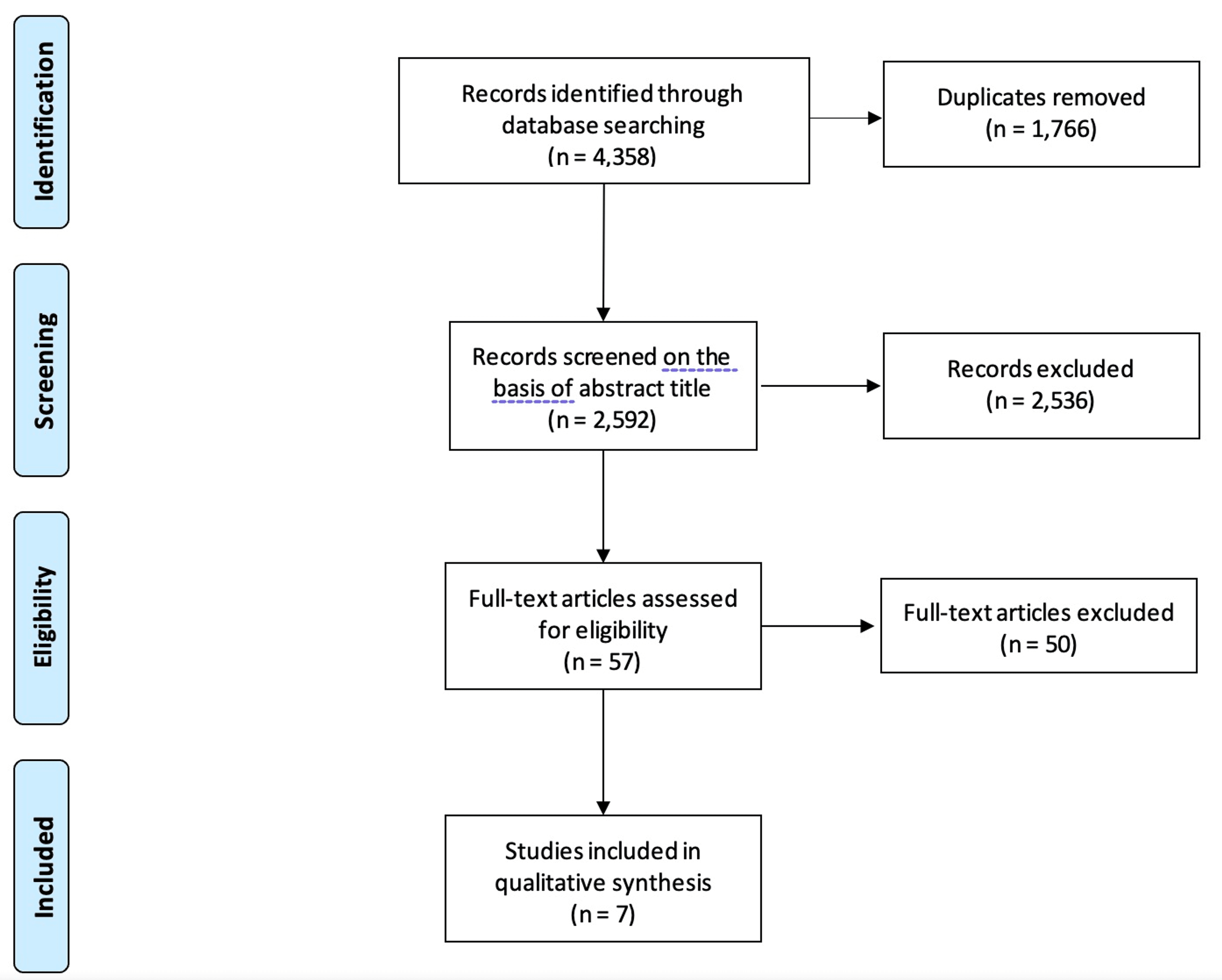
A total of 4,358 citations were identified (Figure 1). After removing 1,766 duplicate citations, a total of 2,592 studies were assessed for eligibility based on title and abstract. Fifty-seven studies were eligible for full-text review. Ultimately, seven studies (n=398 cases) were included in this review.
A descriptive summary of the included studies can be found in Tables 1–2. All studies were performed within the last ten years, except for one conducted in 2008 [15]. Three of the seven studies began their intervention programs upon discharge; two in the first week after surgery, one six weeks after, and one program at 12 weeks postoperatively. The mean program length was 8.0 ± 2.8 weeks. Six studies reported outcomes in the short-term period, and five reported outcomes in the long-term period.

References Country N Mean Age (years) {08cd930984ace14b54ef017cfb82c397b10f0f7d5e03e6413ad93bb8e636217f} Female Mean BMI (kg/m2) Inclusion/exclusion
Austin et al. [7] USA 108 62 44 29 Inclusion: age 18-80 years, primary unilateral THA for OA. Exclusion: inflammatory or post-traumatic arthritis, history of septic arthritis, revision or conversion THA, patients requiring discharge to skilled facility.
Beaupre et al. [8] Canada 21 53 52 NR Inclusion: age <65 years, primary unilateral THA with lateral approach. Exclusion: history of developmental dysplasia of the hip.
Coulter et al. [16] Australia 95 64a 58 NR Inclusion: age > 18 years, primary elective THA, patient lives locally. Exclusion: metastatic disease, pathologic fractures, infection, acute trauma, revision THA, inability to provide informed consent, UCLA scale < 2 preoperatively, unable to bear weight postoperatively, requiring inpatient rehabilitation postoperatively.
Galea et al. [15] Australia 23 68 30 29 Inclusion: primary THA for OA, ability to walk 45 minutes independently with mobility aid, independence in sit to stand transfer, adequately comprehends written/verbal instructions. Exclusion: uncontrolled systemic disease, pre-existing neurologic/other orthopedic condition affecting walking, more than four weeks physiotherapy postoperatively, revision surgery or significant postoperative complications
Mikkelsen et al. [17] Denmark 62 65 42 29 Inclusion: primary unilateral THA for OA, preoperative HOOS ADL < 67, age > 18 years, live within 30 km from hospital, willing to participate. Exclusion: BMI > 35, pre-planned supervised rehabilitation, pre-planned contralateral THA within six months, inability to speak or read Danish, mental or physical conditions impeding intervention
Monaghan et al. [18] Ireland 63 68 32 27 Inclusion: primary THA for OA, age > 50 years, able to read/understand English, willing to participate. Exclusion: medical instability, underlying terminal disease, suspicion of infection following THA
Okoro et al. [19] United Kingdom 26 64 58 NR Inclusion: unilateral THA for OA via posterior approach with 26/28/32 mm femoral head, joint affected is only arthritic joint, no evidence of inflammatory arthropathy. Exclusion: dementia, neurological impairment, cancer or other muscle wasting illness, unstable chronic or terminal illness, any co-morbid disease that contraindicates resistance training
Total   398 64 46b 29c  
References Cohorts Time from discharge to start Program length (weeks) Outcomes assessed Follow-Up Findings
Austin et al. [7] C: 10 weeks unsupervised home exercise based on manual. I: 2 weeks in-home PT followed by 8 weeks outpatient PT 2-3x per week. Upon discharge 10 HHS, WOMAC, SF-36 Physical and Mental 1 month, 6-12 months No significant difference in any of measured outcomes
Beaupre et al. [8] C: home exercise instructions for 4-6 weeks. I: outpatient rehabilitation 2x per week for 3 months. 6 weeks postoperatively 12 WOMAC, SF-36, 6MWT, gait analysis 4 months, 12 months No significant difference in any of measured outcomes
Coulter et al. [16] C: continue exercises from hospital at home, gradually increasing number of repetitions. I: supervised program 1x per week involving circuit exercises for 4 weeks. Upon discharge 4 WOMAC, SF-36, TUG, UCLA activity index 5 weeks, 12 weeks, 26 weeks No significant difference in any of measured outcomes
Galea et al. [15] C: illustrated guide of prescribed home exercises. I: 45 minute sessions 2x per week in supervised rehabilitation center-based program. First week after surgery 8 TUG, stair climb performance, 6MWT, WOMAC 8 weeks C: with faster TUG. No significant difference in other measures.
Mikkelsen et al. [17] C: home-based exercises done 7x per week. I: home-based exercises done 5x per week with additional supervised resistance training sessions 2x per week. First week after surgery 10 Leg extension power, isometric hip muscle strength, STS, stair climb, 20 minute walking speed, HOOS 6 monthsb I: with larger increase in maximal walking speed and stair climb performance. No significant difference in other measures
Monaghan et al. [18] C: postoperative home exercise booklet, advised to walk daily with crutches until review at 6 weeks. I: 35 minute class 2x per week for 6 weeks, no additional home exercises. 12 weeks postoperatively 6 WOMAC, VAS, 6MWT, SF-12, hip abduction strength 18 weeks I: with better improvement in 6MWT, WOMAC function, and SF-12 Physical. No significant differences in WOMAC pain or stiffness, SF-12 mental health score, VAS, or hip abduction strength
Okoro et al. [19] C: unsupervised home exercises. I: weekly PT sessions for 6 weeks. Upon discharge 6 Maximum voluntary contraction of operated leg quad, STS, TUG, stair climb, 6MWT, lean mass of operative leg (DEXA) 6 weeks, 6 months, 9-12 months No significant difference in any of measured outcomes
Total     8a      

Data synthesis and meta-analysis

Summaries for all outcome assessments are summarized in Table 3. No meta-analysis was conducted for long-term aerobic capacity as there were fewer than three studies with available data.

Outcome Risk of bias Directness of evidence Heterogeneity Precision Publication bias Overall quality
LE strength short term No downgrade No downgrade. No evidence of indirectness. I2 = 66{08cd930984ace14b54ef017cfb82c397b10f0f7d5e03e6413ad93bb8e636217f}, moderate heterogeneity. Downgraded one level Rated down one level. Moderate imprecision. No assessment of publication bias conducted. Low
LE strength long term Downgraded by one level. Limitation primarily in selection of reported result. No downgrade. No evidence of indirectness. I2 = 22{08cd930984ace14b54ef017cfb82c397b10f0f7d5e03e6413ad93bb8e636217f}, low heterogeneity Rated down one level. Moderate imprecision. No assessment of publication bias conducted. Low
Aerobic capacity short term No downgrade No downgrade. No evidence of indirectness. I2 = 12{08cd930984ace14b54ef017cfb82c397b10f0f7d5e03e6413ad93bb8e636217f}, low heterogeneity Rated down two levels. Significant imprecision. Very wide confidence interval. Well underneath suggested sample size. No assessment of publication bias conducted. Low
Self-reported physical outcome short term Downgraded by one level. Limitation primarily in measurement of outcome. No downgrade. No evidence of indirectness. No downgrade. I2 = 0{08cd930984ace14b54ef017cfb82c397b10f0f7d5e03e6413ad93bb8e636217f}, low heterogeneity Rated down one level. Moderate imprecision. No assessment of publication bias conducted. Low
Self-reported physical outcome long term Downgraded by one level. Limitation primarily in measurement of outcome. No downgrade. No evidence of indirectness. I2 = 0{08cd930984ace14b54ef017cfb82c397b10f0f7d5e03e6413ad93bb8e636217f}, low heterogeneity Rated down one level. Moderate imprecision. No assessment of publication bias conducted. Low
Self-reported QoL short term Downgraded by one level. Limitation primarily in measurement of outcome. No downgrade. No evidence of indirectness. I2 = 0{08cd930984ace14b54ef017cfb82c397b10f0f7d5e03e6413ad93bb8e636217f}, low heterogeneity Rated down one level. Moderate imprecision. No assessment of publication bias conducted. Low
Self-reported QoL long term Downgraded by one level. Limitation primarily in measurement of outcome. No downgrade. No evidence of indirectness. I2 = 0{08cd930984ace14b54ef017cfb82c397b10f0f7d5e03e6413ad93bb8e636217f}, low heterogeneity Rated down one level. Moderate imprecision. No assessment of publication bias conducted. Low

Short-Term Outcomes

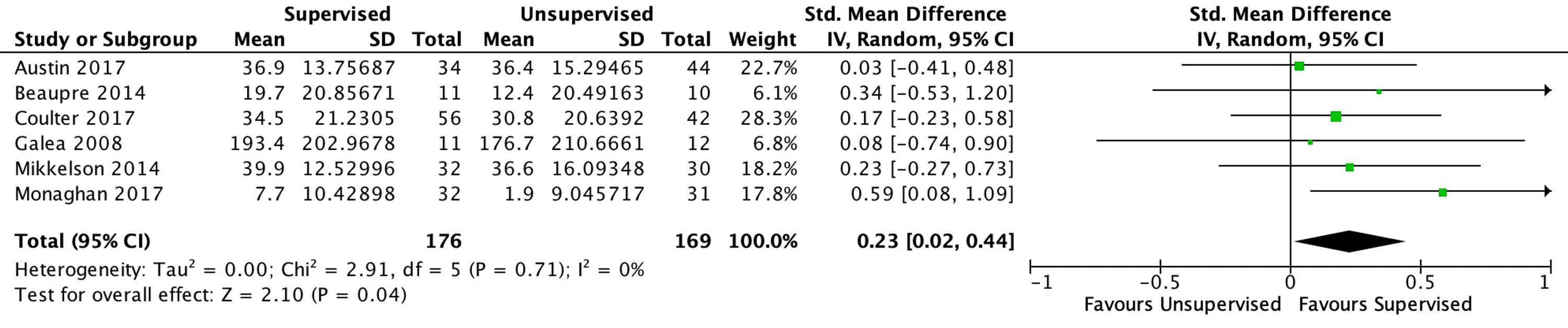
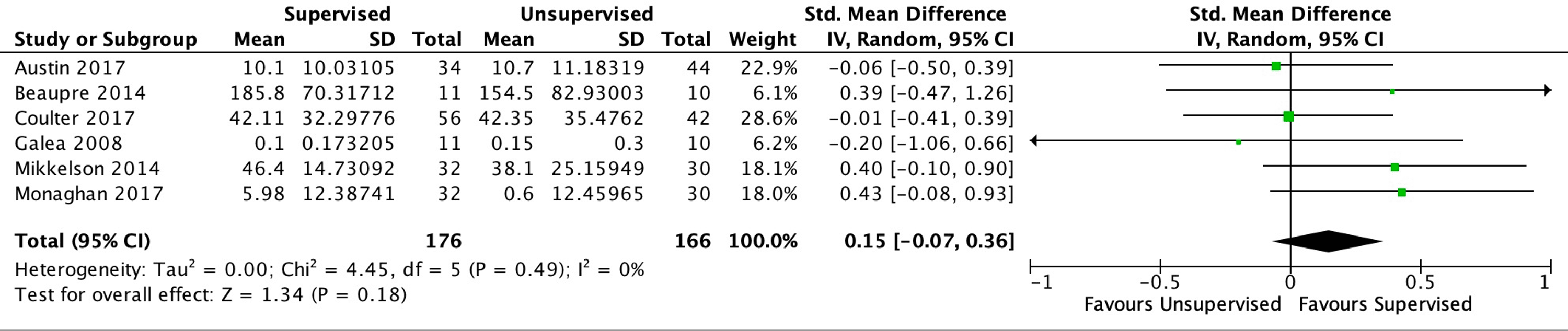
Of the six studies included in the short-term outcome analysis, five found both interventions to be equivocal. One study found a statistically significant difference in physical function scores favoring the supervised cohort but was unable to determine if this difference was clinically significant. Based on five studies and a low level of certainty, no differences in short-term LES were found (SMD −0.04 [−0.50, 0.41]; I2=66{08cd930984ace14b54ef017cfb82c397b10f0f7d5e03e6413ad93bb8e636217f}; p=0.85) (Figure 2). There was no significant difference in short-term aerobic capacity based on three studies and a low level of certainty (SMD −0.50 [−36.88, 35.89]; I2=12{08cd930984ace14b54ef017cfb82c397b10f0f7d5e03e6413ad93bb8e636217f}; p=0.98) (Figure 3). Compared with unsupervised home exercise, the supervised exercise regimen was associated with improved self-reported physical function outcome scores based on six studies and a low level of certainty (SMD 0.23 [95{08cd930984ace14b54ef017cfb82c397b10f0f7d5e03e6413ad93bb8e636217f} CI, 0.02-0.44]; I2=0{08cd930984ace14b54ef017cfb82c397b10f0f7d5e03e6413ad93bb8e636217f}; p=0.04) (Figure 4). According to Cohen’s work [20,21], an SMD of 0.23 is considered a small effect size. No differences were found between the two cohorts with regard to short-term QoL scores based on six studies and a low level of certainty (SMD 0.15 [−0.07, 0.36]; I2=0{08cd930984ace14b54ef017cfb82c397b10f0f7d5e03e6413ad93bb8e636217f}; p=0.18) (Figure 5).


Long-Term Outcomes

No long-term outcome differences were identified between the unsupervised and supervised cohorts in this study. There was no significant difference observed with regards to long-term LES, based on four studies and a low level of certainty (SMD −0.19 [−0.52, 0.13]; I2=22{08cd930984ace14b54ef017cfb82c397b10f0f7d5e03e6413ad93bb8e636217f}; p=0.24) (Figure 6). Similarly, no differences were observed with regards to long-term patient-reported physical outcome scores, based on four studies and a low level of certainty (SMD 0.11 [−0.13, 0.36]; I2=0{08cd930984ace14b54ef017cfb82c397b10f0f7d5e03e6413ad93bb8e636217f}; p=0.37) (Figure 7), or long-term QoL scores based on four studies and a low level of certainty (SMD 0.19 [−0.06, 0.43]; I2=0{08cd930984ace14b54ef017cfb82c397b10f0f7d5e03e6413ad93bb8e636217f}; p=0.14) (Figure 8).


Risk of bias

The results of the quality appraisal are summarized in risk of bias summary plots in the appendices (Appendix Figures 9–15). The self-reported scores all had a high risk of bias, primarily due to bias in outcome measurement (Table 3). All outcomes were rated as low-quality evidence (Table 4). The primary reasons for the downgrade in quality were the risk of bias and imprecision. Publication bias was not assessed as there were fewer than 10 studies involved in each outcome.

Outcome Supervised participants (n) Unsupervised participants (n) SMD/MD (95{08cd930984ace14b54ef017cfb82c397b10f0f7d5e03e6413ad93bb8e636217f} CI) Risk of bias Certainty of evidence
LE strength short term 142 (5) 121 (5) −0.04 (−0.50, 0.41)a Some concerns Low ⨁⨁◯◯
LE strength long term 112 (4) 95 (4) −0.19 (−0.52, 0.13)a High Low ⨁⨁◯◯
Aerobic capacity short term 54 (3) 49 (3) −0.50 (−36.88, 35.89)b Some concerns Low ⨁⨁◯◯
Self-reported physical outcome short term 176 (6) 169 (6) 0.23 (0.02, 0.44) a High Low ⨁⨁◯◯
Self-reported physical outcome long term 133 (4) 126 (4) 0.11 (−0.13, 0.36)a High Low ⨁⨁◯◯
Self-reported QoL short term 176 (6) 166 (6) 0.15 (−0.07, 0.36)a High Low ⨁⨁◯◯
Self-reported QoL long term 133 (4) 126 (4) 0.19 (−0.06, 0.43)a High Low ⨁⨁◯◯

Discussion

Despite the historical emphasis on the importance of formal PT as a critical intervention after THA, this meta-analysis fails to demonstrate any benefit for PT over unsupervised home exercises aside from a small increase in short-term self-reported physical function scores. No significant differences were found with regards to short- and long-term changes from baseline for LES, aerobic capacity, and self-reported QoL scores, as well as long-term self-reported physical outcome scores. The results of our meta-analysis suggest that arthroplasty providers should question the routine use of formal PT for all primary THA patients.

Other reviews conducted on formal PT programs following THA provide mixed results. Reviews conducted by Lowe et. al. [22] and Wijnen et. al. [23] did not perform a meta-analysis of physical function due to considerable variation in their included studies and were unable to provide a definitive conclusion; however, the latter reported an association with increased hip abductor muscle strength. A review conducted by Fatoye et al. [24] including RCTs and retrospective cohorts found that formal PT improved both physical function scores and hip abduction strength, but did not differentiate between short- or long-term follow-up points (follow-up ranged from 2 weeks to 12 months). Finally, Sauressig et al. [25] similarly conducted a meta-analysis and found no differences in self-reported physical function at 4 weeks, 12 weeks, 26 weeks, and one year.

An important aspect of the current review separating it from these prior studies is the use of a clearly defined home exercise regimen, postoperative instructions, or a booklet on discharge as inclusion criteria, excluding those studies that did not specify any form of intervention for their control groups. This is important to ensure a low-cost, standardized control group to allow providers to understand the true effect of trained therapist-led PT for their patients. Without this aspect, studies with controls consisting of no intervention could potentially be included in this review, which could bias results toward the formal therapy groups and may not reflect the current state of most practices.

Although postoperative rehabilitation has long been linked to a successful outcome following THA, the use of supervised PT has several drawbacks. Copay affordability, scheduling outpatient appointments, and arranging transportation have been demonstrated to be legitimate barriers to accessibility to outpatient PT for THA patients after discharge [10,11]. PT exercises can also be painful, as one of the most commonly asked questions regarding PT in the postoperative period after THA is about pain expectations [26]. Additionally, Yayac et al. demonstrated that TJA patients who underwent supervised PT had a significantly higher readmission rate than those who were discharged with self-directed home exercise regimens [9]. After controlling for patient demographics and comorbidities, they found that patients who had supervised home PT were over three times more likely to be readmitted in the 90-day postoperative period. Finally, the added cost associated with it must be considered. Yayac et al. [9] analyzed costs and outcomes in their retrospective study; while no clinically significant difference was found between function or quality of life between groups at two years, they concluded that formal therapy costs included 8{08cd930984ace14b54ef017cfb82c397b10f0f7d5e03e6413ad93bb8e636217f} of a 90-day episode of care costs for those receiving supervised home PT and outpatient PT and 3{08cd930984ace14b54ef017cfb82c397b10f0f7d5e03e6413ad93bb8e636217f} for those receiving supervised home PT only [9]. The results of the current study highlight the need to re-examine the application of routine PT following primary THA, especially with post-discharge costs accounting for up to 36{08cd930984ace14b54ef017cfb82c397b10f0f7d5e03e6413ad93bb8e636217f} of total costs in the bundle payments for TJA [27]. This is particularly salient in the context of a younger patient population, improvements in pain management, and emphasis on early mobilization postoperatively.

The difference between the short-term, self-reported physical outcome scores we observed between supervised and unsupervised groups was largely driven by the findings of the study conducted by Monaghan et al. [18]. This RCT involving an exercise intervention consisting of land- and aquatic-based therapy performed between 12 and 18 weeks after surgery differed from the other studies in this review as it was the only one to include an aquatic component. Additionally, while they found a statistically significant relationship between their formal exercise intervention and improved Western Ontario and McMaster Universities Arthritis Index (WOMAC) scores, they were unable to state whether this translated to a clinically significant difference – an issue that has been raised with the use of WOMAC scores in other literature [28,29]. Our meta-analysis reported an effect size of 0.23, falling under the category of small effect size as described by Cohen [20,21]. However, this was the only measure demonstrating a difference between the two interventions with regard to short-term outcomes and was likely driven by a single study. In the three studies that analyzed data at 12 months, no significant differences were found in any of the assessed outcomes between the two groups [7,8,19]. At the six-month time point, Mikkelson et al. [17] found a larger increase in maximal walking speed and stair climb performance in the formal therapy group, while Johnsson et al. [30] reported increased intermediate-to-moderate pain at six months in the home exercise group. Two other studies at the six-month mark found no significant differences in physical or mental outcomes between home exercise and formal PT groups.

Our results are limited by the number of studies and the quality of their respective data included in the meta-analysis. An important aspect to consider is the included patient population of each included study. Eligibility criteria may have preselected healthier and more motivated patients. In light of this, deconditioned patients with substantial functional deficits or medical comorbidities may still benefit from supervised PT. Additionally, there was substantial heterogeneity of exercise regimens across studies, including aspects such as methodology and duration of therapy, reflecting the likely variation in PT programs at different institutions. Furthermore, relying on patient-reported outcomes can be flawed, particularly in RCTs in which patients know they will be assigned to either supervised or unsupervised cohorts. It is likely that many patients in the intervention groups may be subject to bias – their assignment to formal PT protocols may influence and potentially inflate the supervised PT cohort self-reported outcome scores. The measurement of LES was also subject to variability as the studies assessing it used different methodologies to determine it. Additionally, within the unsupervised cohorts, we were unable to assess the degree of compliance; however, the intention-to-treat approach taken by most of these studies is likely to replicate true scenarios. Finally, previous studies have noted an 18-31{08cd930984ace14b54ef017cfb82c397b10f0f7d5e03e6413ad93bb8e636217f} cross-over rate from self-directed exercise to formal supervised therapy in total joint arthroplasty populations [7,31]. We were unable to account for patients who required crossover in our study – outcomes for these patients would be an area of interest in future studies. The strengths of this study include the narrow inclusion criteria, such as the inclusion of only RCTs or that the unsupervised cohorts must have clearly delineated instructions or booklets given to them, to allow for stronger conclusions than previous reviews on this subject.

Why is carcinogen ethylene oxide used to sterilize medical devices?

Why is carcinogen ethylene oxide used to sterilize medical devices?

Frunk’s therapies went as planned and the cancer by no means returned. It was not right until 2018, when the EPA commenced outreach to communities specified high-danger for EtO exposure, that she uncovered the doable result in of her most cancers.

She is now a single of far more than 800 people today in Illinois who have filed private harm lawsuits in opposition to Sterigenics for its chemical emissions, which they say caused their cancers.

A Cook dinner County, Illinois, jury decided the first these types of circumstance Sept. 19, and awarded the plaintiff $363 million. Sue Kamuda, 70, alleged she developed breast most cancers right after living 1-third of a mile from the plant for 37 several years. She also alleged her son, Brian Kamuda, was diagnosed with non-Hodgkin’s lymphoma in 2021 simply because he grew up there. Their accommodate marked the commencing of a long authorized fight with regards to whether organizations these types of as Sterigenics can be held liable in civil court for elevated most cancers costs in communities wherever it operated. [This paragraph has been updated to reflect the outcome of this lawsuit, which was announced after the print edition of Modern Healthcare went to press.]

Other states are next Illinois. In Georgia, the Environmental Safety Division started out checking EtO degrees near sterilization crops and requesting stricter emissions controls. Facilities operate by medical machine companies Sterigenics and Becton Dickinson signed consent orders in 2019 to quickly close their crops in the point out to strengthen emission protections and carry out air tests.

These corporations have considering the fact that confronted dozens of lawsuits by Georgians who allege their functions brought about cancer. Ga regulators also identified what’s recognised as fugitive emissions in a warehouse exactly where companies sent professional medical units soon after remaining sterilized, which elevated alarms about a new supply of ethylene oxide launch not beforehand deemed.

A facility in Grand Rapids, Michigan, run by healthcare device manufacturer Viant, was shut down and fined in December 2019 by the Michigan Section of Environmental Top quality after the condition uncovered fugitive emissions in a parking good deal in the vicinity of the facility that exceeded the allowable security boundaries.

Previous yr, New Mexico Legal professional Typical Hector Balderas (D) sued Sterigenics for emissions at a facility in San Teresa that opened in 1989. The internet site sterilized 2.5 million clinical products each and every working day, the enterprise disclosed in legal filings. If it ended up to shut down, there would not be plenty of global capacity to make up the perform, claimed Heather Mallinckrodt, associate vice president of agreement and application expert services at consulting company Vizient, which does business with businesses that sterilize health care items, together with Becton Dickinson.

“When [health systems] can not get individuals products, they could have to hold off a method. They may possibly have to use an alternate solution, which the clinicians aren’t as common with,” Mallinckrodt stated.

Amid the disruption, manufacturers have had to triage the launch of medical gadgets by way of a bottlenecked sterilization approach. Products for the most higher-hazard methods and illnesses are prioritized, which threatens shortages of other products. Brands have started to deliver sterilization in-home to greater regulate their inventory, Mallinckrodt claimed.

Preserving Equality in Online Education

Preserving Equality in Online Education

The silver bullet of engineering has not only managed to pierce sectors like finance, law, healthcare, and many others. but also the predominantly conservative sector of training. Pandemic was the catalyst for steering a range of investments and innovation in the online discovering area. Not incredibly, the marketplace is set to increase by $2.28 billion through 2022-2026, progressing at a CAGR of 19.50{08cd930984ace14b54ef017cfb82c397b10f0f7d5e03e6413ad93bb8e636217f} all through the forecast period of time.[1]

The speedy adoption and will need of on the net instruction platforms have impressed pedagogical methods to make tech-dependent education extra engaging and interactive. It is anticipated that integration of blockchain, gamification, synthetic intelligence, immersive systems, mastering analytics, and so on. will make the on the web understanding expertise far more adaptative and personalised to the demands of each individual person scholar.

Even though the world of virtual instruction could have opened rewarding avenues, its impact dwells in another way on college students, teachers, educational institutions, parents, and the industry as a total.

Supreme Court’s Watch on Online Education and learning

Through the pandemic, educational facilities switched to the digital medium, and as these types of, the proper to training was just about denied to young children belonging to the disadvantaged team (DG) or economically weaker portion (EWS). The Supreme Court, headed by a 3-choose bench of Justices D.Y. Chandrachud, Vikram Nath and B.V. Nagarathna in Oct 2021, said that the digital divide, from the backdrop of the COVID pandemic, has generated “stark implications.”

The top courtroom was listening to a plea by the Action Committee on Unaided Recognised Private Educational institutions in connection with the access to engineering by little ones who are attending on the internet lessons and the funding wanted for the exact same. It was a petition submitted by the non-public college managements tough the Delhi High Courtroom order of September 2020 directing them to deliver their 25{08cd930984ace14b54ef017cfb82c397b10f0f7d5e03e6413ad93bb8e636217f} quota of EWS/DG pupils on the internet services free of charge of charge. The Substantial Courtroom had said that the colleges could get themselves reimbursed from the govt.

The Delhi federal government appealed to the Supreme Court in opposition to the Superior Court’s purchase, indicating it experienced no methods to reimburse the university for the on-line gizmos. Nevertheless the Supreme Court experienced stayed the Substantial Courtroom buy in February 2021, the bench led by Justice Chandrachud mentioned each the Centre and states like Delhi could not bow out of their tasks to young small children.

The courtroom observed that the disparity exposed by on the net classes experienced been coronary heart-rending. The engineering gap brought on by on the net lessons defeated the fundamental right of every inadequate kid to study in mainstream educational institutions. The court also dominated that the ideal to schooling for very little young children hinged on who could afford devices for on the web lessons and who could not. Quite a few learners had to take temporary breaks, and in the worst circumstance, drop out, thanks to a deficiency of means to access the online, for on-line training as their families could not find the money for them. Moreover, the chance of the kids, who dropped out of school, getting drawn into boy or girl labour or boy or girl trafficking was large. The demands of younger small children, who are the upcoming of the place, cannot be dismissed, it mentioned. Though colleges were being gradually opening due to the receding curve of the pandemic, the need to have to offer satisfactory laptop or computer-dependent devices and entry to on-line facilities for small children is of utmost significance.

The needs of younger young children who depict the foreseeable future of the country are not able to just be overlooked. A remedy must be devised at all ranges of Federal government – State and Centre to guarantee that ample facilities are manufactured readily available to children throughout social strata so that accessibility to education and learning is not denied to these who deficiency resources. If not, the whole reason of the Correct to Training Act, allowing for EWS learners to study along with mainstream college students even in unaided educational institutions, will be defeated.

The courtroom further held that Short article 21A (the suitable to absolutely free and obligatory training for kids aged in between 6 and 14) must be a truth. It directed the Delhi government to develop a system to assist children in the EWS category and included that the Centre and Condition governments really should jointly function to acquire a practical and long lasting answer to be certain little ones are not denied education and learning because of to lack of methods. The explained bench further explained: “It is important for the Delhi government to come with a system to uphold the salutary aim of the RTE Act. Centre to also coordinate with state governments and share concurrent responsibilities for the applications of funding.”

It also appreciated the Delhi Large Court’s order directing the Delhi government to give personal computer-dependent machines and an world-wide-web package absolutely free of charge to EWS little ones in personal and government universities. The Bench questioned the Delhi Authorities to occur out with a prepare to effectuate the ‘salutary object’ upheld in the Higher Court’s determination. The courtroom claimed the Centre should join in the consultations. The problems elevated in the existing proceedings will not only go over unaided colleges but also federal government and aided faculties. The Bench issued see in the non-public school’s management petition and purchased it to be tagged with the pending Delhi Governing administration petition.

Tips for Electronic Instruction

COVID 19 accelerated the adoption of know-how and brought about a dynamic shift in the sector. However, it was also realised that engineering may perhaps enhance the excellent of dissemination of training but it can hardly ever replace the classroom educating and studying practical experience. Though adopting the blended and hybrid product of education, a equilibrium wants to be struck in discovering and having gain of technological innovation, and serving to small children develop into socially and emotionally balanced men and women and liable citizens.

Bearing that in head, Pragyata Guidelines for Electronic Training were introduced by the Ministry of Human Source Development’s Division of College Training and Literacy. At the commencing of the tutorial calendar year 2021-22, the college training division informed all the faculties to observe these suggestions even though conducting online courses. In accordance to the guidelines, the most display screen time for every day for kindergarten/preschool pupils has been confined to 45 minutes. On the other hand, for classes 1 to 5, colleges can conduct two sessions of 1.5 hrs for every day for not far more than 5 times in a week. For classes 6 to 8, display time has been restricted to 2 hours and for lessons 9 to 12, constrained to a optimum of 3 several hours for each working day.

The Two Sides of On line Learning

Online courses give a relaxed finding out setting for students and provide great progress chances, but it does instil a sense of isolation. Students, specifically all those belonging to more youthful age teams, prosper in a socially simulated natural environment. Even so, provided the set-up of on the net lessons, children are unsuccessful to create the capability to discover social norms and etiquettes. Additional, on the web courses also limit the time and attention teachers can extend to their learners. As a consequence, college students that require excess notice and guidance fail to execute effectively. Also, on-line training may possibly be obtainable, but it is not affordable. Virtual understanding necessitates highly-priced gadgets like computers, laptops, tablets, or smartphones. Hence, students in the economically weaker sections are still left driving.

On the additionally side, exhaustion and included prices of commuting are averted in on line instruction. In addition, on-line understanding platforms features a wide variety of programs and programmes that empower learners to check out alternatives outside the realm of their curriculum. What’s more, considering the fact that it is not doable for instructors to consistently monitor the routines of all students, on the internet courses instil a feeling of accountability and self-willpower in them as they are produced to realise that their actions and negligence will have a extensive-expression affect on their potential.

Mapping and understanding the positives and negatives of on line instruction will enable educational institutes and the ed-tech market to pioneer strategies for more economical supply of schooling. At the very same time, the legislature ought to consider a pro-lively stance in making certain that the fundamental proper to schooling is shielded in all way and kinds without any compromise on the well-staying of learners.

Some N.J. school workers will pay more for health benefits next year as state approves rate hike

Some N.J. school workers will pay more for health benefits next year as state approves rate hike

Days after point out and neighborhood staff were being strike with hikes, a state board on Monday accredited a double-digit improve on well being insurance policies rates for some instructors and school staff in New Jersey upcoming year.

The state’s College Employees’ Overall health Benefits Fee voted 5-1 to raise fees about 15{08cd930984ace14b54ef017cfb82c397b10f0f7d5e03e6413ad93bb8e636217f} for the 2023 calendar calendar year for these enrolled in the state’s wellness rewards software for university personnel.

The will increase signify staff will pay out extra out of pocket and districts will shoulder larger fees, which could in flip have an impact on taxpayers as a result of possibly increased property taxes or cuts to plans and staff. New Jerseyans by now pay out the optimum assets taxes in the country on average, and the most significant portion of their invoice goes to schools.

How substantially college districts shell out to deal with insurance policies prices, when compared to how considerably workforce pay back may differ by district, relying on what unions have negotiated. Districts typically go over the bulk of expenditures, with staff spending the rest.

Monday’s vote arrives 5 times immediately after a separate point out health board voted to approve controversial double-digit fee hikes on overall health insurance options that deal with additional than 800,000 condition and community governing administration personnel. A very last-moment offer in between Gov. Phil Murphy’s administration and labor unions limited the burden for state workforce. Options for municipal and county personnel will boost by just about 23{08cd930984ace14b54ef017cfb82c397b10f0f7d5e03e6413ad93bb8e636217f}.

Point out officers have explained the boosts are the consequence of various components, like the amplified price tag of health and fitness treatment, inflation, and the lingering consequences of the coronavirus pandemic.

The hike accredited Monday affects only university districts and county faculties that utilize the state’s overall health program. Other districts get their insurance policy by means of private options.

About 50 {08cd930984ace14b54ef017cfb82c397b10f0f7d5e03e6413ad93bb8e636217f} of New Jersey’s 600 districts acquire portion in the point out program. As of July, there have been a lot more than 150,000 people lined by the application, according to the condition Treasurer’s Office environment.

The New Jersey School Boards Affiliation opposed the decision, expressing the will increase are “far higher” than people in current situations.

The group also famous the increases arrive after numerous district budgets have by now been finalized, which could drive college boards to slash packages or hearth workers.

“The transfer could have a really adverse affect on district budgets — and eventually undermines scholar achievement,” NJSBA President Irene LeFebvre said in a assertion.

Dr. Timothy Purnell, the group’s govt director, identified as on Murphy and the point out Legislature to “provide relief to community boards that have been afflicted by this.”

Carl Tanksley, the NJSBA’s acting typical counsel and its consultant on the wellbeing benefits commission, cast the only no vote Monday.

The New Jersey Training Affiliation, the state’s largest teachers union, mentioned the raises occur following two years of decreases in the quality amount for in health and fitness strategies.

“Nonetheless, an increase of that measurement is usually a trigger for concern,” NJEA spokesman Steven Baker stated. “That is why we demanded specific facts on the increase and did not vote on premiums till we had that info.”

Baker urged NJEA associates to instead enroll in the two-year-old New Jersey Educator Overall health System, which he claimed “provides substantial high quality coverage at a considerably a lot more reasonably priced charge to our customers.”

Danielle Currie, a spokeswoman for the state Treasurer’s Office environment, stated “we share the problems concerning the raise in premiums and the effect it will have on general public employees and businesses.”

But Currie famous the course of action for placing rates is set by condition regulation, and the prices are “largely formulaic, driven by the earlier year’s real utilization and projected costs, and ultimately made a decision on by the Well being Positive aspects Commissions.”

The panels that approve insurance coverage fees for New Jersey general public staff consist of equally authorities officers and union associates.

NJ Advance Media workers author Derek Corridor contributed to this report.

Our journalism requires your aid. Make sure you subscribe these days to NJ.com.

Brent Johnson could be arrived at at bjohnson@njadvancemedia.com. Comply with him at @johnsb01.

Tina Kelley might be achieved at tkelley@njadvancemedia.com.

WELL Health to Participate in the 22nd Annual Healthcare Summit

WELL Health to Participate in the 22nd Annual Healthcare Summit

VANCOUVER, BC, Sept. 19, 2022 /PRNewswire/ – Well Health Systems Corp. (TSX: Very well) ( OTCQX: WHTCF) (the “Organization” or “Well“), a digital healthcare firm focused on positively impacting overall health outcomes by leveraging technologies to empower health care practitioners and their clients globally, is happy to announce its participation in the 22nd Once-a-year Health care Summit on September 22-23, 2022 in Vancouver, BC.

The Healthcare Summit provides with each other above 50 countrywide and worldwide subject matter make a difference experts and leaders in digital overall health technologies, personalized drugs, wellness innovation, value-based mostly healthcare, and genomics.  Representing Nicely at the summit will be Hamed Shahbazi, Founder and CEO, and Jeremy Mickolwin, VP of Clinic Functions.

Mr. Shahbazi will be offering a keynote handle to talk about improving Canada’s health and fitness ecosystem by superior supporting our care suppliers at 3:20PM on Thursday, September 22.  Mr. Mickolwin will be collaborating on a panel to talk about the purpose of technological know-how in improving upon the supply of key treatment in Canada at 10:45AM on Friday, September 23.

“Our health care ecosystem is nevertheless underpinned by care providers who are discovering it more and more tough in modern challenging environment to run corporations, implement technological innovation remedies and provide care,” stated Mr. Shahbazi. “We will focus on answers to these and other issues, and the role multi-disciplinary, tech-enabled teams can enjoy.”

For much more information and facts with regards to the summit you should go to www.rebootcommunications.com/event/wellness2022.

Properly Well being Technologies CORP.
Per:     “Hamed Shahbazi”             
Hamed Shahbazi
Main Government Officer, Chairman and Director

About Nicely Overall health Systems Corp.

Perfectly is a practitioner targeted electronic healthcare corporation whose overarching objective is to positively influence overall health outcomes to empower and assist healthcare practitioners and their people. Very well has crafted an revolutionary practitioner enablement platform that features detailed stop to finish apply management equipment inclusive of digital treatment and electronic affected individual engagement abilities as very well as Electronic Medical Documents (EMR), Profits Cycle Management (RCM) and data safety companies. Properly employs this system to ability healthcare practitioners both of those inside and outside the house of WELL’s very own omni-channel affected individual companies choices. As this kind of, Effectively owns and operates Canada’s largest network of outpatient clinical clinics serving primary and specialised healthcare services and is the provider of a major multi-nationwide, multi-disciplinary telehealth presenting. Very well is publicly traded on the Toronto Inventory Trade underneath the image “Nicely” and on OTCQX below the image “WHTCF”. To study additional about the Company, you should take a look at: www.effectively.organization.

Source Perfectly Wellbeing Systems Corp.

Young people are driving a rise in mental health spending

Young people are driving a rise in mental health spending

Even though more mature men and women signify the lion’s share of over-all health and fitness treatment costs, people below 25 are propelling a slow and constant rise in mental health and habit investing, in accordance to a report by the Worker Reward Analysis Institute (EBRI).

Why it issues: Companies encounter an progressively hard balancing act: They know robust psychological wellness advantages are critical to attracting and retaining major talent but chafe at the soaring expense of featuring those benefits — notably as much more people today use them.

Driving the news: EBRI’s 7-yr study of employer-sponsored wellbeing programs located that paying on psychological health and fitness and addiction has been increasing, from 6.8{08cd930984ace14b54ef017cfb82c397b10f0f7d5e03e6413ad93bb8e636217f} of whole fees in 2013 to 8.2{08cd930984ace14b54ef017cfb82c397b10f0f7d5e03e6413ad93bb8e636217f} in 2020.

  • Folks less than 25 are driving the pattern: Even though they make up 36{08cd930984ace14b54ef017cfb82c397b10f0f7d5e03e6413ad93bb8e636217f} of the population, they accounted for 42{08cd930984ace14b54ef017cfb82c397b10f0f7d5e03e6413ad93bb8e636217f} of paying out on psychological wellbeing and compound abuse remedy in 2020, vs. only 20{08cd930984ace14b54ef017cfb82c397b10f0f7d5e03e6413ad93bb8e636217f} of overall well being treatment paying.
  • By distinction, folks ages 55-64 accounted for 27{08cd930984ace14b54ef017cfb82c397b10f0f7d5e03e6413ad93bb8e636217f} of overall wellness treatment expending but only 11{08cd930984ace14b54ef017cfb82c397b10f0f7d5e03e6413ad93bb8e636217f} of psychological wellness expenses.
  • Employers and employees expended $77 billion on mental overall health problems in 2020 — a variety that is very likely been rising since.

By the numbers: About 1 in 5 grownups and 1 in 6 youths practical experience psychological sickness each yr, and these premiums have been mounting, EBRI stated.

  • Additional than 20 million People have a compound use problem.
  • In 2020, 18.5{08cd930984ace14b54ef017cfb82c397b10f0f7d5e03e6413ad93bb8e636217f} of persons underneath 65 with work-dependent overall health coverage were being diagnosed with a psychological health ailment, up from 14.2{08cd930984ace14b54ef017cfb82c397b10f0f7d5e03e6413ad93bb8e636217f} in 2013.
  • Also in 2020, 16{08cd930984ace14b54ef017cfb82c397b10f0f7d5e03e6413ad93bb8e636217f} of lined staff members utilized outpatient psychological health services, up from 12{08cd930984ace14b54ef017cfb82c397b10f0f7d5e03e6413ad93bb8e636217f} in 2013.

Kids are emerging as the largest psychological wellbeing customers: Persons below 18 are “far and away making use of psychological health and compound abuse investing more,” stated Paul Fronstin, director of wellness positive aspects study at EBRI, a nonpartisan nonprofit business.

  • In March, the American Academy of Pediatrics declared the mental overall health crisis amid small children a national crisis.

Yes, but: The EBRI benefits never include all the pandemic-linked figures — the 2021 quantities won’t be out until eventually calendar year-end, and the 2020 benefits never absolutely mirror the groundswell of demand from customers that emerged for the duration of lockdowns and layoffs.

  • A scarcity of counselors and online remedy selections may well have artificially tamped down psychological health and fitness paying — particularly early in the COVID-19 disaster.
  • “We’re lacking some issues in the information for the reason that people today couldn’t get care,” Fronstin tells Axios. “Persons were being concerned of telemedicine perhaps they have been concerned to go out to area drugstores to get medicines. That may well have had an affect on our numbers.”

The huge photo: Mental health has emerged emphatically as a prime place of work concern, spurred by the anticipations and needs of young staff — who you should not have the very same hold-ups about stigma as their moms and dads did.

  • The priority has caught a lot of CEOs by shock — and prompted them to reexamine their messaging and gains offers.
  • So considerably, companies are “doubling down on mental wellness added benefits, regardless of the value,” Fronstin claimed.
  • They know what is actually at stake: If they never provide muscular therapy solutions, “it’s going to have an effect on the wellbeing of the workforce and how successful they are,” he additional.

What they are indicating: “The talent wars are driving executive thinking on psychological wellness,” stated Phillip Schermer, founder and CEO of Challenge Healthy Minds, a new nonprofit which is producing a playbook for company The us about personnel psychological wellness.

  • “We have 1 of the tightest labor marketplaces in our life time,” he mentioned. “One pattern that has been loud and apparent from workers is that psychological well being needs to be on the agenda for small business.”

It truly is not just white collar positions. “We have listened to from leaders of retail enterprises as well that mental health and fitness is a best priority for employees,” Schermer mentioned.

In between the strains: Youthful people aren’t necessarily much more anxious and frustrated than more mature ones — they are just far more at ease looking for out assist, Schermer explained.

  • A study of millennials and Gen Z by Undertaking Wholesome Minds identified that 2 in 3 take into account their psychological overall health when deciding on an employer.
  • 60{08cd930984ace14b54ef017cfb82c397b10f0f7d5e03e6413ad93bb8e636217f} want their employer to better prioritize psychological wellness in the place of work.
  • 77{08cd930984ace14b54ef017cfb82c397b10f0f7d5e03e6413ad93bb8e636217f} would leave a career if it was negatively influencing their mental wellness.

What’s following: Oct. 10 is Earth Mental Wellness Day, which marks its 30th anniversary this yr.

Info: EBRI Chart: Kavya Beheraj/Axios