Week 9 of the 2023 Session

Week 9 of the 2023 Session

On Wednesday, March 8, the Governor announced that the Kansas Department for Aging and Disability Services (KDADS), through its Kansas Community Suicide Prevention Grant program, has awarded $525,000 to 15 community organizations to develop strategies to prevent suicide among at-risk Kansans. The 15 grantees, located in Arkansas City, Belleville, Chanute, Clay Center, Garden City, Lawrence, Manhattan, Mission, Olathe, Paola, Seneca, Shawnee and Wichita, will be required to create plans that include conducting a community assessment, building suicide prevention infrastructure, addressing cultural competency, and ensuring suicide prevention efforts are evidence-based. The grants are intended to serve individuals of all ages.

Also on March 8, Gov. Kelly announced that Kansas is the first state to receive $15 million in U.S. Department of Treasury Digital Connectivity Technology funds. The funds will support equal access to high-speed internet, provide devices to underserved Kansans, and expand digital skills training for communities across Kansas. The Kansas Office of Broadband has been conducting meetings across the state to solicit feedback for a five-year broadband access and digital equity strategic plan.  The listening sessions have highlighted the need for laptops/computers, public wi-fi, and digital training programs.

House Health and Human Services Committee

(Rep. Brenda Landwehr, Chair)

On Monday, March 6, the Committee held a hearing on Senate Bill (SB) 180, which would establish the Women’s Bill of Rights and specify that for purposes of any state law or rules and regulations an individual’s “sex” means such individual’s biological sex, either male or female, at birth. The bill would state that with respect to biological sex, separate accommodations are not inherently unequal and would state that laws, rules and regulations that distinguish between the sexes are subject to intermediate constitutional scrutiny. SB 180 also would require schools, state agencies, or political subdivisions that collect vital statistics to identify individuals within the data as either male or female at birth. Opponents included representatives of the Mid-America LGBT Chamber of Commerce, Kansas Legal Services, Kansas Interfaith Action, ACLU of Kansas, Equality Kansas, United School Administrators (USA) of Kansas, Kansas School Superintendents’ Association, Kansas Coalition Against Sexual and Domestic Violence, and five private citizens. Written-only opponent testimony was submitted by 49 private citizens, representatives of the Central States Synod of the Evangelical Lutheran Church in America, Kansas National Education Association, and Mainstream Coalition. Proponents included representatives of Independent Women’s Voice and the Women’s Liberation Front. Written-only proponent testimony was submitted by Kansas Family Voice and the Kansas Catholic Conference and written-only neutral testimony was submitted by the Kansas Department of Corrections. Committee members asked questions regarding the difference between gender and sex, potential legal implications of the bill, and the government’s use of the vital statistics data referenced in the bill. The bill was subsequently passed favorably out of Committee on March 7.

On Tuesday, March 7, the Committee heard a presentation by Leah Gagnon, Community Health Center of Southeast Kansas (CHC/SEK). Gagnon provided an overview of CHC/SEK, including its history, number of patients served annually, workforce, and services provided by community health workers. Committee members asked questions regarding reimbursement rates, healthcare literacy, workforce strategies, and partnerships with diverse communities.

The Committee also held a hearing on House Bill (HB) 2429, which would establish the Alternatives to Abortion Program and Alternatives to Abortion Public Awareness Program, to be  administered by the Kansas Department for Children and Families (DCF). The Alternatives to Abortion Program would serve as a statewide program to enhance and increase resources that promote childbirth to women facing unplanned pregnancies. The Alternatives to Abortion Public Awareness Program would help pregnant women who are at risk of having abortions to be made aware of the alternatives to abortion services that are available. DCF also would be required to match monies appropriated to both programs, which would be contracted by the State Treasurer to a nonprofit organization. Proponents included representatives of Kansans for Life, Kansas Catholic Conference, Nativity House KC, Catholic Charities of Northeast Kansas and Embrace of Wichita. Written-only proponent testimony was submitted by two private citizens. Written-only opponent testimony was submitted by a representative of Planned Parenthood Great Plains Votes and three private citizens. Committee members asked questions regarding current funding of pregnancy resource centers, client demographics, referrals, and the current pregnancy maintenance initiative administered by the Kansas Department of Health and Environment (KDHE).

On Wednesday, March 8, the Committee held a hearing on HB 2313, which would enact the Born-Alive Infants Protection Act. The bill would define “born alive” to mean the complete expulsion or extraction of a human being from its mother, at any stage of development, who, after such expulsion or extraction, breathes or has a beating heart, pulsation of the umbilical cord or definite movement of voluntary muscles, regardless of whether the umbilical cord has been cut and regardless of whether the expulsion or extraction occurs as a result of natural or induced labor, cesarean section or induced abortion. The bill also would establish requirements for healthcare providers and employees of medical facilities in situations when an abortion or attempted abortion resulted in a child being born alive and would define criminal and civil actions allowed for violations of the Act. Medical care facilities in which an infant was born alive would be required to submit an annual report to KDHE. Proponents included Rep. Ron Bryce, a representative of Kansans for Life and two private citizens. Written-only proponent testimony was submitted by representatives of the Kansas Catholic Conference and Kansas Family Voice and a private citizen. Written-only opponent testimony was submitted by a representative of the ACLU of Kansas. Committee members asked questions regarding levels of care for anencephalic infants, the gestational age language in the bill, and the timing of transporting a born alive infant to a hospital. The Committee then worked the bill and passed it favorably out of Committee.

The Committee also worked HB 2429 (see above) and amended the bill to (1) limit the term of the contract with a nonprofit organization to two years, (2) authorize the State Treasurer to assess an administrative fine against any nonprofit organization awarded a contract under the bill for failure to satisfy the requirements of the bill or for intentional or reckless misuse of any funds awarded under a contract, and (3) require the nonprofit organization to submit an annual report regarding the administration of the Alternatives to Abortion Program, including the number of clients enrolled in the program, number of newborns born to program participants, and number of newborns placed for adoption. The bill was then passed favorably out of Committee, as amended.

Senate Public Health and Welfare Committee

(Sen. Beverly Gossage, Chair)

On Monday, March 6, the Committee held a hearing on HB 2033, which would change the criteria used to refer youths to juvenile crisis intervention centers (CICs) by adding definitions for “behavioral health crisis” and changing the phrase “mental health crisis” to “behavioral health crisis” in multiple statutes. In the Revised Kansas Code for Care of Children, the term “Behavioral health crisis” would mean “behavioral and conduct issues that impact the safety or health of a child, members of the child’s household or family, or members of the community, including, but not limited to, non-life-threatening mental health and substance abuse concerns.” There are currently no CICs operating in Kansas. Opponent testimony was provided by a private citizen, who expressed concern that the term “behavioral health crisis” is too broadly defined and could result in violations of constitutional rights. Written-only proponent testimony was submitted by Tanya Keys, Deputy Secretary, DCF and KDADS, and representatives of the Johnson County Mental Health Center and Children’s Alliance of Kansas.

On Tuesday, March 7, the Committee heard a presentation from Leah Gagnon, CHC/SEK, similar to the presentation she made in House Health and Human Services on March 7 (see above). Committee members asked questions regarding how individuals learn about safety net services, the health center’s relationships with schools and hospitals, how patients are prioritized for community health worker services, and medical reimbursement models.

On Wednesday, March 8, the Committee worked HB 2034, as amended by the House, which would create in the Revised Kansas Code for Care of Children a program within KDHE for the training of and payment for Child Abuse Review and Evaluation (CARE) providers who conduct CARE exams. The bill would establish definitions, requirements, and procedures related to CARE examinations and CARE providers and create the CARE Fund. The bill would amend the Code to require the Secretary of DCF or a law enforcement agency, upon investigation by law enforcement or assignment by the Secretary of any investigation of physical abuse or physical neglect, pursuant to this provision, that concerns a child five years of age or younger, to make a CARE referral for such child. The bill would allow, in any other investigation of physical abuse, emotional abuse, medical neglect, or physical neglect conducted pursuant to the section, the Secretary, the law enforcement agency, or the agency’s designee to make a CARE referral for such child. Proponent testimony was provided by representatives of the Kansas Association of Chiefs of Police, Kansas Sheriffs’ Association, Kansas Peace Officers Association, and Kansas Chapter of the American Academy of Pediatrics. Written-only proponent testimony was submitted by DCF, KDHE and the Children’s Alliance of Kansas. There was no opponent testimony. Committee members asked questions regarding the referral process, previous bills on the exchange of information between law enforcement and DCF, current system of physicians preforming examinations in cases of abuse, the CARE Network pilot, and opportunities for training outside of the CARE Network.

On Thursday, March 9, the Committee held a hearing on HB 2390, as amended by the House, which would enact the Kansas Overdose Fatality Review Board Act and exempt materials used to test for the presence of fentanyl, ketamine, flunitrazepam, and gamma hydroxybutyric acid (GHB) from the definition of “drug paraphernalia.” The bill would establish the Kansas Overdose Fatality Review Board to review information and data related to drug overdose fatalities in Kansas and to make recommendations regarding evidence-based strategies to prevent or mitigate the consequences of drug overdose. The bill would require the Board to be established before January 1, 2025, and also require the Board to submit its findings and recommendations to the House Health and Human Services and Senate Public Health and Welfare committees. Proponent testimony was provided by Representative William Clifford, M.D.; Ashley Goss, Deputy Director, KDHE; Andy Brown, Commissioner Behavioral Health Services, KDADS; representatives of the Association of Community Mental Health Centers of Kansas, United Government Wyandotte County Public Health Department, and Reno County Health Department; and a private citizen. Written-only proponent testimony was submitted by representatives of the Kansas Hospital Association, BrightHouse, Kansas National Education Association, Wichita Police Department, Kansas Academy of Family Physicians, Kansas Association of Local Health Departments, DCCCA, and Sedgwick County Health Department, and private citizens. Opponent testimony was provided by one private citizen. Committee members asked questions about the national advocacy efforts to protect teens from fentanyl exposure, the payment of review board members, options for tracking the testing strips, overlap with the Child Death Review Board, confidentiality, and why this board is needed in addition to current agencies.

House Child Welfare and Foster Care Committee

(Rep. Susan Concannon, Chair)

On Monday, March 6, the Committee held a hearing on HB 2443, which would establish the Office of the Child Advocate as an independent state agency and the Child Advocate Advisory Board; prescribe certain powers, duties and functions; and allow disclosure of confidential records to the Child Advocate. The purpose of the office is to ensure that children and families receive adequate coordination of child welfare services, child maltreatment prevention, protection, and care through services offered by DCF or DCF’s contracting entities, KDADS, the Department of Corrections, KDHE and juvenile courts. Proponent testimony was provided by representatives of Kansas Appleseed and Children’s Alliance of Kansas. Written-only proponent testimony was submitted by the Association of Community Mental Health Centers of Kansas and Center for the Rights of Children. There was no opponent or neutral testimony. Committee members asked questions regarding the existing Office of the Child Advocate established by executive order, the need for additional funding for the Office, differences between the House and Senate bills to create the Office, removal of members of the advisory board, and selection of members of the Advisory Board.

On Wednesday, March 8, the Committee held an informational hearing on foster care and mental health and heard presentations from Tanya Keys, Deputy Secretary of DCF, and representatives of KVC, Saint Francis Ministries, Association of Community Mental Health Centers of Kansas, and the Kansas Health Institute. Presenters discussed the high prevalence of mental health and substance use disorders in families involved in the foster care system; challenges in accessing mental health services for children and adults; recent legislative efforts, such as implementation of the 988 Suicide and Crisis Lifeline; the potential impact of Medicaid expansion on the behavioral health system and foster care; and the shortage of mental health providers in certain areas of the state. Committee members asked questions regarding the recidivism rate of children returning to foster care, areas of the state with a shortage of behavioral health providers, the mobile family crisis response provided by Carrillon, data showing the impact of the implementation of the 988 Suicide and Crisis Lifeline, possibility of an increase in children entering foster care as individuals lose Medicaid coverage over the next few months, and whether there are strategies or policies that other states have adopted that may address some of the issues of access to care in the absence of Medicaid expansion.

House Insurance Committee

(Rep. William Sutton, Chair)

On Wednesday, March 8, the Committee worked SB 26, which would amend law relating to the financial documentation demonstrating fiscal soundness that must be submitted by a health maintenance organization (HMO) or a Medicare provider organization (MPO) when applying for a certificate of authority to provide healthcare in the state. The bill would:

  • Require financial projections for a minimum of three years from the date of application;
  • Limit the projections for each deficit year and for one year thereafter required when an HMO or MPO expects to incur a deficit to a maximum of five years;
  • Eliminate the requirement for monthly statements of revenue and expense for the first year on a gross dollar and a per-member-per-month basis; and
  • Change the required balance sheet for all financial projections from quarterly to yearly.

The Committee amended the bill to change its effective date to be upon publication in the Kansas Register and passed it favorably out of Committee, as amended.

House Federal and State Affairs Committee

(Rep. Will Carpenter, Chair)

On Tuesday, March 7, the Committee held a hearing on HB 2438, which would remove the requirement that a member of the Board of Emergency Medical Services (EMS) must be a certified instructor-coordinator and instead would require a member to be actively involved in teaching initial courses of instruction for certification as an emergency medical services provider. The instructor-coordinator’s certificate is associated with the teaching of emergency medical services courses. Proponent testimony was provided by Joseph House, Executive Director, Kansas EMS Board. Neutral testimony was provided by a representative of the Kansas Academy of Physician Assistants, who requested the Committee consider an amendment to update the language in the bill regarding the definition of a physician assistant. Committee members asked questions about challenges the bill would address, the effect the bill would have on the EMS workforce (increased number of training courses) and the deletion of language related to civil liability (provisions no longer needed if the requirement for the certification is removed).

On Wednesday, March 8, the Committee held a hearing on SB 116, which is the companion bill to HB 2304, and would provide that for the purposes of promoting the safety and protection of students and emphasizing how students should respond when encountering a firearm, school districts could provide firearm safety education programs. The State Board of Education would be required to establish curriculum guidelines for a standardized firearm safety education program that would include accident prevention. For students enrolled in kindergarten through grade five, the curriculum would be based on the “Eddie Eagle Gunsafe Program” offered by the National Rifle Association. For grades six through eight, the curriculum would be based on the “Eddie Eagle Gunsafe Program” or the “Hunter Education in Our Schools Program” offered by the Department of Wildlife and Parks. For grades nine through 12, the curriculum would be based on the “Hunter Education in Our Schools Program.” If a local board of education would elect to provide firearm safety education, the instruction would be required to be in accordance with the guidelines established by the State Board of Education. The local board of education also would be required to ensure that all students are provided the opportunity to take the course. Proponent testimony was provided by Rep. Patrick Penn and written-only proponent testimony was submitted by a member of the Kansas State Rifle Association. Written-only opponent testimony was submitted by a representative of the Kansas National Education Association. Committee members asked questions regarding the position of the Kansas State Board of Education on the bill (have not taken a position) and the availability of other curriculum options beyond the Eddie Eagle Gunsafe Program (yes).

House Welfare Reform Committee

(Rep. Francis Awerkamp, Chair)

On Tuesday, March 7, the Committee held an informational hearing regarding the concept of “good cause” related to exemptions from noncompliance with work requirements for welfare programs, including Temporary Assistance for Needy Families (TANF) and the Supplemental Nutrition Assistance Program (SNAP). Tanya Keys, Deputy Secretary, DCF, presented the state’s policy and response when non-exempt persons who are receiving TANF or food assistance benefits may have failed or appear to be refusing to fulfill the work requirements for those programs without good cause. Keys and another DCF staff member described the process for contacting and engaging with these individuals to determine if there is good cause for their noncompliance, how individuals document their compliance with the requirements, the types of activities that qualify to meet the requirements, categories of reasons why DCF may determine there was good cause for noncompliance, and the circumstances that lead to termination of benefits when good cause is not determined. Committee members asked questions regarding options for volunteer work to satisfy the 30-hour work requirement, the verification process for determining whether the individual has satisfied the requirement, the two-month postpartum time period that allows mothers to be exempt from the work requirement to stay home with their infants, and whether the two-month postpartum period applies to individuals who have undergone an abortion procedure.

On Thursday, March 9 the Committee worked HB 2140, as amended by the Committee prior to Turnaround, which would amend law pertaining to eligibility requirements for SNAP. The bill would require DCF to assign registrants ages 50 through 59 without dependents who are not exempt under U.S.C. § 2015(d)(2) to an employment and training program as a condition of participation in SNAP. Under current law, only able-bodied adults ages 18 through 49 without dependents and individuals who are not employed at least 30 hours per week are required to participate in an employment and training program to receive SNAP benefits. U.S.C. § 2015(d)(2) is a federal law that exempts the following work registrants between the ages of 16 and 59 from a work requirement:

  • An individual currently subject to and complying with a work registration requirement under another federal program or the federal-state unemployment compensation system;
  • A parent or other member of a household with responsibility for the care of a dependent child under six years of age or of an incapacitated person;
  • A bona fide student enrolled at least half time in any recognized school, training program, or institution of higher education (except that any such person enrolled in an institution of higher education must meet additional requirements);
  • A regular participant in a drug addiction or alcoholic treatment and rehabilitation program;
  • An individual employed a minimum of 30 hours per week or receiving weekly earnings that equal the federal minimum hourly rate, multiplied by thirty hours; or
  • A person between the ages of 16 and 18 who is not a head of a household or who is attending school, or enrolled in an employment training program, on at least a half-time basis.

Committee members continued to discuss whether there were concerns regarding whether the amendment approved prior to Turnaround creates a conflict with federal guidelines. Chair Awerkamp reported that he had consulted with an attorney who stated there should be no conflict.  The Committee then passed the bill, as previously amended, favorably out of Committee.

Visually navigating on foot uses unique brain region

Visually navigating on foot uses unique brain region

News Launch

Wednesday, March 15, 2023

&#13
Occipital position place supports visually guided navigation, but only when walking not crawling.&#13
&#13

Applying eyesight to successfully shift by way of an space by foot takes advantage of a distinctive region of the brain’s cortex, in accordance to a tiny review funded by the Nationwide Eye Institute (NEI). The location, referred to as the occipital area location (OPA), fails to activate all through other modes of shifting, such as crawling. The obtaining may well enable clarify developmental milestones as children find out to interact with and navigate their in the vicinity of environments. The examine printed in the journal Cerebral Cortex. NEI is component of the Countrywide Institutes of Health.

Navigating by a physical setting – everything from a little room to a metropolis – necessitates the mind to approach many courses of information. Every single course of information and facts is processed in its have region of the brain’s cortex, which then do the job jointly to help navigation behavior, these kinds of as strolling. Loss of any one particular of these areas can impact how or no matter if someone can productively navigate.

Two main parts of the cortex are activated as individuals navigate by means of an ecosystem: the OPA and the retrosplenial complicated (RSC). Daniel Dilks, Ph.D., Emory University, Atlanta, theorizes that each of these regions supports a diverse type of navigation. The RSC supports map-based mostly navigation, which requires locating our way from a particular location to some distant, out-of-sight place (for case in point, finding our way from your household to your favourite restaurant). By distinction, he believes the OPA supports visually guided navigation, which requires acquiring our way by means of in close proximity to ecosystem, preventing boundaries and obstacles (for case in point, shifting by means of your kitchen with no bumping into matters).

On the other hand, his principle has been controversial, in part due to the fact the OPA does not show up to support visually guided navigation until finally about 8 yrs of age. However children somehow control to get about their properties and faculties prolonged before that time – even from the earliest ages, when they crawl alternatively than walk.

“We asked ourselves, does the OPA come on early but just mature slowly?” Dilks reported. “Or does crawling use an totally distinctive procedure?”

Even though most grownups and older youngsters mainly navigate environments by strolling, we retain the potential to crawl as we did in infancy. If OPA just matured slowly but surely, then it should really be activated by both modes of movement, Dilks reasoned. So, he and pupils Christopher Jones and Joshua Byland set out to find out irrespective of whether the OPA would activate in grown ups when crawling.

To check this, the scientists recorded films from the perspective of anyone going for walks as a result of an natural environment, and then similar movies from the perspective of a person crawling by way of that very same setting. They also patched with each other random pictures of the movies (scrambled) and took video clips from a flying-over-the-surroundings point of view, to consist of a mode of navigation not obtainable to people.

When viewing movies, our brains often activate as if we were doing the activity ourselves – a sympathetic response that created Dilks’ experiment feasible. Working with practical magnetic resonance imaging (fMRI), the scientists ended up equipped to keep an eye on the activation of mind areas in 15 adult research members as they had been viewing every single movie and imagining themselves moving by means of the natural environment.

When the members viewed the going for walks video clip, the location of the mind corresponding to the OPA was activated. But when they considered the other video clips – crawling, flying, or scrambled, OPA was not activated. In distinction, the RSC was activated when viewing all the films, suggesting that only OPA is specific for going for walks, as opposed to other modes of visible navigation.

In addition, numerous other brain regions ended up activated when the contributors seen the crawling video clips, suggesting extra areas that might be included in navigation early in lifetime.

“Not only does this analyze counsel that there’s a fully unique brain process managing navigation in early as opposed to late childhood, but it suggests that just about every of these parts of the navigation program appear on at different phases of progress,” Dilks reported. “Based on our review, we think OPA is specially tied to mature, successful walking.”

The analyze was funded by the Nationwide Eye Institute (R01 EY29724).

This push launch describes a basic research obtaining. Essential analysis increases our comprehending of human conduct and biology, which is foundational to advancing new and much better approaches to avoid, diagnose, and treat disease. Science is an unpredictable and incremental process— each and every study progress builds on previous discoveries, normally in unanticipated ways. Most medical advancements would not be doable without the information of essential standard research. To study extra about fundamental research, check out https://www.nih.gov/information-gatherings/essential-investigate-electronic-media-kit.  

NEI prospects the federal government’s analysis on the visible technique and eye ailments. NEI supports essential and scientific science applications to develop sight-conserving treatment plans and handle specific demands of persons with eyesight decline. For a lot more information, check out https://www.nei.nih.gov.  

About the National Institutes of Wellbeing (NIH):&#13
NIH, the nation’s professional medical exploration agency, consists of 27 Institutes and Facilities and is a element of the U.S. Office of Health and fitness and Human Companies. NIH is the major federal agency conducting and supporting fundamental, clinical, and translational professional medical study, and is investigating the leads to, treatment plans, and cures for each frequent and unusual diseases. For far more facts about NIH and its plans, pay a visit to www.nih.gov.

NIH…Turning Discovery Into Wellness®

References

Jones CM, Byland J, and Dilks DD. “The occipital spot place signifies visible details about going for walks, not crawling.” Cerebral Cortex, March 15, 2023. https://doi.org/10.1093/cercor/bhad055

###

UAMS Hosts United States Telecommunication Training Institute (USTTI) for Digital Health Training Program

UAMS Hosts United States Telecommunication Training Institute (USTTI) for Digital Health Training Program

Watch Much larger Impression
UAMS Hosts United States Telecommunication Training Institute (USTTI) for Digital Health Training Program
Representatives from USTTI converse with Terri Imus, RN (foreground suitable) as a digital EKG display screen is handed all-around. The 3-working day occasion showcased various facets of digital overall health systems at UAMS.

Impression by Benjamin Waldrum

IU opens research institute addressing stigma around mental health: IU News

IU opens research institute addressing stigma around mental health: IU News

BLOOMINGTON, Ind. — A new investigate institute at Indiana University, manufactured doable by a $3 million donation from the Jim Irsay household, has formally launched its mission to become a top countrywide center for addressing the stigma encompassing mental ailment and other wellness issues such as HIV, epilepsy, cancer, dementia and addiction.

Indiana University President Pamela Whitten, Irsay Institute Director Bernice Pescosolido and Indianapolis Colts Vice Chair/Owner Kalen J...

Indiana University President Pamela Whitten, Irsay Institute Director Bernice Pescosolido and Indianapolis Colts Vice Chair/Operator Kalen Jackson, from remaining, aided launch the Irsay Institute at IU Bloomington on March 9. Photo by James Brosher, Indiana CollegeAt a kickoff occasion for the new Irsay Institute on Thursday, IU President Pamela Whitten joined Kalen Jackson, vice chair and proprietor of the NFL’s Indianapolis Colts and Irsay household representative, and Bernice Pescosolido, Distinguished Professor of Sociology in the IU School of Arts and Sciences and director of the institute, to celebrate the opening of the institute’s newly renovated house in Morrison Corridor on the IU Bloomington campus.

“The transformative analysis getting area at the Irsay Institute will allow for IU to bolster interdisciplinary investigate addressing stigma and other crucial wellbeing problems, when bringing many impactful campus-huge initiatives underneath a single umbrella,” Whitten stated. “We are thankful to the Irsay spouse and children for their generous donation and determination to equipping IU scientists to confront these urgent difficulties.”

Media kit: Accessibility video and images from the start function

The Irsay Institute is composed of a founding college of much more than 20 sociomedical experts who are setting up connections concerning current wellness-related social science packages, centers and scientists on the IU Bloomington campus and at the IU University of Drugs to concentrate on innovations that translate into enhanced education, workforce growth, policy transform and program good results.

Alongside with targeting stigma, Irsay Institute researchers are tackling problems of substance use ailment, sexuality and replica, the health care program, international health, and the outcomes of weather on wellness. Whilst possessing a prosperous array of study parts, the Irsay Institute has a unique relationship to advancing the aims of the Colts’ Kicking the Stigma initiative, an hard work to increase consciousness about mental wellness and take out the stigma typically linked with mental wellness conditions.

“When we decided to start Kicking the Stigma and handle the mental health and fitness disaster in our condition and region, we realized rapidly that some of the nation’s ideal investigate was presently having area suitable in this article at Indiana College,” Jackson said. “That’s why we’re so honored to companion with IU to support this essential work so foreseeable future generations can solution mental wellness conditions with greater comprehension and compassion and have much more stores and means to assistance these who are suffering.”

The Irsay Institute will additional advance IU’s groundbreaking analysis and training on the stigma that pervades quite a few health and fitness difficulties, these types of as mental ailment and reproductive problems, and deprives folks of equitable therapy and suitable sources. It will also coach more graduates to get ready them to enter the psychological wellbeing subject and will function towards area and national policy agendas linked to psychological overall health and stigma.

Because announcing its generation in 2021, the Irsay Institute has now manufactured strides in tackling these concerns. The institute has joined Whitten’s Scholar Mental Wellness Initiative, aimed at scholar mental health and fitness and perfectly-becoming, and is expanding the evidence-based U Carry Alter to Thoughts Plan, created by Pescosolido, to all IU campuses.

At the countrywide amount, the Irsay Institute is partnering with companies these kinds of as Project Healthier Minds, the Huntsman Psychological Wellness Institute, Carry Alter to Mind and the Globe Psychiatric Association’s Alongside one another From Stigma application to greatly enhance analysis on stigma all-around psychological health and fitness.

Investigation currently being accomplished via the institute also acquired two federal grants from the Nationwide Institutes of Well being. The to start with funds researchers’ function with higher schools in Colorado to comprehend the social roots of suicide clusters and enable universities acquire protection techniques to reduce suicide and college shootings. The next is examining how social networks can affect healthier ageing and slow down the progression of ailments like Alzheimer’s.

With the guidance of the Colts and the university, Pescosolido said the Irsay Institute is primed to turn out to be a countrywide leader in urgent wellbeing and overall health treatment issues that influence the day-to-day lives of Hoosiers and persons throughout the entire world.

“We are grateful for the eyesight and generosity of the Colts, the continued aid of IU for the social sciences, and the graciousness of all those folks and partners that participate in our research to improve health,” stated Pescosolido, director of IU’s Indiana Consortium for Psychological Wellness Services Study and an elected member of both equally the Countrywide Academy of Medication and the Countrywide Academy of Sciences. “Through this collaboration, we have been equipped to develop new alternatives to escalate our scientific, plan and community efforts to strengthen the wellbeing of Indiana and the U.S. extra broadly. With our new area in Morrison Hall and ongoing partnership with the Indianapolis Colts, our scientists, teachers and college students will be in a position to thrust more and speedier.”

Inflation and money woes are forcing Americans to delay medical care : Shots

Inflation and money woes are forcing Americans to delay medical care : Shots

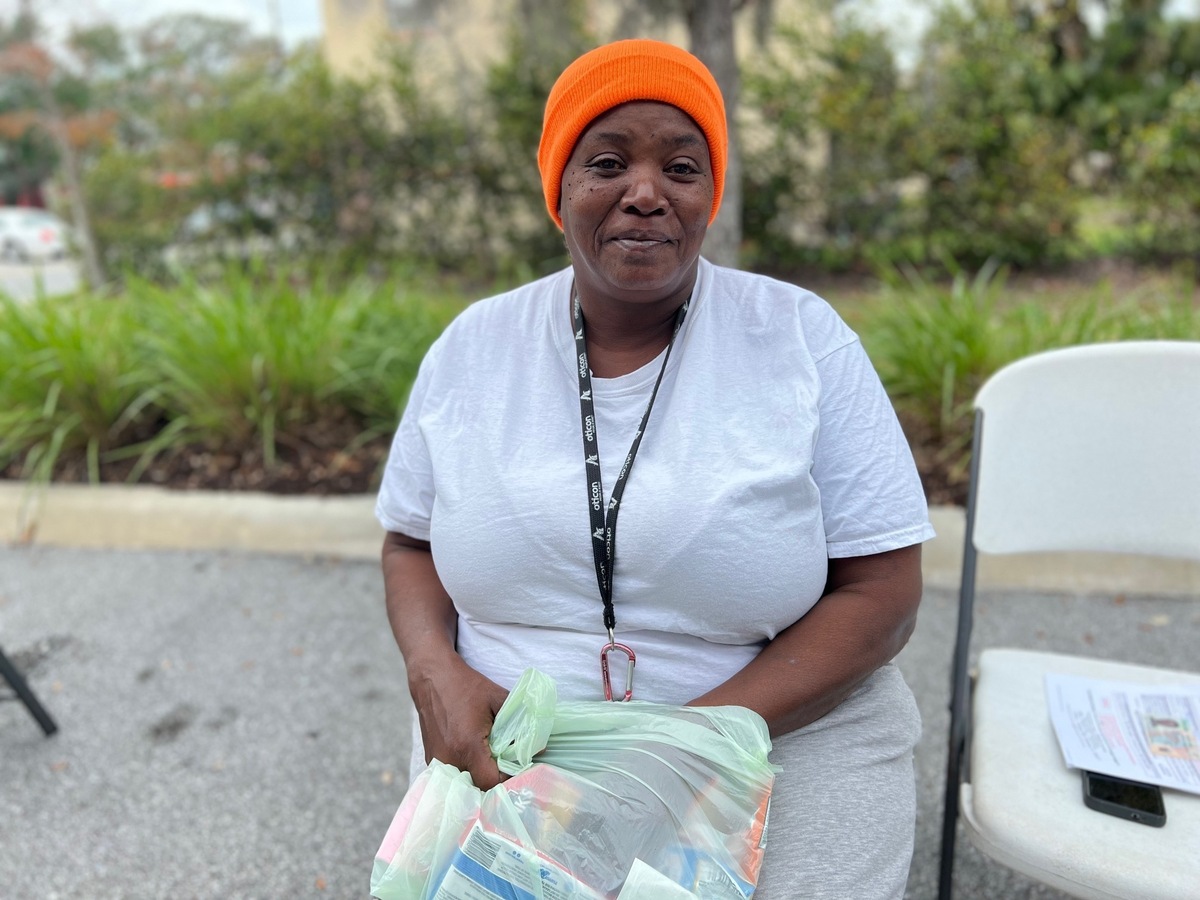
Substitute teacher Crystal Clyburn, 51, doesn’t have health insurance. She got her blood pressure checked at a health fair in Sarasota, Fla.

Stephanie Colombini/WUSF


hide caption

toggle caption

Stephanie Colombini/WUSF


Substitute teacher Crystal Clyburn, 51, doesn’t have health insurance. She got her blood pressure checked at a health fair in Sarasota, Fla.

Stephanie Colombini/WUSF

At a health-screening event in Sarasota, Florida, people milled around a parking lot waiting their turn for blood pressure or diabetes checks. The event was held in Sarasota’s Newtown neighborhood, a historically Black community.

Local resident Tracy Green, 54, joined the line outside a pink and white bus offering free mammograms.

“It’s a blessing, because some people, like me, are not fortunate and so this is what I needed,” she said.

Green said she wanted the exam because cancer runs in her family. And there’s another health concern: her breasts are large and cause her severe back pain. A doctor once recommended she get reduction surgery, she said, but she’s uninsured and can’t afford it.

In a recent Gallup poll, 38{08cd930984ace14b54ef017cfb82c397b10f0f7d5e03e6413ad93bb8e636217f} of Americans surveyed said they had put off medical treatment last year due to cost, up from 26{08cd930984ace14b54ef017cfb82c397b10f0f7d5e03e6413ad93bb8e636217f} in 2021. The new figure is the highest since Gallup started tracking the issue in 2001.

A survey by The Kaiser Family Foundation last summer showed similar results. It found people were most likely to delay dental care, followed by vision services and doctor’s office visits. Many didn’t take medications as prescribed.

The health screening event is part of an ongoing effort provide health services to low-income Floridians who are uninsured. Attendees could have their blood pressure checked or receive screenings for diabetes. A bus also delivered mammogram services.

Stephanie Colombini/WUSF


hide caption

toggle caption

Stephanie Colombini/WUSF


The health screening event is part of an ongoing effort provide health services to low-income Floridians who are uninsured. Attendees could have their blood pressure checked or receive screenings for diabetes. A bus also delivered mammogram services.

Stephanie Colombini/WUSF

The neighborhood screening event in Newtown — organized by the non-profit Multicultural Health Institute in partnership with a local hospital and other health groups — is part of an effort to fill in the coverage gap for low-income people.

Tracy Green explained that her teeth are in bad shape too, but dental care will also have to wait. She doesn’t have health insurance or a stable job. When she can, she finds occasional work as a day laborer through a local temp office.

“I only make like $60 or $70-something a day. You know that ain’t making no money,” said Green. “And some days you go in and they don’t have work.”

If she lived in another state, Green might have been able to enroll in Medicaid. But Florida is one of eleven remaining states that haven’t expanded the program to cover more working-age adults. With rent and other bills to pay, Green says her health is taking a backseat.

“I don’t have money to go to the dentist, nothing, it’s so expensive,” she said. “Now, to get one extraction, one tooth pulled, it’s like $200-300 that you don’t have. So I don’t know what to do. It’s like fighting a losing battle right now.”

Tracy Green, 54, joined the line outside a pink and white bus that offered free mammograms. Green said she wanted the exam because cancer runs in her family.

Stephanie Colombini/WUSF


hide caption

toggle caption

Stephanie Colombini/WUSF


Tracy Green, 54, joined the line outside a pink and white bus that offered free mammograms. Green said she wanted the exam because cancer runs in her family.

Stephanie Colombini/WUSF

In the Kaiser poll, 85 percent of uninsured adults said they found it difficult to pay for health care. Nearly half of insured respondents said they struggled with affordability as well.

The U.S. experienced record high inflation rates last year, and parts of Florida, including the nearby Tampa metro area, often fared even worse.

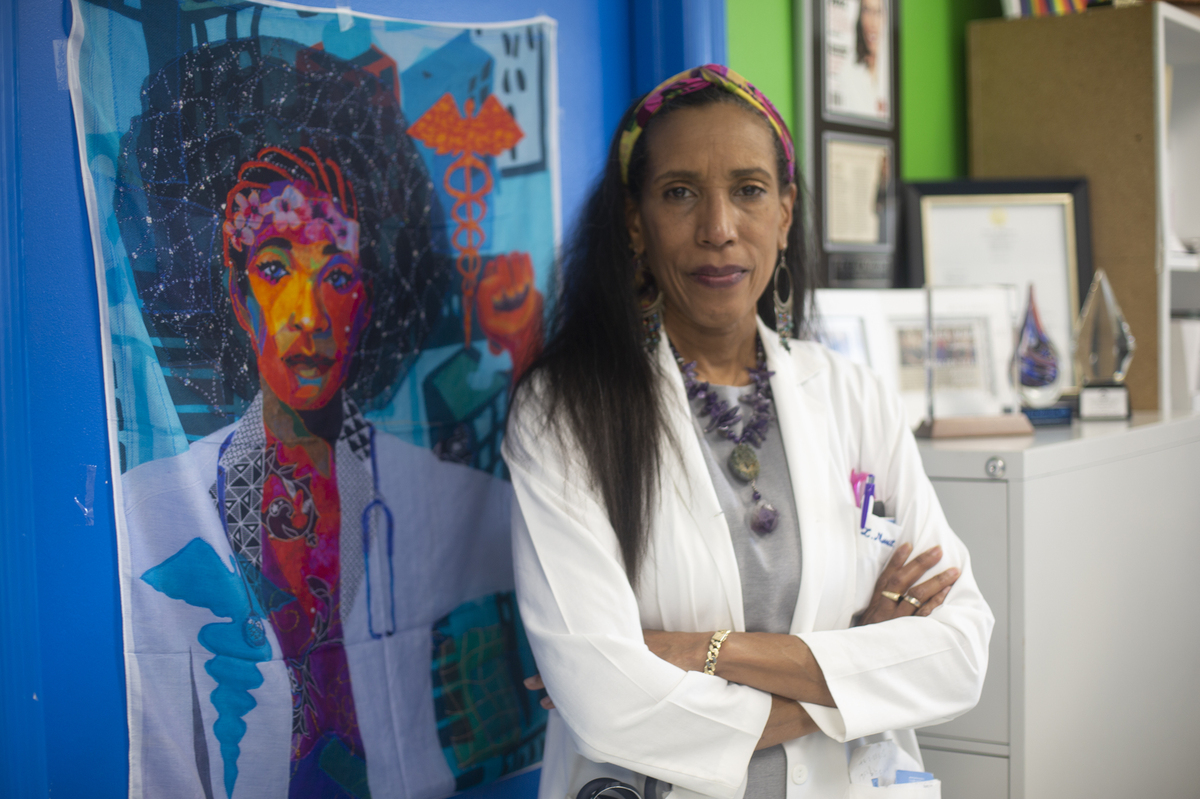
“We see an increasing desperation,” said Dr. Lisa Merritt, executive director of the Multicultural Health Institute.

The Institute, which helps people access low-cost care, is based in Newtown. The neighborhood, inland from Sarasota’s lavish beach communities, has many residents who live below the poverty line, lack insurance and face other barriers to consistent and affordable care.

“It’s very difficult for people to be concerned about abstract things like getting screenings, getting regular health maintenance, when they’re contending with the challenges of basic survival: food, shelter, transportation often,” Merritt said.

‘Horrible’ housing costs put squeeze on health needs

Merritt and her team of volunteers work to build trust with community residents who may not be aware that support is available. They help people apply for low-cost insurance coverage, free medication programs and other resources that can reduce treatment costs.

Volunteer Bonnie Hardy said the people she serves have many financial worries, but one thing tops the list.

“Right now? A place to stay,” said Hardy. “Housing is horrible.”

High housing costs have started to ease in recent months, but data shows rent in Sarasota has gone up nearly 50 percent since the pandemic began in 2020.

Hardy helps people find housing and connects them with programs that cover costs like utilities and security deposits. The goal is to help people stabilize their day-to-day lives, and that in itself can improve health, she said.

“Because they’re more comfortable now,” she said. “They feel like, hey the rent is paid, I can let my guard down, maybe I can go get the medical attention I need.”

Dr. Lisa Merritt and her team of volunteers work to build trust with community residents who are uninsured but may not be aware that support is available.

Daylina Miller/WUSF


hide caption

toggle caption

Daylina Miller/WUSF


Dr. Lisa Merritt and her team of volunteers work to build trust with community residents who are uninsured but may not be aware that support is available.

Daylina Miller/WUSF

Research shows putting off health care can lead to bigger problems.

The Gallup poll found 27{08cd930984ace14b54ef017cfb82c397b10f0f7d5e03e6413ad93bb8e636217f} of respondents delayed treatment due to costs even for “very or somewhat serious” conditions.

Another reason people may be holding off on treating medical issues is that they already have health care debt. An investigation from NPR and Kaiser Health News found about 100 million people in America had medical debt. About 1 in 8 owe more than $10,000, according to a KFF poll.

Treating cancers or chronic conditions like diabetes early can not only save lives, it can also be less expensive than treating advanced-stage illnesses, according to the Centers for Disease Control and Prevention.

Doctors at the health screening event in Newtown said it’s critical to help residents access preventive care.

At the health fair, substitute teacher Crystal Clyburn, 51, got a mammogram on the pink-and-white mobile bus and had her blood pressure checked. Clyburn doesn’t have health insurance and she relies on events like this to stay on top of her health.

“I just try to take advantage of whatever that’s out there, whatever that’s free,” she said. “You have to take care of yourself because you can look healthy and not even know you’re sick.”

After the cuff came off, a doctor told Clyburn her blood pressure was a little high. But then the doctor kept talking, and she smiled.

Although her pressure was high, it wasn’t high enough that she needed to take medication. She thanked him and left, relieved to know that was one expense she wouldn’t have to worry about. Not yet, anyway.

We’re Building “STEAM” In Kannapolis > City of Kannapolis

We’re Building “STEAM” In Kannapolis > City of Kannapolis

STEAM Festival

We’re Building STEAM is coming to Kannapolis in April. Sign up for us for three entertaining family occasions on April 22, 26, and 27, as we rejoice (STEAM) – Science, Know-how, Engineering, Arts and Math.

The Developing STEAM Festival will be held from 10 a.m. to 2 p.m. April 22 at the North Carolina Investigation Campus Horseshoe, 401 Laureate Way, Kannapolis. The occasion is cost-free and will contain things to do for little ones, young people, and parents – each indoors and outside on the campus.

Bring your lab coats and get your arms dirty with hands-on art and style, chemistry, everyday living sciences, earth and room sciences and arithmetic pursuits, experiments, and projects.

You will be in a position to join our partners:

Cabarrus Wellness Alliance

Arrive find out about nourishment with Cabarrus Health and fitness Alliance! We are going to speak about our Healthy Dwelling initiatives applying palms-on things to do this sort of as our sugar and salt shocker kits, portion plates, and many other engaging types.

NC State Plants for Human Well being Institute

Complete a STEM exercise with facts about microgreens, how to increase them, their overall health rewards, and a choose-dwelling task.

UNC Diet Research Institute

Arrive check out the UNC Diet Exploration Institute for a style examination!  Study how genetics can have an impact on how specific food items taste to us.  Our “tongues-on” activity will let your curiosity to be stimulated along with your style buds.

You will interact with our analysis staff members to investigate how unique differences participate in a element in our day-to-working day possibilities. Contributors could leave with some new tips and recipes for healthful food items to check out at household. Young children will be encouraged to specific their “creative style preferences” on the Cheatham Nourishment & Cognition Lab’s Trail of Taste through sidewalk chalk creations.

Other activities are planned by the Harmony Lake Steam Academy, Cabarrus Beekeepers, Schiele Museum, Artwork by Nicolina, and Duke CTSI.

There will be food stuff vendors, kid’s enjoyment zone, a climbing wall, performances by Cirq-u, and a lot extra.

Two added free STEAM situations will be held for the duration of the month of April in Kannapolis.

April 26 – 4- 5 p.m.

Cabarrus County Library, Kannapolis Department, 850 Mountain Road, Kannapolis

Deep Area Journey:  We are blasting off on our initial Star Academy Journey! Unfortunately, no 1 calculated for that wormhole, and we have crash landed on an alien earth. It can be time to set our STEAM competencies to the take a look at! We are going to examine, investigate, and build…will we survive?

April 27 – 5 -7 p.m.,

Rowan-Cabarrus Neighborhood Higher education, Innovative Technological know-how Middle, John Snow Highway

Be part of us as we open up the doors to our new Highly developed Technological know-how Centre. All through this evening occasion, you’ll be ready to tour our point out-of-the-art science labs and healthcare spaces while our remarkable faculty and students direct you in arms-on activities and encourage you to get fired up about STEAM!