Your secrets hurt your mental health. What’s the alternative?

Your secrets hurt your mental health. What’s the alternative?

It was the beginning of the late 1980s. Don and Judy were finally ready to start a family. But, after a few attempts, they realised that they would have to adjust their plan. They would need a sperm donor. And, even before they found one, they had already decided. They were going to have two children, and they would never tell their children that their father was not biologically related to them. This was a secret they promised to each other that they would never tell.

For the past decade, I’ve studied the psychology of secrecy. I know the story of Don and Judy’s secret well because I’m their first child, and I learned about this secret the same day I gave an invited talk about my research on secrecy for a job interview. I was 26, and if you’re wondering what it’s like to learn such a major secret, I’ll tell you this: it was surprising. It was shocking to learn that I was not biologically related to my father nor his parents with whom I was very close. And it was even more shocking to learn that my brother was, in fact, my half-brother, conceived from a different donor. But I had not been the keeper of the secret for all those years. And, while the revelation for me was jolting, the greater impact and harm came to my parents themselves.

Secrets usually hurt their holders most. Keeping a secret is associated with lower life satisfaction, lower-quality relationships, and symptoms of poor psychological and physical health. Our secrets often hurt us, but not for the reasons you might think. While hiding a secret in conversation can feel uncomfortable, the hiding turns out to be the easy part. Simply thinking about a secret outside of a social interaction is associated with feelings of shame, isolation and inauthenticity. These experiences can leave us feeling helpless, at the mercy of our secrets, and unable to cope. And these harms can begin the very moment you decide to keep a secret.

My parents are a good example: the damage wrought by their secret started before my brother and I were born, a time when there wasn’t even anyone to conceal the secret from. The very existence of the secret caused them to worry: what if the children didn’t look like their father? What if they would need to know about their genetics one day? And, after we were born, the secret gnawed at them even more. It was extremely improbable that donor conception would ever come up in conversation when we were young, and so they never had to hide the secret in those early years. But still the secret could nag at them.

My parents told me that it wasn’t until I got older that they ever had to hold back the secret in conversation. In our teenage years, my brother and I would ponder which traits we had inherited from which parent, and we’d ask our parents to weigh in. They said that, even then, the secret was always easy to keep, but it did feel awkward to navigate around it, to hold back something so huge from us. It was after those conversations that my parents would sometimes wonder: should they reveal the secret? Were they making the right decision? The longer they carried the secret, the weightier it became in their minds.

Until recently, the story of secrecy was a short one: secrets hurt us because hiding is stressful.

When I asked participants to recall a secret that currently preoccupied them, they judged the hill to be steeper

A study conducted in the late 1990s asked women who had an eating disorder to conceal it from the interviewer. Without giving away the truth of their eating disorder, the women had to answer questions such as ‘Sometimes people have problems with self-control; is there any part of your life where you have self-control problems?’ and ‘Does anyone (eg, friends, roommates, family) ever tell you that you have unusual eating habits?’ The participants reported that they tried to push away thoughts of their eating disorder, but this was impossible to do while being asked questions like ‘Do you eat regular meals?’ The study purposefully made concealment difficult, and the researchers concluded that secrets hurt their keepers because concealment is difficult.

So, what about secrets that are easier to keep? Fifteen years later, another research team asked participants to answer questions about their ideal dating partner without revealing the gender of that person. This is technically easy to do, as all the participants had to do was say ‘my dating partner’ or ‘they’ instead of ‘he’ or ‘she’. Even so, participants found the experience somewhat burdensome.

Yet the idea that our secrets hurt us mostly because hiding them is difficult and stressful turns out to be wrong. Our secrets do hurt us, but often for other reasons. And holding back a secret in conversation is just a small slice of the pain and stress caused by secrets.

At the same time as those research participants were carefully stepping over the words ‘he’ and ‘she’ in the dating partner study, I was asking another group of participants to simply think about their secrets, and then to do something somewhat strange. I showed them an image of a hill and asked them to estimate how steep the hill was. This was in 2011, two years before I would learn about the major secret my parents had been keeping from me.

In daily life, when people feel burdened, the surrounding world seems more challenging to interact with. It also turns out that when you show people a photograph of a grassy hill, face-on, so that the hill slopes upward and away from them, they aren’t very good at estimating that hill’s incline. And so, my image of the grassy hill was like a blank canvas on which my participants could paint their current experience. If they felt burdened for any reason, I predicted, this should make them perceive the hill as steeper. When I specifically asked participants to recall a secret that currently preoccupied them, they judged the hill to be steeper, compared with those who were asked to recall a secret that was not preoccupying.

My studies found that, when a secret preoccupied the mind, people felt a sense of burden. But my participants were not concealing the secret from an interaction partner. They were not even in a social interaction, and yet still their secrets burdened them. Why?

To find some answers, I developed a list of 38 common categories of secrets. This list came from asking 1,000 people to describe a secret they were currently keeping. With a team of research assistants (my research collaborators and generous friends), we projected as many of these secrets as we could possibly fit on a very large TV screen, and we arranged and rearranged the secrets until we arrived at a set of categories that we could all agree on. Then I asked another 1,000 participants about their secrets, and the 38 categories fit the new data. The list includes secrets about beliefs, family, finances, ambitions, habits, hobbies, discontents (romantic, social, professional, physical), drug use, mental health struggles, violations of trust, cheating, work, relationships, romance, sex, and more. When I show this list to people, they say, on average, that they have 13 secrets from the list.

The hard part of having a secret is that we have to live with it alone

List in hand, I conceived a series of studies. I asked participants to go through the list, and to indicate which secrets they were currently keeping. For each secret that participants had from the list, I asked how many times in the past month had they concealed the secret in conversation, and how many times had they spontaneously thought about the secret outside those conversations. On average, a secret was concealed from others two times in the preceding month, but was thought about outside those conversations four times, so twice as often.

I found that people visited secrets more often in their thoughts than they concealed them from others. This was the case for my parents, too. They told me that they rarely had to hide their secret, but that there were times when they thought about it often, and the secret would weigh on them.

In a follow-up study, I asked participants how much each of their secrets hurt their wellbeing. I found that the more that participants simply thought about their secrets, the more those secrets hurt their wellbeing. However, having to frequently hold back a secret in conversation was not harmful. I find that even secrets that participants never have to hide in conversation can make them unhappy and less satisfied with life.

Why is it that thinking about secrets hurts wellbeing, but not holding back in conversation? Perhaps you can recall an especially awkward moment when someone asked you a question related to your secret, and you had to dance around the truth in order not to reveal it. I’ve been there too but, when it comes to the universe of secrets, this turns out to be a relatively rare experience.

Thanks to the fast-moving nature of conversation, concealment moments are brief, few and far between. The average secret does not come up very often in conversation. And whenever a secret becomes relevant to a conversation, our secrecy intention prepares us for these moments. And so we are quite effective at keeping our secrets hidden. But our secrets exist before those conversations and afterwards too, and this is where the harms seep in.

Without something specific to attend to (a conversation, a work task, a movie) – and sometimes even while you are supposed to be paying attention to something else – your mind can roam away from the here and now. When left free to wander, your mind can cover expansive terrains, but it also tends to visit the same places again and again. When you have a problem not yet solved, you can be sure that your mind will check in on this problem from time to time. How else could you work on it?

If you keep a secret entirely to yourself, then you are leaving yourself only one avenue to work through the secret, and that is in your own thinking. And, unfortunately, a mind unchecked by others’ reactions is more likely to develop unhealthy ways of thinking. The hard part of having a secret is not that we have to hide it in conversation, but that we have to live with it alone.

One of the best ways to reduce the harm of a secret is to talk to someone about it. You don’t have to reveal the secret to the person you are keeping it from, but I find in my research that discussing a secret with a trusted other can make the world of difference. Someone who will be kind, empathic and nonjudgmental will serve you well here. But if you are not yet ready to talk to someone, there are other paths that you can take on your own.

Once you understand how your secrets make you feel, you can channel your emotions toward more helpful places.

In a recent study, my colleagues and I collected responses from 200 participants living throughout the United States. The participants were shown the list of 38 common categories of secrets, and they indicated which they were currently keeping. Some of the most common secrets participants kept involved sexual experiences, violations of trust, discontent (with one’s social life, romantic relationship, physical appearance, profession), and drug use.

We measured how each of their secrets made them feel. Experiences of shame and guilt were among the most common. And so, in a follow-up study, we asked how much the secret makes them feel worthless, small, helpless, and powerless: all experiences associated with shame. We also asked how much each of their secrets makes them feel remorse, regret, and tension over something they have done: all experiences associated with guilt. While both shame and guilt make us feel bad, shame arises when people think ‘I’m a bad person,’ whereas guilt arises when people think ‘I did a bad thing.’

Even though shame and guilt often arrive on the scene together, they don’t leave at the same time

Secrets that participants felt especially ashamed about included self-harm, trauma, and mental health struggles, whereas secrets that participants felt especially guilty about included telling a lie, theft (any kind of taking without asking), and cheating on their partner.

It didn’t matter what the secret was about, but rather how ashamed or guilty the participants felt. The secrets that participants felt most ashamed about were the ones their minds most returned to, and neither shame nor guilt was associated with how often participants had to hold back the secret in conversation.

You would be forgiven for using the words ‘shame’ and ‘guilt’ interchangeably because, quite often, when we feel one, we feel the other. When we judge ourselves to be in the wrong, we can feel deficient and small – shame – and we can feel regret and remorse – guilt. For example, the secrets that evoked the most shame also evoked the most guilt: hurting someone (emotionally or physically) and committing infidelity.

Even though shame and guilt often arrive on the scene together, they don’t leave at the same time. Shame can stick around for longer. The secrets that caused the most shame were the ones that most often lingered in participants’ minds.

But why? When we choose to keep a secret, we avoid whatever punishment would come from the information being known. Except, often, we don’t let ourselves off that easy. People, in general, tend to have a sharp sense of justice, and want to live in a world where those who do bad things get punished for it. And so, when we feel we have escaped punishment, we often feel that we still deserve punishment.

To study this phenomenon, I randomly assigned participants in committed relationships to think about a misdeed they were keeping secret from their partner or to think about a misdeed they had confessed to their partner. Thinking about the secret misdeed made people feel like they still deserved to be punished and this even made them more interested in receiving punishment. Compared with thinking about a confessed misdeed, thinking about a secret misdeed led my research participants to want to deny themselves pleasures. For example, thinking about a secret led participants to feel less comfortable in being the recipient of others’ kind gestures. And the participants who felt they still deserved to be punished were even interested in physical and emotional pain (in the forms of intense exercise, drowning oneself in one’s work, and even spending time isolated from others). In short, one reason to let thoughts of a shameful, upsetting secret take centre stage is because it hurts, and we feel we deserve it.

Based on these findings, my colleagues and I predicted that, relative to the shameful secret, a guilty secret would be easier to cope with. And that turned out to be right. The secrets people felt they could most capably cope with involved secret hobbies, preferences and romantic desire. The secrets people felt they could least capably cope with involved struggles with mental health and trauma.

When we feel ashamed of something, we often try to avoid the problem altogether, but when we feel guilty, we become motivated to do something about it. And so, when people feel guilty, they often want to make amends and learn lessons for the future. When we characterise our behaviour as wrong, we recognise that we can act differently next time, and so we feel capable of doing better.

So how can you move from shame to guilt? In a recent series of experiments, my colleagues and I tried to see if we could help people view their secrets in healthier, less shameful ways. Again, we asked people to examine the 38 categories of secrets, and to report which ones they were currently keeping. We then divided each participant’s set of secrets into two piles.

For half of their secrets, we asked participants which of these three options fit their secret best: 1) I feel ashamed; 2) I feel like a bad person; or 3) I feel helpless. You’ll likely recognise this language because it is all shame-oriented. And the problem with this buffet of bad feelings is that they are all especially unhelpful when it comes to coping. Feeling ashamed might make you want to crawl into a hole and to give up entirely. But such responses don’t address the problems or work toward solving them. When we led our participants to think about their secret through these three shades of shame, it didn’t matter which option participants chose. Simply thinking about their secrets in this manner led them to feel less capable of coping with the secret.

You might wish that the thing you feel bad about never happened, but that wish will get you nowhere

For the other half of their secrets, we showed participants three different options, asking which fit their secret best: 1) I feel bad about something I’ve done; 2) I feel sorry about something I’ve done; or 3) I feel tension about something I’ve done. In this condition, we were hitting participants with a psychological sledgehammer, asking them to read ‘something I’ve done’ three times. Now the feelings on offer, while all negative, related to a previous action. When we led our participants to focus on their prior actions, we pushed them toward guilt. Again, it didn’t matter which option participants chose. Simply thinking about a secret in this healthier manner led them to feel more capable of coping with the secret.

This effect is simple but powerful.

Rather than focus on how bad a secret makes you feel about yourself, think more specifically about the behaviour in question (this is the simple part). You might wish that the thing you feel bad about never happened, but that wish will get you nowhere. Instead, focus on what you can do differently next time, and what you can do moving forward into the future.

And then, like magic, feeling that you are capable of coping well translates to… (drum roll) coping well. When we believe that we can control our emotions, we become more assertive in our efforts to do so – and more effective at staying calm and in control.

Changing how you think about a secret (or any other stressor) for the better will lead you to more actively problem-solve, and this may even include reaching out to others for help. When people feel more in control of their emotions, they report higher wellbeing.

Likewise, my studies find that when you feel capable of coping with your secret, the secret hurts you less, day to day. Often, when we rehash the details of the secret, we are focusing on the past. And I find that when we fixate on the past, thinking about secrets tends to be harmful. In contrast, present- or future-focused thinking about secrets can actually help you chart a better life course. If a secret of yours comes to mind, think about what the secret means for your present, and trace out the different paths you can take into the future.

And that’s where shifting from shame to guilt comes in. My studies show that when people feel guilty rather than ashamed, they become more interested in learning from the past and moving forward from it.

Feeling guilty is a good thing. When people feel guilty, they become motivated to do something about it. You can’t change the past, no matter how much you wish it were so. But you can move in the right direction today, and continue to do so tomorrow.

My parents still regret that they didn’t tell me and my brother sooner about the secret of our donor conceptions. Even though the secret is now out, my parents can still feel bad about it. Fortunately, they don’t. I’ve long assured them that I don’t hold the secrecy against them, and that learning that I’m not biologically related to my dad and his family actually made my relationships with them feel more meaningful, not less; our relationships are not based on a sense of genetic obligation, but rather a deeper sense of family, closeness and love.

While you can’t change the content of your secret, you can change how you feel about it, and that’s the goal.

NIH RECOVER research identifies potential long COVID disparities

NIH RECOVER research identifies potential long COVID disparities

News Release

Thursday, February 16, 2023

&#13
NIH-supported experiments present variations in signs and symptoms and diagnostic encounters between unique racial and ethnic groups.

Black and Hispanic Individuals look to practical experience more indications and health and fitness difficulties related to very long COVID, a lay expression that captures an array of indicators and wellness challenges, than white individuals, but are not as likely to be diagnosed with the ailment, in accordance to new study funded by the Countrywide Institutes of Well being. The findings – from two different reports by NIH’s Studying COVID to Greatly enhance Recovery (Get well) Initiative – increase to a increasing system of analysis aimed to greater comprehend the intricate symptoms and other concerns connected with prolonged COVID that millions have expert.

“This new proof suggests that there might be significant distinctions in how very long COVID manifests in unique racial and ethnic teams,” reported Mitchell S.V. Elkind, M.D., a professor of neurology and epidemiology at Columbia University, New York Town, and chief scientific science officer for the American Heart Affiliation. “However, further investigate is necessary to much better have an understanding of the mechanisms for these variations in symptoms and access to treatment, and also if diagnostic codes assigned by clinicians could engage in a part.” 

In just one investigation, revealed in the Journal of General Inside Medication, researchers appeared at the wellness documents of 62,339 grown ups who acquired a positive COVID-19 check at one of five academic overall health centers in New York Metropolis, all in between March 2020 and October 2021. They tracked the patients’ health and fitness for one to 6 months just after the positive examination and when compared the results to 247,881 adults who under no circumstances experienced COVID.

Among the 13,106 older people who had serious COVID that essential healthcare facility treatment, the scientists found Black and Hispanic grown ups have been disproportionately represented. Of those who experienced these intense instances, for instance, 1 in 4 were Black older people, 1 in 4 were being Hispanic grownups, and 1 in 7 had been white older people.

In the months next infection, Black older people with serious illness ended up a lot more possible than white older people to be diagnosed with diabetes and working experience complications, chest discomfort and joint ache, but much less possible to have sleep problems, cognitive complications, or fatigue. Equally, Hispanic adults who demanded healthcare facility treatment were extra possible than white adults to have complications, shortness of breath, joint paint, and chest ache, but considerably less most likely to have rest disorders, cognitive challenges, or fatigue.

Similar patterns emerged among people with gentle to average disease. Amid sufferers who were being not hospitalized, Black older people ended up a lot more likely to have blood clots in their lungs, upper body discomfort, joint soreness, anemia, or be malnourished. Hispanic grownups were much more probably than white grown ups to have dementia, complications, anemia, upper body agony, and diabetes. Conversely, white adults were most likely to have problems these as cognitive impairment (occasionally referred to as “brain fog”) and exhaustion.

The scientists also located that in comparison to people who did not have COVID, these who did had been more very likely to practical experience disorders influencing their nervous procedure, respiratory purpose, and circulation, and more most likely to feel fatigued or have joint suffering.

“It’s not very clear what is behind these symptom variants,” reported Dhruv Khullar, M.D., a examine author and medical doctor and assistant professor of overall health coverage and economics at Weill Cornell Drugs, New York Town. “We hope this do the job attracts consideration to achievable dissimilarities throughout racial and ethnic groups, stimulates research into the prospective mechanisms, and sparks discussion among the individuals, clinicians, and policymakers.”

In the next examine, which released in BMC Medicine, scientists analyzed knowledge from the electronic well being records of 33,782 adults and kids who gained a prognosis for lengthy COVID among October 2021 and May 2022 at just one of 34 U.S. health care facilities. All experienced been presented a prognosis – Article COVID-19 ailment, unspecified – the code for the condition to start with launched in U.S. wellness care units in October 2021.

In learning the profile of these people and their signs or symptoms, the scientists identified a number of patterns. Amid the more putting: most of the individuals have been white, feminine, non-Hispanic, and very likely to stay in locations with low poverty and increased obtain to well being care.

Provided what scientists currently realized about the disproportionate impact of COVID on persons of coloration and economically disadvantaged populations, the results stood out. Emily Pfaff, Ph.D., a analyze author and assistant professor in the Division of Endocrinology and Rate of metabolism at the University of North Carolina, Chapel Hill, stated the sample advised that not all individuals who have very long COVID are being identified.

The factors fluctuate. In addition to prolonged-documented overall health disparities based mostly on race and other things, she stated, women of all ages are much more probable than adult men to seek out wellbeing treatment in common, and people with the time and means to entry wellness care have a tendency to be disproportionally represented in medical data.

“You can see all the various means these diagnostic codes can deliver perception, but they can also skew the whole tale,” Pfaff said.

Even now, she included, the insights assistance. She and her crew uncovered, for illustration, that most of the people with extended COVID experienced just moderate to moderate, not intense, indicators of acute infection. They also identified that long-time period signs and symptoms could be grouped into typical clusters – cardiopulmonary, neurological, gastrointestinal, and coexisting conditions – as properly as by age.

Children and teenagers were additional most likely to practical experience gastrointestinal and higher respiratory complications, which include abdomen aches and coughing. Grown ups ages 21-45 generally expert neurological challenges, these kinds of as brain fog and fatigue. Grownups ages 66 and more mature had been much more probable to have coexisting situations, these kinds of as coronary heart difficulties and diabetic issues, which the authors suspect is much more possible existing simply because of age than lengthy COVID. 

The authors of the two papers claimed additional research are essential to verify and even further categorize these tendencies.

“This study contributes to our comprehension of symptom clusters in extensive COVID that may perhaps be differentiated by race, ethnicity, and motivated by social determinants of well being,” claimed Gary H. Gibbons, M.D., director of the Nationwide Heart, Lung, and Blood Institute. “It also provides vital insights into the utility, as well as the constraints, of the diagnostic code now in use for long COVID.”

Each experiments were funded by Get better (HL161847-01). The National Heart for Advancing Translational Sciences delivered additional guidance for the evaluate released in BMC Medicine via the National COVID Cohort Collaborative (N3C) Knowledge Enclave (U24TR002306).

About the National Coronary heart, Lung, and Blood Institute (NHLBI): NHLBI is the worldwide leader in conducting and supporting research in heart, lung, and blood illnesses and rest issues that innovations scientific awareness, improves public health, and will save life. For extra facts, pay a visit to www.nhlbi.nih.gov.

About the National Institutes of Overall health (NIH):&#13
NIH, the nation’s clinical research agency, features 27 Institutes and Centers and is a component of the U.S. Department of Overall health and Human Providers. NIH is the key federal agency conducting and supporting fundamental, scientific, and translational healthcare research, and is investigating the causes, treatment plans, and cures for the two frequent and unusual diseases. For additional facts about NIH and its programs, pay a visit to www.nih.gov.

NIH…Turning Discovery Into Health and fitness®

Study

Pfaff ER, Madlock-Brown C, Baratta JM, et al. Coding extensive COVID: Characterizing a new condition by means of an ICD-10 lens. BMC Med. 2023 doi: 10.1186/s12916-023-02737-6.
 

Khullar D, Zhang Y, ang C, et al. Racial and ethnic disparities in the incidence of post-acute sequelae of SARS-CoV-2 an infection among hospitalized and non-hospitalized people in New York Metropolis: An EHR-centered cohort study from the Get better system. J Gen Intern Med. 2023 doi: 10.1007/s11606-022-07997-1.

###

U.S. Republicans target transgender youth healthcare in legislative push

U.S. Republicans target transgender youth healthcare in legislative push

Feb 16 (Reuters) – Republican legislators throughout the United States have escalated a campaign to ban sure healthcare for transgender youth, in some instances searching for to charge mom and dad and medical doctors with boy or girl abuse if they provide procedure.

This year’s legislative agenda, unprecedented in the amount and scope of payments about transgender troubles, also features measures to block teachers from using pronouns that match a student’s gender identification, ban trans women from playing on girls’ athletics groups and call for trans individuals to use the lavatory corresponding to their intercourse assigned at beginning.

The aggressive legislative press arrives as battles about gender and sexuality more and more are staying fought in U.S. lecture rooms, courtrooms and political campaigns. Republicans which include previous President Donald Trump have embraced proscribing trans legal rights ahead of the 2024 White Household race, a force that trans advocates anxiety will harm transgender small children.

“This issue will be a countrywide discussion in the subsequent presidential election,” explained Jay Richards, a senior analysis fellow at the Heritage Basis, a conservative imagine tank. “If Republicans in the applicable states handle this correctly, it truly is basically politically effective.”

Most current Updates

See 2 a lot more stories

The think tank supports the proposed laws in many states, nevertheless Richards stated some payments, this sort of as individuals that find prison legal responsibility for physicians and dad and mom, might be “extremely draconian.”

Republicans have released a lot more than 300 bills in 33 states aiming to limit transgender and broader lesbian, homosexual, bisexual, transgender and queer (LGBTQ) rights this calendar year, much more than double the selection of these kinds of charges filed in 2022, in accordance to Erin Reed, Alejandra Caraballo and Allison Chapman, a trio of transgender legal rights advocates tracking the legislation.

In addition to the acquainted legislative initiatives concentrating on sports and bogs, the emphasis this calendar year is on banning gender-affirming care, the objective of 97 expenditures in 27 states.

Gender-affirming treatment handles a assortment of remedies, such as puberty blockers, hormone therapy and, in exceedingly exceptional instances for trans folks less than 18, surgical procedures. Healthcare associations, which get in touch with the costs transphobic, say these kinds of health care can be lifetime-conserving.

In a lot of states, transgender small children and their moms and dads have testified towards the proposed legislation, describing how gender-affirming care changed their lives and fearing the influence of the charges, which have proliferated even as federal courts blocked bans passed in Arkansas in 2021 and Alabama in 2022.

But many opponents of trans legal rights think that the intercourse assigned at delivery is immutable and distrust the prevailing opinions of medical associations with specialties in pediatrics, endocrinology and mental health. They contend the governing administration will have to intervene to avoid moms and dads and doctors from permanently harming small children.

Governors in South Dakota and Utah have by now signed into law gender-affirming treatment bans that point out legislatures passed this calendar year.

Charges in Idaho, Missouri and Wyoming would criminalize providing these kinds of care as felony kid abuse, although steps in Tennessee and Texas would categorize it as abuse underneath spouse and children regulation.

The Tennessee monthly bill, which would bar medical doctors from delivering gender-affirming treatment to any individual under the age of 18, handed the state’s Republican-led Senate on Monday.

Transgender advocates say such moves are punitive, specifically taking into consideration the issue of getting cure due to charge, lack of family help or difficulty discovering a provider.

“The strategy that we have a social contagion encouraging folks to be trans in a climate that is this hostile to trans people in so unbelievably offensive,” explained Chase Strangio, an ACLU lawyer who has litigated against the Arkansas and Alabama regulations.

Out of 121,884 minors diagnosed with gender dysphoria from 2017 to 2021, fewer than 15{08cd930984ace14b54ef017cfb82c397b10f0f7d5e03e6413ad93bb8e636217f}, or an typical of about 3,500 for every calendar year, received puberty blockers or hormone treatment, in accordance to a data analysis by wellness engineering firm Komodo Health Inc in conjunction with Reuters previous 12 months.

Reporting by Daniel Trotta
Enhancing by Colleen Jenkins and Josie Kao

Our Expectations: The Thomson Reuters Rely on Ideas.

Athletico Physical Therapy Opens in Mason, Ohio

Athletico Physical Therapy Opens in Mason, Ohio

Athletico is on the lookout forward to continuing its high-quality of care in the course of the point out of Ohio

MASON, Ohio, Feb. 13, 2023 /PRNewswire/ — Athletico Bodily Treatment has opened a new spot in Mason, Ohio, positioned by Wendy’s. This area provides hassle-free hrs, which includes early early morning and late evening appointments, and does not demand a referral or prescription to start out treatment. To learn additional, or to plan a no cost evaluation, take a look at www.athletico.com/MasonOH.

“At Athletico, we are proud to generate a clinic surroundings that is concentrated on supporting persons return to their lively existence after personal injury,” explained Jason Privett, MPT, ATC, C-Ped and Clinic Supervisor of Athletico Mason. “Numerous people today are not conscious that physical therapy is the best non-surgical choice to navigate damage by combining workout, handbook therapy, and fashionable modalities. I’m wanting ahead to educating and supporting associates of the Mason local community all through their restoration journeys.”

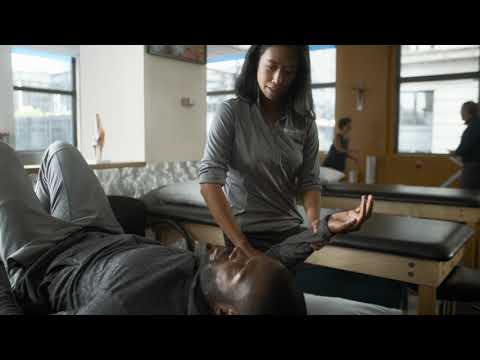
In addition to in-clinic remedy at Mason, Athletico is expanding access to treatment by offering digital appointments from the ease of your possess property. Sufferers have the selection to have their affliction assessed and handled practically by a certified physical therapist by way of a protected on the web online video chat.

Products and services out there at Athletico Mason incorporate:

  • Bodily therapy – Our actual physical therapists handle you to reduce ache, boost or restore mobility, and to support you keep on being at your best health and fitness devoid of additional risk of harm. We also provide joint substitution remedy, headache treatment method, concussion remedy and much more.
  • Absolutely free assessments – If you have a pressure, sprain or nagging suffering, you can see 1 of our experts for a cost-free, 30-moment assessment. We consider your injury and endorse cure. If desired, we can get started procedure instantly, no referral essential. You should notice, limitations implement.
  • Guide treatment – Also known as hands-on bodily therapy, our experts use only their palms while carrying out qualified, distinct palms-on approaches to apply pressure to the gentle tissues of the human body. This remedy can support unwind muscle tissues, enhance circulation and reduce tissue inflammation. 
  • Dry needling – If you are suffering from discomfort, you could benefit from dry needling. This strategy will involve inserting extremely-skinny needles into distressing regions of the overall body to promote the soreness-triggering trigger points in the muscle and connective tissues.
  • Back again soreness/spine rehabilitation – Although typical, again agony is normally misunderstood and remaining untreated can outcome in a extended recovery. Our back again agony specialists support eliminate discomfort swiftly and get you back to performing the matters you adore. This can aid you reduce or eliminate the need for medication or innovative imaging and possibly surgical treatment.

In addition, Athletico Mason:

  • Accepts all major insurance policy strategies, so you you should not need to have to fret about your visits not becoming included.
  • Delivers easy several hours, such as early mornings and late evenings.
  • Does not need a medical professional referral or prescription to start treatment method.
  • Schedules just about every original evaluation rapidly, often the exact or next working day, but usually within 24-48 hours.
  • Provides ongoing affected person education and learning on prognosis, remedy programs and prescribed home-physical exercise applications.
  • Tactics distinct, consistent conversation between therapist, doctor and client with regards to development.

Athletico – Mason
2150 Kings Mills Rd.
Mason, OH 45040
Phone: 513-486-2050
www.athletico.com/MasonOH
[email protected]

About Athletico Physical Treatment
Athletico Physical Therapy is a foremost service provider of the highest quality orthopedic rehabilitation solutions to communities, businesses and athletes. With the current acquisition of Pivot Actual physical Remedy, Athletico operates extra than 900 places in 24 states and the District of Columbia. We are dedicated to our individuals and referring medical professionals by our affected individual-centric aim, inclusive work atmosphere, and interest to high-quality and superior regular of care. Delivering marketplace-primary affected person results and satisfaction are at the main of what we do, as calculated by our business leading patient gratification scores and recognition as a Nationwide Top rated-Tier Service provider by the CMS High-quality Payment Method. We are also passionate about giving again to the communities we provide by outreach, volunteer and fundraising initiatives supported by the Athletico Cares Basis. Our extensive products and services include physical and occupational treatment, workers’ payment and onsite employer providers, athletic teaching, and in excess of 50 specialty products and services, which include absolutely free assessments, pelvic wellness, backbone well being, hand remedy, concussion administration, and more. For more information and facts, or to find an Athletico clinic around you, visit www.athletico.com.

Media Call:
Dana Andreoli
Athletico Actual physical Therapy
[email protected] 
630-259-5156

Supply Athletico Actual physical Remedy

How Can Companies Bring New AI Software Medical Devices to Market?

How Can Companies Bring New AI Software Medical Devices to Market?

For SLAS US 2023, we communicate to Person Starbuck, just one of the co-founders at AIQ International, about how we can use AI technology to carry new medical units to market place. 

You should could you introduce your self and notify us what inspired your job inside of the daily life sciences?

I’m Male Starbuck, Co-Founder and CTO of AIQ Global. I have a qualifications in business computer software development and have been operating in professional medical product enhancement for the final 15 many years.

I discover doing the job with health care equipment to be very rewarding – it’s a terrific emotion to go property at the conclude of the day and know that the perform you do has the opportunity to have a immediate, positive influence on people’s lives.

You are the Co-Founder and CTO of AIQ World-wide, a firm enabling clinicians to make greater-educated treatment decisions. You should can you inform us far more about AIQ and its mission?

AIQ World is transforming how clinicians regulate elaborate health conditions, this sort of as metastatic cancer, to extend and enhance patients’ lives. AIQ’s software technological know-how employs details from radiological scans to assess how individual individuals will respond to specific solutions. Oncologists are working with AIQ’s TRAQinform IQ technologies to make additional confident therapy selections, personalize affected individual treatment, and boost therapy outcomes.

AIQ spun out of the College of Wisconsin-Madison Section of Medical Physics and the Carbone Cancer Centre. We received Fda clearance for our TRAQinform IQ technological know-how in 2018 and now have a group of in excess of 30 men and women in the US and Australia.

How Can Companies Bring New AI Software Medical Devices to Market?

Impression Credit rating: PopTika/Shutterstock.com

You are also encouraging to minimize healthcare expenses by offering intelligence encompassing the heterogeneity of treatment responses for elaborate diseases. How are you equipped to do this, and how does this contribute to the reduction in healthcare fees?

Managing most cancers is difficult, especially in the situation of late-stage, metastatic sickness. Metastatic lesions can be many, numbering as several as many hundred per affected individual, and each individual lesion can respond in another way to treatment method (termed reaction heterogeneity). At the time an oncologist initiates a therapy routine, they are faced with the pursuing queries: Is this patient responding favorably to this treatment, and if so, how long will that carry on? Is this procedure undertaking more harm than good in terms of destruction to crucial organs? Is the monetary expense of this treatment value the prospective profit? They revisit these very same concerns just about every couple of months to choose whether an individual ought to stay on treatment or swap to a different therapy plan.

Recurring radiological imaging provides important data about how the affected person responds to treatment method. In existing typical observe, only a subset of lesions (typically 3-5) is monitored since radiologists have to manually define (or “segment”) and measure each lesion. On the other hand, posted scientific tests have shown that resistance in fewer than 10{08cd930984ace14b54ef017cfb82c397b10f0f7d5e03e6413ad93bb8e636217f} of lesions can drive a inadequate general medical result. It is impractical for that time-consuming procedure to be done for all lesions. For that reason, oncologists are pressured to make clinical selections devoid of having all the details.

Mainly because our know-how is not a diagnostic device, we must refer to the places detected on scans as “regions of interest” fairly than “lesions.” AIQ’s TRAQinform IQ know-how routinely identifies and measures every single region of interest on particular person scans. We then can immediately match these regions of curiosity between scans and measure their alter above time. This engineering can possibly present economic benefit to the health care procedure by extending the period of initially-line therapies, which are substantially fewer costly than next and third-line choices, and averting expenses on ineffective treatment options.

At the moment, producing new health care technological innovation and bringing health-related devices to the marketplace is really tough. Why is this?

Health-related units are closely regulated. Producing professional medical system engineering calls for a significant amount of rigor, with specific needs for documentation of the entire style and manufacturing procedure to take care of security and performance dangers. Regulatory bodies (for illustration, the Food and drug administration in the US and TGA in Australia) will have to obvious professional medical equipment before they can be offered. The method involves the submission of evidence of compliance with applicable rules and common audits.

The second significant obstacle in bringing a health-related unit to marketplace is the complexities of reimbursement, primarily in the United States. With out reimbursement, it is much more difficult for physicians to use the merchandise considering the fact that the expenditures need to have to be absorbed by the health and fitness method or paid for by the client.

The third challenge is creating the device obtainable to physicians as aspect of their conventional set of instruments. Our item, TRAQinform IQ, is a cloud-based mostly procedure that processes 3D medical photographs this kind of as PET/CT scans. The scans reside in the medical center, so we have to have to integrate with hospital networks for info transfer. In addition, we require to combine with digital health care record units to make it straightforward for medical professionals to access our reviews. These integrations all have to have customization for particular person medical center systems to match their person workflow implementations and stability configurations.

Medical Devices Concept

Picture Credit: sfam_photo/Shutterstock.com

AI has obtained elevated notice in recent a long time, and its probable function in healthcare grows every day. How essential do you feel AI is to the health care sector, and the place do you see it creating the most effect in patient care?

We have noticed a large amount of advantages in employing AI to conduct duties that are sophisticated, time-consuming, and call for focus to element. Even though radiologists could contour all the bones, organs, and health conditions in a individual and then match each and every lesion manually involving two scans, it is impractical and just not completed. Furthermore, there can be considerable variability in outcomes among radiologists. By utilizing AI for these duties, we can present steady effects that oncologists can use to make extra self-confident and expense-successful remedy choices ensuing in improved affected person care.

You are offering a discuss at SLAS 2023 titled ‘The Path from Research to Professional medical Gadget- Commercializing AI in Clinical Imaging’. Can you inform us additional about what you will discuss in this speak and what readers can assume to find out?

In my chat, I will go over the tale of how AIQ went from a analysis venture consisting of a patent and a established of code scripts to an Fda-cleared professional software clinical unit. I’ll include the order we done precise pursuits and how we have structured and grown our team.

My intent is to support researchers with a evidence-of-concept with current market opportunity navigate all of the complexities and deliver a concrete roadmap for staffing, fundraising, and commercialization.

Can you inform us a lot more about your TRAQinform platform and its applications in health care?

TRAQinform IQ is a software package health-related gadget hosted in a HIPAA-compliant, secure cloud surroundings. The technologies applies AI and highly developed graphic processing algorithms to conventional-of-care medical pictures to deliver clinicians with complete reviews that they can use to tailor cure regimens and optimize results.

Are you hopeful that with continued support for AI in the health-related sector, we will soon see it turning into more commonplace in scientific settings? What would this imply for both of those hospitals and the people on their own?

AI is poised to be a massive component of health care in the foreseeable future – there’s an enormous quantity of exploration likely on right now, and the Fda now has perfectly-established recommendations for receiving acceptance for AI in healthcare units. As AI resources and procedures experienced and turn into much easier and safer to carry out, this craze will only increase – and has the probable to advantage every person by enhancing obtain to fast, large-high quality health care information and facts.

AI in Healthcare Concept

Picture Credit: metamorworks/Shutterstock.com

You are functioning in an remarkable area, with new progress becoming built at an extraordinary pace. What evokes you most about operating in this field, and what are you most on the lookout ahead to in the coming several years?

I am thankful to have the chance to operate in the health care subject and to be portion of a corporation that is undertaking concrete operate to extend lives and make a serious effects on client care.

Becoming section of a cutting-edge health-related device startup is attractive to quite a few people today, and we’ve assembled a committed staff of top rated folks throughout a lot of disciplines.

What is next for you and AIQ World? Are you involved in any interesting upcoming tasks?

We are continuously finding new and exciting applications for our technology – a person that we’re concentrating on right now is theranostics, the mix of treatment and diagnostics. Theranostics is promptly growing and can be incredibly efficient. On the other hand, it is pricey ($260,000/client), and important troubles exist, these types of as figuring out which patients would profit from therapy, optimizing the therapeutic dose, and checking procedure response. Our technologies is in a position to provide oncologists with specific data about the probable performance of theranostics for every client.

Our science workforce, led by Dr. Tim Perk, has a lot of extra improvements in the pipeline!

Where by can visitors obtain additional information and facts?

About Male Starbuck

In 2016 I experienced the option to co-identified AIQ International, a computer software clinical system startup spun out of the University of Wisconsin – Madison, with my fellow co-founders Dr. Robert Jeraj, Dr. Glenn Liu, and Dona Alberti. We obtained Food and drug administration clearance in 2018, at which issue we hired a CEO, Eric Horler. We have grown steadily and now have more than 30 staff members in the US and Australia.Guy Starbuck

As CTO at AIQ Worldwide, I designed the original prototype of the software program, aided develop our High-quality Management Program, and drove the exertion for our prosperous Fda clearance. I’m at this time the head of Engineering, IT, and Creation, concentrating on enabling the organization to supply new goods and capabilities, strategic advancement and scalability, as well as controlling integrations and protection compliance.

PrepNet Virtual Academy Creates Online Education That Clicks

PrepNet Virtual Academy Creates Online Education That Clicks

GRAND RAPIDS, Mich., Feb. 15, 2023 /PRNewswire/ — Assume of all the elements of a classroom – not just the brick and mortar of a whiteboard and desks, but also the bodily instruction. A trainer pointing to a student with their arm raised to respond to a dilemma. A nod from the teacher that the scholar is on track. A instructor heading about the place to check on each individual scholar’s development with the lesson.

PrepNet Digital Academy, a Countrywide Heritage Academies (NHA) virtual school positioned in Michigan, is a free of charge public constitution university serving pupils in grades K-12 with an early higher education plan, requires all those parts and reimagines them to suit into an on the net learning working experience that satisfies the requirements of learners, instructors, and mothers and fathers.

“I was a skeptic at initial due to the fact I was not familiar with schooling at house on any level,” stated Cierra Wright, a PrepNet Virtual Academy father or mother. “Once we have been form of forced into it (through the pandemic), I would say I like it improved than brick and mortar.”

PrepNet Digital Academy opened in 2021 to fulfill the demands of Michigan people who wanted a long lasting on the net studying solution for their youngsters. PrepNet Virtual Academy brings together the greatest components of a K-12 online college with the social conversation of in-particular person understanding that builds neighborhood and strengthens connections.

What is Virtual Understanding? Creating Connections, Creating Local community

The notion of digital discovering hasn’t often been a popular a single for pupils, moms and dads, and instructors. However, PrepNet Digital Academy’s tactic is changing the conversation. In truth, some could assume that digital studying is all asynchronous, or independent finding out. PrepNet Virtual Academy is not that, with reside instruction occurring through the day.

“We are probably the most opposite of what you could get in a virtual planet,” stated Melissa VanKlompenburg, K-5 principal, who will rejoice 20 a long time with NHA in March. “We lived by way of the pandemic and figured out that while pupils ended up mastering pretty much, the more college students experienced time with the instructor, the far better they did.

“It can not be the ‘I’m heading to do the job at my very own tempo, I’m heading to do my personal thing,’ and you converse to a teacher or a mentor when a day or once a week, which is normally what other digital educational facilities do.”

Which is just one of the causes Wright enrolled her son, Deontae’, in PrepNet Virtual Academy. Presently a fifth-grader, she shared he was thriving in the K-12 online university natural environment brought on all through the pandemic. She failed to see the will need for him to return to a brick and mortar college if he could get the similar good quality instruction on the internet.

In specific, she preferred how PrepNet Digital Academy embeds a character-primarily based strategy into all the things they do, demonstrated by means of Ethical Aim virtues of integrity, gratitude, and regard, to title a handful of.

“I assume individuals items go hand-in-hand with teachers,” she stated. “The idea is to be the most effective pupil you can be. Aspect of that is getting a excellent citizenship and a very good rapport with the men and women in the group you exist in.”

A Supportive Lifestyle with a Higher education-sure Emphasis

Building group via link also will take on a various tactic for its qualified academics. In a brick and mortar classroom, learners could break into modest teams and do the job independently while the trainer displays them. In the electronic sphere, instructors at PrepNet Digital Academy use a computer software plan that permits them to watch scholar progress during the faculty working day by looking at what is actually on a student’s display, along with a collection of slides that deliver visual cues, and a chat box.

The basis of virtual studying at PrepNet Virtual Academy is that college students and teachers are participating all through the faculty working day.

The PrepNet Virtual Academy experience also is greatly concentrated on support. Wright shared any time she experienced a concern, it was resolved in 24 hours. It all adds up to grow to be a versatile studying atmosphere that leaves students ready for school.

“I think occasionally if you are not acquainted with digital faculty, you don’t truly know,” Wright said. “You might be like “Is my baby going to be on the computer system with no person? I am going to have to go in there and chime in.’ It is not like that at all. It really is the actual exact same, it really is just in the comfort of your house.”

A different common aspect at PrepNet Virtual Academy is accelerated learning alternatives. For case in point, seventh- and eighth-quality learners have the selection to make higher university credit rating though even now in middle faculty. This translates to potent interaction skills that occur in handy outside of significant college.

“They are finding out a bunch of actually cool abilities, which are promptly position-relevant, college or university-applicable,” Spanish Teacher Carolyn Knutson reported. “If you can make a good presentation, that goes a very long way at the college or university level.”

No make a difference what an specific family’s wants are, PrepNet Digital Academy offers a distinctive working experience that delivers mothers and fathers and pupils with the educational selection that fuels student success in lifetime, university, and beyond.

About National Heritage Academies:
NHA is a community of 98 tuition-free of charge, general public charter universities across nine states, serving much more than 60,000 college students in kindergarten as a result of 12th quality. For extra data, visit nhaschools.com.

Supply Countrywide Heritage Academies