Medical Devices Market Is Expected To Reach around USD 718.92 Billion by 2030, Grow at a CAGR Of 5.5{08cd930984ace14b54ef017cfb82c397b10f0f7d5e03e6413ad93bb8e636217f} during Forecast Period 2023 To 2030

Medical Devices Market Is Expected To Reach around USD 718.92 Billion by 2030, Grow at a CAGR Of 5.5{08cd930984ace14b54ef017cfb82c397b10f0f7d5e03e6413ad93bb8e636217f} during Forecast Period 2023 To 2030
Contrive Datum Insights Pvt Ltd

Contrive Datum Insights Pvt Ltd

According to a market research study published by Contrive Datum Insights, The Medical Devices industry in North America was worth 188.14 billion USD in 2021.

Farmington, March 01, 2023 (GLOBE NEWSWIRE) — The Global Medical Devices Market Size Was Valued At USD 488.98 Billion In 2021. The Market Is Projected To Grow From USD 495.46 Billion In 2022 To USD 718.92 Billion By 2030, Exhibiting A CAGR Of 5.5{08cd930984ace14b54ef017cfb82c397b10f0f7d5e03e6413ad93bb8e636217f} During The Forecast Period. The COVID-19 pandemic has been shocking and unprecedented on a worldwide scale. As a consequence, compared to levels prior to the pandemic, demand for medical devices is lower than anticipated across all regions. According to our study, the global market shrank by 1.4{08cd930984ace14b54ef017cfb82c397b10f0f7d5e03e6413ad93bb8e636217f} in 2020 compared to 2019.

Because chronic diseases are more prevalent and healthcare organizations are emphasizing early diagnosis and therapy, more people are undergoing diagnostic and surgical treatments.

For instance, according to the American Hospital Association (AHA), there will be approximately 33.4 million hospital patients in the United States in 2021.

Both established and developing nations are experiencing an increase in the demand for medical devices, including capital goods and consumables. This is due to an increase in hospital stays, surgeries, and diagnostic treatments.

Request Sample Copy of Report “Medical Devices Market Size, Share & Trends Estimation Report By Type (Orthopedic Devices, Cardiovascular Devices, Diagnostic Imaging, In-vitro Diagnostics, Minimally Invasive Surgery, Wound Management, Diabetes Care, Ophthalmic Devices, Dental Devices, Nephrology, General Surgery, and Others), By End-user (Hospitals & ASCs, Clinics, and Others), By Region, And Segment Forecasts, 2023 – 2030”, published by Contrive Datum Insights.

Recent Developments:

  • January 2022 – Medtronic received US FDA approval for the Intellis Rechargeable Neurostimulator and the Vanta Rechargeable Neurostimulator for the treatment of chronic pain associated with diabetic peripheral neuropathy.

  • November 2021 – Siemens Healthineers launches the NAEOTOM Alpha, the world’s first photon counting technology CT scanner approved for clinical use in the US and Europe.

Segment Overview

Type Insights

Because more people are using real-time diagnostic tests to determine precisely what is wrong with people with chronic and infectious illnesses like diabetes, cancer, and HIV/AIDS, the in-vitro diagnostics (IVD) market is anticipated to have the highest CAGR. The others market category held the largest market share in 2021. This was due to the increased demand for and usage of hospital goods such as medical clothing, masks, gloves, surgical lights, and foetal sensors. Because medical device companies are investing more money in developing novel wound devices and bioactive therapies, the wound management market is also anticipated to expand at a rapid CAGR.

The expansion of the Minimally Invasive Surgery (MIS) market is also anticipated to be fueled by the development of surgery robot technology and the rising popularity of its users among healthcare professionals. However, it is anticipated that the orthopaedic and cardiovascular device industries will expand much more quickly. This is because there are more individuals with bone and heart conditions than ever before.

End-User Insights

As more people use real-time diagnostic tests to determine what is wrong with people who have chronic and infectious illnesses like diabetes, cancer, and HIV/AIDS, the in-vitro diagnostics (IVD) market is anticipated to have the highest CAGR. The others category accounted for the largest market share in 2021. This resulted from a greater need for and increased use of hospital goods such as medical apparel, masks, gloves, surgical lights, and foetal monitors. Due to increased investment by medical device companies in developing novel wound devices and bioactive therapies, the wound management market is also anticipated to expand at a rapid CAGR.

Technological advancements in surgical robots and the rising use of them by healthcare providers are also anticipated to be major drivers of the development of the Minimally Invasive Surgery (MIS) segment. However, much faster growth is anticipated for the orthopaedic and cardiovascular device sectors. This is because there are more individuals worldwide who are suffering from bone and heart conditions.

Regional Outlook:                                                                                   

The industry in North America was worth 188.14 billion USD in 2021. The major players in the area, good and equitable reimbursement policies, a well-established healthcare infrastructure, rapid adoption of cutting-edge medical technologies, and these factors all contribute to its dominance. This is made worse by the fact that there are more patients as a result of the increasing number of locals who are being identified and treated for long-term illnesses.

Due to increased healthcare spending, well-developed infrastructure, and the use of more sophisticated diagnostic and therapeutic technologies, the European market is anticipated to grow rapidly. Due to a strong emphasis on bringing medical care into home care settings and the introduction of portable medical equipment by top international and regional players in the area, the market is anticipated to expand during the forecast period.

Due to the increased prevalence of diseases like diabetes, heart disease, infectious diseases, and dental issues, Asia-Pacific is predicted to develop at a faster CAGR than other regions. To meet the requirements of patients in this area, market players are also working harder to increase their direct presence in developing nations like China and India.

Buy this Premium Research Report@
https://www.contrivedatuminsights.com/buy/248575

Scope of Report:

Report Attributes

Details

Growth Rate

CAGR of 5.5{08cd930984ace14b54ef017cfb82c397b10f0f7d5e03e6413ad93bb8e636217f} from 2023 to 2030.

Revenue Forecast by 2030                       

USD 718.92 Billion

By Type

Orthopedic Devices, Cardiovascular Devices, Diagnostic Imaging, IVD, MIS, Wound Management, Diabetes Care, Ophthalmic, Dental, Nephrology, General Surgery, Others

By End-user

Hospitals & ASCs, Clinics, Others

By Companies 

Medtronic (Ireland), Stryker (U.S.), Johnson & Johnson Services, Inc. (U.S.), Fresenius SE & Co. KGaA (Germany), Koninklijke Philips N.V. (Netherlands), F. Hoffmann-La Roche Ltd (Switzerland), General Electric Company (U.S.), Siemens Healthineers AG (Germany), BD (U.S.), Boston Scientific Corporation (U.S.)

Regions and Countries Covered

  • North America: (US, Canada, Mexico, Rest of North America)

  • Europe(Germany, France, Italy, Spain, UK, Nordic Countries, Benelux Union, Rest of Europe)

  • Asia-Pacific (Japan, China, India, Australia, South Korea, Southeast Asia, Rest of Asia-Pacific)

  • The Middle East & Africa(Saudi Arabia, UAE, Egypt, South Africa, Rest of the Middle East & Africa)

  • Latin America(Brazil, Argentina, Rest of Latin America)

  • Rest Of the World

Base Year

2022

Historical Year

2017 to 2022

Forecast Year

2023 to 2030

Latest Trends:

Customers’ increasing desire for wearable technology is a significant development.

Wearable technology can’t always protect your info and keep it private, for example. Fitness trackers and activity monitors are still very common despite these issues because they are simple to use and have numerous advantages. Adult fitness is becoming more essential globally, and regional and national health organizations are placing more emphasis on monitoring and diagnosis. The demand for fitness trackers has increased as a result of both of these reasons.

After the COVID-19 pandemic broke out and people began to worry more about their health, the market for these devices grew rapidly. Approximately 21.0{08cd930984ace14b54ef017cfb82c397b10f0f7d5e03e6413ad93bb8e636217f} of adults in the U.S. possessed a fitness tracker in 2019, according to a number of independent surveys conducted there.

Driving Factors:

The prevalence of chronic illnesses will increase demand for medical devices.

People are becoming less active and other variables are contributing to the rise in diabetes, cancer, and other infectious diseases. Additionally, by implementing more information campaigns, health organizations in various nations hope to increase the number of people who receive diagnoses and treatment. The number of individuals who require diagnostic procedures and tests is rising along with public awareness of and propensity for these conditions.

For instance, according to the International Diabetes Federation (IDF), 537 million individuals worldwide will have diabetes by 2021. 783 million individuals will have diabetes by 2045, up from the current 643 million cases.

Restraining Factors:

The market’s expansion will be slowed by high device costs and subpar reimbursement practices in emerging nations.

The use of new technologies and modifications to designs are just two of the significant changes that have occurred in the business over the past ten years. But the cost of these gadgets is high. They are expensive to purchase as well as maintain. As a result, owning and using the gadget will cost you more money overall. Some of the more sophisticated devices have additional components, such as processors, batteries, sensors, and other accessories, that occasionally need to be changed.

For instance, according to a 2020 piece by the Academy of Managed Care Pharmacy, an insulin pump typically costs between USD 4,500 and USD 6,500 per unit in the United States. In addition, the annual expense of the device’s extras, such as batteries and syringes, is about USD 1500.

Key Segments Covered:

Top Market Players:
Medtronic (Ireland), Stryker (U.S.), Johnson & Johnson Services, Inc. (U.S.), Fresenius SE & Co. KGaA (Germany), Koninklijke Philips N.V. (Netherlands), F. Hoffmann-La Roche Ltd (Switzerland), General Electric Company (U.S.), Siemens Healthineers AG (Germany), BD (U.S.), Boston Scientific Corporation (U.S.), and others.

By Component Type

  • Orthopedic Devices

  • Cardiovascular Devices

  • Diagnostic Imaging

  • IVD

  • MIS

  • Wound Management

  • Diabetes Care

  • Ophthalmic

  • Dental

  • Nephrology

  • General Surgery

  • Others

By End-user

  • Hospitals & ASCs

  • Clinics

  • Others

Regions and Countries Covered

  • North America: (US, Canada, Mexico, Rest of North America)

  • Europe: (Germany, France, Italy, Spain, UK, Nordic Countries, Benelux Union, Rest of Europe)

  • Asia-Pacific: (Japan, China, India, Australia, South Korea, Southeast Asia, Rest of Asia-Pacific)

  • The Middle East & Africa: (Saudi Arabia, UAE, Egypt, South Africa, Rest of the Middle East & Africa)

  • Latin America: (Brazil, Argentina, Rest of Latin America)

  • Rest Of the World

Check out more related studies published by Contrive Datum Insights:

  • Menstrual Cup Market – The global Menstrual Cup Market was valued at USD 835.6 Million in 2022 and is projected to reach USD 1,557.8 Million by 2030, growing at a CAGR of 6.3{08cd930984ace14b54ef017cfb82c397b10f0f7d5e03e6413ad93bb8e636217f} from 2023 to 2030.

  • Medical Supply Delivery Service Market – The global Medical Supply Delivery Service Market size was USD 50.33 Billion in 2022 and is expected to reach USD 97.5 Billion by 2030, with a CAGR of 7.6{08cd930984ace14b54ef017cfb82c397b10f0f7d5e03e6413ad93bb8e636217f} from 2022 to 2030.

  • Physiotherapy Equipments Market – The global Physiotherapy Equipment market size was valued at USD 19.1 Billion in 2022. It is expected to expand at a CAGR of around 6.69{08cd930984ace14b54ef017cfb82c397b10f0f7d5e03e6413ad93bb8e636217f} from 2023 to 2030.

Customization of the Report: The report can be customized as per client needs or requirements.For any queries, you can contact us on anna@contrivedatuminsights.com or +1 215-297-4078. Our sales executives will be happy to understand your needs and provide you with the most suitable reports.

About Us:
Contrive Datum Insights (CDI) is a global delivery partner of market intelligence and consulting services to officials at various sectors such as investment, information technology, telecommunication, consumer technology, and manufacturing markets. CDI assists investment communities, business executives, and IT professionals to undertake statistics-based accurate decisions on technology purchases and advance strong growth tactics to sustain market competitiveness. Comprising of a team size of more than 100 analysts and cumulative market experience of more than 200 years, Contrive Datum Insights guarantees the delivery of industry knowledge combined with global and country-level expertise.

Social: Facebook / LinkedIn / Twitter

Contact Us:
Anna B. | Head Of Sales
Contrive Datum Insights
Phone: +
91 9834816757 | +1 2152974078
Email: 
anna@contrivedatuminsights.com

Website:
https://www.contrivedatuminsights.com
Contrive Datum Insights Press Releases
Latest Contrive Datum Insights Latest Reports

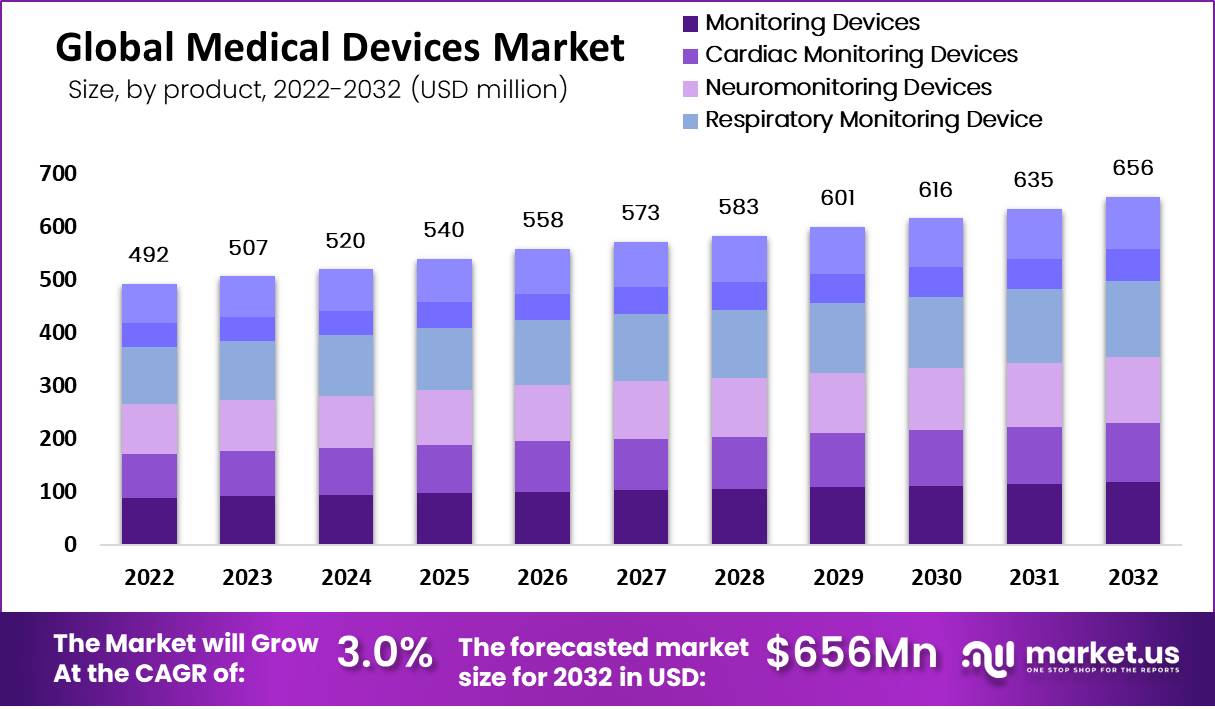
Medical Devices Market Size ($656 Bn by 2032 at 3.0{08cd930984ace14b54ef017cfb82c397b10f0f7d5e03e6413ad93bb8e636217f} CAGR)

Medical Devices Market Size (6 Bn by 2032 at 3.0{08cd930984ace14b54ef017cfb82c397b10f0f7d5e03e6413ad93bb8e636217f} CAGR)


Pune, March 01, 2023 (GLOBE NEWSWIRE) — According to Market.us, the global medical devices market accounted for USD 492 billion in 2022 and is projected to reach USD 656 billion by 2032, exhibiting a CAGR of 3.0{08cd930984ace14b54ef017cfb82c397b10f0f7d5e03e6413ad93bb8e636217f} in the forecast period (2023-2032).

Medical devices are used to diagnose and treat diseases or injuries. These devices can be used to treat illnesses or improve patients’ quality of life. FDA (Food and Drug Administration) classifies medical devices into three classes: Class I, Class II, and Class III. Because they have the most regulatory controls, Class I and II require special labeling. These are the ones that sustain or support human life. These include an implant endosseous and an external defibrillator. Medical device establishments are those that manufacture medical devices. These devices include in-vitro diagnosis and diagnostic imaging devices.

Medical Devices Market

Get additional highlights on major revenue-generating segments; request a medical devices market sample report at https://market.us/report/medical-devices-market/request-sample/

Medical Devices Market Key Takeaway:

  • By product, the In-Vitro Diagnostics segment (IVD) is expected to have the highest CAGR during the forecast period due to the increasing use of real-time diagnostic testing for diagnosing infectious and chronic diseases.
  • By end-user, the hospitals & clinics segment dominated the market in 2022 because of the rising healthcare spending, better healthcare infrastructure, and an attractive reimbursement policy.
  • In 2022, North America dominated the market with the highest revenue share of 43{08cd930984ace14b54ef017cfb82c397b10f0f7d5e03e6413ad93bb8e636217f} due to the high treatment rates, supportive government initiatives for early diagnosis of diseases, and the increasing adoption of technologically advanced devices.
  • Asia-Pacific is expected to grow at the highest CAGR between 2023-2032 due to the increasing patient population suffering from chronic diseases and improving healthcare infrastructure.

Complex surgeries and growing numbers are driving this market. In addition, the market for medical devices is expected to grow due to technological advancements in medical technology, brain monitoring devices, and government initiatives.

Factors affecting the growth of the medical devices industry?

Several factors can affect the growth of the medical devices industry. Some of these factors include:

  • Technological Advancements: Advanced technologies like artificial intelligence (AI) and wearable medical equipment are becoming increasingly prevalent in the medical devices market nowadays. This is propelling the market growth positively.
  • Rising chronic diseases: The increasing cases of chronic diseases like cancer, diabetes, etc., will raise the patient population. A sedentary lifestyle is a major reason behind this. This is boosting the market’s expansion.
  • Increasing healthcare expenditure: The increasing per capita healthcare expenditure in developing and developed countries means more opportunities for medical devices, which is positively affecting market growth.
  • Growing awareness about diseases: The growing awareness about infectious diseases and chronic conditions means that individuals are taking necessary treatments readily. This is abetting the market growth positively.

To understand how our report can bring a difference to your business strategy, Inquire about a brochure at https://market.us/report/medical-devices-market/#inquiry

Top Trends in the Global Medical Devices Market

Remote diagnosis, treatment, and monitoring of patients are possible now because of technologies like remote patient monitoring devices, artificial Intelligence (AI), wearable devices, and electronic health records. Patients can be monitored at their homes and hospitals via contactless technology. This is crucial in controlling COVID-19. Both patients and doctors can have an EHR for their patients. This means they don’t need to deal with traditional paperwork that must be sent through multiple people involved in the treatment. Patients and doctors can view the data on their own devices as well as those of other doctors.

Medical device manufacturers are seeking ways to reuse production lines to produce high-demand supplies to fight against the coronavirus. These products include hand soaps, ventilators, personal protective equipment (PPE), face masks, and other medical supplies. AirCo, a liquor producer, has shifted its focus to hand sanitizers. INKSmith Canada also produces face shields. It was a startup that made technology tools and designs more accessible for children.

Due to rising rates of chronic medical conditions and the treatment of those suffering from them, the healthcare system across different countries is facing immense pressure. This has led to a significant rise in the cost of treating these conditions. Hospital inpatient costs are significantly higher than the hospital charges for those treated at home. Additionally, longer hospital stays can result in a higher economic burden. A recent randomized study comparing hospital patients with those in home care showed that home care management costs decreased by 19{08cd930984ace14b54ef017cfb82c397b10f0f7d5e03e6413ad93bb8e636217f}. There has been an increase in the preference for home healthcare services due to increasing economic burdens and a growing elderly population. Home healthcare services are becoming more popular in developed countries due to the increasing efforts of key players and healthcare agencies to develop and launch simple-to-use medical devices, such as portable and wearable devices for chronic illnesses. Shimmer Research, a world leader in wearable technology applications, introduced Verisense Pulse+ in March 2021. This sensor is designed for Verisense platforms and provides photoplethysmographs and galvanic skin reactions. This device measures the heart rate and oxygen saturation of clinical trial patients and their activity levels and sleep levels.

Market Growth

Living a lifestyle that leads to physical inactivity can increase the risk of developing heart disease. This will likely increase the demand for medical devices as more heart surgeries are performed to clear blocked arteries. This will help to boost the market growth. This market is expanding because companies focus on creating advanced products and using different business strategies, such as acquisitions or partnerships, to maintain their market position.

Regional Analysis

Regional analysis shows that North America is expected to continue to be the largest market in medical devices. This market dominance is due to the rising prevalence of chronic disease, high healthcare spending, and key players’ presence. Canada’s growing elderly population will likely boost market growth during the forecast period. According to United Nations Population Fund statistics for 2022, Canada has a large population aged between 15 and 64. This group makes up approximately 65{08cd930984ace14b54ef017cfb82c397b10f0f7d5e03e6413ad93bb8e636217f} of Canada’s total population. According to the same source, 19{08cd930984ace14b54ef017cfb82c397b10f0f7d5e03e6413ad93bb8e636217f} of Canadians are expected to reach 65 by 2022. Geriatrics are more susceptible to developing chronic conditions such as respiratory disease, cardiopulmonary disease, and orthopedic disorders. This trend over the forecast period is anticipated drive market growth. A rising number of chronic conditions such as stroke, heart disease, and cardiovascular disease has increased cardiopulmonary bypass procedures; therefore, medical devices have seen a significant increase in demand. According to American Heart Association, the United States is predicted to have a 6.8{08cd930984ace14b54ef017cfb82c397b10f0f7d5e03e6413ad93bb8e636217f} heart disease prevalence by 2021, 1.8{08cd930984ace14b54ef017cfb82c397b10f0f7d5e03e6413ad93bb8e636217f} higher than the overall population. This will help to increase demand for medical devices that improves diagnosis and treatment. This will likely boost the market’s growth over the forecast period.

Competitive Landscape

The global medical devices market is fragmented because of the presence of many market players on both a regional and global level. With its extensive product range and international reputation, Medtronic holds the largest market share. Most industry players invest heavily in Research and Development (R&D), which is used to develop new products and improve existing product lines. They also invest a lot in growing their global distributor networks, allowing businesses to diversify product offerings.

Have Queries? Speak to an expert, or To Download/Request a Sample, Click here.

Medical Devices Market: Scope of the Report

Report Attribute Details
Market Value (2022) USD 492 Billion
Market Size (2032) USD 656 Billion
CAGR (from 2023 to 2032) 3.0{08cd930984ace14b54ef017cfb82c397b10f0f7d5e03e6413ad93bb8e636217f}
North America Revenue Share 43{08cd930984ace14b54ef017cfb82c397b10f0f7d5e03e6413ad93bb8e636217f}
Historic Period 2016 to 2022
Base Year 2022
Forecast Year 2023 to 2032

Market Drivers

Sedentary lifestyles and other factors increase chronic diseases like diabetes, cancer, and other infections. Through various awareness programs, healthcare agencies worldwide are trying to improve the speed of diagnosis and treatment. Due to the increasing prevalence of these conditions, the number of people who need diagnostic tests and procedures is on the rise. For example, the International Diabetes Federation stated that 537 million people were diagnosed with diabetes in 2021. IDF states this number will rise to 643 million in 2030 and 783 million by 2045.

According to the American Cancer Society, the number of new cancer cases in 2021 was 1.9 million. In addition, there is a rising demand for orthotic or ophthalmic procedures due to increasing numbers of joint fractures and poor vision in the elderly. Osteoarthritis Alliance 2021 data shows that the incidence of knee osteoarthritis is highest in those between 45 and 65 years old. About 45{08cd930984ace14b54ef017cfb82c397b10f0f7d5e03e6413ad93bb8e636217f} of osteoarthritis patients are 65 years old or older. Along with these factors, higher per capita healthcare spending in developing and emerging countries and better reimbursement policies drive an increasing number of patients seeking treatment and diagnosis. This is driving demand for medical devices.

Due to rising rates of chronic medical conditions and the treatment of those suffering from them, the healthcare system across different countries is facing immense pressure. This has led to a significant rise in the cost of treating these conditions. Hospital inpatient costs are significantly higher than the hospital charges for those treated at home. Additionally, longer hospital stays can result in a higher economic burden Shimmer Research, a world leader in wearable technology applications, introduced Verisense Pulse+ in March 2021. This sensor is designed for Verisense platforms and provides photoplethysmographs and galvanic skin reactions. It also has an inertial measurement unit. This device measures the heart rate and oxygen saturation of clinical trial patients. It can also measure their activity levels and sleep levels.

Market Restraints

Most likely, new products and services will be more expensive due to regulatory changes. Data protection is affected by these regulatory changes. These regulatory changes can also affect equipment approval procedures. The US Food and Drug Administration (FDA) has requested additional clinical information. This information is needed to support safety claims and efficacy claims regarding medical devices such as endoscopies. Due to the potential loss of revenue due to delayed product releases and the higher costs associated with the stringent approval process, investments in product development have been under pressure. This can have a negative effect on the growth of medical device and equipment markets.

Market Opportunities

The largest medical device market segmented by type is In-vitro Diagnostics. Hospitals and clinics will benefit the most from the segmented market for medical devices by the end user. With US$ 55,700 million, the USA is anticipated to be the world’s largest medical device market. According to the Business Research Company, medical device companies should concentrate on disposable medical products, contactless medical devices, portable medical devices, and wearable medical gadgets.

A recent randomized study comparing hospital patients with those in home care showed that home care management costs decreased by 19{08cd930984ace14b54ef017cfb82c397b10f0f7d5e03e6413ad93bb8e636217f}. There has been an increase in the preference for home healthcare services due to increasing economic burdens and a growing elderly population. In addition, home healthcare services are becoming more popular in developed countries due to the increasing efforts of key players and healthcare agencies to develop and launch simple-to-use medical devices, such as portable and wearable devices for chronic illnesses. These factors are creating ample amount of opportunities for the market.

Grow your profit margin with Market.us – Purchase This Premium Medical Devices Market Report at https://market.us/purchase-report/?report_id=95403

Report Segmentation of the Medical Devices Market

Product Insight

In-Vitro Diagnostics (IVD) is expected to experience a higher CAGR. This is due to the increasing usage of real-time diagnostic tests to accurately diagnose chronic or infectious diseases such as diabetes, cancer, HIV/AIDS, etc. In addition, the increased demand for medical devices, such as gloves and masks, surgical lights, and fetal monitors, led to the other segments holding a dominant position in 2022. The wound management segment is expected to grow significantly due to the increased investment made by medical device companies into new wound devices and bioactive therapies. Minimally Invasive Surgery is predicted to grow because of technological advancements in surgical robots and increased use by healthcare providers. Due to the increasing number of patients suffering from different cardiac and orthopedic conditions, orthopedic and cardiovascular devices will likely continue growing rapidly. Market growth for medical devices is anticipated to be driven by the increasing incidence of diabetes and retinal disorders in the population.

End-User Insight

This segment’s notable growth can be attributed primarily to rising healthcare spending, improved healthcare infrastructure, and a favorable reimbursement policy. According to the WHO report on healthcare infrastructure, most developing countries have less than 1 million hospital beds. These countries invest heavily in healthcare infrastructure development. As a result, healthcare infrastructure spending is expected to increase over the forecast period.

For more insights on the historical and Forecast Medical Devices Market data from 2016 to 2032 – Download a sample report at https://market.us/report/medical-devices-market/request-sample/

Market Segmentation

By Product Type

  • Monitoring Devices
  • Cardiac Monitoring Devices
  • Neuromonitoring Devices
  • Respiratory Monitoring Device
  • Multi-Parameter Monitoring Devices
  • Hemodynamic Monitoring Devices
  • Fetal and Neonatal Monitoring Devices
  • Temperature Monitoring Devices
  • Weight Monitoring Devices
  • In-Vitro Diagnostic Devices
  • Surgical ENT Devices.
  • Endoscopes
  • Imaging Devices
  • Diagnostic Molecular Devices
  • Drug Delivery Devices
  • Surgical Devices
  • Bio Implants and Stimulation Devices
  • Treatment Equipment
  • Infusion Pumps
  • Medical lasers and LASIK surgical machines
  • Other Product Types

By End-User

  • Hospitals & Clinics
  • Diagnostic Centers
  • Research laboratory
  • Pharmaceutical companies (Shopping Plazas, Military, Corporate Sectors, Hostels)

By Geography

  • Western Europe
    • Germany
    • France
    • The UK
    • Spain
    • Italy
    • Portugal
    • Ireland
    • Austria
    • Switzerland
    • Benelux
    • Nordic
    • Rest of Western Europe
  • Eastern Europe
    • Russia
    • Poland
    • The Czech Republic
    • Greece
    • Rest of Eastern Europe
  • APAC
    • China
    • Japan
    • South Korea
    • India
    • Australia & New Zealand
    • Indonesia
    • Malaysia
    • Philippines
    • Singapore
    • Thailand
    • Vietnam
    • Rest of APAC
  • Latin America
    • Brazil
    • Colombia
    • Chile
    • Argentina
    • Costa Rica
    • Rest of Latin America
  • Middle East & Africa
    • Algeria
    • Egypt
    • Israel
    • Kuwait
    • Nigeria
    • Saudi Arabia
    • South Africa
    • Turkey
    • United Arab Emirates
    • Rest of MEA

Key Market Players

Recent Development of the Medical Devices Market

  • FDA granted Abbott’s recall of its imaging catheter a Class 1 label in May 2022 because of vascular injury risks.
  • In January 2022, The US gave FDA approval to Mediatric’s Intellis rechargeable neurostimulator and Vanta recharge-free neurostimulator used for treating chronic pain caused by diabetic peripheral neuropathy.
  • Siemens Healthineers AG launched NAEOTOM Alpha in November 2021, which is the world’s first CT scanner that uses photon-counting technology cleared for clinical use in Europe and the US.
  • In August 2021, Johnson & Johnson introduced VELYS digital surgery. The robot-assisted option for total knee arthroplasty in the United States is now available.

Browse More Related Reports:

About Us:

Market.US (Powered by Prudour Pvt Ltd) specializes in in-depth market research and analysis and has been proving its mettle as a consulting and customized market research company, apart from being a much sought-after syndicated market research report-providing firm. Market.US provides customization to suit any specific or unique requirement and tailor-makes reports as per request. We go beyond boundaries to take analytics, analysis, study, and outlook to newer heights and broader horizons.

Our Blog: 


How Can Companies Bring New AI Software Medical Devices to Market?

How Can Companies Bring New AI Software Medical Devices to Market?

For SLAS US 2023, we communicate to Person Starbuck, just one of the co-founders at AIQ International, about how we can use AI technology to carry new medical units to market place. 

You should could you introduce your self and notify us what inspired your job inside of the daily life sciences?

I’m Male Starbuck, Co-Founder and CTO of AIQ Global. I have a qualifications in business computer software development and have been operating in professional medical product enhancement for the final 15 many years.

I discover doing the job with health care equipment to be very rewarding – it’s a terrific emotion to go property at the conclude of the day and know that the perform you do has the opportunity to have a immediate, positive influence on people’s lives.

You are the Co-Founder and CTO of AIQ World-wide, a firm enabling clinicians to make greater-educated treatment decisions. You should can you inform us far more about AIQ and its mission?

AIQ World is transforming how clinicians regulate elaborate health conditions, this sort of as metastatic cancer, to extend and enhance patients’ lives. AIQ’s software technological know-how employs details from radiological scans to assess how individual individuals will respond to specific solutions. Oncologists are working with AIQ’s TRAQinform IQ technologies to make additional confident therapy selections, personalize affected individual treatment, and boost therapy outcomes.

AIQ spun out of the College of Wisconsin-Madison Section of Medical Physics and the Carbone Cancer Centre. We received Fda clearance for our TRAQinform IQ technological know-how in 2018 and now have a group of in excess of 30 men and women in the US and Australia.

How Can Companies Bring New AI Software Medical Devices to Market?

Impression Credit rating: PopTika/Shutterstock.com

You are also encouraging to minimize healthcare expenses by offering intelligence encompassing the heterogeneity of treatment responses for elaborate diseases. How are you equipped to do this, and how does this contribute to the reduction in healthcare fees?

Managing most cancers is difficult, especially in the situation of late-stage, metastatic sickness. Metastatic lesions can be many, numbering as several as many hundred per affected individual, and each individual lesion can respond in another way to treatment method (termed reaction heterogeneity). At the time an oncologist initiates a therapy routine, they are faced with the pursuing queries: Is this patient responding favorably to this treatment, and if so, how long will that carry on? Is this procedure undertaking more harm than good in terms of destruction to crucial organs? Is the monetary expense of this treatment value the prospective profit? They revisit these very same concerns just about every couple of months to choose whether an individual ought to stay on treatment or swap to a different therapy plan.

Recurring radiological imaging provides important data about how the affected person responds to treatment method. In existing typical observe, only a subset of lesions (typically 3-5) is monitored since radiologists have to manually define (or “segment”) and measure each lesion. On the other hand, posted scientific tests have shown that resistance in fewer than 10{08cd930984ace14b54ef017cfb82c397b10f0f7d5e03e6413ad93bb8e636217f} of lesions can drive a inadequate general medical result. It is impractical for that time-consuming procedure to be done for all lesions. For that reason, oncologists are pressured to make clinical selections devoid of having all the details.

Mainly because our know-how is not a diagnostic device, we must refer to the places detected on scans as “regions of interest” fairly than “lesions.” AIQ’s TRAQinform IQ know-how routinely identifies and measures every single region of interest on particular person scans. We then can immediately match these regions of curiosity between scans and measure their alter above time. This engineering can possibly present economic benefit to the health care procedure by extending the period of initially-line therapies, which are substantially fewer costly than next and third-line choices, and averting expenses on ineffective treatment options.

At the moment, producing new health care technological innovation and bringing health-related devices to the marketplace is really tough. Why is this?

Health-related units are closely regulated. Producing professional medical system engineering calls for a significant amount of rigor, with specific needs for documentation of the entire style and manufacturing procedure to take care of security and performance dangers. Regulatory bodies (for illustration, the Food and drug administration in the US and TGA in Australia) will have to obvious professional medical equipment before they can be offered. The method involves the submission of evidence of compliance with applicable rules and common audits.

The second significant obstacle in bringing a health-related unit to marketplace is the complexities of reimbursement, primarily in the United States. With out reimbursement, it is much more difficult for physicians to use the merchandise considering the fact that the expenditures need to have to be absorbed by the health and fitness method or paid for by the client.

The third challenge is creating the device obtainable to physicians as aspect of their conventional set of instruments. Our item, TRAQinform IQ, is a cloud-based mostly procedure that processes 3D medical photographs this kind of as PET/CT scans. The scans reside in the medical center, so we have to have to integrate with hospital networks for info transfer. In addition, we require to combine with digital health care record units to make it straightforward for medical professionals to access our reviews. These integrations all have to have customization for particular person medical center systems to match their person workflow implementations and stability configurations.

Medical Devices Concept

Picture Credit: sfam_photo/Shutterstock.com

AI has obtained elevated notice in recent a long time, and its probable function in healthcare grows every day. How essential do you feel AI is to the health care sector, and the place do you see it creating the most effect in patient care?

We have noticed a large amount of advantages in employing AI to conduct duties that are sophisticated, time-consuming, and call for focus to element. Even though radiologists could contour all the bones, organs, and health conditions in a individual and then match each and every lesion manually involving two scans, it is impractical and just not completed. Furthermore, there can be considerable variability in outcomes among radiologists. By utilizing AI for these duties, we can present steady effects that oncologists can use to make extra self-confident and expense-successful remedy choices ensuing in improved affected person care.

You are offering a discuss at SLAS 2023 titled ‘The Path from Research to Professional medical Gadget- Commercializing AI in Clinical Imaging’. Can you inform us additional about what you will discuss in this speak and what readers can assume to find out?

In my chat, I will go over the tale of how AIQ went from a analysis venture consisting of a patent and a established of code scripts to an Fda-cleared professional software clinical unit. I’ll include the order we done precise pursuits and how we have structured and grown our team.

My intent is to support researchers with a evidence-of-concept with current market opportunity navigate all of the complexities and deliver a concrete roadmap for staffing, fundraising, and commercialization.

Can you inform us a lot more about your TRAQinform platform and its applications in health care?

TRAQinform IQ is a software package health-related gadget hosted in a HIPAA-compliant, secure cloud surroundings. The technologies applies AI and highly developed graphic processing algorithms to conventional-of-care medical pictures to deliver clinicians with complete reviews that they can use to tailor cure regimens and optimize results.

Are you hopeful that with continued support for AI in the health-related sector, we will soon see it turning into more commonplace in scientific settings? What would this imply for both of those hospitals and the people on their own?

AI is poised to be a massive component of health care in the foreseeable future – there’s an enormous quantity of exploration likely on right now, and the Fda now has perfectly-established recommendations for receiving acceptance for AI in healthcare units. As AI resources and procedures experienced and turn into much easier and safer to carry out, this craze will only increase – and has the probable to advantage every person by enhancing obtain to fast, large-high quality health care information and facts.

AI in Healthcare Concept

Picture Credit: metamorworks/Shutterstock.com

You are functioning in an remarkable area, with new progress becoming built at an extraordinary pace. What evokes you most about operating in this field, and what are you most on the lookout ahead to in the coming several years?

I am thankful to have the chance to operate in the health care subject and to be portion of a corporation that is undertaking concrete operate to extend lives and make a serious effects on client care.

Becoming section of a cutting-edge health-related device startup is attractive to quite a few people today, and we’ve assembled a committed staff of top rated folks throughout a lot of disciplines.

What is next for you and AIQ World? Are you involved in any interesting upcoming tasks?

We are continuously finding new and exciting applications for our technology – a person that we’re concentrating on right now is theranostics, the mix of treatment and diagnostics. Theranostics is promptly growing and can be incredibly efficient. On the other hand, it is pricey ($260,000/client), and important troubles exist, these types of as figuring out which patients would profit from therapy, optimizing the therapeutic dose, and checking procedure response. Our technologies is in a position to provide oncologists with specific data about the probable performance of theranostics for every client.

Our science workforce, led by Dr. Tim Perk, has a lot of extra improvements in the pipeline!

Where by can visitors obtain additional information and facts?

About Male Starbuck

In 2016 I experienced the option to co-identified AIQ International, a computer software clinical system startup spun out of the University of Wisconsin – Madison, with my fellow co-founders Dr. Robert Jeraj, Dr. Glenn Liu, and Dona Alberti. We obtained Food and drug administration clearance in 2018, at which issue we hired a CEO, Eric Horler. We have grown steadily and now have more than 30 staff members in the US and Australia.Guy Starbuck

As CTO at AIQ Worldwide, I designed the original prototype of the software program, aided develop our High-quality Management Program, and drove the exertion for our prosperous Fda clearance. I’m at this time the head of Engineering, IT, and Creation, concentrating on enabling the organization to supply new goods and capabilities, strategic advancement and scalability, as well as controlling integrations and protection compliance.

The Top 25 Women Leaders in Medical Devices of 2023

The Top 25 Women Leaders in Medical Devices of 2023

The Healthcare Technology Report is pleased to announce The Top 25 Women Leaders in Medical Devices of 2023. Technology is advancing at a rapid pace across industries, and perhaps nowhere is that more true than in the medical device market. In fact, according to Fortune Business Insights, the global market is projected to grow from roughly $495 billion in 2022 to nearly $719 billion by 2029 at a CAGR of 5.5{08cd930984ace14b54ef017cfb82c397b10f0f7d5e03e6413ad93bb8e636217f}. There is intense competition in the market, and the women on this year’s list and the companies they represent have found success innovating across a range of specialties, from insulin management systems to regenerative technologies, electrotherapy, and wireless surgical solutions.

Some of the distinguished leaders on this year’s list include Tania Saison, SVP and CCO/CRO of Edwards Lifesciences, who oversees the company’s Global Integrity Program, which establishes a comprehensive framework for ensuring compliance with applicable laws, regulations, and standards of conduct. Meanwhile, Jennifer Ernst, CEO of Tivic Health, built her company from founding to IPO in 5 years and put an award-winning medical device into market within 3 years. And Manisha Shah-Bugaj, COO of Activ Surgical, oversees the ongoing development and commercialization of the company’s products, including ActivSight™ Intelligent Light, which aims to provide enhanced visualization and real-time, on-demand surgical insights in the operating room.

The awardees on this year’s list lead from a range of positions, from President and CEO to SVP, EVP, and COO. What they have in common is their dedication to innovation in the medical device space, bringing revolutionary new devices to market and improving the lives of patients and clinicians alike. Please join us in celebrating The Top 25 Women Leaders in Medical Devices of 2023.

 

1. Tania Saison
Company: Edwards Lifesciences
Title: Senior Vice President and Chief Compliance Officer/Chief Responsibility Officer

Tania Saison is Senior Vice President and Chief Compliance Officer/Chief Responsibility Officer for Edwards Life Sciences, the global leader in patient-focused medical innovations for structural heart disease, as well as critical care and surgical monitoring. As CRO, Saison oversees the company’s Global Integrity Program with unwavering support from the Board of Directors and executive leadership. The program establishes a comprehensive framework for ensuring compliance with applicable laws, regulations, and standards of conduct, and reinforces Edwards’ culture of integrity and ethics. Saison is a member of the global senior leadership team.

Prior to Edwards, Saison served as VP and Chief Compliance Officer for Agilent Technologies. She got her start at Agilent as Senior Compliance Counsel. Previously, she was Assistant General Counsel and Head of Global Compliance for Beckman Coulter, Senior Counsel for Diageo plc, and served as an attorney for Hunton & Williams and Dewey Ballantine LLP. Saison earned her JD from Columbia Law School, her MBA from Harvard Business School, and her Bachelor of Arts in history from Columbia University.

 

2. Simona Serban
Company: Fresenius Medical Care
Title: Chief Operating Officer

Simona Serban is based in Bucharest, Romania. She currently serves as the Chief Operating Officer of Fresenius Medical Care, the world’s leading provider of products and services for individuals with kidney diseases. Fresenius aims to create a future worth living for chronically and critically ill patients — worldwide and every day. Thanks to the company’s decades of experience in dialysis, its innovative research, and its value-based care approach, it is helping patients enjoy the very best quality of life.

Prior to her COO role, Serban held assignments of increasing responsibility in the healthcare industry. This includes stints serving as a customer solutions manager and sales representative for Merck Sharp & Dohme Romania SRL. Her areas of expertise include pharmaceutical sales, product launch, market analysis, marketing management, and hospital sales, among others. She holds a degree from the Universitatea Alexandru Ioan Cuza, which is located in Iasi, Romania.

 

3. Aviva McPherron
Company: NuVasive
Title: Chief Information Officer and Senior Vice President of IT

Aviva McPherron serves as NuVasive’s Chief Information Officer and Senior Vice President of IT, and is responsible for the company’s information technology organization. NuVasive is committed to transforming surgery, advancing care, and changing lives through less invasive, procedurally integrated solutions. Since its inception in 1999, it has continually outperformed the market as the largest, spine-focused company in the world. With more than $1 billion in revenues, NuVasive has approximately 2,600 employees and operates in more than 50 countries serving surgeons, hospitals and patients.

McPherron’s previous roles include VP of Enterprise Applications and Senior Director of Business Solutions. Before joining NuVasive, she was Director of Operations for Tapestry Solutions, a Boeing Company, and has held multiple technical leadership positions delivering transformative solutions. McPherron holds a Bachelor of Science in mechanical engineering from Stanford University.

 

4. Elizabeth Sebern McCombs
Company: BD
Title: Executive Vice President and Chief Technology Officer

Elizabeth Sebern McCombs serves as Executive Vice President and Chief Technology Officer of BD (Becton, Dickinson and Company), a leading global medical technology company headquartered in Franklin Lakes, New Jersey. In this role, she is responsible for leading all R&D activities for BD, advancing new product innovation and development from early-stage concepts through launch, and sustaining the current product portfolio. She is also a member of the BD Executive Leadership Team.

McCombs joined BD in 2019 as the Senior Vice President, R&D for the BD Medical Segment, where she co-led the segment portfolio strategy and growth acceleration initiatives. Prior to joining BD, she spent more than 20 years at Johnson & Johnson (J&J), most recently as Vice President, R&D for Ethicon, J&J’s surgical device franchise. Aside from her technical credentials, McCombs has been recognized for her work driving inclusion and diversity efforts, including the support and mentorship of fellow female professionals. She holds an MBA from the University of Pennsylvania’s Wharton School of Business and both a Master of Science and Bachelor of Science in mechanical engineering from the Massachusetts Institute of Technology.

 

5. Niamh Pellegrini
Company: Nevro
Title: Chief Commercial Officer

Niamh Pellegrini currently serves as Chief Commercial Officer for Nevro, a global medical device company focused on delivering innovation to improve the quality of life for patients suffering from debilitating chronic pain. Pellegrini is a proven commercial leader with over 30 years of experience in the healthcare industry. Prior to joining Nevro, she was Vice President of Global Commercial Operations for Abbott Vascular.

Before Abbott, Pellegrini served as CEO and President at Autonomic Technologies, Inc. and President, North America at Thoratec Corporation. Prior to Thoratec, she served in progressively responsible global business development, strategy, and commercial roles at Johnson & Johnson. Pellegrini currently serves on the Board of Directors of Acutus Medical. She graduated from Santa Clara University with an MBA and a Bachelor of Science in finance.

 

6. Lena Hagman
Company: XVIVO
Title: Chief Operating Officer

In December 2022, Lena Hagman was appointed Chief Operating Officer of XVIVO, the first global all organ company. Founded in 1998, XVIVO is the only medical technology company dedicated to extending the life of all major organs — so transplant teams around the world can save more lives. Hagman has extensive global operational experience within the medical device industry, and has for the last 12 years been in different executive roles within the Getinge group, a Swedish global MedTech company. Her most recent role was as Executive Vice President for Quality compliance, Regulatory and Medical Affairs, which she held for 7 years.

Throughout her career, Hagman has been active in the medical device industry, with more than 20 years in leading positions with global responsibilities in R&D, supply chain, and quality/regulatory/medical affairs. Over the years, she has led many strategic and efficiency programs and company integrations. She has deep knowledge and experience in different global medical device quality regulations and with a high customer and patient centricity focus. She holds a Bachelor of Science in chemistry and textile engineering from Chalmers University of Technology, Sweden and is based at XVIVO’s headquarters in Gothenburg.

 

7. Jennifer Ernst
Company: Tivic Health
Title: Co-Founder and Chief Executive Officer

Jennifer Ernst is the Co-Founder and Chief Executive Officer of Tivic Health, a commercial phase healthtech company focused on advancing bioelectronic medicine. Ernst has more than 20 years of experience in the commercialization of breakthrough innovation and a history of developing markets from frontier technologies. As CEO of the U.S. subsidiary of Thin Film Electronics, she helped build the company from eight to 130 people, achieved a $480 million market cap in five years, and launched international award-winning products.

Ernst has held positions at Xerox PARC, positioning research for productization through strategic partnerships and licensing, and served as chairperson of Flex, the U.S. National Consortium for Flexible and Printed Electronics, now part of SEMI. She participated in the launch of the Global Women’s Leadership Network and was named to the Inc. Female Founders 100 and to the Healthcare Technology Report Top Women Leaders in Consumer Healthtech. She received an MBA from Santa Clara University and a Bachelor of Arts from San Francisco State University.

 

8. Manisha Shah-Bugaj
Company: Activ Surgical
Title: Chief Operating Officer

In December 2022, Manisha Shah-Bugaj was promoted from Activ Surgical’s Chief Operating Officer, a position she had held for just under a year, to its newest Chief Executive Officer. In addition to engaging with company partners, customers, and investors, Shah-Bugaj oversees the ongoing development and commercialization of Activ Surgical products, including ActivSight™ Intelligent Light, which aims to provide enhanced visualization and real-time, on-demand surgical insights in the operating room.

Prior to joining Activ Surgical, Shah-Bugaj architected the gynecology unit at Olympus from the ground up in the U.S., ultimately serving as General Manager and Global Vice President for the company, and played an integral role in expanding the gynecology business internationally. She has more than two decades of experience, including building and implementing corporate business plans, directing regional and global businesses aligned to financial and operational targets, hiring and establishing new teams, and managing product portfolios. She holds a Master of Engineering Management and a Bachelor of Engineering in biomedical engineering, both from Dartmouth College.

 

9. Anna Lucsok
Company: Zynex Medical
Title: Chief Operating Officer

Anna Lucsok currently serves as Chief Operating Officer for Zynex Medical. Zynex, founded in 1996, markets and sells its own design of electrotherapy medical devices used for pain management and rehabilitation. The company’s proprietary NeuroMove device is designed to help the recovery of stroke and spinal cord injury patients. Zynex has also developed a blood volume monitor for use in hospitals and surgery centers.

Previously, Lucsok served as Vice President of Reimbursement and Sales Operations with Zynex. In this position, she was responsible for leading and expanding Zynex’s order, reimbursement, patient experience, and inside sales support operations. During her tenure, each of these teams consistently achieved quarterly targets, while also expanding in size. Lucsok brings more than nine years of healthcare operations experience as well as critical knowledge of revenue cycle management and medical care collections. She has been involved in various operations positions as well as management positions with Zynex since her start in 2018, including serving as Billing Manager. She previously held key positions with companies such as the University of Colorado Hospital, the U.S. Air Force based in Germany and Japan, and Schryver Medical. Lucsok holds certification in medical billing and earned her Bachelor of Science in healthcare administration and management from Colorado State University.

 

10. Sreelakshmi Kolli
Company: Align Technology
Title: Executive Vice President, Chief Digital Officer

Sreelakshmi Kolli is Executive Vice President Chief Digital Officer for Align Technology. She is responsible for leading software, data, enterprise, cloud, and infrastructure engineering teams focused on the design and development of digital products and services. This includes defining the technology strategy and development of product software, consumer, customer, manufacturing, and enterprise applications enabling the Align Digital Platform. In addition, Kolli led Align’s global business transformation initiative aimed at delivering platforms and technology to support customer experience and simplified business processes across the company.

Kolli joined Align in June 2003 as Manager, Software Engineering and held positions of increasing responsibility leading business operations and engineering for customer-facing applications. She was promoted to Senior Vice President, Global IT in December 2012 before being promoted to her current position in April 2020. Prior to joining Align, Kolli held technical lead positions with Citadon and Accenture. She is also a member of the Board of Directors at Zimmer Biomet Holdings, Inc. Kolli earned a Master of Science in computer applications at the National Institute of Technology in Trichy, India and is a graduate of the Stanford Executive Program offered by the Stanford Graduate School of Business.

 

12. Deborah Gordon
Company: Insulet
Title: Vice President, Investor Relations

Deborah Gordon has served as Vice President, Investor Relations for Insulet Corporation since January 2015. Insulet is a roughly $1 billion medical device company dedicated to making the lives of people with diabetes easier through its OmniPod Insulin Management System. Gordon also serves on the Board of Directors of the L.S. Starrett Company, serving on the Audit Committee since July 2020 and the Compensation Committee since July 2021.

Prior to joining Insulet, Gordon served in a number of roles of increasing responsibility during her 10 years at Hologic, Inc. and Cytyc Corporation (which merged with Hologic in October 2007). Notably, she served for seven years as Hologic’s Vice President, Investor Relations and Corporate Communications and prior as Assistant Corporate Controller and Director of SEC Reporting and Technical Accounting at Cytyc. Before joining Cytyc, Gordon served in the audit practice at Deloitte & Touche for 11 years. She earned her Bachelor of Arts in business administration, with concentrations in accounting and economics, from Clark University and is a certified public accountant.

 

13. Suzanne Winter
Company: Accuray
Title: President and Chief Executive Officer

Since July 2021, Suzanne Winter has served as President of California-based medical equipment manufacturer Accuray, and in July 2022 she was promoted to Chief Executive Officer as well. In her position at the head of the company, Winter has continually driven the expansion of Accuray’s radiotherapy cancer treatment technologies, yielding record order volume and the approval of numerous novel treatments in China and beyond. She has had a significant impact on Accuray’s product portfolio and commercial momentum since joining the company.

Prior to joining Accuray, Winter held senior executive roles spanning general management, commercial operations, and business development across a range of healthcare industry segments, including radiology, neurology, and surgery. Most recently, she served as Group Vice President – Americas region at Medtronic Diabetes, where she was responsible for leading the 2,000 person commercial organization. Before Medtronic, Winter was the General Manager of GE Healthcare’s Detection and Guidance Solutions operations. She earned an MBA from Harvard Business School and a Bachelor of Science in chemistry from Saint Lawrence University.

 

14. Sandra Hirsch
Company: Zyris, Inc.
Title: President and Chief Executive Officer

Sandra Hirsch is the third founding member of Zyris, Inc., pairing decades of experience as a financial manager and CPA with a zeal for entrepreneurship sparked by her Bachelor of Science in business administration from the University of Southern California. Under her leadership as President and Chief Executive Officer, Zyris has grown from a struggling start-up to the world leader in dental isolation, distributing Isolite products throughout North America and in more than 20 countries overseas. Hirsch is defined by her family, the Zyris team, and unwavering resolve to forever change the experience of dentistry for patients and clinicians.

In 2001, Hirsch founded Innerlite Inc. with her husband Jim Hirsch, an industrial designer, and her brother-in-law Tom Hirsch, a practicing dentist. Together, they rebranded the company as Isolite Systems and launched their flagship product, the Isolite illuminated dental isolation system, in 2002. Isolite enables dental practices of all sizes to implement a technique for controlling the oral environment, providing an innovative solution for dental isolation. Offering a full line of isolation products that are minimally invasive and easy-to-use, Isolite Systems allows dental professionals to work more productively and effectively with less stress and fatigue for both themselves and their patients.

Today, Hirsch serves as President and CEO of Isolite Systems. Under her leadership, the company has grown from a single game-changing idea to an international phenomenon, with over fifty employees at their Santa Barbara-based manufacturing and distribution center and representatives worldwide. Thousands of dentists in over twenty countries are loyal fans of the safety, comfort, and control that Isolite dental isolation provides. In the U.S., over 20{08cd930984ace14b54ef017cfb82c397b10f0f7d5e03e6413ad93bb8e636217f} of all dental schools have adopted their products, which will soon become the standard of care for everyday dental procedures. Hirsch and the Isolite team continue to develop products that make a difference in people’s lives. They are relentlessly focused on the pursuit of a better dental experience for every patient and have earned numerous awards and accolades for their efforts.

 

15. Tavia Walsh
Company: Pulse Technologies
Title: Co-Founder Chief Technology Officer

Tavia Walsh is a Co-Founder and the Chief Technology Officer of Pulse Technologies, an entrepreneurial startup based in Vancouver designing innovative, low-cost consumer wearable devices using emerging new conductive materials and 3D printing methods. As a biomedical engineer with both an electrical and mechanical background, Walsh has an interest in complex problem solving and design thinking; and as a founder of Pulse, she has experience in the biomedical start-up space.

Walsh co-founded Pulse Technologies in 2016. While working on Pulse, she served as a biomedical engineer for 4M BioTech from 2020-2021 and as a mechanical engineer for ViVitro Labs Inc. from 2021-2022. Walsh earned her MD from University College Dublin, her Master of Applied Science in mechanical engineering from the University of Victoria, and her Bachelor of Applied Science from The University of British Columbia.

 

16. Jennifer Honeycutt
Company: Danaher
Title: Executive Vice President

As Executive Vice President, Jennifer Honeycutt provides strategic and operational leadership for Danaher’s Environmental and Applied Solutions businesses, which includes the Product Identification and Water Quality platforms. She also oversees Danaher’s High Growth Markets and regional teams outside of China. Honeycutt originally joined Danaher with the 2000 acquisition of Hach and has held positions of increasing responsibility across multiple industries over the past 20+ years.

Leadership roles at Hach Ultra Analytics, Anderson Instrument Company (now part of Fortive), Linx Printing Technologies, Beckman Coulter Life Sciences, and Pall have given her deep knowledge of the Danaher Business System (DBS) and a unique perspective on the many ways Danaher can help realize life’s potential across its businesses. Honeycutt is a champion of the power of diversity, and a longstanding member of Danaher’s Diversity + Inclusion Council. Throughout her tenure, she has consistently delivered strong results by building high-performing teams and driving strategic M&A, innovation, and commercial execution. Honeycutt earned a Master of Arts in Technology Management from the University of Denver and Bachelor of Arts degrees in chemistry and French from Grinnell College.

 

17. Pooja Pathak
Company: LumiraDx
Title: Chief Product Officer

Since June 2021, Pooja Pathak has served as Chief Product Officer for LumiraDx, a next-generation point of care diagnostics company based in the U.K. Founded in 2014, the company provides a comprehensive portfolio of testing solutions used by governments and leading healthcare institutions. Pathak, who previously served as LumiraDx’s Vice President of Platform Strategy, is currently responsible for product management, marketing, and medical affairs.

Prior to LumiraDx, Pathak most recently worked at Abbott as VP of Global Marketing for the Infectious Disease Emerging Markets business, which included 170 countries across Asia, EMEA, and Latin America. In this role she was responsible for a $500 million portfolio. Additionally, she has held leadership roles with Alere and Novartis Vaccines, where she focused on bringing new innovations to market, implementing integrated diagnostic and treatment programs, and rolling out global public health solutions. Pathak holds a Master of Science in chemical engineering from MIT and a Bachelor of Science in chemical engineering from the University of Illinois Chicago.

 

18. Kelli Howell
Company: Alphatec Spine
Title: Executive Vice President, Clinical Strategies

Kelli Howell has served as Executive Vice President, Clinical Strategies of Alphatec Spine since March 2018. Alphatec improves lives by providing innovative spine surgery solutions through its relentless pursuit of superior outcomes. The company is dedicated to the design, development, launch, and the delivery of spinal fusion products. Alphatec accomplishes this by working with spine surgeons to design and develop products and systems that address the entire spinal fusion procedure in the most effective and efficient way possible. Its product designs and platforms provide innovation through a focus on simplifying procedures for the surgeon with the ultimate objective of superior outcomes.

For the 18 years prior to joining Alphatec, Howell held various management positions at NuVasive, Inc., including Vice President, Research & Health Informatics from January 2017 to March 2018, Vice President, Research & Education from February 2015 to January 2017, and Vice President, Research from April 2012 to February 2015. Prior to joining NuVasive, Howell was involved in research at Orthopedic Biomechanics Laboratory (OBL), Beth Israel Deaconess Medical Center in Boston. Howell received a Master of Science in biomedical engineering from Boston University and a Bachelor of Arts in engineering sciences from Dartmouth College.

 

19. Alison Burdett
Company: The Surgical Company
Title: Chief Scientific Officer

Alison Burdett has over 30 years of experience in electronic engineering and semiconductor design, particularly in the field of ultra-low-power wireless communication for medical applications. She co-founded Toumaz in 2001 and served as the Technical Director. She became the Chief Technical Officer in 2006, responsible for delivering silicon and advanced technology programs for both consumer and healthcare divisions of the business. In 2016, the healthcare business unit of Toumaz, Sensium Healthcare, became part of The Surgical Company Group and she joined Sensium, where she became the Chief Scientific Officer, responsible for all engineering and scientific programs for the company’s digital health products.

Prior to joining Toumaz, Burdett spent time both in industry as an integrated circuit designer, and also in academia (as a Senior Lecturer of Analog IC Design with Imperial College London). She is a Visiting Researcher with the Institute of Biomedical Engineering, Imperial College. She has more than 80 peer-reviewed publications and is a named inventor on more than 20 patents. Burdett was a member of the Technical Programme Committee for the IEEE International Solid-State Circuits Conference (ISSCC) from 2009 to 2018, serving as the European Regional Chair 2012–2014 and the Technical Program Chair for ISSCC 2018. She has been an Associate Editor of IEEE Transactions on Biomedical Circuits and Systems since 2008, and is the Associate Editor-in-Chief of the IEEE Open Access Journal of Circuits and Systems. She is a Chartered Engineer and a Fellow of the Institute of Engineering and Technology. Burdett earned her PhD in analogue IC design and her bachelor’s degree in electrical and electronics engineering from Imperial College London.

 

20. Rhonda Robb
Company: Cardiovascular Systems, Inc.
Title: Chief Operating Officer

From January 2018 to June 2022, Rhonda Robb served as Chief Operating Officer of Minnesota-based medical device manufacturer Cardiovascular Systems, Inc., a medical device company developing and commercializing innovative interventional treatment systems for peripheral and coronary artery disease. In her time at the company, Robb was renowned for her agile, forward-thinking leadership style, and her efforts helped bring the company to numerous new patients and a greatly expanded product line.

In the time since her departure from Cardiovascular Systems, Robb has continued to serve on the board of 4C Medical Technologies. Robb formerly served as Vice President and General Manager of the Heart Valve Therapies business at Medtronic. In that role, she was responsible for the transcatheter and surgical valve franchises. Previously, Robb held additional leadership positions in Medtronic’s Coronary, Peripheral, and Cardiac Rhythm businesses. She has strong experience leading complex businesses, growing new markets, extensive commercial experience, and a strong track record of building teams and product portfolios that have improved the quality of care for patients with cardiovascular disease. Robb holds an MBA from the University of Minnesota’s Carlson School of Management.

 

21. Jessica Lynch
Company: DentalMonitoring
Title: Chief Operations Officer – North America

Since April 2022, Jessica Lynch has been Chief Operations Officer – North America at DentalMonitoring, the leading Intelligent Platform globally which provides connected, smarter and more sustainable dental care. DentalMonitoring creates with doctors and partners an environment to deliver the best dental care to patients, synchronized with their treatment needs. Showcasing a unique, people-first leadership style, Lynch has helped the company improve financial results while enjoying sustainable organizational growth. Recent achievements by DentalMonitoring have included new advances in AI-driven dental technologies and a unique new gamified feature in its signature platform.

Prior to DentalMonitoring, Lynch served as Vice President of Operations Excellence and Vice President of Strategy for Smile Doctors. Before that, she was Chief Operating Officer for DN Orthodontics for four years. She also served as Senior VP, Doctor Relations (2010-2014) and Director of Operation Consultants (2009-2010) for OrthoSynetics, and was a physician liaison for Louisiana Medical Center and Heart Hospital, LLC. Lynch holds a Bachelor of Science in business administration from the University of Louisiana at Lafayette.

 

22. Rebecca Lin
Company: Potrero Medical
Title: Chief Strategic Officer

With her unique blend of business acumen and technical expertise, Rebecca Lin is a dynamic leader with many years of success in the healthcare industry. Today she serves as the Chief Strategic Officer for Potrero Medical, a Hayward, California-based predictive health company developing the next generation of medical devices with smart sensors and artificial intelligence. Lin, who has been with the company since October 2016, previously served as the Senior Vice President of Sales and Marketing. In that role, she built and led the commercial organization that developed go-to-market strategies for Potrero’s Accuryn Monitoring System.

Over the years, Lin has achieved success at both large corporations and startups. Prior to her work at Potrero, she was the VP of Business Development at Theranova and led marketing initiatives for C. R. Bard (now owned by Becton Dickinson), in both Shanghai and the U.S. She has also worked as a Board Fellow at the American Red Cross Bay Area, currently serves as a guest lecturer at the University of California, San Francisco and Berkeley, and spent several years in sales and training at Johnson & Johnson. Lin holds a Master of Science in management from the Stanford University Graduate School of Business and a master’s in marine biology from Sun Yat-sen University in Guangdong, China.

 

23. Kristie West
Company: Orchid Orthopedic Solutions
Title: Chief Operating Officer

Kristie West is the Chief Operating Officer at Orchid Orthopedic Solutions, a global leader in medical device outsourcing services. Founded in 2005, the company’s 1,500 employees work to provide a broad array of capabilities in the world of orthopedic devices, including design, regulatory affairs, implant manufacturing, and instrument manufacturing, among other areas. West, who is a Six Sigma Black Belt and a Master Black Belt, joined Orchid in January 2022.

West came to Orchid from General Electric’s Edison Works Programs and Operations team, where she was the Senior Executive Director supporting the future of military combat and space. Prior to joining the Edison Works team, West was the Senior Executive for the Tubes & Ducts Value Stream in GE Aviation’s Supply Chain organization. She also held a number of leadership roles within GE, including Director of Operations for Unison Industries (a GE company); Executive Plant Leader for Avio Aero (a GE company), in Torino, Italy; Supply Chain Strategy Leader for GE Aviation; and CF6 Customer Programs Leader. Prior to GE, West held various leadership roles in manufacturing with Navistar and Carrier Global Corporation. She holds a Bachelor of Science in organizational leadership from Purdue University’s Polytechnic Institute.

 

24. Liz Hammack
Company: Pristine Surgical
Title: Chief Manufacturing Officer

Liz Hammack is Chief Manufacturing Officer of Pristine Surgical, a medical device company with a mission to simplify endoscopy. While Hammack joined the company in September 2021, her career began more than 30 years ago. During this time, she has worn many hats: from working on the factory floor, to holding multi-plant leadership, to operating in the boardroom. In addition to her work at Pristine, she is also the principal owner of Hammack Manufacturing Solutions, which is based in Portland, Oregon.

Prior to Pristine, Hammack spent 16 years at Medtronic, most recently serving as a Vice President of Manufacturing and Operations, AFS. In that position, she led operations, manufacturing, and supply chain integration activities for the newly formed AF Solutions business at Medtronic-CRDM. In 1981, she graduated from Oregon State University with a Bachelor of Science in industrial engineering. A proud alum, she has since served on numerous boards for the university’s College of Engineering. Furthermore, in 2013, she received Oregon State’s distinguished engineer award.


25. Dina Dubey
Company: Teleflex
Title: Chief Operating Officer

Dina Dubey is the Chief Operating Officer of Teleflex. Dubey’s roots with the company go back to 2011, when she started off as Director of Research and Development for Z-Medica, which was acquired by Teleflex in 2020. In this position, Dubey drove a pipeline of projects and developed and drove QuikClot Control+, the organization’s first-of-its-kind, new-generation hemostatic dressing, which ultimately resulted in commercialization of the product. On top of that, Dubey was a vital member of the executive leadership team that grew Z-Medica’s revenue from $28 million to $64.8 million.

Dubey started her career at Kensey Nash Corporation (now DSM Biomedical), where she spent eight years in engineering and management roles. In 2003, she received a Bachelor of Science in biomedical engineering from Case Western Reserve University. She also holds a Master of Science in engineering management and a Master of Science in biomedical engineering from Drexel University. More recently, Dubey completed a leadership development program from Harvard Business School Executive Education.

Medical Devices Secondary Packaging Market is Estimated to be Valued at US$ 12,409.8 Million in 2023 & Rising to US$ 20,914 Million by 2033

Medical Devices Secondary Packaging Market is Estimated to be Valued at US$ 12,409.8 Million in 2023 & Rising to US$ 20,914 Million by 2033
Future Market Insights Global and Consulting Pvt. Ltd.

Future Market Insights Global and Consulting Pvt. Ltd.

Leading Medical Devices Secondary Packaging Market participants include Sonoco Products Company, Smurfit Kappa, Berry Global Group, Inc., Constantia Flexibles Group GmbH, UFP Technologies, Placon Incorporated, Steripack Group among others. China’s Medical Devices Secondary Packaging Market is projected to be worth US$ 1,270.1 million by 2033.

NEWARK, Del, Feb. 14, 2023 (GLOBE NEWSWIRE) — The global medical device secondary packaging market is expected to be worth US$ 12,409.8 million in 2023, rising to US$ 20,914 million by 2033. The adoption of medical device secondary packaging is expected to surge at a stable CAGR of 6.1{08cd930984ace14b54ef017cfb82c397b10f0f7d5e03e6413ad93bb8e636217f} over the forecast period.

The medical device secondary packaging market is experiencing significant growth driven by several key factors. The increasing aging population and the associated rise in chronic diseases are driving the demand for medical devices such as pacemakers, stents, and artificial joints, leading to an increased need for proper packaging to ensure the safety and integrity of these devices. Advancements in medical technology have also led to the development of new medical devices, requiring manufacturers to invest in packaging solutions to protect them during transportation and storage.

In addition, the growing demand for minimally invasive surgical procedures is driving the need for smaller medical devices and appropriate packaging solutions to ensure safe delivery to the surgical site. Stringent regulations for medical device secondary packaging are also playing a key role in driving demand as governments around the world implement standards to protect the safety and integrity of the devices.

Request a Sample@ https://www.futuremarketinsights.com/reports/sample/rep-gb-16617

Furthermore, rising awareness about the importance of proper packaging in extending the shelf life of medical devices is also driving demand.

While the adoption of medical device secondary packaging is expected to experience significant growth, manufacturers are also facing several challenges. One of the prominent challenges is meeting stringent regulations and compliance requirements to ensure the safety and integrity of medical devices. Another challenge is ensuring the compatibility of packaging materials with medical devices to avoid any damage. Managing costs while maintaining high standards of quality is also a significant challenge for manufacturers as they strive to produce packaging solutions at a competitive price while meeting industry standards.

Key Takeaways from the Medical Device Secondary Packaging Market:

  • The paper and paperboard market is predicted to account for US$ 14,293.2 million by 2032 and to grow at a 5.5{08cd930984ace14b54ef017cfb82c397b10f0f7d5e03e6413ad93bb8e636217f} CAGR throughout the projection period.

  • During the projection period, the plastic segment is expected to offer a growth potential of US$ 6,620.8 million. In 2022, the boxes sector accounted for about 30{08cd930984ace14b54ef017cfb82c397b10f0f7d5e03e6413ad93bb8e636217f} of the market. This category is also predicted to rise at a healthy 5.5{08cd930984ace14b54ef017cfb82c397b10f0f7d5e03e6413ad93bb8e636217f} CAGR throughout the projection period.

  • Folding cartons are expected to represent an incremental potential of US$ 1.9 billion over the projection period and to account for more than 21{08cd930984ace14b54ef017cfb82c397b10f0f7d5e03e6413ad93bb8e636217f} of the market by 2032.

  • During the projection period, the medical device secondary packaging sector in the United States is expected to exceed US$ 5,067.6 million.

  • This German market is predicted to provide a startling additional opportunity of US$ 1,030.4 million, making it an appealing location for both investors and producers.

  • By 2032, China’s medical device secondary packaging industry is expected to be worth US$ $1,270.1 million.

Who is Winning?

Product innovation, market expansion into new markets, strategic alliances and collaborations, and acquisitions are common growth tactics employed by the industry’s leading players. Startups in the market are developing innovative technologies to efficiently label medical devices.

Packaging companies may save validation time and eventually create smaller batch sizes that comply with customer specifications by applying the same processes for identical medical devices with a few minor adjustments. The use of NFC and RFID tags in packaging materials is expected to be promoted by counterfeiting, which is a serious problem with medical supplies.

Sonoco Products Company, Smurfit Kappa, Berry Global Group,Inc., Constantia Flexibles Group GmbH, UFP Technologies, Placon Incorporated, Steripack Group, Nelipak Group, Stora Enso Oyj, Winpak Ltd, Graphic Packaging International, LLC,Atlantic Packaging, Pro-tech Design & Manufacturing Inc., Scan Modul B.V., Körber AG, The BoxMaker

Ask an Analyst@ https://www.futuremarketinsights.com/ask-question/rep-gb-16617

Recent Developments in the Market:

  • Ashfield, a subsidiary of UDG Healthcare plc, announced the development of three business divisions in January 2021 to expand and diversify its healthcare capabilities.

  • In April 2021, Amcor presented its most recent invention, the New AmSkyTM blister system. This innovation has the potential to revolutionize medical packaging sustainability.

  • In April 2020, Amcor’s ULTRA pouches were certified for steam sterilization at 134°C and vaporized hydrogen peroxide treatment. As a result, the pouches may be used to sterilize reusable medical equipment.

Medical Devices Secondary Packaging Market by Category

By Material:

  • Paper and Paperboard

  • Plastics

By Packaging Format:

  • Boxes

  • Folding Cartons

  • Bags and Pouch

  • Trays

  • Inserts and Dividers

  • Wrapping Films

By End Use:

  • Surgical

  • Therapeutic

  • Diagnostic

By Region:

Ask For Customization@ https://www.futuremarketinsights.com/customization-available/rep-gb-16617

Table of Content

1. Executive Summary | Medical Devices Secondary Packaging Market

1.1. Global Market Outlook

1.2. Demand-side Trends

1.3. Supply-side Trends

1.4. Technology Roadmap Analysis

1.5. Analysis and Recommendations

2. Market Overview

2.1. Market Coverage / Taxonomy

2.2. Market Definition / Scope / Limitations

3. Market Background

3.1. Market Dynamics

3.1.1. Drivers

3.1.2. Restraints

3.1.3. Opportunity

3.1.4. Trends

Browse Full Report@ https://www.futuremarketinsights.com/reports/medical-devices-secondary-packaging-market

Have a Look at Related Research Reports of Packaging

Packaging Tapes Market Size: The global packaging tapes market is set to enjoy a market valuation of US$ 71.7 Bn in 2021, and register a CAGR of 4.8{08cd930984ace14b54ef017cfb82c397b10f0f7d5e03e6413ad93bb8e636217f} {08cd930984ace14b54ef017cfb82c397b10f0f7d5e03e6413ad93bb8e636217f} to reach US$ 120.1 Bn by 2032.

Packaging Bins Market Forecast: Global sales of packaging bins stood at around US$ 1.9 Bn in 2021 and is slated to increase at a CAGR of 4.4{08cd930984ace14b54ef017cfb82c397b10f0f7d5e03e6413ad93bb8e636217f} to reach a valuation of US$ 3.0 Bn by 2032.

FMCG Packaging Market Outlook: The global FMCG packaging market is expected to reach US$ 418.8 Bn in 2022, with sales growing at a CAGR of 5.7{08cd930984ace14b54ef017cfb82c397b10f0f7d5e03e6413ad93bb8e636217f} through 2032.

Medical Device Packaging Market Sales: The global medical device packaging market is likely to reach US$ 48.1 Bn by the year 2027at a CAGR of 5.3 {08cd930984ace14b54ef017cfb82c397b10f0f7d5e03e6413ad93bb8e636217f} between 2022 and 2027.

Medical Device Trays Market Growth: Medical Device Trays Market: Medical Device Trays Industry Analysis, Regional Outlook, Market Revenue, Competitor Analysis, and Industrial Growth by Future Market Insights.

About Future Market Insights, Inc.

Future Market Insights, Inc. is an ESOMAR-certified business consulting & market research firm, a member of the Greater New York Chamber of Commerce and is headquartered in Delaware, USA. A recipient of Clutch Leaders Award 2022 on account of high client score (4.9/5), we have been collaborating with global enterprises in their business transformation journey and helping them deliver on their business ambitions. 80{08cd930984ace14b54ef017cfb82c397b10f0f7d5e03e6413ad93bb8e636217f} of the largest Forbes 1000 enterprises are our clients. We serve global clients across all leading & niche market segments across all major industries.

Contact Us:
Future Market Insights Inc.
Christiana Corporate, 200 Continental Drive,
Suite 401, Newark, Delaware – 19713, USA
T: +1-845-579-5705
LinkedIn| Twitter| Blogs | YouTube
For Sales Enquiries: sales@futuremarketinsights.com

New 3M tape for wearable medical devices can now stick up to 28 days

New 3M tape for wearable medical devices can now stick up to 28 days

3M has introduced a new adhesive tape that can stick to the skin for up to 28 days for use with medical monitors, sensors and wearables — a significant improvement over the industry’s standard wear time.

The company is marketing the tape to medical device makers and original equipment manufacturers.

Known to consumers as the maker of Scotch tape and Post-it notes, 3M has more than 55 years of medical adhesion experience. The company produces more than 200 medical tapes and films.

“If you think of a Post-it note, you want to be able to remove it without damage to whatever you’ve stuck it to. You think of skin in the same way,” said Chad Reed, director of global business for 3M medical materials and technologies. “You want to stick something to the skin and be able to remove it without damage to the skin.”

The target market is wearable medical devices, for example, glucose monitors.

As device manufacturers work through developing a new device, they will incorporate the 3M adhesive, which can be worn in wet conditions, and will not fall off due to sweat.

“It is usually a patch,” Reed said. “Most patients won’t have any idea that a 3M product is incorporated into that device.”

Before last year, the industry standard wear time for medical adhesives was up to 14 days. In April 2022, 3M debuted an adhesive — 3M Medical Tape 4576 — that could last for up to 21 days. 3M developers in the U.S. and Japan spent about a year devising that longer-lasting adhesive.

The newest adhesive is 3M Medical Tape 4578, which can last for up to 28 days.

“This is a huge innovation,” said Michael Fry, senior principal product engineer with St. Paul-based Minnetronix Medical, a contract manufacturer of medical devices. “Longevity of the adhesive is an important factor. It really helps to lessen the intrusion on the patient’s life.”

Minnetronix currently has six wearable products under development and production. Patients with wearables using the new tape will not need to switch patches as often. As a result, Fry said, it could cut costs for device development because fewer patches will be needed.

It may also improve patient safety, he said. For a patient with an open wound under a wearable, fewer changes means lower risk of contamination.

A recent study from Deloitte found that 49{08cd930984ace14b54ef017cfb82c397b10f0f7d5e03e6413ad93bb8e636217f} of U.S. health care consumers use wearables, digital assistants or smart devices to track health and fitness.

“About one-third of consumers said they use a wearable device to monitor health issues — for example, blood sugar, blood pressure, breathing function, mood,” wrote Glenn Snyder, Deloitte’s global med tech practice leader, in a November blog post.

In July, 3M announced plans to spinoff its $8.6 billion health care business into a separate public company. It expects to complete the separation by the end of this year. The company has not shared new details or an updated timeline since announcing the plan.