Ankylosing Spondylitis Physical Therapy Exercises

Ankylosing Spondylitis Physical Therapy Exercises

Physical therapy is a common treatment used for ankylosing spondylitis. It helps to:

  • Reduce pain
  • Improve mobility
  • Minimize stiffness

This article will cover the benefits of ankylosing spondylitis physical therapy and what to expect during ankylosing spondylitis physical therapy sessions. It will also discuss pain management techniques to stay comfortable.

Wavebreakmedia / Getty Images


Benefits of Ankylosing Spondylitis Physical Therapy

One of the primary treatments for ankylosing spondylitis is exercise. Exercise guided by a physical therapist (PT) has been shown to provide:

  • Pain relief
  • Spinal mobility
  • Functional capacity
  • Stiffness

A PT can help to prevent and/or correct postural deformities.

What to Expect During Physical Therapy Sessions

When you work with a physical therapist, you will learn specific exercises and stretches to improve function. A physical therapist will assess your needs and determine your limitations. Once an assessment is complete, the physical therapist will guide you through the movements.

After the session, you usually are given a set of exercises and stretches to do at home.

A physical therapist will create an at-home plan individualized to your needs and goals. This plan is generally provided in a handout at the end of the physical therapy session. Don’t hesitate to ask your therapist to clarify how to do the exercises.

Physical Therapy After Surgery

If you have had surgery for ankylosing spondylitis, your healthcare provider may recommend seeing a physical therapist. The PT will work with the person to regain range of motion and strength in a safe way after surgery.

Posture Training

Ankylosing spondylitis causes inflammation in the spine that can also lead to bone formations that fuse the spine. People with the condition may have a stooped posture to compensate for the pain and stiffness.

A physical therapist may use posture training exercises to help restore mobility and proper posture in people with ankylosing spondylitis. These exercises will focus on strengthening the lower back and shoulder blades to help improve posture and movement.

Flexibility Exercises and Stretching

Stretching and flexibility exercises benefit you by supporting your mobility and range of motion. When you have ankylosing spondylitis, your ability to move may decline, increasing your risk of joint fusion. Also, when joint inflammation occurs, the nearby muscles tighten to control the motion. This causes even more pain and stiffness.

As a result, stretching and range of motion exercises should be done every day on joints that are still or can become stiff.

Strength Exercises

In people with ankylosing spondylitis, strengthening exercises are key in supporting their core and maintaining overall muscle strength.

The core muscles, which include the abdominal and back muscles, support your spine. Having strong core muscles can reduce stress on the spine and pain. Strengthening exercises are ones in which you are moving against resistance or weight. These exercises should be done two to four times per week with the guidance of a physical therapist.

Aerobic Exercise

Aerobic exercises increase blood flow through the heart and improve lung and heart function as well as your overall health. Other ways that aerobic exercise benefits people with ankylosing spondylitis include:

  • Improve breathing function
  • Increase endurance
  • Better mood
  • Less pain and fatigue

The Spondylitis Association of America recommends performing aerobic exercises three to five times per week for an approximate total of 75 to 150 minutes each week.

Balance Exercises

Maintaining a strong core and proper balance are at the base of safe movements. In less active people, these stability exercises are extra important. Balance exercises reduce the chance of falls. A physical therapist can help design balance exercises that are both safe and effective while helping those with ankylosing spondylitis reach their physical goals.

Patient Education and Pain Management

Physical therapists are trained to educate patients on exercises to improve their condition. This education is completed through in-person appointments and handouts that can be reviewed at home.

A 2019 study showed that ankylosing spondylitis symptoms improved in people with an exercise program compared to those who did not exercise. Each person will have different needs; that is where a physical therapist can come in and create an exercise program for your individual needs.

Other Ankylosing Spondylitis Treatment Options

Exercise and stretching are key to a holistic approach to ankylosing spondylitis. But medication and proper nutrition are also part of the equation. There are several medications available that can slow down the progress of the condition and help manage the symptoms.

They include nonsteroidal anti-inflammatory drugs (NSAIDs), TNF (tumor necrosis factor) inhibitors, and others. A healthcare provider will guide your through treatment options to provide the best results.

How to Find a Physical Therapist

One of the best ways to find a physical therapist is through a referral from your healthcare provider. They will know which physical therapists specialize in ankylosing spondylitis and are in the area. If your healthcare provider is unable to find a physical therapist for you, ask for a referral to a social worker. They can guide patients through the healthcare system and find the necessary assistance.

Summary

Ankylosing spondylitis is a chronic condition that causes back pain and stiffness. One of the recommended treatments is exercise and stretching. Exercise and stretching will help patients reduce symptoms and maintain their range of motion. A physical therapist is trained to guide patients through an exercise program to provide them with the best results.

Frequently Asked Questions

  • Do you need to work with a special type of physical therapist?

    People with ankylosing spondylitis do not need to work with a special type of physical therapist, but it is helpful to work with a PT who is familiar with the disease’s limitations and progression.

  • How long do you need to do physical therapy for AS?

    How long someone with ankylosing spondylitis needs physical therapy will vary based on their healthcare provider’s recommendations. Individual sessions generally last from 30 minutes and one hour.

Verywell Health uses only high-quality sources, including peer-reviewed studies, to support the facts within our articles. Read our editorial process to learn more about how we fact-check and keep our content accurate, reliable, and trustworthy.
  1. Physiopedia. Ankylosing spondylitis (axial spondyloarthritis).

  2. Millner JR, Barron JS, Beinke KM, et al. Exercise for ankylosing spondylitis: An evidence-based consensus statement. Semin Arthritis Rheum. 2016;45(4):411-427.

  3. Spondylitis Association of America. Exercise.

  4. Regnaux J, Davergne T, Palazzo C, et al. Exercise programmes for ankylosing spondylitis. Cochrane Database Syst Rev. 2019;2019(10):CD011321. doi:10.1002/14651858.CD011321.pub2

  5. Spondylitis Association of America. Treatment of spondyloarthritis.


By Patty Weasler, RN, BSN

Patty is a registered nurse with over a decade of experience in pediatric critical care. Her passion is writing health and wellness content that anyone can understand and use.

At-home physical therapy program effective with Rett syndrome | Tailored exercises strengthen patients’ motor skills

At-home physical therapy program effective with Rett syndrome | Tailored exercises strengthen patients’ motor skills

Ladies and women with Rett syndrome who participated in a 3-thirty day period, at-house actual physical treatment application with occasional remote supervision met or exceeded most remedy ambitions and received in motor talents, a research stories.

“The proposed activity programs … improved gross and fantastic motor capabilities, and increased the daily physical action degree of girls and girls with RTT [Rett] across a huge assortment of ages and severity levels,” the researchers wrote.

The examine, “Individualized Remotely Supervised Motor Exercise Systems Boost Rehabilitation Purpose Accomplishment, Motor Operating, and Actual physical Action of People with Rett Syndrome—A One-Cohort Analyze,” was printed in the Worldwide Journal of Environmental Investigation and Community Wellness.

Advisable Reading

An illustration shows a group of hands giving the thumbs up sign.

1 complete hour of movement exercises, finished five days a week

People with Rett syndrome experience ubiquitous troubles with motor purpose. Physical therapy can assist to boost purpose, and for the finest results, treatment routines need to be continuously practiced at house, not just at the clinic. In the wake of pandemic-connected lockdowns, investigation interest is developing in applications that can facilitate treatment in a home environment.

A staff of scientists in Italy and Israel done a demo to appraise a personalized, distant-supervised actual physical remedy software for Rett syndrome patients.

The research enrolled 40 ladies and women of all ages with Rett (necessarily mean age, 15.7) and their people, which the scientists noted tends to make it “the most significant sample ever recruited in analysis about the motor treatment of people today with RTT.”

At an first go to, contributors achieved with a therapist to examine treatment objectives. 3 months later on, they met all over again and were being instructed in a personalised established of therapeutic workouts that could be done at the residence.

Routines focused on four places — motor functionality, hand purpose, array of motion, and bodily fitness — and have been to be executed for one particular hour, with time damaged up as required, 5 times a 7 days.

“The applications aimed to reach the determined therapeutic aims by means of very easily executed bodily functions done in just the girl’s everyday lifetime,” the scientists wrote. They famous that specific packages diverse broadly, based on the wants of the specific.

“The therapeutic intervention ought to be spouse and children-centered and constructed in strict cooperation with the person’s family to concentration on major objectives and enough guidance, maximizing adherence to the intervention,” the group wrote.

Participants had been instructed to execute the at-home method for a few months, and each and every other 7 days they obtained steering from a therapist by means of a 1-hour video meeting.

Individuals then underwent a a few-thirty day period washout interval, in which they did not carry out application routines. Both of those ahead of and right after the intervention, people underwent a number of standardized assessments of motor functionality.

Most of 176 determined treatment goals achieved or surpassed by people

Amid the 40 clients, a complete of 176 remedy plans were being discovered. By the conclude of the intervention, most (82.4{08cd930984ace14b54ef017cfb82c397b10f0f7d5e03e6413ad93bb8e636217f}) of these ambitions had been attained or surpassed. The scientists famous that practical goals, like increasing motor capabilities or hand function, were far more probably to be satisfied than goals linked to increasing joint assortment of movement or all round bodily health.

“More precisely,” the researchers wrote, “65.5{08cd930984ace14b54ef017cfb82c397b10f0f7d5e03e6413ad93bb8e636217f} of these goal achievements exceed … anticipations, highlighting the efficacy of motor rehabilitation packages when used to clients’ day by day routines.”

In assessments, the scientists employed Goal Attainment Scaling (Fuel), a numeric score that assesses holistically how well an personal is assembly therapy targets. A Fuel rating lessen than 40 implies that the patient is failing to meet objectives, while a score in excess of 60 suggests the affected individual is overachieving.

For just about half of the people — 19 out of 40, or 47.5{08cd930984ace14b54ef017cfb82c397b10f0f7d5e03e6413ad93bb8e636217f} — Fuel scores had been better than 60 next the intervention. This accomplishment suggests that “these individuals’ treatment method probable has been underestimated,” the scientists wrote.

Only just one of these 40 individuals experienced a Gas score lessen than 40, and she started to knowledge seizures shortly immediately after commencing the study, which interfered with the family’s capability to complete the system as developed. Just after the washout section, an additional two patients had Fuel scores reduce than 40. Once again, these minimal scores have been connected with overall health complications, like hip difficulties that brought about trouble strolling.

Over-all, “the acquired effects strongly assist the efficacy of [remote supervised physical therapy] programs in bettering the participants’ motor useful abilities and the achievement of rehabilitation plans,” the scientists wrote.

In 85{08cd930984ace14b54ef017cfb82c397b10f0f7d5e03e6413ad93bb8e636217f} of individuals, scores on the Rett Syndrome Motor Evaluation Scale (RESMES) improved substantially following the intervention, reflecting much better motor purpose, and scores typically remained steady by means of the washout period. Physical action scores, as measured with the Modified Bouchard Exercise History (mBAR), elevated significantly with the intervention and dropped thereafter to the pre-intervention stage.

Collectively, analyze findings counsel that the at-house treatment plan can profit individuals with Rett syndrome, and the scientists invited clinicians caring for individuals with Rett to carry out related programs for their people.

“The proposed intervention may well also be beneficial to other folks with severe disabilities,” the researchers extra.

Tibial Plateau Fracture Recovery: Physical Therapy Exercises

Tibial Plateau Fracture Recovery: Physical Therapy Exercises

A tibial plateau fracture is a fracture of the top of the tibia or shin bone. Tibia plateau fractures most commonly occur from motor vehicle accidents, falls, or high-impact sports collisions. For a tibial plateau fracture to heal properly, you will require physical therapy to rehabilitate you back to your prior level of function. 

This article will review physical therapy exercises for a tibial plateau fracture, a general recovery timeline, and tips for getting started with physical therapy.

ljubaphoto / Getty Images


Location and Pain Sensation of a Tibial Plateau Fracture 

A tibial plateau fracture will cause a deep ache and/or sharp pain within your knee joint and at the top of your shin bone where the fracture occurred. Pain may also radiate down your leg and into your foot, and a visible deformity of your knee and significant swelling will be present. In addition, bearing weight through your leg to stand up or walk will be incredibly difficult and painful, and you may need to go to the emergency room.

When to Begin Rehabilitation  

Rehabilitation for a tibial plateau fracture should start as soon as possible under your healthcare provider’s recommendations. However, if the break is severe enough, you may need to go to the operating room after injury to realign your bone and secure the broken pieces to heal. 

Physical Therapy Exercises for Tibial Plateau Fracture

Exercises for a tibial plateau fracture strengthen your glutes, quadriceps, and hamstrings that support and stabilize your knee and leg. You will start with non-weight-bearing exercises and gradually progress to weight-bearing exercises as you can tolerate putting more weight on your leg as it heals.

Heel Slides

Heel slides help bend your knee to restore the range of motion of your knee.

To perform this exercise:

  • Lay on your back and place a towel under the heel of your affected leg. 
  • While keeping your heel in contact with the surface you are lying on, pull the towel with both arms to slide your foot closer to your body as you bend your knee. 
  • Once you cannot bend your knee any further, hold this position for 5 seconds, then slowly straighten your leg. 
  • Repeat for 20 repetitions, holding the stretch for 5 seconds each time. 

Quadriceps Stretch

Stretching your quadriceps muscles helps maintain proper flexibility of your leg muscles and helps improve your ability to bend your knee. 

To perform this exercise:

  • Lay on your stomach and place a long towel around the foot of your affected leg. 
  • Grab both ends of the towel with one hand and pull your leg, so your foot moves closer to your buttocks. 
  • Hold this stretch for 30 seconds, then relax. 
  • Repeat for three sets of 30 seconds. 

Bridges

Bridges help improve the strength of your glutes, powerful muscles that help support and stabilize your legs with walking, stepping up when climbing stairs, and standing up from a seated position. The glutes also provide strength and stability for your legs to help balance.

To perform a bridge:

  • Lie on your back with both knees bent and feet flat
  • Squeeze your glute muscles to lift your hips as high as you can without pain. Keep your back flat, and do not arch your back.
  • Hold for three seconds at the top, then lower your hips back down.
  • Rest, then repeat for a total of three sets of 10 repetitions.

Clamshells

Clamshells help strengthen the glute muscles, specifically the gluteus medius muscles on the sides of the hips, that help provide support and stability to help you maintain your balance when moving and changing directions.

To perform this exercise:

  • Lie on your side with your knees bent and feet flat with a resistance band placed around your thighs above your knees.
  • Keeping your feet flat, push your knees out to the sides against the band.
  • Hold for three seconds, then bring your knees back together.
  • Rest, then repeat for a total of three sets of 10 repetitions.

Straight Leg Raise

Straight leg raises help improve the strength of your hip flexors to lift your leg and quadriceps to stabilize your knee.

To perform this exercise:

  • Lie on your back with one leg bent and one leg extended.
  • Tighten the thigh muscle of the extended leg and lift your leg while keeping your leg straight the entire time.
  • Slowly lower your leg while keeping your thigh muscle tight and your knee straight.
  • Repeat for three sets of 10 to 15 repetitions.

Side-Lying Straight Leg Raise

Side-lying leg raises can help strengthen your gluteus medius, a muscle that helps stabilize the leg.

To perform this exercise:

  • Lie on your side with your body in a straight line– hips, knees, and ankles stacked on top of each other, keeping your legs straight.
  • Slowly lift your top leg up while keeping your leg straight the entire time. Do not let your body or hips roll backward or forward.
  • Hold your leg at the top position for one second.
  • Slowly lower your leg while keeping your knee straight.
  • Repeat 10 to 15 times, completing a total of three sets.

Sit to Stand

This exercise helps strengthen the glute and quadricep muscles to improve your ability to bend down, squat, and get in and out of a chair.

To perform this exercise:

  • Sit in a chair with a hard surface (using a soft chair or couch will make it harder to stand up).
  • Lean your body forward so your nose is aligned with your toes.
  • Use your legs to push yourself up from the chair. Try not to use your hands to help you push up from the chair surface.
  • Squeeze your glutes at the top to fully extend your hips once standing upright.
  • Hold for 1 second, then push your hips back and slowly lower yourself back onto the chair.
  • Rest, then repeat for a total of three sets of 10 repetitions.

Step-Ups

Step-ups help improve the overall strength of your leg by targeting multiple muscle groups, including the hip flexors, quadriceps, and glutes, to support your ability to lift your leg and bear weight on your leg, especially with going upstairs.

To perform this exercise:

  • Stand in front of a small step with handrails on each side.
  • While holding onto the handrails, lift your affected leg to place your foot on the step.
  • Step up with the affected leg, then follow with the other leg.
  • Then step down backward with the unaffected leg first, followed by the affected leg.
  • Rest, then repeat for a total of three sets of 10 repetitions.

Tools and Exercise Aids 

In the beginning stages of recovery from a tibial plateau fracture, you will need crutches or a walker to help support your body weight. If you are not allowed to stand on your leg, you may need a wheelchair for the initial weeks following surgery to get around.

Once you build up enough strength in your leg to support your body weight and improve your balance, you may progress to using a cane or no assistive device to help you walk.

Estimated Recovery Timeline 

A tibial plateau fracture can take three to six months or more to heal completely depending on the severity of your fracture. Pain levels will decrease, and walking will be easier after one month of being able to put weight on your leg after surgery.

During your recovery, walking and standing for long periods will be difficult at first, which can impact your ability to work and engage in family and social activities. In addition, jobs that have more physically demanding work duties will require a more extended amount of time to recover and return to work.

Making sure you attend regular physical therapy visits will ensure that you are taking the appropriate steps to rehabilitate yourself back to your previous level of functioning. 

For most cases, you will need to attend physical therapy visits two to three times per week for generally up to three months. During and after your physical therapy sessions, you should also expect to keep up with your progress by performing a home exercise program. 

How to Find a Physical Therapist 

To find a physical therapist, you can use an internet search engine with the keywords “physical therapy” and your town to find physical therapy practices near your location. You can also use the “find a provider” search function on the website of your health insurance company to find physical therapy providers in your area that accept your insurance. In addition, homecare services can be used to deliver physical therapy in your home for people who have difficulty getting to and from a facility. 

Insurance Coverage and Costs 

The cost of your physical therapy visits will depend on your individual health insurance coverage. Most insurance companies approve a certain amount of visits at a time or per year, but these visits can often be extended if treatment is considered medically necessary. Your health insurance may fully cover your visits, or you may have to pay a certain amount for each visit.

Summary

Physical therapy for a tibial plateau fracture should start as soon as possible after your injury and surgery to restore your range of motion and strength as quickly as possible. Depending on the severity of your injury, you may or may not be able to bear weight through your leg after surgery and will need some type of assistive device like crutches, a walker, or a wheelchair to get around.

A physical therapist will work with you to improve your ability to move your leg, the strength of surrounding muscles, your ability to walk, and balance with exercises that move your leg through different planes of movement. 

A Word From Verywell

Getting up and moving after a tibial plateau fracture is crucial. The more actively engaged you are in your rehabilitation process, the better the chance of a successful recovery. 

Frequently Asked Questions

  • What exercise should you avoid with a tibial plateau fracture?

    High-impact and weight-bearing exercises should be avoided if you are given non-weight-bearing restrictions in the beginning stages of your recovery. Your physical therapist will review safe exercises you can do during each phase of your rehabilitation and will progress exercises as you build up more strength and stability in your leg.

  • Is a full recovery possible after a tibial plateau fracture?

    With proper rehabilitation and adherence to a post-operative protocol, full recovery from a tibial plateau fracture to return to work and exercise is possible.

  • What’s the best way to sleep during tibial pleasure fracture recovery?

    You can sleep in whatever position is most comfortable for you. Avoid placing a pillow or towel directly under your knee, which can cause it to stiffen up and make it difficult and painful to fully move your knee.

  • What can you do at home to speed up recovery?

    Regularly engaging in a home exercise program provided by your physical therapist and applying ice to your knee can help decrease pain and improve your leg strength and range of motion to speed up recovery.

  • Do you need a referral to start physical therapy for a tibial plateau fracture?

    Some facilities require a prescription from a referring physician to start physical therapy while other facilities operate under direct access, where you can call and request an initial evaluation appointment without a prescription.

Emotional exercises to better your mental health and combat anxiety

Emotional exercises to better your mental health and combat anxiety

Juli Fraga, Psy.D., is a psychologist with a non-public practice in San Francisco.

As the pandemic proceeds, so does the mental health crisis. A lot of of us are having difficulties with the grief and trauma the coronavirus unleashed, as perfectly as stressors this kind of as mass shootings and local weather modify. With so substantially suffering, there is a higher need to have for remedy, but numerous psychotherapists — myself incorporated — just can’t meet up with the mounting desire.

When new individuals speak to me, I help those in disaster discover unexpected emergency treatment and connect others with counselors or group support. But when money “S” stressors these types of as unrelenting panic, depleting despair and sleeplessness roar loud, some sufferers want additional rapid enable. This may possibly make clear why numerous potential sufferers talk to me: “What can I do now to increase my psychological overall health?”

One doable option, claims clinical psychologist Emily Anhalt, is to incorporate an “emotional workout” to your self-treatment routine. “Just like functioning out prevents superior blood pressure and heart ailment, psychological health can be a proactive stance towards strain administration,” suggests Anhalt, the co-founder of Coa, a health club for psychological health and fitness.

In Coa’s virtual lessons, Anhalt and her crew educate routines called “emotional push-ups,” which are tiny approaches to operate on you every working day. “The purpose is to improve your mental wellbeing muscle mass so that you’re in a superior position to experience life’s difficulties,” she says.

Self-treatment equipment can be helpful, primarily when barriers this sort of as substantial-deductible insurance policy ideas, superior co-pays and residing in distant locations can make psychological wellbeing treatment tough to afford or accessibility. And though the pandemic isn’t entirely to blame for the absence of therapists, it is absolutely made items even worse, suggests Vaile Wright, the senior director of wellbeing-care innovation at the American Psychological Association.

This is why it’s so challenging to find psychological health and fitness counseling ideal now

With far too couple mental wellbeing sources, we require ground breaking techniques to make psychological care extra accessible, she states. If you’re waiting around to see a therapist, just cannot manage psychological wellbeing treatment or have not too long ago concluded therapy, emotional workout routines are one way to reinforce your psychological muscle mass. Whilst these workouts aren’t meant to substitute person or group treatment, Anhalt suggests they can advertise resilience and enable you truly feel empowered.

In this article are some pro-backed workouts to support you start.

Overwhelmed? Agenda a ‘worry date.’

The uptick in environment turmoil is understandably rattling our psychological wellbeing. Wright says the around constant “bad news” cycle and social media discussions can heighten our emotions of get worried and overwhelm.

Researchers state that fret has a cognitive ingredient, which is why ruminations usually spur on troubling feelings that enjoy on repeat. 1 way to cope with this distress is to program a “worry date.” “Set a time on your each day calendar to be concerned, obsess and ruminate,” Anhalt indicates. Throughout this date, take 10 to 15 minutes to jot down your woes.

In her e book, “Cards From Anxiousness,” mental wellbeing educator and writer Pooky Knightsmith says a date with stress can halt this uneasy experience from getting to be the manager and having over.

8 approaches to really feel fewer anxious about things outside of your command

Irritated with a beloved a single? Exercise the ‘self-reflection thrust-up.’

When you’re pissed off since your spouse went to a live performance maskless or a co-worker stole the spotlight, it’s purely natural to see the irritating occasion as the dilemma. But one more method is to get the opportunity to learn about yourself, Anhalt states.

Sensation hurt, aggravated or offended with somebody else’s behavior could possibly replicate something we dislike about ourselves. To study this risk, Anhalt implies training an training she calls the “self-reflection force-up.” This press-up makes use of the “3 Js, which stand for be a part of, jealous and judge” to guideline you.

Request your self if the other person’s conduct is something you also do (join), are envious of (jealous) or criticize (choose). For occasion, if you’re irritated with your good friend for becoming selfish, you may understand that you have behaved the identical way. Placing the spotlight on our steps allows us to take responsibility, Anhalt suggests.

When it comes to constructing near interactions, investigate reveals that self-awareness can enhance cognitive empathy, which is our ability to fully grasp another person else’s emotions from their viewpoint.

Sensation down? Befriend rough thoughts.

As people, we’re wired to stay away from soreness. When not comfortable feelings this kind of as anger or sadness occur, we may well try to distract ourselves from experience lousy. We may well scroll by means of social media, drink an additional glass of wine or binge on Netflix. These methods are called “defenses,” which are thoughts and behaviors that maintain us from feeling the unbearable. But when we solely depend on defenses, we stay away from feeling our emotions, which hinders our ability to approach them.

When upset thoughts arise, try to befriend your inner thoughts. Start off by naming your feelings, a system psychologists contact “affect labeling.” You can also turn into a detective by discovering in which your emotions clearly show up in your overall body. For instance, I check with my clients, “Where do you feel that emotion?” and “What may well it be attempting to tell you?” The target is not to change the emotion, but to deliver awareness to how it feels in the instant.

It is all-natural to feel delighted and unfortunate at the identical time. Here’s when it can turn out to be a problem.

A 2018 investigation overview states that “concentrating on our inner thoughts, devoid of attempting to improve them” can enable relieve distress. This “in-the-moment” head-set is what dialectical-habits therapist Marsha Linehan calls “radical acceptance,” and it’s a single way to prevent soreness from persisting. Several persons suppose that radical acceptance hinders transform, but this liberating stance can escort transformation, suggests scientific psychologist Jenny Taitz.

Reeling with stress and anxiety? Training curiosity.

About 32 {08cd930984ace14b54ef017cfb82c397b10f0f7d5e03e6413ad93bb8e636217f} of U.S. adults confirmed signs of anxiousness ailment or depressive problem in the 7 days ahead of Aug. 8, the Home Pulse Survey confirmed, in accordance to the Centers for Condition Handle and Avoidance. For a more compact share of people, nervousness indicators are a mental ailment these as generalized anxiousness ailment, which has an effect on somewhere around 3 {08cd930984ace14b54ef017cfb82c397b10f0f7d5e03e6413ad93bb8e636217f} of Americans, or social stress and anxiety disorder, which has an effect on closer to 7 {08cd930984ace14b54ef017cfb82c397b10f0f7d5e03e6413ad93bb8e636217f} of the standard inhabitants.

If you want to disarm your anxiousness, adopting a curious brain-set may well help. When anxiety and uncertainty strike, we’re frequently speedy to question, “Why is this taking place?” points out psychiatrist and neuroscientist Judson Brewer, author of “Unwinding Stress and anxiety” and professional medical director of Sharecare. “The mind latches on to this ‘why’ issue for the reason that we believe that uncovering the solution will take care of our nervousness,” Brewer describes. But in truth, this mind-established can keep us experience helpless and caught. To climb out of this rabbit hole, check out to enter the “anxiety-free zone,” the neuroscientist suggests.

How to make buddies with your internal critic

A person grounding exercise is to sit down, glimpse at your toes, and inquire, which “foot is hotter than the other?” This problem helps spark curiosity, Brewer states. This wondrous feeling also can open up the head to alternatives, permitting us to see our scenarios in a different mild, investigate reveals. “When stress and anxiety throws us for a loop, changing ‘Why is this occurring?’ with ‘What is happening?’ can pull us out of the nervousness-laden ‘why zone,’ ” Brewer states.

Mental health and fitness workout routines can train us to greater regulate our worrisome feelings and upset emotions. These exercise sessions may well also support us assume about our discomfort in a various way. “Symptoms like anxiety and melancholy are the body’s alarm method,” Anhalt claims. “By trying to comprehend them, we can uncover the root induce of our suffering.”

If you’re on the lookout for further psychological wellness workouts, Wondermind presents a totally free e-newsletter with mental fitness tips, Coa presents a complimentary 15-moment psychological health class, and Liberate delivers wellness lessons to assistance individuals cope with worry and burnout.

We welcome your reviews on this column at OnYourMind@washpost.com.

Indicator up for the Well+Remaining e-newsletter, your resource of qualified assistance and simple guidelines to enable you live effectively just about every working day

Unsupervised Home Exercises Versus Formal Physical Therapy After Primary Total Hip Arthroplasty: A Systematic Review

Unsupervised Home Exercises Versus Formal Physical Therapy After Primary Total Hip Arthroplasty: A Systematic Review

Formal physical therapy (PT) after total joint arthroplasty (TJA) is commonly recommended and is often thought to be indispensable to favorable patient outcomes [1,2]. In contrast to the modern era, these surgeries were performed on older, less active patients with more severe diseases and deformities [3]. These earlier surgeries were more extensive, and weight bearing was often limited postoperatively [4,5]. Modern total hip arthroplasty (THA), however, is characterized by a younger, more active patient population along with dramatic advances in pain control and rapid recovery [4,5]. Despite the changing landscape, formal PT has maintained its status amongst providers and patients as an integral component to improving outcomes [2,6].

Several studies over the past few years have demonstrated that formal PT, whether inpatient or outpatient, may not have any benefit over home-based unsupervised exercise programs [7-9]. While this has led to a shift away from formal PT utilization by some, there are no guidelines to assist in determining which patients may benefit [7]. Reducing the routine use of formal PT to only those patients for whom it is warranted may offer several benefits. The responsibility of copays and transportation is often placed on the patient and, for many, can be a significant burden [10,11]. Additionally, with the increased interest in alternative healthcare models, the focus has shifted to finding methods to reduce episode-of-care costs [12,13]. The costs associated with formal PT after discharge are not trivial, comprising up to 8{08cd930984ace14b54ef017cfb82c397b10f0f7d5e03e6413ad93bb8e636217f} of total costs for TJA episodes of care [9].

The goal of this review was to assess the existing literature comparing outcomes of primary THA patients undergoing formal supervised PT to those with unsupervised home exercise programs through a systematic review and meta-analysis of randomized controlled trials (RCTs). To avoid intervention bias towards supervised home programs, we chose to only include studies that explicitly described unsupervised home exercise regimens. The primary aim was to assess changes in lower extremity strength (LES), aerobic capacity, and patient-reported physical outcome and quality of life (QoL) scores at zero to six months and six months to one year.

This systematic review and meta-analysis were conducted in accordance with the PRISMA (Preferred Reporting Items for Systematic Reviews and Meta-Analyses) guidelines and were registered in the PROSPERO International Prospective Register of Systematic Reviews (PROSPERO Identifier CRD42021228071).

Inclusion criteria

This review considered all English-language RCTs that compared objective measures and patient-reported outcomes (PROs) from patients with formal postoperative PT or supervised exercise programs to those with unsupervised home exercise interventions (defined as an explicitly stated form of home exercise program to be performed without direct supervision of a health professional). This also included written exercise instructions, video programs demonstrating exercises, or phone applications containing directions for exercises). The time period of interventions was limited to the period between discharge from hospitalization and six months postoperatively. Studies involving comparisons between only supervised cohorts, unsupervised cohorts, or without clear delineation of what each exercise intervention consists of were excluded, as were those involving preoperative exercise programs as the primary intervention.

Search strategy and study screening

With the assistance of an informationist, an electronic search was conducted of all published literature from database inception to December 14, 2020 from the following databases: PubMed, EMBASE, Web of Science, Scopus, Cochrane Library, and ClinicalTrials.gov. MeSH and Emtree terms were used alongside free text to enhance search sensitivity. Studies were screened based on titles and abstracts initially, with relevant studies subjected to full-text review. All screening was performed independently by two authors (YPC and HH). All disagreements were resolved through discussion, with input from the senior author (CAD) on an as-needed basis.

Quality appraisal

The Cochrane Risk of Bias Tool 2.0 was utilized to assess the five domains of potential bias: randomization process, deviations from intended intervention, missing outcome data, outcome measurement, and selection of reported results. The result for each domain was assigned risk scores of “low,” “some concern,” or “high.” A risk of bias assessment was made for each outcome measurement. The GRADE (Grading of Recommendations Assessment, Development, and Evaluation) system was utilized to appraise the quality of evidence included in this meta-analysis to ensure the reliability of its results.

Data extraction and statistical analysis

Data extraction was performed manually by three reviewers (YPC, HH, and ZW). Extracted descriptive variables included journal, year, and country of publication, number of cases, age, gender, body mass index, inclusion criteria, follow-up, type of intervention, time from discharge to intervention initiation, and intervention length. The outcomes of interest in this study changed from baseline data in LES (measured with a timed up-and-go test (TUG), sit-to-stand test, or hip abduction strength as measured by a dynamometer), aerobic capacity, and patient-reported physical function and QoL. Each outcome measure was divided into short-term recovery (<6 months from surgery; if multiple time points were observed <6 months from surgery, the closest one to the three-month postoperative point was chosen) and long-term recovery (≥6 months from surgery; if multiple time points were observed ≥6 months from surgery, the closest one to the one-year postoperative point was chosen) windows. Changes from baseline values were collected in the form of a mean and standard deviation (SD). When not available for change from baseline scores, they were imputed using previously established methods from the Cochrane Handbook for Systematic Reviews of Interventions [14]. For studies involving more than one outcome measure for each of the above categories, only one outcome measure was included. Outcome measures were pooled for meta-analysis if there were at least three studies with reported results. All the outcomes in this study consisted of continuous variables. Effect sizes were assessed using random effect models to calculate standardized mean differences (SMD) and 95{08cd930984ace14b54ef017cfb82c397b10f0f7d5e03e6413ad93bb8e636217f} confidence intervals (CI). Heterogeneity was tested using the I2 statistic. All meta-analysis calculations and subsequent forest plots were generated using Review Manager Software Version 5.4.1 (Copenhagen: The Nordic Cochrane Center, The Cochrane Collaboration, 2020).

Characteristics of included studies

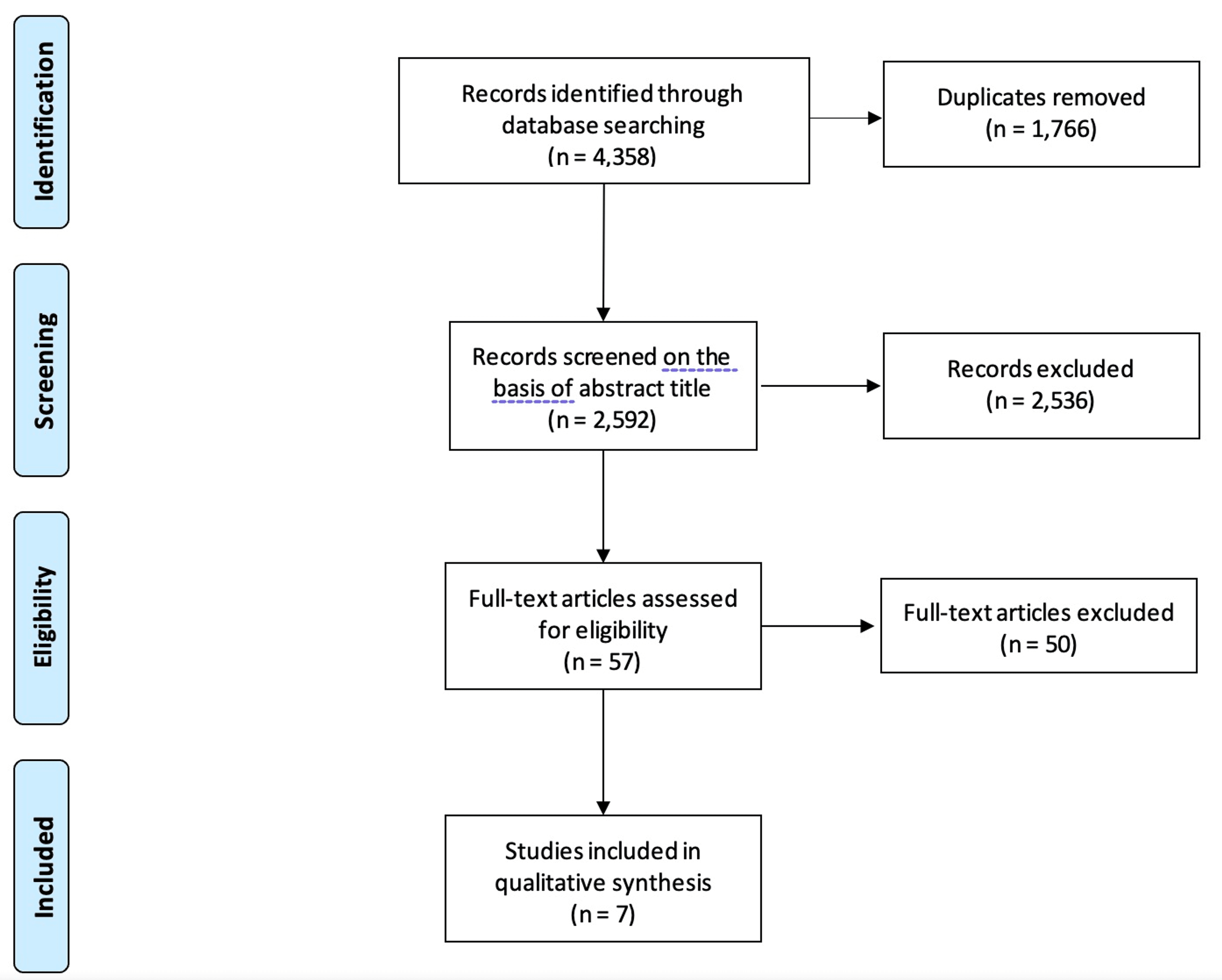
A total of 4,358 citations were identified (Figure 1). After removing 1,766 duplicate citations, a total of 2,592 studies were assessed for eligibility based on title and abstract. Fifty-seven studies were eligible for full-text review. Ultimately, seven studies (n=398 cases) were included in this review.

A descriptive summary of the included studies can be found in Tables 1–2. All studies were performed within the last ten years, except for one conducted in 2008 [15]. Three of the seven studies began their intervention programs upon discharge; two in the first week after surgery, one six weeks after, and one program at 12 weeks postoperatively. The mean program length was 8.0 ± 2.8 weeks. Six studies reported outcomes in the short-term period, and five reported outcomes in the long-term period.

References Country N Mean Age (years) {08cd930984ace14b54ef017cfb82c397b10f0f7d5e03e6413ad93bb8e636217f} Female Mean BMI (kg/m2) Inclusion/exclusion
Austin et al. [7] USA 108 62 44 29 Inclusion: age 18-80 years, primary unilateral THA for OA. Exclusion: inflammatory or post-traumatic arthritis, history of septic arthritis, revision or conversion THA, patients requiring discharge to skilled facility.
Beaupre et al. [8] Canada 21 53 52 NR Inclusion: age <65 years, primary unilateral THA with lateral approach. Exclusion: history of developmental dysplasia of the hip.
Coulter et al. [16] Australia 95 64a 58 NR Inclusion: age > 18 years, primary elective THA, patient lives locally. Exclusion: metastatic disease, pathologic fractures, infection, acute trauma, revision THA, inability to provide informed consent, UCLA scale < 2 preoperatively, unable to bear weight postoperatively, requiring inpatient rehabilitation postoperatively.
Galea et al. [15] Australia 23 68 30 29 Inclusion: primary THA for OA, ability to walk 45 minutes independently with mobility aid, independence in sit to stand transfer, adequately comprehends written/verbal instructions. Exclusion: uncontrolled systemic disease, pre-existing neurologic/other orthopedic condition affecting walking, more than four weeks physiotherapy postoperatively, revision surgery or significant postoperative complications
Mikkelsen et al. [17] Denmark 62 65 42 29 Inclusion: primary unilateral THA for OA, preoperative HOOS ADL < 67, age > 18 years, live within 30 km from hospital, willing to participate. Exclusion: BMI > 35, pre-planned supervised rehabilitation, pre-planned contralateral THA within six months, inability to speak or read Danish, mental or physical conditions impeding intervention
Monaghan et al. [18] Ireland 63 68 32 27 Inclusion: primary THA for OA, age > 50 years, able to read/understand English, willing to participate. Exclusion: medical instability, underlying terminal disease, suspicion of infection following THA
Okoro et al. [19] United Kingdom 26 64 58 NR Inclusion: unilateral THA for OA via posterior approach with 26/28/32 mm femoral head, joint affected is only arthritic joint, no evidence of inflammatory arthropathy. Exclusion: dementia, neurological impairment, cancer or other muscle wasting illness, unstable chronic or terminal illness, any co-morbid disease that contraindicates resistance training
Total   398 64 46b 29c  
References Cohorts Time from discharge to start Program length (weeks) Outcomes assessed Follow-Up Findings
Austin et al. [7] C: 10 weeks unsupervised home exercise based on manual. I: 2 weeks in-home PT followed by 8 weeks outpatient PT 2-3x per week. Upon discharge 10 HHS, WOMAC, SF-36 Physical and Mental 1 month, 6-12 months No significant difference in any of measured outcomes
Beaupre et al. [8] C: home exercise instructions for 4-6 weeks. I: outpatient rehabilitation 2x per week for 3 months. 6 weeks postoperatively 12 WOMAC, SF-36, 6MWT, gait analysis 4 months, 12 months No significant difference in any of measured outcomes
Coulter et al. [16] C: continue exercises from hospital at home, gradually increasing number of repetitions. I: supervised program 1x per week involving circuit exercises for 4 weeks. Upon discharge 4 WOMAC, SF-36, TUG, UCLA activity index 5 weeks, 12 weeks, 26 weeks No significant difference in any of measured outcomes
Galea et al. [15] C: illustrated guide of prescribed home exercises. I: 45 minute sessions 2x per week in supervised rehabilitation center-based program. First week after surgery 8 TUG, stair climb performance, 6MWT, WOMAC 8 weeks C: with faster TUG. No significant difference in other measures.
Mikkelsen et al. [17] C: home-based exercises done 7x per week. I: home-based exercises done 5x per week with additional supervised resistance training sessions 2x per week. First week after surgery 10 Leg extension power, isometric hip muscle strength, STS, stair climb, 20 minute walking speed, HOOS 6 monthsb I: with larger increase in maximal walking speed and stair climb performance. No significant difference in other measures
Monaghan et al. [18] C: postoperative home exercise booklet, advised to walk daily with crutches until review at 6 weeks. I: 35 minute class 2x per week for 6 weeks, no additional home exercises. 12 weeks postoperatively 6 WOMAC, VAS, 6MWT, SF-12, hip abduction strength 18 weeks I: with better improvement in 6MWT, WOMAC function, and SF-12 Physical. No significant differences in WOMAC pain or stiffness, SF-12 mental health score, VAS, or hip abduction strength
Okoro et al. [19] C: unsupervised home exercises. I: weekly PT sessions for 6 weeks. Upon discharge 6 Maximum voluntary contraction of operated leg quad, STS, TUG, stair climb, 6MWT, lean mass of operative leg (DEXA) 6 weeks, 6 months, 9-12 months No significant difference in any of measured outcomes
Total     8a      

Data synthesis and meta-analysis

Summaries for all outcome assessments are summarized in Table 3. No meta-analysis was conducted for long-term aerobic capacity as there were fewer than three studies with available data.

Outcome Risk of bias Directness of evidence Heterogeneity Precision Publication bias Overall quality
LE strength short term No downgrade No downgrade. No evidence of indirectness. I2 = 66{08cd930984ace14b54ef017cfb82c397b10f0f7d5e03e6413ad93bb8e636217f}, moderate heterogeneity. Downgraded one level Rated down one level. Moderate imprecision. No assessment of publication bias conducted. Low
LE strength long term Downgraded by one level. Limitation primarily in selection of reported result. No downgrade. No evidence of indirectness. I2 = 22{08cd930984ace14b54ef017cfb82c397b10f0f7d5e03e6413ad93bb8e636217f}, low heterogeneity Rated down one level. Moderate imprecision. No assessment of publication bias conducted. Low
Aerobic capacity short term No downgrade No downgrade. No evidence of indirectness. I2 = 12{08cd930984ace14b54ef017cfb82c397b10f0f7d5e03e6413ad93bb8e636217f}, low heterogeneity Rated down two levels. Significant imprecision. Very wide confidence interval. Well underneath suggested sample size. No assessment of publication bias conducted. Low
Self-reported physical outcome short term Downgraded by one level. Limitation primarily in measurement of outcome. No downgrade. No evidence of indirectness. No downgrade. I2 = 0{08cd930984ace14b54ef017cfb82c397b10f0f7d5e03e6413ad93bb8e636217f}, low heterogeneity Rated down one level. Moderate imprecision. No assessment of publication bias conducted. Low
Self-reported physical outcome long term Downgraded by one level. Limitation primarily in measurement of outcome. No downgrade. No evidence of indirectness. I2 = 0{08cd930984ace14b54ef017cfb82c397b10f0f7d5e03e6413ad93bb8e636217f}, low heterogeneity Rated down one level. Moderate imprecision. No assessment of publication bias conducted. Low
Self-reported QoL short term Downgraded by one level. Limitation primarily in measurement of outcome. No downgrade. No evidence of indirectness. I2 = 0{08cd930984ace14b54ef017cfb82c397b10f0f7d5e03e6413ad93bb8e636217f}, low heterogeneity Rated down one level. Moderate imprecision. No assessment of publication bias conducted. Low
Self-reported QoL long term Downgraded by one level. Limitation primarily in measurement of outcome. No downgrade. No evidence of indirectness. I2 = 0{08cd930984ace14b54ef017cfb82c397b10f0f7d5e03e6413ad93bb8e636217f}, low heterogeneity Rated down one level. Moderate imprecision. No assessment of publication bias conducted. Low

Short-Term Outcomes

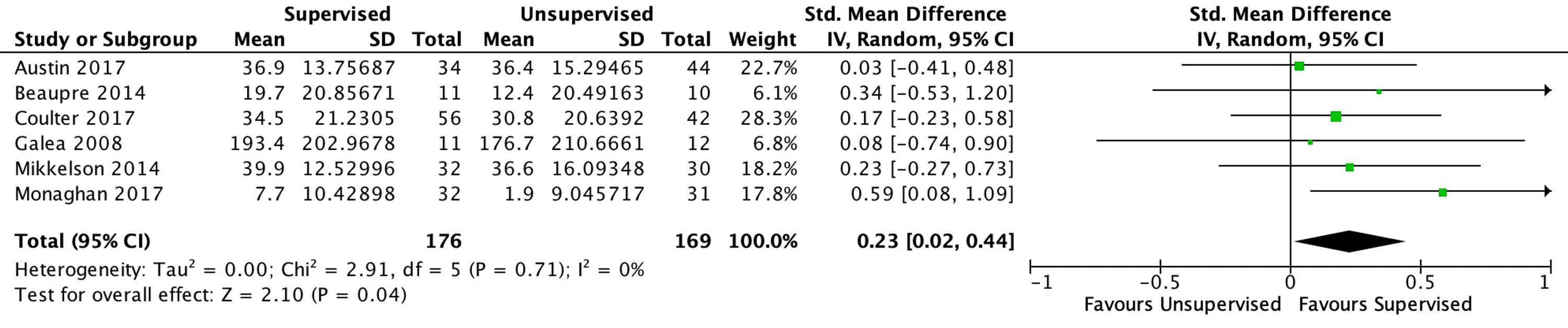
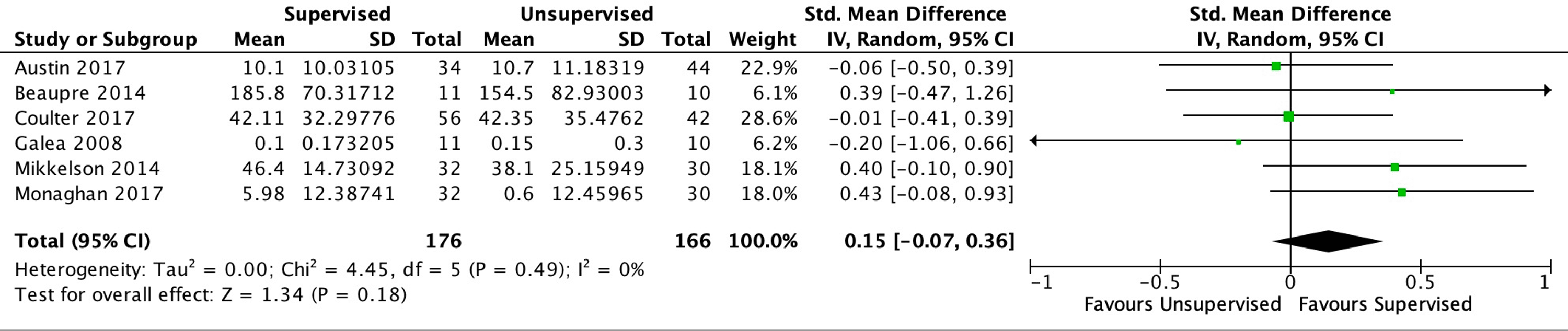
Of the six studies included in the short-term outcome analysis, five found both interventions to be equivocal. One study found a statistically significant difference in physical function scores favoring the supervised cohort but was unable to determine if this difference was clinically significant. Based on five studies and a low level of certainty, no differences in short-term LES were found (SMD −0.04 [−0.50, 0.41]; I2=66{08cd930984ace14b54ef017cfb82c397b10f0f7d5e03e6413ad93bb8e636217f}; p=0.85) (Figure 2). There was no significant difference in short-term aerobic capacity based on three studies and a low level of certainty (SMD −0.50 [−36.88, 35.89]; I2=12{08cd930984ace14b54ef017cfb82c397b10f0f7d5e03e6413ad93bb8e636217f}; p=0.98) (Figure 3). Compared with unsupervised home exercise, the supervised exercise regimen was associated with improved self-reported physical function outcome scores based on six studies and a low level of certainty (SMD 0.23 [95{08cd930984ace14b54ef017cfb82c397b10f0f7d5e03e6413ad93bb8e636217f} CI, 0.02-0.44]; I2=0{08cd930984ace14b54ef017cfb82c397b10f0f7d5e03e6413ad93bb8e636217f}; p=0.04) (Figure 4). According to Cohen’s work [20,21], an SMD of 0.23 is considered a small effect size. No differences were found between the two cohorts with regard to short-term QoL scores based on six studies and a low level of certainty (SMD 0.15 [−0.07, 0.36]; I2=0{08cd930984ace14b54ef017cfb82c397b10f0f7d5e03e6413ad93bb8e636217f}; p=0.18) (Figure 5).

Long-Term Outcomes

No long-term outcome differences were identified between the unsupervised and supervised cohorts in this study. There was no significant difference observed with regards to long-term LES, based on four studies and a low level of certainty (SMD −0.19 [−0.52, 0.13]; I2=22{08cd930984ace14b54ef017cfb82c397b10f0f7d5e03e6413ad93bb8e636217f}; p=0.24) (Figure 6). Similarly, no differences were observed with regards to long-term patient-reported physical outcome scores, based on four studies and a low level of certainty (SMD 0.11 [−0.13, 0.36]; I2=0{08cd930984ace14b54ef017cfb82c397b10f0f7d5e03e6413ad93bb8e636217f}; p=0.37) (Figure 7), or long-term QoL scores based on four studies and a low level of certainty (SMD 0.19 [−0.06, 0.43]; I2=0{08cd930984ace14b54ef017cfb82c397b10f0f7d5e03e6413ad93bb8e636217f}; p=0.14) (Figure 8).

Risk of bias

The results of the quality appraisal are summarized in risk of bias summary plots in the appendices (Appendix Figures 9–15). The self-reported scores all had a high risk of bias, primarily due to bias in outcome measurement (Table 3). All outcomes were rated as low-quality evidence (Table 4). The primary reasons for the downgrade in quality were the risk of bias and imprecision. Publication bias was not assessed as there were fewer than 10 studies involved in each outcome.

Outcome Supervised participants (n) Unsupervised participants (n) SMD/MD (95{08cd930984ace14b54ef017cfb82c397b10f0f7d5e03e6413ad93bb8e636217f} CI) Risk of bias Certainty of evidence
LE strength short term 142 (5) 121 (5) −0.04 (−0.50, 0.41)a Some concerns Low ⨁⨁◯◯
LE strength long term 112 (4) 95 (4) −0.19 (−0.52, 0.13)a High Low ⨁⨁◯◯
Aerobic capacity short term 54 (3) 49 (3) −0.50 (−36.88, 35.89)b Some concerns Low ⨁⨁◯◯
Self-reported physical outcome short term 176 (6) 169 (6) 0.23 (0.02, 0.44) a High Low ⨁⨁◯◯
Self-reported physical outcome long term 133 (4) 126 (4) 0.11 (−0.13, 0.36)a High Low ⨁⨁◯◯
Self-reported QoL short term 176 (6) 166 (6) 0.15 (−0.07, 0.36)a High Low ⨁⨁◯◯
Self-reported QoL long term 133 (4) 126 (4) 0.19 (−0.06, 0.43)a High Low ⨁⨁◯◯

Discussion

Despite the historical emphasis on the importance of formal PT as a critical intervention after THA, this meta-analysis fails to demonstrate any benefit for PT over unsupervised home exercises aside from a small increase in short-term self-reported physical function scores. No significant differences were found with regards to short- and long-term changes from baseline for LES, aerobic capacity, and self-reported QoL scores, as well as long-term self-reported physical outcome scores. The results of our meta-analysis suggest that arthroplasty providers should question the routine use of formal PT for all primary THA patients.

Other reviews conducted on formal PT programs following THA provide mixed results. Reviews conducted by Lowe et. al. [22] and Wijnen et. al. [23] did not perform a meta-analysis of physical function due to considerable variation in their included studies and were unable to provide a definitive conclusion; however, the latter reported an association with increased hip abductor muscle strength. A review conducted by Fatoye et al. [24] including RCTs and retrospective cohorts found that formal PT improved both physical function scores and hip abduction strength, but did not differentiate between short- or long-term follow-up points (follow-up ranged from 2 weeks to 12 months). Finally, Sauressig et al. [25] similarly conducted a meta-analysis and found no differences in self-reported physical function at 4 weeks, 12 weeks, 26 weeks, and one year.

An important aspect of the current review separating it from these prior studies is the use of a clearly defined home exercise regimen, postoperative instructions, or a booklet on discharge as inclusion criteria, excluding those studies that did not specify any form of intervention for their control groups. This is important to ensure a low-cost, standardized control group to allow providers to understand the true effect of trained therapist-led PT for their patients. Without this aspect, studies with controls consisting of no intervention could potentially be included in this review, which could bias results toward the formal therapy groups and may not reflect the current state of most practices.

Although postoperative rehabilitation has long been linked to a successful outcome following THA, the use of supervised PT has several drawbacks. Copay affordability, scheduling outpatient appointments, and arranging transportation have been demonstrated to be legitimate barriers to accessibility to outpatient PT for THA patients after discharge [10,11]. PT exercises can also be painful, as one of the most commonly asked questions regarding PT in the postoperative period after THA is about pain expectations [26]. Additionally, Yayac et al. demonstrated that TJA patients who underwent supervised PT had a significantly higher readmission rate than those who were discharged with self-directed home exercise regimens [9]. After controlling for patient demographics and comorbidities, they found that patients who had supervised home PT were over three times more likely to be readmitted in the 90-day postoperative period. Finally, the added cost associated with it must be considered. Yayac et al. [9] analyzed costs and outcomes in their retrospective study; while no clinically significant difference was found between function or quality of life between groups at two years, they concluded that formal therapy costs included 8{08cd930984ace14b54ef017cfb82c397b10f0f7d5e03e6413ad93bb8e636217f} of a 90-day episode of care costs for those receiving supervised home PT and outpatient PT and 3{08cd930984ace14b54ef017cfb82c397b10f0f7d5e03e6413ad93bb8e636217f} for those receiving supervised home PT only [9]. The results of the current study highlight the need to re-examine the application of routine PT following primary THA, especially with post-discharge costs accounting for up to 36{08cd930984ace14b54ef017cfb82c397b10f0f7d5e03e6413ad93bb8e636217f} of total costs in the bundle payments for TJA [27]. This is particularly salient in the context of a younger patient population, improvements in pain management, and emphasis on early mobilization postoperatively.

The difference between the short-term, self-reported physical outcome scores we observed between supervised and unsupervised groups was largely driven by the findings of the study conducted by Monaghan et al. [18]. This RCT involving an exercise intervention consisting of land- and aquatic-based therapy performed between 12 and 18 weeks after surgery differed from the other studies in this review as it was the only one to include an aquatic component. Additionally, while they found a statistically significant relationship between their formal exercise intervention and improved Western Ontario and McMaster Universities Arthritis Index (WOMAC) scores, they were unable to state whether this translated to a clinically significant difference – an issue that has been raised with the use of WOMAC scores in other literature [28,29]. Our meta-analysis reported an effect size of 0.23, falling under the category of small effect size as described by Cohen [20,21]. However, this was the only measure demonstrating a difference between the two interventions with regard to short-term outcomes and was likely driven by a single study. In the three studies that analyzed data at 12 months, no significant differences were found in any of the assessed outcomes between the two groups [7,8,19]. At the six-month time point, Mikkelson et al. [17] found a larger increase in maximal walking speed and stair climb performance in the formal therapy group, while Johnsson et al. [30] reported increased intermediate-to-moderate pain at six months in the home exercise group. Two other studies at the six-month mark found no significant differences in physical or mental outcomes between home exercise and formal PT groups.

Our results are limited by the number of studies and the quality of their respective data included in the meta-analysis. An important aspect to consider is the included patient population of each included study. Eligibility criteria may have preselected healthier and more motivated patients. In light of this, deconditioned patients with substantial functional deficits or medical comorbidities may still benefit from supervised PT. Additionally, there was substantial heterogeneity of exercise regimens across studies, including aspects such as methodology and duration of therapy, reflecting the likely variation in PT programs at different institutions. Furthermore, relying on patient-reported outcomes can be flawed, particularly in RCTs in which patients know they will be assigned to either supervised or unsupervised cohorts. It is likely that many patients in the intervention groups may be subject to bias – their assignment to formal PT protocols may influence and potentially inflate the supervised PT cohort self-reported outcome scores. The measurement of LES was also subject to variability as the studies assessing it used different methodologies to determine it. Additionally, within the unsupervised cohorts, we were unable to assess the degree of compliance; however, the intention-to-treat approach taken by most of these studies is likely to replicate true scenarios. Finally, previous studies have noted an 18-31{08cd930984ace14b54ef017cfb82c397b10f0f7d5e03e6413ad93bb8e636217f} cross-over rate from self-directed exercise to formal supervised therapy in total joint arthroplasty populations [7,31]. We were unable to account for patients who required crossover in our study – outcomes for these patients would be an area of interest in future studies. The strengths of this study include the narrow inclusion criteria, such as the inclusion of only RCTs or that the unsupervised cohorts must have clearly delineated instructions or booklets given to them, to allow for stronger conclusions than previous reviews on this subject.