Remembers of house-centered clinical gadgets and faulty one-use gadgets are the top rated two concerns on the Pennsylvania-based non-profit’s top 10 know-how dangers for 2023.
The growing level of popularity of smart dwelling technological innovation and property-centered healthcare, including distant individual checking applications, means there are a lot more medical equipment in the house to oversee, both by the treatment workforce or the patent. That could direct to complications if the products aren’t working.
The challenge of figuring out remembers for at-house medical gadgets tops the Major 10 Know-how Hazards for 2023, an once-a-year report issued by ECRI, a Pennsylvania-dependent non-income targeted on basic safety, good quality, and price tag-effectiveness in health care. Now in its 16th 12 months, the report highlights the problems connected with health care technological innovation, and spots tendencies in care supply that may be catching each providers and people by surprise.
With at-dwelling health care units, ECRI notes that people applying those gadgets at residence might be the previous to listen to of a remember, and they could not understand what the remember means or how the deal with one.
“System companies seldom have immediate interaction with home care clients and health care suppliers might not proactively get in touch with individuals about recalls,” the report notes. “As a outcome, patients who use health care products in the household could find out about a recall—and the methods necessary to be certain secure use of the device—long just after it was issued, and most likely from an unreliable source, this sort of as a tv commercial for a course-motion lawsuit or via social media.”
In addition, the recall observe may possibly be filled with technical language that sufferers wouldn’t have an understanding of obviously. They could possibly not realize the hazards involved with the gadget and keep on applying it.
“ECRI difficulties companies of clinical equipment that can be used exterior the healthcare facility atmosphere to put into action measures such as: providing end users with simple-to-abide by product registration directions, producing only worded recall notices, maintaining up-to-day databases of machine distribution, and designating workers to ensuring that remembers access property end users,” the report says.
Coming in next on the checklist is yet another growing craze in healthcare: The increasing range of one-use healthcare gadgets, intended to be applied after and then discarded. ECRI reports an “unacceptably large number of defective solitary-use professional medical gadgets,” which can negatively impact affected individual care, guide to delays in care or remedy, and even harm clients.
“ECRI has acquired stories of cracked tubing and connectors compromised sterility of needles, catheters, and method kits and incorrect solution labeling,” the report notes. “These are just a couple of illustrations of products defects that can guide to waste, delays, incorrect treatment method, health care-obtained infections, or other individual damage.”
“ECRI is worried that some product suppliers are not generating adequate efforts to address the issue,” it continues. “In fact, somewhat than observing improvements about time, we have discovered a continuing increase in issue experiences. ECRI urges producers to choose decisive methods to strengthen their top quality manage (QC) processes.”
The relaxation of the checklist is as follows:
Inappropriate use of automated dispensing cupboard overrides.
Undetected venous needle dislodgement.
Failure to handle cybersecurity challenges involved with cloud-centered medical devices.
Inflatable stress infusers.
Confusion encompassing ventilator cleansing and disinfection demands.
Frequent misconceptions about electrosurgery.
Overuse of cardiac telemetry.
Underreporting device-associated difficulties.
Quite a few of the objects on this record ended up brought on or exacerbated by the pandemic. Healthcare companies struggled to preserve functions all through the peak of the COVID-19 disaster, and most are still working with pressure, burnout, and staffing problems. In this environment, healthcare providers are additional probably to look at do the job-arounds or bypassing established treatments to get anything performed, which could lead to unsafe or perilous methods. It can be inherent on administration at this time to emphasize the relevance of basic safety protocols.
At the exact same time, the report calls on the clinical gadget marketplace to be much more diligent.
“This year we’re extending a problem to our business colleagues,” it notes. “We consider some of the hazards outlined in this report could be mitigated—and potentially even eliminated—by enhanced unit patterns or producing procedures. As a rule, an engineering resolution that gets rid of a hazard will often be preferable to a teaching solution that can only alert of a hazard. With the COVID-19 pandemic leaving health care amenities understaffed and healthcare personnel overstressed, it’s far more vital than at any time that health-related technologies be designed in techniques that enable be certain their safe and sound use.”
ECRI also famous the tendencies it has noticed more than the many years in its experiences that have led to market-vast advancements. In the 1970s, it assisted spur improvements to handbook resuscitators to protect against inadequate lung inflation, and the 1980s observed a go to safer electrode connections for individual monitoring tools to avert electrocution.
In the 1990s, the studies pushed the market to make improvements to on mattress security to prevent entrapment and strangulations, as effectively as including no cost-movement avoidance mechanisms infusion pumps to reduce overmedication. And considering that 2000, the group has prodded the sector to boost integration of drug libraries and infusion pumps to avoid drug dosing errors make improvements to CT scanner dose-manage systems to cut down radiation exposure and make improvements to endoscope reprocessing treatments and technologies to protect against cross-contamination.
Eric Wicklund is the Innovation and Engineering Editor for HealthLeaders.
Growth Dwelling Health care is reinventing house healthcare products and solutions with fantastically designed, really useful, and uncomplicated-to-use merchandise that empower individuals to treatment for on their own with dignity
LOS ANGELES, Jan. 11, 2023 /PRNewswire/ — Currently, Founders of Clear Wellness Advisors, Byrdie Lifson Pompan and Dr. Valerie Ulene, launched Increase Property Professional medical – a company with a mission to radically reinvent dwelling professional medical merchandise with beautifully intended, hugely functional, and simple-to-use products and solutions that empower folks to care for on their own with dignity.
Loona Bedside Urinal from Growth House Health care
Loona Bedside Urinal from Growth Home Health-related
Present-day house healthcare products and solutions are intimidating, outdated, awkward, and outright unattractive. Boom Home Medical’s reimagined dwelling healthcare products are made to match correctly into consumers’ lives and houses. The enterprise launches with toileting items and will be rolling out a lineup of impressive bathing, dressing, and mobility items throughout 2023.
“We offer our shoppers the option to care for their standard requires with dignity,” stated Byrdie Lifson Pompan, Co-Founder. “By 2025 there will be 75 million child boomers above the age of 65 and, for the initial time ever in the US, there will be more persons over the age of 65 than below the age of 13. Baby boomers have professional innovation in each and every customer product or service group, and now can working experience it in home health care products way too. No person would like the very same resilient household clinical machines that their grandparents employed.”
Loona, Boom House Medical’s very first product release in the toileting class, is a individual bedside urinal created for any one with woman anatomy. About 50 million Individuals wake up a number of situations a night with the urge to urinate, a healthcare condition called nocturia. Loona presents a option for men and women who put up with from this situation, reducing its effect on sleep and getting rid of the dangers of going for walks to the bathroom in the dim. Loona can also aid people who are expecting deal with the challenge of recurrent urination and is a good solution for individuals who come across it complicated to get close to following surgery or as the final result of an damage. It really is also a wonderful companion for travel and camping.
“We partnered with the award-profitable crew at HERBST Produkt, industrial designer for impressive brand names these kinds of as Brita and Molekule, to develop the fantastically developed Loona. It really is the to start with bedside urinal that looks at dwelling by your bedside. Loona is about extra than just relief, it can be about being proud to have our item in a spot the place any person can see it. It is the most tasteful answer to aid, anytime and wherever,” reported Dr. Valerie Ulene, Co-Founder .
Loona is readily available on Amazon and www.BoomHomeMedical.com in 3 shades: blue, coral dream, and moon grey.. For far more facts and FAQs on Loona stop by www.boomhomemedical.com and abide by @boomhomemedical for the most current information, strategies, and future products launches.
About Growth Residence Clinical:
Founded by Byrdie Lifson Pompan and Dr. Valerie Ulene, Boom Residence Health care is radically reinventing the house professional medical item industry with wonderfully created, remarkably useful, and uncomplicated-to-use solutions that empower folks to care for them selves with dignity. The reimagined household health-related merchandise for toileting, bathing, dressing, and mobility are created to in shape flawlessly in your lifetime and home.
Media Get in touch with: Jillian Eldredge 508-207-2384 [email protected]

Berks County, Pennsylvania, is very first neighborhood to be a part of partnership with community public health departments.
The Nationwide Institutes of Health, in collaboration with the Administration for Strategic Preparedness and Reaction (ASPR) at the U.S. Department of Wellness and Human Services, has released the Household Check to Deal with system, an totally virtual group health and fitness intervention that will present free COVID-19 health services—at-dwelling swift tests, telehealth classes and at-residence treatments—in chosen communities. The system, 1st announced by the White Dwelling in September 2022, will make antiviral treatment obtainable for qualified folks who receive a optimistic check end result, which could stop critical disease, hospitalization or loss of life.
“At-house testing for COVID-19 is now extensively accessible in the United States, as are antiviral treatment plans, and this plan brings together uncomplicated residence entry to equally,” explained Bruce Tromberg, Ph.D., director of the Nationwide Institute of Biomedical Imaging and Bioengineering (NIBIB) at the Nationwide Institutes of Well being and chief of the Fast Acceleration of Diagnostics (RADx®) Tech plan. “The Household Exam to Address method allows those people who are unwell an choice to venturing out for screening or cure, potentially cutting down the spread of COVID-19 in the community.”
Later this month, neighborhood and condition officials in Berks County, Pennsylvania, will be the 1st to pilot the Property Take a look at to Handle method. Up to 8,000 suitable inhabitants are predicted to take part in the application.
Plan organizers will get details from participants to recognize finest techniques and make improvements to the Household Examination to Address model that can be applied to put into practice the program on a much larger scale. Further communities throughout the place will be chosen to participate centered on stage of neighborhood require, accessibility to healthcare procedure, expected COVID-19 infection rates and socio-economic things. As a result of collaborations with nearby health departments, Residence Exam to Address aims to provide products and services to somewhere around 100,000 individuals throughout the United States in the coming year.
Telehealth companies provider eMed will apply the Property Take a look at to Deal with software. Their expert services are presented beneath a deal award by NIBIB contractor, VentureWell. Possessing administered hundreds of thousands of verified at-home telehealth sessions during the pandemic, eMed will host the consumer-friendly Dwelling Exam to Deal with web-site, where participants can indication up for the software, report symptoms, receive telehealth and antiviral procedure delivery, and coordinate telehealth enabled exam kits.
NIBIB also has issued a deal with UMass Chan Clinical University, whose scientists, in collaboration with eMed, will review facts collected from every collaborating neighborhood, like the impacts of a residence-based approach for testing and remedy, person attitudes about the Household Test to Handle method, and scientific outcomes from solutions.
HHS, by ASPR, has led a countrywide COVID-19 Check to Treat initiative given that March 2022, that consists of hundreds of procedure obtain details nationwide. These include things like CDC’s Growing Group Access to Screening (ICATT) plan, composed of federally funded overall health facilities, very long-term treatment facilities and neighborhood-based websites. Members in the Residence Test to Deal with application can be examined at area ICATT facilities. The Examination to Deal with initiative has developed to include extra mobile and telehealth-centered products that lessen limitations to obtain for the greatest-threat folks. NIH’s House Check to treat program will provide an essential added pathway to rapidly entry lifesaving solutions for COVID-19 in susceptible communities.
Residence Examination to Treat will endorse equitable methods and assistance to establish best techniques that could conserve life in this and upcoming pandemics. In each and every local community, the investigate crew will recognize and apply enhancements that go away us in a much much better posture to respond to certain demands at the local, point out and federal amounts.
The Countrywide Institute of Biomedical Imaging and Bioengineering (NIBIB) has supported enhancement of Home Take a look at to Handle as a result of the RADx Tech plan.
About the Swift Acceleration of Diagnostics (RADx®) initiative: The RADx initiative was released on April 29, 2020, to pace innovation in the progress, commercialization, and implementation of technologies for COVID-19 screening. The initiative has 4 systems: RADx Tech, RADx Innovative Technological innovation Platforms, RADx Underserved Populations and RADx Radical. It leverages the current NIH Place-of-Care Technological innovation Analysis Network. The RADx initiative associates with federal organizations, together with the Office of the Assistant Secretary of Health and fitness, Department of Protection, the Biomedical Superior Research and Development Authority, and U.S. Foods and Drug Administration. Master much more about the RADx initiative and its programs: https://www.nih.gov/radx.
About the Nationwide Institute of Biomedical Imaging and Bioengineering (NIBIB): NIBIB’s mission is to increase wellbeing by primary the development and accelerating the software of biomedical systems. The Institute is fully commited to integrating the actual physical and engineering sciences with the everyday living sciences to advance fundamental analysis and clinical treatment. NIBIB supports rising technologies study and progress in just its inside laboratories and by means of grants, collaborations, and coaching. More details is accessible at the NIBIB web-site: https://www.nibib.nih.gov.
About the National Institutes of Health and fitness (NIH):
NIH, the nation’s professional medical research agency, involves 27 Institutes and Centers and is a ingredient of the U.S. Section of Overall health and Human Services. NIH is the major federal company conducting and supporting simple, medical, and translational medical exploration, and is investigating the triggers, treatment plans, and cures for the two widespread and uncommon health conditions. For more info about NIH and its packages, take a look at www.nih.gov.
A Stanford psychiatry professor located herself in a odd posture at the start out of 2017.
The Trump administration had just banned vacation to the United States from 7 Muslim-majority countries, and Stanford’s Muslim group was in despair. Acknowledging that further assistance was required, the college asked Dr. Rania Awaad to keep remedy-like office environment hrs with Muslim students. She’s a psychiatrist, but had been operating in the classroom, not as a therapist.
Nevertheless she could see that remedy was what numerous pupils desperately required. She recollects 1 scholar sharing that her treatment options on campus seemed to be either a company who understood absolutely nothing about Islam and the trauma she experienced professional or one who was “oozing with empathy.”
At Stanford and at faculties Awaad visited, students advised her again and once more that when they required care, they didn’t want to go to the campus counseling centre for the reason that they didn’t see Muslim therapists, or therapists who they felt could fully grasp them.
The info she collected during those 2017 classes boosted research and student activism at the College of California, Berkeley, where she experienced served start the initial Muslim Psychological Wellbeing Initiative the calendar year in advance of, and at Stanford, where by the product was initially made in the Muslim Psychological Health and Islamic Psychology Lab. Now, the MMHIs on both equally campuses perform along with a nonprofit termed Maristan to location Muslim-pinpointing therapists on university campuses.
“To me, it is like evening and working day,” Awaad claimed, referring to the availability of the useful resource to the campus neighborhood. “The pupils, when they know that support is there, there is anything to drop back again on, they feel a perception of belonging, which is actually, genuinely significant.”
Spiritual groups on faculty campuses that have extended recommended pupils grappling with issues of faith or spirituality are now including psychological well being clinicians in campus religious hubs, and coaching religious leaders to know when to refer learners to psychological treatment.
Religion and spirituality can contribute to very good mental health, but people with solid religious affiliations can and do undergo from psychological overall health concerns and experience lifestyle tension like everybody else. And folks who practical experience spiritual discrimination are a lot more very likely than some others to endure from widespread psychological health and fitness problems.
Not every single therapist is geared up to fully grasp the nuances of unique religions. A Muslim scholar may well need to talk about the problems of coordinating course schedules with day by day prayer instances. Or a Jewish pupil may want to talk about the battle of retaining kosher in the eating hall. These gulfs of comprehension can make it more hard for some religious students to get assist.
“Having a area where there’s previously a shared worldview, even if it is not totally agreed on, just offers persons a perception of reassurance and belonging,” claimed Stephanie Winkeljohn Black, an assistant professor of psychology at Pennsylvania Condition University Harrisburg who experiments the intersection of faith and spirituality with mental wellness.
To improved provide these learners, the Muslim Psychological Wellness Initiative has positioned therapists in at the very least three universities and has designs to keep expanding. To improved serve Jewish pupils, therapists, social staff or staffers devoted to perfectly-currently being have been extra to at the very least 15 campus Hillel centers, as component of a psychological well being and wellness pilot program that is scheduled to develop to other campus Hillels. These strategies target on college students who are component of minority religious teams that have been historically discriminated against, and who may have difficulties acquiring therapists who share their identity.
Faculties that have foundational affiliations with Catholic, evangelical or other Christian faiths are likely to offer you equally religious methods and counseling and psychological expert services on campus. The Catholic Campus Ministry Affiliation, which has members at religious and secular colleges, recognized an improve in pupil psychological health and fitness needs in the course of the pandemic and has begun schooling nonclinical campus personnel members to improved comprehend and respond to scholar psychological well being troubles. Even if Christian college students really do not attend a religiously affiliated faculty, they are a lot more probable to discover a supplier who understands their religion simply because it is the bulk religion in the place.
Advocates say that in addition to helping Muslim and Jewish college students come to feel a lot more comfy with companies, introducing therapists in spiritual hubs cuts down the stigma all over finding enable, and tends to make it much easier for chaotic college students to find the care they need. These therapists can also alleviate the scheduling pressure on campus counseling centers, which often give a minimal amount of periods to students and can have very long wait around periods.
Even though these styles can support, it is also critical that the two therapists and religious leaders stay in the bounds of their knowledge and know when to refer somebody to one more style of treatment, Winkeljohn Black said.
“As a clinician, you have to be really very careful not to interpret spiritual texts, or speak to a certain religion doctrine. I wouldn’t even do that for my have spiritual team, if I had been working with an individual from the exact religion custom,” Winkeljohn Black said. “My most important issue is the human being across from me, their psychological overall health. Being ready to know when to refer to a clergyperson is really vital for that cause.”
A framework to provide Muslim scholar mental well being
Muslim college students, like other school pupils, are hoping to treatment for their mental health as they juggle academic stressors and new associations, typically even though getting absent from residence for the 1st time. But these difficulties are difficult by activities of racialization, discrimination and usually emotion like a member of a minority team, stated Abiya Ahmed, affiliate dean of learners and director of the Markaz Resource Center at Stanford.
“I’m not stating it can’t be resolved by other clinicians, but it can be resolved much more successfully, competently and much more properly by Muslim-identifying clinicians,” Ahmed explained.
Mahnoor Hyat, a modern Stanford graduate who began exploring Muslim psychological overall health concerns on campus right after hearing about the immense want from her mates, reported no solitary tactic would solve all the problems users of her local community encounter.
Quite a few pupils preferred the possibility of obtaining a Muslim therapist, she uncovered, while other people said they’d prefer to talk to someone with whom they identify in a different way, but who is marginally taken off from their religious neighborhood.
Hyat recalled learning in emphasis teams that college students who experienced previously tried to get help “had invested practically 30 to 40 minutes in the session explaining where they had been coming from, like, conveying the cultural significance of something they were being talking about.” She included: “And they have been conversing about just feeling so exhausted by the time the session ended, since they generally had to teach their therapist.”
Now, as a result of the Muslim Mental Well being Initiative and Maristan, the university contracts with Muslim therapists to superior meet the requires of Muslim students.
Hyat, now a doctoral college student in medical psychology at the College of Washington, explained she is grateful that the response to her exploration has been beneficial so considerably, and she hopes Stanford will be proactive in the potential about assembly the demands of traditionally marginalized students.
There are now chapters of the Muslim Mental Wellness Initiative at the University of California, Berkeley and Northwestern University in Illinois, and learners on other campuses are pushing to build additional chapters, Awaad explained. College student groups at other educational facilities have received training from these Muslim Mental Wellness Initiative chapters, and some groups associate with local organizations such as the Khalil Heart, which provides psychological solutions rooted in Islamic ideas.
But Muslim learners at most schools throughout the region do not have obtain to these means.
Nimrah Riaz, the chair of the board of the Muslim Learners Affiliation National, explained that if she experienced endless assets, she would make sure that each individual MSA chaplain was experienced in mental wellbeing counseling.
For now, Riaz encourages students in Muslim College students Associations on a variety of campuses to go as a result of a Mental Wellbeing To start with Assist training course, which teaches nonprofessionals about psychological health and fitness warning symptoms and how to help another person who is acquiring a mental health disaster.
A multipronged method at Hillel
Hillel businesses, which provide Jewish college or university students, are also adding psychological wellness suppliers. The therapists are funded as a result of partnerships with regional Jewish teams and Jewish loved ones services businesses.
“For those people students who are acquiring problem just wrapping their minds about the actuality that they may possibly profit from therapy, strolling into a campus mental well being facility is distinct than walking into a Hillel setting up,” stated Amee Sherer, the government director of Hillel at the University of Washington. “This is a risk-free room for them, we hope. We hope that it is significantly less stigmatized.”
Hillel at the University of Washington had a section-time therapist for several years, relationship to the 1990s, but when the pandemic hit, Hillel team observed the larger require for pupil mental health aid. With the Jewish Household Provider of Seattle, the campus Hillel ultimately hired a licensed medical social worker to provide as Hillel’s entire-time, in-home therapist.
Sheri Davis, who served in that purpose for the very last two many years, said pupils usually came to her grappling with stress or depression. But they also experienced troubles relevant to the Jewish faith and tradition, these as the struggles of interfaith dating, being away from dwelling for the High Vacations for the to start with time, antisemitism, or the loss of loved kinds through the pandemic, when the need for social distancing designed it challenging to notice the mourning ritual of sitting Shiva.
Other than utilizing regular counseling procedures, Davis reminded them of Jewish values and inspired them to have interaction with Hillel and its functions to help fight off isolation. Sherer said she thinks part of the value is the “cultural flavor of familiarity.”
Leah Siskin Moz, the senior director of pupil and workers effectively-staying at Hillel Intercontinental, stated the psychological health and wellness pilot software consists of treatment, psychological health and fitness training so that Hillel staff members who are not therapists know when their learners will need enable, and wellness activities to encourage connectedness.
Students typically build powerful associations with Hillel staff members, and come to them to share what is likely on in their life, Siskin Moz explained. People associations are the foundation that will make the psychological overall health and wellness plan successful, she claimed.
Some of the schools in the Hillel pilot method have a staff members person dedicated to wellness alternatively than a certified psychological overall health supplier some have both equally. At the College of Southern California Hillel, Leenie Baker’s job, individual from the work of the on-staff therapist, centers on scheduling occasions and coaching for college students made to foster connectedness and aid them build a perception of belonging. In addition to holding common Hillel situations such as Shabbat meals on Friday evenings, Baker not too long ago ran a gardening-themed workshop exactly where college students planted succulents, an open up mic evening and a meditation workshop.
“When you are in a tension cooker kind of ecosystem, you have a good deal of expectations to be incredibly great at the items you do, and I feel the much more we can promote actions exactly where it in fact
just encourages students to specific creative imagination and check out a thing new or some thing they are really not very good at, it is quite beneficial to our holistic properly-remaining,” Baker said. “It’s allowing for you to just be a individual, fairly than owning to strive to fit some expectation.”
At 6.40{08cd930984ace14b54ef017cfb82c397b10f0f7d5e03e6413ad93bb8e636217f} CAGR, World wide House Clinical Tools Market place Measurement & Share to Surpass US$ 52.23 Billion by 2027 | Sector Trends, Share & Forecast Report by IMARC Group
SHERIDAN, WYOMING, United states, November 25, 2022 /EINPresswire.com/ — IMARC Team has lately unveiled a new analysis analyze “Home Medical Gear Market: World Field Developments, Share, Size, Growth, Chance and Forecast 2022-2027”, presents a in depth investigation of the marketplace motorists, segmentation, development possibilities, developments, and aggressive landscape to have an understanding of the current and future sector scenarios.
What are the advancement prospective customers of the dwelling health-related machines sector ?
The international residence health care gear market place sizing achieved US$ 35.5 Billion in 2021. Hunting ahead, IMARC Group expects the market to attain a value of US$ 52.23 Billion by 2027, exhibiting a advancement level (CAGR) of 6.40{08cd930984ace14b54ef017cfb82c397b10f0f7d5e03e6413ad93bb8e636217f} through 2022-2027.
Covid-19 Effects:
We are frequently tracking the immediate effect of COVID-19 on the market, alongside with the indirect affect of associated industries. These observations will be built-in into the report.
What is a the property clinical products market place ?
House clinical products refer to medical equipment made use of in a residence care placing. They comprise reservoirs, high-strain cylinders, oxygen equipment and materials, concentrators, dwelling invasive mechanical ventilators, steady favourable airway strain (CPAP) equipment, respiratory assist devices (RAD), oxygen conserving appliances, intermittent beneficial force breathing (IPPB) devices, and nebulizers.
Dwelling health-related tools monitor the well being of individuals often and deliver a comprehensive report to the caregiver. They also enhance the safety of the individual while presenting improved healthcare. As a consequence, residence medical tools are extensively obtainable across medical center pharmacies, on line retailers, and healthcare stores.
What are the key marketplace drivers in a household health-related tools market place ?
The escalating prevalence of really serious health problems, these as arthritis, diabetes, influenza, pneumonia, cancer, stroke, septicemia, and kidney, coronary heart, respiratory, and Alzheimer’s disease, is amongst the primary aspects driving the house health care machines market. Moreover this, the rising need for oxygen-connected products and solutions, owing to the enhance in the incidence of serious obstructive pulmonary condition (COPD) across the world, is even more augmenting the sector progress.
Moreover, the increasing utilization of progressive property health care devices, together with needle-free diabetic care, treatment administration instruments, health care beds, and elevate chairs, is also catalyzing the worldwide industry. Aside from this, the elevating geriatric inhabitants and the increasing healthcare market are performing as significant growth-inducing aspects.
Also, the raising awareness between the masses about the benefits of dwelling care instruments is also stimulating the current market expansion. Moreover, the inflating selection of investments by the main gamers in investigation and progress (R&D) routines to combine highly developed systems, such as wearable gadgets, telehealth, and cellular wellbeing software package, are expected to bolster the dwelling health care products marketplace in the coming several years.
The report has been segmented the current market into next types:
Breakup by Equipment Type:
Therapeutic Devices o Respiratory Therapy Equipment o Dialysis Machines o Intravenous Gear o Others
Affected individual Checking Tools o Conventional Screens o Telemedicine Individual Checking Products
Mobility Support and Affected individual Assist Tools o Mobility Support Tools o Medical Home furniture o Bathroom Basic safety Tools
Breakup by Distribution Channel: o Retail Health care Shops o Online Retailers o Hospital Pharmacies
By Geography: • North The united states (United States, Canada) • Europe (Germany, France, United Kingdom, Italy, Spain, Many others) • Asia Pacific (China, Japan, India, Australia, Indonesia, Korea, Other folks) • Latin The united states (Brazil, Mexico, Some others) • Middle East and Africa (United Arab Emirates, Saudi Arabia, Qatar, Iraq, Other)
The major players in the marketplace are Abbott Laboratories Arkray Inc. B. Braun Melsungen AG Baxter International Inc. Caire Inc. (NGK Spark Plug Co. Ltd.) Inogen Inc., Invacare Company Koninklijke Philips N.V. Medline Industries LP, Medtronic plc OMRON Healthcare Inc. (Omron Corporation) and Resmed Inc.
Essential highlights of the report:
• Sector General performance (2016-2021) • Market place Outlook (2022- 2027) • Porter’s 5 Forces Examination • Market place Motorists and Success Aspects • SWOT Assessment • Benefit Chain • Thorough Mapping of the Competitive Landscape
If you require certain facts that is not presently within just the scope of the report, we can present it to you as a part of the customization.
IMARC Team is a primary current market investigation company that offers administration strategy and marketplace investigation globally. We companion with shoppers in all sectors and regions to discover their best-benefit options, address their most important troubles, and rework their companies.
IMARC’s details products and solutions include major sector, scientific, economic and technological developments for business enterprise leaders in pharmaceutical, industrial, and high technological know-how companies. Marketplace forecasts and business analysis for biotechnology, innovative products, prescribed drugs, food stuff and beverage, vacation and tourism, nanotechnology and novel processing procedures are at the major of the company’s knowledge.
Elena Anderson IMARC Expert services Non-public Restricted +1 631-791-1145 e-mail us here
Formal physical therapy (PT) after total joint arthroplasty (TJA) is commonly recommended and is often thought to be indispensable to favorable patient outcomes [1,2]. In contrast to the modern era, these surgeries were performed on older, less active patients with more severe diseases and deformities [3]. These earlier surgeries were more extensive, and weight bearing was often limited postoperatively [4,5]. Modern total hip arthroplasty (THA), however, is characterized by a younger, more active patient population along with dramatic advances in pain control and rapid recovery [4,5]. Despite the changing landscape, formal PT has maintained its status amongst providers and patients as an integral component to improving outcomes [2,6].
Several studies over the past few years have demonstrated that formal PT, whether inpatient or outpatient, may not have any benefit over home-based unsupervised exercise programs [7-9]. While this has led to a shift away from formal PT utilization by some, there are no guidelines to assist in determining which patients may benefit [7]. Reducing the routine use of formal PT to only those patients for whom it is warranted may offer several benefits. The responsibility of copays and transportation is often placed on the patient and, for many, can be a significant burden [10,11]. Additionally, with the increased interest in alternative healthcare models, the focus has shifted to finding methods to reduce episode-of-care costs [12,13]. The costs associated with formal PT after discharge are not trivial, comprising up to 8{08cd930984ace14b54ef017cfb82c397b10f0f7d5e03e6413ad93bb8e636217f} of total costs for TJA episodes of care [9].
The goal of this review was to assess the existing literature comparing outcomes of primary THA patients undergoing formal supervised PT to those with unsupervised home exercise programs through a systematic review and meta-analysis of randomized controlled trials (RCTs). To avoid intervention bias towards supervised home programs, we chose to only include studies that explicitly described unsupervised home exercise regimens. The primary aim was to assess changes in lower extremity strength (LES), aerobic capacity, and patient-reported physical outcome and quality of life (QoL) scores at zero to six months and six months to one year.
This systematic review and meta-analysis were conducted in accordance with the PRISMA (Preferred Reporting Items for Systematic Reviews and Meta-Analyses) guidelines and were registered in the PROSPERO International Prospective Register of Systematic Reviews (PROSPERO Identifier CRD42021228071).
Inclusion criteria
This review considered all English-language RCTs that compared objective measures and patient-reported outcomes (PROs) from patients with formal postoperative PT or supervised exercise programs to those with unsupervised home exercise interventions (defined as an explicitly stated form of home exercise program to be performed without direct supervision of a health professional). This also included written exercise instructions, video programs demonstrating exercises, or phone applications containing directions for exercises). The time period of interventions was limited to the period between discharge from hospitalization and six months postoperatively. Studies involving comparisons between only supervised cohorts, unsupervised cohorts, or without clear delineation of what each exercise intervention consists of were excluded, as were those involving preoperative exercise programs as the primary intervention.
Search strategy and study screening
With the assistance of an informationist, an electronic search was conducted of all published literature from database inception to December 14, 2020 from the following databases: PubMed, EMBASE, Web of Science, Scopus, Cochrane Library, and ClinicalTrials.gov. MeSH and Emtree terms were used alongside free text to enhance search sensitivity. Studies were screened based on titles and abstracts initially, with relevant studies subjected to full-text review. All screening was performed independently by two authors (YPC and HH). All disagreements were resolved through discussion, with input from the senior author (CAD) on an as-needed basis.
Quality appraisal
The Cochrane Risk of Bias Tool 2.0 was utilized to assess the five domains of potential bias: randomization process, deviations from intended intervention, missing outcome data, outcome measurement, and selection of reported results. The result for each domain was assigned risk scores of “low,” “some concern,” or “high.” A risk of bias assessment was made for each outcome measurement. The GRADE (Grading of Recommendations Assessment, Development, and Evaluation) system was utilized to appraise the quality of evidence included in this meta-analysis to ensure the reliability of its results.
Data extraction and statistical analysis
Data extraction was performed manually by three reviewers (YPC, HH, and ZW). Extracted descriptive variables included journal, year, and country of publication, number of cases, age, gender, body mass index, inclusion criteria, follow-up, type of intervention, time from discharge to intervention initiation, and intervention length. The outcomes of interest in this study changed from baseline data in LES (measured with a timed up-and-go test (TUG), sit-to-stand test, or hip abduction strength as measured by a dynamometer), aerobic capacity, and patient-reported physical function and QoL. Each outcome measure was divided into short-term recovery (<6 months from surgery; if multiple time points were observed <6 months from surgery, the closest one to the three-month postoperative point was chosen) and long-term recovery (≥6 months from surgery; if multiple time points were observed ≥6 months from surgery, the closest one to the one-year postoperative point was chosen) windows. Changes from baseline values were collected in the form of a mean and standard deviation (SD). When not available for change from baseline scores, they were imputed using previously established methods from the Cochrane Handbook for Systematic Reviews of Interventions [14]. For studies involving more than one outcome measure for each of the above categories, only one outcome measure was included. Outcome measures were pooled for meta-analysis if there were at least three studies with reported results. All the outcomes in this study consisted of continuous variables. Effect sizes were assessed using random effect models to calculate standardized mean differences (SMD) and 95{08cd930984ace14b54ef017cfb82c397b10f0f7d5e03e6413ad93bb8e636217f} confidence intervals (CI). Heterogeneity was tested using the I2 statistic. All meta-analysis calculations and subsequent forest plots were generated using Review Manager Software Version 5.4.1 (Copenhagen: The Nordic Cochrane Center, The Cochrane Collaboration, 2020).
Characteristics of included studies
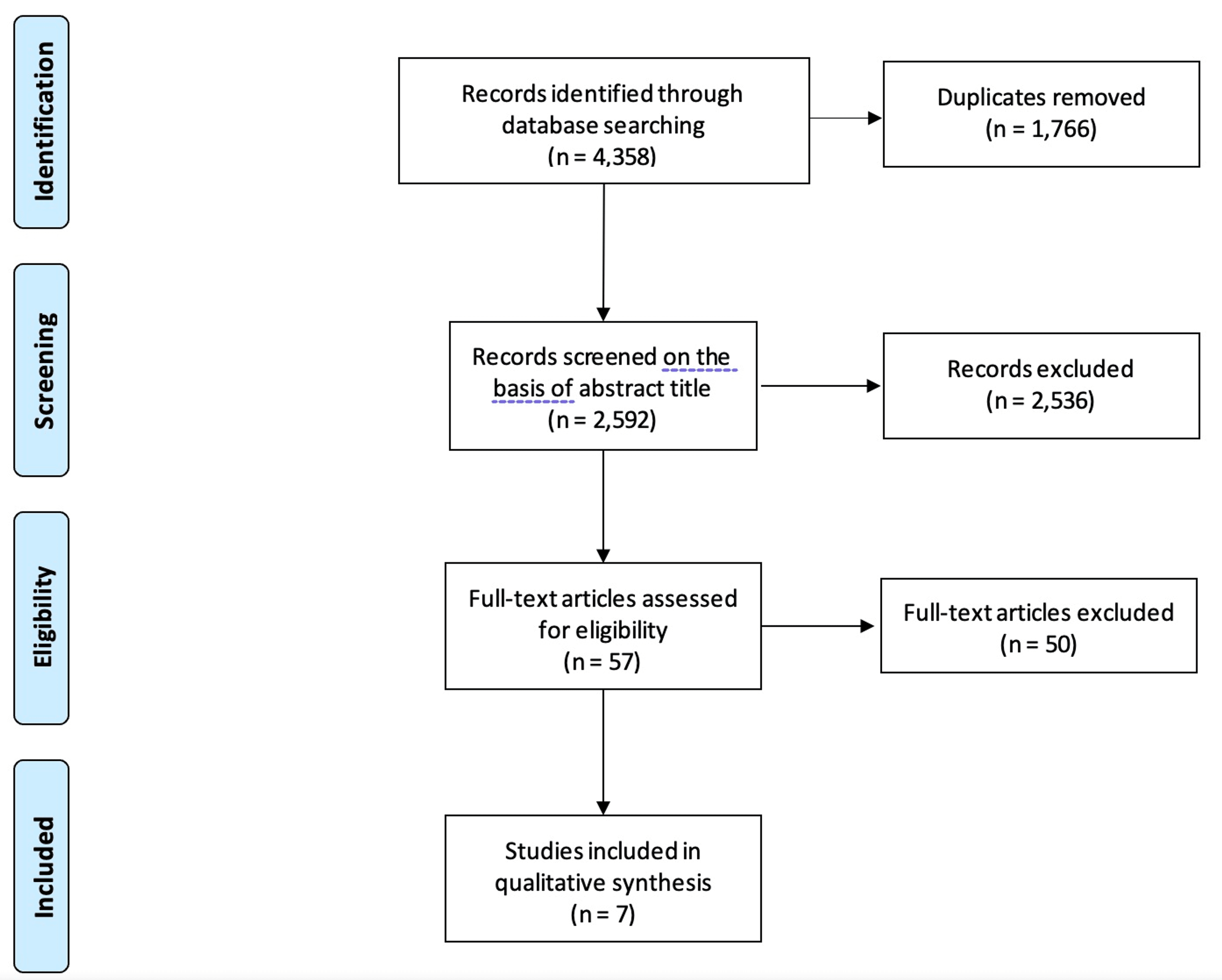
A total of 4,358 citations were identified (Figure 1). After removing 1,766 duplicate citations, a total of 2,592 studies were assessed for eligibility based on title and abstract. Fifty-seven studies were eligible for full-text review. Ultimately, seven studies (n=398 cases) were included in this review.
Figure
1:
Preferred Reporting Items for Systematic Reviews and Meta-Analyses (PRISMA) flow chart.
A descriptive summary of the included studies can be found in Tables 1–2. All studies were performed within the last ten years, except for one conducted in 2008 [15]. Three of the seven studies began their intervention programs upon discharge; two in the first week after surgery, one six weeks after, and one program at 12 weeks postoperatively. The mean program length was 8.0 ± 2.8 weeks. Six studies reported outcomes in the short-term period, and five reported outcomes in the long-term period.
Inclusion: age 18-80 years, primary unilateral THA for OA. Exclusion: inflammatory or post-traumatic arthritis, history of septic arthritis, revision or conversion THA, patients requiring discharge to skilled facility.
Inclusion: primary THA for OA, ability to walk 45 minutes independently with mobility aid, independence in sit to stand transfer, adequately comprehends written/verbal instructions. Exclusion: uncontrolled systemic disease, pre-existing neurologic/other orthopedic condition affecting walking, more than four weeks physiotherapy postoperatively, revision surgery or significant postoperative complications
Inclusion: primary unilateral THA for OA, preoperative HOOS ADL < 67, age > 18 years, live within 30 km from hospital, willing to participate. Exclusion: BMI > 35, pre-planned supervised rehabilitation, pre-planned contralateral THA within six months, inability to speak or read Danish, mental or physical conditions impeding intervention
Inclusion: primary THA for OA, age > 50 years, able to read/understand English, willing to participate. Exclusion: medical instability, underlying terminal disease, suspicion of infection following THA
Inclusion: unilateral THA for OA via posterior approach with 26/28/32 mm femoral head, joint affected is only arthritic joint, no evidence of inflammatory arthropathy. Exclusion: dementia, neurological impairment, cancer or other muscle wasting illness, unstable chronic or terminal illness, any co-morbid disease that contraindicates resistance training
Total
398
64
46b
29c
Table
1: Study characteristics of seven randomized controlled trials of unsupervised vs. supervised exercise regimens following primary total hip arthroplasty.
BMI: body mass index; NR: not reported; THA: total hip arthroplasty; OA: osteoarthritis; HOOS: Hip disability and Osteoarthritis and Outcomes Score; ADL: activities of daily living.
aMedian age – no mean age reported.
bMean {08cd930984ace14b54ef017cfb82c397b10f0f7d5e03e6413ad93bb8e636217f} female gender across all included studies.
C: continue exercises from hospital at home, gradually increasing number of repetitions. I: supervised program 1x per week involving circuit exercises for 4 weeks.
Upon discharge
4
WOMAC, SF-36, TUG, UCLA activity index
5 weeks, 12 weeks, 26 weeks
No significant difference in any of measured outcomes
C: home-based exercises done 7x per week. I: home-based exercises done 5x per week with additional supervised resistance training sessions 2x per week.
First week after surgery
10
Leg extension power, isometric hip muscle strength, STS, stair climb, 20 minute walking speed, HOOS
6 monthsb
I: with larger increase in maximal walking speed and stair climb performance. No significant difference in other measures
C: postoperative home exercise booklet, advised to walk daily with crutches until review at 6 weeks. I: 35 minute class 2x per week for 6 weeks, no additional home exercises.
12 weeks postoperatively
6
WOMAC, VAS, 6MWT, SF-12, hip abduction strength
18 weeks
I: with better improvement in 6MWT, WOMAC function, and SF-12 Physical. No significant differences in WOMAC pain or stiffness, SF-12 mental health score, VAS, or hip abduction strength
C: unsupervised home exercises. I: weekly PT sessions for 6 weeks.
Upon discharge
6
Maximum voluntary contraction of operated leg quad, STS, TUG, stair climb, 6MWT, lean mass of operative leg (DEXA)
6 weeks, 6 months, 9-12 months
No significant difference in any of measured outcomes
Total
8a
Table
2: Study outcomes of seven randomized controlled trials of unsupervised vs. supervised exercise regimens following primary total hip arthroplasty.
C: control; I: intervention; PT: physical therapy; HHS: Harris Hip Score; WOMAC: Western Ontario and McMaster’s Universities Osteoarthritis Index; SF: Short Form Survey; 6MWT: 6 Minute Walk Test; TUG: Timed Up and Go; STS: Sit to Stand; HOOS: Hip Disability Osteoarthritis and Outcomes Score; VAS: Visual Analogue Scale; DEXA: dual-energy x-ray absorptiometry.
aMean program length.
bIsometric muscle strength and gait speed also checked at four weeks postoperatively.
Data synthesis and meta-analysis
Summaries for all outcome assessments are summarized in Table 3. No meta-analysis was conducted for long-term aerobic capacity as there were fewer than three studies with available data.
Outcome
Risk of bias
Directness of evidence
Heterogeneity
Precision
Publication bias
Overall quality
LE strength short term
No downgrade
No downgrade. No evidence of indirectness.
I2 = 66{08cd930984ace14b54ef017cfb82c397b10f0f7d5e03e6413ad93bb8e636217f}, moderate heterogeneity. Downgraded one level
Rated down one level. Moderate imprecision.
No assessment of publication bias conducted.
Low
LE strength long term
Downgraded by one level. Limitation primarily in selection of reported result.
Table
3: GRADE assessment of meta-analytic results.
GRADE: Grading of Recommendations Assessment, Development and Evaluation, I2: I-square heterogeneity statistic, LE: lower extremity.
Short-Term Outcomes
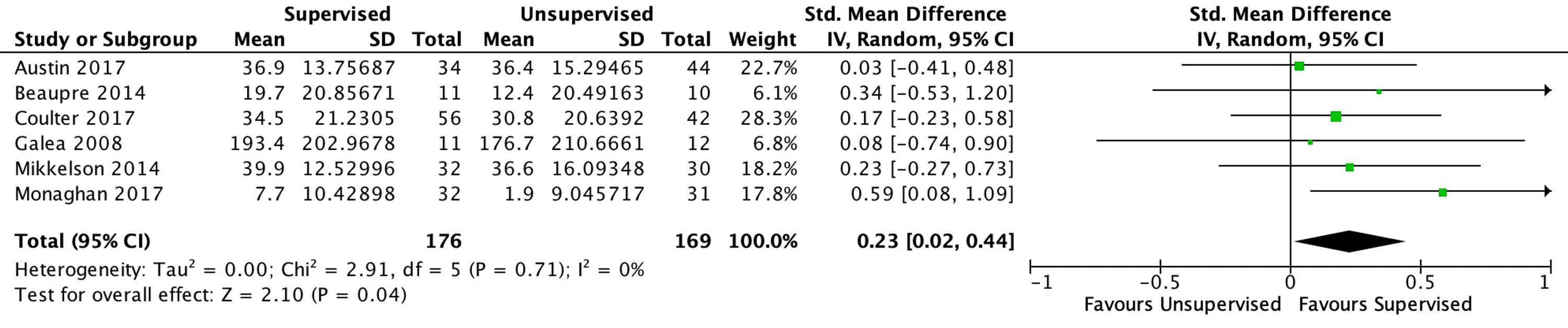
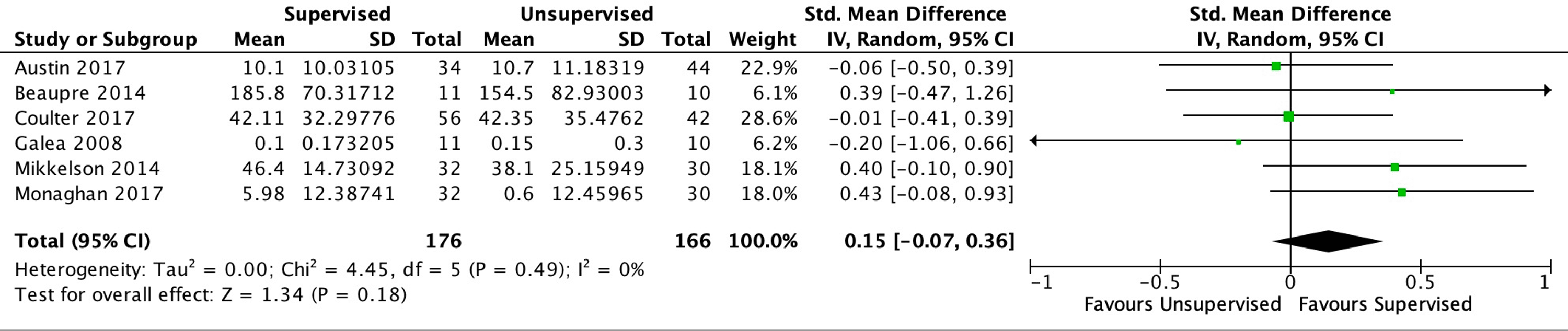
Of the six studies included in the short-term outcome analysis, five found both interventions to be equivocal. One study found a statistically significant difference in physical function scores favoring the supervised cohort but was unable to determine if this difference was clinically significant. Based on five studies and a low level of certainty, no differences in short-term LES were found (SMD −0.04 [−0.50, 0.41]; I2=66{08cd930984ace14b54ef017cfb82c397b10f0f7d5e03e6413ad93bb8e636217f}; p=0.85) (Figure 2). There was no significant difference in short-term aerobic capacity based on three studies and a low level of certainty (SMD −0.50 [−36.88, 35.89]; I2=12{08cd930984ace14b54ef017cfb82c397b10f0f7d5e03e6413ad93bb8e636217f}; p=0.98) (Figure 3). Compared with unsupervised home exercise, the supervised exercise regimen was associated with improved self-reported physical function outcome scores based on six studies and a low level of certainty (SMD 0.23 [95{08cd930984ace14b54ef017cfb82c397b10f0f7d5e03e6413ad93bb8e636217f} CI, 0.02-0.44]; I2=0{08cd930984ace14b54ef017cfb82c397b10f0f7d5e03e6413ad93bb8e636217f}; p=0.04) (Figure 4). According to Cohen’s work [20,21], an SMD of 0.23 is considered a small effect size. No differences were found between the two cohorts with regard to short-term QoL scores based on six studies and a low level of certainty (SMD 0.15 [−0.07, 0.36]; I2=0{08cd930984ace14b54ef017cfb82c397b10f0f7d5e03e6413ad93bb8e636217f}; p=0.18) (Figure 5).
Figure
2:
Forest plot for five randomized controlled trials investigating short-term lower extremity strength in unsupervised vs. supervised exercise regimens following primary total hip arthroplasty.
References: Beaupre et al. [8]; Coulter et al. [16]; Galea et al. [15]; Mikkelson et al. [17]; Monaghan et al. [18].
Figure
3:
Forest plot for three randomized controlled trials investigating short-term aerobic capacity in unsupervised vs. supervised exercise regimens following primary total hip arthroplasty.
References: Beaupre et al. [8]; Galea et al. [15]; Monaghan et al. [18].
Figure
4:
Forest plot for six randomized controlled trials investigating short-term patient-reported physical outcome scores in unsupervised vs. supervised exercise regimens following primary total hip arthroplasty.
References: Austin et al. [7]; Beaupre et al. [8]; Coulter et al. [16]; Galea et al. [15]; Mikkelson et al. [17]; Monaghan et al. [18].
Figure
5:
Forest plot for six randomized controlled trials investigating short-term patient-reported quality of life scores in unsupervised vs. supervised exercise regimens following primary total hip arthroplasty.
References: Austin et al. [7]; Beaupre et al. [8]; Coulter et al. [16]; Galea et al. [15]; Mikkelson et al. [17]; Monaghan et al. [18].
Long-Term Outcomes
No long-term outcome differences were identified between the unsupervised and supervised cohorts in this study. There was no significant difference observed with regards to long-term LES, based on four studies and a low level of certainty (SMD −0.19 [−0.52, 0.13]; I2=22{08cd930984ace14b54ef017cfb82c397b10f0f7d5e03e6413ad93bb8e636217f}; p=0.24) (Figure 6). Similarly, no differences were observed with regards to long-term patient-reported physical outcome scores, based on four studies and a low level of certainty (SMD 0.11 [−0.13, 0.36]; I2=0{08cd930984ace14b54ef017cfb82c397b10f0f7d5e03e6413ad93bb8e636217f}; p=0.37) (Figure 7), or long-term QoL scores based on four studies and a low level of certainty (SMD 0.19 [−0.06, 0.43]; I2=0{08cd930984ace14b54ef017cfb82c397b10f0f7d5e03e6413ad93bb8e636217f}; p=0.14) (Figure 8).
Figure
6:
Forest plot for four randomized controlled trials investigating long-term lower extremity strength in unsupervised vs. supervised exercise regimens following primary total hip arthroplasty.
References: Beaupre et al. [8]; Coulter et al. [16]; Mikkelson et al. [17]; Okoro et al. [19].
Figure
7:
Forest plot for four randomized controlled trials investigating long-term patient-reported physical outcome scores in unsupervised vs. supervised exercise regimens following primary total hip arthroplasty.
References: Austin et al. [7]; Beaupre et al. [8]; Coulter et al. [16]; Mikkelson et al. [17].
Figure
8:
Forest plot for four randomized controlled trials investigating long-term patient-reported quality of life scores in unsupervised vs. supervised exercise regimens following primary total hip arthroplasty.
References: Austin et al. [7]; Beaupre et al. [8]; Coulter et al. [16]; Mikkelson et al. [17].
Risk of bias
The results of the quality appraisal are summarized in risk of bias summary plots in the appendices (Appendix Figures 9–15). The self-reported scores all had a high risk of bias, primarily due to bias in outcome measurement (Table 3). All outcomes were rated as low-quality evidence (Table 4). The primary reasons for the downgrade in quality were the risk of bias and imprecision. Publication bias was not assessed as there were fewer than 10 studies involved in each outcome.
SMD: standardized mean difference, MD: mean difference CI: confidence interval, QoL: quality of life, LE: lower extremity.
aStandardized mean difference.
bMean difference.
Discussion
Despite the historical emphasis on the importance of formal PT as a critical intervention after THA, this meta-analysis fails to demonstrate any benefit for PT over unsupervised home exercises aside from a small increase in short-term self-reported physical function scores. No significant differences were found with regards to short- and long-term changes from baseline for LES, aerobic capacity, and self-reported QoL scores, as well as long-term self-reported physical outcome scores. The results of our meta-analysis suggest that arthroplasty providers should question the routine use of formal PT for all primary THA patients.
Other reviews conducted on formal PT programs following THA provide mixed results. Reviews conducted by Lowe et. al. [22] and Wijnen et. al. [23] did not perform a meta-analysis of physical function due to considerable variation in their included studies and were unable to provide a definitive conclusion; however, the latter reported an association with increased hip abductor muscle strength. A review conducted by Fatoye et al. [24] including RCTs and retrospective cohorts found that formal PT improved both physical function scores and hip abduction strength, but did not differentiate between short- or long-term follow-up points (follow-up ranged from 2 weeks to 12 months). Finally, Sauressig et al. [25] similarly conducted a meta-analysis and found no differences in self-reported physical function at 4 weeks, 12 weeks, 26 weeks, and one year.
An important aspect of the current review separating it from these prior studies is the use of a clearly defined home exercise regimen, postoperative instructions, or a booklet on discharge as inclusion criteria, excluding those studies that did not specify any form of intervention for their control groups. This is important to ensure a low-cost, standardized control group to allow providers to understand the true effect of trained therapist-led PT for their patients. Without this aspect, studies with controls consisting of no intervention could potentially be included in this review, which could bias results toward the formal therapy groups and may not reflect the current state of most practices.
Although postoperative rehabilitation has long been linked to a successful outcome following THA, the use of supervised PT has several drawbacks. Copay affordability, scheduling outpatient appointments, and arranging transportation have been demonstrated to be legitimate barriers to accessibility to outpatient PT for THA patients after discharge [10,11]. PT exercises can also be painful, as one of the most commonly asked questions regarding PT in the postoperative period after THA is about pain expectations [26]. Additionally, Yayac et al. demonstrated that TJA patients who underwent supervised PT had a significantly higher readmission rate than those who were discharged with self-directed home exercise regimens [9]. After controlling for patient demographics and comorbidities, they found that patients who had supervised home PT were over three times more likely to be readmitted in the 90-day postoperative period. Finally, the added cost associated with it must be considered. Yayac et al. [9] analyzed costs and outcomes in their retrospective study; while no clinically significant difference was found between function or quality of life between groups at two years, they concluded that formal therapy costs included 8{08cd930984ace14b54ef017cfb82c397b10f0f7d5e03e6413ad93bb8e636217f} of a 90-day episode of care costs for those receiving supervised home PT and outpatient PT and 3{08cd930984ace14b54ef017cfb82c397b10f0f7d5e03e6413ad93bb8e636217f} for those receiving supervised home PT only [9]. The results of the current study highlight the need to re-examine the application of routine PT following primary THA, especially with post-discharge costs accounting for up to 36{08cd930984ace14b54ef017cfb82c397b10f0f7d5e03e6413ad93bb8e636217f} of total costs in the bundle payments for TJA [27]. This is particularly salient in the context of a younger patient population, improvements in pain management, and emphasis on early mobilization postoperatively.
The difference between the short-term, self-reported physical outcome scores we observed between supervised and unsupervised groups was largely driven by the findings of the study conducted by Monaghan et al. [18]. This RCT involving an exercise intervention consisting of land- and aquatic-based therapy performed between 12 and 18 weeks after surgery differed from the other studies in this review as it was the only one to include an aquatic component. Additionally, while they found a statistically significant relationship between their formal exercise intervention and improved Western Ontario and McMaster Universities Arthritis Index (WOMAC) scores, they were unable to state whether this translated to a clinically significant difference – an issue that has been raised with the use of WOMAC scores in other literature [28,29]. Our meta-analysis reported an effect size of 0.23, falling under the category of small effect size as described by Cohen [20,21]. However, this was the only measure demonstrating a difference between the two interventions with regard to short-term outcomes and was likely driven by a single study. In the three studies that analyzed data at 12 months, no significant differences were found in any of the assessed outcomes between the two groups [7,8,19]. At the six-month time point, Mikkelson et al. [17] found a larger increase in maximal walking speed and stair climb performance in the formal therapy group, while Johnsson et al. [30] reported increased intermediate-to-moderate pain at six months in the home exercise group. Two other studies at the six-month mark found no significant differences in physical or mental outcomes between home exercise and formal PT groups.
Our results are limited by the number of studies and the quality of their respective data included in the meta-analysis. An important aspect to consider is the included patient population of each included study. Eligibility criteria may have preselected healthier and more motivated patients. In light of this, deconditioned patients with substantial functional deficits or medical comorbidities may still benefit from supervised PT. Additionally, there was substantial heterogeneity of exercise regimens across studies, including aspects such as methodology and duration of therapy, reflecting the likely variation in PT programs at different institutions. Furthermore, relying on patient-reported outcomes can be flawed, particularly in RCTs in which patients know they will be assigned to either supervised or unsupervised cohorts. It is likely that many patients in the intervention groups may be subject to bias – their assignment to formal PT protocols may influence and potentially inflate the supervised PT cohort self-reported outcome scores. The measurement of LES was also subject to variability as the studies assessing it used different methodologies to determine it. Additionally, within the unsupervised cohorts, we were unable to assess the degree of compliance; however, the intention-to-treat approach taken by most of these studies is likely to replicate true scenarios. Finally, previous studies have noted an 18-31{08cd930984ace14b54ef017cfb82c397b10f0f7d5e03e6413ad93bb8e636217f} cross-over rate from self-directed exercise to formal supervised therapy in total joint arthroplasty populations [7,31]. We were unable to account for patients who required crossover in our study – outcomes for these patients would be an area of interest in future studies. The strengths of this study include the narrow inclusion criteria, such as the inclusion of only RCTs or that the unsupervised cohorts must have clearly delineated instructions or booklets given to them, to allow for stronger conclusions than previous reviews on this subject.