Everything You Ever Wanted to Know About Labrador Retriever Colors

Everything You Ever Wanted to Know About Labrador Retriever Colors

Throughout the history of America’s favorite dog breed, Labrador retriever colors have traditionally been classified as black, chocolate brown, or yellow. If you ask the American Kennel Club, those are the only acceptable colors for a Labrador. And even then, those dogs must have other specific color features (like dark noses and lips) to count as true Labradors.

But lately, non-traditional Labrador retriever colors have increased in popularity. The coats on these dogs look like faded versions of the traditional colors. Charcoal, silver, champagne, and white Labs have all emerged on the scene. They simultaneously enchant dog-loving Americans who want something new and different—and frustrate the traditional crowd of Lab owners and trainers who don’t approve of the breeding decisions that result in these non-traditional coat colors. 

So where did these new colors come from? Are they associated with health problems? Are these “designer” Labs going to overtake the traditional breed-standard colors of black, chocolate, and yellow? Here’s the lowdown on all the Labrador retriever colors out there.

A yellow Lab with black pups.
A yellow Lab rests with her black pups. Labrador retriever colors may seem straightforward, but there’s actually a lot of variation—and gene interaction—that determine a pup’s coat color. Mikkel Bigandt / Adobe Stock

The Traditional Labrador Retriever Colors

Black is the most dominant color in the history of Labrador retrievers. The dogs that Labs originate from, St. John’s dogs, were all-black with white tuxedo markings on their chests and paws. Once multiple generations of Labrador retrievers reproduced, recessive-gene colors like chocolate and yellow emerged from other bloodlines. Before the 20th century, breeders didn’t value these colors, breeder and co-owner of DuckCreek kennels Peggy Stalnaker tells Outdoor Life.   

“The breeders would cull the runts or any weird-colored dogs,” says Stalnaker, who lives and breeds Labs of various colors in Winfield, Kansas. “They didn’t want to get the reputation that their females [whelped] funky-colored animals. People would think she wasn’t true full-blood, when she actually was.”

Three traditional AKC coat colors for Labradors.
Black is the most traditional coat color for Labs, but chocolate and yellow have grown more popular over the years. claireliz / Adobe Stock

Eventually, dog owners began to value chocolate and yellow Labs, and official kennel clubs around the world began accepting these coat colors as part of the breed standard. The Labrador retriever was first registered as a breed with the Kennel Club of England in 1903 before the AKC registered them in 1917.

Labrador Retriever Colors Are Determined by Genetics

A series of genes determine what color an individual Labrador retriever will be. The sire and dam that produce the litter of puppies pass down those genes to the offspring. Different combinations of genes result in different coat colors, AKC judge and Labrador retriever breeder Margaret Wilson tells Outdoor Life. 

If you don’t remember the genetics unit from your high-school biology class, here’s a quick recap.

Black Labs and Chocolate Labs

A black Lab sits on a platform.
With black noses, skin, and lips, back Labs are the most classic example of the AKC standard for the breed. Natalie Krebs

The black coat color gene is dominant, Wilson explains. The chocolate coat gene, on the other hand, is recessive. (We’ll get to yellow coat genes in a second.)

Say two black Labs breed and produce a litter of pups. If just one of the parents—in this example, the sire—has all-black genes, none of their puppies will be chocolate. All the pups will be black Labs. That’s because the black genes from the sire will dominate any recessive chocolate genes the dam might contribute. But if both black Labs each have a recessive chocolate gene in their genetic makeup, there’s a chance the litter could include chocolate pups.

A female hocolate Lab nurses her pups.
Chocolate Labrador retrievers carry the recessive gene for coat color. If two chocolate Labs produce a litter, all the pups will be chocolate, too.

The same is true for a black Lab that breeds a chocolate Lab. If the black Lab only has black genes to pass down, all their puppies will be black. But if that black Lab has a recessive chocolate gene to pass down, the litter could include both black and chocolate pups. That’s because a chocolate Lab only has recessive chocolate genes to pass along.

Two chocolate Labs can only produce a chocolate litter, Wilson explains. Those are known as “homozygous chocolate” Labrador retrievers. All these dogs—the parents and the offspring—only have recessive chocolate genes. There aren’t any dominant black coat genes present to “switch off” the chocolate color.

Yellow Labs

A yellow Lab stands on a platform with a duck at his feet.
Yellow Labs have the widest range of coat color variations while still falling within AKC standards. This yellow Lab was bred from a black female and a fox red male. Natalie Krebs

Yellow coats come from an entirely different pair of genes than black or brown coats. The black or brown Labrador retrieve color coat genes are called “B” genes, and the yellow coat genes are called “E” genes, according to the UC Davis School of Veterinary Medicine. 

Here’s where things get really complicated: The dominant E gene can’t cancel out the black or brown coats. If either parent passes down a dominant E gene, the puppy’s coat will be black or brown. But, if both parents have a recessive gene (represented by a lowercase “e”) to pass on and a puppy receives them from both parents, those combined recessive genes will overpower either the black or brown trait and present a yellow coat. 

Read Next: The Best Hunting Dog Names

Yellow Labs have the widest range in coat color while remaining within the AKC breed standard, Wilson says. Yellow Labs must have dark, heavily-pigmented noses, eyes, and lips, but their fur can range from a lighter vanilla to fox red.

Fox Red Labs

A fox red Lab stands in a lake.
Fox red Labrador retrievers have much darker coats than other yellow Labs, but they’re still considered “yellow” by AKC standards. mike / Adobe Stock

This lesser-known Labrador retriever color often gets mentioned alongside other “designer” coat colors, and it certainly appeals to people looking for a classic Lab personality with a newer look. But in reality, the earliest yellow Labs were fox red, Wilson says. The color was first documented toward the end of the 19th century, and today, this coat variation is well within the AKC breed standard for yellow Labs. 

“Over time, some of the lighter colors became more popular,” she says. “Now there’s [been] a more recent resurgence in the past 30 years and the fox red is gaining more popularity every year. They’re absolutely legitimate.”

These darker yellow Labs are becoming especially popular among hunters, since the color blends into most habitat types. 

Yellow Labs with Pink Noses

Other iterations of the yellow Lab fall outside of the breed standard. One of the more common falters is the light brown or pink nose, lips, and eyes.

Something as trivial as a dog’s nose or jowls might not seem like a big-enough deal to warrant disqualification from AKC breed standards. But from a health perspective, says Wilson, yellow Labs with light features are more prone to complications.

A yellow Lab with a pink nose, lips and eyes.
Yellow Labs fall outside the AKC breed standard when their lips, nose, and skin around the eyes is pink, rather than black. These types of Labs are often referred to as Dudley Labs. Alessandra Sawick / Adobe Stock

These features often show up in yellow Labs with chocolate Lab parents. While the recessive “e” gene makes the coat yellow, the dog’s nose, eye rims, and lips will have less pigment like those of a chocolate Lab. (If you look closely at a chocolate Lab, you’ll notice that, despite their dark fur, their eye rims, lips, and nose are actually light in color.) This can make the skin more prone to sunburn or melanoma. Lighter, more sensitive eyes also make it harder for the dog to work properly in the field. That’s why yellow Labs with the eyes, lips, and nose of a black Lab are more desirable for working, trial, or hunting dogs. If Labs have black noses, lips, and eyes, they’re more protected from the sun and their vision is better suited for outdoor work.   

Which Traditional Labrador Retriever Color Is Best?

black Labrador retriever in reeds
Black Labrador retrievers are one of the most popular bird dogs in the country. Alex Robinson

The best traditional Labrador retriever color is, of course, a matter of personal preference. Each color has their pros and cons. 

Yellow Labs

  • Are harder to disguise in marsh and timber
  • Are tougher to keep track of during an upland bird hunt since they tend to blend into grassy cover
  • Identifying ticks, cuts, and abrasions is easier on their light coats

Black Labs

  • Are easier to disguise in many waterfowl environments, including marsh and timber
  • Are easier to spot while working thick upland cover
  • Their dark coat makes it harder to notice ticks, blood, and thorns

Chocolate Labs

  • Are the least traditional of the traditional Labrador retriever colors
  • Have amassed a loyal following over the years
  • Blend well into most habitat types and environments

Non-Traditional Labrador Retriever Colors

A silver Lab puppy sits on a trail.
If a puppy inherits the recessive dilute gene from both parents, its coat will be diluted, or lighter in color. Chocolate Labs will turn silver in appearance. amathers / Adobe Stock

Beyond the world of AKC breed standards and traditional bloodlines lies a popular demand for something new and different. The results of this demand are a variety of Labrador retriever colors that aren’t formally recognized by the AKC, but that get peoples’ attention—and money—nonetheless.

White, champagne, silver, and charcoal Labs are all products of breeding focused on the “dilute” gene. This gene is entirely separate from the black and chocolate coat gene (B) and the yellow coat gene (E), and it is denoted by the letter “D.” When puppies inherit the dominant “D” gene from either or both their parents, their coats won’t be a diluted color, according to the UC Davis School of Veterinary Medicine. But if a pup inherits the recessive “d” gene from both parents, the coat will be diluted, or lighter in color. Black Labs will become charcoal, chocolate Labs will turn silver, and yellow Labs will turn either champagne or what is known as polar white.

Dilute breeding to produce non-traditional Labrador retriever coat colors has its controversies. The practice is particularly frustrating to the traditional Labrador retriever community that strictly adheres to AKC purebred standards.

“I call them ‘silveristas,’ because I consider these people to be a dilute terrorist organization that is undermining the integrity of the breed,” Wilson says. “And it’s not to better the breed at all, it’s to somehow give them credibility with the unsuspecting public.”

Where Did Dilute Labrador Retriever Colors Come From?

Wilson rehashes a story of the first documented silver Lab, which she says was supposedly born in Wisconsin in 1985 to a chocolate Lab female and a chocolate Lab male. But the breeder, who Wilson says she knew about through a friend, was having trouble with a Weimaraner on his property at the time. When the litter arrived, some of the pups were chocolate Labs and some were silver. 

Silver Labrador retriever
Silver Labrador retrievers have become wildly popular across the country. Courtesy of Peggy Stalnaker

“So he registered them as ‘silver,’”  says Wilson, who suspects the rogue Weimaraner was actually the sire. “Back in those days, the [AKC] hard copy registration form listed Labrador colors as black, yellow, or chocolate, but there was a box off to the side labeled ‘other.’ He filled in ‘silver.’”

Eventually, the Labrador Retriever Club (the only AKC-recognized parent club of the breed) caught wind of these so-called silver Labs. They forwarded the information to the AKC, who dispatched a field inspector to determine the genetics of the pups. (This was a tricky assignment in the era before modern DNA testing and microchips. The breeder presented a chocolate female as the dam and said the sire, which had been on loan as a stud, was back in the northern part of the state.

“So the field inspector took some photographs that, to my knowledge, no one’s ever seen, and we don’t know what colors [the dogs] were. The only photo that I’ve ever seen of the first registered silver was in a sepia-toned photograph,” Wilson says. “You can’t tell [what color the dog is].”

(We were not able to corroborate this story, but the Labrador Retriever Club does claim that the original silver Lab breeders were also involved with Weimaraners.)

champagne Labrador retriever
Silver Labs can have the exact same personalities and capabilities as traditional-colored Labs. Courtesy of Peggy Stalnaker

Stalnaker, who breeds dilute Labs at DuckCreek, doubts this version of the silver Lab origin story, given what she knows about dilute genetics. Her hunch is that a few true recessive dilute puppies were born by accident.

“The traditionals will say, ‘Oh they have Weimaraner in them.’ But [Weimaraners] are totally different [than Labs]. I’m not saying that somewhere along the line, less-honest breeders haven’t thrown a Weimaraner in somewhere to try to pull more of the dilute colors. I’ve seen Labs that looked kind of Weimaran-y. But I don’t know. It’s just an argument that will go on and on.”

Stalnaker quotes a book written by breeder and hunter Mary Roslin Williams in 1969, titled The Dual Purpose Labrador. (Stalnaker points out that this book was published well before the first documented cases of dilute Labs in the United States.)

“It says that she has heard of a smokey-colored Lab, but she herself has never seen it.”

Does the Dilute Gene Cause Health Issues in Labrador Retrievers?

charcoal labrador retriever
The charcoal Labrador retriever is darker than silver and comes from a black Lab with the dilute gene. Katherine / Adobe Stock

Stalnaker says she takes meticulous care to produce the healthiest dogs possible. When dilute Labs became popular, she explains, attempts to meet consumer demand resulted in some problematic inbreeding. This resulted in dilute Labs that were less genetically diverse and had higher chances of genetic health issues. But Stalnaker puts all her dogs through extensive genetic testing to determine any predispositions for these issues, which range from dwarfism to exercise-induced collapse syndrome to excessively dry noses. 

“We test for 17 or 18 different genetic disorders at this time. But this isn’t specific [to the dilute gene itself],” Stalnaker clarifies, adding that it is standard practice among reputable Labrador breeders (of any color) to perform key genetic health tests before breeding. “Dilute Labs do have a tendency toward fur issues, where they don’t have a full undercoat and a full overcoat. Their fur would be really thin. But I haven’t had that with any of my dogs. Some of them had coats that weren’t as heavy as I wanted them to be, but we’re away from that now.”

Stalnaker is talking about color dilution alopecia, which is a common disorder for all dogs with dilute coats. She has avoided this by breeding in non-diluted Labs that possess the dilute gene. This means some of her puppies are traditional colors and some are diluted. But the diluted Labs have less disorder-prone genetic codes thanks to the genetic diversity from the non-diluted sire and dam.

Her customers have been happy with their DuckCreek Labs. She recalls one man who flew to Kansas from south Georgia to pick up a silver puppy and fly it home. He was mostly looking for a companion dog, but he’ll also hunt over it, she says. That’s who DuckCreek Labs cater to: customers who want a pet that can also hold its own in the field. She doesn’t get many “hardcore” hunting customers, since she doesn’t run her dogs through hunt tests. She cites the time commitment as a barrier. (She’s too busy coaching the local youth trap shooting team.)

Final Thoughts on Labrador Retriever Colors

fox red labrador retriever in water
Fox red coats are becoming more popular among a public interested in “designer” color Labs. everydoghasastory / Adobe Stock

Dog breeds evolve over time, and many dilute Lab fans argue that breeders like Stalnaker are responsibly meeting consumer demand. Just because a Lab inherits a dilute color gene and has a slightly different coat color does not mean that dog isn’t capable of fulfilling all the personality and physical traits of the breed. Despite criticism from traditional Labrador loyalists like Wilson, some owners still register dilute Labs under traditional AKC colors. For example, since the AKC only offers choices of black, yellow, and chocolate, a “polar white” dilute Lab owner might register their pup as a yellow Lab.

“They’re promoted, and unfortunately, advertised as rare and desirable, and the AKC is going to recognize them,” says Wilson. “But all of these things are just their propaganda. Don’t buy one from people who are breeding these dilutes, no matter what kind of snake oil salesman they may be.”

Meanwhile, Stalnaker runs into the occasional negative quip about her Labs, but generally people are civil.

labrador retriever colors
Choosing a certain color Lab is really a matter of personal preference. Farinoza / Adobe Stock

“Once in a while, I will get a comment on the open Facebook page, but I choose not to argue with anyone,” she says. “People have their opinions, and you’re not going to change their minds. If anybody is nasty, I just block them. But it’s [usually] a respectful disagreement.”

Read Next: Golden Retriever vs Labrador Retriever: Which Hunting Breed Is Better?

The new variety of Labrador retriever colors is probably here to stay, since the consumer demand is high. But the dilute Labs will probably remain on the outskirts of the Lab community for the foreseeable future, while the traditional Labrador retriever colors of black, chocolate, and yellow continue to win hearts and field trials alike.

Golden Retriever vs Labrador Retriever: Who Wins?

Golden Retriever vs Labrador Retriever: Who Wins?

Few dog breeds have more fans than Labrador retrievers and golden retrievers. These two hunting retrievers are historically the most popular household pets in the country, holding the No. 1 and 3 spots respectively on the American Kennel Club’s Most Popular Dog Breeds list for decades. (The German Shepherd usually clocked in at No. 2, and the French bulldog dethroned the Lab in 2022, ending the Lab’s 31-year streak.) So which retriever makes a better hunting dog: the golden or the Labrador? In this showdown of the golden retriever vs Labrador retriever, we break down each breed’s strengths and weaknesses.

Golden Retriever vs Labrador Retriever: The Upshot

golden retriever vs labrador retriever
Goldens and Labs have distinct personalities that make each breed better suited for different lifestyles. Kseniia / Adobe Stock

Golden retrievers and Labrador retrievers are similar dog breeds. In general, both are known and valued for their flushing and retrieving abilities, making them both a great choice for upland bird hunters and waterfowlers alike. Neither breed is known for pointing birds, so if you’re looking to hunt over a pointing dog, go with a pointer or a setter. (Pointing Labradors do exist, though they’re a niche and sometimes controversial retriever.)

Show Dogs and Field Dogs

Labs and goldens are also similar in that they have long been bred for two purposes: as conformation dogs (also known as show dogs), or as working field dogs. According to amateur handler and longtime hunting retriever owner Kari Laufenberg, conformation retrievers are usually bred for their looks and stocky stature. They are meant to meet breed standards in a show setting. Field dogs, on the other hand, are bred to perform in field trials and hunt tests. They’re often sleeker, their coats shed water faster, and they’re more utilitarian. But those long-standing divisions are fading.

kari laufenberg with golden retrievers
Laufenberg poses with two conformation-line Golden retrievers, Reggie (left) and Riggs, after a Working Certificate hunt test. Courtesy of Kari Laufenberg

“I hunt and train with the more conformation-bred dogs, but the two worlds are starting to come together,” she explains. “In the past, it might have been thought that a conformation-bred golden retriever or Lab would not have the drive to hunt and do field work, whereas the field-bred dogs had high drive. But now these conformation breeders are seeing the value of breeding some of that into their lines.” 

That value includes creating a more well-rounded and versatile dog that appeals to a wider population of owners, from hardcore hunters to young families.

But Labrador retrievers and golden retrievers have a few distinct differences that bird hunters should take into consideration when picking which one to bring into their life. 

Get a Golden Retriever If…

  • You’re spending more time on dry land than water. Golden retrievers take longer to dry off and can develop hot spots, or acute moist dermatitis, if water gets trapped in their coats, Laufenberg explains. Goldens tend to require more grooming attention in general.
  • You’re looking for a pet that can make a good teammate. Golden retrievers are generally great with small children, in hospital settings, and any other circumstances that require extra gentleness. They are well-suited for being considered pets first and hunting dogs second. 
  • You want your dog to enjoy downtime with you. As a breed, golden retrievers are slightly lower-energy and less task-oriented than Labs, although there are lots of exceptions, Lauenberg points out. 
  • You need a quiet dog. According to the AKC, goldens tend to bark less than Labs. But again, there are exceptions.
  • You don’t need a watchdog. Goldens are known for their affectionate personalities—not their protective nature. They have little instinct for guarding homes or being suspicious of strangers.

Get a Labrador Retriever If…

  • You’re spending more time on water than dry land. Field-bred Labs have sleek, short coats that look almost waterproof. They dry quickly and aren’t as prone to hot spots as goldens. They also don’t require as much grooming.
  • You’re looking for a teammate that can make a good pet. Labs are just slightly more intense and less reserved than goldens, although they were America’s favorite dog breed for a long time.  
  • You want to play fetch with your dog for hours on end. Labs tend to have a bit more energy than goldens, and might be more prone to playing than snuggling.
  • You don’t mind a little barking or whining. Labs can be a bit louder than goldens.
  • You want a watchdog. Labradors also have friendly personalities, but they tend to be more protective of their homes and handlers, according to the AKC. 

How Are Golden Retrievers and Labrador Retrievers Similar?

golden retriever and yellow lab puppy
The golden retriever and the Labrador retriever have long held top-five positions on the AKC’s Most Popular Dog Breeds list. Ben Gabbe / Getty Images

When it comes to size and demeanor, these two breeds are more similar than they are different.

  • Both have historically been bred for long days sitting in a duck blind, working a field, or slipping through the timber. 
  • Both breeds weigh, on average, in the 55- to 80-pound range and stand at about 21 to 24 inches at the shoulder, depending on sex. Some Labs might get heavier and taller than some goldens. Conformation retrievers tend to be heavier and have thicker coats than field retrievers.
  • Both Labs and goldens make great companions for families of all ages. While the lower-energy golden might let your toddler sleep on it or pull its tail, the higher-energy Lab will lick the peanut butter off your toddler’s face and keep them entertained.
  • Both goldens and Labs are good-natured. Since the personalities of individual dogs vary, nitpicking the personality differences between the two breeds is like splitting hairs. Both breeds are so primed for obedience training, Laufenberg explains, that a solid obedience foundation can help mold them into the perfect dog for your exact situation. 

Do Golden Retrievers Make Good Hunting Dogs?

golden retriever with bird
Golden retrievers have strong prey drives and excellent noses. John Hafner

The phrase “hunting dog” might bring a Lab, setter, or spaniel to mind. But field-bred golden retrievers have serious prey drive and unmatched noses, which puts them squarely among the top hunting dog breeds. The first golden retrievers were born in England in the late 1860s, from a litter between a golden, “wavy-coated dog” named Nous and a Tweed water spaniel named Belle. (Tweed water spaniels are now extinct.) Belle belonged to a wealthy member of Parliament named Dudley Coutts Marjoribanks, and Nous belonged to a cobbler who received him as payment for a debt.

“It was an inspired combination, crossing a retriever to a water spaniel to create a robust hunter capable of navigating both land and water to hunt grouse, partridge and even red deer,” an AKC article reads. “Marjoribanks’ famous 1868 litter contained the … puppies who are considered the world’s first Golden Retrievers.”

Today, goldens especially rise to the top when it comes to conformation-bred retrievers doing field work. 

“The pros will notice that, when working with a conformation-bred golden retriever versus a conformation-bred Lab, the golden retriever does a little more on the thinking side,” Laufenberg says. “That’s not to say Labs are stupid, because they are not. But it’s kind of the joke in that world—the Labs will just go do something, but we have to think hard about the training with the golden retrievers.” 

golden retrievers with geese
The right golden retriever bloodlines can make for hard-working bird dogs. Golden retrievers range in color from deep bronze to light sand. Courtesy of Shawn Skipper

A golden’s propensity to think more before acting shines through in its calmer, more deliberate demeanor.

“In general, a golden retriever is going to be a little more laid back,” she explains. “Once they retire from field work, they [might] go do therapy work. They have a real soft presentation about them and they just want to be next to you. They’re a good sponge. That’s not to say a Lab couldn’t do it, but it’s just more common in the golden retrievers.”

Still, there’s no denying that golden retrievers are far less common hunting dogs than the ever-popular Labrador retriever. Labs are more versatile when it comes to hunting land or water, and duck hunters might even pick a Chesapeake Bay retriever over a golden when given the choice. And while many goldens have respectable prey drive, it doesn’t meet that of the field-bred American Lab.  

Why Are Labrador Retrievers Good Hunting Dogs?

Black Lab with mallard
Labrador retrievers are marked by a very high prey drive and a love for water. Bill Buckley

If golden retrievers have sharper minds for field work, Labrador retrievers tend to have bodies built for bird country. Water rolls right off their backs. They slither through tight brush and glide through rivers and lakes. Their seemingly endless energy gives them the power to tackle long days effectively. And when those days are done, their shorter coats are extremely low-maintenance.

“Grooming comes into play. A lot of the [Lab] guys I train with look at my dogs, and say they love how my dogs work but they’d never want the responsibility after,” Laufenberg chuckles. “A lot of guys will go with the Lab because the maintenance is easier.”

Read Next: Why British Labs Just Might Take Over American Bird Hunting

Labrador retrievers originated in Newfoundland from the packs of dogs that ran around the capital city of St. John, according to the AKC. Originally, a “land race” of St. John’s dogs emerged, and eventually the Labrador retriever evolved from that breed. They spent a lot of time in the water near the fisheries and were known to retrieve any cod that spat a hook, as well as nets and lines. All modern British retrievers were born from St. John’s dogs.

The Labrador retriever’s hunting instincts are obvious when you watch a retriever field trial. These competitions involve retrievers following their handler’s commands to find a duck or bumper (both known as a “mark”) hundreds of yards away without any knowledge of where it landed. Field trials are generally more taxing on a dog’s memory and endurance than hunt tests, which are shorter-range and test retrieving skills, Laufenberg explains.

Black Labrador retriever in field
Field trials are frequently dominated by black Labs, Laufenberg says. Willee Cole / Adobe Stock

“In [field trials], you’ll mostly see black Labs—very few yellow or chocolate Labs. And you almost never see a conformation-bred golden retriever there. They’re logical thinkers, so they’ll say ‘This is not reality, we will never be out hunting and do a 300-yard mark, so why are we doing this?’ Whereas the field-bred Labs will fly out there and do it because they love it.”

That prey drive in Labs shines through in the last seven decades straight of National Championships for Retrieving results: a golden retriever hasn’t won since 1951.

Golden Retriever vs Labrador Retriever: Training Tips

golden retriever puppy in field
Laying a base of obedience training is important for a young pup. John Hafner

Once you settle the golden retriever vs Labrador retriever debate and bring a dog into your life, the best thing you can do for them is lay a foundation for training, Laufenberg says. The training approach is the same for both breeds, and obedience training should come first.

Read Next: The Best Hunting Dog Names

“When they’re puppies, we’re working on pulling out their [prey] drive and getting them exposed to birds. But I’m always making sure that their obedience is good,” she explains. “No matter what you do with your dog, obedience has value. That’s whether you’re walking down the street with your dog, if you’re hunting with your dog, if you’re doing agility with your dog, obedience is in everything. It just makes for a great relationship with the dog, and it’s also a safety factor.”

Final Thoughts on Goldens vs Labs

black lab close-up
Labrador retrievers are hard to beat in the bird hunting world. Alex Robinson

Lots of people prefer golden retrievers for their demeanor, but you can’t argue with the field-bred Lab’s prey drive on land and in the water, their longtime position at the top of the AKC Most Popular Breeds list, or even their short, fast-drying coat. Based on factors like versatility, ease of care, general popularity, and seven straight decades of NRC wins, in the match up of Golden retriever vs Labrador, Labs take the title. 

2 Types of Labrador Dogs That Make The Best Pets

2 Types of Labrador Dogs That Make The Best Pets

↓ Continue Reading through To See This Awesome Online video

The names American Labrador Retriever and English Labrador Retriever need to have appeared at some place if you’ve study everything at all about Labrador Retrievers. These phrases are normally made use of to describe the two most important varieties of Labrador dogs. What do these phrases signify, although? How did these text appear to be utilized so commonly? Do they differ from a single a further in ways other than just where by the canines had been born or bred?

In this report, we’ll choose a search at the distinctions and similarities among an English Labrador Retriever and an American Labrador Retriever. To assistance you in deciding upon the best breed of Labrador for you, we’ll also examine and discover each and every of these outstanding doggy breeds and spotlight their strengths.

The Heritage of the Labrador Retriever

It’s a very little unclear in which Labradors actually came from. They have been to begin with discovered in the northeastern Canadian province of Newfoundland. The precise time when these drinking water-loving canines initial appeared is not nicely known. 

Early Labs were being devoted to cooperating and residing with fishermen and explorers included in the trade routes between Europe and Canada. The Kennel Club in the United Kingdom has claimed that they had been in the area as early as the 1500s. These active puppies assisted in the retrieval of nets in the ocean and of wildlife on land. 

When touring Canada, English noblemen uncovered the Labrador Retriever’s recovery capabilities to be really helpful. They came residence with dedicated puppies they considered would excel in the subject. In individual, for the duration of the mid-1800s, Colonel Peter Hawker and the Earl of Malmesbury attempted to breed Labradors into gun canines. Later, in 1903, the Labrador Retriever was authorised as an official breed by the Kennel Club.

American Labrador Retrievers

The American Labrador is a quick-thinking, rapid-transferring doggy that generally has a hugely sensitive soul and a desire to please. Serious sensitivity can occasionally lead to anxiousness, whilst temperament is frequently excellent during the breed. 

Schooling the hardworking American Labrador Retriever is a little bit much easier than teaching its English cousin. For occasion, it will probably be a lot easier for beginner house owners to teach them to wander properly on a leash. American Labradors may have very strong searching instincts and be far more prone to look for out neighborhood animals when they are out in the open up. For persons who dwell in rural regions or wander their puppies in locations in which there are rabbits or squirrels, this could be an concern.

Some American Labs, even though not all, will have so a lot generate that a beginner operator might come across it complicated to retain control when they go on their regular walks together. This is specifically so if they really do not give the puppy adequate awareness throughout the day. If you enjoy soothing and catching up with buddies whilst out going for walks, you could possibly want to consider the English Labrador instead.

Yellow Labrador Retriever
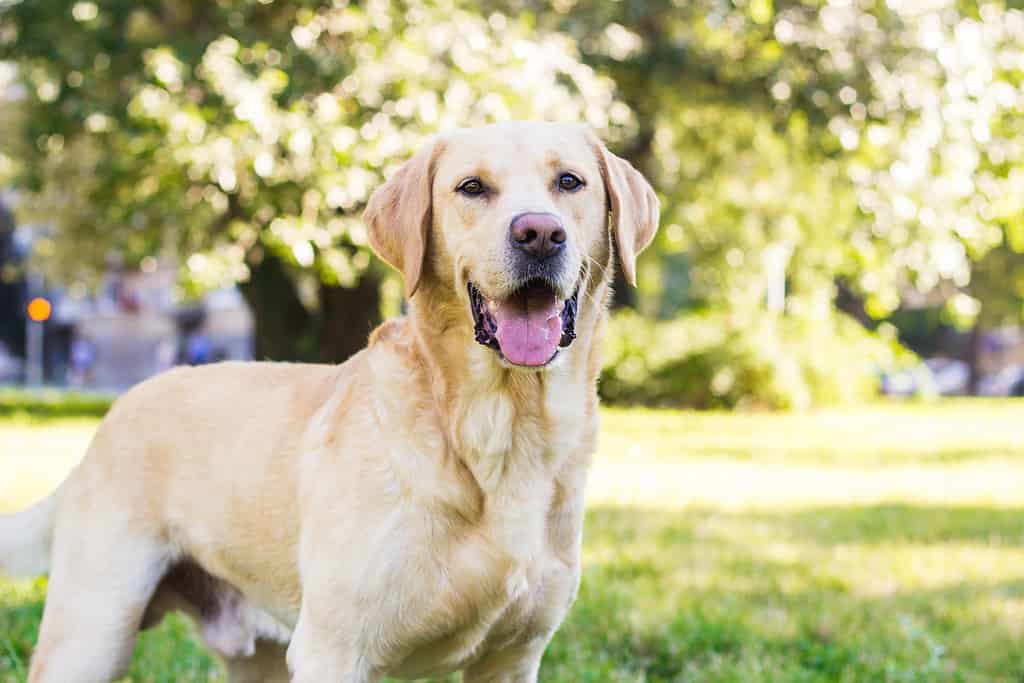
American Labrador Retrievers (pictured) are bred as functioning and searching dogs in addition to remaining animals.

©sanjagrujic/Shutterstock.com

English Labrador Retrievers

All Labradors are fairly active when they’re youthful, but some display-bred English Labradors experienced into canine who are a little calmer, a lot more reserved, and additional peaceful. That being reported, some of their field-bred counterparts have a tendency to appreciate extended, superior-energy lives.

If you work out your English Lab in crowded dog parks in which they will be mingling with lots of other dogs, it might be difficult for the reason that some English Labradors can be fairly energetic and quickly distracted as puppies.

Some present-form English Labs are a lot more demanding to educate for the reason that of their pleasurable silliness. When compared to American Labs, clearly show-bred English Labs may perhaps be extra loud or susceptible to whining. On the other hand, this trait has been largely bred out of show dogs in the very last few years.

Yellow English Labrador Retriever
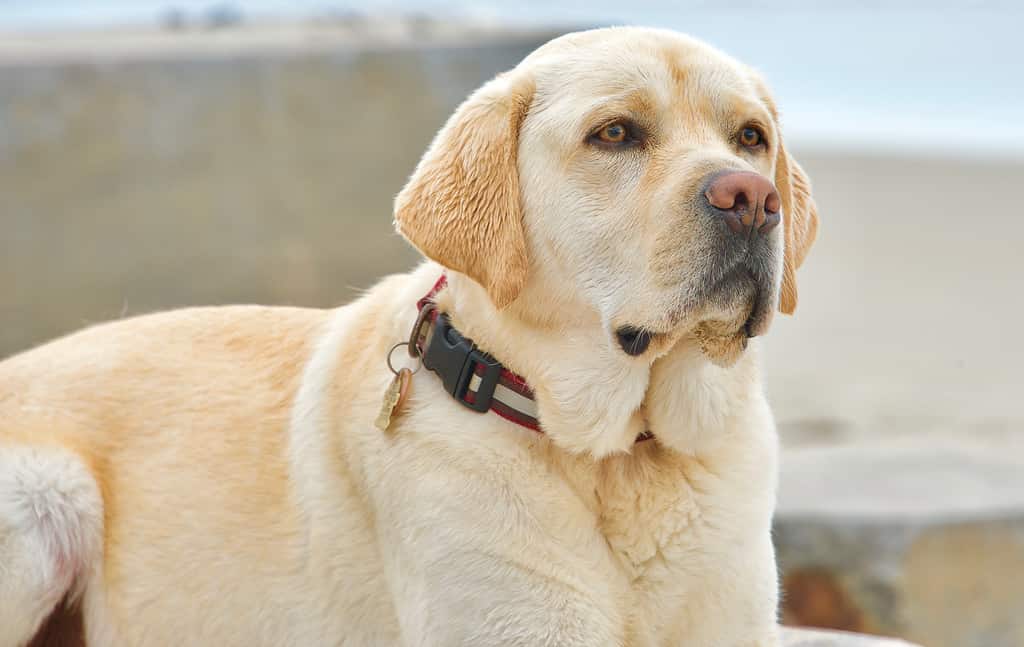
The English Labrador Retriever (pictured) has a slightly various look than the American sort and do nicely as clearly show dogs.

©Judal/Shutterstock.com

What is the Big difference Involving an American Labrador and an English Labrador?

While there is not a formal difference amongst English and American-type Labrador Retrievers, the versions involving them are apparent and the two types are now usually identified. The two phrases are frequently employed, properly-recognised, and approved nicknames for Labradors with lineage from the applicable nations as perfectly as individuals that have been bred for many applications.

So, are there actually two various kinds of Labrador pet dogs? Not quite, as all present-day canines are believed to be descended from the identical Newfoundland breed line, and the the vast majority of Labrador breeders adhere to the formal breed conventional acknowledged by each the American Kennel Club and The British isles Kennel Club.

There is some ambiguity around the kinds of Labrador Retrievers that are offered and how they appear given that some breeders adhere to the Federation Cynologique Internationale common, which is considerably distinct from the US and British isles variations. However, these two kinds of Labradors differ in a handful of important methods.

How Are English Labradors and American Labradors Comparable?

When it comes down to it, the English Lab and the American Lab are the identical breed of puppy. They are merely two distinctive varieties of the same breed.

The big coat hues of Labrador Retrievers are regarded by equally breed expectations as currently being black, chocolate, and yellow in hue. Furthermore, they the two have swimming diversifications like webbed feet, numerous layers of fur insulation, and sturdy tails that serve as rudders to help these swimmers navigate the water. They also have blocky skulls that are comparable, although the English variety tends to be a bit blockier.

The two of these puppies are really brilliant and study successfully through good reinforcement. Additionally, the overall perspective is the identical. The ideal temperament of the Labrador Retriever is one particular of sweetness, sociability, and tractability. Each varieties should really also be keen to remember to and non-intense toward people or animals. Folks are drawn to the Labrador for a selection of factors, which include its sweet character, intellect, and adaptability.

How Are English Labradors and American Labradors Various?

The English Labradors and American Labradors can be categorised as possibly looking puppies or display canine. These types of Labrador puppies are often sociable, reliable, good-natured, and lively, and they enjoy remaining close to people today. They are appreciated as service and companion animals.

Thanks to their prevalence in the United kingdom and the actuality that they had been made for demonstrate and conformation, English Labradors have received widespread recognition. Offered that they are significantly additional common in the United states, Labradors bred for field trials and searching have arrive to be acknowledged as American Labradors.

Nevertheless, confusingly, there are American Labs that compete in dog displays and English Labs that are utilized for looking and discipline trials. The labels “English Labradors” and “American Labradors” are a lot more of a beneficial reference to the form of Labrador Retriever currently being talked about in conversation than they are complete and demanding terminology. Quite a few exceptions exist.

Sizeable Variances in the English Labrador’s Visual appearance

Evaluating a Lab with an American sort and an English kind reveals some jarring contrasts. The English variety seems heavier and far more strong when compared to an American Lab. They have barrel chests that are notably broader and additional reliable-searching, and are blockier and bulkier over-all. The English Lab seems to be much more firmly constructed due to its broader head, more obvious and perfectly-described quit, fuller face, and shorter muzzle.

In comparison to their American counterparts, English Labradors have a larger, thicker, and ordinarily straighter tail as properly as a larger, a lot more highly effective-appearing neck and coat. Since of its shorter torso and legs, the English Lab does not stand as tall as the American kind. Owing to the actuality that English Labs are produced for conformation, they often resemble the business breed normal considerably additional than the American Lab.

Substantial Variances in the American Labrador’s Appearance

The American Labrador is lighter and more slender than the English variety. They seem a lot more nimble and amped up to go because of to their a lot more athletic physique, which is lithe and finer-boned. The American Lab has a narrower head than its English cousin as nicely. In comparison to the English Labrador, their muzzle is lengthier and additional streamlined, and their cranium and facial area are notably thinner.

The American Lab has a lengthier, slimmer neck, which contributes to its more athletic visual appearance. Its coat is also appreciably thinner. The American Labrador’s tail is generally shorter and a lot less otter-like than the English Lab’s. It appears to be like more time and some even have a slight curl.

When as opposed to an English Lab, the American Lab is taller mainly because its legs are extended. Their appearance of agility is more enhanced by their thinner frame in mixture with this extensive-leggedness. The breed normal is practically under no circumstances precisely matched to the functioning American Labs considering the fact that breeders have considerably less incentive to strive for it.

English Labrador Temperament

In comparison to the American Lab, the English Lab is imagined to be calmer, less energetic, and quieter by nature. When as opposed to American Labs, they are usually regarded as currently being sweeter, mellower, extremely quiet, and quieter. They are also believed to be simpler to educate and stay with for considerably less-seasoned and laid-back again homeowners.

The English Lab is a lot fewer demanding when it comes to exercise and will additional quickly rest at your feet at the close of a extensive working day. Nonetheless, they are however pushed and ideal for lifetime as doing the job dogs.

American Labrador Temperament

The American Lab frequently has extra electricity and push than its English relative. This is since they are designed for labor and industry trials. They are considerably far more energetic and generally on the go. With duties like performing and looking all working day, a pet of course wants much larger quantities of energy.

American Labs have a reputation for being more large-strung mainly because of their increased action and travel. They are normally transferring and need care and consideration. They are explained to have a much more headstrong temperament than an English Lab. This sort will need a extra seasoned and robust-willed owner to retain regulate and make a properly-behaved and balanced companion. This may well be mainly because of the mix of superior intellect and significant power.

Show Labradors
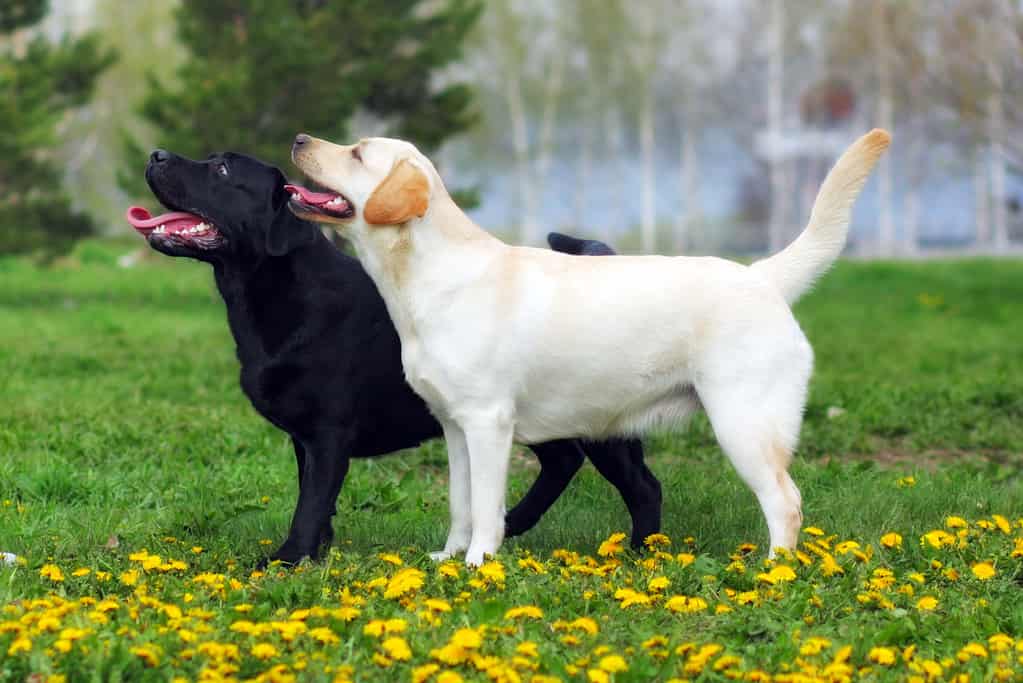
Irrespective of which style you decide on, Labrador Retrievers (pictured) make superb family members animals.

©Anna Goroshnikova/Shutterstock.com

Picking out the Appropriate Labrador Retriever

Of training course, the dilemma “Which variety of Labrador is most effective?” is never ever conveniently answered.  Just as properly, it somewhat depends on in which you live and what you want from your canine. A doing work American Labrador may be the excellent choice for you if you desire to be active with your puppy and perhaps participate in a variety of Labrador sporting activities or actions. An English Labrador might be better if you are hunting for a dog based purely on peaceful temperament and aesthetics.

American Labrador: Outdoor Recreation and Hunting

American Labs reply properly to regular interactions with men and women and much more reasonable outdoor action. Nonetheless, they are likely to be impatient if you acquire a break on your walk to chat with pals. These canines are also much more probable to be attentive to their handler and to react nicely to instruction. If you desire to participate in a sport or activity that consists of your pet dog, this might be helpful.

English Labs could possibly not have the agility to take part at a substantial stage in the well-known sport of doggy agility, in which American Labs generally excel. An American Lab is your greatest alternative if you want a pet and searching companion. Consider a Lab that has been bred with the typical hunter or shooter in mind if you really do not want to contend in industry trials. In the two the United Kingdom and the United States, dogs bred for field trials may sometimes be a bit incredibly hot for the untrained handler.

English Labrador: Aesthetics and Family members Animals

An English Lab could be the finest solution for people today who never want to spend substantially time teaching. Choose for this sort if you prefer to go on prolonged loved ones walks by way of the countryside in which your canine can run free. 

Also, owing to its less extreme looking tendencies, this display-sort Lab may perhaps be less complicated to deal with outside. On the other hand, the point that they are loved for their actual physical overall look could be the crucial variable in influencing folks who are not trying to get a looking partner to select an English Lab. But what particularly will make the English Lab preferable for aesthetics? It all comes down to their noggins.

The heads of the two distinct forms of Labrador canines are their most distinguishing distinctions. English Labs have the standard boxy Labrador head and swooshing otter tail, which usually would make them preferable as show puppies.

Just hold in thoughts that English Labs tend to be a lot more lively, slower to mature, and extra keen to introduce themselves to any passing stranger. In a natural way, all people has their individual definition of natural beauty as properly. You may choose the seem of an American Lab instead. Also, some individuals who have an American Lab at residence may possibly obtain the English Lab unappealing because of to its bigger head and shorter legs. Though any assortment of Labrador can make great spouse and children pets, the English variety may perhaps be a little less most likely to exhibit shyness or panic.

Conclusion

You can not go completely wrong with a Labrador Retriever! This stands accurate regardless of whether you will need a proficient looking dog or just want a loving, lively four-legged household member. Keep away from American Labs if you really don’t want to hunt with your dog. These canines were being bred to work and won’t be material devoid of a process to carry out.

No make any difference what form of Lab you opt for, we recommend selecting a highly regarded breeder. Request the breeder if they examine their puppies for health and fitness difficulties, and inquire for complimentary health and fitness certifications. This is a popular observe simply because elbow and hip dysplasia and eye difficulties are very prevalent in Labrador Retrievers. Any reliable breeder will be additional than pleased to present you with details on the well being of their dogs.

Irrespective of which varieties of Labrador canine you choose, these pet dogs are extremely loveable creatures that make exceptional animals. Both variety would do the job well with people or as present puppies, even though the American Lab will be preferable for sport.

Completely ready to find the major 10 cutest doggy breeds in the total earth?

How about the speediest dogs, the biggest puppies and people that are — rather frankly — just the kindest puppies on the world? Every working day, AZ Animals sends out lists just like this to our hundreds of electronic mail subscribers. And the ideal component? It is Free of charge. Sign up for nowadays by moving into your e mail below.

Up Following:

Labrador retriever loses crown after 31 years on top as America’s most popular dog | US News

Labrador retriever loses crown after 31 years on top as America’s most popular dog | US News

Step apart labrador betriever, a new top puppy has taken the lead! The canine breed has missing its crown just after 31 many years as America’s most preferred pet dog, according to the American Kennel Club.

The dethroning arrives immediately after three many years, with the US’ favourite now becoming the “playful” and “adaptable” French bulldog.

The sturdy and droll-like faced animal has grow to be one particular that many have come to enjoy – as the club introduced its winner on Wednesday.

“The French Bulldog has viewed a surge in level of popularity about the decades, and for great motive,” mentioned the club’s executive secretary, Gina DiNardo.

To lots of, it may occur as a surprise that the Labrador retriever arrived out on major for so extended, but the French bulldog experienced slowly been producing its way to prime spot.

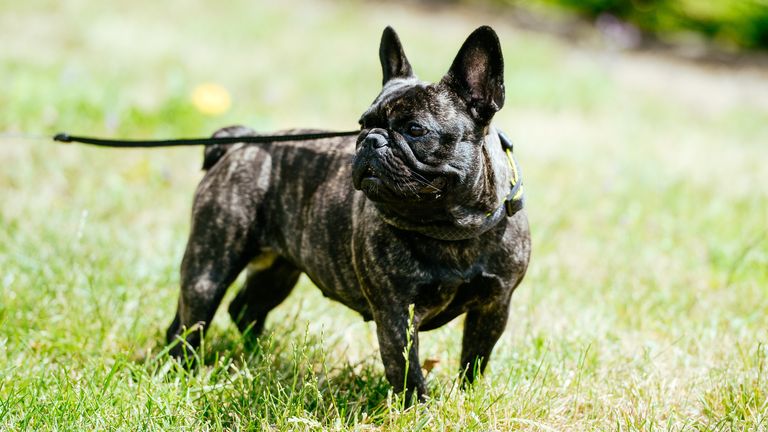
Picture of a french bulldog, taken on 16/06/17 in Frankfurt | usage worldwide Photo by: Jan Haas/picture-alliance/dpa/AP Images

The club reported the Frenchies had gone from 14th location in 2012 to No 1 in 2022, incorporating that registrations for the new lovable animals experienced amplified by “about 1,000{08cd930984ace14b54ef017cfb82c397b10f0f7d5e03e6413ad93bb8e636217f}” in that period of time.

Could French Bulldogs be the great companion?

“Frenchies are playful, adaptable, loyal and outgoing.

“They make excellent companions for a assortment of people today, but it is particularly significant to do your study to not only discover the ideal breed for your life-style, but to be certain that you might be receiving a properly-bred doggy from a liable breeder,” Ms DiNardo additional.

According to the club, other breeds also climbing up the ladder include the American hairless terrier, the Gordon setter, the Italian greyhound, and the Anatolian shepherd.

Read through much more:
Moonpig to pull cards featuring pugs and French bulldogs
Jack Russell terriers stay lengthier than other breeds in Uk

Although the perky-eared breed has knocked the labrador retriever from its perch, there have been circumstances where these Frenchies had been satisfied with substantially criticism and worry.

In 2017, the British Veterinary Affiliation set out a statement that reported it “strongly suggests likely owners do not purchase brachycephalic breeds as an alternative we really encourage probable proprietors to communicate to their local vet ahead of shopping for a puppy to far better fully grasp what may perhaps be the very best breed for them, discover a lot more about accountable possession and how to far better fully grasp a dog’s desires”.

Brachycephalic dogs are flat-faced breeds this sort of as pugs, bulldogs, and French bulldogs. These canines may well have a short cranium condition, which offers them a flat appearance, the British Veterinary Affiliation states.

Other animals can also be afflicted by brachycephaly these species include dogs, cats, and rabbits, among many some others.

Many health and fitness flaws come with brachycephaly, this sort of as respiratory troubles, eye condition, organic delivery, skin infections and dental troubles.

In accordance to VioVet, a pet provides firm, the French bulldog’s weak point is optical ailments and cherry eye even so, the animal is acknowledged to have a continual and simple temperament.

The site also states that Frenchies show “loyalty and devotion to its learn and family members, whilst acting fearlessly to safeguard its beloved types in the celebration of perceived menace”.

Labrador retrievers ousted as top US dog breed after record 31 years | Dogs

Labrador retrievers ousted as top US dog breed after record 31 years | Dogs

For the 1st time in 3 decades, the US has a new favorite pet breed, according to the American Kennel Club (AKC).

Lovely in some eyes, deplorable in many others, the sturdy, thrust-confronted, perky-eared, earth-weary-seeking and distinctively droll French bulldog turned the nation’s most common purebred puppy very last yr, the club announced on Wednesday. Frenchies ousted labrador retrievers from the leading spot following a document 31 a long time.

“They’re comical, welcoming, loving small canine,” says the French Bull Dog Club of The us spokesperson, Patty Sosa. City-helpful, with modest grooming and exercise requires, she extra, “they provide a ton in a smaller bundle.”

Nonetheless the Frenchie’s dizzying increase – it wasn’t even a leading-75 breed a quarter-century ago – worries its admirers, to say nothing of its critics.

The minor dogs have been specific in thefts, including previous month’s lethal taking pictures of a 76-calendar year-previous South Carolina breeder and the 2021 shooting of a California pet walker who was performing exercises singer Girl Gaga’s pets.

There is problem that need, in addition the premium that some customers will pay out for abnormal coat shades and textures, is engendering swift-buck breeders and unhealthy puppies. The breed’s recognition is sharpening discussion above whether there is just about anything healthy about propagating puppies prone to respiration, spinal, eye and pores and skin circumstances.

The British Veterinary Association has urged men and women not to acquire flat-confronted breeds, these kinds of as Frenchies. The Netherlands has prohibited breeding quite shorter-snouted dogs, and the country’s agriculture minister aims to outlaw even proudly owning them.

“French bulldogs can be a polarizing subject,” claims Carrie Stefaniak, a Glendale, Wisconsin-primarily based veterinarian who is on the Frenchie club’s wellness committee.

She has taken care of French bulldogs with respiration issues, and she stresses that would-be entrepreneurs need to research breeders and overall health testing and to acknowledge that problems can be expensive to address.

Even so, she owns two and has conditioned them for agility courses and hilly hikes.

“These canine can be incredibly healthy, can be pretty active,” Stefaniak mentioned. “They really do not have to be sedentary canine that just can’t breathe.”

The AKC’s popularity rankings address about 200 breeds in the nation’s oldest canine registry. The rankings do not count blended breeds or well known designer hybrids these as labradoodles, puggles and morkies.

The AKC’s best 10 have been: French bulldogs, labrador retrievers, golden retrievers, German shepherds, poodles, bulldogs, rottweilers, beagles, dachshunds and German shorthaired tips.

French bulldogs grew to become stylish amongst American elites all over the flip of the 20th century, then light from favor.

That adjusted, rapidly, in this century. Social media and superstar owners, ranging from Leonardo DiCaprio to Megan Thee Stallion to the US congresswoman Alexandria Ocasio-Cortez, boosted their popularity. Breeder and a veterinarian Lori Hunt sees Frenchies as great companions but their popularity as “a curse, not a blessing”.

“They’re being quite exploited” by unscrupulous breeders, she stated.