The Healthcare Technology Report is pleased to announce The Top 25 Women Leaders in Medical Devices of 2023. Technology is advancing at a rapid pace across industries, and perhaps nowhere is that more true than in the medical device market. In fact, according to Fortune Business Insights, the global market is projected to grow from roughly $495 billion in 2022 to nearly $719 billion by 2029 at a CAGR of 5.5{08cd930984ace14b54ef017cfb82c397b10f0f7d5e03e6413ad93bb8e636217f}. There is intense competition in the market, and the women on this year’s list and the companies they represent have found success innovating across a range of specialties, from insulin management systems to regenerative technologies, electrotherapy, and wireless surgical solutions.
Some of the distinguished leaders on this year’s list include Tania Saison, SVP and CCO/CRO of Edwards Lifesciences, who oversees the company’s Global Integrity Program, which establishes a comprehensive framework for ensuring compliance with applicable laws, regulations, and standards of conduct. Meanwhile, Jennifer Ernst, CEO of Tivic Health, built her company from founding to IPO in 5 years and put an award-winning medical device into market within 3 years. And Manisha Shah-Bugaj, COO of Activ Surgical, oversees the ongoing development and commercialization of the company’s products, including ActivSight™ Intelligent Light, which aims to provide enhanced visualization and real-time, on-demand surgical insights in the operating room.
The awardees on this year’s list lead from a range of positions, from President and CEO to SVP, EVP, and COO. What they have in common is their dedication to innovation in the medical device space, bringing revolutionary new devices to market and improving the lives of patients and clinicians alike. Please join us in celebrating The Top 25 Women Leaders in Medical Devices of 2023.
 1. Tania Saison
Company: Edwards Lifesciences
Title: Senior Vice President and Chief Compliance Officer/Chief Responsibility Officer
Tania Saison is Senior Vice President and Chief Compliance Officer/Chief Responsibility Officer for Edwards Life Sciences, the global leader in patient-focused medical innovations for structural heart disease, as well as critical care and surgical monitoring. As CRO, Saison oversees the company’s Global Integrity Program with unwavering support from the Board of Directors and executive leadership. The program establishes a comprehensive framework for ensuring compliance with applicable laws, regulations, and standards of conduct, and reinforces Edwards’ culture of integrity and ethics. Saison is a member of the global senior leadership team.
Prior to Edwards, Saison served as VP and Chief Compliance Officer for Agilent Technologies. She got her start at Agilent as Senior Compliance Counsel. Previously, she was Assistant General Counsel and Head of Global Compliance for Beckman Coulter, Senior Counsel for Diageo plc, and served as an attorney for Hunton & Williams and Dewey Ballantine LLP. Saison earned her JD from Columbia Law School, her MBA from Harvard Business School, and her Bachelor of Arts in history from Columbia University.
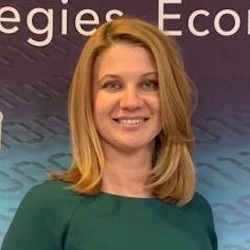 2. Simona Serban
Company: Fresenius Medical Care
Title: Chief Operating Officer
Simona Serban is based in Bucharest, Romania. She currently serves as the Chief Operating Officer of Fresenius Medical Care, the world’s leading provider of products and services for individuals with kidney diseases. Fresenius aims to create a future worth living for chronically and critically ill patients — worldwide and every day. Thanks to the company’s decades of experience in dialysis, its innovative research, and its value-based care approach, it is helping patients enjoy the very best quality of life.
Prior to her COO role, Serban held assignments of increasing responsibility in the healthcare industry. This includes stints serving as a customer solutions manager and sales representative for Merck Sharp & Dohme Romania SRL. Her areas of expertise include pharmaceutical sales, product launch, market analysis, marketing management, and hospital sales, among others. She holds a degree from the Universitatea Alexandru Ioan Cuza, which is located in Iasi, Romania.
 3. Aviva McPherron
Company: NuVasive
Title: Chief Information Officer and Senior Vice President of IT
Aviva McPherron serves as NuVasive’s Chief Information Officer and Senior Vice President of IT, and is responsible for the company’s information technology organization. NuVasive is committed to transforming surgery, advancing care, and changing lives through less invasive, procedurally integrated solutions. Since its inception in 1999, it has continually outperformed the market as the largest, spine-focused company in the world. With more than $1 billion in revenues, NuVasive has approximately 2,600 employees and operates in more than 50 countries serving surgeons, hospitals and patients.
McPherron’s previous roles include VP of Enterprise Applications and Senior Director of Business Solutions. Before joining NuVasive, she was Director of Operations for Tapestry Solutions, a Boeing Company, and has held multiple technical leadership positions delivering transformative solutions. McPherron holds a Bachelor of Science in mechanical engineering from Stanford University.
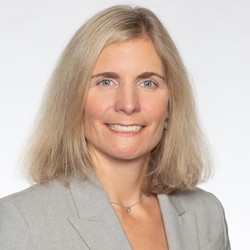 4. Elizabeth Sebern McCombs
Company: BD
Title: Executive Vice President and Chief Technology Officer
Elizabeth Sebern McCombs serves as Executive Vice President and Chief Technology Officer of BD (Becton, Dickinson and Company), a leading global medical technology company headquartered in Franklin Lakes, New Jersey. In this role, she is responsible for leading all R&D activities for BD, advancing new product innovation and development from early-stage concepts through launch, and sustaining the current product portfolio. She is also a member of the BD Executive Leadership Team.
McCombs joined BD in 2019 as the Senior Vice President, R&D for the BD Medical Segment, where she co-led the segment portfolio strategy and growth acceleration initiatives. Prior to joining BD, she spent more than 20 years at Johnson & Johnson (J&J), most recently as Vice President, R&D for Ethicon, J&J’s surgical device franchise. Aside from her technical credentials, McCombs has been recognized for her work driving inclusion and diversity efforts, including the support and mentorship of fellow female professionals. She holds an MBA from the University of Pennsylvania’s Wharton School of Business and both a Master of Science and Bachelor of Science in mechanical engineering from the Massachusetts Institute of Technology.
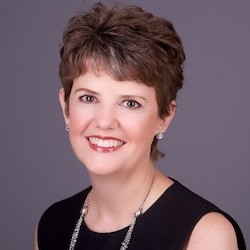 5. Niamh Pellegrini
Company: Nevro
Title: Chief Commercial Officer
Niamh Pellegrini currently serves as Chief Commercial Officer for Nevro, a global medical device company focused on delivering innovation to improve the quality of life for patients suffering from debilitating chronic pain. Pellegrini is a proven commercial leader with over 30 years of experience in the healthcare industry. Prior to joining Nevro, she was Vice President of Global Commercial Operations for Abbott Vascular.
Before Abbott, Pellegrini served as CEO and President at Autonomic Technologies, Inc. and President, North America at Thoratec Corporation. Prior to Thoratec, she served in progressively responsible global business development, strategy, and commercial roles at Johnson & Johnson. Pellegrini currently serves on the Board of Directors of Acutus Medical. She graduated from Santa Clara University with an MBA and a Bachelor of Science in finance.
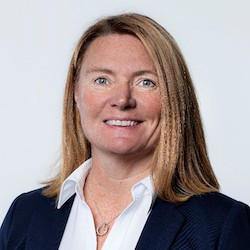 6. Lena Hagman
Company: XVIVO
Title: Chief Operating Officer
In December 2022, Lena Hagman was appointed Chief Operating Officer of XVIVO, the first global all organ company. Founded in 1998, XVIVO is the only medical technology company dedicated to extending the life of all major organs — so transplant teams around the world can save more lives. Hagman has extensive global operational experience within the medical device industry, and has for the last 12 years been in different executive roles within the Getinge group, a Swedish global MedTech company. Her most recent role was as Executive Vice President for Quality compliance, Regulatory and Medical Affairs, which she held for 7 years.
Throughout her career, Hagman has been active in the medical device industry, with more than 20 years in leading positions with global responsibilities in R&D, supply chain, and quality/regulatory/medical affairs. Over the years, she has led many strategic and efficiency programs and company integrations. She has deep knowledge and experience in different global medical device quality regulations and with a high customer and patient centricity focus. She holds a Bachelor of Science in chemistry and textile engineering from Chalmers University of Technology, Sweden and is based at XVIVO’s headquarters in Gothenburg.
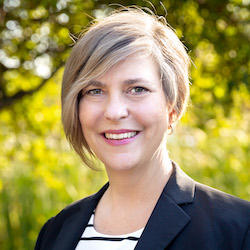 7. Jennifer Ernst
Company: Tivic Health
Title: Co-Founder and Chief Executive Officer
Jennifer Ernst is the Co-Founder and Chief Executive Officer of Tivic Health, a commercial phase healthtech company focused on advancing bioelectronic medicine. Ernst has more than 20 years of experience in the commercialization of breakthrough innovation and a history of developing markets from frontier technologies. As CEO of the U.S. subsidiary of Thin Film Electronics, she helped build the company from eight to 130 people, achieved a $480 million market cap in five years, and launched international award-winning products.
Ernst has held positions at Xerox PARC, positioning research for productization through strategic partnerships and licensing, and served as chairperson of Flex, the U.S. National Consortium for Flexible and Printed Electronics, now part of SEMI. She participated in the launch of the Global Women’s Leadership Network and was named to the Inc. Female Founders 100 and to the Healthcare Technology Report Top Women Leaders in Consumer Healthtech. She received an MBA from Santa Clara University and a Bachelor of Arts from San Francisco State University.
 8. Manisha Shah-Bugaj
Company: Activ Surgical
Title: Chief Operating Officer
In December 2022, Manisha Shah-Bugaj was promoted from Activ Surgical’s Chief Operating Officer, a position she had held for just under a year, to its newest Chief Executive Officer. In addition to engaging with company partners, customers, and investors, Shah-Bugaj oversees the ongoing development and commercialization of Activ Surgical products, including ActivSight™ Intelligent Light, which aims to provide enhanced visualization and real-time, on-demand surgical insights in the operating room.
Prior to joining Activ Surgical, Shah-Bugaj architected the gynecology unit at Olympus from the ground up in the U.S., ultimately serving as General Manager and Global Vice President for the company, and played an integral role in expanding the gynecology business internationally. She has more than two decades of experience, including building and implementing corporate business plans, directing regional and global businesses aligned to financial and operational targets, hiring and establishing new teams, and managing product portfolios. She holds a Master of Engineering Management and a Bachelor of Engineering in biomedical engineering, both from Dartmouth College.
 9. Anna Lucsok
Company: Zynex Medical
Title: Chief Operating Officer
Anna Lucsok currently serves as Chief Operating Officer for Zynex Medical. Zynex, founded in 1996, markets and sells its own design of electrotherapy medical devices used for pain management and rehabilitation. The company’s proprietary NeuroMove device is designed to help the recovery of stroke and spinal cord injury patients. Zynex has also developed a blood volume monitor for use in hospitals and surgery centers.
Previously, Lucsok served as Vice President of Reimbursement and Sales Operations with Zynex. In this position, she was responsible for leading and expanding Zynex’s order, reimbursement, patient experience, and inside sales support operations. During her tenure, each of these teams consistently achieved quarterly targets, while also expanding in size. Lucsok brings more than nine years of healthcare operations experience as well as critical knowledge of revenue cycle management and medical care collections. She has been involved in various operations positions as well as management positions with Zynex since her start in 2018, including serving as Billing Manager. She previously held key positions with companies such as the University of Colorado Hospital, the U.S. Air Force based in Germany and Japan, and Schryver Medical. Lucsok holds certification in medical billing and earned her Bachelor of Science in healthcare administration and management from Colorado State University.
 10. Sreelakshmi Kolli
Company: Align Technology
Title: Executive Vice President, Chief Digital Officer
Sreelakshmi Kolli is Executive Vice President Chief Digital Officer for Align Technology. She is responsible for leading software, data, enterprise, cloud, and infrastructure engineering teams focused on the design and development of digital products and services. This includes defining the technology strategy and development of product software, consumer, customer, manufacturing, and enterprise applications enabling the Align Digital Platform. In addition, Kolli led Align’s global business transformation initiative aimed at delivering platforms and technology to support customer experience and simplified business processes across the company.
Kolli joined Align in June 2003 as Manager, Software Engineering and held positions of increasing responsibility leading business operations and engineering for customer-facing applications. She was promoted to Senior Vice President, Global IT in December 2012 before being promoted to her current position in April 2020. Prior to joining Align, Kolli held technical lead positions with Citadon and Accenture. She is also a member of the Board of Directors at Zimmer Biomet Holdings, Inc. Kolli earned a Master of Science in computer applications at the National Institute of Technology in Trichy, India and is a graduate of the Stanford Executive Program offered by the Stanford Graduate School of Business.
 12. Deborah Gordon
Company: Insulet
Title: Vice President, Investor Relations
Deborah Gordon has served as Vice President, Investor Relations for Insulet Corporation since January 2015. Insulet is a roughly $1 billion medical device company dedicated to making the lives of people with diabetes easier through its OmniPod Insulin Management System. Gordon also serves on the Board of Directors of the L.S. Starrett Company, serving on the Audit Committee since July 2020 and the Compensation Committee since July 2021.
Prior to joining Insulet, Gordon served in a number of roles of increasing responsibility during her 10 years at Hologic, Inc. and Cytyc Corporation (which merged with Hologic in October 2007). Notably, she served for seven years as Hologic’s Vice President, Investor Relations and Corporate Communications and prior as Assistant Corporate Controller and Director of SEC Reporting and Technical Accounting at Cytyc. Before joining Cytyc, Gordon served in the audit practice at Deloitte & Touche for 11 years. She earned her Bachelor of Arts in business administration, with concentrations in accounting and economics, from Clark University and is a certified public accountant.
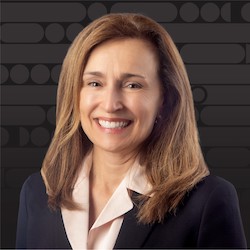 13. Suzanne Winter
Company: Accuray
Title: President and Chief Executive Officer
Since July 2021, Suzanne Winter has served as President of California-based medical equipment manufacturer Accuray, and in July 2022 she was promoted to Chief Executive Officer as well. In her position at the head of the company, Winter has continually driven the expansion of Accuray’s radiotherapy cancer treatment technologies, yielding record order volume and the approval of numerous novel treatments in China and beyond. She has had a significant impact on Accuray’s product portfolio and commercial momentum since joining the company.
Prior to joining Accuray, Winter held senior executive roles spanning general management, commercial operations, and business development across a range of healthcare industry segments, including radiology, neurology, and surgery. Most recently, she served as Group Vice President – Americas region at Medtronic Diabetes, where she was responsible for leading the 2,000 person commercial organization. Before Medtronic, Winter was the General Manager of GE Healthcare’s Detection and Guidance Solutions operations. She earned an MBA from Harvard Business School and a Bachelor of Science in chemistry from Saint Lawrence University.
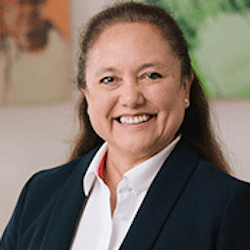 14. Sandra Hirsch
Company: Zyris, Inc.
Title: President and Chief Executive Officer
Sandra Hirsch is the third founding member of Zyris, Inc., pairing decades of experience as a financial manager and CPA with a zeal for entrepreneurship sparked by her Bachelor of Science in business administration from the University of Southern California. Under her leadership as President and Chief Executive Officer, Zyris has grown from a struggling start-up to the world leader in dental isolation, distributing Isolite products throughout North America and in more than 20 countries overseas. Hirsch is defined by her family, the Zyris team, and unwavering resolve to forever change the experience of dentistry for patients and clinicians.
In 2001, Hirsch founded Innerlite Inc. with her husband Jim Hirsch, an industrial designer, and her brother-in-law Tom Hirsch, a practicing dentist. Together, they rebranded the company as Isolite Systems and launched their flagship product, the Isolite illuminated dental isolation system, in 2002. Isolite enables dental practices of all sizes to implement a technique for controlling the oral environment, providing an innovative solution for dental isolation. Offering a full line of isolation products that are minimally invasive and easy-to-use, Isolite Systems allows dental professionals to work more productively and effectively with less stress and fatigue for both themselves and their patients.
Today, Hirsch serves as President and CEO of Isolite Systems. Under her leadership, the company has grown from a single game-changing idea to an international phenomenon, with over fifty employees at their Santa Barbara-based manufacturing and distribution center and representatives worldwide. Thousands of dentists in over twenty countries are loyal fans of the safety, comfort, and control that Isolite dental isolation provides. In the U.S., over 20{08cd930984ace14b54ef017cfb82c397b10f0f7d5e03e6413ad93bb8e636217f} of all dental schools have adopted their products, which will soon become the standard of care for everyday dental procedures. Hirsch and the Isolite team continue to develop products that make a difference in people’s lives. They are relentlessly focused on the pursuit of a better dental experience for every patient and have earned numerous awards and accolades for their efforts.
 15. Tavia Walsh
Company: Pulse Technologies
Title: Co-Founder Chief Technology Officer
Tavia Walsh is a Co-Founder and the Chief Technology Officer of Pulse Technologies, an entrepreneurial startup based in Vancouver designing innovative, low-cost consumer wearable devices using emerging new conductive materials and 3D printing methods. As a biomedical engineer with both an electrical and mechanical background, Walsh has an interest in complex problem solving and design thinking; and as a founder of Pulse, she has experience in the biomedical start-up space.
Walsh co-founded Pulse Technologies in 2016. While working on Pulse, she served as a biomedical engineer for 4M BioTech from 2020-2021 and as a mechanical engineer for ViVitro Labs Inc. from 2021-2022. Walsh earned her MD from University College Dublin, her Master of Applied Science in mechanical engineering from the University of Victoria, and her Bachelor of Applied Science from The University of British Columbia.
 16. Jennifer Honeycutt
Company: Danaher
Title: Executive Vice President
As Executive Vice President, Jennifer Honeycutt provides strategic and operational leadership for Danaher’s Environmental and Applied Solutions businesses, which includes the Product Identification and Water Quality platforms. She also oversees Danaher’s High Growth Markets and regional teams outside of China. Honeycutt originally joined Danaher with the 2000 acquisition of Hach and has held positions of increasing responsibility across multiple industries over the past 20+ years.
Leadership roles at Hach Ultra Analytics, Anderson Instrument Company (now part of Fortive), Linx Printing Technologies, Beckman Coulter Life Sciences, and Pall have given her deep knowledge of the Danaher Business System (DBS) and a unique perspective on the many ways Danaher can help realize life’s potential across its businesses. Honeycutt is a champion of the power of diversity, and a longstanding member of Danaher’s Diversity + Inclusion Council. Throughout her tenure, she has consistently delivered strong results by building high-performing teams and driving strategic M&A, innovation, and commercial execution. Honeycutt earned a Master of Arts in Technology Management from the University of Denver and Bachelor of Arts degrees in chemistry and French from Grinnell College.
 17. Pooja Pathak
Company: LumiraDx
Title: Chief Product Officer
Since June 2021, Pooja Pathak has served as Chief Product Officer for LumiraDx, a next-generation point of care diagnostics company based in the U.K. Founded in 2014, the company provides a comprehensive portfolio of testing solutions used by governments and leading healthcare institutions. Pathak, who previously served as LumiraDx’s Vice President of Platform Strategy, is currently responsible for product management, marketing, and medical affairs.
Prior to LumiraDx, Pathak most recently worked at Abbott as VP of Global Marketing for the Infectious Disease Emerging Markets business, which included 170 countries across Asia, EMEA, and Latin America. In this role she was responsible for a $500 million portfolio. Additionally, she has held leadership roles with Alere and Novartis Vaccines, where she focused on bringing new innovations to market, implementing integrated diagnostic and treatment programs, and rolling out global public health solutions. Pathak holds a Master of Science in chemical engineering from MIT and a Bachelor of Science in chemical engineering from the University of Illinois Chicago.
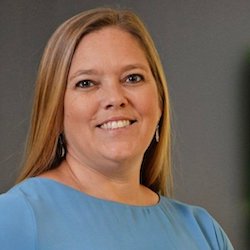 18. Kelli Howell
Company: Alphatec Spine
Title: Executive Vice President, Clinical Strategies
Kelli Howell has served as Executive Vice President, Clinical Strategies of Alphatec Spine since March 2018. Alphatec improves lives by providing innovative spine surgery solutions through its relentless pursuit of superior outcomes. The company is dedicated to the design, development, launch, and the delivery of spinal fusion products. Alphatec accomplishes this by working with spine surgeons to design and develop products and systems that address the entire spinal fusion procedure in the most effective and efficient way possible. Its product designs and platforms provide innovation through a focus on simplifying procedures for the surgeon with the ultimate objective of superior outcomes.
For the 18 years prior to joining Alphatec, Howell held various management positions at NuVasive, Inc., including Vice President, Research & Health Informatics from January 2017 to March 2018, Vice President, Research & Education from February 2015 to January 2017, and Vice President, Research from April 2012 to February 2015. Prior to joining NuVasive, Howell was involved in research at Orthopedic Biomechanics Laboratory (OBL), Beth Israel Deaconess Medical Center in Boston. Howell received a Master of Science in biomedical engineering from Boston University and a Bachelor of Arts in engineering sciences from Dartmouth College.
 19. Alison Burdett
Company: The Surgical Company
Title: Chief Scientific Officer
Alison Burdett has over 30 years of experience in electronic engineering and semiconductor design, particularly in the field of ultra-low-power wireless communication for medical applications. She co-founded Toumaz in 2001 and served as the Technical Director. She became the Chief Technical Officer in 2006, responsible for delivering silicon and advanced technology programs for both consumer and healthcare divisions of the business. In 2016, the healthcare business unit of Toumaz, Sensium Healthcare, became part of The Surgical Company Group and she joined Sensium, where she became the Chief Scientific Officer, responsible for all engineering and scientific programs for the company’s digital health products.
Prior to joining Toumaz, Burdett spent time both in industry as an integrated circuit designer, and also in academia (as a Senior Lecturer of Analog IC Design with Imperial College London). She is a Visiting Researcher with the Institute of Biomedical Engineering, Imperial College. She has more than 80 peer-reviewed publications and is a named inventor on more than 20 patents. Burdett was a member of the Technical Programme Committee for the IEEE International Solid-State Circuits Conference (ISSCC) from 2009 to 2018, serving as the European Regional Chair 2012–2014 and the Technical Program Chair for ISSCC 2018. She has been an Associate Editor of IEEE Transactions on Biomedical Circuits and Systems since 2008, and is the Associate Editor-in-Chief of the IEEE Open Access Journal of Circuits and Systems. She is a Chartered Engineer and a Fellow of the Institute of Engineering and Technology. Burdett earned her PhD in analogue IC design and her bachelor’s degree in electrical and electronics engineering from Imperial College London.
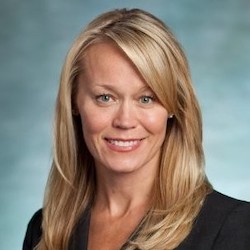 20. Rhonda Robb
Company: Cardiovascular Systems, Inc.
Title: Chief Operating Officer
From January 2018 to June 2022, Rhonda Robb served as Chief Operating Officer of Minnesota-based medical device manufacturer Cardiovascular Systems, Inc., a medical device company developing and commercializing innovative interventional treatment systems for peripheral and coronary artery disease. In her time at the company, Robb was renowned for her agile, forward-thinking leadership style, and her efforts helped bring the company to numerous new patients and a greatly expanded product line.
In the time since her departure from Cardiovascular Systems, Robb has continued to serve on the board of 4C Medical Technologies. Robb formerly served as Vice President and General Manager of the Heart Valve Therapies business at Medtronic. In that role, she was responsible for the transcatheter and surgical valve franchises. Previously, Robb held additional leadership positions in Medtronic’s Coronary, Peripheral, and Cardiac Rhythm businesses. She has strong experience leading complex businesses, growing new markets, extensive commercial experience, and a strong track record of building teams and product portfolios that have improved the quality of care for patients with cardiovascular disease. Robb holds an MBA from the University of Minnesota’s Carlson School of Management.
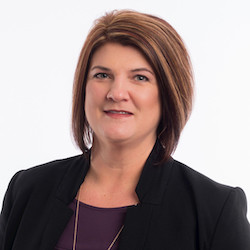 21. Jessica Lynch
Company: DentalMonitoring
Title: Chief Operations Officer – North America
Since April 2022, Jessica Lynch has been Chief Operations Officer – North America at DentalMonitoring, the leading Intelligent Platform globally which provides connected, smarter and more sustainable dental care. DentalMonitoring creates with doctors and partners an environment to deliver the best dental care to patients, synchronized with their treatment needs. Showcasing a unique, people-first leadership style, Lynch has helped the company improve financial results while enjoying sustainable organizational growth. Recent achievements by DentalMonitoring have included new advances in AI-driven dental technologies and a unique new gamified feature in its signature platform.
Prior to DentalMonitoring, Lynch served as Vice President of Operations Excellence and Vice President of Strategy for Smile Doctors. Before that, she was Chief Operating Officer for DN Orthodontics for four years. She also served as Senior VP, Doctor Relations (2010-2014) and Director of Operation Consultants (2009-2010) for OrthoSynetics, and was a physician liaison for Louisiana Medical Center and Heart Hospital, LLC. Lynch holds a Bachelor of Science in business administration from the University of Louisiana at Lafayette.
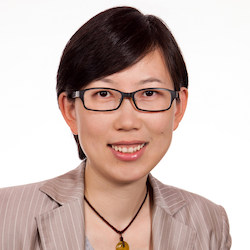
22. Rebecca Lin
Company: Potrero Medical
Title: Chief Strategic Officer
With her unique blend of business acumen and technical expertise, Rebecca Lin is a dynamic leader with many years of success in the healthcare industry. Today she serves as the Chief Strategic Officer for Potrero Medical, a Hayward, California-based predictive health company developing the next generation of medical devices with smart sensors and artificial intelligence. Lin, who has been with the company since October 2016, previously served as the Senior Vice President of Sales and Marketing. In that role, she built and led the commercial organization that developed go-to-market strategies for Potrero’s Accuryn Monitoring System.
Over the years, Lin has achieved success at both large corporations and startups. Prior to her work at Potrero, she was the VP of Business Development at Theranova and led marketing initiatives for C. R. Bard (now owned by Becton Dickinson), in both Shanghai and the U.S. She has also worked as a Board Fellow at the American Red Cross Bay Area, currently serves as a guest lecturer at the University of California, San Francisco and Berkeley, and spent several years in sales and training at Johnson & Johnson. Lin holds a Master of Science in management from the Stanford University Graduate School of Business and a master’s in marine biology from Sun Yat-sen University in Guangdong, China.
 23. Kristie West
Company: Orchid Orthopedic Solutions
Title: Chief Operating Officer
Kristie West is the Chief Operating Officer at Orchid Orthopedic Solutions, a global leader in medical device outsourcing services. Founded in 2005, the company’s 1,500 employees work to provide a broad array of capabilities in the world of orthopedic devices, including design, regulatory affairs, implant manufacturing, and instrument manufacturing, among other areas. West, who is a Six Sigma Black Belt and a Master Black Belt, joined Orchid in January 2022.
West came to Orchid from General Electric’s Edison Works Programs and Operations team, where she was the Senior Executive Director supporting the future of military combat and space. Prior to joining the Edison Works team, West was the Senior Executive for the Tubes & Ducts Value Stream in GE Aviation’s Supply Chain organization. She also held a number of leadership roles within GE, including Director of Operations for Unison Industries (a GE company); Executive Plant Leader for Avio Aero (a GE company), in Torino, Italy; Supply Chain Strategy Leader for GE Aviation; and CF6 Customer Programs Leader. Prior to GE, West held various leadership roles in manufacturing with Navistar and Carrier Global Corporation. She holds a Bachelor of Science in organizational leadership from Purdue University’s Polytechnic Institute.
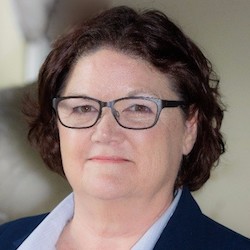 24. Liz Hammack
Company: Pristine Surgical
Title: Chief Manufacturing Officer
Liz Hammack is Chief Manufacturing Officer of Pristine Surgical, a medical device company with a mission to simplify endoscopy. While Hammack joined the company in September 2021, her career began more than 30 years ago. During this time, she has worn many hats: from working on the factory floor, to holding multi-plant leadership, to operating in the boardroom. In addition to her work at Pristine, she is also the principal owner of Hammack Manufacturing Solutions, which is based in Portland, Oregon.
Prior to Pristine, Hammack spent 16 years at Medtronic, most recently serving as a Vice President of Manufacturing and Operations, AFS. In that position, she led operations, manufacturing, and supply chain integration activities for the newly formed AF Solutions business at Medtronic-CRDM. In 1981, she graduated from Oregon State University with a Bachelor of Science in industrial engineering. A proud alum, she has since served on numerous boards for the university’s College of Engineering. Furthermore, in 2013, she received Oregon State’s distinguished engineer award.
 25. Dina Dubey
Company: Teleflex
Title: Chief Operating Officer
Dina Dubey is the Chief Operating Officer of Teleflex. Dubey’s roots with the company go back to 2011, when she started off as Director of Research and Development for Z-Medica, which was acquired by Teleflex in 2020. In this position, Dubey drove a pipeline of projects and developed and drove QuikClot Control+, the organization’s first-of-its-kind, new-generation hemostatic dressing, which ultimately resulted in commercialization of the product. On top of that, Dubey was a vital member of the executive leadership team that grew Z-Medica’s revenue from $28 million to $64.8 million.
Dubey started her career at Kensey Nash Corporation (now DSM Biomedical), where she spent eight years in engineering and management roles. In 2003, she received a Bachelor of Science in biomedical engineering from Case Western Reserve University. She also holds a Master of Science in engineering management and a Master of Science in biomedical engineering from Drexel University. More recently, Dubey completed a leadership development program from Harvard Business School Executive Education.