Not just hot flushes: how menopause can destroy mental health | Menopause

Not just hot flushes: how menopause can destroy mental health | Menopause

At her lowest point, Karen Arthur came within a hair’s breadth of killing herself. Having been signed off from her teaching job with anxiety, which she had not then connected with going through the menopause, the 51-year-old had booked a few days away from home to try to clear her head. A long walk in the country brought her to a spot notorious for suicide attempts.

At that stage, she says, she had not considered how she might kill herself, but she had put her affairs in order for her two daughters, who were away at university. “I did think it would be easier if I wasn’t here. The kids would get the house, the mortgage paid off.”

This moment, she says, was her turning point. “I remember thinking how desperate you have to be … And thinking very lucidly: ‘I don’t want to die, I don’t want to kill myself, that’s too real for me.’” Instead, she walked to the nearest pub, ordered chips and a hot chocolate with rum. Then “I took my journal out and decided that I wanted to live. I started to write about the things I wanted to do. That was the lowest point but also the highest point – it brought me back from the brink.”

Arthur quit teaching, started therapy, embarked on a new career in fashion design, and six years later – in the emotionally charged aftermath of George Floyd’s murder, amid the rise of the Black Lives Matter movement – created the positive ageing podcast Menopause Whilst Black, after finding woefully few resources catering specifically for black women. Research suggests they enter menopause earlier on average than white women, and are more likely to experience some symptoms, including depression. When she first saw her GP about her anxiety, she mentioned she was having hot flushes, but, she says, she wasn’t offered hormone replacement therapy (HRT) and, at the time, thought being menopausal was the least of her worries. “I didn’t know that anxiety and depression could be linked to menopause. Everything I know about my journey, I know in retrospect.”

Karen Arthur.
‘I didn’t know that anxiety and depression could be linked to menopause’ … Karen Arthur. Photograph: Rich Barr Photo

Midlife mood swings, rage and forgetfulness may be the stuff of jokey Instagram memes. But, as Arthur found out, for many women in perimenopause (the transition stage leading up to periods stopping) and menopause (defined as having gone a year without a period), they are anything but funny. A survey of 2,000 women commissioned by the House of Commons women and equalities select committee inquiry into menopause at work last year found 75{08cd930984ace14b54ef017cfb82c397b10f0f7d5e03e6413ad93bb8e636217f} reported problems with memory or concentration and 69{08cd930984ace14b54ef017cfb82c397b10f0f7d5e03e6413ad93bb8e636217f} reported feeling anxious or depressed – not necessarily to clinical levels, but often enough to reduce concentration and confidence at work. And in rarer cases, those mood swings can be extreme.

Last month, the actor Kathy Burke told the Observer that she had experienced “pretty dark, suicidal thoughts” in her early 50s, which she linked to menopause. Unable to take HRT because of other medication she was on, Burke said she had struggled for years. Meg Mathews, the menopause campaigner and former wife of Oasis star Noel Gallagher, has similarly described such anxiety in her late 40s: “I couldn’t leave the house for three months.”

Yet mental health in menopause remains surprisingly ill-explored, the waters muddied by the way it coincides with what is often a time of wider upheaval in women’s lives. These are the emotionally turbulent years of children leaving home, elderly parents getting sick, midlife divorces and transitions at work that can make it harder to disentangle cause from effect. Do you feel mentally unwell because your life is in flux? Or is your life in flux, at least partly, because your hormones are?

Dr Louise Newson, a GP and menopause specialist, has recently worked with the Royal College of Psychiatrists to train its members on the mental health implications of menopause. Most of the patients she sees at her private clinic in Stratford-upon-Avon cite mental as well as physical menopause symptoms and many, she says, are desperate; some have tried everything from electric shock therapy to spending thousands of pounds on experimental treatments. “We’ve seen people who have been on ketamine, clinics that have been giving ketamine – that really scares me,” she says. (Ketamine is a licensed anaesthetic, sometimes used illegally as a party drug and sometimes prescribed “off-label” to treat depression.) “We see a lot of women who are suicidal.”

Research into mental health during menopause is still “not as good as you would want,” Newson says, but it is now well established that the hormones oestrogen and testosterone, which decline in midlife, play important roles in brain function. “We know that anxiety and memory problems, low mood and reduced motivation are very common in menopause. Whether it’s the actual level of hormones or fluctuations of hormones – anything that’s changing in the brain has a knock-on effect.” She says women who have previously had episodes of depression – as Burke had – or postnatal depression may be at particular risk of deteriorating mental health in menopause; so might women who suffered severe premenstrual syndrome or its more intense cousin premenstrual dysphoric disorder (PMDD) around the time of their periods.

Not all mental health problems in middle-aged women are hormone-related, Newson stresses, and HRT isn’t a magic cure for everyone. “Often I will optimise hormones and then see what the patient’s mental health is doing. Some women do need antidepressants.” But the link between menopause and depression is now sufficiently recognised that the NHS prescribing watchdog, the National Institute for Health and Care Excellence, recommends HRT as a first line of treatment for low mood or anxiety in menopausal women. Yet still, Newson says, she sees women who have been sent away by GPs with nothing but antidepressants. One reason she created Balance, her free app which helps women recognise and log menopause symptoms, is to help doctors and patients to join the dots. “For so long we have been told that menopause is about hot flushes and vaginal dryness. We haven’t been told it can affect your mood or energy or concentration,” she says. “Women get told to put up and shut up the whole time.”

That resonates with Kate Duffy, who was a 44-year-old single mother of children aged four and two when she went to her GP complaining of anxiety, insomnia and severe mood swings along with more puzzling physical symptoms, including hair loss. Her doctor diagnosed depression, but Duffy was convinced it was more complicated. “I was thinking, ‘I’m not saying I’m not depressed, but I think it’s related to menopause’,” she says. “I kept going back and saying that, but they wouldn’t listen. I was banging my head on a brick wall for a year, it was so frustrating. I’d be Googling and there would be lots of women like me, up in the middle of the night trying to find out what was wrong with them, saying: ‘My marriage is over, I can’t do the job I’ve done for 30 years, I can’t think straight, I feel suicidal …’”

It was only after her first hot flush, she says, that the GP – who had thought her too young to be perimenopausal – ordered the blood tests that confirmed her hunch. Even then, says Duffy, she had to fight for HRT; and only when another woman tipped her off about a specialist menopause clinic in her home city of Oxford was she diagnosed retrospectively with PMDD, explaining a long previous history of severe mood swings around her periods. “It made sense of the past 30 years of my life, where I was up and down like a yo-yo, going in and out of the GPs, saying, ‘I feel like killing myself … oh no I don’t, I’m fine now.’ It was completely cyclical.” Duffy now serves as a “patient tutor”, sharing her experiences with trainee doctors to help counter what she sees as “the lack of awareness, the lack of training in women’s healthcare – it’s an absolute disgrace. It’s like we’re not worth the research.”

At 55, her moods are now far more stable, but the experience has left its mark. Having felt unable to return to her old office job, she now makes a more flexible living painting and upcycling furniture. Shockingly, a survey of 4,000 women commissioned for the recent Channel 4 documentary Davina McCall: Sex, Mind and the Menopause found one in 10 had quit their jobs because of menopause symptoms – either mental or physical – while 14{08cd930984ace14b54ef017cfb82c397b10f0f7d5e03e6413ad93bb8e636217f} had reduced their working hours. “I know of women signing non-disclosure agreements and being performance managed out of jobs at quite a high level [because of menopause symptoms],” says Kate Muir, the author of Everything You Need to Know About the Menopause, who produced the Channel 4 documentary.

Muir, who herself had such chronic “brain fog” in her late 40s that she feared she was getting Alzheimer’s, says her memory improved dramatically within a week of starting the right HRT. But she remains intrigued by the relationship between mental health and the chronic insomnia middle-aged women often experience, sometimes without realising that it can be a menopause symptom. “One of the markers for future dementia is lack of sleep. It really matters, and it’s a marker for depression, too,” she points out. For many working mothers, there is a particularly cruel irony to battling through the sleepless fog of early motherhood, only to be sideswiped professionally by broken nights again just as their children are finally grown up.

Lauren Chiren, 54, was in her early 40s and working as a senior executive in financial services when she found herself struggling to remember things. It wasn’t just forgetting the odd name, she says: one night she came home from work, greeted her son and his nanny, and then picked up her bags again to go out to work. “I’d forgotten I’d left for the day. I was losing the plot.” Her confidence plummeted, and she began to avoid speaking up in meetings for fear of revealing the gaps in her memory. Convinced she must have early onset dementia, and terrified about how she would cope as the single parent of a child with lifelong medical needs, Chiren negotiated an exit deal and resigned. “I left work because I genuinely felt I was running out of time, and I would have to find someone else to look after my son,” she says. When blood tests carried out by her doctor confirmed she had been through early menopause, she was flabbergasted: “I thought that was something that happened to older women, and it would be the occasional hot flush.”

Chiren now runs a coaching business, Women of a Certain Stage, providing awareness training for employers to support staff through menopause, plus personal coaching for women to keep their careers on track. She helps her clients to recognise and track their symptoms, seek out what she calls “small adjustments” at work that can help them cope, and consider lifestyle changes such as taking up exercise and improving their diet. (Not everyone can take HRT, she points out, and some actively don’t want to.) Her first event in the City of London was so packed that it was standing room only, but she realised several of those attending had blacked out their diaries for the day “so that people didn’t know they were there”.

It is still hard, says Chiren, for some women in competitive environments to talk about menopause at work. “Often they’ve worked hard to get where they are. They don’t want anything to single them out as weak or vulnerable.” Women who coast through this period relatively easily, meanwhile, may be reluctant to advertise the existence of midlife anxiety and forgetfulness, worried that it will become just another excuse for writing off older women.

Yet as Arthur points out, the embarrassed silence that can shroud mental health problems in menopause leaves many women woefully ill-prepared to recognise the symptoms. When it happened to her, she says, she felt utterly alone. “My thinking now is that the more of us who speak, the less we will feel alone.”

In the UK and Ireland, Samaritans can be contacted on 116 123, or email jo@samaritans.org or jo@samaritans.ie. In the US, the National Suicide Prevention Lifeline is 1-800-273-8255. In Australia, the crisis support service Lifeline is 13 11 14. Other international helplines can be found at befrienders.org.

Why experts worry TikTok could add to mental health crisis among US teens

Why experts worry TikTok could add to mental health crisis among US teens


New York
CNN
 — 

Jermone Yankey explained he employed to pull all-nighters when he was in university – not researching or partying, but scrolling on TikTok right until the solar came up.

“I noticed me not putting the exertion into my possess lifestyle, fairly just making an attempt to stay vicariously as a result of what I’m looking at,” said 23-calendar year previous Yankey. He reported he misplaced rest, his grades suffered, and he fell out of contact with buddies and himself.

In 2021, he deleted the application. The positive effects, he said, was noticeable. “It’s so excellent to be in a position to be sleeping once again beginning at midnight,” he reported. “It’s fantastic to be capable to be up early and be much more productive with the sunlight.”

In new months, TikTok has confronted rising strain from state and federal lawmakers over worries about its ties to China by means of its mum or dad enterprise, ByteDance. But some lawmakers and researchers have also been scrutinizing the effects that the short-kind online video application may have on its youngest people.

GOP Rep. Mike Gallagher, the incoming chairman of a new Household choose committee on China, not too long ago termed TikTok “digital fentanyl” for allegedly owning a “corrosive affect of consistent social media use, specially on youthful males and girls right here in The united states.” Indiana’s legal professional basic filed two suits in opposition to TikTok past month, which include a single alleging that the platform lures kids onto the system by falsely saying it is pleasant for users involving 13 to 17 several years previous. And a person research from a non-revenue team claimed TikTok may possibly area most likely destructive information associated to suicide and eating ailments to young people inside minutes of them making an account.

TikTok is considerably from the only social system to be scrutinized by lawmakers and psychological wellness authorities for its impact on teens. Leading execs from a number of organizations, together with TikTok, have been grilled in Congress on the matter. And this 7 days, Seattle General public Faculties sued social media businesses like Fb, Instagram, TikTok, Snapchat and YouTube alleging the platforms have been “causing a youth mental well being crisis,” building it tricky for the college process “to fulfill its academic mission.”

But psychologist Dr. Jean Twenge reported TikTok’s algorithm in distinct is “very sophisticated” and “very sticky,” which retains teenagers engaged on the system extended. TikTok has amassed far more than just one billion global end users. Individuals buyers put in an common of an hour and a 50 {08cd930984ace14b54ef017cfb82c397b10f0f7d5e03e6413ad93bb8e636217f} for each working day on the application in last yr, extra than any other social media platform, according to the electronic analytics platform SensorTower.

“A great deal of teens explain the working experience of heading on TikTok and intending to commit 15 minutes and then they expend two hours and or more. Which is problematic because the extra time a teen spends on social media, the extra most likely he or she is to be frustrated. And that’s especially legitimate for at the extremes of use,” stated Twenge.

That may perhaps only compound a extended-expression increase in mental health and fitness difficulties, partly fueled by technologies. Psychologists say as smartphones and social media grew all over 2012, so did the charge of despair among the teens. Concerning 2004 and 2019 the amount of teen depression nearly doubled, in accordance to the Substance Abuse and Mental Health and fitness Products and services Administration. And for teen women its worse. By 2019, a person in 4 US girls have knowledgeable clinical melancholy, in accordance to Twenge.

TikTok mentioned it has tools to enable end users set restrictions for how extensive they expend on the app every day. TikTok also proceeds to roll out other safeguards for its users, which include techniques to filter out experienced or “potentially problematic” videos and far more parental controls.

“One of our most crucial commitments is supporting the security and properly-currently being of teenagers, and we realize this function is hardly ever finished. We carry on to concentration on sturdy safety protections for our group although also empowering mom and dad with more controls for their teen’s account through TikTok Family Pairing,” TikTok reported in a assertion to CNN.

The business explained involving April and June of 2022 it taken out 93.4{08cd930984ace14b54ef017cfb82c397b10f0f7d5e03e6413ad93bb8e636217f} of movies on self-hurt and suicide from the app prior to they had been ever viewed. But teens say it is not the most egregious video clips that hold them engaged. It’s the written content programmed to them in the “For You” portion of the app.

“It’s so curated to you,” mentioned Angelica Faustino, an 18-yr-outdated sophomore at the University at Buffalo, who suggests she spends 3 to 4 hrs a working day on TikTok.

“There is a great deal of overall body examining on TikTok – a whole lot of individuals displaying off matters about themselves that are it’s possible unachievable. You see if plenty of times you are like perhaps I should really be that way,” stated Faustino.

For all the issues, having said that, there are indicators that TikTok and other social networks can have a good effects on more youthful customers, also.

The the greater part of teenagers say social media can be a place for relationship and creative imagination, in accordance to Pew Exploration. 8 in 10 teens ages 13-17 say social media tends to make them feel far more connected to what is going on in their buddies lives and 71{08cd930984ace14b54ef017cfb82c397b10f0f7d5e03e6413ad93bb8e636217f} say social media is a put they can be artistic, according to Pew.

And some in Gen Z, the era that has been lifted on TikTok, have discovered special possibilities on the system.

Hannah Williams spends her time on TikTok functioning her business, Wage Clear Street. She interviews day to day Us residents about the salary they make at their positions, providing shell out transparency to her approximately 1 million followers.

“I stop my career in May perhaps of 2022 to operate on my social media site on Tik Tok full time because I noticed a excellent prospect to do anything with my profession,” claimed 26 year-aged Williams.

“I feel it is intriguing that we can try to use social media to genuinely impression the entire world for fantastic,” she said, “and I’m hoping which is what takes place.”

Paul George and Reggie Jackson on starting a mental health dialogue

Paul George and Reggie Jackson on starting a mental health dialogue

Previous 7 days, Paul George and Reggie Jackson turned the hottest Los Angeles Clippers stars to speak out about the actuality of mental health in sporting activities and the black community.

This comes just a number of months immediately after John Wall revealed his very own struggles amid battling with a extended-phrase injuries and losing both equally his mom and grandmother, whilst Robert Covington also spoke previous time about prioritizing his mental wellbeing soon after slipping into a dim location that induced him to nearly give up basketball and Nicolas Batum shared that he was “crying just before games” on the Charlotte Hornets.

Now, speaking in an job interview with Fantastic Early morning The us this earlier 7 days, George and Jackson have teamed up to toss their weight at the rear of furthering people discussions, normalizing being able to share experiences and checking in with these around you.

“People check out us as superheroes and superstars or what not, but we all battle the same battles,” George claimed of mental wellness amid athletes. “Everybody is expected to accomplish to the greatest level. I tend to be in my head on most occasions when I’m acquiring a good deal of anxiety. I’m the human being that reads the place and sits back, you know, analyzes a ton of factors and it can damage me at moments.”

Jackson, when requested about it becoming taboo in the black neighborhood, added:

“Economically, demographically, historically, we presently do not have the sources and we already really feel weaker than possibly a whole lot of us are ready to discuss for. A lot of the time we never actually know what we’re sensation, I feel that’s why the numbers are tilted the way they are.”

It’s not the first time the pair have opened up about their personal experiences with mental health struggles, following Jackson spoke of how substantially George helped him when he was also contemplating about quitting basketball entirely prior to joining the Clippers, when PG shared his own battles during the NBA bubble.

“I couldn’t snooze, it just was a downward spiral that I was likely by,” George explained of his time in Orlando. “Every moment I felt like I was out there to confirm anything, I wasn’t Alright. You know, I was in a position to get assist and figure out a way to cope with it. It was a big support listening to an individual else’s standpoint of my everyday living.”

George and Jackson credited fellow NBA stars Kevin Like and DeMar DeRozan with providing them the system to speak out, and now the Clippers duo hope to make a good variation, by doing something as straightforward as examining in with each individual other but also utilizing their platforms to encourage some others to do the identical.

Jackson stated:

“A good deal of our dialogue is, ‘truly, how are you experience? What’s your feelings? What are you imagining?’ We are mind, entire body and spirit, so you gotta just take treatment of all facets and realize that, with no having them all in sync, you actually cannot move and sense very well.”

George additional:

“I believe the extra that we can just discuss about it, the additional that we can make it regular, normalize the situation. And I think individuals will be able to handle it by themselves.”

Woman Moved Next to Disney World to Improve Her Mental Health

Woman Moved Next to Disney World to Improve Her Mental Health
  • I’ve been in treatment and on treatment for several years to deal with my anxiousness and melancholy.
  • I moved 10 minutes absent from Disney Environment to see no matter whether it would support my mental well being.
  • Possessing the parks nearby makes me much more keen to get out and socialize.

At any time since I was a tiny lady, I have dreamed of residing in Disney Earth — not in a “I want to be a princess” kind of way but mainly because it was a spot the place I constantly felt cost-free to be my most authentic self.

There was a thing about becoming surrounded by people today who embraced the magic that made me really feel secure and at peace. It was at Disney Earth the place I could depart my anxieties at property for the day and just exist as a regular person.

As I grew up, my nervousness turned into a complete-blown disorder and was shadowed by depression, which consumed me. Although I would been in therapy and on medication for many years, I was nonetheless miserable in every waking minute of the day and would long for a time when I could get an additional vacation to my happy position.

That is when I considered going to Disney Globe. At initially, it sounded like a wild idea mainly because I’d hardly ever lived by itself, but for the sake of my mental wellness, I was prepared to attempt it.

It is really been the best selection for me

I talked as a result of the notion with my therapist, mates, and family, and I arrived to the summary that I would check out it to see what took place. At the conclude of the working day, the worst point that could take place was that I hated it and moved again house.

But right after almost three months of becoming settled into my new apartment only 10 minutes from Disney Earth, I can wholeheartedly say it’s a person of the finest decisions I’ve manufactured for my mental health and fitness.

I am not expressing that due to the fact it truly is all magic and pixie dust — although it is a ton of the time. I however have rough days, with depression leaving me caught in mattress as I go days without having showers and my apartment falls into utter disarray. But when I can assemble the electrical power to get out of mattress, possessing the parks to go to can make me eager on heading outside, socializing, and enjoyable, which I’ve observed has been incredibly helpful for my mental health. 

On days when I would generally sit in my area and both slumber or operate all day, I locate myself at the parks dwelling my existence. I have extra of a cause and a wish to get breaks and have some pleasurable.

There are even some aspects of going to the parks that have added nutritious behaviors to my lifestyle. When I’m at the parks, I’m exterior in the sunlight. My therapists have always harped on the relevance of vitamin D, specially for coping with depression, but I never ever actually listened ahead of.

Now that I’m at the parks a large amount, which are in essence all outdoor, I have had increased exposure to sunlight, and that has had a profound affect on my temper. And strolling all-around the parks has greater my physical exercise, which I am positive has had an influence on both of those my mental and my actual physical very well-getting.

It truly is easier to socialize at the parks than any where else

I feel the most valuable section has been the social facet of currently being at the parks. I find it simpler to socialize, and I have the need to make connections. Since you can find this shared adore for Disney, which is the icebreaker, and it will make the relaxation of the conversation simpler.

Even when I meet figures at the parks, it offers me the option to have conversations about an imaginary entire world, which presents me with an outlet to escape the mundane small converse that drains the daily life out of me in common discussions.

With all this reported, I am pretty blessed to have been in a position to make the move close to Disney Entire world. It is really provided me a new outlook on daily life and a motive to wake up in the early morning.

While the melancholy and panic don’t go absent, I have a location I can stop by to enable go of my problems, even if it is really only non permanent. I can just take a move absent from my intrusive feelings and hard feelings and only bask in the position where I experience happiest.

Ketamine clinics for mental health are popping up across the U.S. Does the treatment work?

Ketamine clinics for mental health are popping up across the U.S. Does the treatment work?

Inside of Field Vacation Health’s New York Town clinic, the vibe is fewer doctor’s office environment, a lot more tranquil spa.

Tucked absent on the 11th ground of a nondescript making, you can barely listen to the clamor of the chaotic streets. As an alternative, this ketamine clinic feels like an oasis of zen, strewn with twinkle lights, lush greenery and cozy meditation pillows.   

That vibe is aspect of what attracted Chere Scythes, 51, to occur back again on a chilly Thursday evening for a different ketamine cure. 

“A couple of of my buddies and colleagues experienced tried using ketamine and other types of psychedelic treatment plans,” Scythes explained. “And in conversing to them, the stories were tough to imagine. But they’re folks I understood for 20 several years, and they seemed like diverse people. They experienced that large of a modify.”

Scythes reported she 1st sought ketamine treatment previous winter season, when she realized that a series of traumatic activities, such as the dying of her mother from liquor abuse, a divorce and, much more recently, the loss of her greatest mate, have been getting a toll. About the several years, she stated, she experienced attempted antidepressants, but they didn’t get the job done for her. Meditation and therapy aided but didn’t do more than enough.

Chere Scythes, right, listens to guided meditation during a ketamine session at Field Trip Health in New York City
Chere Scythes, proper, listens to guided meditation for the duration of a ketamine session at Discipline Vacation Wellbeing in New York City.NBC News

“I realized right after some time off from get the job done and meditating rather a lot that I just had this deep sadness in me and this anxiousness in my chest,” she stated. 

Ketamine is a hallucinogen that has been approved by the Foodstuff and Drug Administration as an anesthetic for many years, but it is also utilised illegally as a party drug. Over the final couple years, growing exploration has discovered that the drug also operates for cure-resistant despair in some persons, which led the Fda to approve a version known as esketamine, or Spravato, in 2019. It is an inhaled version that ought to be administered in a doctor’s business, and it is approved only for folks for whom other therapies have unsuccessful.

But in the latest yrs — even ahead of the acceptance of Spravato —  a new sector has emerged: ketamine clinics, which present the drug off-label as possibly an infusion or an injection for a extensive wide range of mental wellbeing issues. “Off label” use usually means the drug has not been specially approved for these problems. 

At Area Journey, a countrywide chain of clinics that has provided ketamine-assisted psychotherapy for many mental well being conditions given that 2019, clients first undertake a screening to see if they qualify for therapy. If so, individuals get photographs of ketamine though they lounge donning eye masks as clinicians lead them via guided meditation. They also satisfy with therapists prior to and right after their “trips.”

“Patients say, ‘This changed my daily life,’” said Mike Dow, a psychotherapist at a Industry Excursion clinic in Los Angeles.  

It’s unclear how ketamine functions precisely in the mind. Dow said he thinks it may perhaps increase really feel-fantastic chemical substances, comparable to traditional antidepressants, as perfectly as lessen inflammation, and variety new neural pathways that are linked with the potential to produce new behavior and behaviors. 

People also bear psychedelic encounters that can truly feel non secular, which in alone can strengthen their mood, Dow stated.

But as the amount of new ketamine clinics skyrockets, with centers springing up across the place, some medical practitioners are apprehensive that it is an unregulated field which is ripe for danger. 

Due to the fact the drug has Food and drug administration approval, any physician can prescribe it off-label. Clinics aren’t controlled federally, but they are matter to the identical point out regulations as other outpatient medical clinics.

“The concern with these clinics’ popping up is that individuals are obtaining treatment plans that haven’t been nicely-established, effectively-examined or next any guidelines,” mentioned Dr. Smita Das, an associate professor at Stanford College University of Medicine and chairwoman of the American Psychiatric Association’s Council on Dependancy Psychiatry. “My problem is that people who need cure will devote their revenue and vitality in these ketamine clinics that are not nicely-established.”

Treatments can be high priced — from $400 to $800 a session, on regular, mentioned Kathryn Walker, the CEO of Revitalist, a chain of clinics that delivers ketamine infusions — and they aren’t included by insurance plan.

There can also be aspect outcomes, which includes alterations in temper and blood strain, as properly as nausea and drowsiness. 

Das and Dow say they are also worried that some clinics may be presenting the drug without any supervision, which is particularly worrying if a patient has a “bad trip.”

Only a several compact experiments have appeared at its added benefits for other mental overall health conditions past therapy-resistant depression, and the American Psychiatric Affiliation doesn’t supply precise pointers for its use.

“People can seldom experience paranoia or suicidal ideation,” Das mentioned. “And so several of these clinics don’t have mental overall health experts staffing them. When those mental well being issues pop up, they may well not be equipped to respond properly.”

Ketamine also isn’t a cure-all. Not everyone responds to therapy, and it can end doing the job in some people, reported Dr. Subhdeep Virk, the director of the Treatment-Resistant Melancholy Method at Ohio Condition College Wexner Clinical Centre.

“It’s extremely hard to predict who is likely to reply and how very long it is going to last,” mentioned Virk, who has been managing clients with ketamine because 2018. She included that it’s also unclear no matter if the drug can help circumstances moreover cure-resistant despair.

Lynette Ebberts, 66, reported that for her, ketamine was a lifeline. For practically 40 several years, she reported, she tried dozens of combos of antidepressants, electroconvulsive treatment and other therapies for her critical despair, but practically nothing labored.

Lynette Ebberts.
Lynette Ebberts with her pet, Jax. Ebberts mentioned ketamine remedy helped with her melancholy immediately after quite a few other solutions did not get the job done.Courtesy Lynette Ebberts

In 2016, before most folks experienced heard about ketamine for despair, her therapist advisable a clinic in the vicinity of the place she lived in Raleigh, North Carolina. 

“I reported, ‘Yes, when and where by?’” she claimed. “I was so determined to experience superior. I imagined making an attempt one thing is far better than not making an attempt just about anything at all and end up using my own lifetime.”

Ebberts reported each individual 45-minute infusion felt like a aspiration, in which she noticed vivid hues and designs. Immediately after she underwent a few remedies in one 7 days, she mentioned, anything started off to shift. 

“I commenced to come to feel like I could get up out of bed,” she mentioned. “That deep darkish depressive cloud commenced to raise.”

In blend with her antidepressants, she has continued the ketamine remedies and now gets one each individual five weeks.

Not like Ebberts, Scythes doesn’t return to the clinic consistently.  

She vividly remembers her to start with cure. She noticed herself as a minor girl, participating in in the woods that she loved as a little one, and then she observed her mother, who passed absent approximately 20 many years back.

“I explained to her how substantially I loved her and how significantly I skipped her, and I felt this unconditional enjoy for her that I couldn’t fairly come to feel when she was alive,” she reported. “Once it was around, that deep unhappiness that was in my body for so extended was just long gone.”

Follow NBC Health and fitness on Twitter & Facebook.

Use These 7 Daily Habits to Boost Your Mental Health in 2023

Use These 7 Daily Habits to Boost Your Mental Health in 2023

This tale is part of 12 Times of Ideas, aiding you make the most of your tech, house and overall health in the course of the getaway period.

12 Days of Tips logo

After a lengthy and stress filled 2022, just one of the greatest ambitions for a lot of this year is nourishing our mental well being in 2023. 

Our mental health is the basis for almost everything we do and impacts each and every factor of our life. Getting intentional about valuing your psychological health and fitness will assistance you join further with other folks, minimize anxiousness and enhance your confidence. Integrate these 7 day-to-day behavior into your routine to see huge gains in your psychological wellness. 

Also, see how to in a natural way reduce stress without having treatment and guidelines for strengthening your psychological health and fitness without the need of remedy.

Simple mental wellness practices to start off for much better mental health 

Make relaxation a regimen

Quite number of issues in daily life are promised. Periods of anxiety are, regretably, just one of them. There will be periods when you experience overwhelmed or pressured out. Having said that, you can manage how you react to the strain. Applying leisure procedures into your everyday routine can support you handle pressure. 

Meditation is a popular way to rest as it can enable access a state of relaxed, lower anxiety and make improvements to your temper. Some men and women even use new music to guideline them by their meditation periods. If meditation isn’t your thing, deep respiration, reading or having a bubble tub are also common relaxation methods. No make a difference how you select to rest, just make it a habit.

Study much more: The Finest Meditation Apps for Leisure 

Exercise gratitude 

Including gratitude in your daily life is a way to create a favourable outlook on your lifetime. A lot more than that, it has tangible advantages for your mental health, such as lessening pressure, lessening despair indications and boosting your temper. 

Gratitude is a straightforward idea, but at times complicated to maintain up with. In 2023, consider time for self-reflection and share your gratitude with the people today all-around you. If you like to journal, regularly write down a listing of things you’re grateful for.

Two young women sitting on a patio, drinking coffee and laughing.

Catherine Delahaye/Getty Visuals

Worth social interaction

Sharing our time with others is often just what we want to raise our mood or transform our point of view on items. By building time for mates and loved ones, you will decrease inner thoughts of loneliness and assure you have an emotional assistance method at your fingertips. If you can’t consistently meet in man or woman, text messages and zoom calls are all significant approaches to hook up with others without the need of actually seeing each other. 

The other facet of valuing social interaction is realizing when you’ve got had enough. Boundaries are an important portion of psychological wellness that assist you from pushing on your own way too far. Sense empowered to say no or go ideas around when your entire body tells you to. 

Choose care of your actual physical overall health

Mental well being is specifically tied to physical overall health — a person cannot prosper devoid of the other. The a few principal places to concentrate on for 2023 are snooze, nourishment and training. 

Let us dig into every target spot:

  • Rest: The point out of your mental health and fitness is influenced by the slumber you get. If you do not get more than enough rest, your brain won’t have the prospect to relaxation and get well. Sleep deprivation helps make it harder to control your thoughts and cope with stress, which can amplify the indicators of present mental sicknesses. Currently being intentional about prioritizing your sleep is a straightforward way to benefit your mental health and fitness. 
  • Foods and hydration: Providing your physique the vitamins and hydration it requires to function is an additional necessary part of psychological wellness. In addition to having perfectly-well balanced meals, test introducing foodstuff to your diet plan that raise pleasure. And make positive you consume adequate drinking water hydration is joined to decreased danger of anxiety and depression. 
  • Workout: Being lively is one more way to strengthen your mood and make you experience fantastic. Including training to your plan provides you a likelihood to bond with other folks, decrease anxiety and improve your self esteem. It isn’t going to have to be significant lifting or rigorous routines standard walks or bike rides can also enhance your psychological wellbeing.

Monitor your social media consumption

Our telephones are our lifelines. Most of the time, they are beside us, maintaining us linked to the exterior entire world through phone calls, texts and social media. The hours invested scrolling by means of social media, evaluating ourselves to the snapshot of perfection persons submit, can critically effects our self-view and stain our psychological health. Regular social media use has been linked to worsened stress and melancholy signs and symptoms, thoughts of inadequacy and harmful sleeping habits.

You can use social media in a way that will not deplete your psychological wellness. Use these ways to make social media perform for you:

  • Set a restrict on how lengthy you can spend on social media. 
  • Don’t commence or finish your working day with social media. 
  • Use the time you employed to shell out on social media to do a thing that brings you joy or peace. 

Journal your emotions

Journaling is a strong resource to cope with psychological wellbeing problems by performing via emotions and channeling ideas. A 2018 study discovered that journaling for 15 minutes each individual working day considerably decreased worry and inner thoughts of anxiousness. Other investigation has connected it to assisting operate via PTSD signs or melancholy. 

There is no appropriate or incorrect way to journal. Numerous individuals journal each day. Some others might only journal when stressed or require to do the job by way of something. No subject how you use it, journaling is a way you can track your progress and advancement all over the 12 months. 

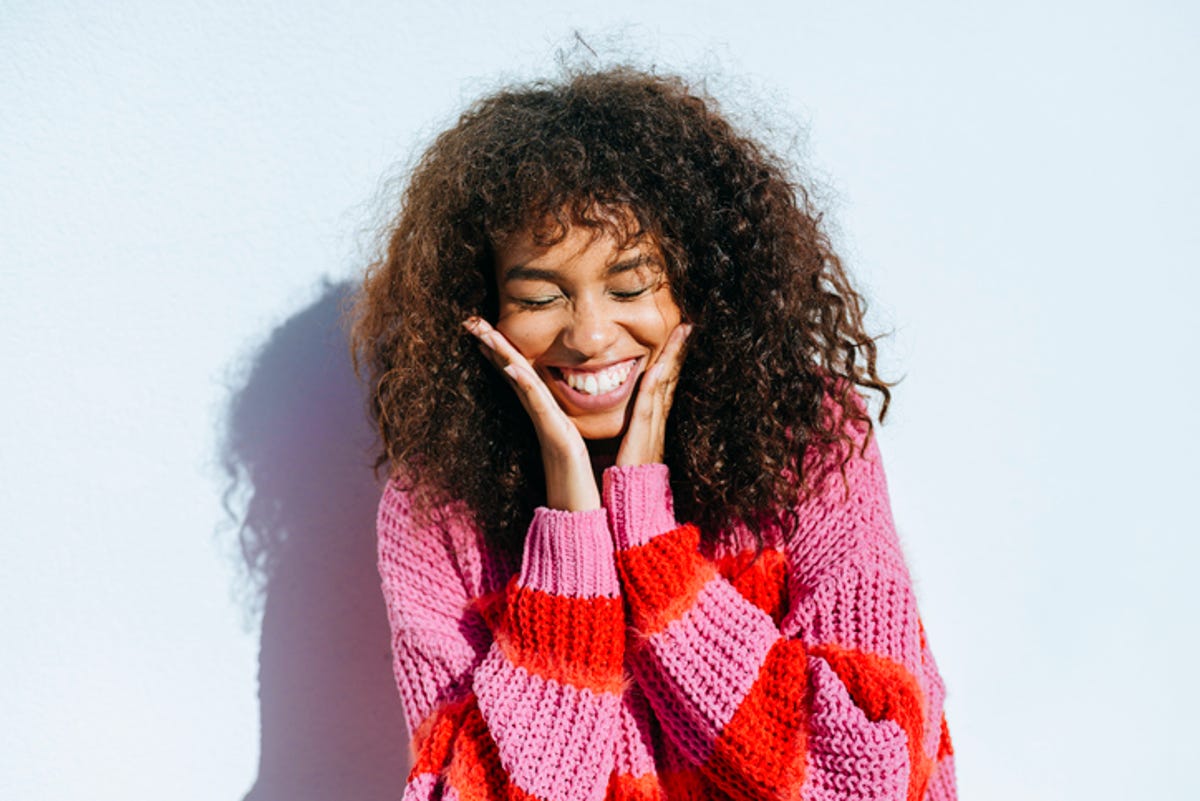
Young woman with curling hair laughing while standing against a wall.

Westend61/Getty Photos

Make on your own chuckle

In some cases, laughter is the most effective drugs. When you might be feeling stressed or down, do items that will make you snicker to cut down anxiousness and stress. Watch your favorite Tv set display or movie to give your mood a improve. Or find the source within oneself. Sing whilst you’re in the shower or dance even though cleaning your house. Dancing lessens the pressure hormone cortisol in the physique. 

Improving your mental health is a journey it won’t transpire right away. You can make lasting tweaks to your very well-staying by deliberately incorporating practices to your schedule.

The data contained in this report is for academic and informational reasons only and is not supposed as health and fitness or health care guidance. Always seek the advice of a medical professional or other competent health company about any questions you may well have about a clinical ailment or health and fitness goals.