Mario Diel, Chairman and Founder IKAR Holdings, Ulas Kayacan, Chairman and CEO Insense Health Tech Inc.
Executive Board, IKAR Holdings, Sertan Aycicek, Group President, IKAR Holdings, Ulas Kayacan, Chairman and CEO Insense Helath Tech Inc.
IKAR Holdings, has announced a partnership with Turkish Insense Overall health Tech to globally offer their engineering solution covering the demands of epilepsy people.
LONDON, UNITED KINGDOM, April 4, 2023/EINPresswire.com/ — The partnership between IKAR Holdings and Insense Wellness Tech Inc. will offer a complete resolution to the needs of epilepsy people. The technologies product or service created by Insense Health and fitness Tech is a detailed technique that screens the patient’s health and fitness and gives actual-time details to the patient’s medical professional / patient.
The process is built to detect the onset of an epileptic seizure and notify the patient’s medical professional / affected individual in real-time. This will enable the medical doctor to offer timely healthcare support to the client.
The engineering products formulated by Insense Overall health Tech Organization is a innovative product that will revolutionize the way epilepsy sufferers are monitored and treated.
IKAR Holdings, which will maintain its fairness shares by way of its operational Keeping, Adelfi Ventures Confined, London, is psyched to lover with Insense Health Tech to offer this ground breaking technological know-how to epilepsy individuals close to the world. This partnership will support to increase the quality of lifetime for epilepsy individuals and supply them with the best possible care.
IKAR Holdings and Insense Overall health Tech are dedicated to delivering the very best attainable treatment to epilepsy people and are self-assured that this partnership will assist to make a change in the life of those people influenced by this issue.
The parties agreed on a 30 Million Euro valuation of Insense Wellbeing Tech Inc.
IKAR Holdings is a multi-tiered entrepreneurial team, with a present-day in general portfolio of 40 firms. The group has a vertical tactic, which is structured into three operational Holdings, covering functions across a broad wide range of industries:
IKAR Industries is targeted on matured industries such as electricity, sports, true belongings, cyber stability, aviation, defense, products and services, and building. IKAR Worldwide is centered on affect functions ranging from media, to technology, to finance and instruction and is at this time in the process of developing its individual University. The 3rd holding, Adelfi Ventures, is centered on startup and proven firms and has currently a portfolio of more than 10 firms covering overall health tech, production, investing, telecommunication and many others.
Insense is a health technological know-how firm, based in Istanbul, co-founded by health care medical doctors and tech-business owners. The business offers technological solutions in the wellbeing sector. These alternatives contain software program used for ailment prognosis and treatment, medical imaging software package, individual info administration techniques and a lot of much more. Insense utilizes reducing-edge technological know-how to make health care companies much more successful and successful and develops custom made software program to meet the desires of its buyers.
Aaruni Kumar – Chief Working Officer IKAR Holdings Restricted, London press@ikarholdings.com
Check out Bigger Picture John Ukadike is a Minor Rock Spouse and children Drugs resident physician at the University of Arkansas for Healthcare Sciences’ (UAMS). He is also a happy alum of the Fay W. Boozman College or university of Community Health Master of General public Overall health system.
| John Ukadike, D.O., MPH, is a Little Rock Relatives Medication resident medical doctor at the University of Arkansas for Health-related Sciences’ (UAMS).
He’s a merchandise of the UAMS Fay W. Boozman Faculty of Community Health’s Grasp of Public Overall health (MPH) program. Ukadike afterwards went to the New York Institute of Technologies, where by he acquired his doctorate. He appreciates how the MPH curriculum served posture him to in the end apply drugs.
“My practical experience in the College of Community Health was great,” Ukadike stated. “I was privileged to acquire the community overall health law course taught by Kevin Ryan J.D., MA, associate dean for Scholar and Alumni Affairs, through my initially calendar year in the software. That was essential for me. The rapport he and I designed still can help me a ton. Faculty like him made my practical experience in the college fantastic.”
Ukadike also appreciated how the college’s instructors experienced serious-everyday living general public health ordeals that motivated how they taught and led analysis jobs. Ukadike explained it additional a genuine element to the data they offered.
“My community wellbeing education and learning opened my eyes to numerous scenarios that are also applicable to my scientific practice nowadays,” Ukadike claimed. “The university uncovered me to so numerous realities that individuals confront. It can help me take into account the total particular person when practicing — fairly than just medicine by yourself.”
As for hardships, they hit close to property for Ukadike.
Now, his dad is a psychological counselor at the College of Arkansas-Minimal Rock and his mom is the director of schooling and communications for the UAMS Section of Loved ones and Preventive Medication. Nonetheless, prior to Ukadike’s parents attained their accomplishment, they experienced to overcome their honest share of problems.
His father is from Nigeria and grew up devoid of functioning water. His dad also lived as a result of the Nigerian civil war through which he noticed youngsters starving in the streets. As for Ukadike’s mom, she’s a native of rural Northeast Arkansas and was lifted in a dilapidated home that leaked terribly and experienced warmth in only a single space.
Knowing how his parents lived when they were young, inspires Ukadike to constantly give a encouraging hand to people today in require — specifically if youngsters are associated.
“Both of my mother and father emerged from a history of poverty,” he claimed. “For me, the blend of becoming biracial and listening to tales of the battle my dad and mom went as a result of manufactured me curious about how I could help to boost issues for Arkansans. Individuals want alternatives. With my background in public health and fitness and medication, my target is to put myself in a position to provide about prevalent alter on a populace amount.”
Ukadike’s interest in general public overall health grew from his parents’ everyday living activities.
“My motivation to help many others started at a young age,” he stated. “Being so close to the healthcare field, blended with increasing up with an African father and a white mother — both equally of whom experienced seen and seasoned tricky instances — in hindsight, that all aided me explore my curiosity in general public health and fitness.”
Just after completing his undergraduate training at the University of Arkansas at Fayetteville, Ukadike — who’s a community medication liaison for his residency software — returned house to Central Arkansas. He enrolled in the MPH system, which he claims provided him with extraordinary possibilities.
“Working to get the Learn of Community Well being degree put me in situation to serve,” he mentioned. “It was a fulfilling knowledge. We examined and went out and did points to assist persons. We registered men and women to vote. We served with housing, leasing rights. We ended up pretty much working to address the community overall health predicaments we ended up finding out about.”
For professional medical students, entering the plan to also get the MPH is best, Ukadike extra.
“If you go to UAMS for health-related university, I strongly recommend the dual observe method to get the MPH to go with it,” he claimed. “The application helps you achieve an knowing of the distinct populace groups that you could not have a great deal experience operating with, likely into med school. That broadens your horizons and helps make you a greater doctor.”
With the condition facing a significant scarcity of competent wellbeing care staff, Metropolitan State College of Denver has embarked on an formidable strategy to extend its capacity to meet up with the escalating need.
The College has started operate on a new 18,000-square-foot well being-simulation laboratory that will allow it to teach a lot more nurses and other overall health pros in point out-of-the-art facilities that mirror regular scientific environments.
MSU Denver is also trying to get condition funding this yr for the initial phase of a 70,000-sq.-foot health and fitness training developing that will permit the College to convey its overall health-similar tutorial packages less than one particular roof. The new facility, MSU Denver leaders said, will also raise pupil capacity in people systems, which now include a lot more than 5,200 pupils, by an regular of 32{08cd930984ace14b54ef017cfb82c397b10f0f7d5e03e6413ad93bb8e636217f}.
“Colorado requires these students in the workforce now much more than at any time,” stated President Janine Davidson, Ph.D., noting that the state had approximately 900,000 unique overall health treatment work postings last year, according to a 2022 Expertise Pipeline Report.
“We want to do everything we can to fill that pipeline,” she reported. “The wellness of our communities is dependent on it.”
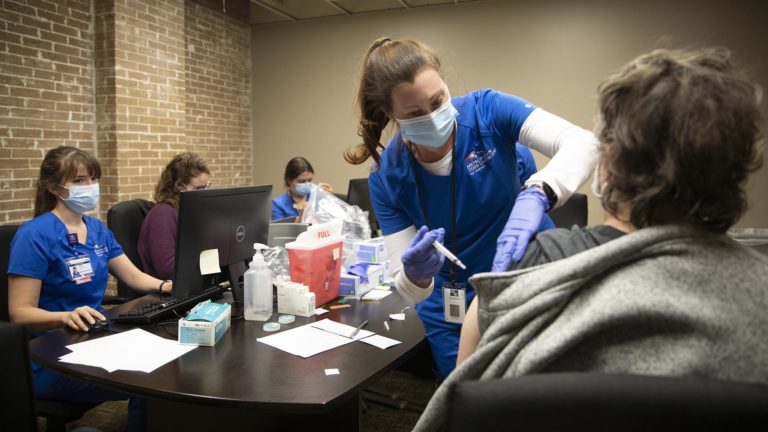
MSU Denver Nursing students administer vaccines at a local community clinic. Colorado will shortly be shorter a lot more than 10,000 nurses, in accordance to a 2021 evaluation by the human-means consulting organization Mercer. Photograph by Amanda Schwengel
In 2018, the University designed its Health and fitness Institute, a collaboration amid 10 tutorial departments centered on wellbeing and wellness. MSU Denver’s interdisciplinary emphasis allows learners discover professions when making ready them to interact with individuals who function in related fields, just as they could in a significant healthcare facility environment, stated Emily Matuszewicz, DC, the Health Institute’s director of Enhancement and Partnerships.
A collaboration of 10 academic departments concentrated on health and fitness and wellness:
Biology
Chemistry and Biochemistry
Overall health Professions
Human Performance and Sport
Human Companies and Counseling
Nursing
Nutrition
Psychological Sciences
Social Get the job done
Speech, Language and Hearing Sciences
“Historically, we have found a siloed strategy to both larger education and well being-associated fields,” she stated. “We’re doing work not just to construct ability for much more college students in wellness fields but to give those learners a better tutorial knowledge throughout numerous disciplines so that they can come to be problem-solvers and leaders in the health treatment sector.”
Connected: Transformational reward to assist new overall health-training facility
Even though the academic institute has been in spot for five many years, centralized physical area to make cross-division collaboration probable has been more durable to appear by. So MSU Denver is pursuing condition funding and fundraising chances to assist the University’s integrative tactic and to boost its ability to provide pupils.
Previous yr, MSU Denver been given $10 million from the point out to establish the Wellbeing Institute Simulation Labs, a renovation of the existing West Classroom developing on the Auraria Campus that will additional than double the potential of the Nursing Office.
MSU Denver at this time turns away about 50 {08cd930984ace14b54ef017cfb82c397b10f0f7d5e03e6413ad93bb8e636217f} of the applicants to its Nursing software due to the fact of area constraints, and pre-Nursing students who do not get in typically transfer or drop out of college or university.
The new simulation facility will feature techniques labs, simulated clinic rooms, a nurses station, an ambulance bay and a residence wellbeing space wherever pupils can observe in-house care.
A new 18,000 square-foot simulation laboratory in MSU Denver’s Wellness Institute will include simulated healthcare facility rooms, as depicted in this rendering.
In addition to the Sim Labs that are on keep track of to be completed by summer time 2024, MSU Denver has submitted a money ask for to state lawmakers that would fund the first phase of the Wellbeing Institute Tower challenge, a 70,000-sq.-foot addition to the campus’ West Classroom building. The interdisciplinary health instruction facility would involve labs and technology that could minimize dependency on scarce medical placements.
Programs for the tower include community-experiencing clinics for Speech, Language and Listening to Sciences and psychological and behavioral overall health an interprofessional-expertise lab, a Social Do the job classroom and lab, an work out-science lab, a fitness-evaluation lab, and a demonstration kitchen area for Nourishment classrooms.
Associated: Banking on the upcoming of health treatment
“Getting to exercise all of our strategies will enable us with figuring out patients’ health and retaining affected individual care a precedence,” claimed MSU Denver scholar Virginia Navarro, an Physical exercise Science main who would like to grow to be a physical therapist. “These new labs are definitely heading to support.”
In his November budget proposal, Gov. Jared Polis advisable funding the tower task due to the fact it will “provide extremely-certified graduates with the schooling and experience essential to enter into the community-wellbeing, nursing, and behavioral-wellness workforce.”
But legislators on the state’s Money Advancement Committee and Joint Budget Committee also have a say on which general public projects receive funding in advance of the total legislature passes the funds and sends it to the governor to indication into legislation.
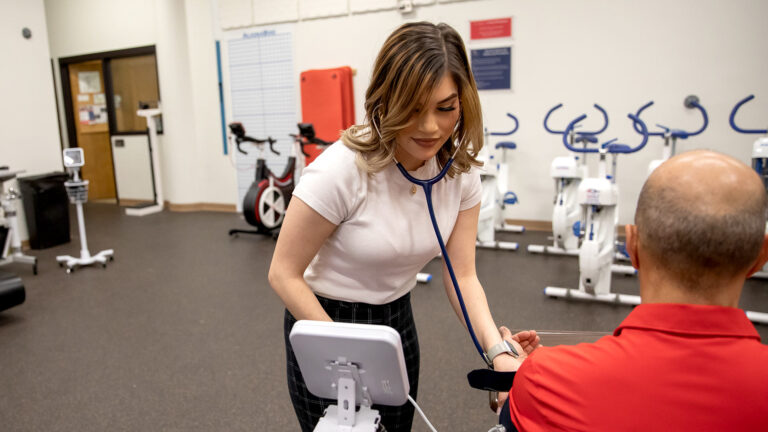
Exercise Science big Virginia Navarro hopes turn into a physical therapist just after graduating from her Wellness Institute program at MSU Denver. Photo by Amanda Schwengel
Connected: Our nurse source is running out
Lawmakers are thinking of the ask for as Colorado faces a dire scarcity of health care personnel.
Colorado’s 2022 Expertise Pipeline report said well being treatment employers experienced to repost work 5 periods on average ahead of discovering the expertise wanted to fill just about every posture, a indication of a drastic workforce shortage that is projected to get even worse.
A 2021 evaluation from the human-resources consulting business Mercer assignments that the United States will have a lack of far more than 3 million crucial well being care employees by 2026, with Colorado among the worst-positioned states specifically in the fields of psychological health and fitness and nursing. Mercer approximated that Colorado will shortly be short much more than 10,000 nurses, 3rd-worst in the region.
Navigate Your Health Vocation Function
Are you a student intrigued in the health discipline? Be part of the Overall health Institute and Classroom to Job Hub for a well being-vocation exploration event. Register listed here.
Feb. 24 | 8 a.m.-2 p.m.
SpringHill Suites by Marriott Denver Downtown
1190 Auraria Parkway
MSU Denver is not targeted on basically filling these roles – it aims to fill them with health and fitness care employees who mirror the communities they provide. The Health Institute provides robust economic-assist plans and university student-assistance products and services that purpose to recruit and keep college students from underserved communities.
“There’s more and far more evidence telling us that when a service provider appears like the patient, or when a service provider has some lived practical experience connected to that affected individual and what they are going by way of, you have superior health results,” Matuszewicz claimed. “Colorado is a largely medically underserved condition, so we’re trying to serve as many wellness care college students as possible.”
Study far more and assistance MSU Denver’s Wellbeing Institute right here.
Get hold of: Communications Workplace NewsMedia@flhealth.gov 850-245-4111
Tallahassee, Fla. — The Florida Division of Overall health launched the Florida Reimbursement Help for Healthcare Education and learning (Frame) portal nowadays for 2023 application cycle. The Frame application provides professional medical schooling loan credit card debt aid to health and fitness care gurus training in much less populated areas of the point out.
In July 2022, Governor Ron DeSantis and the Florida Legislature directed almost $6.6 million in funding to broaden access to major care health solutions using the Frame method. Frame encourages qualified wellbeing treatment specialists to practice in underserved places throughout the point out, by offering yearly payments meant to offset the financial loans and instructional costs leading to professional medical or nursing degrees.
“We want to make sure we are performing all that we can to recruit and keep excellent health and fitness care specialists all over the point out of Florida,” said Lieutenant Governor Jeanette Nuñez. “This method will satisfy a critical need to have in our condition and will prioritize setting up a potent workforce that will assist help save lives and deliver significant-high quality treatment each and every working day.”
“Through the Frame system, we will maximize obtain to health and fitness care for families throughout the point out,” claimed Point out Surgeon Standard Dr. Joseph Ladapo. “By delivering this resource, we can recruit and retain wellbeing treatment experts to underserved regions and by raising capacity, will not only provide households right now exactly where they dwell but will also get ready us for the worries of the foreseeable future.”
Through the Frame plan, medical professionals, medical professional assistants, and nursing professionals may perhaps be suitable for an once-a-year award of up to $20,000 toward the remaining principal of their academic loans. To be suitable, suppliers must have a principal treatment specialty and at the moment offer companies inside a federally selected Health and fitness Expert Shortage Space (HPSA) or statutorily specified facility type.
Purposes for Frame funding will be prioritized dependent on a mixed element of direct individual care hrs offered in a HPSA, the HPSA score, and the duration of continued support of the applicant in the HPSA(s). Funding will be dispersed by prioritization rating.
Purposes can be submitted on the FRAMEworks portal or by mail all through the application cycle between February 1, 2023, and March 31, 2023. Award determinations will be manufactured by June 1, 2023.
For supplemental details about Frame, you should contact Body@flhealth.gov.
About the Florida Division of Wellness
The division, nationally accredited by the General public Wellbeing Accreditation Board, is effective to protect, advertise and improve the wellbeing of all people today in Florida as a result of integrated condition, county and local community attempts.
Follow us on Twitter at @HealthyFla and on Fb. For more information and facts about the Florida Department of Health and fitness be sure to pay a visit to www.FloridaHealth.gov.
The agency’s get the job done supports advancements in most cancers detection, analysis, and treatment and contributes to declining prices of cancer-linked fatalities and new most cancers conditions in the U.S.
RESTON, Va., Dec. 28, 2022 /PRNewswire/ — Peraton has secured a seat on a five-yr, unrestricted $1.7 billion blanket acquire arrangement (BPA) to aid information and facts technological know-how (IT) and professional IT products and services for the Nationwide Cancer Institute (NCI) Middle for Biomedical Informatics and Facts Know-how (CBIIT).
As part of the Countrywide Institutes of Health (NIH), NCI manages most cancers analysis, coaching, and information dissemination to fulfill the varied desires of the American community. The agency’s operate supports developments in most cancers detection, analysis, and care and contributes to declining prices of cancer-linked deaths and new most cancers instances in the U.S.
By the NCI CBIIT BPA, CVP (Buyer Worth Companions) and Peraton, CTA (Contractor Teaming Arrangement) Team Member, will supply DevSecOps, cloud solutions, IT operations and provider desk solutions, cybersecurity, engineering, and information management abilities to empower the agency’s mission to direct, carry out, and assist cancer investigate to progress scientific awareness and support all persons are living longer, more healthy life.
“We are thrilled to have the chance to produce impactful outcomes to NCI’s important mission and assembly the agency’s requirements,” stated Tarik Reyes, president, Protection Mission and Well being Solutions sector. “As a leading mission capability integrator and company IT provider, our workforce is poised and ready to assist the company.”
About Peraton
Peraton drives missions of consequence spanning the world and extending to the farthest reaches of the galaxy. As the world’s top mission capacity integrator and transformative organization IT provider, we produce reliable and remarkably differentiated national security remedies and technologies that hold people risk-free and safe. Peraton serves as a valued associate to critical governing administration agencies across the intelligence, house, cyber, defense, citizen safety, well being, and point out and community markets. Each working day, our employees do the won’t be able to be completed, solving the most daunting challenges struggling with our prospects. Visit Peraton.com/Information and follow Peraton on LinkedIn for news and updates.
Mayor Issues Directive Clarifying Responsibility to Provide Care When SMI Prevents Someone From Meeting Their Basic Needs
Mayor Announces 11-Point Mental Health Legislative Agenda for Upcoming Session in Albany
NYC to Launch Tele-Consult Line to Provide First Responders in Field With Direct Access to Clinicians
NEW YORK – New York City Mayor Eric Adams today announced a new pathway forward to address the ongoing crisis of individuals experiencing severe mental illnesses left untreated and unsheltered in New York City’s streets and subways. In a public address, Mayor Adams detailed a compassionate new vision to tackle this crisis, beginning with a directive being issued immediately to city agencies and contractors involved in evaluating and providing care to individuals in psychiatric crisis so that more people in need of help receive it. Mayor Adams also laid out an 11-point legislative agenda that will be among his top priorities in Albany during the upcoming legislative session. The agenda takes aim at gaps in New York State’s Mental Hygiene Law that intensify the city’s challenges in meeting the needs of its most vulnerable residents with severe mental illness. Finally, Mayor Adams announced new clinical co-response teams deployed in New York City’s subways to respond to those with serious mental health issues, as well as an enhanced training in partnership with New York State for all first responders to compassionately care for those in crisis.
“As a city, we have a moral obligation to support our fellow New Yorkers and stop the decades-long practice of turning a blind eye towards those suffering from severe mental illness, especially those who pose a risk of harm to themselves,” said Mayor Adams. “It is not acceptable for us to see someone who clearly needs help and walk past them. For too long, there has been a gray area where policy, law, and accountability have been unclear, and this has allowed people in desperate need to slip through the cracks. This culture of uncertainty has led to untold suffering and deep frustration, but we cannot and will not allow it to continue. Today, we are making a clear statement to our fellow New Yorkers that, by leading with compassion and care, we can do much more to help those among us in a severe mental health crisis, even when they are unable to, by no fault of their own, recognize their own needs. This is our moral mandate as a city and we will not fail to deliver for our most vulnerable.”
In accordance with state law and court precedent, Mayor Adams’ directive clarifies that outreach workers, city-operated hospitals, and first responders have the legal authority to provide care to New Yorkers when severe mental illness prevents them from meeting their own basic human needs to the extent that they are a danger to themselves. The directive — issued by Mayor Adams today — seeks to dispel a persistent myth that the legal standard for involuntary intervention requires an “overt act” demonstrating that the person is violent, suicidal, or engaging in outrageously dangerous behavior likely to result in imminent harm.
Mayor Adams also announced today that the city is developing a tele-consult line to provide police officers in the field with direct access to clinicians. This new tele-consult line will provide critical clinical advice to police officers when dealing with individuals in distress and ensure a compassionate response for those suffering with untreated serious mental illness.
Measures in Mayor Adams’ legislative agenda announced today include:
Making the law explicit that a person requires care when their mental illness prevents them from meeting their own basic needs;
Mandating that hospital clinicians consider a range of factors when assessing a patient’s need for involuntary admission or retention, including known treatment history and current ability to adhere to outpatient treatment;
Requiring hospitals to screen all psychiatric patients prior to discharge for their need to receive “assisted outpatient treatment” (court-ordered care under “Kendra’s Law”);
Allowing a broader range of trained mental health professionals to perform evaluations and community removals of individuals in crisis; and
Requiring hospitals to notify known community providers when their clients are admitted or released and collaborate with community providers in preparing patients for discharge.
Ahead of the winter months — when homelessness typically increases on subways due to the cold weather — the Adams administration has begun deploying subway clinical co-response teams, made up of joint patrols of the New York City Department of Health and Mental Hygiene (DOHMH) and the New York City Police Department (NYPD), to patrol high-traffic subway stations and respond with a clinician-led approach to those appearing to have serious mental health issues.
Finally, in partnership with New York State, the city will also provide comprehensive training to all clinicians, outreach workers, and first responders to ensure compassionate care that potentially could include involuntary removals when interacting with individuals in distress suffering from severe mental illnesses. The city will be rolling out this training immediately.
“With this announcement, we are bolstering our strategies to get people who are in danger due to untreated severe mental illness the help they need,” said Deputy Mayor for Health and Human Services Anne Williams-Isom. “We are adding layers of additional support for our first responders to work with clinical specialists in the moment and at the time it is needed, and we are pursuing all other areas for assistance: Health, social services, legal, and legislative. Thank you to our teams across government working to see that this is a coordinated, whole-of-government effort.”
“You can’t effectively have public safety without adequate mental health care — the two go hand-in-hand,” said Deputy Mayor for Public Safety Philip Banks III. “For too long, public safety personnel’s hands have been tied in getting those in need care before they hurt themselves or others. These directives and proposals are a common-sense way to clear those impediments and get help for those who need it most.”
“The NYPD works day and night to improve the quality of life of all New Yorkers, especially our city’s most vulnerable populations,” said New York City Police Department (NYPD) Commissioner Keechant L. Sewell. “This is a longstanding and very complex issue. And we will continue to work closely with our many partners to ensure that everyone has access to the services they require. This deserves the full support and attention of our collective efforts.”
“Responding to New Yorkers in need is the mission of the Fire Department, and we are proud to partner with Mayor Adams in addressing this critical public safety issue,” said Fire Department of the City of New York (FDNY) Commissioner Laura Kavanagh. “Our mission is simple: To be there for all New Yorkers when they need help and provide critical mental health care.”
“People living with serious mental illness deserve to live their lives with dignity, respect, and free from discrimination and stigma,” said DOHMH Commissioner Dr. Ashwin Vasan. “As a city, this work — at the intersection of public safety and mental illness — represents part of the larger strategy, which is centered on providing everyone living with serious mental illness the basic building blocks of recovery: Health care, a home, and a community. We know that focusing on these pillars will reduce the number of people we see in need on our streets and in our subways to begin with, and is consistent with Mayor Adams’ focus on balancing prevention and intervention. The city is galvanized to address the broader issue of supporting people with serious mental illness to improve health, prevent suffering and isolation, and improve their quality of life. In the coming weeks, we’ll be turning to trusted community groups to inform a comprehensive vision aimed at improving access to care and housing and reducing social isolation.”
“We are proud of our cross-agency partnership with the city’s Health Department, Health + Hospitals, NYPD, and FDNY-EMS to develop these new protocols and trainings” said Mayor’s Office of Community Mental Health (OCMH) Director Eva Wong. “Helping our fellow New Yorkers most in need get connected to care is a top priority for OCMH. These new protocols and trainings will ensure that agencies and systems responsible for connecting our community members with severe mental illnesses to treatments are working in unison to get them the support they need and deserve. We look forward to continuing our work with city and state agencies as we partner to bring compassionate care to all New Yorkers.”
“With today’s announcement, Mayor Adams has reaffirmed his commitment to meeting the concurrent crises of untreated mental illness and unsheltered homelessness head on,” said New York City Department of Social Services (DSS) Commissioner Gary P. Jenkins. “As part of the Subway Safety Plan, DSS-DHS outreach staff and our partners are making great strides to connect New Yorkers experiencing homelessness in the subways to critical shelter services. This new plan builds on existing efforts like these to more efficiently and effectively engage New Yorkers experiencing mental health crises and ensure they receive the services they often desperately need. We commend the mayor for continuing to lead on this issue and assembling the resources necessary to support our neighbors in need.”
“The city has a moral obligation to assist homeless New Yorkers suffering from untreated severe mental illness who are unable to meet their basic needs to such an extent that they are a danger to themselves,” said New York City Corporation Counsel Sylvia Hinds-Radix. “The mayor’s comprehensive plan demonstrates this administration’s commitment to using every tool at its disposal to ensure outreach workers, city-operated hospitals, and first responders are able to provide the necessary care that these individuals so desperately need.”
“As the largest provider of behavioral health care in New York City, NYC Health + Hospitals plays a critical role in the serious mental illness continuum of care,” said Mitchell Katz, MD, president and CEO, NYC Health + Hospitals (H+H). “We will work with our partners in the city and state to ensure that our patients receive the highest quality of care. I want to thank Mayor Adams for his commitment to New Yorkers in need.”
“Today’s announcement reaffirms Mayor Adams’ commitment to addressing the needs of some of the most vulnerable New Yorkers,” said Mayor’s Office of Criminal Justice Director Deanna Logan. “Investment in public health solutions, including mental health treatment, is critical to keeping New Yorkers safe. Necessary solutions like those outlined today will result in safer, healthier communities for all.”
Since taking office in January, the Adams administration has made significant investments to address the severe mental health crisis afflicting New Yorkers and connect individuals suffering from untreated severe mental illness to care. In February, Mayor Adams rolled out the “Subway Safety Plan” to connect people experiencing homelessness on the subway to shelter. Since that launch, the city has effectively connected more than 3,000 people experiencing homelessness, some of whom are also in mental health crisis, to shelters and safe havens.
Mayor Adams has also doubled down on investments in community supports for those living with serious mental illnesses, including investing in the expansion of the city’s clubhouse program. Clubhouses follow an evidence-based model of psychiatric rehabilitation: A one-stop treatment facility that helps people with severe mental illnesses through their recovery by providing peer support, access to services, employment and educational opportunities, socialization, and recreation in a safe, restorative, and structured setting. DOHMH is expanding the capacity at some of the most successful clubhouses, with the goal of engaging 500 more members this fiscal year. The Adams administration also launched CONNECT: Continuous Engagement between Community and Clinic Treatment earlier this year as a new model of mental health treatment that focuses on holistic care, including for people experiencing severe mental illness.
Mayor Adams’ address, as prepared for delivery, can be found below:
Good morning, New York City. I want to talk to you about a crisis we see all around us: People with severe and untreated mental illness who live out in the open, on the streets, in our subways, in danger and in need.
We see them every day, and our city workers are familiar with their stories. The man standing all day on the street across from the building he was evicted from 25 years ago, waiting to be let in. The shadow-boxer on the street corner in Midtown, mumbling to himself as he jabs at an invisible adversary. The unresponsive man unable to get off the train at the end of the line without assistance from our mobile crisis team.
These New Yorkers and hundreds of others like them are in urgent need of treatment, yet often refuse it when offered. The very nature of their illnesses keeps them from realizing they need intervention and support. Without that intervention, they remain lost and isolated from society, tormented by delusions and disordered thinking. They cycle in and out of hospitals and jails.
But New Yorkers rightly expect our city to help them. And help them we will.
For the past eleven months, my team and I have studied the challenge of severe mental illness in the streets of our city. We have spoken to those who suffer from it and the experts who treat it. We have analyzed data gathered by our outreach teams. We have worked across many agencies, and we have consulted with our partners at the state level.
I want to update you on the results of these efforts and lay out the next phase of our plan to address this urgent and complex challenge.
My administration is determined to do more to assist people with mental illness, especially those with untreated psychotic disorders who pose a risk of harm to themselves, even if they are not an imminent threat to the public. It is not acceptable for us to see someone who clearly needs help and walk past.
For too long, there has been a gray area where policy, law, and accountability have not been clear, and this has allowed people in need to slip through the cracks. This culture of uncertainty has led to untold suffering and deep frustration. It cannot continue.
We need to change that culture and clarify our expectations. No more walking by or looking away. No more passing the buck.
Going forward, we will focus on action, care, and compassion. If severe mental illness is causing someone to be unsheltered and a danger to themselves, we have a moral obligation to help them get the treatment and care they need.
Today, we are embarking on a long-term strategy to help more of those suffering from severe and untreated mental illness find their way to treatment and recovery. It begins with an immediate shift in how we interpret our obligation to those in need and calls upon our outreach workers to take deeper actions and more intensive engagements.
We can no longer deny the reality that untreated psychosis can be a cruel and all-consuming condition that often requires involuntary intervention, supervised medical treatment, and long-term care. We will change the culture from the top down and take every action to get care to those who need it.
To do this, we will need significant help from our partners in Albany. I want to thank Governor Hochul for her support on this issue. Thanks to her leadership, we have greater resources and a stronger commitment to making progress on one of the most enduring challenges facing our city. She has been an excellent partner in our efforts, and I look forward to working with her and the State Legislature to address the longstanding gaps in our state Mental Hygiene Law.
To begin that process, our team has developed an 11-point legislative agenda to address those gaps, and getting it enacted will be a major priority for us in 2023. This agenda is already available online and to the public. But even as we move forward on that agenda, there is much we can do now by properly interpreting and carrying out existing law.
Job one is to make it universally understood by our outreach workers, hospital staff, and police officers that New York law already allows us to intervene when mental illness prevents a person from meeting their basic human needs, causing them to be a danger to themselves. This policy has been confirmed in written guidance from our state Office of Mental Health.
Yet a common misunderstanding persists that we cannot provide involuntary assistance unless the person is violent, suicidal, or presenting a risk of imminent harm. This myth must be put to rest. Going forward, we will make every effort to assist those who are suffering from mental illness and whose illness is endangering them by preventing them from meeting their basic human needs.
And let me be clear: We will continue to do all we can to persuade those in need of help to accept services voluntarily. But we will not abandon them if those efforts cannot overcome the person’s unawareness of their own illness. In short, we are confirming that a person’s “inability to meet basic needs,” to the extent that it poses a risk of harm, is part of the standard for mental health interventions.
And we will accomplish this in five specific ways.
First, we have issued a new directive to our Department of Health and Mental Hygiene mobile crisis teams, FDNY-EMS, and the NYPD. This directive lays out an expedited, step-by-step process for involuntarily transporting a person experiencing a mental health crisis to a hospital for evaluation. It explicitly states that it is appropriate to use this process when a person refuses voluntary assistance and it appears that they are suffering from mental illness and are a danger to themselves due to an inability to meet their basic needs. We believe this is the first time that a mayoral administration has given this direction on the “basic needs” standard in official guidance.
Second, our mobile crisis teams and police officers will receive enhanced training on how to assist those in mental health crisis. There will be a new focus on the need to intervene in situations where an individual appears to be suffering from mental illness and in danger due to an inability to meet their basic needs. This will include an in-depth discussion of what “inability to meet basic needs” means and an array of options to consider before resorting to involuntary removal.
The first training to incorporate this new focus took place this morning, and we will soon roll it out to all current members of the mobile crisis teams and the NYPD.
Third, we will be launching a hotline staffed by clinicians from our H+H hospitals that will provide guidance to police officers who encounter individuals in psychiatric crisis. State law already authorizes a police officer to make a judgment call to have a person involuntarily removed to a hospital. But many officers feel uneasy using this authority when they have any doubt that the person in crisis meets the criteria. The hotline will allow an officer to describe what they are seeing to a clinical professional, or even use video calling, to get an expert opinion on what options may be available.
Fourth, we will develop a special cadre of clinicians paired with NYPD officers dedicated to the difficult work of getting New Yorkers in crisis into care. These specialized intervention teams will have the training, expertise, and sensitivity to ensure that those in need are safely transported to a hospital for evaluation.
Fifth, we will work to have the “basic needs” standard for involuntary intervention explicitly written into state law. This is point number one in our 11-point legislative agenda that I mentioned earlier. State law already gives us the scope and authority to help those who are unable to meet their own needs. But to have it clearly spelled out in legislation will help dispel the misconception that we must wait for a threatening, violent, or suicidal act to get those in crisis the help they need. We will also seek a common-sense expansion of the criteria that a hospital doctor considers in deciding whether or not to discharge a psychiatric patient.
All too often, a person enters a hospital in crisis and gets discharged prematurely because their current behavior is no longer as alarming as it was when they were admitted. The law should require hospital evaluators to consider not just how the person is acting at the moment of evaluation but also their treatment history, recent behavior in the community, and whether they are ready to adhere to outpatient treatment.
Our agenda also calls for allowing a broader range of licensed mental health professionals to staff our mobile crisis teams and perform these evaluations. This will help us get more outreach teams on the ground and enable hospital psychiatrists to spend more time providing medical care directly to patients.
We will also seek changes in the law to improve communication between inpatient and outpatient treatment providers, allowing better continuity of care and discharge planning. And we will look to extend the reach of one of our most successful programs — “assisted outpatient treatment” — also known as “Kendra’s Law.”
When used, Kendra’s Law has been shown to help those with severe mental illness avoid repeat hospitalization and arrest. But we know that many who stand to benefit from this approach are not finding their way into the program. To remedy that, hospitals must be required to screen all psychiatric patients for Kendra’s Law eligibility.
These relatively simple changes to the law will have an outsized impact. They will strengthen our mental health laws and incorporate what we’ve learned through experience. And they will do so without threatening anyone’s civil or legal rights.
This plan represents a major shift in how we care for our fellow New Yorkers in crisis, even as we build on improvements we have already made over the past 11 months. It is the logical extension of what we have been doing from day one of this administration to repair our broken mental health system. That includes the Subway Safety Plan that put more outreach workers and police officers on the trains and platforms, and increased investment into drop-in centers, safe havens, stabilization beds, and Street Health Outreach and Wellness vans. The result so far has been over 3,000 New Yorkers connected with care, support, and shelter.
Our city also implemented the B-HEARD pilot program, which deploys social workers and EMTs to respond to nonviolent mental health 911 calls, and we have worked with the Sanitation Department to remove illegal encampments throughout the city, many of them extremely dangerous for those living there.
We want all New Yorkers to have access to a safe place to live, and we are working to expand the supply of supportive and low-barrier housing. We are also piloting innovative models to connect people in shelter with the services they need to succeed — including Medicaid Home- and Community-Based Services, which includes mental health care, socialization, and connection to housing.
We will be enrolling appropriate people living in shelter into specialized, Medicaid-managed long-term care plans. This will offer them enhanced services with the goal of stabilizing their medical conditions, increasing connection to health care services, reducing hospitalizations, and increasing access to community housing.
We are adding more Support and Connection Centers and increasing investment in other community support options. And we have launched our CONNECT program, which offers continuous engagement between clinical and community partners. We are also exploring ways to use Medicaid funding to provide services to people in shelter, including those with severe mental illness. There is a huge role for the federal government to play here.
All of these efforts are based on our core conviction that people with severe mental illness deserve care, community, and treatment in the least restrictive setting possible. Some may see the policy shift announced today as a departure from that goal. But let me be clear: When we hospitalize those in crisis, it will be with a sense of mission to help them heal and prepare them for an appropriate community placement.
We can’t just stabilize people for a few days and send them back out into the city. We must build a continuum of care that helps patients transition into step-down programs and eventually into supportive housing.
But nobody should think decades of dysfunction can be changed overnight. The longest journey begins with a single step, and we can’t wait another day to take this one. We must lead with a sense of purpose and conviction, not get lost in a wilderness of bureaucracy and fear. We must train, teach, and empower our city workforce to get help to those who need it — and know that our city supports them in this effort. We must build out a system that will bring people into care, alleviate their pain, keep them from harming themselves or others, and get them treatment and support they need in the long term.
Those suffering from severe mental illness have more than a right to exist or survive. They have a right to health care, housing, and treatment. A right to dignity and respect. A right to safety and security. And above all, a right to hope. Hope for treatment, community, and healing. Hope that their future will be safe and that their illness can be managed. But that hope starts with a spark of engagement on our part, followed by a strong and supportive program of help and housing.
We owe our brothers and sisters that much. And, in helping them, we will also be protecting the rights of every New Yorker to live, work, thrive, and be safe.