Some ACA health insurance plans have lots of enrollees, few providers : Shots

Some ACA health insurance plans have lots of enrollees, few providers : Shots

The Affordable Care Act saw a record number of sign ups this year, but some people are having trouble finding doctors in their health plan networks.

Getty Images


hide caption

toggle caption

Getty Images


The Affordable Care Act saw a record number of sign ups this year, but some people are having trouble finding doctors in their health plan networks.

Getty Images

The Affordable Care Act may be struggling with its own success.

Record enrollment over the last two years brought more consumers into the health insurance market. At the same time, many insurers began offering smaller networks of doctors and hospitals, partly to be price competitive.

That combination left some patients scrambling to find an available in-network physician or medical facility. That can be a challenge, especially when enrollees must rely on inaccurate provider lists from their insurance company. A recent federal report found that 243 out of 375 insurance company plans reviewed by regulators failed to meet network standards.

‘The last thing she needed’

Take what happened to a central Pennsylvania policyholder, who in January fell and broke her arm and a bone near her eye.

She was directed by the hospital that provided her emergency care to follow up with an orthopedist, recounted Kelly Althouse, the patient’s insurance agent, who works near Reading, Pa. Althouse’s client spent hours calling orthopedic doctors listed in the provider directory of her new health plan from insurer Ambetter Health, a national carrier that in 2019 started offering ACA plans in Pennsylvania. Several doctors said they weren’t part of the network, despite being listed by the company, Althouse said. It took about 15 tries before her client found an in-network doctor who would see her.

That “was the last thing she needed when she was already feeling terrible,” said Althouse.

It’s a story that has been repeated to her multiple times since January, when the new plan year began. Her clients have “bombarded” her with calls, saying a range of physicians and other providers were not accepting the insurance, even if that provider was listed in the plan’s own directory. “The thing that shocked me was how many offices told my clients, ‘We have never heard of this company,'” Althouse said.

For its part, Ambetter officials said in a written statement to KHN that their network in Pennsylvania “meets or exceeds regulatory standards.”

The size of insurers’ networks of contracted doctors and hospitals, particularly in ACA plans, has long drawn concern. In recent years, insurers have trended toward offering smaller networks, in part to cut costs and keep premiums in check.

Problems arise when patients cannot find local in-network providers and must either pay more, for out-of-network care, if that’s even an option in their plans, or travel farther for in-network care.

It wasn’t supposed to be that way anymore, after new rules kicked in this year to address such issues.

More oversight, but is it enough?

For one, federal regulators are again checking whether insurers have enough providers. That comes after a 2021 court ruling that reversed a Trump administration move to eliminate such federal oversight.

In addition, new “time and distance” standards went into effect, requiring insurers to make available, within certain driving distances, at least one provider for each of a variety of physician specialties. For example, a large metro area must have enough endocrinologists for at least 90 percent of enrollees to be able to find one within 15 miles or a 30-minute drive.

Yet insurance brokers in multiple states told KHN that many clients are having trouble finding in-network providers across a variety of health plans. Even when they do, patients on some plans face “a four- to five-month wait to see a primary care doctor,” said Tracy McMillan, president of Marketplace Insurance Exchange, an insurance brokerage in the Dallas-Fort Worth area.

Under the Affordable Care Act, insurers must “ensure a sufficient choice of providers.” But there is no single nationwide standard on what to measure to determine network adequacy, and both federal and state regulators have authority to oversee the plans.

“These exchange networks have never had much rigorous oversight,” said Karen Pollitz, a senior fellow at KFF.

But access is still limited in some areas and even the standards themselves may not be tough enough, say policy experts and brokers.

“We have insurers that don’t even have a hospital in some counties,” said Lauren Jenkins, owner of Native Oklahoma Insurance, a brokerage based near Tulsa. “How do they even get approved to be in these counties?”

In a metro area no more than 40 miles across, a plan could theoretically have as few as 10 doctors and three facilities in network and still meet these standards, Pollitz said.

In Texas, North Carolina, and other parts of the country, new companies, often charging lower premiums, have entered the ACA market. Some have networks “that are very, very tiny,” said Don Hilke, owner of ClearBenefits Group in Durham, N.C. Even larger carriers are either squeezing their networks to compete on price or enrolling so many customers that they are stretching their existing networks.

‘Everyone in a pickle’

In Texas, two smaller insurance companies left the market, leaving the remaining insurers without enough doctors to absorb the policyholders who had to find other coverage, said Ronnell Nolan, president and CEO of Health Agents for America, a membership association for independent brokers. “It left everyone in a pickle.”

Federal regulators propose more changes for next year, including requiring insurers to meet appointment wait-time standards.

More has been done this year too, including reviewing insurer networks, said Ellen Montz, deputy administrator and director of the federal Center for Consumer Information and Insurance Oversight, part of the Centers for Medicare & Medicaid Services.

Insurers pegged as having a shortfall in their networks must now report monthly to CMS their “good faith efforts to fill those gaps” and how many complaints they get from consumers about access, she wrote.

Montz did not say how many insurers have fallen short, but the December report from the U.S. Government Accountability Office noted that CMS found the majority of insurance companies whose medical or dental plans were reviewed by federal regulators in August failed to meet network adequacy standards. CMS told the GAO that all plans eventually satisfied the requirements or provided “an acceptable justification as to why they were unable to meet the standards.”

Creating networks and keeping lists of participating providers up to date pose ongoing challenges, said Jeanette Thornton, executive vice president of policy and strategy at AHIP, the health insurance industry’s leading lobbying group. Those include the need to rely on providers to inform insurers when they move, retire, or stop accepting new patients.

Questions about the accuracy of provider directories persist. Dr. Neel Butala, an assistant professor at the University of Colorado School of Medicine, found that fewer than 20{08cd930984ace14b54ef017cfb82c397b10f0f7d5e03e6413ad93bb8e636217f} of more than 449,000 physician listings had consistent address and specialty area information across five large insurers’ directories, according to a research letter published in the Journal of the American Medical Association on March 14.

A lawsuit filed in August 2022 in the U.S. District Court for the Northern District of Illinois alleges the provider networks for Centene’s Ambetter plans “are simply false and are often just copies of physician directories from other sources.”

Without accurate directories, the lawsuit alleges, patients face “delays in treatment, inability to get treatment, traveling to see an in-network provider who is hundreds of miles away, and paying out-of-pocket for out-of-network providers.” Similar allegations are included in ongoing lawsuits first filed in 2021 by the San Diego City Attorney against three California insurers.

The “No Surprises Act,” which went into effect more than a year ago, requires insurers to update their provider directories every 90 days. No insurers have yet been penalized for failing to update theirs, said CMS’s Montz. The law also stipulates that if patients get hit with an out-of-network charge because they relied on inaccurate information, the insurer can charge the patient only the in-network rate.

In October, CMS published an official query asking for comment on whether the federal government should create its own national database of in-network medical providers, an inquiry that drew hundreds of responses, both for and against.

There has been no indication whether such a plan will move forward.

KHN (Kaiser Health News) is a national newsroom that produces in-depth journalism about health issues. Together with Policy Analysis and Polling, KHN is one of the three major operating programs at KFF (Kaiser Family Foundation). KFF is an endowed nonprofit organization providing information on health issues to the nation.

Online mental health provider’s use of tracking tech highlights dangers

Online mental health provider’s use of tracking tech highlights dangers

Comment

Welcome to The Cybersecurity 202! Minor spoiler for the finale of “The Last of Us”: Fighting off a zombie while giving birth is super metal.

Reading this online? Sign up for The Cybersecurity 202 to get scoops and sharp analysis in your inbox each morning.

Below: House leaders ask for information on the DC Health Link breach, and a Cambodian cybersecurity law is stirring controversy. First:

Cerebral disclosure shows vulnerability of online mental health data, risk of tracking tools

A company that provides online therapy services acknowledged last week that its customers’ sensitive health information had been sent to third-party firms, illustrating the risks for mental health data and calling attention to a problematic privacy practice.

The telehealth provider, Cerebral, sent letters to more than 3 million users on March 6 about the incident, then followed that with a notice to the Department of Health and Human Services. The company had been sharing user data with Google, Facebook parent Meta, TikTok and others via tracking “pixels.”

“On January 3, 2023, Cerebral determined that it had disclosed certain information that may be regulated as protected health information,” the notice reads, with the information ranging from IP addresses to what services someone selected.

The privacy practices of Cerebral and two other telehealth companies had already drawn congressional attention. Cerebral also is facing scrutiny from HHS under a law that governs exposure of health-care information.

Cerebral said it began using the trackers when it began operations in 2019. Such trackers can often provide information with few checks to outside companies. According to an HHS list of cases it’s investigating that involve unsecured protected health information, the 3.2 million affected individuals makes it the second-biggest case so far this year.

The incident could face scrutiny by regulators like the Federal Trade Commission, as data protection officer and privacy lawyer Whitney Merrill (a former FTC attorney) notes:

Online therapy company BetterHelp reached a settlement with the FTC last week for $7.8 million for sharing health data with third parties for advertising reasons. The FTC also barred it from sharing the health data going forward.

Dozens of telehealth companies have used tracking tools like the ones used by Cerebral, the Markup and STAT jointly reported in December. 

“I thought I was at this point hard to shock,” Ari Friedman, an emergency medicine physician at the University of Pennsylvania and digital health privacy researcher, told the publications in response to their findings. “And I find this particularly shocking.”

Last month, five senators sent letters to the heads of Cerebral, Monument and Workit, which were mentioned in the Markup/STAT story.

“Recent reports highlight how your company shares users’ contact information and health care data that should be confidential,” the letter from Sens. Amy Klobuchar (D-Minn), Susan Collins (R-Maine), Maria Cantwell (D-Wash.) and Cynthia M. Lummis (R-Wyo.) reads. “This information is reportedly sent to advertising platforms, along with the information needed to identify users. This data is extremely personal, and it can be used to target advertisements for services that may be unnecessary or potentially harmful physically, psychologically, or emotionally.”

The senators asked the three companies to provide a list of all the trackers they used, what questions users might be asked and more.

The Senate Homeland Security and Governmental Affairs Committee is also set to hold a hearing on cyber risks to the health care sector on Thursday.

Cerebral’s notice, alerting of the “privacy breach” under the Health Insurance Portability and Accountability Act, outlined what it has done in response. That includes offering free credit monitoring, a common standard response to data breaches that consumer advocates say doesn’t go far enough.

“Upon learning of this issue, Cerebral promptly disabled, reconfigured, and/or removed the Tracking Technologies on Cerebral’s Platforms to prevent any such disclosures in the future and discontinued or disabled data sharing with any Subcontractors not able to meet all HIPAA requirements,” Cerebral said. “In addition, we have enhanced our information security practices and technology vetting processes to further mitigate the risk of sharing such information in the future.”

Malicious hackers have a history of going after mental health information. Such data can also be valuable to advertisers.

The Cerebral case follows an incident last month where a ransomware gang, Vice Society, published a trove of the Los Angeles Unified School District’s current and former student mental health records on the dark web.

In one of the most prominent cases involving the breach of mental health records, hackers who stole data about tens of thousands of patients from Finish psychotherapy practice Vastaamo tried to extort ransoms out of individual patients.

Privacy attorneys say that exposed mental health data could cause reputational harm if it involves things like substance abuse treatment information. And telehealth services saw a big jump in usage as a result of the coronavirus pandemic. 

House leaders ask for information on breach of congressional health insurance platform

The FBI and U.S. Capitol Police are investigating the breach of D.C. health insurance marketplace DC Health Link, which is used by thousands of people — including members of Congress and their staff, multiple outlets report. Top House lawmakers are also asking for answers.

House Speaker Kevin McCarthy (R-Calif.) and Minority Leader Hakeem Jeffries (D-N.Y.) sent a letter to Mila Kofman, the DC Health Benefit Exchange Authority’s executive director, last Wednesday after the breach was confirmed, Margaret Barthel reported for DCist. They requested answers about when the group will be notifying affected users about their stolen data and asked for additional steps about how to safeguard the exchange, among other things.

The data that was stolen contained the info of a former national security official, as well as employees of lobbying firms, CyberScoop reporters AJ Vicens and Tonya Riley reported last week. “The leaked data includes names, email addresses, dates of birth, home addresses, social security numbers and details about insurance policies,” they write in the story.

SEC reaches settlement with Blackbaud over misleading ransomware disclosures

South Carolina-based data management software firm Blackbaud agreed to pay $3 million to the U.S. Securities and Exchange Commission to settle charges over misleading claims about a 2020 ransomware attack, David Jones of Cybersecurity Dive reports. 

The SEC said the company failed to notify regulators in an August 2020 quarterly report about the scope of a ransomware attack that occurred a month earlier. In July, the company said ransomware attackers did not access Social Security numbers and bank account details. When employees found that sensitive information was stolen, they didn’t tell upper management, according to the SEC.

Blackbaud “failed to disclose the full impact of a ransomware attack despite its personnel learning that its earlier public statements about the attack were erroneous,” David Hirsch, who leads the SEC Enforcement Division’s Crypto Assets and Cyber Unit, said in a statement.

In a statement from Blackbaud CFO Tony Boor that was provided to Jones, Boor said the company “is pleased to resolve this matter with the SEC and appreciates the collaboration and constructive feedback from the commission as the company continuously improves its reporting and disclosure policies.”

Leaked draft law highlights Cambodian government’s move to expand censorship authority

A leaked proposal of a new cybersecurity law would expand the Cambodian government’s ability to seize equipment, initiate searches and prosecute entities that are unable to mitigate cybersecurity threats, Rest of World’s Fiona Kelliher reports.

The 13-page draft law — which was dated Sept. 2, 2022 — wasn’t previously made public, and experts said the bill’s authority expands to both local and international companies, Kelliher writes.

Cambodia in 2018 reportedly faced an increased in hacking attempts leading up to its national elections. Critics said the draft law is meant to protect the current Cambodian regime, and some said it could be abused as the country’s government seeks to crack down on critics ahead of the country’s next round of national elections in July. The law is meant to apply to the majority of public and private entities operating in Cambodia who provide services in sectors such as banking and finance, telecommunications and health care. 

Cambodia’s Ministry of Post and Telecommunications would oversee the law. A spokesperson from the ministry told Kelliher “the law is still in draft, and the team is working hard to review the comments from all stakeholders.”

Biden admin’s cloud security problem: ‘It could take down the internet like a stack of dominos’ (Politico)

House intel wants to lock in FBI’s new guardrails for 702 (Politico Pro)

House GOP tries to turn the page on election dead-enders (The Daily Beast)

North Korean hackers used polished LinkedIn profiles to target security researchers (CyberScoop)

Russia’s covert operation for ‘the next Ukraine’ has already begun (The Daily Beast)

Russia-Ukraine cyber conflict splits APT groups, raises threat level (README_)

Military surveilled Ayotzinapa school for years before disappearance of 43 students (National Security Archive)

Acronis downplays cyberattack after 12GB trove leaks online (The Register)

AT&T says nine million customers exposed in January vendor breach (The Record)

PeopleGrove security lapse exposed users’ personal information (TechCrunch)

FBI once bought mobile-phone data for warrantless tracking. Other agencies still do. (The Wall Street Journal)

  • The Senate Homeland Security and Governmental Affairs Committee will hold a 10 a.m. hearing Thursday to examine cybersecurity risks in the health-care sector.

Thanks for reading. See you tomorrow.

Education Department to review rules for online program providers

Education Department to review rules for online program providers

The Education Division is planning to enhance oversight of the outside contractors that faculties and universities use to enable operate online plans.

The on the internet software management organizations, or OPMs, have developed in the last decade, but critics have accused the business of participating in aggressive recruiting methods and questioned the legality of the OPMs’ business practices. Supporters of the providers say they have helped grow online offerings in larger education and learning at a time when institutions lacked the potential to produce systems and that even more regulation would dampen innovation.

OPMs have confronted escalating scrutiny in the latest a long time from congressional Democrats and customer groups, which have criticized the Education Department’s oversight of the industry. Previous year, the Government Accountability Office environment reviewed the companies and urged more scrutiny from the Training Department, finding that the agency did not have ample information to gauge the scale or legality of the companies’ agreements with establishments.

To deal with that discovering, the office explained in steering issued Wednesday that OPMs and any entity that provides recruitment services for a school are viewed as 3rd-bash servicers, subjecting the companies’ contracts with institutions to normal audits. Schools and universities are demanded to report details of their agreements to the office by May 1.

“That will supply important transparency into what’s going on,” reported Robert Shireman, who worked in the Instruction Division throughout the Obama administration and is now a senior fellow at the Century Basis, a progressive consider tank. “The Department of Education and then the rest of us will learn a lot more about the contracts that institutions have, and there will be increased scrutiny and accountability for the OPM contractors if they are concerned in recruiting learners.”

A key problem for critics and the Training Office is the earnings-sharing agreement concerning the OPMs and schools, in which the company receives a share of the programs’ tuition revenue. Federal legislation prohibits establishments of larger education and learning from delivering a fee or bonuses to individuals or entities primarily based on securing enrollment or financial assist.

Nevertheless, third events are exempt from the ban on incentive compensation if they deliver a bundled established of providers, as outlined in direction issued in 2011. That way, a enterprise could receive fiscal gains for enrolling learners as extended as it also pays for other solutions, these types of as technological innovation assistance, in addition to college student recruitment.

Shireman, who worked in the Obama administration when the 2011 direction was issued and who has considering the fact that called for it to be rescinded, said he sees the department’s evaluation as a feasible first step in rescinding that 2011 guidance.

“We think it is now vital for the OPM corporations to put ahead their proposals, as perfectly as establishments, faculties and universities, about how considerably of their tuition can they deliver to a recruiter off-internet site without having violating the incentive-payment ban,” he stated.

OPMs have commenced to go absent from the income-sharing product, charging fixed charges for certain expert services as an alternative subsequent the elevated scrutiny and changing training landscape.

Section officers stated in a information launch that “the number of college students recruited by entities operating less than this exception has increased” because the advice was issued. To learn far more about how that exception has impacted greater instruction and whether updates are necessary, the department will maintain two listening sessions on March 8 and 9.

‘Online instruction has the possible to satisfy the requires of quite a few pupils and decrease prices,” Less than Secretary James Kvaal explained in a assertion. “But we are concerned about the growth in personal loan debt and want to make certain college students get benefit for their money. These listening sessions are element of the department’s determination to undertake a careful, truthful, and thorough evaluation of the rules about how contractors recruit learners for on the net packages.”

Pearson and 2U—two of the larger sized on-line method companies—said in statements that they appeared forward to doing the job with the section and supported greater transparency measures.

“Innovation in instruction is vital to our place, and 2U and organizations like us have come to be a critical component of driving innovation, obtain, and affordability in the greater education ecosystem,” a 2U spokesperson stated in a assertion. “Safeguarding and protecting college students is an important part of the equation, and we appear forward to operating with the division to help guarantee that our business is serving the very best pursuits of students, universities and taxpayers.”

Shopper teams and consider tank analysts normally applauded the department’s announcement.

“The bundled-services loophole to the incentive-payment ban has led to the subsequent frontier of predatory practices in larger training,” said Aaron Ament, president of the Countrywide Scholar Lawful Protection Community. “This has ripened the ailments for misleading and defrauding college students, and we have already viewed proof of damage induced by this lack of oversight.

The network and Tycko & Zavareei LLP sued 2U and the College of Southern California late last yr, alleging that both entities significantly misled college students. The lawsuit is continue to pending.

North Carolina agent Virginia Foxx, the Republican who chairs the Dwelling Committee on Education and the Workforce, criticized the conclusion and mentioned in a assertion that she hoped the Biden administration was ready to pay attention to all the points.

“While I share the belief that we must ensure programs supply worth to students and taxpayers, it is under no circumstances likely to get the job done for the section to drive blanket compliance procedures onto entities, especially those businesses that support learners comprehensive their education by means of productive retention techniques,” her assertion stated.

Overreach or Needed Oversight?

Trace Urdan, handling director at Tyton Partners, claimed the assistance designating OPMs as third-celebration servicers was “potentially alarming” and an overreach of the department’s authority.

Any entity involved with the administration of an institution’s federal university student aid is viewed as a third-social gathering servicer. That incorporates contracts that manage college student loans or operate economical help functions.

Urdan explained that underneath the latest guidance, any company that contracts with an establishment that participates in the federal economic aid system could be issue to federal regulation.

“This definition is growing to enable for immediate regulation of a 3rd occasion, and I assume the problem is that there is no genuine restricting basic principle there,” he stated, introducing that these a modify could discourage outside the house investment in better instruction.

Ben Kennedy, a consultant who advises colleges on their on the web approach, stated the change in third-occasion servicers will likely be an administrative inconvenience but not the loss of life knell for OPMs.

If the 2011 advice is rescinded, that would be a big acquire for institutions currently in a revenue-sharing arrangement, for the reason that they could renegotiate contracts, he mentioned. But he doesn’t consider the department has to go that much. Alternatively, the company could include disclosure prerequisites and other stipulations to make them unpalatable.

Additional facts about the contracts also would profit establishments, he claimed.

Stephanie Hall, a senior fellow at the Centre for American Development who’s researched OPMs and been vital of the preparations, mentioned that bringing OPMs underneath the 3rd-occasion-servicer umbrella will at minimum increase oversight. That modify also would make the businesses and establishments “jointly and severally liable” for any violation.

“Third-occasion OPMs have been equipped to conceal guiding seriously crafty language in their contracts that keeps them from getting responsible for any violations,” she explained. “It locations all the duty on the institution.”

She’s thrilled to listen to from learners and institutions, especially people that are locked in extensive-term contracts, all through the listening classes subsequent month.

“Hopefully it’s a possibility for the department to hear what some of the impacts are and how common those impacts are,” she mentioned. “One detail that I would hope will come out of that is that the office will get details so they can shift forward with both rescinding or revising that bundled provider steerage.”

Nebraska bill would allow healthcare providers to ‘conscientiously object’ to procedures

Nebraska bill would allow healthcare providers to ‘conscientiously object’ to procedures

Nebraska lawmakers are subsequent the path of other conservative states in considering a invoice that would let professional medical vendors, services and insurers to cite their religious, ethical or ethical beliefs in denying some health care remedies. Critics say it can be just a further way to focus on abortion rights and the LGBTQ neighborhood.

The invoice, introduced by Sen. Dave Murman, of Glenvil, casts a extensive internet. The phrase “medical companies” addresses everybody from health professionals, nurses and pharmacists to psychological health and fitness counselors and nursing dwelling staffers — all of whom could refuse to perform nonemergency methods, from abortions and gender-affirming hormone treatments to prescribing start command — if the provider has a ethical objection to it.

The bill features practically three internet pages of language preserving vendors who rigorously object to offering remedy from lawsuits, criminal charges and skilled ethics expenses.

VIRGINIA Invoice WOULD BAN TRANSGENDER ATHLETES FROM WOMEN’S Athletics

The monthly bill would also enable health care tactics, clinics and hospitals to refuse procedure based mostly on conscientious objections and would allow companies and wellness insurance plan companies to refuse to pay out for treatment method for the exact same reasons.

Murman claimed the measure does not give carte blanche to those people vendors and entities to discriminate towards individuals. A health practitioner who identifies as a Christian could not, for case in point, refuse to handle someone mainly because the individual is Muslim, or vice versa.

“The act is procedure particular, not affected individual distinct,” Murman said Friday at a hearing for the invoice before the Legislature’s Wellness and Human Solutions Committee.

A identical invoice is being considered in Montana, and in 2021, Arkansas passed its personal health care conscientious objection law. In Idaho, a invoice greatly noticed as targeting LGBTQ residents would make it possible for mental health therapists and counselors to refuse to treat clientele if the clients’ plans or behaviors conflict with the counselor’s “sincerely held ideas” narrowly superior from a legislative committee Thursday.

Jane Seu, lawful and coverage counsel with the American Civil Liberties Union, was amongst individuals who opposed the Nebraska monthly bill Friday, expressing it would “give an unbridled license to wellbeing treatment experts to discriminate in opposition to their clients for pretty much any cause.”

“This license to discriminate will be felt extra seriously in rural spots where patients have a limited decision of health care vendors,” she reported.

Eliana Siebe-Walles, a 20-year-aged college student at the University of Nebraska-Lincoln who works by using the pronoun they, told the committee that they go through from a reproductive affliction that is handled with start regulate hormones.

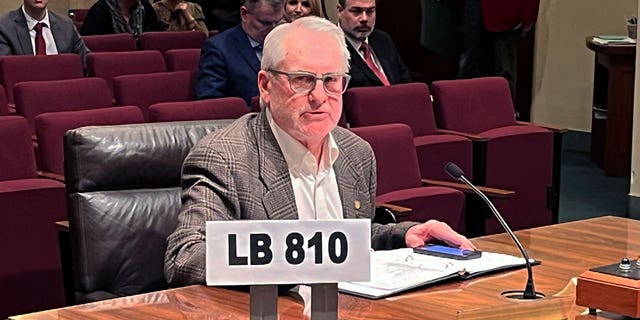
Nebraska state Sen. Dave Murman introduced a bill allowing healthcare providers to "conscientiously object" to procedures they disagree with.

Nebraska state Sen. Dave Murman released a monthly bill making it possible for healthcare providers to “conscientiously object” to techniques they disagree with. (AP Photo/Margery Beck)

“Beneath this monthly bill, a company could most likely maintain me from having the procedure I need to have,” they reported.

Outside the house the listening to, Siebe-Walles reported their main issue is that this bill could be employed by medical workers to discriminate, “specifically towards individuals of coloration and queer people today who are presently additional burdened than others when it comes to receiving the treatment they want.”

That dread is common, as well, in Idaho, exactly where a bill prohibiting all gender-affirming healthcare care is predicted to go the Idaho Household. That, coupled with the conscientious objection monthly bill for mental wellbeing personnel, has some LGBTQ inhabitants and allies anxious that youthful people today there will before long be experiencing a in the vicinity of-whole health care hurdle.

Kris Huntting, a transgender guardian raising a transgender teenager in southwestern Idaho, was refused treatment by their have extensive-time therapist various yrs ago soon after revealing they were trans. Now Huntting is worried about their son’s health care obtain, even while the 15-calendar year-old has not nonetheless expressed an curiosity in gender-affirming health-related care.

ARKANSAS Dwelling PASSES TRANS Toilet BAN FOR Educational institutions

“1 thing I’ve seriously struggled with is that his health care provider understands he’s trans,” Huntting reported Thursday. “Really should that have been a thing I stated medically to his health practitioner, or is he not likely to be taken care of for his depression and stress and anxiety any more — which he’s had all his life — mainly because it will be regarded as associated to his gender dysphoria prognosis, or simply because a therapist may well not like that?”

The American Medical Association’s code of clinical ethics suggests medical professionals have an ethical obligation to present care in medical emergencies and that medical practitioners “ought to also uphold ethical responsibilities not to discriminate in opposition to a prospective client on the foundation of race, gender, sexual orientation, or gender identity, or other personal or social characteristics that are not clinically relevant to the individual’s treatment.”

Click In this article TO GET THE FOX Information Application

Trying to keep that in mind, doctors could drop to provide remedy “in sure restricted circumstances,’’ which include if the individual requests treatment that is “incompatible with the physician’s deeply held particular, religious or moral beliefs,’’ according to the code.

The Florida Department of Health Launches Program to Provide Medical Educational Loan Debt Relief to Health Care Providers

The Florida Department of Health Launches Program to Provide Medical Educational Loan Debt Relief to Health Care Providers

Get hold of:
 Communications Workplace
 NewsMedia@flhealth.gov
 850-245-4111

Tallahassee, Fla. — The Florida Division of Overall health launched the Florida Reimbursement Help for Healthcare Education and learning (Frame) portal nowadays for 2023 application cycle. The Frame application provides professional medical schooling loan credit card debt aid to health and fitness care gurus training in much less populated areas of the point out.

In July 2022, Governor Ron DeSantis and the Florida Legislature directed almost $6.6 million in funding to broaden access to major care health solutions using the Frame method. Frame encourages qualified wellbeing treatment specialists to practice in underserved places throughout the point out, by offering yearly payments meant to offset the financial loans and instructional costs leading to professional medical or nursing degrees.

“We want to make sure we are performing all that we can to recruit and keep excellent health and fitness care specialists all over the point out of Florida,” said Lieutenant Governor Jeanette Nuñez. “This method will satisfy a critical need to have in our condition and will prioritize setting up a potent workforce that will assist help save lives and deliver significant-high quality treatment each and every working day.”

“Through the Frame system, we will maximize obtain to health and fitness care for families throughout the point out,” claimed Point out Surgeon Standard Dr. Joseph Ladapo. “By delivering this resource, we can recruit and retain wellbeing treatment experts to underserved regions and by raising capacity, will not only provide households right now exactly where they dwell but will also get ready us for the worries of the foreseeable future.”

Through the Frame plan, medical professionals, medical professional assistants, and nursing professionals may perhaps be suitable for an once-a-year award of up to $20,000 toward the remaining principal of their academic loans. To be suitable, suppliers must have a principal treatment specialty and at the moment offer companies inside a federally selected Health and fitness Expert Shortage Space (HPSA) or statutorily specified facility type.

Purposes for Frame funding will be prioritized dependent on a mixed element of direct individual care hrs offered in a HPSA, the HPSA score, and the duration of continued support of the applicant in the HPSA(s). Funding will be dispersed by prioritization rating.

Purposes can be submitted on the FRAMEworks portal or by mail all through the application cycle between February 1, 2023, and March 31, 2023. Award determinations will be manufactured by June 1, 2023.

For supplemental details about Frame, you should contact Body@flhealth.gov.


About the Florida Division of Wellness

The division, nationally accredited by the General public Wellbeing Accreditation Board, is effective to protect, advertise and improve the wellbeing of all people today in Florida as a result of integrated condition, county and local community attempts.

Follow us on Twitter at @HealthyFla and on Fb. For more information and facts about the Florida Department of Health and fitness be sure to pay a visit to www.FloridaHealth.gov.


Subscribe To Electronic mail List

Small mental health care providers face ‘burden’ in applying for Oregon Health Plan

Small mental health care providers face ‘burden’ in applying for Oregon Health Plan

PORTLAND, Ore. (KOIN) — Starting this calendar year, a new Oregon law will assist protected extra than $140 million annually for improving psychological wellness care in the point out.

Nonetheless, smaller mental wellbeing treatment suppliers are expressing all the crimson tape is stopping them from collaborating in the publicly funded plan. One of the major issues surrounding mental well being treatment in Oregon is that there are not more than enough therapists to treat folks.

Addressing psychological health and fitness care has develop into a key focus in Oregon not too long ago. A good deal of states and federal money is now remaining set into the Oregon Wellbeing Plan (OHP), in get to increase fees, and in turn, raise the salaries of psychological wellbeing care staff — incentivizing them to want to keep in this line of function.

But as lesser psychological health care techniques have tried to utilize for their certifications to be a portion of the Oregon Health Prepare, they’re sensation stonewalled. Mental wellbeing treatment suppliers say the software method to turn into in community with the OHP is burdensome.

“Others have advised me it takes more than a 12 months. A few of their personnel had to do it. There had been many revisions because of to suggestions,” stated Jennifer Dodd from the Embodied Lifetime Remedy Middle. “And another person quoted me assist to enable me do my software, but it will value $5,000. I have due to the fact learned men and women have been quoted up to $10,000 to aid with this application… It is ridiculous. It is absolutely ridiculous.”

Dodd states if the point out is genuinely in crisis, then they should really be acting like it.

“We do not have a ton of time in this mental wellness disaster to also go to all your orientations, to retain the services of consultants, to fill out applications, to use our methods, she stated. “It feels like gatekeeping and it appears like talk is inexpensive to me.”

Oregon Rep. Rob Nosse chairs the committee on behavioral wellbeing and wellness treatment. He reported there is normally a large amount of paperwork associated in being section of the OHP network.

“Unfortunately, we have regulations stacked on polices, and a ton of those people guidelines, they exist for motives,” Nosse reported.

In recent yrs, he suggests lawmakers have attempted to lessen the paperwork approach.

“We have not succeeded at that, to be entirely trustworthy,” he mentioned.

But he suggests it’s an concern he aims to tackle extra head-on with an additional modest invoice this calendar year that duties the Oregon Wellbeing Authority with using the services of a investigate analyst to meet up with with sector professionals to decipher what laws generate unneeded burden.

He states they’ll be inquiring the inquiries: “what are laws that we have on the books these days that are generating it more challenging to retain the services of any individual to do remedy, to do charting? What can we get rid of?”

Once Oregon Health and fitness Authority has reviewed the current procedures and polices, Nosse hopes to have a bill all set to break down the bureaucracy of psychological wellness treatment in 2024.

“I imagine oftentimes we’re not usually so confident why we have the [rules] or what reason they’re serving,” Nosse added.

KOIN 6 Information noticed an orientation that OHA places on consistently to teach mental health and fitness care providers how to fill out their Certificate of Approval. During the seminar, a compliance professional acknowledged a number of situations just how labor-intensive the system is.

Although nothing at all in government is a brief take care of, Nosse wants lesser psychological overall health treatment companies to know this issue is on his radar.

“Untangling that however can take work,” he explained.