

Police, public and policymakers focus on mental health crisis response

Police, public and policymakers focus on mental health crisis response
mental health crisis response
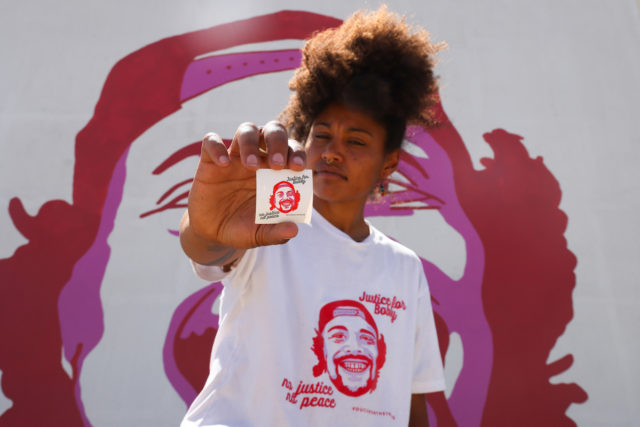
Rae Duckworth holds a “Justice for Bobby” sticker on July 2, 2022, near murals in Salt Lake City remembering the victims of police shootings. Her cousin, Bobby Duckworth, was killed during a mental health call in 2019. (Laura Bargfeld/News21)

(Editor’s note: Reporter Laura Bargfeld contributed to this article, which is part of “In Pursuit,” an investigation into police reform and accountability in America, produced by the Carnegie-Knight News21 program. For more stories, visit inpursuit.news21.com.)

By Chin Tung Tan | News21

SALT LAKE CITY — Rae Duckworth rummaged through her fanny pack and produced a sticker showing a portrait of a man painted with bright pink and red ink.

The man smiles brightly, eyes crinkling. On the bottom of the sticker, it says “No justice. No peace” and “#DUCKWORTHSTRONG.”

Utah residents may recognize the man as one of the many faces painted on the murals in downtown Salt Lake City to memorialize victims of police brutality.

His name is Bobby Duckworth. Rae Duckworth, Bobby’s cousin and leader of Black Lives Matter Utah, passes these stickers out to everyone she meets, hoping one day she will see her cousin’s face everywhere.

Police officer Garrett Safley shot and killed Bobby Duckworth in the rural town of Wellington, southeast of Salt Lake City, in September 2019. Bobby’s fiancée told local reporters that the 26-year-old was having a mental health crisis at the time.

After a round of investigations, prosecutors determined that Safley’s action was lawful.

“I truly believe Bobby needed a hug and not bullets,” Rae Duckworth said, holding back tears. “The whole system failed him. He didn’t have any support.”

She joins protesters every other Thursday at Washington Square Park, outside Salt Lake City’s mayor’s office, to protest the decision to pull out of meetings of the Community Activists Group. Duckworth also has spent hours at the Utah State Capitol to speak on various police reform bills, including those addressing mental health crisis response.

“Police reform is overdue,” she said. “I will always speak up for bills that support the community.”

In February, Duckworth spoke to the Utah Legislature to support a bill that would allocate funds for what’s known as co-response, which pairs social workers with police officers on mental health crisis calls. The model has grown in popularity across the country as police departments grapple with how to respond to a growing number of calls involving people in mental health crises.

A 2020 analysis by the Center for American Progress that looked at 911 calls from eight cities found that between 21 to 38 percent involved homelessness, behavioral health crises, substance use, quality-of-life concerns and other community conflicts.

“Police are the de facto mental health providers in our community because we have historically underinvested in mental health,” said Zack Stoycoff, the executive director of Healthy Minds Policy Initiative, an Oklahoma nonprofit developing statewide data-informed policies on mental illness and substance abuse. “(But) police know they don’t have the training to handle mental health conditions.”

The public knows that, too, and now it’s demanding change in both the criminal justice and mental health systems. Fifty-eight percent of the 1,352 respondents to a 2020 survey created by Data for Progress said they support the creation of a nonpolice first-responder agency to handle issues that don’t require police presence.

Every state, county and city across the country must figure out what works for them. Most strategies focus on such trends as shifting funds away from police and toward social services, creating diversion programs to triage low-level 911 calls and training officers on how to better respond.

There’s no simple set of solutions to this nationwide problem. Experts, advocates and the public say the answer must rely on a combination of efforts: reduce or eliminate law enforcement’s role in behavioral health crisis response, train and equip law enforcement officers when they do need to respond, and improve treatment for psychiatric care.

But these approaches take time and money, political and community support and collaboration between agencies.

Amy Watson, a nationally recognized expert on mental health crisis response, has spent two decades examining police encounters with people with mental illnesses.

“There’s been various efforts at police reform that have really sort of chipped away at edges but not necessarily made significant, lasting change,” said Watson, a social work professor at the University of Wisconsin-Milwaukee. “To make that bigger change, we need to be at a point where we look at those other systems that we want to play a bigger role so that we can shift some things away from police and really redesign the law enforcement role.”

Defining the problem
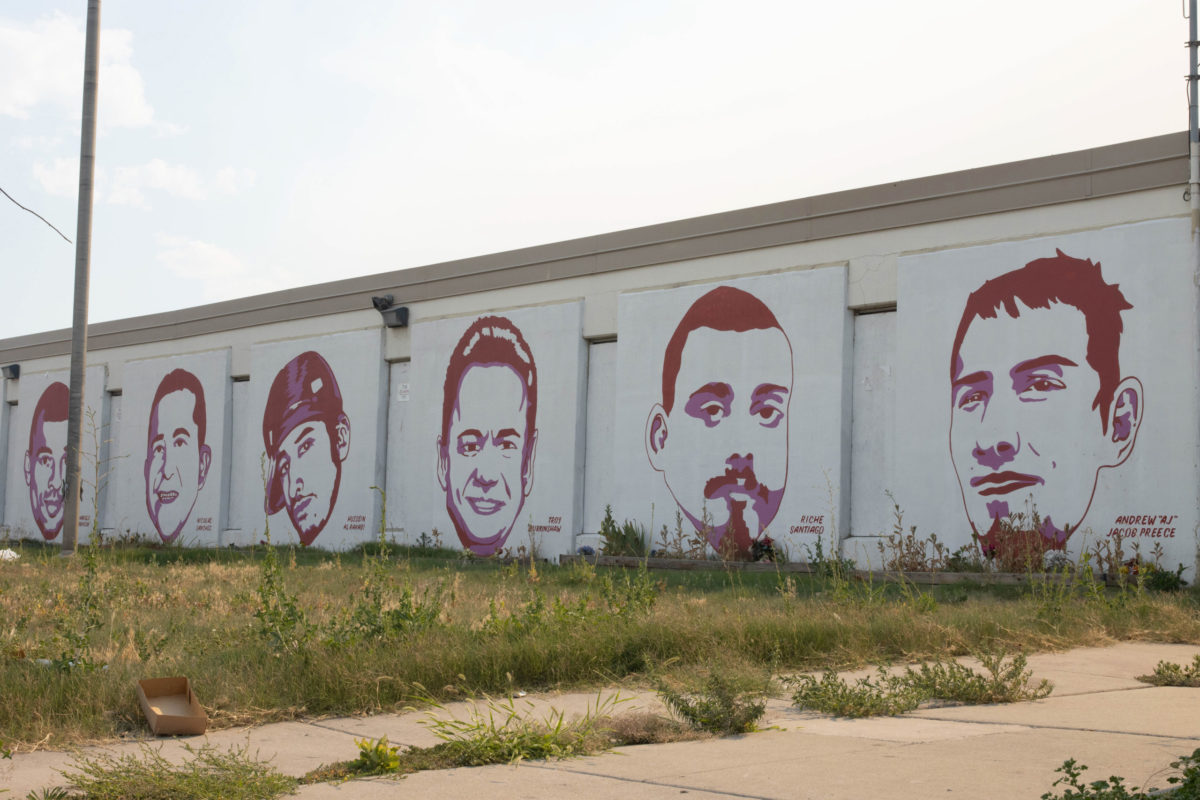
A mural in Salt Lake City, Utah, depicts people who have died at the hands of police. (Donovan England/News21)

When he became a law enforcement officer, 33 years ago, Capt. Kevin Ickleberry of the Bartlesville Police Department in Oklahoma did not imagine he would answer mental health calls every day.

“If you’re not involved with somebody that has mental health crises, you don’t really understand either how well the system works or how poor it works,” he said.

Bartlesville police recently launched a pilot program to pair officers with social workers.

“The last thing we want to do is handcuff somebody and stick them in the back of a police car or behind the cage,” Ickleberry said. “​​We want everybody to be safe. We want everybody to have a better life, and part of that is trying to get them the best services we can.”

But the mere presence of police cars and uniformed officers can exacerbate feelings of distress in those experiencing a mental health crisis. Watson said police presence further stigmatizes mental health and defines these situations as dangerous and criminal.

“If someone feels really triggered, their behavior may be such that the officer thinks it’s resistant, and it sort of builds to a really awful situation for people,” Watson said. “Instead of having someone who’s there to help me, there’s basically somebody (there) to protect others from me and potentially arrest me.”

A 2018 U.S. Department of Justice survey of nearly 770 training academies across the country found that new recruits receive an average of 14 hours of mental health response training, compared with 68 hours of firearm training.

With little understanding of mental health crisis response, police officers can react with force. As of Sept. 10, according to the Washington Post’s database of fatal shootings by police, 1,640 of the 7,729 people killed by the police since 2015 were experiencing a behavioral health crisis.

Sara Foreman, a certified peer recovery support specialist (PRSS) who works for a mental health center in Pryor, Oklahoma, said these kinds of incidents are shown on the news all the time.

“Instead of de-escalating the situation, [some officers] either get scared or overwhelmed,” Foreman said. “They pull their gun out and shoot.”

Diverting mental health calls
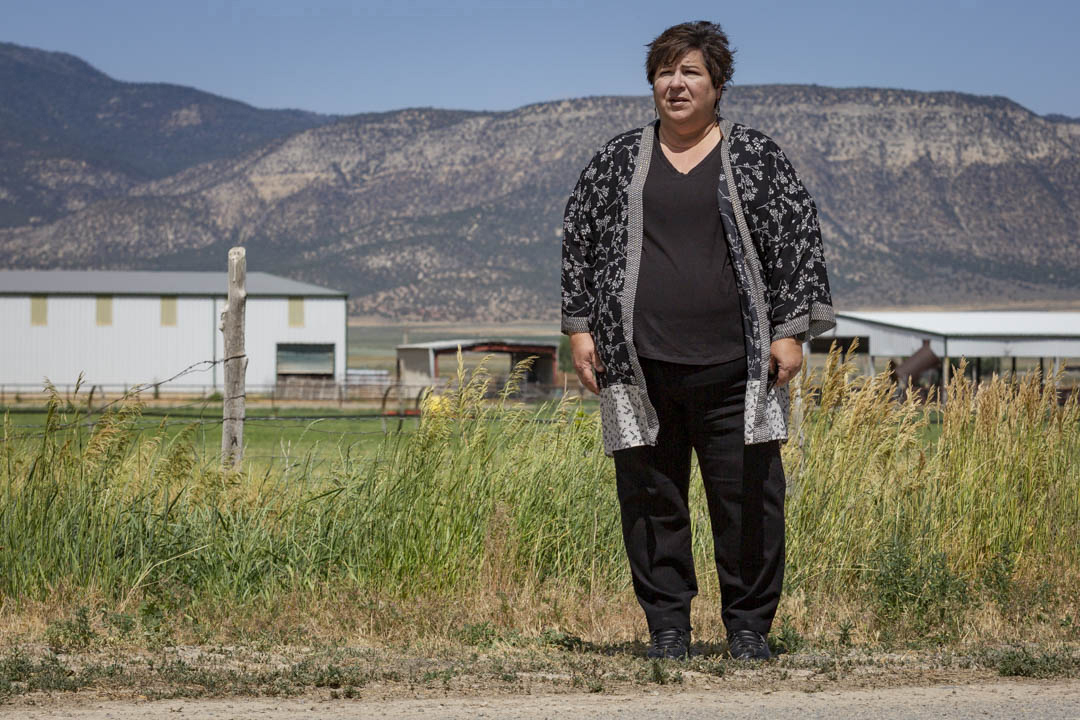
Anna LaDamus, the director of crisis services at the Central Utah Counseling Center in Ephraim, says mobile crisis team services are more cost effective than most emergency room visits. (Taylor Bayly/News21)

The murder of George Floyd by a Minneapolis police officer in May 2020 enraged millions and amplified Black Lives Matters protests around the world. “Defund the police” became the rallying cry for efforts to reallocate funds from law enforcement agencies to public health organizations and other social services.

Although few police departments have fully “defunded,” the movement to intercept behavioral crisis calls before they reach police has grown, specifically with crisis lines and mobile teams.

With crisis lines, trained call takers provide emotional support for people in crisis as an alternative to calling the police. Ideally, those answering the calls can make referrals, dispatch mobile crisis teams and follow up with callers.

One of the most notable crisis lines is the 10-digit National Suicide Prevention Lifeline, which was recently replaced by the three-digit 988 Suicide and Crisis Lifeline.

“By calling 988, you really bypass, in most situations, the need for police to even come out, which is good,” Stoycoff said.

Since it launched July 16, this 24-hour hotline has faced concerns about underfunding and understaffing because it’s managed by more than 180 call centers nationwide, according The New York Times. Some advocates and researchers warned the public against calling the number because of its ties with the police and the possibility of being involuntarily hospitalized.

The origin of the 988 Suicide & Crisis Lifeline can be traced to Utah state Sen. Daniel Thatcher, who worked to implement the idea in his state. Eventually, more than 20 community hotlines were consolidated into a statewide system.

In fiscal year 2021, Utah’s crisis line received 92,532 calls, according to the Huntsman Mental Health Institute. Eighty-six percent of the crisis calls were resolved over the phone, and a mobile crisis outreach team was dispatched for 8 percent. Law enforcement had to intervene 2 percent of the time.

Thatcher predicted use of the national crisis line will spike — and he worries it could be overwhelmed.

“The entire system, I think, is going to work really well,” he said. “The only worry that I have is what happens if there are not enough people to answer the phones? That’s what’s keeping me up at night, because you only get one chance to make a first impression.”

As the crisis lines continue to grow, so might the use of mobile crisis teams.

Licensed therapists or clinicians, certified peer recovery support specialists or case managers typically make up the 24/7 response teams, which attempt to provide immediate crisis stabilization services and connect people to long-term mental health resources.

“It is absolutely the best practice that mobile crisis responders respond instead of police in most situations, except where scene safety is needed,” Stoycoff said. “We have to figure out when it’s appropriate to have a police presence. And how do you do that? You do that through relationships and trust and collaboration and shared understanding of the roles of each of these people.”

Mobile crisis teams are not necessarily a new idea. The White Bird Clinic in Eugene, Oregon, has operated a program called Crisis Assistance Helping Out on the Streets (CAHOOTS) for 33 years. It has been widely used as a model throughout the U.S.

A recent Stanford University study indicated mobile crisis teams have the potential to reduce police involvement and save money. In Denver, the Support Team Assisted Response effort helped law enforcement agencies avoid almost 1,380 “criminal offenses” within six months of the pilot program’s operation. That came with significant savings, as the study said it could have cost four times as much if police had responded.

“It’s really appealing because it just makes so much more sense to get the right people there and to have a response that’s not frightening for people,” Watson said.

Some states have expanded the use of mobile crisis teams.

The Utah Legislature passed a bill to fund more crisis receiving centers and mobile crisis team expansion in rural areas. Utah ranks last in the nation for adult mental health care access because of provider shortages, and Utah’s rural communities face significant challenges, according to Mental Health America’s 2021 report.

In Ephraim, a town of about 5,700 people in central Utah, the Central Utah Counseling Center provides mental health services to six rural counties that cover 17,000 square miles.

A year since its inception, the mobile crisis outreach team has responded to 584 calls, many of which involved individuals with suicidal ideation or the intention to harm themselves.

“It’s well worth the money spent,” said Anna LaDamus, the center’s director of crisis services. “It’s well worth the time invested. It’s worth all of the growing pains.”

Allan Taylor runs the four-person police force in Salina, about 34 miles south of Ephraim. Before the crisis teams became an option in central Utah, he and his officers relied on their own de-escalation skills.

“It’s really important for our team to not escalate things,” he said. “I don’t care if it takes all night to negotiate with somebody or talk with somebody. I’d rather do that than the other alternatives.”

But now, his officers can call for help from mental health professionals.

Providing tools and resources
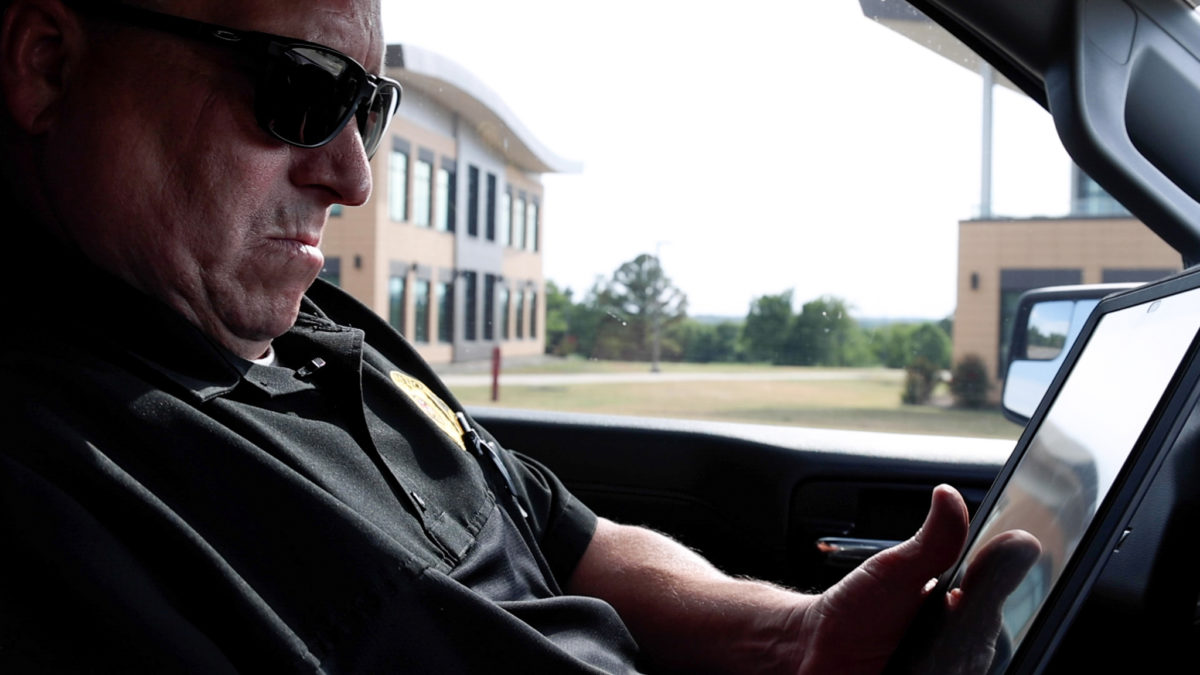
Osage Nation police Officer Rocky Davis looks at an iPad he received from GRAND Mental Health outside department headquarters in Pawhuska, Oklahoma, on July 12, 2022. “I think we must do better in helping people that have mental health issues,” Davis says. (Laura Bargfeld/News21)

Experts agree that police shouldn’t respond to most behavioral health calls. But when they do, they should have the training and tools to deal with the situation. Police departments across the country have spent millions of dollars and uncounted hours training officers in crisis intervention.

One of the most popular models is the crisis intervention team, or CIT. The National Alliance on Mental Illness said there are more than 2,700 CIT programs in the U.S.

Ron Bruno, executive director for CIT International, said the model isn’t just about training. It involves bringing together behavioral health services, law enforcement agencies, advocates, people with lived experiences and other resources to develop a plan that works.

That plan should include developing a crisis response system that is the most compassionate, most effective and least intrusive to the lives of people with mental health disorders, Bruno said.

This summer, the Arizona health care system Mercy Care brought together several law enforcement agencies for a CIT training event in Tempe. They spent 40 hours in the span of five days learning about de-escalation tactics and practicing them. They heard from people with lived experiences, and the training included sessions titled “family perspective,” “veteran perspective” and “hallucinations and hearing voices.”

Although many departments have signed on to CIT programs, Bruno said, only a small number are certified. CIT International in 2021 established a certification process to ensure departments are following best practices. As of September, only 15 programs were certified.

Bruno said many law enforcement agencies have misused CIT programs.

“There were so many people that claimed that they were doing CIT,” he said, “but then we’d get these calls from the community saying, ‘See, it doesn’t work. Our CIT officers just shot an unarmed person.’”

Bruno said most departments try to get all their officers CIT-trained when they should select a few vetted patrol officers.

“Not every officer has the skill set to handle everything perfectly, and we need to start realizing that,” Bruno said. “It has to be somebody that has the desire to work with this special population.”

Ickleberry, the police captain from Bartlesville, Oklahoma, was involved with CIT 20 years ago as a crisis negotiator. He said he learned the importance of using the right tone when speaking to a person in crisis.

“A lot of times when law enforcement shows up, it’s the uniform that’s the threat, so we need to figure out a way to take that threat away,” he said. “The biggest way to do that is being able to talk to people.”

Other training may involve cultural competency.

Melissa Pitts Johnson, a health care professional in Pryor, Oklahoma, said that’s an important element in crisis response.  As a citizen of the Cherokee Nation, she said certain cultural traditions and practices may get misconstrued as symptoms of a mental health disorder.

“Sometimes that means we ask for help and education from the people that we’re serving because there’s no better expert in that,” she said.

In addition to training, some communities have found tools that have helped improve communication between law enforcement and health care professionals.

In northeast Oklahoma, that came in the form of iPads.

“Our iPad program is a level of care that literally puts treatment on demand in your hand,” said Johnson, the regional clinical director for GRAND Mental Health. “It has the ability to receive outpatient care from your team regardless of your location and to be able to get crisis support and 24/7 care literally at the touch of a button.”

GRAND Mental Health, which serves 12 counties and has headquarters in Claremore, has distributed more than 10,200 iPads in about six years at a total cost of about $4.8 million. They have distributed about 8,500 of them to clients and nearly 1,700 to first responders and hospital personnel.

The state reimburses the company for all crisis services — including the iPads — provided to Medicaid beneficiaries.

Nicholas Allgood, chief clinical officer of crisis services, said the iPads are especially effective in rural areas because they can provide immediate service.

“You’re not traveling anywhere,” Allgood said. “You’re not using gas. You’re not dependent on the client’s income. Your no-show rates go down for your sessions because they’re right there.”

Ickleberry said all Bartlesville patrol officers have iPads, and they have been a great tool. The department usually handles three to four calls a day with the help of the iPad, he said.

Officers can connect people with mental health help with the click of a button. And most of the time, it does not require the officer to transport somebody to a hospital and spend long hours waiting as they receive treatment.

Reducing the role of law enforcement
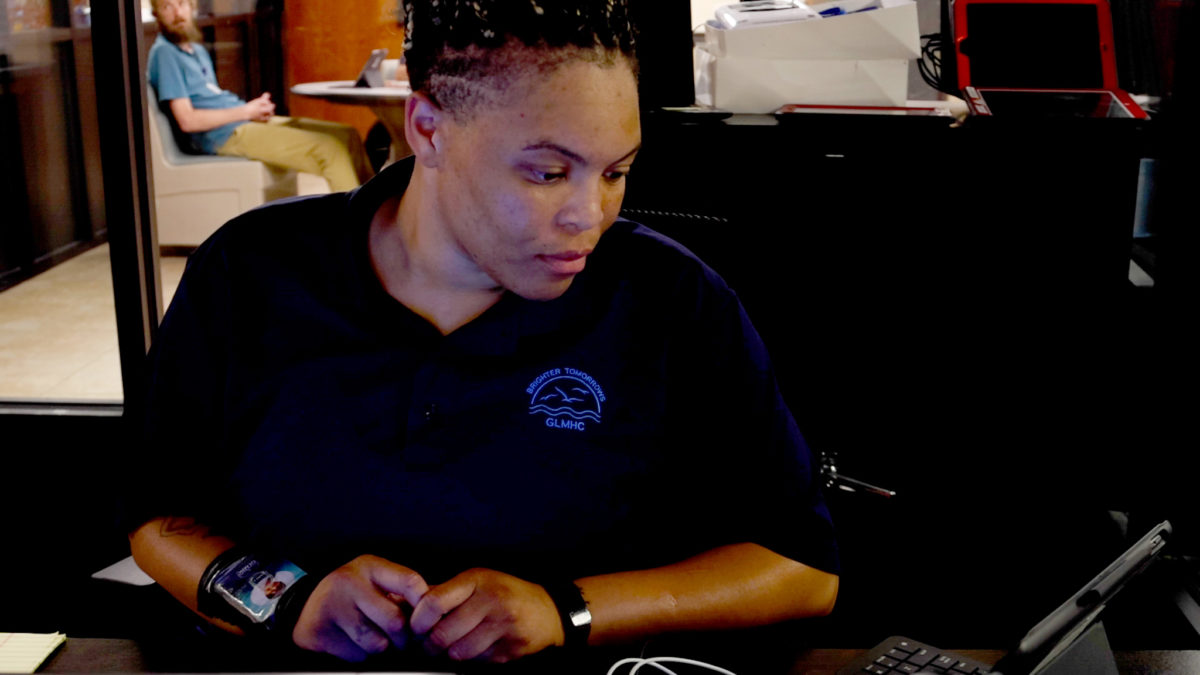
Sara Foreman, a certified peer recovery support specialist, speaks with a client through an iPad at GRAND Urgent Recovery Center in Pryor, Oklahoma, on July 15, 2022. (Laura Barfeld/News21)

Foreman, the PRSS, sits in GRAND Mental Health Crisis Center’s Pryor location with her laptop on a table and an iPad propped next to her.

The iPad rang, and Foreman’s face brightened when she saw the name on the screen. The caller was a regular who she dubbed one of her “special ones.” It did not matter why the person called. She would listen to every word they had to say. As a peer recovery support specialist, her job is to relate to clients and restore hope in them.

“I see miracles every day working at this job,” Foreman said.

GRAND Mental Health’s service area covers 10,000 square miles, so instead of having one central crisis center, it has 22 locations that serve as an alternative for emergency rooms and jails. 

Foreman said she has seen people end up behind bars because officers don’t know how to handle a mental health crisis.

“Just sending that person to prison is not going to help the situation,” she said. “They need to be stabilized and medicated.”

In 2016, 56 percent of the U.S. prison population indicated a recent or previous mental health disorder, according to the Prison Policy Initiative.

For a comprehensive system to work, it needs three parts: a crisis call center to help get the right help to people, a crisis mobile team to respond when necessary and crisis receiving and stabilization facilities, according to the Substance Abuse and Mental Health Services Administration’s best practice guide.

GRAND Mental Health serves as a crisis receiving and stabilization facility. It has reduced inpatient psychiatric hospitalizations from 841 adult clients in 2015 to one in 2019 with the help of iPads and crisis receiving centers, according to a study by the National Association of State Mental Health Program Directors Research Institute.

The study also reports that the GRAND model has produced an estimated $62 million in cost savings by diverting clients from inpatient hospitalization. As for the law enforcement side, the model has saved these agencies a total of 13,831 hours, or more than 576 days, in time previously spent transporting people to a psychiatric hospital.

An Oklahoma law passed in 2021 requires third parties to transport a person in crisis to the nearest treatment facility if the distance is greater than 30 miles. Previously, that responsibility fell on the shoulders of law enforcement agencies.

“In the old days when we transported people, we were transporting two to three people per day to mental health facilities,” Ickleberry said. “Since the iPad came along and then since the law changed in Oklahoma, GRAND Mental Health is the one that now transports them to their facilities, so that’s taking the load off us.”

What’s next for mental health crisis response?
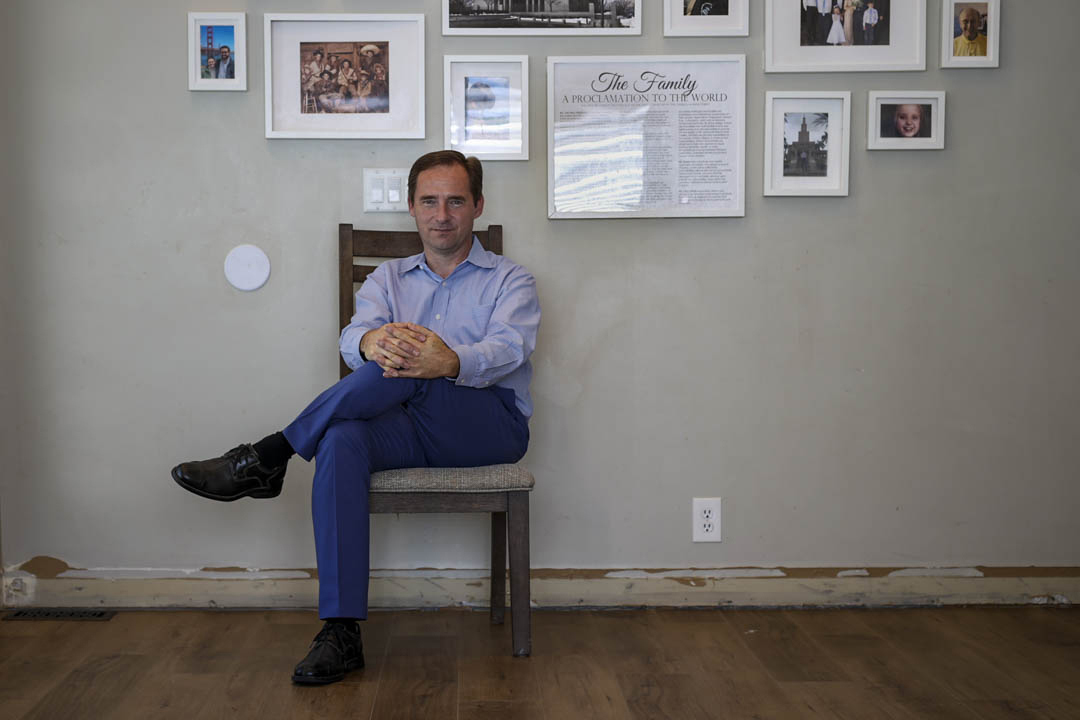
State Rep. Steve Eliason, photographed at his home in Sandy, Utah, has sponsored a number of bills promoting access to mental health services in the state, including suicide prevention and increasing mental health access for frontline workers and health care professionals. (Taylor Bayly/News21)

Making any crisis response reform work requires funding, support and collaboration from all the key players — policymakers, law enforcement agencies, health care leaders and the public.

Stoycoff said a successful response involves everyone.

“It’s not up to one sector,” he said. “It’s not up to the mental health treatment system alone. You need to have a community that is responsive and able to provide pathways to treatment where and when they’re needed because it allows that treatment to occur sooner before it escalates to a crisis.”

State lawmakers have taken the launch of 988 as an opportunity to introduce legislation to strengthen and expand care. For example, in 2021, Virginia created a Crisis Contact Centers Fund to develop a comprehensive crisis system involving contact centers, mobile crisis teams and crisis stabilization centers. Similarly, Washington state appropriated $23 million to fund the operations of crisis contact centers, whose staff has the ability to deploy mobile crisis teams. In September, Oklahoma dedicated $125 million in American Rescue Plan Act funding for the construction of two new psychiatric hospitals. Another pediatric behavioral health hospital operated by the University of Oklahoma is being expanded.

The same goes for Utah, where legislators supported funding to increase access to mental health crisis services in rural areas.

Utah state Rep. Steve Eliason has introduced more than 30 mental health-related bills since 2011.

The Republican legislator said his child was hospitalized a few years ago and needed to see a child psychiatrist. They eventually found one, but not before going through the emergency room. His experience showed him the need for improvement in the mental health system.

One of the bills he sponsored in 2021 involved requiring Utah police officers to go through mandatory training to learn how to better interact with people on the autism spectrum and other mental illnesses. The governor signed the bill into law later that session.

“Our support has been very strong, very broad, very bipartisan,” he said. “It’s an area of police reform that I think everybody can agree with.”

Even with legislative support and funding, building a new system takes time.

Rachel Lucynski, director of crisis services at the Huntsman Mental Health Institute, said the creation of an integrated crisis response system in Utah represented more than a decade of partnerships with elected officials, commission members and state departments.

But for some, the pace of change is too slow.

Rae Duckworth, the activist in Salt Lake City, said she hopes the day will come when police don’t need to respond to mental health calls at all.

The younger generation gives her hope.

“The kids are way smarter, and if we’re not listening to them, we’re in trouble,” she said. “I don’t want them marching for stuff we could literally figure out. We can figure this out. We just got to all sit down and talk about it.

“If we’re all participating, and we’re all realizing that the power is actually in our pockets, then we’re going to be unstoppable.”

Huntsman Mental Health Institute celebrates $7 million in public and private funds to expand mental health services for Utahns

Huntsman Mental Health Institute celebrates $7 million in public and private funds to expand mental health services for Utahns

Media Contacts

Sara Weber

Manager, Communications and General public Relations, Huntsman Psychological Wellbeing Institute
E mail: sara.weber@utah.edu

Nov 23, 2022 2:00 PM

HMHI will receive $7 million in non-public and public funds—$3.5 million from the Larry H. & Gail Miller Relatives Foundation and $3.5 million from Salt Lake County—to develop mental well being crisis services in Utah.

Huntsman Mental Well being Institute (HMHI) will obtain $7 million in public and non-public funds to expand mental well being products and services in Utah. Of these cash, $3.5 million is a generous donation from the Larry H. & Gail Miller Family Basis, and $3.5 million in funding is getting committed by Salt Lake County, a crucial companion with HMHI in growing psychological overall health disaster products and services. 

“HMHI is a leader in psychological wellness treatment and a pioneering power in growing the knowledge of complicated features of the mind,” suggests College of Utah President Taylor Randall. “This generous donation by the Larry H. & Gail Miller Spouse and children Foundation and funding from Salt Lake County will support HMHI prioritize psychological overall health treatment to generate much better results for everybody.” 

The Larry H. & Gail Miller Spouse and children Basis has fully commited $3.5 million to assemble what will be recognised as the Larry H. & Gail Miller Relatives Built-in Healing and Innovation Heart in just the Kem and Carolyn Gardner Psychological Overall health Crisis Care Middle. The Integrated Therapeutic and Innovation Center will deliver lawful assist services, scenario administration, clinical and dental assistance, and mental wellness counseling. 

“We are grateful to the Salt Lake County Council, Salt Lake County Mayor Jenny Wilson, and the Larry H. & Gail Miller Spouse and children Foundation for their continued help,” says Mark H. Rapaport, MD, CEO of HMHI. “This type of cross-sector collaboration is essential for increasing and bettering mental wellbeing treatment in our local community and beyond.” 

The Salt Lake County Council will co-sponsor $2.5 million in a person-time federal American Rescue Prepare Act pounds to fund a non permanent psychological wellness acquiring heart at the current Huntsman Psychological Health Institute. These funds will include the expense of retrofitting and expanding an current house at HMHI, as very well as 17 months of staffing.  

The council also permitted funding for an further $1 million from Mayor Jenny Wilson’s price range to go towards the making of the Kem and Carolyn Gardner Psychological Wellness Crisis Treatment Middle. 

“These cash ensure we continue to offer exceptional care for sufferers in disaster,” claims Michael L. Superior, MD, CEO of College of Utah Well being. “U of U Well being significantly appreciates the advocacy and leadership of the Salt Lake County Council, Mayor Wilson, and the Larry H. & Gail Miller Family Basis in encouraging to treatment for the mental wellness of our neighborhood.” 

### 

Huntsman Psychological Wellness Institute 

Huntsman Psychological Well being Institute (HMHI) was proven in 2021 following the Huntsman Foundation’s historic reward to the University of Utah of $150 million. HMHI is a college-extensive Institute with a reputation all through the Mountain West as a leader in innovative psychiatric procedure and treatment, serving a diverse inhabitants from youthful youngsters to geriatric patients. Researchers at HMHI create and use the most highly developed solutions in genetics, imaging, epidemiology, and huge knowledge analysis. HMHI is also the regional schooling center for psychiatry and other psychological health disciplines. HMHI’s key 170 bed total-company hospital is adjacent to the College of Utah campus, and HMHI’s 1,691 faculty, personnel, and learners provide clinical, investigate, and training packages in about 20 spots throughout Utah and Idaho.  

For extra details, visit HMHI.utah.edu and be part of the conversation on Fb, Instagram, Twitter, and LinkedIn. 

Kem and Carolyn Gardner Psychological Overall health Disaster Treatment Centre 

When the doors of the Kem and Carolyn Gardner Crisis Care Middle open up in 2024, it will be a welcoming put for all older people. The Center will help people de-escalate, stabilize, and connect to local community means catered to their particular person mental health demands. The Heart will aid persons dealing with a psychiatric crisis get on the route to mental wellness by unifying vital disaster expert services and a lot of group sources in one effortless-to-entry spot. The developing design and style and functions will make certain individuals and their households really feel welcome, highly regarded, and safe all over each phase of their care. 

Scientists will operate alongside clinicians, patients and their families to produce proof-dependent ideal procedures for remedy and care and build new techniques for helping men and women. It will also be a site for instruction potential generations of disaster treatment professionals which includes social employees, nurses, psychologists, psychiatrists, and quite a few more. 

Learn more or make a lifetime-transforming donation.

hmhi
mental well being services
crisis products and services

Duke Global Health Institute director talks current public health challenges, equitable solutions

Duke Global Health Institute director talks current public health challenges, equitable solutions

The Duke Workplace of Worldwide Affairs, Duke Worldwide Wellbeing Institute, and the University of Drugs hosted a conversation this week centered close to the international well being worries we currently deal with.

The event highlighted speakers A. Eugene Washington, chancellor for wellbeing affairs at Duke College and president and chief govt officer of the Duke University Wellness Technique, and Chris Beyrer, director of the Duke World Wellbeing Institute and professor of medicine. 

In the course of his job, Beyrer served as president of the International AIDS Culture, an advisor to the U.S. President’s Unexpected emergency Approach for AIDS Reduction and the HIV Vaccine Trials Network, between other corporations. 

When the COVID-19 pandemic happened, Beyrer pivoted to enable operate vaccine trials. He at the moment serves as a scientific liaison to the COVID-19 Vaccine Avoidance Community.

Modern day conflict and climate transform  

The globe inhabitants will achieve 8 billion individuals this 7 days, according to Beyrer. The populace growth signifies accomplishment in reducing infant mortality and raising lifetime expectancy, but overpopulation offers a new set of wellness-related issues, he said.

“Eight billion men and women simply cannot dwell on this planet in the way that we are at the moment exploiting its sources, we will exhaust Earth’s ability to maintain our societies. And which is a functionality both of the overconsumption that is going on, but also these incredible inequalities, which have been sharply rising,” Beyrer stated. 

Beyrer emphasised that more privileged people have a ethical obligation to mitigate the inequitable impact of overpopulation and overconsumption. 

“The weather disaster is also a justice disaster, a social justice crisis. And it is really a moral concern,” he mentioned. 

Beyrer also highlighted that devastating fashionable conflicts, in particular the war in Ukraine, present troubles for public wellbeing. 

“We have extra displaced men and women with what’s been occurring with Russia and Ukraine, and a range of other conflicts which now have above 100 million internally or externally displaced men and women,” Beyrer reported. 

In accordance to Beyrer, conflict-driven displacement and local weather-driven migration are incentivizing appropriate-wing, populist and anti-immigrant governments. Beyrer warned that the guidelines offered by these governments are not likely to provide extended-expression solutions to present day public health complications. 

In this landscape, a single of the largest difficulties of community wellness is staying apolitical and retaining scientific objectivity, Beyrer explained. Nevertheless, community overall health officers will have to advocate for difficulties of equity, which some construe as “choosing sides” and undermining scientific objectivity. 

Fairness in COVID-19 vaccine trials

Beyrer mentioned the great importance of the government’s investments in infrastructure and health care pros in direction of establishing the COVID-19 vaccine. 

In his get the job done in COVID-19 vaccine trials, Beyrer advocated for which include racially and ethnically assorted exam subjects that corresponded with the population. He also ensured that at the very least a quarter of people today in the trials ended up over the age of 65, “because that is who’s definitely obtaining unwell with COVID.” 

Beyrer argued that variety was a healthcare, not political, issue. 

“If we do not reach fairness, we’re likely to have a lot more challenges with hesitancy and distrust,” he reported. 

Monkeypox  

Pursuing the rollout of the monkeypox vaccine, fees of monkeypox are lowering. But the best fees of monkeypox are between Black and Latinx gay or bisexual gentlemen, and the most at-risk populations were vaccinated at lower premiums than their lower-possibility counterparts.

Beyrer argued that lessen vaccination fees among the at-possibility populations can be a failure of general public health messaging.

“Very often this is a failure of our community wellness technique, this kind of as it is to equitably distribute and get details out and attain communities that are reduced resourced and have lower access to health information and facts,” he explained.  

Duke’s role 

Among the the community overall health problems posed by weather transform, war, COVID-19 and monkeypox, Beyrer believes that Duke and other academic institutions can play a central part in addressing these challenges. 

In unique, Beyrer hopes that the College can work towards producing sustainable remedies that prioritize the requirements of certain populations. 

“The important concept for what we need to have to function on is the intersections between health and worldwide health and fitness work that we do and sustainability — sustainable livelihoods and sustainable societies,” he stated.   


Zoe Spicer
| Staff Reporter

Zoe Spicer is a Trinity sophomore and a employees reporter of The Chronicle’s 118th quantity.

PHI at APHA 2022 – Public Health Institute

PHI at APHA 2022 – Public Health Institute

2:30 – 4:00 pm EST: Advancing equity and addressing social determinants of health and fitness via community engagement (4209)

presentation icon2:30 – 2:45 pm EST Presentation – Strengthening community engagement procedures to address social determinants of health (922281)

Emilie McClintic, Exploration Affiliate, MPH – Middle for Wellness and Diet

Jamie Frederick, MSW, MPH, Assistant Director of Analysis and Evaluation Amy DeLisio, MPH, RDN, Director

Community engagement endeavours are known to guide to sustainable and equitable programming, thus featuring a design of collaborative instruction and technological aid to businesses need to be replicated and scaled in the general public wellbeing community for larger effect.

Cover report: We’re All in This Together: Strengthening Community Engagement Strategies Through a Collaborative Technical Assistance ModelA lot more from the Centre for Wellness and Diet: Uncover techniques to fortify your group engagement efforts, in this report and toolkit from PHI’s Middle for Wellness and Nutrition. The means consist of insights, resources, advice, nearby examples and more—helping to build believe in and sustainable adjust, and top to better influence and progression of equity ambitions.


2:30 – 4:00 pm EST: Organizational initiatives to progress wellbeing fairness (4211)

presentation icon3:00 – 3:15 pm EST Presentation – Advancing fairness in communities by way of multi-sector collaboratives: The purpose of area context and energy dynamics (926636)

Peter Forberg, Investigate Affiliate, MA – Population Wellness Innovation Lab,

Stephanie Bultema, MAAL, PhD Prospect, Director of Exploration and Community Science Emily Christopher, MPH, (Former) Investigation Scientist Christina Olson, MPH, Method Manager Sue Grinnell, MPH, Director Esmeralda Salas, BS, Exploration Affiliate

This presentation focuses on how multi-sector health collaboratives are shaped by area contexts and electrical power dynamics, understanding how these two forces shape their mission towards improving upon health fairness.

People standing in front of a glass wall with sticky notesAdditional from Population Wellbeing Innovation Lab: In this report, PHI’s Inhabitants Health and fitness Innovation Lab (PHIL) explores how six Accountable Communities for  Overall health (ACHs) throughout California and Washington are levelling dissimilarities in energy dynamics and improving fairness, with means for how communities can deal with challenges head-on to collectively establish wellness, fairness and neighborhood electrical power.


2:30 – 4:00 pm EST: Insights on availability: Quantitative and qualitative polices restricting ingesting destinations and factors for implementation (4195)

presentation icon3:30 – 3:45 pm Presentation: Determining plan levers with possible to lower alcoholic beverages-related penalties intently adhering to bouts of significant episodic drinking (HED) and substantial intensity consuming (HID) (923305)

Tom K. Greenfield, PhD, Scientific Director  – Alcoholic beverages Exploration Team

Camillia Lui, PhD, Scientist, HID Challenge Co-Director Edwina Williams, MPH, Senior Analysis Assistant Libo Li, PhD, Senior Biostatistician William C. Kerr, PhD, Heart Director & Senior Scientist Yachen Zhu, PhD, Biostatistician

Working with a net study of Significant and Higher Intensity Drinkers we discovered that, altering for several covariates, price of acquiring to-go drinks was strongly affiliated with signify amount of problems (e.g., hangovers, fights, work absenteeism) adhering to all extreme ingesting degrees.


Health Fairness and HIV Poster Session (4273)

poster icon 3:00 – 4:00 pm EST Poster – “Working Boys” – Electronic Storytelling Intervention for Transmen in San Francisco and Alameda Counties, CA

Mariko Iwamoto, MA, Sabrina Suico

To increase local community consciousness of compound use, HIV/STIs, and psychological health challenges among trans youth, HIPUP carried out the electronic storytelling intervention. Contributors produced electronic storytelling video clips, sharing their individual tales of becoming a transman of color engaging in intercourse work.

Neighborhood Wellbeing Arranging and Coverage Improvement Poster Session (4268)

poster icon 3:00 – 4:00 pm EST Poster – Analysis of a county-built-in get hold of tracing support venture in California

Esmeralda Salas, Investigation Associate, BS – Populace Health and fitness Innovation Lab (PHIL)

Stephanie Bultema, MAAL, PhD Candidate, Director of Investigation and Community Science Peter Forberg, MA, Investigate Affiliate Sue Grinnell, MPH, Director Max Chavez, BA, Study Assistant Beverly Bruno, BS, Exploration Assistant Emily Christopher, MPH Danielle Theberge Nicole Lordi Becky Garrow, MPH, Garrow Consulting

This analysis presents worthwhile learnings to ongoing and future cross-sector collaborative initiatives to support pandemic response and offers direction on challenge implementation.


Wednesday, November 9th, 2022

8:30 – 10:00 am EST: Partnerships for Improving Health care Services‚ Delivery‚ and Results (5026)

presentation icon

8:45 – 9 am EST Presentation: Drivers of units improve as a result of partnerships (926326)

Stephanie Bultema Director of Research & Network Science, MAAL, PhD(c)) – Inhabitants Wellness Innovation Lab (PHIL)

Sue Grinnell, MPH – PHIL Director 

The presentation explores how cross-boundary partnerships can create methods improve.


8:30 – 10:00 am EST: Improving upon alcoholic beverages-related outcomes by focusing on precedence and usually disregarded populations: What do the details say? (5002)

presentation icon

9:30 – 9:45 am EST Presentation: Intersectional disparities in alcoholic beverages procedure completion: Results from US Countrywide Administrative Information

Joanne Delk, MS – Alcoholic beverages Investigation Team

Meenakshi S. Subbaraman, PhD, Biostatistician Yu Ye, Biostatistician MS Kara Bensley, PhD, Associate Scientist Nina Mulia, DrPH, Senior Scientist and Middle Associate Director Aryn Z. Phillips PhD, Northwestern College Feinberg Faculty of Medication, Katherine J. Karriker-Jaffe, PhD, RTI Intercontinental

We will present race-by-gender disparities in finishing specialty liquor remedy and talk about acquiring showing the disparities are greatest for minoritized women when in comparison to White adult males.


12:30 – 2:00 pm EST: Examining Info Desires to Progress Wellbeing Fairness (5126)

presentation icon

12:30 – 12:45 pm EST Presentation: Harnessing the electrical power of area community well being to advance equity (917815)

Ana I. Bonilla, MPH, MURP – Community Overall health Alliance of Southern California 

Alyssa Kennett, MPH, MIA, San Joaquin Valley Community Wellness Consortium Melissa Jones, MPA, Bay Spot Regional Well being Inequities Initiative Richard Vezina, MPH, Blue Protect of California Basis

In this session, attendees will master about products that display how nearby well being jurisdictions (LHJs) can perform collectively to share information and facts, lengthen their methods, impact insurance policies that assist improved health throughout their jurisdictions, and lift up the communities they provide.

Cover page: Supporting Communities and Local Public Health Departments During COVID-19 and Beyond: A Roadmap for Equitable and Transformative ChangeMore from Public Overall health Alliance of Southern California: In this report, Public Health Alliance of Southern California and the California Department of Community Health’s Office of Health and fitness Equity share plan, system, and resource tips to aid ensure that neighborhood public well being departments are sufficiently well prepared to secure communities most vulnerable to COVID-19, as very well as upcoming public overall health emergencies.


PHI Presenters

What To Know: New Laws on Education, Public Safety and Water Security Go Into Effect Today

What To Know: New Laws on Education, Public Safety and Water Security Go Into Effect Today

“This year’s legislative session is positive to be one particular to remember  — and not only because of the historic bipartisan price range agreement. We took file revenues and despatched a crystal clear message about our state’s foreseeable future: we’re ready, and we’re unstoppable.” – Governor Doug Ducey

Governor Doug Ducey signed 387 bills all through the next session of Arizona’s 55th Legislature, capping 8 successful years of collaboration with lawmakers to situation our quickly-rising point out as a land of option.

The expenditures – which prioritized K-12 training, public security, water stability, infrastructure, veterans, wellness care and far more –  go into result today, September 24.

The Arizona Republic, Arizona’s Family and KOLD 13 included some of the legislation that influence the each day lives of Arizonans. 

Beneath are some highlights of the laws heading into result currently:

Securing Arizona’s H2o Potential

Arizona’s daring prepare to secure its h2o long term goes into effect nowadays. S.B. 1740 was a bipartisan exertion across the Home and Senate, legislative leaders and Governor Ducey. The $1 billion expense will fund projects to bring additional h2o to the condition and assist make sure that Arizona households, businesses and agriculture continue to have satisfactory very long-expression water provides.

The governor forged the plan in partnership with Arizona Senate President Karen Fann and House Speaker Rusty Bowers, and Leaders Rebecca Rios and Reginald Bolding, taking an “all of the above” strategy to deal with drinking water supply for the up coming 100 yrs.

The financial investment expands the H2o Infrastructure Finance Authority with a new board and with responsibilities to offer financial loans and grants to drinking water vendors and entities for the reasons of importing drinking water into Arizona, conservation, efficiency and reuses, and new systems.

Cracking Down on Criminal offense at the Border

H.B. 2696, sponsored by Rep. Leo Biasiucci, cracks down on human smuggling throughout the border by generating obvious that an individual who aids unlawful human smuggling organizations or operations will be held accountable for their crime. The law goes a move further to make sure people who prey on the most susceptible, including minors, are held accountable by the criminal justice technique.

The regulation builds on Arizona’s monumental border security investments in this year’s finances, which allocated a lot more than $560 million for the Border Security Fund. The investments have presently been set to use, filling border wall gaps around Yuma.

Solidifying Arizona’s Position as a Nationwide Chief in Civics Education and learning

H.B. 2632, sponsored by Rep. Quang Nguyen, strengthens Arizona students’ competency in civics just before graduating superior university. The bill pushes the Arizona Civics Take a look at passing score up from 60 to 70 percent, will allow pupils to choose the examination as early as center faculty and necessitates test score data to be created publicly available online. 

In addition, the governor signed S.B. 1497, sponsored by Sen. Vince Leach, creating the Arizona America250 Fee. The commission which will strategy a celebration for the United States’ 250th anniversary and fortify teachings of our nation’s founding in schools.

Civics instruction has been a legislative priority for Governor Ducey given that he took office. The to start with bill he signed into law made the Arizona Civics Exam. 

Enhanced Accessibility to Precision Drugs

H.B. 2144, sponsored by Rep. Regina Cobb, improves obtain for clients and their medical doctors to progressive testing that can assistance determine the most successful healthcare treatment for most cancers and other health conditions.

Governor Ducey celebrated the monthly bill signing in Could at the Dignity Wellness Cancer Institute at St. Joseph’s Medical center and Professional medical Centre in Phoenix. Arizona now joins only a handful of other states in necessitating overall health insurance coverage options to address biomarker tests when there’s a medical will need.

Supporting our Veterans

H.B. 2741, sponsored by Rep. Joanne Osborne, waives condition organization licensing costs for navy spouses and honorably discharged veterans, aiding individuals who have served their place begin their individual enterprise.

The go provides to the latest rule that organizations will have to waive any preliminary organization licensing rate for an applicant whose cash flow does not exceed 200 per cent of the federal poverty rules.

Safeguarding Parental Rights

H.B. 2025, sponsored by Rep. Michelle Udall, strengthens mom and dad rights by necessitating university governing boards to undertake policies for visits, tours and observations of all lecture rooms by mom and dad of enrolled pupils and parents who would like to enroll their small children in the constitution university or faculty district.

H.B. 2161, sponsored by Rep. Steve Kaiser, elevated obtain for dad and mom to their children’s instructional information. It also states that dad and mom need to be presented any study language their child may choose. 

### 

N.J. to launch its first public health institute

N.J. to launch its first public health institute

Prolonged-standing well being disparities have been exposed and exacerbated thanks to the COVID pandemic, which include in New Jersey where advocates claimed the community health and fitness process in the condition has been strained for a long time.

“Our community well being systems in New Jersey are chronically underfunded, leaving state and neighborhood health departments with as well few means to control schedule matters, allow alone enormous emergencies like the COVID-19 pandemic,” said Maisha Simmons, director of New Jersey grantmaking with the Robert Wooden Johnson Foundation.

Simmons claimed a 10-month scheduling section has finished, and a new chapter begins as the basis declared it is awarding a two-calendar year, $1 million grant to Glassboro-primarily based Acenda Built-in Health to serve as an incubator for the state’s very first community health and fitness institute. It is the culmination of a era-extensive exertion to set up one particular.

“For nearly 3 a long time, New Jersey wellbeing leaders explored the positive aspects of developing a public health and fitness institute to foster collaboration among sectors, advance racial equity, and tackle the social determinants of wellbeing,” Simmons included. “We’re amid the few states devoid of a public health and fitness institute that can be a clearinghouse for greatest methods, improvements, investigate, and progression of general public overall health providers.”

Leaders at Tuesday’s virtual announcement boasted that this will be the initial general public health and fitness institute in the nation with wellbeing equity as a founding theory.

“We look ahead to thinking of how a community wellness institute can support advance wellness equity and innovations, could aid to lower New Jersey’s health disparities, and could tackle the social determinants of health and fitness,” said state Health Commissioner Judy Persichilli, who recalled lessons learned as her company resolved the pandemic by means of an equity lens.

“We will have to go on to deal with these and other issues in get to enable tackle these important community overall health gaps,” she additional.

There are 33 states together with Puerto Rico and Washington, D.C. that have community health and fitness establishments. The advice that the Back garden Condition create this kind of an entity came from a report introduced in March, that was authored by RWJF, Nicholson Basis, and the Nationwide Network of Community Wellbeing Institutes, in collaboration with the New Jersey Section of Wellbeing.

It concluded that a “new, impartial nonprofit” required to be established as the institute mainly because “no existing corporation in the condition is correctly positioned to fill this role.”

Simmons claimed other corporations weren’t dominated out due to disqualifiers, they noticed an opportunity to get enter from the group and other companions to imagine and develop “what could be new.”

“We opened up an chance for a competition to actually incubate and established the training course for a new sort of firm that will be built from scratch with most effective tactics from NNPHI and other businesses throughout the country,” she included.

Melissa Fox, Acenda’s chief running officer, mentioned the organization’s very long-standing commitment to general public health and lessening disparities, including they look ahead to performing with RWJF and NNPHI.

“Supporting the launch of the state’s initially general public health institute is not only a terrific honor but is also firmly aligned with our mission,” she reported.

Officers mentioned it will acquire two a long time for the institute to stand on its very own. Until eventually then, they will explore what the romance between the institute and the state health and fitness department will seem like.