
Recovery high schools build a culture of mental health to help kids thrive : Shots

Recovery high schools build a culture of mental health to help kids thrive : Shots

5280 High School in Denver is one of 43 secondary schools in the U.S. with a program designed for students recovering from substance use disorder and related mental health disorders.

Stephanie Daniel/KUNC


hide caption

toggle caption

Stephanie Daniel/KUNC
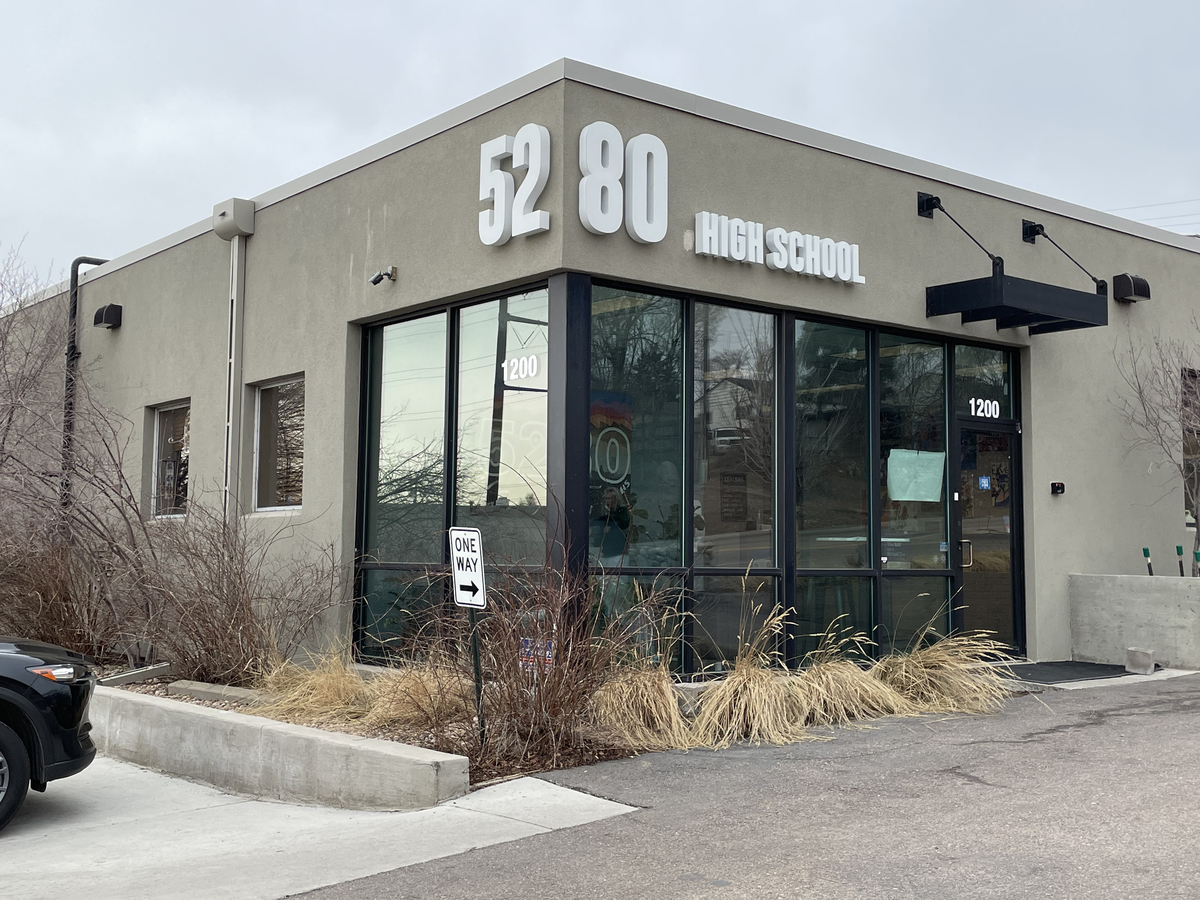

5280 High School in Denver is one of 43 secondary schools in the U.S. with a program designed for students recovering from substance use disorder and related mental health disorders.

Stephanie Daniel/KUNC

Every weekday at 5280 High School in Denver starts the same way.

Students in recovery from drug and alcohol addiction gather on the steps of the school’s indoor auditorium to discuss a topic chosen by staff members. One recent morning, they talked about mental health and sobriety. A teenage boy dressed in tan corduroys, a black hoodie, and sneakers went first.

“I didn’t want to have, like, any emotion,” he said. “So I thought, like, the best way to, like, put it down would be to do more and more and more drugs.”

A classmate said she started doing drugs for fun and then got hooked. Another student said his addiction negatively impacts his mental health. A third announced an upcoming milestone.

“In, like, two days, I’ll be six months sober,” she said, as her classmates cheered.

The students attend Colorado’s only recovery high school — one of 43 nationwide. These schools are designed for students who are recovering from substance use disorder and might also be dealing with related mental health disorders. The Denver school opened in 2018 as a public charter school that today enrolls more than 100 students.

KHN logo

One of those cheering classmates was sophomore Alexis Castillo, 16, who listened supportively during that recent morning meeting. She is in recovery for alcohol and fentanyl addictions. Several of her friends attended the school when she enrolled during her freshman year and initially loved it. But after a while some of Castillo’s friends left and she grew disillusioned. She stopped going to class and wasn’t motivated to work her recovery steps.

“They give you a lot of accountability,” she said. “That was not something I wanted.”

Castillo relapsed and school staffers helped her get into rehab. Three months later she was back at the school, in recovery and ready to do the work.

The school’s mission is to help kids learn to live a substance-free life while receiving an education. This includes attending recovery meetings and wellness activities, and taking traditional high school classes like English, math, and Spanish.

“They can go on to college or a career and really handle anything that life throws at them,” said 5280’s founder and executive director, Dr. Melissa Mouton.

In 2022, nearly a third of 12th graders and 1 in 5 10th graders reported using an illicit drug in the previous year, according to a national survey from the Monitoring the Future project conducted by the University of Michigan Survey Research Center. Those numbers have steadily decreased over the past 25 years. However, data from UCLA shows overdose deaths among teens doubled in the first year of the pandemic, mainly attributed to the increased prevalence of fentanyl-laced drugs.

The first recovery high school opened in Silver Spring, Md., in 1979 and similar programs now operate in 21 states. Compared with their peers at regular schools who have gone through treatment, recovery high school students have better attendance and are more likely to stay sober, and their graduation rate is at least 21{08cd930984ace14b54ef017cfb82c397b10f0f7d5e03e6413ad93bb8e636217f} higher, according to one study.

A mosaic in the computer lab at 5280 High School in Denver. Colorado’s only high school with a recovery program opened in 2018 as a public charter school and today enrolls more than 100 students.

Stephanie Daniel/KUNC


hide caption

toggle caption

Stephanie Daniel/KUNC
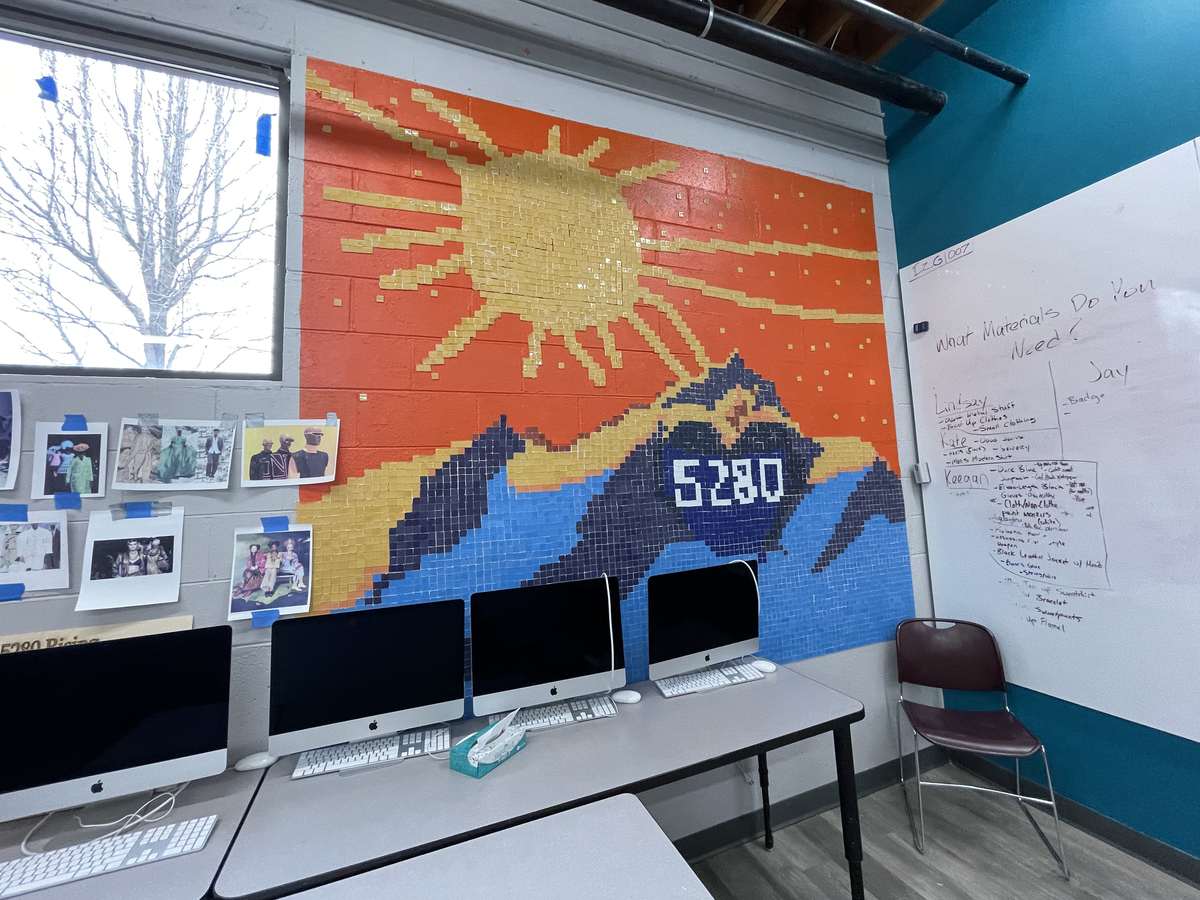

A mosaic in the computer lab at 5280 High School in Denver. Colorado’s only high school with a recovery program opened in 2018 as a public charter school and today enrolls more than 100 students.

Stephanie Daniel/KUNC

“For this particular group of young people who have these disorders, this can be a lifesaver,” said John Kelly, director of the Recovery Research Institute at Massachusetts General Hospital. “It can help them create a social norm of recovery.”

There are three components to effective drug and alcohol treatment, according to Dr. Sharon Levy, a pediatrician and addiction medicine specialist at Boston Children’s Hospital. The first part is medical, which includes seeing a doctor, drug testing, and using medications like buprenorphine to treat opioid addiction. The second is emotional support from counseling to address co-occurring mental health disorders. And there is a behavioral component that, for kids, can include receiving positive feedback from parents, peer support and recovery schools.

“Recovery schools offer an opportunity really for peer support and mutual aid in a kind of a supervised and structured way,” Levy said.

Recovery high schools often weave components of treatment into the school day — activities like 5280’s daily recovery program meeting. In the afternoon, the school offers wellness electives such as spiritual principles and journaling. The school also employs a director of recovery and recovery coach to work with and counsel the students individually.

Recovery schools do face challenges. Most are publicly funded charter or alternative schools that carry a higher cost of educating students than traditional schools do. This is due to a smaller enrollment, the need for mental health and recovery personnel, higher faculty-to-student ratios, and other factors.

The Denver school enrolls about 100 students annually, making it one of the biggest recovery high schools in the nation. This year, the per-pupil cost is about $25,000 per student but the school receives only about $15,000 from federal, state, and local funding, according to Mouton. The remaining money comes from donors.

Given the complex needs of the students, “recovery schools will always be small,” she said.

Pooling such students together may also raise a concern that students will trigger one another to use drugs and alcohol and relapse, but, Levy said, that’s a risk with any social interaction.

“So, if you’re in an environment where the recovery is kind of front and center and people are watching and monitoring and supervising,” she said, “I think that’s helpful for a lot of kids.”

The school in Denver purposely keeps enrollment under capacity so additional teens can enroll anytime during the school year. A student won’t get kicked out if they relapse, but there are two requirements: They must want to be sober and attend an outside recovery program.

“The No. 1 step is just letting them know out of the gate, no matter what’s going on, that we love them,” said Brittany Kitchens, the school’s recovery coach. “We are here for them.”

Kitchens teaches students how to navigate recovery and regulate their emotions. She likens herself to a hall monitor, constantly checking in with students and looking for changes in behavior.

“I tend to be the first kind of line that the kids will come to when they’re experiencing something that is just a little bit too big for them to process,” she said.

Some of these difficulties stem from traumas students have experienced, including sex and drug trafficking, and abandonment. Students also deal with traumas they have caused, Kitchens said, actions that landed them in jail or on probation.

Kitchens, who is in recovery herself, shares coping mechanisms with the students.

“A lot of times it just starts with, ‘Hey, take a breath, breathe in through the nose and out through the mouth,'” she said.

Alexis has been in recovery for nearly a year, she said. The morning meetings where she and her classmates talk about mental health, sobriety, and other topics are an opportunity to build a community of friends who support one another, something she said she didn’t have when she was using drugs.

“It’s really hard to get sober young,” she said.

This article is part of a partnership that includes KUNC, NPR, and KHN.

KHN (Kaiser Health News) is a national newsroom that produces in-depth journalism about health issues. Together with Policy Analysis and Polling, KHN is one of the three major operating programs at KFF (Kaiser Family Foundation). KFF is an endowed nonprofit organization providing information on health issues to the nation.

Jeremy Renner Shares Image Of Physical Therapy From Home Amid Recovery

Jeremy Renner Shares Image Of Physical Therapy From Home Amid Recovery

As his restoration carries on pursuing his traumatic snowcat accident, Jeremy Renner shares a new impression from house of his physical treatment development.


Jeremy Renner has taken to social media for a further update on his restoration, sharing a new graphic of his physical treatment system. Renner is most effective recognized to many audiences for his part as Hawkeye in the MCU, but the actor has starred in a host of well-liked Tv set shows and films, including The City, Mission: Difficult: Ghost Protocol, and The Mayor of Kingstown. In early January, the star was associated in a pretty severe incident involving a snowcat and has considering that been recovering from his a lot of accidents.

As his recovery carries on, Renner shared a new graphic on his Instagram tales (by using ComicBook) on Sunday of some of the gear he uses for bodily treatment.

Jeremy Renner's Instagram story of his physical therapy equipment.

Even though Renner himself is not highlighted in the picture, it does aspect an array of resistance bands, fat belts, a resistance ring, and what seems to be a blood tension observe. The actor also incorporates some textual content in the tale, indicating that he dedicates Sundays to actual physical remedy.

Related: What If Jeremy Renner Had Replaced Tom Cruise In Mission: Not possible?


Jeremy Renner’s Accident & Restoration Timeline Described

Jeremy Renner

On New Year’s Day, Renner was involved in an accident involving his snowcat around his dwelling in Reno, Nevada. The actor was run over by the snow removing car, which weighs upwards of 14,000lbs, crushing his chest and torso and breaking a lot more than 30 of his bones. It was later on exposed that the Mayor of Kingstown star was making an attempt to save his nephew from remaining strike by the sliding car or truck right before becoming pulled beneath it himself.

After paying numerous weeks in a regional healthcare facility and undergoing surgical procedures, Renner then returned property, maintaining his followers appraised of the go on social media. Given that relocating residence, the Hawkeye actor seems to be in fantastic spirits, encouraging viewers to look at out Key of Kingstown year 2 and featuring updates on his fact Television show, Rennervations. The actor even joked with fellow MCU star Chris Evans about the accident and the snowcat that severely wounded him.

As facts carry on to emerge about the accident and his recovery progress, comedian Jay Leno uncovered himself in some hot h2o previous 7 days for joking about Renner’s incident, with numerous Twitter users rapidly coming to the actor’s defense. It really is unclear just how lengthy Renner will take to completely get better from the incident, but certain reports have instructed that it could consider as prolonged as a 12 months or additional. Although Renner‘s accident was without doubt intense, the MCU star’s repeated peeks powering the curtain at his restoration would counsel that he’s holding his spirits high and continuing to get the job done difficult behind the scenes to get his strength back.

Extra: Mission: Difficult 7 Sets Up Jeremy Renner’s Perfect Return

Supply: Jeremy Renner (by using ComicBook)

UK physical therapist explores recovery challenges after ICU stay

UK physical therapist explores recovery challenges after ICU stay

LEXINGTON, Ky. (Jan. 20, 2023) — Kirby Mayer has identified considering that he was a teen that he preferred to be a bodily therapist. His grandmother had Alzheimer’s disorder and regularly been given bodily treatment at house in their rural Kentucky city.

“I noticed individuals a single-on-a person interactions, and the distinction they made,” he claimed. “Simple things like music and dancing would change her mood. Her medical professionals didn’t say substantially about those types of items, but the physical therapists did. They aided give her better good quality of daily life.”

Now a medical doctor of actual physical remedy, assistant professor in the College or university of Wellness Sciences, and clinician researcher in UK’s ICU Recovery Clinic, Mayer specializes in outcomes for individuals who have survived a significant disease and ICU continue to be. Whilst some patients steadily return to their pre-disease well being standing, quite a few have extended-time period or long-lasting impairments the underlying results in of these disparate results are improperly understood.

Mayer hopes to fill gaps in this understanding and, to do so, has just lately been awarded a K23 Mentored Job Advancement Award from the Countrywide Institute of Arthritis and Musculoskeletal and Pores and skin Disorders. The $753,000 grant supports a investigation examine on mobile and actual physical operate outcomes that lead to failed muscle mass regrowth in sufferers recovering from vital ailment. 

“This undertaking is all about knowing why certain patients do not recuperate immediately after a vital sickness and an ICU continue to be. We know some individuals get better, and get better rapidly, and they go again to function and driving — they get better. But a significant proportion of patients really do not. One and even five many years afterwards, they have deficits in muscle and actual physical perform. There is a considerable sum of incapacity after significant sickness,” he stated.

A person effect of a crucial health issues and ICU hospitalization is reduction of muscle toughness and velocity, in section thanks to extended periods of immobility. This muscle atrophy in turn makes recovery more difficult, on top of how a serious illness itself ravages the entire body.

“My K23 analysis is truly centered about muscle: from what’s transpiring on the cellular degree — is there mitochondrial problems, or changes in protein synthesis — all the way up to practical features, like ‘Are you going for walks, are you going, are you driving?’

“I believe a whole lot of the impairments and indications like fatigue are because of to the prolonged inflammatory point out that people encounter through and soon after a crucial disease. They get sick, the sickness leads to systemic swelling, and it doesn’t spare the muscular tissues. For some persons, the inflammation resolves and the muscle groups get well, but for other folks it does not,” Mayer claimed.

The exploration review will also look at surroundings variables of in which sufferers live, including if they have access to fitness centers, sidewalks or other spaces where by they can be bodily active. From a rural town in southern Kentucky and getting concluded his doctorate of actual physical therapy at UK’s Middle of Excellence in Rural Health in Hazard, Kentucky, Mayer understands that geography specifically impacts health and fitness.

By examining purposeful, cellular and environmental things, Mayer hopes to determine the demographic, social and clinical variables that forecast much better or even worse operate 12 months right after a patient’s hospitalization. He hypothesizes that aberrant cellular procedures, like mitochondrial impairments, underlie prolonged useful deficits soon after crucial ailment.  

He and his investigation workforce will enroll 200 individuals above the subsequent four a long time, concentrating on folks who’ve been in the ICU owing to sepsis or acute respiratory failure (ARF). It was a rotation in the ICU although completing his doctorate that spurred Mayer’s curiosity about what happens to this sort of individuals right after they’ve remaining the healthcare facility.

“Traditionally, individuals who endure these health problems (sepsis or ARF) really don’t have structured adhere to-up care, like another person who has a hip substitution or is a stroke survivor might have. They do not have that variety of pathway,” he explained. “But British isles is quite fortuitous to have the ICU Restoration Clinic — a genuinely exceptional workforce that you really don’t see at a ton of hospitals — which enables us to follow and treat these men and women.”

Most members in the study will do noninvasive screening at a few, six, and 12 months following hospital discharge to measure matters like muscle mass toughness, electric power, ambulation and cardiorespiratory function. A subset of 10{08cd930984ace14b54ef017cfb82c397b10f0f7d5e03e6413ad93bb8e636217f} to 20{08cd930984ace14b54ef017cfb82c397b10f0f7d5e03e6413ad93bb8e636217f} of these individuals will also have blood attracts and muscle biopsies. Grownups without the need of record of significant illness will be enrolled as a management team.

Because K grants aim on training, in this analyze Mayer is pioneering a novel solution to muscle biopsy analysis. Ahead of the course of action, individuals who have muscle biopsies will drink “heavy water” that has an added hydrogen molecule. This enables isotope labeling in the course of the biopsy investigation, which then allows Mayer to look at RNA and mitochondrial biogenesis in the muscle tissue.

“Understanding the cellular environment in the time period just after clinic launch, and how it impacts muscle mass protein turnover, will inform efforts for powerful therapies to accelerate muscle regrowth,” he said.

His K23 study builds on his former analysis, together with two reports supported by pilot funding from the Uk Centre for Scientific and Translational Science (CCTS). A single research, with collaborators Ashley Montgomery-Yates, M.D., director of the ICU Restoration Clinic, and Nathan Johnson, Ph.D., D.P.T., affiliate professor of physical remedy, utilised fMRI to glimpse at mind changes in ICU survivors. The 2nd research examined muscle mass loss in people who expert an acute kidney injury although in the ICU this project is a collaboration with College of New Mexico and College of Iowa and is funded by a pilot grant from the Consortium of Rural States (CORES), of which the United kingdom CCTS is a member, in just the Scientific and Translational Science Award community.

“The pilot grants, the providers of the CCTS outpatient investigation clinic, CCTS suggestions from my KL2 application, and the collaborative atmosphere at the CCTS are main good reasons my K23 grant was funded,” Mayer mentioned.

He is emphatic about the worth of crew science for analysis to increase very well-getting, and the effect of the mentorship he’s acquired. His principal mentor on the K23 award is Esther Dupont-Versteegden, Ph.D. the team also includes Benjamin Miller, Ph.D. Charlotte Peterson, Ph.D. Amy Pastva, Ph.D. Peter Morris, M.D.. Stacy Slone, M.S. and Ashley Montgomery-Yates, M.D.

“This perform is not the final result of just myself, but of innumerable people today — mentors, collaborators, my students, our clinic team and most importantly the patients. The science would be arduous devoid of a devoted, interprofessional workforce, and our operate would be meaningless devoid of engaged individuals that genuinely understand how investigate can improve drugs and support other people in the upcoming.”
 

Investigate noted in this publication was supported by the National Institute of Arthritis and Musculoskeletal and Skin Health conditions of the National Institutes of Wellness under Award Range K23AR079583. The Uk CCTS is supported by the National Center for Advancing Translational Sciences of the National Institutes of Health under Award Number UL1TR001998. The information in this article is only the accountability of the authors and does not automatically represent the formal views of the National Institutes of Health and fitness. 

Tibial Plateau Fracture Recovery: Physical Therapy Exercises

Tibial Plateau Fracture Recovery: Physical Therapy Exercises

A tibial plateau fracture is a fracture of the top of the tibia or shin bone. Tibia plateau fractures most commonly occur from motor vehicle accidents, falls, or high-impact sports collisions. For a tibial plateau fracture to heal properly, you will require physical therapy to rehabilitate you back to your prior level of function. 

This article will review physical therapy exercises for a tibial plateau fracture, a general recovery timeline, and tips for getting started with physical therapy.

ljubaphoto / Getty Images


Location and Pain Sensation of a Tibial Plateau Fracture 

A tibial plateau fracture will cause a deep ache and/or sharp pain within your knee joint and at the top of your shin bone where the fracture occurred. Pain may also radiate down your leg and into your foot, and a visible deformity of your knee and significant swelling will be present. In addition, bearing weight through your leg to stand up or walk will be incredibly difficult and painful, and you may need to go to the emergency room.

When to Begin Rehabilitation  

Rehabilitation for a tibial plateau fracture should start as soon as possible under your healthcare provider’s recommendations. However, if the break is severe enough, you may need to go to the operating room after injury to realign your bone and secure the broken pieces to heal. 

Physical Therapy Exercises for Tibial Plateau Fracture

Exercises for a tibial plateau fracture strengthen your glutes, quadriceps, and hamstrings that support and stabilize your knee and leg. You will start with non-weight-bearing exercises and gradually progress to weight-bearing exercises as you can tolerate putting more weight on your leg as it heals.

Heel Slides

Heel slides help bend your knee to restore the range of motion of your knee.

To perform this exercise:

  • Lay on your back and place a towel under the heel of your affected leg. 
  • While keeping your heel in contact with the surface you are lying on, pull the towel with both arms to slide your foot closer to your body as you bend your knee. 
  • Once you cannot bend your knee any further, hold this position for 5 seconds, then slowly straighten your leg. 
  • Repeat for 20 repetitions, holding the stretch for 5 seconds each time. 

Quadriceps Stretch

Stretching your quadriceps muscles helps maintain proper flexibility of your leg muscles and helps improve your ability to bend your knee. 

To perform this exercise:

  • Lay on your stomach and place a long towel around the foot of your affected leg. 
  • Grab both ends of the towel with one hand and pull your leg, so your foot moves closer to your buttocks. 
  • Hold this stretch for 30 seconds, then relax. 
  • Repeat for three sets of 30 seconds. 

Bridges

Bridges help improve the strength of your glutes, powerful muscles that help support and stabilize your legs with walking, stepping up when climbing stairs, and standing up from a seated position. The glutes also provide strength and stability for your legs to help balance.

To perform a bridge:

  • Lie on your back with both knees bent and feet flat
  • Squeeze your glute muscles to lift your hips as high as you can without pain. Keep your back flat, and do not arch your back.
  • Hold for three seconds at the top, then lower your hips back down.
  • Rest, then repeat for a total of three sets of 10 repetitions.

Clamshells

Clamshells help strengthen the glute muscles, specifically the gluteus medius muscles on the sides of the hips, that help provide support and stability to help you maintain your balance when moving and changing directions.

To perform this exercise:

  • Lie on your side with your knees bent and feet flat with a resistance band placed around your thighs above your knees.
  • Keeping your feet flat, push your knees out to the sides against the band.
  • Hold for three seconds, then bring your knees back together.
  • Rest, then repeat for a total of three sets of 10 repetitions.

Straight Leg Raise

Straight leg raises help improve the strength of your hip flexors to lift your leg and quadriceps to stabilize your knee.

To perform this exercise:

  • Lie on your back with one leg bent and one leg extended.
  • Tighten the thigh muscle of the extended leg and lift your leg while keeping your leg straight the entire time.
  • Slowly lower your leg while keeping your thigh muscle tight and your knee straight.
  • Repeat for three sets of 10 to 15 repetitions.

Side-Lying Straight Leg Raise

Side-lying leg raises can help strengthen your gluteus medius, a muscle that helps stabilize the leg.

To perform this exercise:

  • Lie on your side with your body in a straight line– hips, knees, and ankles stacked on top of each other, keeping your legs straight.
  • Slowly lift your top leg up while keeping your leg straight the entire time. Do not let your body or hips roll backward or forward.
  • Hold your leg at the top position for one second.
  • Slowly lower your leg while keeping your knee straight.
  • Repeat 10 to 15 times, completing a total of three sets.

Sit to Stand

This exercise helps strengthen the glute and quadricep muscles to improve your ability to bend down, squat, and get in and out of a chair.

To perform this exercise:

  • Sit in a chair with a hard surface (using a soft chair or couch will make it harder to stand up).
  • Lean your body forward so your nose is aligned with your toes.
  • Use your legs to push yourself up from the chair. Try not to use your hands to help you push up from the chair surface.
  • Squeeze your glutes at the top to fully extend your hips once standing upright.
  • Hold for 1 second, then push your hips back and slowly lower yourself back onto the chair.
  • Rest, then repeat for a total of three sets of 10 repetitions.

Step-Ups

Step-ups help improve the overall strength of your leg by targeting multiple muscle groups, including the hip flexors, quadriceps, and glutes, to support your ability to lift your leg and bear weight on your leg, especially with going upstairs.

To perform this exercise:

  • Stand in front of a small step with handrails on each side.
  • While holding onto the handrails, lift your affected leg to place your foot on the step.
  • Step up with the affected leg, then follow with the other leg.
  • Then step down backward with the unaffected leg first, followed by the affected leg.
  • Rest, then repeat for a total of three sets of 10 repetitions.

Tools and Exercise Aids 

In the beginning stages of recovery from a tibial plateau fracture, you will need crutches or a walker to help support your body weight. If you are not allowed to stand on your leg, you may need a wheelchair for the initial weeks following surgery to get around.

Once you build up enough strength in your leg to support your body weight and improve your balance, you may progress to using a cane or no assistive device to help you walk.

Estimated Recovery Timeline 

A tibial plateau fracture can take three to six months or more to heal completely depending on the severity of your fracture. Pain levels will decrease, and walking will be easier after one month of being able to put weight on your leg after surgery.

During your recovery, walking and standing for long periods will be difficult at first, which can impact your ability to work and engage in family and social activities. In addition, jobs that have more physically demanding work duties will require a more extended amount of time to recover and return to work.

Making sure you attend regular physical therapy visits will ensure that you are taking the appropriate steps to rehabilitate yourself back to your previous level of functioning. 

For most cases, you will need to attend physical therapy visits two to three times per week for generally up to three months. During and after your physical therapy sessions, you should also expect to keep up with your progress by performing a home exercise program. 

How to Find a Physical Therapist 

To find a physical therapist, you can use an internet search engine with the keywords “physical therapy” and your town to find physical therapy practices near your location. You can also use the “find a provider” search function on the website of your health insurance company to find physical therapy providers in your area that accept your insurance. In addition, homecare services can be used to deliver physical therapy in your home for people who have difficulty getting to and from a facility. 

Insurance Coverage and Costs 

The cost of your physical therapy visits will depend on your individual health insurance coverage. Most insurance companies approve a certain amount of visits at a time or per year, but these visits can often be extended if treatment is considered medically necessary. Your health insurance may fully cover your visits, or you may have to pay a certain amount for each visit.

Summary

Physical therapy for a tibial plateau fracture should start as soon as possible after your injury and surgery to restore your range of motion and strength as quickly as possible. Depending on the severity of your injury, you may or may not be able to bear weight through your leg after surgery and will need some type of assistive device like crutches, a walker, or a wheelchair to get around.

A physical therapist will work with you to improve your ability to move your leg, the strength of surrounding muscles, your ability to walk, and balance with exercises that move your leg through different planes of movement. 

A Word From Verywell

Getting up and moving after a tibial plateau fracture is crucial. The more actively engaged you are in your rehabilitation process, the better the chance of a successful recovery. 

Frequently Asked Questions

  • What exercise should you avoid with a tibial plateau fracture?

    High-impact and weight-bearing exercises should be avoided if you are given non-weight-bearing restrictions in the beginning stages of your recovery. Your physical therapist will review safe exercises you can do during each phase of your rehabilitation and will progress exercises as you build up more strength and stability in your leg.

  • Is a full recovery possible after a tibial plateau fracture?

    With proper rehabilitation and adherence to a post-operative protocol, full recovery from a tibial plateau fracture to return to work and exercise is possible.

  • What’s the best way to sleep during tibial pleasure fracture recovery?

    You can sleep in whatever position is most comfortable for you. Avoid placing a pillow or towel directly under your knee, which can cause it to stiffen up and make it difficult and painful to fully move your knee.

  • What can you do at home to speed up recovery?

    Regularly engaging in a home exercise program provided by your physical therapist and applying ice to your knee can help decrease pain and improve your leg strength and range of motion to speed up recovery.

  • Do you need a referral to start physical therapy for a tibial plateau fracture?

    Some facilities require a prescription from a referring physician to start physical therapy while other facilities operate under direct access, where you can call and request an initial evaluation appointment without a prescription.

RWJBarnabas Health Institute for Prevention and Recovery Awarded $3.75M SAMHSA Grant

RWJBarnabas Health Institute for Prevention and Recovery Awarded .75M SAMHSA Grant

Eatontown, N.J. (September 26, 2022) – RWJBarnabas Overall health Institute for Avoidance and Recovery (IFPR) has been awarded a $3.75M grant from the Material Abuse and Mental Health and fitness Expert services Administration (SAMHSA) to extend obtain to medicine for opioid use condition (MOUD) and greatly enhance recovery help expert services more than a five-calendar year time period. This grant will support the implementation of the Medicine-Assisted Treatment – Prescription Drug and Opioid Habit (MAT-PDOA) system and the institution of a “bridge clinic” at Newark Beth Israel Professional medical Heart (NBIMC) and at Clara Maass Health-related Heart (CMMC) that supplies patients with transitional treatment in concerning discharge from the clinic and placement in a neighborhood treatment setting.

Clinic unexpected emergency departments participate in a very important job in addressing the nation’s substance use ailment epidemic as they routinely treatment for sufferers with substance-similar emergencies. The goals of the MAT-PDOA plan are to maximize the capability of RWJBarnabas Wellness workers to provide remedies in mix with comprehensive clinically ideal companies for people with opioid use condition in the crisis section, increase the range of individuals obtaining medicine-assisted treatment and lower illicit opioid drug use and illicit prescription opioid misuse.

“We are thrilled to be awarded this grant funding which will help us to build a bridge clinic, raising access to medication for opioid use problem and boosting our ability to motivate people to enter and keep on being in therapy,” claimed Connie Greene, Senior Vice President, RWJBarnabas Wellness Institute for Avoidance and Restoration, and Co-Chair, RWJBarnabas Well being Tackling Addiction Undertaking Drive. “The MAT-PDOA plan will construct upon our in depth harm reduction initiatives and provide as one more essential instrument in our toolkit as we work to proactively address the opioid epidemic from all angles.”

The program will further bolster the system’s strong damage reduction attempts spearheaded by IFPR and the RWJBarnabas Wellness Tackling Addiction Process Pressure, which has set the regular for executing a thorough, multidisciplinary tactic to combatting substance use ailment across the program, focusing on 4 important regions: schooling, avoidance, procedure and restoration. Supplementing these initiatives, the IFPR Peer Recovery Software is also distributing naloxone kits to eligible sufferers on discharge from the unexpected emergency section as a result of a partnership with RWJBarnabas Health’s Corporate Pharmacy Division and the Rutgers Opioid Overdose Avoidance Community (OOPN).

IFPR is dedicated to addressing the opioid epidemic from all angles, together with offering restoration support solutions for individuals with substance use ailments. Since its establishment in 2016, IFPR has served around 76,000 folks as a result of its Peer Recovery Program, which provides recovery assistance services for all clients who current with material use issues across RWJBarnabas Well being crisis departments and inpatient floors, connecting persons to thorough help providers and placing them on a route to recovery.

For much more facts about the RWJBarnabas Wellness Institute for Avoidance and Restoration, stop by RWJBarnabas Well being Institute for Avoidance and Recovery or call 833-233-IFPR (4377).

About the Institute for Avoidance and Restoration

The RWJBarnabas Health and fitness Institute for Prevention and Recovery (IFPR) is a chief in New Jersey (NJ) for compound use disorder focused avoidance and recovery assist providers. IFPR has virtually 30 several years of expertise giving courses and services executed by a crew of highly experienced and extremely passionate specialists. As a result of complete courses presented throughout NJ, IFPR perpetuates serious modify by facilitating productive, very long-expression effect, which generates prevention and recovery geared up communities. IFPR is also identified for its tobacco cessation companies, as very well as its Teaching Institute.

Media Contact: Carrie Cristello
908-347-3157
carrie.cristello@rwjbh.org