Calcific Tendonitis Physical Therapy: Benefits, Tips

Calcific Tendonitis Physical Therapy: Benefits, Tips

Calcific tendonitis results from the buildup of calcium in the shoulder, causing pain and limited range of motion. Symptoms can often be treated with physical therapy to restore the shoulder’s range of motion and improve rotator cuff strength.

This article reviews physical therapy exercises for calcific tendonitis and the general recovery timeline.

boonchai wedmakawand / Getty Images


Location and Pain Sensation of Calcific Tendonitis 

Calcific tendinitis most commonly causes a dull ache in the shoulder that worsens with movement of the arm and limits the range of motion of the shoulder. The condition also often causes increased shoulder pain at night that interferes with sleep.

When to Begin Rehabilitation 

Rehabilitation for calcific tendonitis should begin as soon as possible. If left untreated, the condition can progress to a frozen shoulder, causing severe, painful stiffening of the shoulder joint capsule that significantly restricts movement and interferes with daily activities.

Shoulder Calcification Physical Therapy Exercises 

Exercises for calcific tendonitis include moving your shoulder through its full range of motion and increasing the strength of your rotator cuff muscles that support and stabilize your shoulder. 

Also perform strengthening exercises for the muscles that control your shoulder blades, such as the middle and lower trapezius, rhomboids, and serratus anterior, to improve the alignment of your shoulder. Strengthening these muscles will also prevent shoulder impingement, the pinching of the rotator cuff tendons under the forward projecting portion of the shoulder blade called the acromion, which often occurs with and worsens symptoms of calcific tendonitis.

A physical therapist will progressively increase the difficulty of your exercises as you build up strength and range of motion and will monitor your form to make sure that you are performing the exercises correctly and activating the right muscle groups. 

If your range of motion is significantly affected, your physical therapist will also stretch and mobilize your shoulder. Following your physical therapy visits, you will be provided with a home exercise program to improve your shoulder strength and range of motion at home.

Wall Slides

This exercise helps move your shoulder joint through different planes of motion.

To perform this exercise:

  1. Hold a towel with both hands and press it against the wall out in front of you.
  2. Slide the towel up the wall as high as you can.
  3. Slowly slide the towel back down to the starting position.
  4. Repeat for 20 repetitions.
  5. Next, keep the towel in contact with the wall in front of you as you move your arm in a circular motion as if you are cleaning the wall.
  6. Perform 20 circles to the right (clockwise) and 20 circles to the left (counterclockwise).
  7. Then turn toward the side so that you are holding the towel against the wall out to your side.
  8. Slide the towel up the wall as high as you can up to the side to feel a good stretch.
  9. Slowly slide the towel back down to the starting position.
  10. Repeat for 20 repetitions.

Resisted Shoulder External Rotation

This exercise improves the strength of the rotator cuff muscles to stabilize and externally rotate your shoulder.

To perform this exercise:

  1. Tie a resistance band to a railing or doorknob and stand at a 90-degree angle to it with your unaffected shoulder next to it.
  2. Grab the loose end of the resistance band with the hand of your affected shoulder with your palm facing up and your elbow bent at 90 degrees.
  3. While keeping your elbow hugged into your side, pull the band out to the side away from the railing without extending your elbow. Then relax.
  4. Repeat for three sets of 10 repetitions.

Rows

This exercise improves the strength of muscles that control the alignment of your shoulder blades, including the rhomboids and middle trapezius.

To perform this exercise:

  1. Secure a resistance band to a railing so that there are two loose ends, grabbing one end in each hand. 
  2. While keeping a 90-degree bend in both elbows, pull the ends of the band back and squeeze your shoulder blades together. Your forearms should stay parallel with the floor throughout the movement. Then relax.
  3. Repeat for three sets of 10 repetitions.

Theraband Shoulder Extension

This exercise improves the strength of muscles that control the alignment of your shoulder blades, including the rhomboids, middle trapezius, and lower trapezius.

To perform this exercise:

  1. Secure a resistance band to a railing so that there are two loose ends, grabbing one end in each hand. 
  2. Keeping your arms at your sides, pull your arms straight back while keeping your elbows fully extended as you squeeze your shoulder blades together. Then relax.
  3. Repeat for three sets of 10 repetitions.

Band Pull-Aparts

This exercise improves the strength of the rotator cuff muscles to stabilize your shoulder, the posterior deltoid, and the muscles that control the alignment of your shoulder blades, including the rhomboids and middle trapezius.

To perform this exercise:

  1. Grab a resistance band with two hands, keeping your palms facing up. Make sure there is at least a foot of distance between your hands.
  2. Raise your arms up to shoulder height and while maintaining this position, pull your arms apart out to your sides to stretch the band. Then relax.
  3. Repeat for three sets of 10 repetitions.

Ys and Ts

These exercises improve the strength of your rotator cuff muscles to stabilize your shoulders and muscles that control the alignment of your shoulder blades, including the rhomboids, middle trapezius, and lower trapezius.

To perform this exercise:

  1. Lay face down.
  2. Place your palms inward and point your thumbs up.
  3. Lift both arms up like you are making the letter Y with your body. Then relax.
  4. Then move both arms out to your sides like you are making the letter T. Then relax.
  5. Alternate through the Y and T positions for 10 repetitions each.
  6. Repeat for three sets of 10 repetitions.

 Tools and Exercise Aids 

Exercise equipment like light weights and resistance bands are useful to use during your rehabilitation for calcific tendonitis; increasing resistance during exercise will help your muscles get stronger.

Estimated Recovery Timeline

During your recovery, upper body and overhead movements for long periods of time will be difficult at first, which can impact your ability to work and engage in family and social activities. Jobs that have more physically demanding work duties will require a longer amount of time to recover and return to work. 

For most cases, you will need to attend physical therapy visits two to three times per week for one to two months. During and after your physical therapy sessions, you should expect to keep up with your progress by performing a home exercise program as well. 

Making sure you attend regular physical therapy visits will ensure that you are taking the appropriate steps to rehabilitate you to your previous level of functioning.  

Calcific tendonitis typically resolves over time as the calcium deposits in your rotator cuff tendons are eventually broken down by your body. This process can take up to 12-18 months.

The stages of calcific tendonitis include:

  • Precalcification stage: Tendons undergo cellular changes that can make them more likely to form calcium deposits.
  • Calcific stage: Calcium is excreted from tendons, forming calcium deposits. This phase is the most painful.
  • Postcalcific stage: Calcium deposits are broken down and reabsorbed by the tendons, causing them to disappear.

How to Find a Physical Therapist

To find a physical therapist, you can use an internet search engine with the keywords “physical therapy” and your town to find PT practices near your location. You can also use the “find a provider” search function on the website of your health insurance company to find physical therapy providers in your area that accept your insurance. 

Physical therapists work at a variety of locations, including private practice physical therapy clinics, hospitals, and doctors’ offices.

Insurance Coverage and Costs 

The cost of your physical therapy visits will depend on your individual health insurance coverage. Most insurance companies approve a certain amount of visits at a time or per year, but these visits can often be extended if treatment is considered medically necessary.

Summary

Calcific tendonitis is a painful condition of the shoulder that develops from calcium deposits in the rotator cuff tendons, causing pain, stiffness, and decreased range of motion. While calcific tendonitis tends to resolve over time, physical therapy exercises can help improve your symptoms by increasing your shoulder mobility and strength of muscles that control your shoulder blade and shoulder joint alignment, to decrease compression of the rotator cuff tendons.  

A Word From Verywell

Calcific tendonitis can be a painful condition that limits your ability to perform everyday activities. If you feel that your pain, stiffness, and limited shoulder range of motion is interfering with your daily tasks, scheduling an evaluation with a physical therapist can help provide you with treatment and exercises to help alleviate your symptoms. If symptoms still do not improve with physical therapy, a cortisone injection or surgery may be recommended next.


Frequently Asked Questions

  • What are natural ways to treat calcific tendonitis?

    Calcific tendonitis can be treated with rest, ice, and shoulder exercises.

  • What are good sleeping positions during calcific tendonitis recovery?

    You should avoid sleeping on your affected shoulder to decrease discomfort and compression of the irritated tendons.

  • Can calcific tendonitis go away on its own?

    Calcific tendonitis tends to resolve on its own in 12–18 months.

  • Do you need a referral for calcific tendonitis physical therapy?

    Some facilities require a prescription from a referring physician to start physical therapy while other facilities operate under direct access, where you can call and request an initial evaluation appointment without a prescription.

  • How do you reduce shoulder calcium deposits?

    Calcium deposits tend to naturally break down and reabsorb into the body with time. If your pain and limited range of motion are severe, surgery may be needed to remove the calcium deposits from your rotator cuff tendons.

Despite long Covid risks, employees consider cutting health benefits

Despite long Covid risks, employees consider cutting health benefits

Tech startup company Fast Chief Communications Officer Jason Alderman (R) talks with an staff on the initial day doing the job in the place of work on March 24, 2021 in San Francisco, California.

Justin Sullivan | Getty Photos

Inflation has stretched home budgets near their restrict. As a result, most men and women have reined in discretionary paying, even when it will come to wellness and wellness.

But just as numerous Us residents want to scale back, U.S. wellness officials are anticipating one more pandemic wave this winter and new analysis underscores the importance of getting comprehensive clinical positive aspects.

While the Biden administration is seeking at ending the general public overall health emergency above the subsequent few months, many who get ill but endure Covid endure from enduring overall health challenges, reports exhibit. And at this time, as numerous as 23 million Us citizens have what is actually regarded as extensive Covid, according to the latest estimates from the U.S. Department of Wellness and Human Expert services.

With open enrollment period in comprehensive swing, this is an prospect to reevaluate your protection, stated Gary Claxton, senior vice president at the Kaiser Relatives Foundation, a nonprofit group focused on nationwide wellness issues.

Far more from Your Health, Your Money

Here is a glimpse at much more stories on the complexities and implications of lengthy Covid:

Staff devote 18 minutes, on regular, reviewing their reward alternatives during open up enrollment, according to Rob Grubka, CEO of Overall health Solutions for Voya Monetary. “They commit more time determining what to observe on Netflix.”

But this calendar year brings added uncertainty, he explained. “Concerning mounting inflation, Covid and extensive Covid, we undervalue how distinct matters might glance in the long run.”

At the identical time, far more than a quarter of staff have postponed wellness visits and screenings and take into account price the most significant factor in identifying their gain options for future calendar year, according to benefits platform Elevate. 

Staff are earning choices to hold by themselves afloat, said Brian Cosgray, Elevate’s CEO and co-founder. Regretably, some are engaging in trade-offs — like foregoing wanted medical care — that could result in difficulties down the street, he extra.

To balance your general health and fitness and the prolonged-expression threats of sickness as effectively as economic constraints, Claxton indicates reassessing your employer-sponsored overall health insurance policy throughout open up enrollment, which normally runs by means of early December.

Nearly 159 million Us residents rely on employer-sponsored health insurance coverage. Here are four crucial concerns with open enrollment year underway:

1. Wellbeing insurance ideas

For starters, contemplate what your health and fitness protection expenditures you.

Once-a-year family members premiums for employer-sponsored health and fitness coverage — the volume it costs each individual yr for insurance plan, often divided into 12 month to month payments — normal $22,463 this yr, up a bit from a year back, according to the Kaiser Relatives Basis.

On typical, workers contribute $6,106 towards the price of a family members quality, with businesses decide up the relaxation.

Having said that, additional staff have a deductible — the total you shell out in advance of coverage kicks in — and that deductible is also increasing. In 2022, the typical single deductible was $1,763, a lot more than double what it was a 10 years in the past.

But “do not just glimpse at the regular charge of your overall health insurance policy,” Cosgray recommended. “Most businesses offer a couple of health-system alternatives,” he additional, such as a substantial-deductible prepare with a well being discounts account or a a lot more standard PPO.

“If you expect your well being-treatment expenses to be very low for the coming yr, a significant deductible health-care plan paired with an HSA could be a excellent way to preserve dollars,” he explained. “Having said that, if you have persistent overall health problems in your residence and typically strike your deductible, a common prepare paired with [a flexible spending account] may save you far more around the training course of a calendar year, even if the plan’s month to month value is higher,” Cosgray stated.

“If you are heading to acquire the substantial-deductible approach, you have to be able to pay the deductible if anyone will get unwell,” Claxton additional. “The program it’s possible more affordable but what if you are unable to pay for to use it?” Most folks can not even find the money for a $500 expense, he pointed out. “If you go to the clinic the probability that your out-of-pocket charges are at the very least $500 are really superior.”

There are typically employer-supplied sources made to assist decide on involving gain choices, which can include things like webinars and dedicated advantages professionals. 

“Many wellness plans now have excellent tools to assistance you handle your decisions based mostly on what you anticipate your well being-treatment prices to be,” suggested Thomas Belmont, overall health and rewards follow leader at Gallagher.

“That will aid manual you.”

2. Wellbeing discounts accounts

Why long Covid could cost the U.S. nearly $4 trillion

3. Daily life insurance and incapacity insurance policy insurance policies

To be positive, the pandemic brought a larger awareness of monetary challenges linked with a critical sickness.

Employer-issued existence coverage insurance policies normally quantity to a year’s truly worth of income, normally significantly less, but that may well be a fraction of what you will need to safeguard younger youngsters or other dependents.

Think about what is the correct volume for you and your relatives, then weigh no matter if you want to obtain additional protection, or supplemental insurance policies, as a result of your place of work group prepare or store for your own specific term daily life coverage plan, a transfer lots of advisors endorse, even though this might also need a lot more healthcare details, which include a physical examination and blood operate.

The very same goes for incapacity insurance policies, which can enable substitute a part of your paycheck if you get sick and are not able to get the job done.

There are two primary varieties: Short-time period disability usually replaces 60{08cd930984ace14b54ef017cfb82c397b10f0f7d5e03e6413ad93bb8e636217f} to 70{08cd930984ace14b54ef017cfb82c397b10f0f7d5e03e6413ad93bb8e636217f} of your base wage and rates are normally paid by your employer. Lengthy-phrase incapacity, which ordinarily kicks in after a few months to 6 months, commonly replaces 40{08cd930984ace14b54ef017cfb82c397b10f0f7d5e03e6413ad93bb8e636217f} to 60{08cd930984ace14b54ef017cfb82c397b10f0f7d5e03e6413ad93bb8e636217f} of your revenue.

Other voluntary advantages offered by way of an employer can give further protection, such as medical center indemnity coverage, vital illness coverage and incident insurance coverage.

“As we go into upcoming calendar year and the additional money pressures, make sure you are defending your earnings,” Belmont reported.

4. Wellness added benefits

Artificial Intelligence in Health Care: Benefits and Challenges of Machine Learning Technologies for Medical Diagnostics

Artificial Intelligence in Health Care: Benefits and Challenges of Machine Learning Technologies for Medical Diagnostics

What GAO Found

Several machine learning (ML) technologies are available in the U.S. to assist with the diagnostic process. The resulting benefits include earlier detection of diseases; more consistent analysis of medical data; and increased access to care, particularly for underserved populations. GAO identified a variety of ML-based technologies for five selected diseases — certain cancers, diabetic retinopathy, Alzheimer’s disease, heart disease, and COVID-19 —with most technologies relying on data from imaging such as x-rays or magnetic resonance imaging (MRI). However, these ML technologies have generally not been widely adopted.

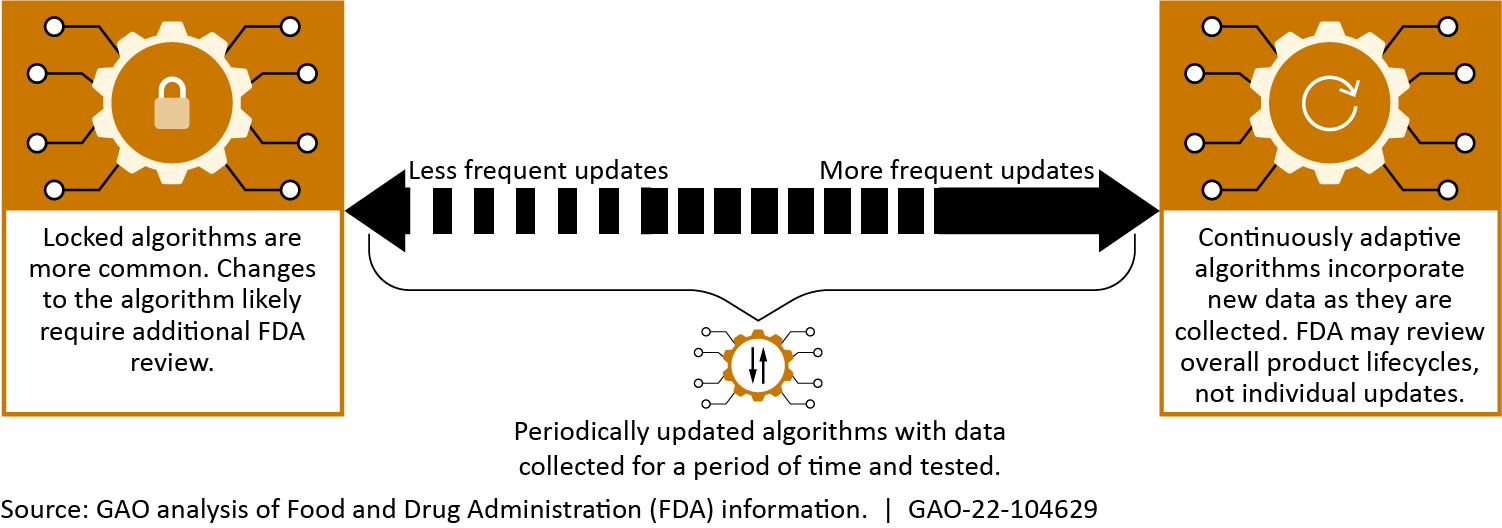
Academic, government, and private sector researchers are working to expand the capabilities of ML-based medical diagnostic technologies. In addition, GAO identified three broader emerging approaches—autonomous, adaptive, and consumer-oriented ML-diagnostics—that can be applied to diagnose a variety of diseases. These advances could enhance medical professionals’ capabilities and improve patient treatments but also have certain limitations. For example, adaptive technologies may improve accuracy by incorporating additional data to update themselves, but automatic incorporation of low-quality data may lead to inconsistent or poorer algorithmic performance.

Spectrum of adaptive algorithms

We identified several challenges affecting the development and adoption of ML in medical diagnostics:

  • Demonstrating real-world performance across diverse clinical settings and in rigorous studies.
  • Meeting clinical needs, such as developing technologies that integrate into clinical workflows.
  • Addressing regulatory gaps, such as providing clear guidance for the development of adaptive algorithms.

These challenges affect various stakeholders including technology developers, medical providers, and patients, and may slow the development and adoption of these technologies.

GAO developed three policy options that could help address these challenges or enhance the benefits of ML diagnostic technologies. These policy options identify possible actions by policymakers, which include Congress, federal agencies, state and local governments, academic and research institutions, and industry. See below for a summary of the policy options and relevant opportunities and considerations.

Policy Options to Help Address Challenges or Enhance Benefits of ML Diagnostic Technologies

  Opportunities Considerations

Evaluation (report
page 28)

Policymakers could create incentives, guidance, or policies to encourage or require the evaluation of ML diagnostic technologies across a range of deployment conditions and demographics representative of the intended use.

This policy option could help address the challenge of demonstrating real world performance.

  • Stakeholders could better understand the performance of these technologies across diverse conditions and help to identify biases, limitations, and opportunities for improvement.
  • Could inform providers’ adoption decisions, potentially leading to increased adoption by enhancing trust.
  • Information from evaluations can help inform the decisions of policymakers, such as decisions about regulatory requirements.
  • May be time-intensive, which could delay the movement of these technologies into the marketplace, potentially affecting patients and professionals who could benefit from these technologies.
  • More rigorous evaluation will likely lead to extra costs, such as direct costs for funding the studies. Developers may not be incentivized to conduct these evaluations if it could show their products in a negative light, so policymakers could consider whether evaluations should be conducted or reviewed by independent parties, according to industry officials.

Data Access (report
page 29)

Policymakers could develop or expand access to high-quality medical data to develop and test ML medical diagnostic technologies. Examples include standards for collecting and sharing data, creating data commons, or using incentives to encourage data sharing.

This policy option could help address the challenge of demonstrating real world performance.

  • Developing or expanding access to high-quality datasets could help facilitate training and testing ML technologies across diverse and representative conditions. This could improve the technologies’ performance and generalizability, help developers understand their performance and areas for improvement, and help to build trust and adoption in these technologies.
  • Expanding access could enable developers to save time in the development process, which could shorten the time it takes for these technologies to be available for adoption.
  • Entities that own data may be reluctant to share them for a number of reasons. For example, these entities may consider their data valuable or proprietary. Some entities may also be concerned about the privacy of their patients and the intended use and security of their data.
  • Data sharing mechanisms may be of limited use to researchers and developers depending on the quality and interoperability of these data, and curating and storing data could be expensive and may require public and private resources.

Collaboration (report
page 30)

Policymakers could promote collaboration among developers, providers, and regulators in the development and adoption of ML diagnostic technologies. For example, policymakers could convene multidisciplinary experts together in the design and development of these technologies through workshops and conferences.

This policy option could help address the challenges of meeting medical needs and addressing regulatory gaps.

  • Collaboration between ML developers and providers could help ensure that the technologies address clinical needs. For example, collaboration between developers and medical professionals could help developers create ML technologies that integrate into medical professionals’ workflows, and minimize time, effort, and disruption.
  • Collaboration among developers and medical providers could help in the creation and access of ML ready data, according to NIH officials.
  • As previously reported, providers may not have time to both collaborate with developers and treat patients; however, organizations can provide protected time for employees to engage in innovation activities such as collaboration. 
  • If developers only collaborate with providers in specific settings, their technologies may not be usable across a range of conditions and settings, such as across different patient types or technology systems.

Source: GAO. | GAO-22-104629

Why GAO Did This Study

Diagnostic errors affect more than 12 million Americans each year, with aggregate costs likely in excess of $100 billion, according to a report by the Society to Improve Diagnosis in Medicine. ML, a subfield of artificial intelligence, has emerged as a powerful tool for solving complex problems in diverse domains, including medical diagnostics. However, challenges to the development and use of machine learning technologies in medical diagnostics raise technological, economic, and regulatory questions.

GAO was asked to conduct a technology assessment on the current and emerging uses of machine learning in medical diagnostics, as well as the challenges and policy implications of these technologies. This report discusses (1) currently available ML medical diagnostic technologies for five selected diseases, (2) emerging ML medical diagnostic technologies, (3) challenges affecting the development and adoption of ML technologies for medical diagnosis, and (4) policy options to help address these challenges.

GAO assessed available and emerging ML technologies; interviewed stakeholders from government, industry, and academia; convened a meeting of experts in collaboration with the National Academy of Medicine; and reviewed reports and scientific literature. GAO is identifying policy options in this report.

For more information, contact Karen L. Howard at (202) 512-6888 or howardk@gao.gov.

Some N.J. school workers will pay more for health benefits next year as state approves rate hike

Some N.J. school workers will pay more for health benefits next year as state approves rate hike

Days after point out and neighborhood staff were being strike with hikes, a state board on Monday accredited a double-digit improve on well being insurance policies rates for some instructors and school staff in New Jersey upcoming year.

The state’s College Employees’ Overall health Benefits Fee voted 5-1 to raise fees about 15{08cd930984ace14b54ef017cfb82c397b10f0f7d5e03e6413ad93bb8e636217f} for the 2023 calendar calendar year for these enrolled in the state’s wellness rewards software for university personnel.

The will increase signify staff will pay out extra out of pocket and districts will shoulder larger fees, which could in flip have an impact on taxpayers as a result of possibly increased property taxes or cuts to plans and staff. New Jerseyans by now pay out the optimum assets taxes in the country on average, and the most significant portion of their invoice goes to schools.

How substantially college districts shell out to deal with insurance policies prices, when compared to how considerably workforce pay back may differ by district, relying on what unions have negotiated. Districts typically go over the bulk of expenditures, with staff spending the rest.

Monday’s vote arrives 5 times immediately after a separate point out health board voted to approve controversial double-digit fee hikes on overall health insurance options that deal with additional than 800,000 condition and community governing administration personnel. A very last-moment offer in between Gov. Phil Murphy’s administration and labor unions limited the burden for state workforce. Options for municipal and county personnel will boost by just about 23{08cd930984ace14b54ef017cfb82c397b10f0f7d5e03e6413ad93bb8e636217f}.

Point out officers have explained the boosts are the consequence of various components, like the amplified price tag of health and fitness treatment, inflation, and the lingering consequences of the coronavirus pandemic.

The hike accredited Monday affects only university districts and county faculties that utilize the state’s overall health program. Other districts get their insurance policy by means of private options.

About 50 {08cd930984ace14b54ef017cfb82c397b10f0f7d5e03e6413ad93bb8e636217f} of New Jersey’s 600 districts acquire portion in the point out program. As of July, there have been a lot more than 150,000 people lined by the application, according to the condition Treasurer’s Office environment.

The New Jersey School Boards Affiliation opposed the decision, expressing the will increase are “far higher” than people in current situations.

The group also famous the increases arrive after numerous district budgets have by now been finalized, which could drive college boards to slash packages or hearth workers.

“The transfer could have a really adverse affect on district budgets — and eventually undermines scholar achievement,” NJSBA President Irene LeFebvre said in a assertion.

Dr. Timothy Purnell, the group’s govt director, identified as on Murphy and the point out Legislature to “provide relief to community boards that have been afflicted by this.”

Carl Tanksley, the NJSBA’s acting typical counsel and its consultant on the wellbeing benefits commission, cast the only no vote Monday.

The New Jersey Training Affiliation, the state’s largest teachers union, mentioned the raises occur following two years of decreases in the quality amount for in health and fitness strategies.

“Nonetheless, an increase of that measurement is usually a trigger for concern,” NJEA spokesman Steven Baker stated. “That is why we demanded specific facts on the increase and did not vote on premiums till we had that info.”

Baker urged NJEA associates to instead enroll in the two-year-old New Jersey Educator Overall health System, which he claimed “provides substantial high quality coverage at a considerably a lot more reasonably priced charge to our customers.”

Danielle Currie, a spokeswoman for the state Treasurer’s Office environment, stated “we share the problems concerning the raise in premiums and the effect it will have on general public employees and businesses.”

But Currie famous the course of action for placing rates is set by condition regulation, and the prices are “largely formulaic, driven by the earlier year’s real utilization and projected costs, and ultimately made a decision on by the Well being Positive aspects Commissions.”

The panels that approve insurance coverage fees for New Jersey general public staff consist of equally authorities officers and union associates.

NJ Advance Media workers author Derek Corridor contributed to this report.

Our journalism requires your aid. Make sure you subscribe these days to NJ.com.

Brent Johnson could be arrived at at bjohnson@njadvancemedia.com. Comply with him at @johnsb01.

Tina Kelley might be achieved at tkelley@njadvancemedia.com.