The crisis of student mental health is much vaster than we realize

The crisis of student mental health is much vaster than we realize
Lucy Wegener, then 13, center right, an organizer with Arizona Students for Mental Health, listens to attendees at a vigil on Sept. 10 in Chandler, Ariz.
Lucy Wegener, then 13, center right, an organizer with Arizona Students for Mental Health, listens to attendees at a vigil on Sept. 10 in Chandler, Ariz. (Caitlin O’Hara for The Washington Post)

Comment

The change was gradual. At first, Riana Alexander was always tired. Then she began missing classes. She had been an honors student at her Arizona high school, just outside Phoenix. But last winter, after the isolation of remote learning, then the overload of a full-on return to school, her grades were slipping. She wasn’t eating a lot. She avoided friends.

Her worried mother searched for mental health treatment. Finally, in the spring, a three-day-a-week intensive program for depression helped the teenager steady herself and “want to get better,” Alexander said. Then, as she was finding her way, a girl at her school took her own life. Then a teen elsewhere in the district did the same. Then another.

“It just broke my heart that there were three different people who were going through what I was, and they never got the chance to heal,” said Alexander, 17, now a high school senior.

After that devastating stretch in May, families and classmates in the Chandler Unified School District mourned the three 15-year-olds. They would enjoy no more summer vacations, no birthdays or graduations. The losses ignited a debate about what schools should be doing to support students in despair.

Nationally, adolescent depression and anxiety — already at crisis levels before the pandemic — have surged amid the isolation, disruption and hardship of covid-19. Even as federal coronavirus relief money has helped schools step up their efforts to aid students, they also have come up short. It’s unclear how much money is going to mental health, how long such efforts will last or if they truly reach those who struggle most.

“The need is real, the need is dire,” said Alberto Carvalho, superintendent of the Los Angeles Unified School District, who recalled hearing just that day from the district’s mental health partners that calls about suicidal thoughts had quadrupled. “We’re living through historically unprecedented times,” he said.

More than 75 percent of schools surveyed in spring said their teachers and staff have voiced concerns about student depression, anxiety and trauma, according to federal data. Nearly as many schools cited a jump in the number of students seeking mental health services.

But mental health is not the only pandemic priority. Schools are spending vast sums of their coronavirus relief money on ventilation upgrades, expanded summer learning, after-school programs, tutors and academic specialists.

The federal spending plans of 5,000 school districts nationally show that more than one-third intend to bring new mental health professionals into schools, and about 30 percent plan to fund social-emotional learning efforts, according to an analysis by FutureEd, a think tank at Georgetown University’s McCourt School of Public Policy.

“This is an incredible increase in the amount of money being spent and the number of districts pursuing it,” Phyllis Jordan, associate director of FutureEd said. But it is still, advocates say, not nearly enough.

“We simply don’t have enough people in our profession to meet the need.”

— Kelsey Theis, president of the Texas Association of School Psychologists

In many areas, even when money is in hand, hiring is not easy. As this school year opened, nearly 20 percent of schools reported vacancies in mental health positions, according to federal data. Schools often said they employed too few staff to manage the caseload but also complained about difficulties finding licensed providers, the data showed.

“We simply don’t have enough people in our profession to meet the need,” said Kelsey Theis, president of the Texas Association of School Psychologists. When families seek private therapists, “sometimes there’s a wait list of months and months before they get help,” she said.

In Maine, waiting lists grew so long last year that school counselor Tara Kierstead began looking out of state for therapists who had openings — a solution that was not practical for many families.

“It was the hardest I’ve ever had to work to get resources to people,” Kierstead said. “I know some kids who were never seen.”

Surgeon General Vivek H. Murthy called out the “devastating” effects of the pandemic on youth mental health in a public advisory last December. Earlier that year, the American Academy of Pediatrics, the American Academy of Child and Adolescent Psychiatry and the Children’s Hospital Association together declared “a national state of emergency” in children’s mental health. They pointed out that young people of color were especially affected and linked the struggle for racial justice to the worsening crisis.

A year later, this October, they sounded the alarm again. Things are not getting better.

Not long after the pandemic started, researchers began to document declines in child and adolescent mental health. The numbers are stark.

Hospital emergency room visits spiked for suspected suicide attempts among girls ages 12 to 17, according to the Centers for Disease Control and Prevention. From February to March 2021, the number jumped by 51 percent compared with the same period during 2019. For boys, the increase was 4 percent. Early research from MIT suggested the suicide rate for people aged 10 to 19 increased in 2020, compared with before the pandemic. More recently, CDC provisional data for 2021 showed an increase in the national rate from 2020 to 2021, especially for people ages 15 to 24.

In other research, the CDC found nearly 45 percent of high school students were so persistently sad or hopeless in 2021 they were unable to engage in regular activities. Almost 1 in 5 seriously considered suicide, and 9 percent of the teenagers surveyed by the CDC tried to take their lives during the previous 12 months. A substantially larger percentage of gay, lesbian, bisexual, other and questioning students reported a suicide attempt.

Family upheaval, meanwhile, was widespread, particularly in the early pandemic: Nearly 30 percent of students said an adult in their home had lost a job, and 24 percent said they went hungry for a lack of food.

There are no directly comparable pre-pandemic studies, but Kathleen Ethier, the CDC’s director of the division of adolescent and school health, said student well-being is significantly better for teens who report feeling connected to their schools — a problem for a population that, nationwide, was kept out of them for so long.

“There is 20 years of research showing that it not only has an impact on how young people do while they’re adolescents, but it has 20-year impacts on all kinds of measures of health,” including emotional well-being, suicidality and substance use, she said.

It also left many children grieving. More than 230,000 U.S. students under 18 are believed to be mourning the ultimate loss: the death of a parent or primary caregiver in a pandemic-related loss, according to research by the CDC, Imperial College London, Harvard University, Oxford University and the University of Cape Town. In the United States, children of color were hit the hardest, another study found. It estimated that the loss for Black and Hispanic children was nearly twice the rate for White children.

Too much need, too little help

In Maryland, Julia Horton, 16, recalls that, as her struggles worsened last year, she fell asleep in class a lot and did not turn in work; her grades dropped. Looking back, she said, “it is very obvious it was a cry for help.” Some teachers were compassionate, but others less so. “A lot of teachers talk about understanding mental illness, but they don’t act upon it,” she said.

Her school in suburban Montgomery County had two mental health professionals within its wellness center, county officials said, but Horton — like many students — had no idea. She talked to a counselor she liked about getting more time for assignments but it did not help. Her mother ultimately found her an excellent therapist to help Horton with her depression and anxiety, but she wonders about other teens who may not be as fortunate.

Montgomery County school officials said they inform students about mental health services through community messages, their website, student forums and advisory period lessons — though school board member Lynne Harris said messaging should be more robust and focused on platforms students use most.

In Philadelphia, Mikayla Jones, then 15, took care of her father in spring 2020 when he caught covid-19 and she had little contact with teachers and friends during remote learning. She wanted to talk to a therapist, but her mother couldn’t find one with an opening and she’d never heard of any mental health specialist at school. “I feel like this should not be something that’s possible,” she said. Now a 17-year-old senior, Jones is starting a club to advocate for mental health support across Philadelphia’s schools. “All youth deserve someone to be there for them.”

Philadelphia officials said counselors were meeting with students virtually or in person during the pandemic to assess their needs and help decide next steps. Still, the high school senior never found a therapist. The first meeting of her mental health support club will be later this month.

Told about the school system’s comment, the teenager said: “If the school does not communicate the availability of counselors, and their role as counselor has been repeatedly labeled as ‘college counselor,’ then how will we know that they are there as a mental health resource?”

Shortages of mental health professionals have been the norm in schools. Professional organizations recommend one school psychologist per 500 students, but the national average is one per 1,160 students, with some states approaching one per 5,000. Similarly, the recommended ratio of one school counselor per 250 students is not widespread. The national average: one per 415 students.

National research from 2019 showed that students of color have not received equal access to school counselors. At that time, 38 states were shortchanging students of color, students from low-income families or both, according to the study done by the Education Trust.

As the pandemic has persisted, students have spoken out — in Nebraska, Arizona, Connecticut and Washington.

In Seattle, students who formed the Seattle Student Union to promote racial justice decided this year to push for mental health support in schools. Chetan Soni, a 17-year-old who co-founded the union, said there are too few mental health professionals to meet rising student needs. The district told him it doesn’t have the money, he said.

Seattle teachers, who went on strike in September, included a call for more mental health support for students as one of their bargaining points. The strike settlement included part-time social workers at most schools — a sign of progress, Soni said, but not enough to help all. “Students are suffering from the pandemic and so many other things too,” he said.

His school, Lincoln High, is fortunate in having a school-based health clinic, run by Neighborcare Health. But just one therapist works there, said Rachel Gordon, the company’s school-based mental health clinical manager. Nearly all therapists based at Seattle’s schools have full caseloads and wait lists, Gordon said. Many run group therapy sessions as a way to serve more students. “We’ve seen increases in anxiety, disordered eating, suicidal ideation, OCD and many other mental health challenges,” she said.

In rural Montana, the squeeze was different: Altacare, a for-profit provider, decided to halt services in the state this year amid recruitment difficulties and funding issues. Districts scrambled to cover for the loss, but many could not, and state officials were limited in what they could do. “Unfortunately, they were serving a lot of the very small rural schools that were already struggling,” said Mary Windecker, executive director of the nonprofit Behavioral Health Alliance of Montana.

The shortages meant that Montana kids who needed residential care, for the most serious mental illnesses, were mostly being sent to other states, she said. “Not because we don’t have beds for those children but because we don’t have people to staff those kids,” she said. “Imagine a six-year-old with a serious emotional disturbance being sent as far away as Georgia. That’s happening.”

One result of all these deficiencies: More students are acting out. Last school year, nearly 40 percent of schools nationally reported increases in physical attacks or fights, and roughly 60 percent reported more disruptions in class because of student misconduct, according to federal data. Las Vegas officials reported several alarming attacks on teachers. In Louisiana, fathers at a Shreveport school showed up to help keep the peace after a particularly heated week of student fighting.

National test scores also plummeted to levels not seen since 1999, according to recent data — setting off a wave of alarm among educators, many of whom consider the mental health crisis a contributing factor.

Violence in schools is on the rise

School administrators across the country are clear-eyed about students’ worsening mental health, many of them strategizing about school initiatives that might help.

“We know that when kids are mentally well, they’re much more likely to attend school and do well in school,” said Sharon Hoover, co-director of the National Center for School Mental Health.

In Maryland’s Montgomery County, the state’s largest school system has expanded school-based wellness centers that provide mental health services: Five are open, a sixth will debut in January and 19 others are being phased in.

In Georgia, Hawaii and a host of other states, schools rely on telehealth services to help meet the gap. They often involve contractors — such as Hazel Health — that respond to referrals from teachers, school counselors or parents; services are often covered through government funding or payer reimbursements.

Some school systems have adopted student mental health “check-ins” to get a quick read on student well-being. Others created calming rooms for students or found ways to build mindfulness, yoga or meditation into student life.

“We know that when kids are mentally well, they’re much more likely to attend school and do well in school.”

— Sharon Hoover, co-director of the National Center for School Mental Health

A growing number of schools now offer therapy. Many have forged partnerships with community providers who treat students in person on campus. Health or wellness centers that are located inside of schools numbered roughly 3,000 before the pandemic.

“School-based health centers fill a void, particularly in low-income communities,” said Robert Boyd, chief executive at the nonprofit School-Based Health Alliance. “In rural communities, sometimes it’s the only provider around.”

How mindfulness practices are changing an inner-city school

More broadly, school systems are expanding social-emotional learning intended to help students understand and regulate their emotions, develop positive relationships and face challenges. These lessons may be embedded in classes (say, a discussion of empathy related to characters in a novel) or they may come directly through an activity about, for instance, decision-making. In some parts of the country, social-emotional teaching is tangled up in the culture wars, particularly when material deals with gender and racial equity.

In California’s Natomas School District, Superintendent Chris Evans brought in an administrator with mental health expertise seven years before the pandemic. Each school already had a psychologist. But as the pandemic began, social workers were hired for each school, too — a decision that no one regretted. “About one in every two of our students,” Evans said, “accessed some form of mental health resource.” Suicide assessments more than doubled last year, to 191, compared with 71 before the pandemic.

A big worry in many areas is what happens when federal aid runs out. The school board in Natomas voted this spring to retain the new hires even after the money is gone, Evans said.

Other efforts flowed from legislation. At least 12 states have adopted some form of “mental health days,” which excuse student absences for mental health purposes. In Illinois, students are now allowed five days per year under a new measure approved by the legislature.

Ten ways to get mental health help during a therapist shortage

Critics see the excused days off as counterproductive for students who have already missed too much school, but supporters say the laws recognize the stressful reality of many students’ lives and elevate the stature of mental health so that it is comparable to physical health.

Twenty states also require mental health education in schools — which Barb Solish, director of youth and young adult initiatives with the National Alliance on Mental Illness, said will reduce stigma and increase literacy so students recognize symptoms and learn how to get help for themselves or their friends.

Mental health in schools is expected to get a big boost, too, Solish said, from the passage of the Bipartisan Safer Communities Act, which allots more than $1 billion over five years to support school-based mental health services. More than $500 million is slated for a grant program to hire and retain providers in schools, and another $500 million is for building a pipeline of future professionals.

Riana Alexander and other students in Chandler, Ariz., showed up at school board meetings for several months, distressed about the string of suicides that left three 15-year-olds dead. At a meeting in June, many of them acknowledged their own mental health difficulties as they pressed the school district to do more.

The father of a teen who took his life joined them, his voice breaking in grief. “I don’t have the answers,” he said. He vowed to work with the students as they seek change and called them brave.

Then his voice stiffened.

“It’s a shame they have to come in here and ask for this,” he said.

Two months later, another teenager took her life. She was 16. School had been open less than three weeks.

“This is a crisis,” Sofia Borczon, a 10th-grader, told the board at another meeting. She’d had mental health struggles for four years, she said, and never felt there were necessary resources. “Kids are dying — and they have been for years.”

She and others — part of Arizona Students for Mental Health, which was founded by Alexander — asked for mental health “first-aid training,” so that everyone would know more about how to help kids in need, and for “student action boards” to elevate mental health concerns at schools. They wanted to lead a town hall meeting, so their peers could be heard too.

Chandler officials told The Washington Post the requests either take time to implement or might conflict with best practices. Eventually, Chandler’s prevention coordinator started to meet with the students, and the school system held a mental health event in October, with speakers and resource information.

Chandler schools spokeswoman Stephanie Ingersoll said the district has suicide prevention training for all teachers and staff, going beyond what is required by the state. At a meeting in August, the school system outlined a list of other initiatives. The district plans to begin teen mental health first aid training, but only for students 15 and older who have parental consent, Ingersoll said, and offers mental health first aid for staff within its training department. “We hope there is an understanding that implementing anything new takes time,” she said in an email.

Alexander said the school system’s recent efforts are a step forward, but lack urgency and are not enough. She and others testified before a state committee on teen mental health.

In September, the students gathered with classmates for a Saturday evening vigil to remember students who died recently by suicide and those who preceded them. It was World Suicide Prevention Day — a month after the most recent Chandler student took her life.

“Mental health is hard,” Alexander told those gathered. “It’s hard to talk about it, it’s hard to struggle with it, it’s hard to open up about it. But struggling in silence isn’t the way and it’s not the answer. There are people out there who have gone through or are currently going through exactly what you are. There are people out there who love you and there are people out there who care about you.”

If you or someone you know needs help, visit 988lifeline.org or call or text the Suicide & Crisis Lifeline at 988.

How the PASTEUR Act can heal the antibiotics crisis

How the PASTEUR Act can heal the antibiotics crisis

It is quick to fail to remember that not prolonged back, a lot of of our most typical bacterial infections were being untreatable. Then antibiotics arrived alongside and, nowadays, most reoccurring bacterial infections can be easily handled with them. Several prevalent kinds of bacterial pneumonia can usually be handled with a Z-pack. And oral antibiotics are normally the first procedure for urinary tract infections that direct to 8.1 million U.S. wellbeing care visits annually.

However, the pretty use of these medications will cause the germs they address to modify in methods that make the medicines ineffective. Recent overuse of antibiotics is accelerating the increase of drug-resistant bacterial infections — generally referred to as “superbugs.” Whilst these superbugs ended up on the decline for several years, the pandemic established us back. 

Amongst March and Oct 2020, nearly 80 per cent of clients hospitalized with COVID-19 were specified antibiotics to address possible secondary bacterial bacterial infections.

This spike in antibiotic use, paired with hospitals stretched way too slender to preserve antibiotic stewardship procedures meant to make certain the medicines are utilized appropriately, caused increased incidences of these superbugs. Also acknowledged as antimicrobial resistance, the incidence of infections resistant to cure rose substantially over the past numerous years, in accordance to study by the U.S. Centers for Illness Command and Prevention.

To make issues even worse, not only have these infections develop into a lot more popular, they have also turn out to be much more fatal. In 2020 on your own, antimicrobial resistance caused a 15 percent increase in hospitalizations and fatalities. 

Anyone has a portion to perform to remain 1 move in advance of superbugs, as I know from main the Pharmaceutical Study Manufacturers of America. Doctors should follow suitable prescribing rules, this kind of as all those from the Infectious Ailment Society of The usa. They need to also be knowledgeable of area designs of antimicrobial resistance that could affect their sufferers. Sufferers really should verify antibiotics are certainly warranted if they are recommended and complete their program of treatment options. That is since, if stopped much too early, the remaining bacteria can turn out to be resistant to the medication aimed at battling it.

Biopharmaceutical firms are doing their element as perfectly. For our portion, the biopharmaceutical field launched the AMR Action Fund with a $1 billion industry expenditure to fund businesses producing new antimicrobial medicines. And hospitals and doctors take part in stewardship programs that encourage the suitable use of antibiotics. 

Regretably, acquiring a effective new antibiotic does not normally promise a company will recoup the significant charges affiliated with its improvement. Several huge and tiny biotech organizations have declared bankruptcy or exited the antibiotic market place due to the money dangers connected with creating these medications and the truth they should be made use of in the most constrained set of circumstances in purchase to gradual the inescapable process that prospects to antimicrobial resistance. 

Which is where policymakers can participate in a essential purpose in repairing this issue. The PASTEUR Act, which has broad bipartisan aid, would incentivize providers to produce new antimicrobial and antifungal medications by offering “subscription” contracts to makers to supply comprehensive accessibility to these medications in federal wellbeing treatment programs. The legislation will present additional a long time of existence to clients who would in any other case deal with really serious ailment or dying from infections right now deemed treatable.  

Antibiotic and antifungal medicines are critical to the day-to-day apply of medicine, yet lots of current medications may soon no lengthier be ready to quit these superbugs.

If Congress fails to enact the PASTEUR Act, plan professional medical treatment, preparedness for foreseeable future public well being emergencies, and people’s lives are at considerable danger.

We don’t want superheroes to combat superbugs. We just require the correct guidelines in area to make sure our everyday heroes — the medical professionals and nurses who handle individuals just about every working day — have the correct resources to fight bacterial infections. 

Stephen J. Ubl is president and main executive officer of the Pharmaceutical Study and Manufacturers of The us (PhRMA), which signifies America’s major biopharmaceutical exploration companies.

4 Navy sailors assigned to same facility die by apparent suicide within weeks, amid growing concerns of mental health crisis

4 Navy sailors assigned to same facility die by apparent suicide within weeks, amid growing concerns of mental health crisis

At the very least four U.S. Navy sailors assigned to the very same facility in Virginia died by suicide in the last couple weeks, together with just one as a short while ago as Saturday, military officers and relatives users explained.

It is the hottest cluster of Navy suicides this year to spark concerns of a fleetwide psychological health and fitness crisis.

The four sailors worked for the Mid-Atlantic Regional Upkeep Middle (MARMC), which maintains armed forces ships and is centered in Norfolk, Virginia.

“I was inundated with the sum of hopelessness at that command,” mentioned Kayla Arestivo, a certified counselor who was introduced in two months ago to help the sailors in the unit.

A lot of MARMC sailors have been having difficulties with personalized concerns that had been exacerbated by a absence of psychological well being sources on the task and experience overworked and undervalued by their leaders, in accordance to a sailor who spoke with NBC Information and Arestivo, who a short while ago led 4 suicide avoidance sessions at the internet site.

“Part of it is toxic management. The sailors promptly pointed that out,” Arestivo said.

Of the approximately 3,000 men and women assigned to MARMC, lots of are on minimal duty since they either have mental or actual physical disabilities or are dealing with personal circumstantial stressors that are avoiding them from whole unrestricted responsibility, Arestivo claimed.

Arestivo mentioned the Navy really should have identified those problems for the whole device and offered aid earlier on.

“Right away, we should know these men and women are in better need to have, less than higher pressure,” stated Arestivo, who is also the co-founder and president of Trails of Objective, a nonprofit that offers free of charge psychological overall health care to service associates.

‘It doesn’t will need to be this way’

Kody Lee Decker, 22, of Virginia, was on constrained obligation owing to psychological overall health problems when he took his possess lifetime on Oct. 29, in accordance to a sailor close to Decker, who questioned to continue being nameless out of fear of retaliation.

Kody Lee Decker, 22, pictured in New York City this June, died by suicide on Oct. 29.
Kody Lee Decker, 22, pictured in June, died by suicide on Oct. 29.Courtesy image

The electronics technician’s struggles commenced in early 2020 even though he was serving the USS Bataan and working with “toxic leadership” on the amphibious assault ship, the sailor said.

The sailor stated Decker’s mental well being worsened when he was transferred in August to MARMC, where his operate ailments did not boost and he did not obtain psychological help.

“If he had appear to MARMC and they really acted like they gave a s— and delivered methods and followed up, I do not consider we would be sitting down in this article acquiring this dialogue,” the sailor said.

Decker, remembered for his outgoing temperament and his appreciate of higher-close sneakers, had just become a father about nine months in advance of his death.

“A lot more little ones are heading to get rid of their dad and mom. Extra men and women are likely to reduce their spouses, unnecessarily,” the sailor mentioned. “It would not have to have to be this way.”

Specifically one particular 7 days later on, on Nov. 5, Cameron Armstrong died by suicide, his mother, Sharon, said.

Armstrong, 22, was nearing the end of his deal with the Navy following four a long time, his family members and buddies said.

He experienced explained to his mother that he was emotion depressed, but she said she did not know the extent of his suffering.

“I didn’t assume it was that undesirable. I never know what he was heading through to do that,” she reported.

Sharon explained her son, who she called a “goodhearted soul,” leaves behind his wife, who was his higher university sweetheart.

Cameron Armstrong, right, in an undated photo with his mother, Sharon. The 22-year-old U.S. Navy sailor died by suicide on Nov. 5.
Cameron Armstrong in an undated picture with his mom, Sharon. Armstrong, 22, died by suicide on Nov. 5.Courtesy Sharon Armstrong

‘We’re putting Band-Aids on bullet holes’

The Navy and neighborhood police departments are investigating the conditions encompassing each and every dying, but military services officials reported the 4 fatalities have been labeled as apparent suicides.

The suicide prevention sessions that Arestivo was brought in for were being obligatory to staff and held 2 times a day on Nov. 14 and Nov. 16, MARMC and Arestivo claimed.

A lot more than half of the division attended, Arestivo explained. But the efforts, which arrived right after at minimum two other sailors experienced currently died by suicide, ended up also late, she reported.

And devoid of systematic modifications, the counselor explained she understood a pair of seminars and other responses, these types of as suicide recognition emails, would not be more than enough to avert a lot more fatalities.

A 3rd sailor died by suicide on Nov. 14. He experienced not attended the suicide prevention session previously that working day but was slated to show up at the second a person, Arestivo stated.

“We’re placing Band-Aids on bullet holes,” she explained.

On Nov. 16, she stated she relayed that concept to MARMC’s commanding officer.

“I claimed to him, ‘You will have a further a single.’ I shook his hand and seemed him suitable in the eye,” Arestivo claimed. “And positive as s—, right here we are.”

A fourth sailor died by suicide on Nov. 26.

In a statement, MARMC spokesman Douglas Denzine mentioned chaplains, psychologists and counselors were being offered, and that leaders were being taking a “proactive approach” to support its users, increase psychological well being and manage anxiety among the sailors. 

“One suicide is too numerous,” Denzine claimed. “We continue being fully engaged with our Sailors and their people to ensure their health and fitness and effectively-staying, and to assure a local weather of have faith in that encourages Sailors to question for assistance.”

The most recent rash of Navy suicides will come months right after a few sailors assigned to the USS George Washington killed them selves within a week in April.

Latest and former George Washington sailors instructed NBC Information that their struggles were straight associated to a culture exactly where in search of assist is not satisfied with the required resources, as perfectly as virtually uninhabitable residing situations aboard the ship, such as frequent design sounds that designed sleeping extremely hard and a deficiency of very hot water and electric power. 

Considering that then, dad and mom of sailors who died by suicide have said the Navy has finished very little to adequately tackle a fleetwide issue. They also criticized the U.S. military for not however utilizing the Brandon Act, which allows provider users to confidentially look for mental overall health assist, nearly a person 12 months immediately after it was signed into law.

In a assertion, the Protection Office reported it would keep on working towards implementation by the stop of the calendar calendar year.

Named right after Navy Petty Officer 3rd Course Brandon Caserta, 21, who died by suicide in 2018, the Brandon Act not only expedites psychological overall health evaluations, but also gives a confidential channel for company customers to self-report mental health and fitness challenges.

Caserta’s moms and dads, Arestivo and armed service mental well being gurus explained both equally are essential reforms required to lower suicides in the solutions.

“They’re sitting down on it, and these persons are dying. And it is like they really do not care,” Caserta’s father, Patrick, said.

In 2021, the most new year for which entire information is readily available, 519 services users died by suicide, a slight fall from 580 the calendar year in advance of, in accordance to the Protection Office, which released new suicide figures at the close of Oct.  

Approximately 17 out of every 100,000 Navy sailors died by suicide in 2021, when compared to users of the Military, who experienced the greatest charge, at about 36 per 100,000, Pentagon statistics present. 

“No just one is taking account of all this missing potential,” the sailor who understood Decker mentioned. “There is certainly so much lost potential. It can be just not heading to prevent.”

If you or anyone you know is in crisis, call 988 to achieve the Suicide and Crisis Lifeline. You can also get in touch with the community, beforehand identified as the Countrywide Suicide Avoidance Lifeline, at 800-273-8255, text Dwelling to 741741 or check out SpeakingOfSuicide.com/methods for additional means.

Police, public and policymakers focus on mental health crisis response

Police, public and policymakers focus on mental health crisis response
mental health crisis response
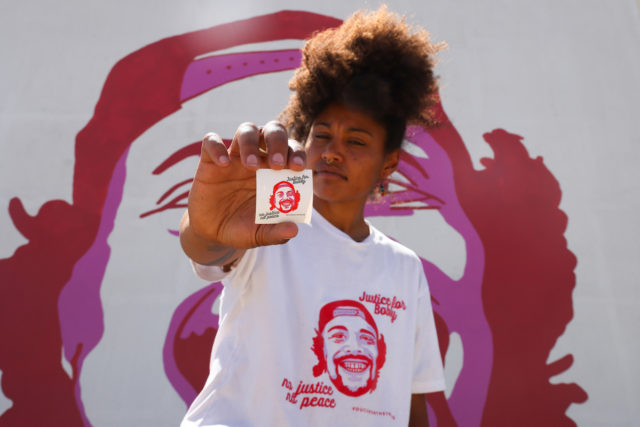
Rae Duckworth holds a “Justice for Bobby” sticker on July 2, 2022, near murals in Salt Lake City remembering the victims of police shootings. Her cousin, Bobby Duckworth, was killed during a mental health call in 2019. (Laura Bargfeld/News21)

(Editor’s note: Reporter Laura Bargfeld contributed to this article, which is part of “In Pursuit,” an investigation into police reform and accountability in America, produced by the Carnegie-Knight News21 program. For more stories, visit inpursuit.news21.com.)

By Chin Tung Tan | News21

SALT LAKE CITY — Rae Duckworth rummaged through her fanny pack and produced a sticker showing a portrait of a man painted with bright pink and red ink.

The man smiles brightly, eyes crinkling. On the bottom of the sticker, it says “No justice. No peace” and “#DUCKWORTHSTRONG.”

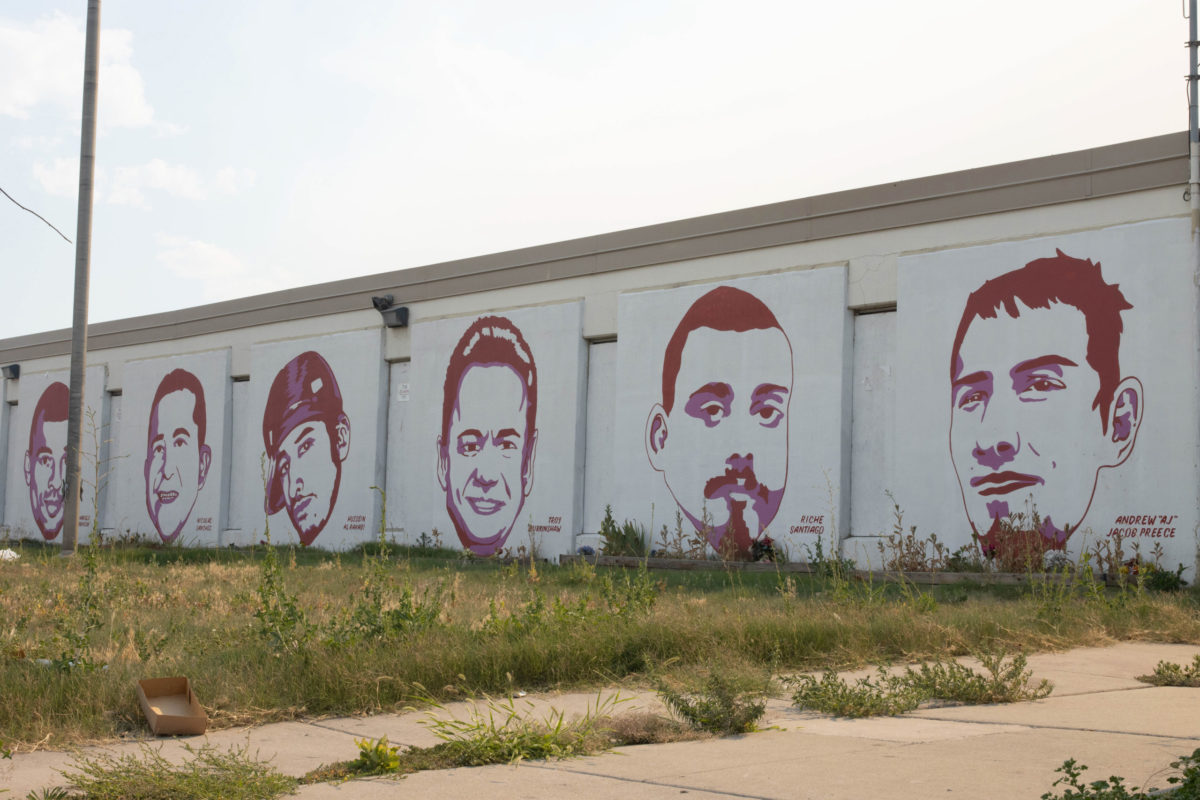
Utah residents may recognize the man as one of the many faces painted on the murals in downtown Salt Lake City to memorialize victims of police brutality.

His name is Bobby Duckworth. Rae Duckworth, Bobby’s cousin and leader of Black Lives Matter Utah, passes these stickers out to everyone she meets, hoping one day she will see her cousin’s face everywhere.

Police officer Garrett Safley shot and killed Bobby Duckworth in the rural town of Wellington, southeast of Salt Lake City, in September 2019. Bobby’s fiancée told local reporters that the 26-year-old was having a mental health crisis at the time.

After a round of investigations, prosecutors determined that Safley’s action was lawful.

“I truly believe Bobby needed a hug and not bullets,” Rae Duckworth said, holding back tears. “The whole system failed him. He didn’t have any support.”

She joins protesters every other Thursday at Washington Square Park, outside Salt Lake City’s mayor’s office, to protest the decision to pull out of meetings of the Community Activists Group. Duckworth also has spent hours at the Utah State Capitol to speak on various police reform bills, including those addressing mental health crisis response.

“Police reform is overdue,” she said. “I will always speak up for bills that support the community.”

In February, Duckworth spoke to the Utah Legislature to support a bill that would allocate funds for what’s known as co-response, which pairs social workers with police officers on mental health crisis calls. The model has grown in popularity across the country as police departments grapple with how to respond to a growing number of calls involving people in mental health crises.

A 2020 analysis by the Center for American Progress that looked at 911 calls from eight cities found that between 21 to 38 percent involved homelessness, behavioral health crises, substance use, quality-of-life concerns and other community conflicts.

“Police are the de facto mental health providers in our community because we have historically underinvested in mental health,” said Zack Stoycoff, the executive director of Healthy Minds Policy Initiative, an Oklahoma nonprofit developing statewide data-informed policies on mental illness and substance abuse. “(But) police know they don’t have the training to handle mental health conditions.”

The public knows that, too, and now it’s demanding change in both the criminal justice and mental health systems. Fifty-eight percent of the 1,352 respondents to a 2020 survey created by Data for Progress said they support the creation of a nonpolice first-responder agency to handle issues that don’t require police presence.

Every state, county and city across the country must figure out what works for them. Most strategies focus on such trends as shifting funds away from police and toward social services, creating diversion programs to triage low-level 911 calls and training officers on how to better respond.

There’s no simple set of solutions to this nationwide problem. Experts, advocates and the public say the answer must rely on a combination of efforts: reduce or eliminate law enforcement’s role in behavioral health crisis response, train and equip law enforcement officers when they do need to respond, and improve treatment for psychiatric care.

But these approaches take time and money, political and community support and collaboration between agencies.

Amy Watson, a nationally recognized expert on mental health crisis response, has spent two decades examining police encounters with people with mental illnesses.

“There’s been various efforts at police reform that have really sort of chipped away at edges but not necessarily made significant, lasting change,” said Watson, a social work professor at the University of Wisconsin-Milwaukee. “To make that bigger change, we need to be at a point where we look at those other systems that we want to play a bigger role so that we can shift some things away from police and really redesign the law enforcement role.”

Defining the problem

A mural in Salt Lake City, Utah, depicts people who have died at the hands of police. (Donovan England/News21)

When he became a law enforcement officer, 33 years ago, Capt. Kevin Ickleberry of the Bartlesville Police Department in Oklahoma did not imagine he would answer mental health calls every day.

“If you’re not involved with somebody that has mental health crises, you don’t really understand either how well the system works or how poor it works,” he said.

Bartlesville police recently launched a pilot program to pair officers with social workers.

“The last thing we want to do is handcuff somebody and stick them in the back of a police car or behind the cage,” Ickleberry said. “​​We want everybody to be safe. We want everybody to have a better life, and part of that is trying to get them the best services we can.”

But the mere presence of police cars and uniformed officers can exacerbate feelings of distress in those experiencing a mental health crisis. Watson said police presence further stigmatizes mental health and defines these situations as dangerous and criminal.

“If someone feels really triggered, their behavior may be such that the officer thinks it’s resistant, and it sort of builds to a really awful situation for people,” Watson said. “Instead of having someone who’s there to help me, there’s basically somebody (there) to protect others from me and potentially arrest me.”

A 2018 U.S. Department of Justice survey of nearly 770 training academies across the country found that new recruits receive an average of 14 hours of mental health response training, compared with 68 hours of firearm training.

With little understanding of mental health crisis response, police officers can react with force. As of Sept. 10, according to the Washington Post’s database of fatal shootings by police, 1,640 of the 7,729 people killed by the police since 2015 were experiencing a behavioral health crisis.

Sara Foreman, a certified peer recovery support specialist (PRSS) who works for a mental health center in Pryor, Oklahoma, said these kinds of incidents are shown on the news all the time.

“Instead of de-escalating the situation, [some officers] either get scared or overwhelmed,” Foreman said. “They pull their gun out and shoot.”

Diverting mental health calls

Anna LaDamus, the director of crisis services at the Central Utah Counseling Center in Ephraim, says mobile crisis team services are more cost effective than most emergency room visits. (Taylor Bayly/News21)

The murder of George Floyd by a Minneapolis police officer in May 2020 enraged millions and amplified Black Lives Matters protests around the world. “Defund the police” became the rallying cry for efforts to reallocate funds from law enforcement agencies to public health organizations and other social services.

Although few police departments have fully “defunded,” the movement to intercept behavioral crisis calls before they reach police has grown, specifically with crisis lines and mobile teams.

With crisis lines, trained call takers provide emotional support for people in crisis as an alternative to calling the police. Ideally, those answering the calls can make referrals, dispatch mobile crisis teams and follow up with callers.

One of the most notable crisis lines is the 10-digit National Suicide Prevention Lifeline, which was recently replaced by the three-digit 988 Suicide and Crisis Lifeline.

“By calling 988, you really bypass, in most situations, the need for police to even come out, which is good,” Stoycoff said.

Since it launched July 16, this 24-hour hotline has faced concerns about underfunding and understaffing because it’s managed by more than 180 call centers nationwide, according The New York Times. Some advocates and researchers warned the public against calling the number because of its ties with the police and the possibility of being involuntarily hospitalized.

The origin of the 988 Suicide & Crisis Lifeline can be traced to Utah state Sen. Daniel Thatcher, who worked to implement the idea in his state. Eventually, more than 20 community hotlines were consolidated into a statewide system.

In fiscal year 2021, Utah’s crisis line received 92,532 calls, according to the Huntsman Mental Health Institute. Eighty-six percent of the crisis calls were resolved over the phone, and a mobile crisis outreach team was dispatched for 8 percent. Law enforcement had to intervene 2 percent of the time.

Thatcher predicted use of the national crisis line will spike — and he worries it could be overwhelmed.

“The entire system, I think, is going to work really well,” he said. “The only worry that I have is what happens if there are not enough people to answer the phones? That’s what’s keeping me up at night, because you only get one chance to make a first impression.”

As the crisis lines continue to grow, so might the use of mobile crisis teams.

Licensed therapists or clinicians, certified peer recovery support specialists or case managers typically make up the 24/7 response teams, which attempt to provide immediate crisis stabilization services and connect people to long-term mental health resources.

“It is absolutely the best practice that mobile crisis responders respond instead of police in most situations, except where scene safety is needed,” Stoycoff said. “We have to figure out when it’s appropriate to have a police presence. And how do you do that? You do that through relationships and trust and collaboration and shared understanding of the roles of each of these people.”

Mobile crisis teams are not necessarily a new idea. The White Bird Clinic in Eugene, Oregon, has operated a program called Crisis Assistance Helping Out on the Streets (CAHOOTS) for 33 years. It has been widely used as a model throughout the U.S.

A recent Stanford University study indicated mobile crisis teams have the potential to reduce police involvement and save money. In Denver, the Support Team Assisted Response effort helped law enforcement agencies avoid almost 1,380 “criminal offenses” within six months of the pilot program’s operation. That came with significant savings, as the study said it could have cost four times as much if police had responded.

“It’s really appealing because it just makes so much more sense to get the right people there and to have a response that’s not frightening for people,” Watson said.

Some states have expanded the use of mobile crisis teams.

The Utah Legislature passed a bill to fund more crisis receiving centers and mobile crisis team expansion in rural areas. Utah ranks last in the nation for adult mental health care access because of provider shortages, and Utah’s rural communities face significant challenges, according to Mental Health America’s 2021 report.

In Ephraim, a town of about 5,700 people in central Utah, the Central Utah Counseling Center provides mental health services to six rural counties that cover 17,000 square miles.

A year since its inception, the mobile crisis outreach team has responded to 584 calls, many of which involved individuals with suicidal ideation or the intention to harm themselves.

“It’s well worth the money spent,” said Anna LaDamus, the center’s director of crisis services. “It’s well worth the time invested. It’s worth all of the growing pains.”

Allan Taylor runs the four-person police force in Salina, about 34 miles south of Ephraim. Before the crisis teams became an option in central Utah, he and his officers relied on their own de-escalation skills.

“It’s really important for our team to not escalate things,” he said. “I don’t care if it takes all night to negotiate with somebody or talk with somebody. I’d rather do that than the other alternatives.”

But now, his officers can call for help from mental health professionals.

Providing tools and resources

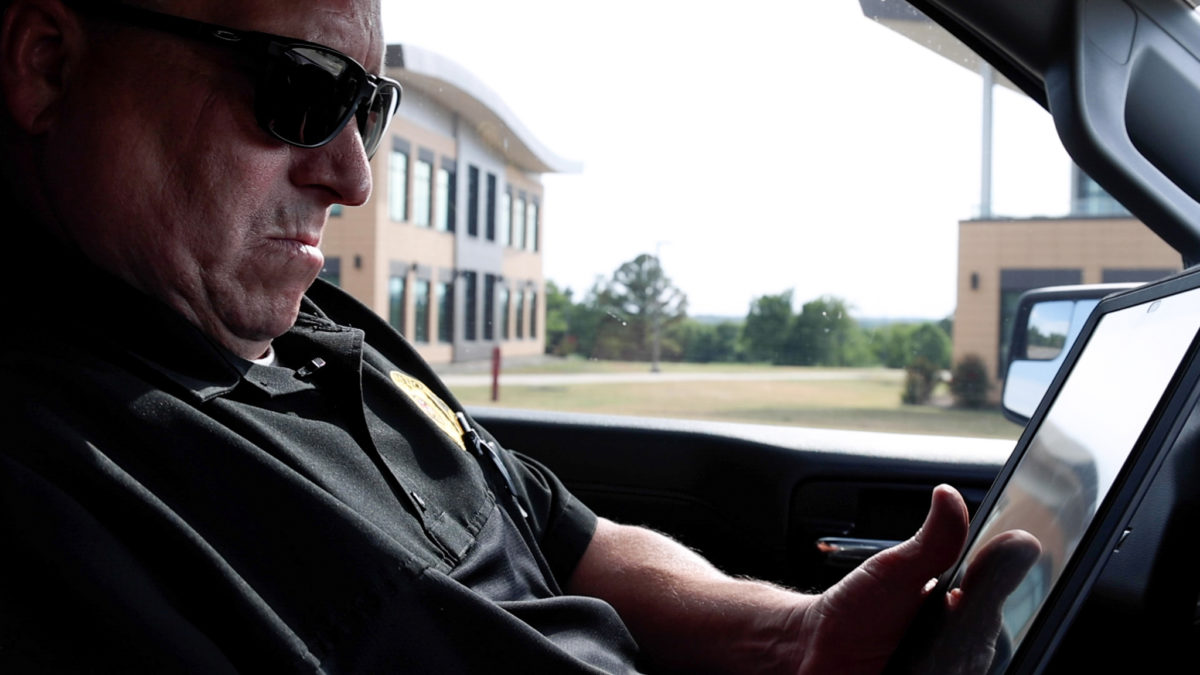
Osage Nation police Officer Rocky Davis looks at an iPad he received from GRAND Mental Health outside department headquarters in Pawhuska, Oklahoma, on July 12, 2022. “I think we must do better in helping people that have mental health issues,” Davis says. (Laura Bargfeld/News21)

Experts agree that police shouldn’t respond to most behavioral health calls. But when they do, they should have the training and tools to deal with the situation. Police departments across the country have spent millions of dollars and uncounted hours training officers in crisis intervention.

One of the most popular models is the crisis intervention team, or CIT. The National Alliance on Mental Illness said there are more than 2,700 CIT programs in the U.S.

Ron Bruno, executive director for CIT International, said the model isn’t just about training. It involves bringing together behavioral health services, law enforcement agencies, advocates, people with lived experiences and other resources to develop a plan that works.

That plan should include developing a crisis response system that is the most compassionate, most effective and least intrusive to the lives of people with mental health disorders, Bruno said.

This summer, the Arizona health care system Mercy Care brought together several law enforcement agencies for a CIT training event in Tempe. They spent 40 hours in the span of five days learning about de-escalation tactics and practicing them. They heard from people with lived experiences, and the training included sessions titled “family perspective,” “veteran perspective” and “hallucinations and hearing voices.”

Although many departments have signed on to CIT programs, Bruno said, only a small number are certified. CIT International in 2021 established a certification process to ensure departments are following best practices. As of September, only 15 programs were certified.

Bruno said many law enforcement agencies have misused CIT programs.

“There were so many people that claimed that they were doing CIT,” he said, “but then we’d get these calls from the community saying, ‘See, it doesn’t work. Our CIT officers just shot an unarmed person.’”

Bruno said most departments try to get all their officers CIT-trained when they should select a few vetted patrol officers.

“Not every officer has the skill set to handle everything perfectly, and we need to start realizing that,” Bruno said. “It has to be somebody that has the desire to work with this special population.”

Ickleberry, the police captain from Bartlesville, Oklahoma, was involved with CIT 20 years ago as a crisis negotiator. He said he learned the importance of using the right tone when speaking to a person in crisis.

“A lot of times when law enforcement shows up, it’s the uniform that’s the threat, so we need to figure out a way to take that threat away,” he said. “The biggest way to do that is being able to talk to people.”

Other training may involve cultural competency.

Melissa Pitts Johnson, a health care professional in Pryor, Oklahoma, said that’s an important element in crisis response.  As a citizen of the Cherokee Nation, she said certain cultural traditions and practices may get misconstrued as symptoms of a mental health disorder.

“Sometimes that means we ask for help and education from the people that we’re serving because there’s no better expert in that,” she said.

In addition to training, some communities have found tools that have helped improve communication between law enforcement and health care professionals.

In northeast Oklahoma, that came in the form of iPads.

“Our iPad program is a level of care that literally puts treatment on demand in your hand,” said Johnson, the regional clinical director for GRAND Mental Health. “It has the ability to receive outpatient care from your team regardless of your location and to be able to get crisis support and 24/7 care literally at the touch of a button.”

GRAND Mental Health, which serves 12 counties and has headquarters in Claremore, has distributed more than 10,200 iPads in about six years at a total cost of about $4.8 million. They have distributed about 8,500 of them to clients and nearly 1,700 to first responders and hospital personnel.

The state reimburses the company for all crisis services — including the iPads — provided to Medicaid beneficiaries.

Nicholas Allgood, chief clinical officer of crisis services, said the iPads are especially effective in rural areas because they can provide immediate service.

“You’re not traveling anywhere,” Allgood said. “You’re not using gas. You’re not dependent on the client’s income. Your no-show rates go down for your sessions because they’re right there.”

Ickleberry said all Bartlesville patrol officers have iPads, and they have been a great tool. The department usually handles three to four calls a day with the help of the iPad, he said.

Officers can connect people with mental health help with the click of a button. And most of the time, it does not require the officer to transport somebody to a hospital and spend long hours waiting as they receive treatment.

Reducing the role of law enforcement

Sara Foreman, a certified peer recovery support specialist, speaks with a client through an iPad at GRAND Urgent Recovery Center in Pryor, Oklahoma, on July 15, 2022. (Laura Barfeld/News21)

Foreman, the PRSS, sits in GRAND Mental Health Crisis Center’s Pryor location with her laptop on a table and an iPad propped next to her.

The iPad rang, and Foreman’s face brightened when she saw the name on the screen. The caller was a regular who she dubbed one of her “special ones.” It did not matter why the person called. She would listen to every word they had to say. As a peer recovery support specialist, her job is to relate to clients and restore hope in them.

“I see miracles every day working at this job,” Foreman said.

GRAND Mental Health’s service area covers 10,000 square miles, so instead of having one central crisis center, it has 22 locations that serve as an alternative for emergency rooms and jails. 

Foreman said she has seen people end up behind bars because officers don’t know how to handle a mental health crisis.

“Just sending that person to prison is not going to help the situation,” she said. “They need to be stabilized and medicated.”

In 2016, 56 percent of the U.S. prison population indicated a recent or previous mental health disorder, according to the Prison Policy Initiative.

For a comprehensive system to work, it needs three parts: a crisis call center to help get the right help to people, a crisis mobile team to respond when necessary and crisis receiving and stabilization facilities, according to the Substance Abuse and Mental Health Services Administration’s best practice guide.

GRAND Mental Health serves as a crisis receiving and stabilization facility. It has reduced inpatient psychiatric hospitalizations from 841 adult clients in 2015 to one in 2019 with the help of iPads and crisis receiving centers, according to a study by the National Association of State Mental Health Program Directors Research Institute.

The study also reports that the GRAND model has produced an estimated $62 million in cost savings by diverting clients from inpatient hospitalization. As for the law enforcement side, the model has saved these agencies a total of 13,831 hours, or more than 576 days, in time previously spent transporting people to a psychiatric hospital.

An Oklahoma law passed in 2021 requires third parties to transport a person in crisis to the nearest treatment facility if the distance is greater than 30 miles. Previously, that responsibility fell on the shoulders of law enforcement agencies.

“In the old days when we transported people, we were transporting two to three people per day to mental health facilities,” Ickleberry said. “Since the iPad came along and then since the law changed in Oklahoma, GRAND Mental Health is the one that now transports them to their facilities, so that’s taking the load off us.”

What’s next for mental health crisis response?

State Rep. Steve Eliason, photographed at his home in Sandy, Utah, has sponsored a number of bills promoting access to mental health services in the state, including suicide prevention and increasing mental health access for frontline workers and health care professionals. (Taylor Bayly/News21)

Making any crisis response reform work requires funding, support and collaboration from all the key players — policymakers, law enforcement agencies, health care leaders and the public.

Stoycoff said a successful response involves everyone.

“It’s not up to one sector,” he said. “It’s not up to the mental health treatment system alone. You need to have a community that is responsive and able to provide pathways to treatment where and when they’re needed because it allows that treatment to occur sooner before it escalates to a crisis.”

State lawmakers have taken the launch of 988 as an opportunity to introduce legislation to strengthen and expand care. For example, in 2021, Virginia created a Crisis Contact Centers Fund to develop a comprehensive crisis system involving contact centers, mobile crisis teams and crisis stabilization centers. Similarly, Washington state appropriated $23 million to fund the operations of crisis contact centers, whose staff has the ability to deploy mobile crisis teams. In September, Oklahoma dedicated $125 million in American Rescue Plan Act funding for the construction of two new psychiatric hospitals. Another pediatric behavioral health hospital operated by the University of Oklahoma is being expanded.

The same goes for Utah, where legislators supported funding to increase access to mental health crisis services in rural areas.

Utah state Rep. Steve Eliason has introduced more than 30 mental health-related bills since 2011.

The Republican legislator said his child was hospitalized a few years ago and needed to see a child psychiatrist. They eventually found one, but not before going through the emergency room. His experience showed him the need for improvement in the mental health system.

One of the bills he sponsored in 2021 involved requiring Utah police officers to go through mandatory training to learn how to better interact with people on the autism spectrum and other mental illnesses. The governor signed the bill into law later that session.

“Our support has been very strong, very broad, very bipartisan,” he said. “It’s an area of police reform that I think everybody can agree with.”

Even with legislative support and funding, building a new system takes time.

Rachel Lucynski, director of crisis services at the Huntsman Mental Health Institute, said the creation of an integrated crisis response system in Utah represented more than a decade of partnerships with elected officials, commission members and state departments.

But for some, the pace of change is too slow.

Rae Duckworth, the activist in Salt Lake City, said she hopes the day will come when police don’t need to respond to mental health calls at all.

The younger generation gives her hope.

“The kids are way smarter, and if we’re not listening to them, we’re in trouble,” she said. “I don’t want them marching for stuff we could literally figure out. We can figure this out. We just got to all sit down and talk about it.

“If we’re all participating, and we’re all realizing that the power is actually in our pockets, then we’re going to be unstoppable.”

Health Care — White House: Graham abortion bill would be a ‘crisis’ 

Health Care — White House: Graham abortion bill would be a ‘crisis’ 

An auction of goods that belonged to the late, wonderful Betty White is about to be underway, and you could be the happy owner of her VHS tape selection or even her bed room doorway. 

In wellness treatment, the Biden administration is pushing back on Sen. Lindsey Graham’s (R-S.C) proposal for a countrywide abortion ban, with just one White Home staffer warning it would guide to “crisis.” 

Welcome to Right away Wellbeing Treatment, the place we’re following the hottest moves on policy and news impacting your overall health. For The Hill, we’re Nathaniel Weixel and Joseph Choi. A person ahead you this e-newsletter? Subscribe here.

Officials warn in opposition to national abortion ban

A top White Dwelling official warned in a memo issued Thursday that Sen. Lindsey Graham’s (R-S.C.) proposal for a nationwide abortion ban would direct to a “nationwide wellbeing care crisis” and transform reproductive drugs. 

Jennifer Klein, director of the Gender Plan Council at the White Residence, wrote in a memo acquired by The Hill that Graham’s laws would endanger pregnant females and have catastrophic consequences for the wellbeing treatment system 

  • “If handed and enacted, this monthly bill would make a nationwide health and fitness crisis, imperiling the wellbeing and life of gals in all 50 states. It would change the observe of medication, opening the doorway to medical doctors remaining thrown in jail if they fulfill their obligation of treatment to sufferers according to their very best health-related judgment,” Klein wrote in the memo. 
  • Klein cited a analyze from The New England Journal of Medicine that seemed at a Texas legislation imposing an abortion ban immediately after six weeks of pregnancy that went into outcome in September 2021. The research found that quite a few vendors do not provide info to individuals about abortion in scenarios wherever the wellbeing of the mom or the fetus is in danger out of concern of lawful and specialist effects.  
  • “Providers have sent house people whose well being is in jeopardy, unable to give care beneath the law, and only delivered appropriate therapy as soon as they returned with indicators of a existence threatening affliction like sepsis. Lastly, the research notes that some suppliers are arranging to go away Texas solely,” Klein wrote. 

Graham before this month introduced his proposed 15-7 days national abortion ban, stating he was determined to act adhering to makes an attempt by Democrats to enshrine abortion protections into federal legislation. 

Read through additional listed here. 

Fda consumer payment reauthorization additional to bill 

Sen. Richard Burr (R-N.C.) on Thursday explained the 5-year reauthorization of the Foods and Drug Administration’s (Food and drug administration) user cost program will be integrated in the stopgap paying out bill meant to avert a governing administration shutdown. 

A senior GOP committee aide confirmed to The Hill that the evaluate is provided in the stopgap paying bill, including that conversations on Fda consumer service fees are still “ongoing.” 

Fda consumer charges are gathered from drug and medical device businesses to fund and expedite the agency’s critique of merchandise. Each and every five many years, Congress need to vote to reauthorize the FDA’s authority to gather person fees. 

The Household handed an Fda user fee package deal in June with added provisions these kinds of as diversifying scientific trial participation. Burr later on released a “clean” person payment deal in the Senate that remaining out what he referred to as “harmful additions.” 

  • An aide for Sen. Patty Murray (D-Wash.), chair of the Senate Assist committee, stated, “Senator Murray has reached a offer on a nearly clean up reauthorization that makes sure Congressional inaction will not force Food and drug administration to mail out pink slips alongside with some supplemental policies.” 
  • “Even following we have dealt with this speedy problem in advance of the looming deadline she believes we cannot, and she won’t, halt pushing for the kind of reforms family members need to see from the drug marketplace and this crucial agency,” stated the aide. 

Prospective repercussions: Congress ought to move a funding monthly bill by Oct. 1 to stay clear of a government shutdown. When Congress has missed the deadline to reauthorize the Food and drug administration user charges in the earlier, the head of the Food and drug administration warned this calendar year that if reauthorization isn’t passed then the agency will have to have out furloughs. 

Read far more below. 

Judge Puts INDIANA’S ABORTION BAN ON HOLD 

An Indiana choose put the state’s abortion ban on maintain on Thursday, 1 7 days following it went into effect. 

Monroe Circuit Courtroom Judge Kelsey Hanlon granted abortion companies a preliminary injunction, blocking enforcement of the ban. Indiana’s abortion ban, which went into impact on Sept. 15, criminalized the procedure other than in the circumstance of rape, incest or to guard the existence of the mom. 

Constitutionality: Hanlon noted in Thursday’s choice putting the law on keep pending litigation that there is “a acceptable probability that this considerable restriction of personal autonomy offends the liberty assures of the Indiana Constitution.”  

Indiana Gov. Eric Holcomb (R) signed the abortion ban into law on Aug. 5, creating Indiana the initial condition to pass limitations on abortion accessibility considering that the Supreme Court overturned Roe v. Wade in June.  

Several Indiana abortion suppliers filed accommodate on Aug. 30, professing the legislation violates the Indiana Structure. 

Read through extra below. 

PFIZER AGREES TO Supply Thousands and thousands OF Global PAXLOVID COURSES 

Pfizer announced on Thursday it has arrived at an arrangement to offer up to 6 million courses of its COVID-19 antiviral Paxlovid to the Worldwide Fund to get treatment to very low and center-profits nations. 

This provide settlement was created as part of the International Fund’s COVID19 Response System (C19RM), Pfizer claimed in a assertion offered to The Hill. 

  • “The C19RM has been the main channel for giving grant assistance to minimal- and center-cash flow nations around the world to buy COVID-19 checks, treatments, individual protecting devices and important factors of wellness systems strengthening,” Pfizer mentioned. 
  • “PAXLOVID remedy programs will be readily available for procurement by
    this mechanism, subject matter to community regulatory acceptance or authorization, by the 132 grant-qualified nations established by World Fund centered on income classification and disease load.” 

Access to coronavirus therapeutics like Paxlovid, which should be administered in just five times of symptom-onset, has been confined for poorer nations around the world. Some efforts to offer accessibility to these treatments to poorer international locations have been produced because they have been licensed.. 

Earlier this thirty day period, Pfizer donated 100,000 courses of Paxlovid to the Covid Treatment method Swift Start out Consortium, a newer organization designed with the aim of supporting nations around the world established up test-and-handle Systems. 

Examine much more listed here. 

Food and drug administration blames formula crisis on outdated units, schooling

An inner Meals and Drug Administration (Food and drug administration) report examining what went mistaken with the federal government’s response to the infant system scarcity before this 12 months observed 15 places in which the Fda could have far better managed the disaster. 

The report from Steven Solomon, director of the FDA’s Middle for Veterinary Drugs, advised the agency update emergency response systems, raise team training and modernize details technological know-how, amid other variations. 

What can be improved: 

  • The Fda report suggests agents who examine toddler formula crops will need a lot more teaching and investigators who are section of the foods division of the federal company are understaffed. 
  • Solomon also found fault with the FDA’s interaction and coordination endeavours on handling the disaster, citing “inadequate processes and deficiency of clarity” on dealing with whistleblower complaints and outdated facts devices in which reviews and product or service problems are submitted. 

Solomon mentioned quite a few of the results he has outlined, together with the suggestions to repair them, are by now becoming dealt with. 

“This is a person of our most important obligations,” Solomon wrote. “As community overall health servants, our determination to shielding the nation’s food supply really should be by no means-ending.” 

The toddler system lack drew nationwide headlines before this 12 months as family members scrambled to get the product or service just before the shortage eased in the summertime. 

Examine a lot more below. 

WHAT WE’RE Looking through

  • Why Omicron May possibly Stick Close to (The New York Instances) 
  • NIH launches the up coming phase of its ‘human genome project’ for the mind (Stat) 
  • On Countrywide Medical professional Suicide Awareness Day, medical practitioners increase the alarm on medical doctor fatalities (ABC Information) 

State BY Point out

  • Opponents of California’s Abortion Rights Measure Mislead on Expenditure to Taxpayers (Kaiser Overall health News) 
  • Rhode Island approves wellness insurance coverage charge increases (The Boston World) 
  • Previous lawmaker blasts Tennessee’s effort to obtain thousands and thousands of bucks erroneously paid out in well being statements (WTVF) 

THE HILL OP-EDS

That is it for these days, many thanks for reading. Examine out The Hill’s Health Care webpage for the hottest news and coverage. See you tomorrow.

Perspective Complete Model Listed here