Gov. Tim Walz names new education, health and public safety commissioners

Gov. Tim Walz names new education, health and public safety commissioners

Minnesota Gov. Tim Walz named six new state commissioners on Wednesday, filling out his cabinet as he heads into his second term.

Former St. Cloud school district Superintendent Willie Jett was named education commissioner, and Brooke Cunningham, assistant commissioner of the Health Department’s Health Equity Bureau, will take over as health commissioner. Bob Jacobson, who served more than three decades in active law enforcement, will lead the Department of Public Safety.

In written statements, Jacobson said he will seek to “elevate and support” public safety personnel across the state; Cunningham said she will prioritize equity in the Health Department’s science, operations and partnerships; and Jett said he is excited to partner with educators, lawmakers, businesses and colleges.

“Together, we will continue to advance access and opportunity for every child in every corner of Minnesota,” Jett said.

Former DFL state Rep. Paul Marquart was appointed revenue commissioner. He served on the House Taxes Committee for 18 years, including four years as chair.

Nicole Blissenbach, who has served as temporary commissioner of the Department of Labor and Industry since August, will permanently lead the agency.

Ida Rukavina, executive director of the Range Association of Municipalities and Schools and daughter of the late Rep. Tom Rukavina, was named commissioner of the Department of Iron Range Resources and Rehabilitation.

“I am looking forward to working with people and communities of the Taconite Assistance Area to continue working towards a future which includes jobs that support families, a strong educational system, and thriving cities and towns,” Rukavina said in a statement.

The appointments come after recent retirements and departures from Walz’s cabinet.

Cunningham will be the first Black woman to serve as Minnesota health commissioner, a Department of Health spokeswoman said.

Timothy Beebe, interim dean of the University of Minnesota School of Public Health, praised Cunningham’s “extensive experience in public health, patient care and public service.” Cunningham was previously an assistant professor in the U’s Medical School, where she focused her teaching and scholarship on race and medicine.

St. Cloud schools Superintendent Laurie Putnam, who served as assistant superintendent under Jett for three years, said that having him as education commissioner is “an incredible win for Minnesota students.” Jett has focused on expanding opportunities for students throughout his career, she said.

“I think it’s also a win for educators — not only administrators,” Putnam said. “It’s wonderful to have somebody in that chair who has done the role of assistant principal, principal and superintendent. But he’s also been a teacher and a coach.”

Jacobson will bring a wealth of experience to the public safety commissioner job. Before his appointment, he was interim deputy assistant commissioner of the Minnesota Department of Human Services (DHS). He spent 16 years as New Brighton’s director of public safety and police chief, leading the city’s police, fire and emergency operations. He also briefly served as Stillwater’s interim police chief and as interim inspector general for DHS.

“Bob Jacobson is one of the highest-integrity leaders I have met,” state Human Services Commissioner Jodi Harpstead said in a statement. “He will bring a balance of law enforcement experience and kindness and flexibility to the position of Commissioner of Public Safety.”

Staff writer Jenny Berg contributed to this report.

New Oriental Education & Technology (EDU): Chart Of The Day

New Oriental Education & Technology (EDU): Chart Of The Day

New Oriental Education & Technology (EDU): Chart Of The Day

Sushiman/iStock via Getty Images

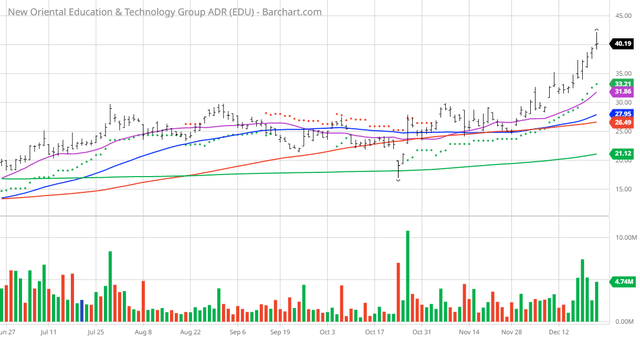
The Chart of the Day belongs to the Chinese education services provider New Oriental Education & Technology (EDU). I found the stock by using Barchart’s powerful screening functions to find stocks with the highest

EDU New Oriental Education & Technology

EDU Price vs 20, 50,100 DMA ( )

Lake Houston-area lawmakers to tackle property values, education, health care in 88th Texas Legislature

Lake Houston-area lawmakers to tackle property values, education, health care in 88th Texas Legislature
The 88th Texas Legislature will meet up with starting Jan. 10, and Lake Houston-spot lawmakers are concentrating on addressing mounting property values, entry to wellbeing care and funding for community training.

Much more than 1,300 payments have been filed by users of the Texas Residence of Representatives and Senate to day, which includes just over 155 payments submitted by lawmakers symbolizing the Lake Houston, Humble and Kingwood places.

Also, lawmakers will be tasked with approving the state’s funds in the course of the session, which will finance expending by means of 2024 and 2025. All through a Nov. 23 function held in Austin, State Comptroller Glenn Hegar stated lawmakers will have a surplus exceeding $27 billion to work with as they head into price range negotiations.

Incoming Rep. Charles Cunningham, R-Houston—who was elected in November subsequent the retirement of Rep. Dan Huberty—said the spending budget surplus could open up up a great deal of prospects for lawmakers.

“I’ve been told it’s simpler to go by means of a session when you have no revenue for the reason that it’s easier to say, ‘no,’” Cunningham reported, listing public training, mental wellness initiatives and assets tax aid among his priorities. “You’ve obtained a laundry checklist of things that we’re likely to be hitting. … It is likely to be an appealing session.”

Although the price range discussions will have an effect on Texans during the state, quite a few of the bills submitted by community lawmakers are remaining written with the area’s wants in brain, together with house tax relief, wellness care and instruction.

House appraisal proposals

Several regional lawmakers have submitted bills aimed at lowering the amount appraisals on assets values can rise each individual year. In Harris County, house costs saw an ordinary value enhance of 21{08cd930984ace14b54ef017cfb82c397b10f0f7d5e03e6413ad93bb8e636217f} from 2021-22, according to the Harris County Appraisal District.

At an Oct. 5 Higher East Montgomery County Chamber of Commerce luncheon in New Caney, condition Sen. Brandon Creighton, R-Conroe, mentioned addressing rising assets values will be a top rated precedence in the 2023 legislative session.

“The average county in all of Texas—254 counties—went up above 20{08cd930984ace14b54ef017cfb82c397b10f0f7d5e03e6413ad93bb8e636217f} on their [property] valuations,” Creighton stated. “We’ve been emotion this for a prolonged time, and we’re fed up.”

In accordance to Texas tax code, the yearly increase of a home’s appraised assets price is capped at the sum of 10{08cd930984ace14b54ef017cfb82c397b10f0f7d5e03e6413ad93bb8e636217f} of the home’s appraised benefit for the previous tax 12 months, the home’s appraised price for the previous tax calendar year and the current market value of all new improvements to the assets because it was past appraised.

However, Creighton mentioned any bill aimed at lowering the state’s appraisal cap on residence values would call for a supermajority vote in every single chamber.

“We’ve been pushing for a lower appraisal cap … each and every solitary session [since 2005],” Creighton claimed. “That tells you how tricky it is to get a bill passed, even in that environment in the Texas Capitol.”

Domestically, lawmakers have submitted 10 expenditures similar to residential and business assets benefit appraisals. Dwelling Invoice 664—authored by Rep. Ernest Bailes, R-Shepherd—would lower the appraisal cap to 2.5{08cd930984ace14b54ef017cfb82c397b10f0f7d5e03e6413ad93bb8e636217f}. House Invoice 335—filed by Rep. Cecil Bell, R-Magnolia—would lessen the appraisal cap to 5{08cd930984ace14b54ef017cfb82c397b10f0f7d5e03e6413ad93bb8e636217f}.

Moreover, Property charges 808, 809 and 810—filed by Rep. Will Metcalf, R-Conroe—would call for chief appraisers, boards of administrators and appraisal review board customers for each and every county’s appraisal districts to be elected as a substitute of appointed.

Overall health treatment bills

Sixteen of the 158 charges filed by nearby legislators are centered all around well being treatment with numerous payments calling for expanded access to Medicaid, which provides health and fitness insurance protection for young children, reduced-revenue residents and men and women with disabilities.

Knowledge delivered by the 2021 U.S. Census Bureau American Community Study demonstrates about 21.1{08cd930984ace14b54ef017cfb82c397b10f0f7d5e03e6413ad93bb8e636217f} of Harris County citizens did not have wellbeing insurance when polled.

In accordance to Luis Figueroa, main of legislative affairs for general public policy advocacy group Each and every Texan, the state’s refusal to increase Medicaid eligibility stipulated by the federal Economical Care Act authorized in 2014 has contributed to a statewide uninsured amount of practically 18{08cd930984ace14b54ef017cfb82c397b10f0f7d5e03e6413ad93bb8e636217f}.

Figueroa stated he thinks the Affordable Care Act was largely thriving in expanding entry to health and fitness insurance policy by growing Medicaid eligibility to involve residents earning up to 138{08cd930984ace14b54ef017cfb82c397b10f0f7d5e03e6413ad93bb8e636217f} of the poverty amount. However, Texas opted out of the expansion, which means nondisabled adults with no kids who are minors are ineligible for Medicaid no matter of their profits.

“Most of the states have finished Medicaid growth … simply because the [federal government] will set in 90{08cd930984ace14b54ef017cfb82c397b10f0f7d5e03e6413ad93bb8e636217f} of [the funding], and the states set in 10{08cd930984ace14b54ef017cfb82c397b10f0f7d5e03e6413ad93bb8e636217f},” Figueroa explained. “It’s a web gain to the state because we get all this federal funding that will help shore up rural hospitals it’ll reduce the uninsured amount, and it will give an economic boon for a ton of communities.”

Senate Monthly bill 125—authored in portion by Sen. John Whitmire, D-Houston, and Sen. Carol Alvarado, D-Houston—would extend Medicaid eligibility to be in line with the Very affordable Treatment Act.

In the Texas Household, Rep. Senfronia Thompson, D-Houston, submitted Property Monthly bill 487, which would extend Medicaid eligibility for gals next a being pregnant from 6 to 12 months.

Education priorities

Even though there have been 16 bills filed by area legislators connected to principal and higher education, Bob Popinski—senior director of plan for Elevate Your Hand Texas, a nonprofit aimed at strengthening public education—said some funding troubles could be addressed in the state’s spending plan.

“In 2019 … we additional $500 to our for each-pupil investing, which was historic, but we are however $4,000 guiding the national average,” Popinski reported.

Humble ISD Superintendent Elizabeth Fagen outlined numerous priorities she hoped lawmakers would deal with in the approaching session, including enhanced psychological well being assist, thoroughly funded virtual studying, college retention and a re-examination the state’s A-F Accountability Ranking System.

Fagen claimed she thinks the rating system—which assesses faculties and faculty districts based on condition examination scores graduation rates and college, vocation and armed service readiness outcomes—does not offer an exact reflection of student results.

“I fully grasp that [the Texas Education Agency] claims the aim is to produce development and extend objectives for districts and for the state, but a going goal would make no sense to anyone,” Fagen said. “A-F really should be a criterion-dependent process with excellent benchmarks, and if you meet up with them, you get the A or the B involved with apparent and concise outcomes.”

Of the 16 expenditures that have been submitted by local legislators connected to schooling, none resolved the state’s accountability ranking procedure.

Even so, Property Monthly bill 37—authored by Rep. Mary Gonzalez, D-Clint—would set up a 19-member commission to establish and make tips for advancements to the accountability rating method.

“Parents want all kids to increase in reading through, all children to increase in math, all young children to create smooth expertise like creative imagination and collaboration,” Fagen explained. “Why can not the A-F method be a little something identical?”

Emily Lincke contributed to this report.

The Education Stories That Stuck With Us

The Education Stories That Stuck With Us

Education Week publishes thousands of stories, opinion pieces, and videos every year. And every year, we find ourselves rereading some of the ones that stick with us. The ones that spoke the loudest. The stories that haunt us.

This year, I asked our reporters, editors, and members of our visual teams to do a bit of reflecting: What story did you work on this year that continues to resonate? How did it add to our understanding of a problem at large? Can you share any insights about the reporting?

In this two-part series, we give you a look under the hood. In part 1, we’ll hear from reporters talking about the stories they worked on. Stay tuned for part 2, where we’ll get additional insights from newsroom leaders.

Crystal Curtis and her son, Jordan Curtis, outside their home in Plano, Texas. Crystal, a healthcare professional whose son attends school in Plano talks about the challenges of ensuring quality schooling, her discomfort with the state and district’s rollback of mandatory masking, and the complications of raising a Black child in a suburban district as policies shift.

“ ‘COVID Is Not Over Us’: As Pandemic Lingers, a Texas Mother’s Dismay Deepens”

Early in 2022, schools were wracked with closures due to dozens of staff members contracting the highly contagious omicron variant of COVID-19. Outages were so widespread that it posed a difficult reporting challenge—how do you cover something that’s happening everywhere while distinguishing your work and your insights from everyone else’s?

The answer came when I found Crystal Curtis, a health care worker who, in a fit of pique, had posted on social media about her frustrations navigating her school district’s changing policies about masking and her son’s experiences in school.

Talking to Curtis threw a few things I’d been thinking about into relief. One was that the debates about masking and in-person schooling had been flattened into binary frames. In fact, as her experience showed, people’s feelings about these things were deeply personal, shaped by their own encounters with school systems. Curtis’ own decision was complicated by the fact that her son is Black—she wanted him to wear masks for his protection but was also afraid people would see his choice of masks as threatening.

The interview also illuminated the fact that even when kids were back to in-person schooling, the quality of instruction hadn’t always returned to what it could or should be. We may be, at least theoretically, in a different place now that boosters aimed at omicron have available for a while. But the themes that that this piece illuminated stay with me: which people do schools serve well and which ones aren’t served well? And how does that shape how we engage with schools?

—Stephen Sawchuk, assistant managing editor

Jacquelyn Mancinelli in the angel garden at Virtua Hospital in Vorhees, NJ, on Aug. 4, 2022. Mancinelli is a teacher and the founder of Start Healing Together.

”Inside the Push to Include Miscarriages and Stillbirths in Teachers’ Leave Policies”

While at the National Education Association’s annual meeting this summer, I was struck by the teacher who stood up in front of everyone to advocate for paid time off for miscarriages and stillbirths. She had learned firsthand that those losses don’t usually qualify for bereavement leave in school districts. I began looking into the issue and found so many heart-wrenching stories: One teacher was actively miscarrying while teaching elementary students; another was told that she didn’t qualify for parental leave after her stillbirth because she was “only caring for [her]self.”

Even though teaching is a predominately female profession, there are so many barriers in place to parenthood. Few school districts offer paid parental leave, and most schools don’t accommodate teachers who are breastfeeding. The lack of bereavement leave for pregnancy loss is yet another grievance.

At a time when teachers are feeling disrespected and demoralized, and are considering leaving the profession, these workplace challenges are important to shed light on.

—Madeline Will, staff writer

Larry Zurcher, sustainability teacher on special assignment for the Lake Oswego School District, prepares students to audit their school building's food waste on Dec. 9, 2021.

“ ‘It Has to Be a Priority’: Why Schools Can’t Ignore the Climate Crisis”

Covering the devastating effects of climate change can feel like shouting into a void that’s rapidly closing. The tenor of the outrage doesn’t come close to matching the scale of the problem.

That’s why I was proud to collaborate this year with my colleague Madeline Will on this pair of pieces that outlines how climate change is affecting schools; how schools are contributing to climate change; and how schools can fight climate change.

The biggest thing I took away, aside from an impending feeling of doom that probably will never fully abate, is how much school districts can do right now—not eventually—to make fighting climate change an active priority—and how much more they could do with more robust financial support for those efforts. It’s never too late to start.

—Mark Lieberman, staff writer

An aerial view of Robb Elementary School in Uvalde, Texas, on July 20, 2022.

“In Uvalde, Pain Where There Once Was Pride”

If there was a story of the year in 2022, it surely was the horrific mass shooting at Robb Elementary in Uvalde, Texas. The shooting added another tragic chapter to the national narrative around school safety and gun laws.

For the town’s Mexican and Mexican American families, it also marked a dark end to Robb Elementary, the school that for years served as a reminder of both a painful past of segregation and how families and students worked to overcome it.

Education Week covered the tragedy as a hard news event, but we knew we wanted to go further than that. My story highlighted the connections between past and present, drawing on archival documents and interviews with residents who were there in the 1970s and who once again have to wrestle with the school’s legacy.

—Ileana Najarro, staff writer

Image of dissatisfied, neutral, satisfied.

ThitareeSarmkasat/iStock/Getty

“School Psychologists Remain Scare Even As Needs Rise”

Nearly 40 percent of all school districts nationally, enrolling 5.4 million students, did not have a single school psychologist in the first full year of the pandemic.

And while most districts did have a school counselor in the 2020-21 school year, only 14 percent met the ratio of one school counselor to 250 students recommended by the American School Counselor Association. And the whiter a district’s student population, the more likely it was to meet the recommended ratios of school-based mental health professionals.

Those frankly startling stats come from an original analysis by my co-reporter, EdWeek librarian and data specialist, Maya Riser-Kositsky. The story started (as they often do), with Maya poking around in some federal databases. After a preliminary analysis, we knew we had something that would be highly relevant to Education Week readers and dove in.

What we published is an in-depth exploration of the massive shortages of school counselors and psychologists in schools when students needs are arguably at their greatest and the very real consequences of those shortages, as told to us by students, teachers, principals, counselors, psychologists, and nurses.

—Arianna Prothero, staff writer

Online Education

Online Education

The Larger Education and learning Fee (HEC) is aiming to develop online classes for five crucial categories in the undergraduate curriculum. The goal is to develop extra pathways to understanding through growing accessibility, modeling courses that are on par with in-particular person education, and enabling pupils to commence at their desired speed. Given the constraints for training in just Pakistan, HEC will have to be appreciated for this valiant work.

In accordance to the HEC, the courses will be designed to be wholly asynchronous but with qualified precision so that just about every session is as instructive and structured as synchronous classes. It additional said that though some specifics will be hammered out later, all lesson and examine resources will be accessible on PakistanEdX. This signifies that all a scholar has to do is log in and each individual useful resource they want will be obtainable to them. Plus, the system has also presented thorough consideration to the kind of classes it desires to offer you and soon after session with top universities, made a decision upon Arts and Humanities, Social Sciences, Quantitative Techniques, All-natural Sciences, and Expository Composing.

The on the internet learning platform and classes feel to be all-encompassing so far and they fall in line with the HEC’s undergraduate college guidelines. This entails that these programs will be aspect of the official increased instruction program and will be attributed credit rating hrs, and minimal online check out-in hrs and will include things like checkmarks for development. This provides to the advantage of online mastering considering that all the things is done by means of the formal HEC system and will integrate the scholar into the pre-current program.

We can’t deny that avenues to attain linear education are not offered for the masses in Pakistan and this hole can be tackled by on the internet schooling. As a more effortless mode of training, it is also additional obtainable for men and women residing in far-flung areas of Pakistan as properly as for girls and girls on their own. They usually face authorization, mobility, and stability challenges but by this new stage, entry to schooling will be a great deal less complicated. On line instruction also needs very little infrastructure and is a much less expensive method as a result of which training can be inspired nationally. Our sources are by now constrained and it is very good to see these types of high-utility initiatives currently being devised regardless of this barrier.

At the exact same time, we need to have to be obvious on the truth that this is just one particular of the a great number of and extensive insurance policies we will need to certainly achieve the goal of ‘revamping’ the sector.

Artificial Intelligence Applications in Education and Pharmacy Practice

Artificial Intelligence Applications in Education and Pharmacy Practice

The definition of artificial intelligence (AI) proceeds to evolve but can be considered of as a simulation of human intelligence, exclusively in conditions of the way people act and consider. Equipment finding out (ML) is a approach of AI that will involve education a product (or algorithm) to make predictions based mostly on data input.1 AI has a number of probable uses in the medical and industry configurations, and some appealing real-globe conditions enable illustrate these alternatives. With the advent of these technologies, nonetheless, there is also a require for even further schooling on AI in health care curricula.

The electronic well being field is developing at an incredible speed and has certainly been accelerated by the COVID-19 pandemic. “Digital health” and “artificial intelligence” have grow to be buzzwords both of those inside and outside the house of wellbeing treatment. As we start off to see far more of these systems carried out in overall health treatment settings, it is necessary for pharmacists to be associated.

Pharmacists are frontline wellness care specialists who have reliable touchpoints with individuals. With electronic wellbeing starting to be a core component of persistent condition management, irrespective of whether it be in symptom monitoring, adherence tracking, or even delivery of treatment alone, pharmacists enjoy an integral function in leveraging systems to enhance client ordeals and outcomes.2 Pharmacists’ voices are wanted at the table when discussing the improvement and implementation of AI algorithms and the need to have to advocate for the integration of a additional strong AI component in the pharmacy curriculum. Pharmacists can also motivate college students and other practicing pharmacists to be curious about utilizing AI in their practice.

As medicine industry experts, pharmacists assist to detect exceptional procedure for clients across healthcare facility, key care, and local community settings. Pharmacists bear arduous training to produce a important thinking framework for client get the job done-up. With considerably of digital wellbeing systems involving an factor of AI, pharmacists will need to implement the very same skillsets to appraise the underlying algorithms. While a lot of scientific purposes of AI are nonetheless in the evidence-of-notion stage, there appears to be a lack of urgency in creating pharmacists as key stakeholders. This posting will share an overview of existing apps of AI in the context of pharmacy and focus on possibilities for involvement by pharmacists.

Clinical Programs

Pharmacists in many overall health treatment options have employed AI to offer facts-driven interventions by means of Scientific Selection Support Systems (CDSS). This form of technological know-how can help pharmacists comb as a result of information and make interventions to prevent treatment problems, reduce individual complications, and save expenses.3 For case in point, one particular company, Arine, has designed a platform that provides pharmacists with necessary info to provide complete individual care products and services such as customized medication management, life style counseling, and care coordination via telehealth.4

A different company, Cricket Wellbeing, makes use of ML to assistance sufferers with chronic kidney disorder (CKD). The Cricket Overall health designs are intended to forecast approximated glomerular filtration (eGFR) with no lab data. A cohort examine was built applying Cricket Health’s academic system with 37 contributors in the intervention arm (61 overall). Survey success revealed that more patients in the Cricket Wellness system started dialysis in the outpatient setting and demonstrated far better knowledge of the ailment (p<0.001).5

A separate, similar study with Cricket Health involved an educational program for patients with CKD stages 4 and 5 to help determine which treatment modality would be best for their renal health. The patients showed increases in peritoneal dialysis selection, renal transplants (as opposed to conservative management), and overall disease state knowledge.6

CDSSs have also been implemented in community pharmacies. A literature review comprised of 6 different studies showed a 31{08cd930984ace14b54ef017cfb82c397b10f0f7d5e03e6413ad93bb8e636217f} reduction in drug-drug interactions (DDIs) and a reduced frequency of inappropriate medications for pregnant or elderly patients. The study did, however, find that clinical inertia and alert fatigue were barriers to use of CDSS in the community setting.7

AI is also seen in the ambulatory care setting. A systematic review by Sennesael et al. analyzed 16 different studies involving CDSS and patients requiring anticoagulation.8 Some of the positive features of the CDSS included integration with EMRs, no additional data entry required on the clinician’s side, and recommendations provided (as opposed to only assessments). The study also showed negative features of CDSS such as lack of formalized incentives to use the technology, lack of communication of decision support results to patients, and lack of periodic feedback to clinicians, all of which may be barriers to implementation of CDSS in practice.8

AI can be beneficial to pharmacists in the acute care setting as highlighted in research by Calloway et al., which describes an acute care facility utilizing CDSS to guide pharmacy interventions in antimicrobial stewardship. These interventions involved de-escalation of antibiotic regimens, identification of inappropriate antibiotics based on cultures or patient lab data, dose optimizations, and intravenous to oral conversions. The authors also shared that the CDSS provided alerts to the diabetes educator if abnormal blood glucose values were found in the health records. Utilization of the CDSS therefore increased pharmacists’ clinical interventions by over 100{08cd930984ace14b54ef017cfb82c397b10f0f7d5e03e6413ad93bb8e636217f} each month, saving approximately $1.5 million annually.9

Industry Applications

Novel medications are currently estimated to cost $3 billion and take up to 10 to 15 years to develop.10 Coupled with the use of in silico models, AI and related techniques (e.g., ML or deep learning [DL]) are able to make predictions across a range of physicochemical properties, pharmacokinetic characteristics, selectivity, and more, which then allows research and development teams to hone in on potentially higher yield preclinical candidate compounds. Deep neural networks (DNN) have also been used in pattern recognition, which can be useful in pharmacology and drug discovery. These DNNs can be used to create novel features beyond the compounds’ traditional molecular structure. However, as DNN algorithms become more commonplace, significant resources will be required to optimize this technology in health care settings.10

AI can be used in drug design to verify protein targets using 3-dimensional structures. Although there is an interest in using AI for this, it remains expensive and time intensive. However, using DL methods in combination with other neural networks has led to advances in target prediction.

Prediction of protein-protein interactions is also possible using AI. This technology may even reduce the rate of adverse events in small molecule drugs due to the increase in selectivity of the drug’s target profile. Furthermore, the neural networks can be used earlier in the drug development process to identify poor absorption, distribution, metabolism, and excretion (ADME) outcomes of the molecule-disease state combination being studied.11

AI is also used for drug repurposing and “hit discovery” by creating disease state models which are validated against either public (e.g., ChEMBL and PubChem) or proprietary (e.g., GOSTAR) chemical libraries.12 Drug repurposing using ML and DL algorithms can be built with an optimized and unbiased data set to authenticate the model performance. These models are then used in conjunction with the previously mentioned chemical libraries with human guidance to further identify the best possible drug candidate in accordance with the disease state.13 These drug models have been used to decrease the time between initial screening and the end of preclinical testing. For example, Exscientia and Sumitomo Dainippon Pharma co-developed DSP-1181, a drug targeting obsessive compulsive disorder. The average time for initial screening to the end of preclinical testing took roughly 12 months, whereas the industry average is 4 to 6 years.14

Pharmacists require the necessary tools and training to understand the fundamentals of AI, whether in the clinical or industry setting. Therefore, more emphasis should be placed on training using avenues such as additions to pharmacy school curriculum, pharmacist continuing education (CE), and digital health research.

AI in Pharmacy Education

As digital health continues to integrate into clinical and industry workflows, health care education must evolve to meet the changing landscape. In order to more seamlessly integrate AI into existing practice settings, digital health education for pharmacists needs to be more accessible. As Aungst et al. discussed in a 2020 piece in the Journal of Medical Education and Curricular Development, there are many proposed models to consider. One potential strategy involves threading digital health topics throughout the pharmacy school curriculum and reinforcing digital health training through elective courses and educational tracks, minors, or certificate programs. Post-graduate opportunities may include master’s degrees, residencies or fellowships, and continuing education credits.15

An exhaustive syllabus search across United States pharmacy schools revealed that few training modalities currently exist, particularly ones involving AI. Several digital health fellowships and permanent roles at well-known universities such as the University of Southern California (USC) and University of California, San Diego (UCSD) have been developed, although a significant gap remains in terms of formal educational opportunities.15

The International Pharmaceutical Federation (FIP) released a comprehensive report on a Global Digital Health Education Framework in May 2021. This report is the first of its kind to showcase global initiatives that integrate digital health into pharmacy education and into the pharmacy workforce and utilized a survey to understand what opportunities already existed.16

The key findings from the survey largely mirrored the US syllabus search, highlighting the limited number of pharmacy schools that offer digital health education.16 It also found a misconception among survey participants, who understood “online education” and “digital health education” to be interchangeable terms. Challenges to offering digital health education were limited resources and availability of experts to guide them in implementation. Despite these findings, there appeared to be a promising trend in that approximately half of participants agreed that their school would be able to incorporate new digital health tools into the curricula as they emerged, and that their students would be prepared to deliver digital health services.

The findings of this report highlighted the knowledge and skill gaps in the pharmaceutical workforce. Implementation of digital health tools in clinical care was one of the least likely concepts covered in pharmacy education, despite participants’ highlighting the clear need to learn how to apply this technology for clinical problem solving. Participants also spoke to the use of digital health technologies such as AI and ML as offering excellent opportunities to improve health care services, access, and outcomes. Participants were most excited about topics such as AI, chatbots, and blockchain technologies, despite having a lower baseline knowledge relative to the more commonly discussed topics of electronic health records and e-prescribing. Existing digital health education seems to include more operational and administrative competencies rather than AI and ML the report revealed that data interpretation and applications of AI in clinical pharmacy and industry settings seem to be a major gap in digital health training and education.16

There are a few institutions that have successfully implemented digital health training opportunities. Utrecht University in the Netherlands invited students with specific interests in digital health to apply to a pilot elective course. Students had the opportunity to gain diverse exposure to AI, chatbots, and blockchain among other topics through guest speakers, interactive workshops, and applied assignments. Another case study involves a postgraduate course on digital health in Madrid, Spain, which gave students the opportunity to learn about various digital tools, including AI, to help comprehend the power of information technology to deliver more patient-centered care. La Trobe University in Australia was cited for a work-in-progress model on their vertically aligned digital health curriculum that they have integrated into their current pharmacy curriculum. This superimposed model has allowed students starting in their first year to build a foundational framework. In later years, they continue to expand and apply it via existing therapeutics cases and clinical exam role-plays, demonstrating how digital tools can be useful in their practice. They develop deeper understanding through exploring more complex topics such as AI, big data, and robotics. These examples encourage students to stay curious about applying topics such as AI and be at the forefront of their future practice settings.16

Traditional pharmacy school curriculum discusses the clinical fundamentals such as taking a detailed medication history, reconciling medication lists from multiple conflicting sources, and providing thorough patient education. Considering the digital transformation of the health care system and the evolving role of pharmacists, assessing digital health literacy and collecting information on digital technologies used in addition to medication therapies will be a new focus.17 Timothy Aungst writes that “digital health” will just become “health” because of the digital transformation era.18

Discussion

AI integration in pharmacy practice is inevitable. It is essential that pharmacists understand AI concepts to adapt to future needs. AI-generated clinical decision support can augment the role of the pharmacist as a patient care provider. By interpreting and applying the data provided by the algorithms, pharmacists are uniquely equipped to guide development of more patient-centered care. Educational standards, however, must keep pace with the changes in health care delivery. Pharmacists likely have little to no formal training in AI applications in pharmacy practice given that concepts related to clinical decision making and evidence-based medicine using AI were least likely to be included in pharmacy curriculum, according to survey participants.

During the COVID-19 pandemic, students have been adapting to virtual patient care practices and precepting models to continue their experiential education. There is a need for pharmacists to adopt more digital services beyond telehealth visits in the post-COVID era and implement a digital health competency framework among educators.

Health care has traditionally been a late adopter of the latest digital innovations. Based on the findings from the FIP report, it is essential that digital health education be integrated into pharmacy curricula, especially in AI, ML, and digital medicine. Emphasis should be placed not only on digitally enabling the future generations of pharmacists through the curricular additions, but also on providing support to currently practicing pharmacists through CE and professional development training in emerging digital technologies.

References

1. Vatanka P. Preparing the Next Generation of Pharmacists for their Role in Digitally Enabled Care. Digital Health presented by CPhA. Published November 8, 2021. https://digitalhealthcpha.com/2021/11/preparing-the-next-generation-of-pharmacists-for-their-role-in-digitally-enabled-care/

2. Amelung K. Pharmacists’ Responsibility in Assessing the Value of Digital Tools for their Patients. Digital Health presented by CPhA. Published September 7, 2021. https://digitalhealthcpha.com/2021/09/pharmacists-responsibility-in-assessing-the-value-of-digital-tools-for-their-patients/

3. Amarasingham R, Plantinga L, Diener-West M, Gaskin DJ, Powe NR. Clinical information technologies and inpatient outcomes: a multiple hospital study. Arch Intern Med. 2009169(2):108-114. doi:10.1001/archinternmed.2008.520

4. Prescribing Physician Analytics. Arine. https://www.arine.io/prescriber-analytics?hsLang=en

5. Kaiser P, Pipitone O, Franklin A, et al. A Virtual Multidisciplinary Care Program for Management of Advanced Chronic Kidney Disease: Matched Cohort Study. J Med Internet Res. 202022(2):e17194. doi:10.2196/17194

6. Dubin R, Rubinsky A. A Digital Modality Decision Program for Patients With Advanced Chronic Kidney Disease. JMIR Form Res. 20193(1):e12528. doi:10.2196/12528

7. Curtain C, Peterson GM. Review of computerized clinical decision support in community pharmacy. J Clin Pharm Ther. 201439(4):343-348. doi:10.1111/jcpt.12168

8. Sennesael AL, Krug B, Sneyers B, Spinewine A. Do computerized clinical decision support systems improve the prescribing of oral anticoagulants? A systematic review. Thrombosis Research. 2020187:79-87. doi:10.1016/j.thromres.2019.12.023

9. Calloway S, Akilo HA, Bierman K. Impact of a Clinical Decision Support System on Pharmacy Clinical Interventions, Documentation Efforts, and Costs. Hosp Pharm. 201348(9):744-752. doi:10.1310/hpj4809-744

10. Ekins S, Puhl AC, Zorn KM, et al. Exploiting machine learning for end-to-end drug discovery and development. Nat Mater. 201918(5):435-441. doi:10.1038/s41563-019-0338-z

11. Zhong F, Xing J, Li X, et al. Artificial intelligence in drug design. Sci China Life Sci. 201861(10):1191-1204. doi:10.1007/s11427-018-9342-2

12. Chaturvedula A, Calad‐Thomson S, Liu C, Sale M, Gattu N, Goyal N. Artificial Intelligence and Pharmacometrics: Time to Embrace, Capitalize, and Advance? CPT Pharmacometrics Syst Pharmacol. 20198(7):440-443. doi:10.1002/psp4.12418

13. Koromina M, Pandi MT, Patrinos GP. Rethinking Drug Repositioning and Development with Artificial Intelligence, Machine Learning, and Omics. OMICS: A Journal of Integrative Biology. 201923(11):539-548. doi:10.1089/omi.2019.0151

14. Burki T. A new paradigm for drug development. The Lancet Digital Health. 20202(5):e226-e227. doi:10.1016/S2589-7500(20)30088-1

15. Aungst TD, Patel R. Integrating Digital Health into the Curriculum-Considerations on the Current Landscape and Future Developments. J Med Educ Curric Dev. 20207:2382120519901275. doi:10.1177/2382120519901275

16. FIP Digital Health In Pharmacy Education Report Group, Aukje Mantel-Teeuwisse D, Others. FIP Digital Health in Pharmacy Education. Published online 2021.

17. Clark M, Clark T, Bhatti A, Aungst T. The Rise of Digital Health and Potential Implications for Pharmacy Practice. J Contemp Pharm Pract. 201764(1):32-40. doi:10.37901/jcphp16-00012

18. Aungst T. 5 Things Pharmacists Should Know About Digital Health. GoodRx Health. Published July 6, 2021. https://www.goodrx.com/hcp/pharmacists/5-things-pharmacists-should-know-about-digital-health