Unsupervised Home Exercises Versus Formal Physical Therapy After Primary Total Hip Arthroplasty: A Systematic Review

Unsupervised Home Exercises Versus Formal Physical Therapy After Primary Total Hip Arthroplasty: A Systematic Review

Formal physical therapy (PT) after total joint arthroplasty (TJA) is commonly recommended and is often thought to be indispensable to favorable patient outcomes [1,2]. In contrast to the modern era, these surgeries were performed on older, less active patients with more severe diseases and deformities [3]. These earlier surgeries were more extensive, and weight bearing was often limited postoperatively [4,5]. Modern total hip arthroplasty (THA), however, is characterized by a younger, more active patient population along with dramatic advances in pain control and rapid recovery [4,5]. Despite the changing landscape, formal PT has maintained its status amongst providers and patients as an integral component to improving outcomes [2,6].

Several studies over the past few years have demonstrated that formal PT, whether inpatient or outpatient, may not have any benefit over home-based unsupervised exercise programs [7-9]. While this has led to a shift away from formal PT utilization by some, there are no guidelines to assist in determining which patients may benefit [7]. Reducing the routine use of formal PT to only those patients for whom it is warranted may offer several benefits. The responsibility of copays and transportation is often placed on the patient and, for many, can be a significant burden [10,11]. Additionally, with the increased interest in alternative healthcare models, the focus has shifted to finding methods to reduce episode-of-care costs [12,13]. The costs associated with formal PT after discharge are not trivial, comprising up to 8{08cd930984ace14b54ef017cfb82c397b10f0f7d5e03e6413ad93bb8e636217f} of total costs for TJA episodes of care [9].

The goal of this review was to assess the existing literature comparing outcomes of primary THA patients undergoing formal supervised PT to those with unsupervised home exercise programs through a systematic review and meta-analysis of randomized controlled trials (RCTs). To avoid intervention bias towards supervised home programs, we chose to only include studies that explicitly described unsupervised home exercise regimens. The primary aim was to assess changes in lower extremity strength (LES), aerobic capacity, and patient-reported physical outcome and quality of life (QoL) scores at zero to six months and six months to one year.

This systematic review and meta-analysis were conducted in accordance with the PRISMA (Preferred Reporting Items for Systematic Reviews and Meta-Analyses) guidelines and were registered in the PROSPERO International Prospective Register of Systematic Reviews (PROSPERO Identifier CRD42021228071).

Inclusion criteria

This review considered all English-language RCTs that compared objective measures and patient-reported outcomes (PROs) from patients with formal postoperative PT or supervised exercise programs to those with unsupervised home exercise interventions (defined as an explicitly stated form of home exercise program to be performed without direct supervision of a health professional). This also included written exercise instructions, video programs demonstrating exercises, or phone applications containing directions for exercises). The time period of interventions was limited to the period between discharge from hospitalization and six months postoperatively. Studies involving comparisons between only supervised cohorts, unsupervised cohorts, or without clear delineation of what each exercise intervention consists of were excluded, as were those involving preoperative exercise programs as the primary intervention.

Search strategy and study screening

With the assistance of an informationist, an electronic search was conducted of all published literature from database inception to December 14, 2020 from the following databases: PubMed, EMBASE, Web of Science, Scopus, Cochrane Library, and ClinicalTrials.gov. MeSH and Emtree terms were used alongside free text to enhance search sensitivity. Studies were screened based on titles and abstracts initially, with relevant studies subjected to full-text review. All screening was performed independently by two authors (YPC and HH). All disagreements were resolved through discussion, with input from the senior author (CAD) on an as-needed basis.

Quality appraisal

The Cochrane Risk of Bias Tool 2.0 was utilized to assess the five domains of potential bias: randomization process, deviations from intended intervention, missing outcome data, outcome measurement, and selection of reported results. The result for each domain was assigned risk scores of “low,” “some concern,” or “high.” A risk of bias assessment was made for each outcome measurement. The GRADE (Grading of Recommendations Assessment, Development, and Evaluation) system was utilized to appraise the quality of evidence included in this meta-analysis to ensure the reliability of its results.

Data extraction and statistical analysis

Data extraction was performed manually by three reviewers (YPC, HH, and ZW). Extracted descriptive variables included journal, year, and country of publication, number of cases, age, gender, body mass index, inclusion criteria, follow-up, type of intervention, time from discharge to intervention initiation, and intervention length. The outcomes of interest in this study changed from baseline data in LES (measured with a timed up-and-go test (TUG), sit-to-stand test, or hip abduction strength as measured by a dynamometer), aerobic capacity, and patient-reported physical function and QoL. Each outcome measure was divided into short-term recovery (<6 months from surgery; if multiple time points were observed <6 months from surgery, the closest one to the three-month postoperative point was chosen) and long-term recovery (≥6 months from surgery; if multiple time points were observed ≥6 months from surgery, the closest one to the one-year postoperative point was chosen) windows. Changes from baseline values were collected in the form of a mean and standard deviation (SD). When not available for change from baseline scores, they were imputed using previously established methods from the Cochrane Handbook for Systematic Reviews of Interventions [14]. For studies involving more than one outcome measure for each of the above categories, only one outcome measure was included. Outcome measures were pooled for meta-analysis if there were at least three studies with reported results. All the outcomes in this study consisted of continuous variables. Effect sizes were assessed using random effect models to calculate standardized mean differences (SMD) and 95{08cd930984ace14b54ef017cfb82c397b10f0f7d5e03e6413ad93bb8e636217f} confidence intervals (CI). Heterogeneity was tested using the I2 statistic. All meta-analysis calculations and subsequent forest plots were generated using Review Manager Software Version 5.4.1 (Copenhagen: The Nordic Cochrane Center, The Cochrane Collaboration, 2020).

Characteristics of included studies

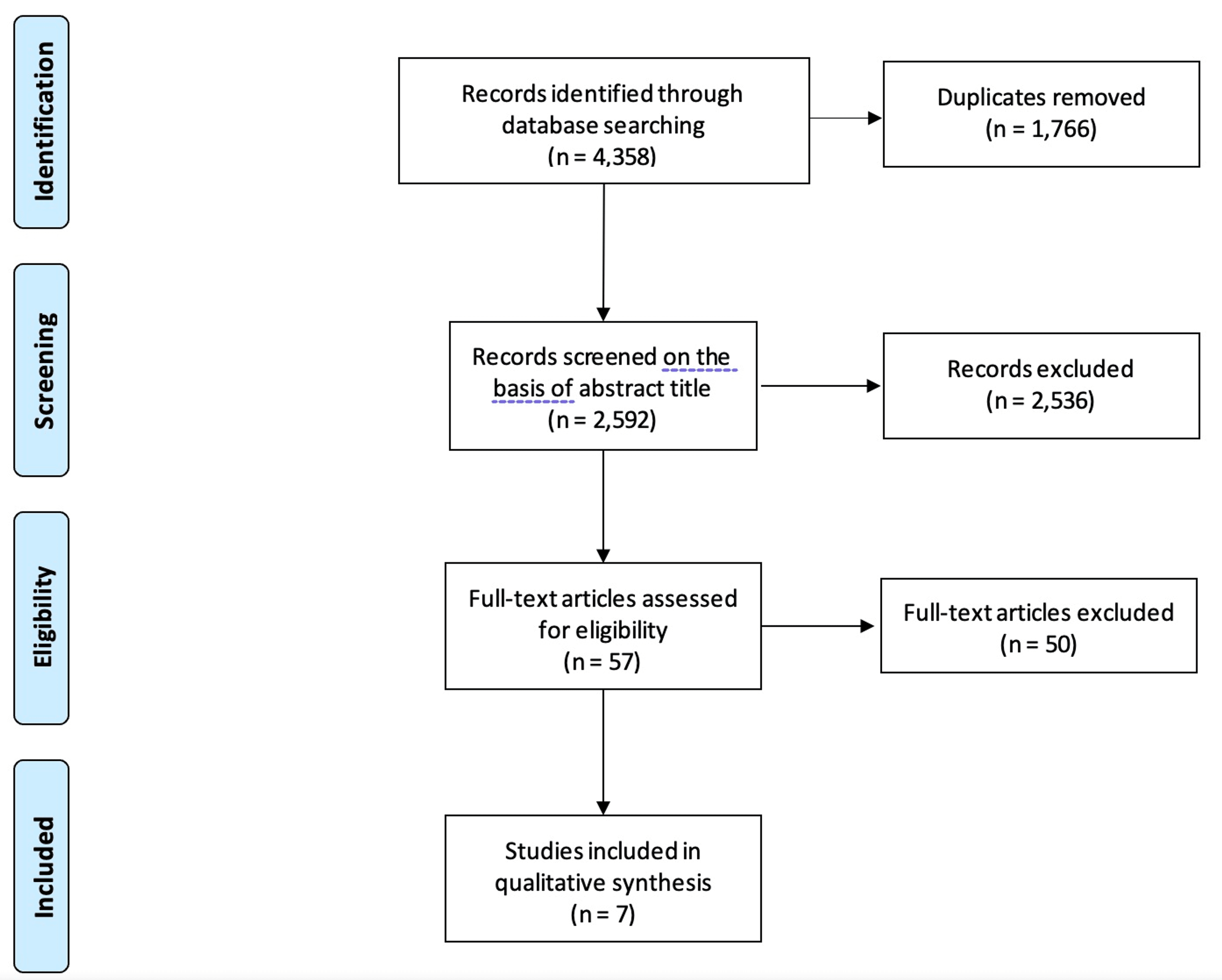
A total of 4,358 citations were identified (Figure 1). After removing 1,766 duplicate citations, a total of 2,592 studies were assessed for eligibility based on title and abstract. Fifty-seven studies were eligible for full-text review. Ultimately, seven studies (n=398 cases) were included in this review.
A descriptive summary of the included studies can be found in Tables 1–2. All studies were performed within the last ten years, except for one conducted in 2008 [15]. Three of the seven studies began their intervention programs upon discharge; two in the first week after surgery, one six weeks after, and one program at 12 weeks postoperatively. The mean program length was 8.0 ± 2.8 weeks. Six studies reported outcomes in the short-term period, and five reported outcomes in the long-term period.

References Country N Mean Age (years) {08cd930984ace14b54ef017cfb82c397b10f0f7d5e03e6413ad93bb8e636217f} Female Mean BMI (kg/m2) Inclusion/exclusion
Austin et al. [7] USA 108 62 44 29 Inclusion: age 18-80 years, primary unilateral THA for OA. Exclusion: inflammatory or post-traumatic arthritis, history of septic arthritis, revision or conversion THA, patients requiring discharge to skilled facility.
Beaupre et al. [8] Canada 21 53 52 NR Inclusion: age <65 years, primary unilateral THA with lateral approach. Exclusion: history of developmental dysplasia of the hip.
Coulter et al. [16] Australia 95 64a 58 NR Inclusion: age > 18 years, primary elective THA, patient lives locally. Exclusion: metastatic disease, pathologic fractures, infection, acute trauma, revision THA, inability to provide informed consent, UCLA scale < 2 preoperatively, unable to bear weight postoperatively, requiring inpatient rehabilitation postoperatively.
Galea et al. [15] Australia 23 68 30 29 Inclusion: primary THA for OA, ability to walk 45 minutes independently with mobility aid, independence in sit to stand transfer, adequately comprehends written/verbal instructions. Exclusion: uncontrolled systemic disease, pre-existing neurologic/other orthopedic condition affecting walking, more than four weeks physiotherapy postoperatively, revision surgery or significant postoperative complications
Mikkelsen et al. [17] Denmark 62 65 42 29 Inclusion: primary unilateral THA for OA, preoperative HOOS ADL < 67, age > 18 years, live within 30 km from hospital, willing to participate. Exclusion: BMI > 35, pre-planned supervised rehabilitation, pre-planned contralateral THA within six months, inability to speak or read Danish, mental or physical conditions impeding intervention
Monaghan et al. [18] Ireland 63 68 32 27 Inclusion: primary THA for OA, age > 50 years, able to read/understand English, willing to participate. Exclusion: medical instability, underlying terminal disease, suspicion of infection following THA
Okoro et al. [19] United Kingdom 26 64 58 NR Inclusion: unilateral THA for OA via posterior approach with 26/28/32 mm femoral head, joint affected is only arthritic joint, no evidence of inflammatory arthropathy. Exclusion: dementia, neurological impairment, cancer or other muscle wasting illness, unstable chronic or terminal illness, any co-morbid disease that contraindicates resistance training
Total   398 64 46b 29c  
References Cohorts Time from discharge to start Program length (weeks) Outcomes assessed Follow-Up Findings
Austin et al. [7] C: 10 weeks unsupervised home exercise based on manual. I: 2 weeks in-home PT followed by 8 weeks outpatient PT 2-3x per week. Upon discharge 10 HHS, WOMAC, SF-36 Physical and Mental 1 month, 6-12 months No significant difference in any of measured outcomes
Beaupre et al. [8] C: home exercise instructions for 4-6 weeks. I: outpatient rehabilitation 2x per week for 3 months. 6 weeks postoperatively 12 WOMAC, SF-36, 6MWT, gait analysis 4 months, 12 months No significant difference in any of measured outcomes
Coulter et al. [16] C: continue exercises from hospital at home, gradually increasing number of repetitions. I: supervised program 1x per week involving circuit exercises for 4 weeks. Upon discharge 4 WOMAC, SF-36, TUG, UCLA activity index 5 weeks, 12 weeks, 26 weeks No significant difference in any of measured outcomes
Galea et al. [15] C: illustrated guide of prescribed home exercises. I: 45 minute sessions 2x per week in supervised rehabilitation center-based program. First week after surgery 8 TUG, stair climb performance, 6MWT, WOMAC 8 weeks C: with faster TUG. No significant difference in other measures.
Mikkelsen et al. [17] C: home-based exercises done 7x per week. I: home-based exercises done 5x per week with additional supervised resistance training sessions 2x per week. First week after surgery 10 Leg extension power, isometric hip muscle strength, STS, stair climb, 20 minute walking speed, HOOS 6 monthsb I: with larger increase in maximal walking speed and stair climb performance. No significant difference in other measures
Monaghan et al. [18] C: postoperative home exercise booklet, advised to walk daily with crutches until review at 6 weeks. I: 35 minute class 2x per week for 6 weeks, no additional home exercises. 12 weeks postoperatively 6 WOMAC, VAS, 6MWT, SF-12, hip abduction strength 18 weeks I: with better improvement in 6MWT, WOMAC function, and SF-12 Physical. No significant differences in WOMAC pain or stiffness, SF-12 mental health score, VAS, or hip abduction strength
Okoro et al. [19] C: unsupervised home exercises. I: weekly PT sessions for 6 weeks. Upon discharge 6 Maximum voluntary contraction of operated leg quad, STS, TUG, stair climb, 6MWT, lean mass of operative leg (DEXA) 6 weeks, 6 months, 9-12 months No significant difference in any of measured outcomes
Total     8a      

Data synthesis and meta-analysis

Summaries for all outcome assessments are summarized in Table 3. No meta-analysis was conducted for long-term aerobic capacity as there were fewer than three studies with available data.

Outcome Risk of bias Directness of evidence Heterogeneity Precision Publication bias Overall quality
LE strength short term No downgrade No downgrade. No evidence of indirectness. I2 = 66{08cd930984ace14b54ef017cfb82c397b10f0f7d5e03e6413ad93bb8e636217f}, moderate heterogeneity. Downgraded one level Rated down one level. Moderate imprecision. No assessment of publication bias conducted. Low
LE strength long term Downgraded by one level. Limitation primarily in selection of reported result. No downgrade. No evidence of indirectness. I2 = 22{08cd930984ace14b54ef017cfb82c397b10f0f7d5e03e6413ad93bb8e636217f}, low heterogeneity Rated down one level. Moderate imprecision. No assessment of publication bias conducted. Low
Aerobic capacity short term No downgrade No downgrade. No evidence of indirectness. I2 = 12{08cd930984ace14b54ef017cfb82c397b10f0f7d5e03e6413ad93bb8e636217f}, low heterogeneity Rated down two levels. Significant imprecision. Very wide confidence interval. Well underneath suggested sample size. No assessment of publication bias conducted. Low
Self-reported physical outcome short term Downgraded by one level. Limitation primarily in measurement of outcome. No downgrade. No evidence of indirectness. No downgrade. I2 = 0{08cd930984ace14b54ef017cfb82c397b10f0f7d5e03e6413ad93bb8e636217f}, low heterogeneity Rated down one level. Moderate imprecision. No assessment of publication bias conducted. Low
Self-reported physical outcome long term Downgraded by one level. Limitation primarily in measurement of outcome. No downgrade. No evidence of indirectness. I2 = 0{08cd930984ace14b54ef017cfb82c397b10f0f7d5e03e6413ad93bb8e636217f}, low heterogeneity Rated down one level. Moderate imprecision. No assessment of publication bias conducted. Low
Self-reported QoL short term Downgraded by one level. Limitation primarily in measurement of outcome. No downgrade. No evidence of indirectness. I2 = 0{08cd930984ace14b54ef017cfb82c397b10f0f7d5e03e6413ad93bb8e636217f}, low heterogeneity Rated down one level. Moderate imprecision. No assessment of publication bias conducted. Low
Self-reported QoL long term Downgraded by one level. Limitation primarily in measurement of outcome. No downgrade. No evidence of indirectness. I2 = 0{08cd930984ace14b54ef017cfb82c397b10f0f7d5e03e6413ad93bb8e636217f}, low heterogeneity Rated down one level. Moderate imprecision. No assessment of publication bias conducted. Low

Short-Term Outcomes

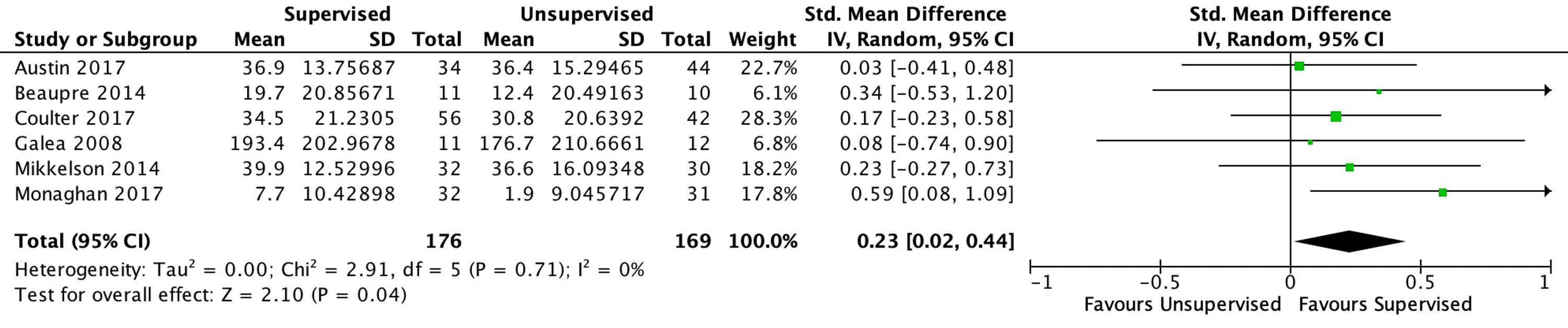
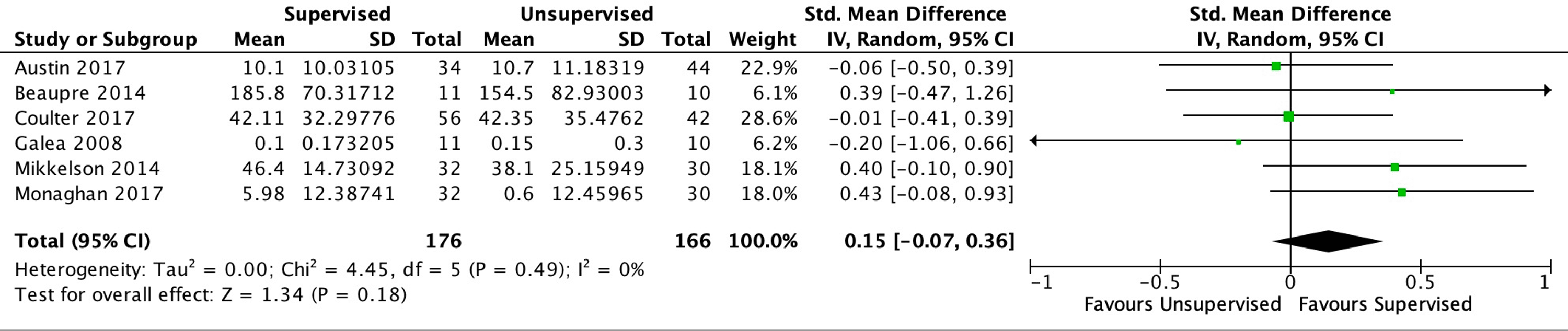
Of the six studies included in the short-term outcome analysis, five found both interventions to be equivocal. One study found a statistically significant difference in physical function scores favoring the supervised cohort but was unable to determine if this difference was clinically significant. Based on five studies and a low level of certainty, no differences in short-term LES were found (SMD −0.04 [−0.50, 0.41]; I2=66{08cd930984ace14b54ef017cfb82c397b10f0f7d5e03e6413ad93bb8e636217f}; p=0.85) (Figure 2). There was no significant difference in short-term aerobic capacity based on three studies and a low level of certainty (SMD −0.50 [−36.88, 35.89]; I2=12{08cd930984ace14b54ef017cfb82c397b10f0f7d5e03e6413ad93bb8e636217f}; p=0.98) (Figure 3). Compared with unsupervised home exercise, the supervised exercise regimen was associated with improved self-reported physical function outcome scores based on six studies and a low level of certainty (SMD 0.23 [95{08cd930984ace14b54ef017cfb82c397b10f0f7d5e03e6413ad93bb8e636217f} CI, 0.02-0.44]; I2=0{08cd930984ace14b54ef017cfb82c397b10f0f7d5e03e6413ad93bb8e636217f}; p=0.04) (Figure 4). According to Cohen’s work [20,21], an SMD of 0.23 is considered a small effect size. No differences were found between the two cohorts with regard to short-term QoL scores based on six studies and a low level of certainty (SMD 0.15 [−0.07, 0.36]; I2=0{08cd930984ace14b54ef017cfb82c397b10f0f7d5e03e6413ad93bb8e636217f}; p=0.18) (Figure 5).


Long-Term Outcomes

No long-term outcome differences were identified between the unsupervised and supervised cohorts in this study. There was no significant difference observed with regards to long-term LES, based on four studies and a low level of certainty (SMD −0.19 [−0.52, 0.13]; I2=22{08cd930984ace14b54ef017cfb82c397b10f0f7d5e03e6413ad93bb8e636217f}; p=0.24) (Figure 6). Similarly, no differences were observed with regards to long-term patient-reported physical outcome scores, based on four studies and a low level of certainty (SMD 0.11 [−0.13, 0.36]; I2=0{08cd930984ace14b54ef017cfb82c397b10f0f7d5e03e6413ad93bb8e636217f}; p=0.37) (Figure 7), or long-term QoL scores based on four studies and a low level of certainty (SMD 0.19 [−0.06, 0.43]; I2=0{08cd930984ace14b54ef017cfb82c397b10f0f7d5e03e6413ad93bb8e636217f}; p=0.14) (Figure 8).


Risk of bias

The results of the quality appraisal are summarized in risk of bias summary plots in the appendices (Appendix Figures 9–15). The self-reported scores all had a high risk of bias, primarily due to bias in outcome measurement (Table 3). All outcomes were rated as low-quality evidence (Table 4). The primary reasons for the downgrade in quality were the risk of bias and imprecision. Publication bias was not assessed as there were fewer than 10 studies involved in each outcome.

Outcome Supervised participants (n) Unsupervised participants (n) SMD/MD (95{08cd930984ace14b54ef017cfb82c397b10f0f7d5e03e6413ad93bb8e636217f} CI) Risk of bias Certainty of evidence
LE strength short term 142 (5) 121 (5) −0.04 (−0.50, 0.41)a Some concerns Low ⨁⨁◯◯
LE strength long term 112 (4) 95 (4) −0.19 (−0.52, 0.13)a High Low ⨁⨁◯◯
Aerobic capacity short term 54 (3) 49 (3) −0.50 (−36.88, 35.89)b Some concerns Low ⨁⨁◯◯
Self-reported physical outcome short term 176 (6) 169 (6) 0.23 (0.02, 0.44) a High Low ⨁⨁◯◯
Self-reported physical outcome long term 133 (4) 126 (4) 0.11 (−0.13, 0.36)a High Low ⨁⨁◯◯
Self-reported QoL short term 176 (6) 166 (6) 0.15 (−0.07, 0.36)a High Low ⨁⨁◯◯
Self-reported QoL long term 133 (4) 126 (4) 0.19 (−0.06, 0.43)a High Low ⨁⨁◯◯

Discussion

Despite the historical emphasis on the importance of formal PT as a critical intervention after THA, this meta-analysis fails to demonstrate any benefit for PT over unsupervised home exercises aside from a small increase in short-term self-reported physical function scores. No significant differences were found with regards to short- and long-term changes from baseline for LES, aerobic capacity, and self-reported QoL scores, as well as long-term self-reported physical outcome scores. The results of our meta-analysis suggest that arthroplasty providers should question the routine use of formal PT for all primary THA patients.

Other reviews conducted on formal PT programs following THA provide mixed results. Reviews conducted by Lowe et. al. [22] and Wijnen et. al. [23] did not perform a meta-analysis of physical function due to considerable variation in their included studies and were unable to provide a definitive conclusion; however, the latter reported an association with increased hip abductor muscle strength. A review conducted by Fatoye et al. [24] including RCTs and retrospective cohorts found that formal PT improved both physical function scores and hip abduction strength, but did not differentiate between short- or long-term follow-up points (follow-up ranged from 2 weeks to 12 months). Finally, Sauressig et al. [25] similarly conducted a meta-analysis and found no differences in self-reported physical function at 4 weeks, 12 weeks, 26 weeks, and one year.

An important aspect of the current review separating it from these prior studies is the use of a clearly defined home exercise regimen, postoperative instructions, or a booklet on discharge as inclusion criteria, excluding those studies that did not specify any form of intervention for their control groups. This is important to ensure a low-cost, standardized control group to allow providers to understand the true effect of trained therapist-led PT for their patients. Without this aspect, studies with controls consisting of no intervention could potentially be included in this review, which could bias results toward the formal therapy groups and may not reflect the current state of most practices.

Although postoperative rehabilitation has long been linked to a successful outcome following THA, the use of supervised PT has several drawbacks. Copay affordability, scheduling outpatient appointments, and arranging transportation have been demonstrated to be legitimate barriers to accessibility to outpatient PT for THA patients after discharge [10,11]. PT exercises can also be painful, as one of the most commonly asked questions regarding PT in the postoperative period after THA is about pain expectations [26]. Additionally, Yayac et al. demonstrated that TJA patients who underwent supervised PT had a significantly higher readmission rate than those who were discharged with self-directed home exercise regimens [9]. After controlling for patient demographics and comorbidities, they found that patients who had supervised home PT were over three times more likely to be readmitted in the 90-day postoperative period. Finally, the added cost associated with it must be considered. Yayac et al. [9] analyzed costs and outcomes in their retrospective study; while no clinically significant difference was found between function or quality of life between groups at two years, they concluded that formal therapy costs included 8{08cd930984ace14b54ef017cfb82c397b10f0f7d5e03e6413ad93bb8e636217f} of a 90-day episode of care costs for those receiving supervised home PT and outpatient PT and 3{08cd930984ace14b54ef017cfb82c397b10f0f7d5e03e6413ad93bb8e636217f} for those receiving supervised home PT only [9]. The results of the current study highlight the need to re-examine the application of routine PT following primary THA, especially with post-discharge costs accounting for up to 36{08cd930984ace14b54ef017cfb82c397b10f0f7d5e03e6413ad93bb8e636217f} of total costs in the bundle payments for TJA [27]. This is particularly salient in the context of a younger patient population, improvements in pain management, and emphasis on early mobilization postoperatively.

The difference between the short-term, self-reported physical outcome scores we observed between supervised and unsupervised groups was largely driven by the findings of the study conducted by Monaghan et al. [18]. This RCT involving an exercise intervention consisting of land- and aquatic-based therapy performed between 12 and 18 weeks after surgery differed from the other studies in this review as it was the only one to include an aquatic component. Additionally, while they found a statistically significant relationship between their formal exercise intervention and improved Western Ontario and McMaster Universities Arthritis Index (WOMAC) scores, they were unable to state whether this translated to a clinically significant difference – an issue that has been raised with the use of WOMAC scores in other literature [28,29]. Our meta-analysis reported an effect size of 0.23, falling under the category of small effect size as described by Cohen [20,21]. However, this was the only measure demonstrating a difference between the two interventions with regard to short-term outcomes and was likely driven by a single study. In the three studies that analyzed data at 12 months, no significant differences were found in any of the assessed outcomes between the two groups [7,8,19]. At the six-month time point, Mikkelson et al. [17] found a larger increase in maximal walking speed and stair climb performance in the formal therapy group, while Johnsson et al. [30] reported increased intermediate-to-moderate pain at six months in the home exercise group. Two other studies at the six-month mark found no significant differences in physical or mental outcomes between home exercise and formal PT groups.

Our results are limited by the number of studies and the quality of their respective data included in the meta-analysis. An important aspect to consider is the included patient population of each included study. Eligibility criteria may have preselected healthier and more motivated patients. In light of this, deconditioned patients with substantial functional deficits or medical comorbidities may still benefit from supervised PT. Additionally, there was substantial heterogeneity of exercise regimens across studies, including aspects such as methodology and duration of therapy, reflecting the likely variation in PT programs at different institutions. Furthermore, relying on patient-reported outcomes can be flawed, particularly in RCTs in which patients know they will be assigned to either supervised or unsupervised cohorts. It is likely that many patients in the intervention groups may be subject to bias – their assignment to formal PT protocols may influence and potentially inflate the supervised PT cohort self-reported outcome scores. The measurement of LES was also subject to variability as the studies assessing it used different methodologies to determine it. Additionally, within the unsupervised cohorts, we were unable to assess the degree of compliance; however, the intention-to-treat approach taken by most of these studies is likely to replicate true scenarios. Finally, previous studies have noted an 18-31{08cd930984ace14b54ef017cfb82c397b10f0f7d5e03e6413ad93bb8e636217f} cross-over rate from self-directed exercise to formal supervised therapy in total joint arthroplasty populations [7,31]. We were unable to account for patients who required crossover in our study – outcomes for these patients would be an area of interest in future studies. The strengths of this study include the narrow inclusion criteria, such as the inclusion of only RCTs or that the unsupervised cohorts must have clearly delineated instructions or booklets given to them, to allow for stronger conclusions than previous reviews on this subject.

Belonging Runs Deep Among Physical Therapy Students, Faculty, and Staff

Belonging Runs Deep Among Physical Therapy Students, Faculty, and Staff

From supporting fellow learners through the COVID-19 pandemic to managing the Boston Marathon in honor of his mom and one of his professors, Jacob Notinger’s experience in the Health practitioner of Bodily Therapy (DPT) software exemplifies the neighborhood and connections the system promotes.

Smiling male student after running a marathon
Jacob Notinger following finishing the Boston Marathon (Contributed image)

Notinger ‘20, ‘23 (CAHNR) navigated an unconventional get started to his graduate experiments finding a supportive group alongside the way. When Notinger started the DPT plan in Slide 2020, the COVID-19 pandemic had compelled courses that were generally incredibly fingers-on to a digital setting.

Inspite of the problems this offered for the new college students, the encounter bonded the 2020 cohort, Notinger suggests.

“The simple fact that it was COVID was a whirlwind for my total class,” Notinger says. “It finished up bringing us with each other much more than everything.”

This previous April, Notinger ran the Boston Marathon and was sponsored by the Dana Farber Most cancers Institute, raising $10,000 for the organization.

He ran in honor of his mom, who is fighting cancer, as well as a member of his UConn “family,” professor Deborah Bubela, who is a cancer survivor. Notinger experienced his fellow DPT pupils indicator a shirt for Bubela, which he took throughout the end line.

“It was a single of the nicest things everyone has at any time finished for me,” Bubela says. “And he did that. He has the greater photograph of goodness. He’s definitely an altruistic and supplying young guy, like so lots of of the pupils in this application.”

Tiny Group, Massive Bond

Just about every cohort in the DPT software incorporates about 30 learners. This modest dimension assists foster meaningful connections among school and students, states Laurie Devaney, affiliate professor and DPT director.

“Our plan is not about levels of competition, it is about supporting all people to realize success,” Devaney claims. “When [our students] go out in the entire world it’s essential to not appear at the person up coming to you as levels of competition, but as a person on the similar staff.”

As an undergraduate, Notinger worked intently with Devaney on research related to get the job done by kinesiology department head, Lindsay DiStefano. The review when compared students’ skills to complete simple athletics tasks, like throwing or catching a ball, with their perception of how well they could full that process.

Notinger’s constructive undergraduate experience functioning with Devaney and other faculty and personnel encouraged him to continue to be at UConn for his graduate research.

He and the other member of the close-knit scholar cohort were being capable to resume in-man or woman research for their next calendar year in the application. Coming into their 3rd year, the DPT pupils will just take on a collection of internships all around the place.

“We really feel like we’re all set, even however it’s been a roundabout highway,” Notinger suggests.

Notinger is commencing with a clinical rotation at an outpatient facility in Massachusetts. In January, he will total a specialized internship at the Seattle Children’s Hospital, a very sought posture at the nationally renowned medical center, doing work with adolescent athletes recovering from accidents.

Notinger constantly knew he wanted to review drugs, but wasn’t positive what industry. By his sophomore year, he had made the decision to pursue a occupation in physical therapy, recalling his personal experiences in actual physical remedy from his time as a student athlete.

“I usually preferred the fingers-on part of it, and how you can assist individuals and you can see advancements,” Notinger says.

Producing a Variance, Just one Mile at a Time

Bubela claims Notinger exemplifies the type of scholar the UConn DPT system celebrates: a single who is motivated by a want to assistance many others.

“All our students do this [work] to help other folks and to make a variance in the entire world,” Bubela claims. “Jacob has surely shown that in several ways.”

When Notinger suggests his marathon time was barely document-shattering, he was happy to have finished, with cheers from his spouse and children and DPT supporters all along the way.

Stick to UConn CAHNR on social media

New physical therapy concept Performance Optimal Health opens in North Naples –

New physical therapy concept Performance Optimal Health opens in North Naples –

Todd Wilkowski made a decision to just take his experienced daily life and his most loved trip place and merge the two of them.

Overall performance Optimum Overall health, started virtually 20 decades ago by Wilkowski in Manhattan, New York, has developed to 6 spots, with the some others clustered in Connecticut. Now, he has a seventh place at 2260 Logan Blvd. N., Ste. 202 in North Naples. It’s at the Logan Landing browsing center, following doorway to First Observe.

The 1,500-square-foot facility opened with a delicate start Tuesday and will celebrate its grand opening Oct. 13.

“A lot of our clientele in all of those people locations arrive down and invest their winters in Southwest Florida,” Wilkowski claimed of why he resolved to migrate his small business south as perfectly. “For the previous few of years, we have been checking out the expansion into Florida. Possibility-smart, our brand name and support probably will do really effectively down listed here.”

Performance Exceptional Wellbeing gives 1-on-a single instruction and concentrates on bodily therapy. It aids men and women occur back from sports activities-similar injuries. But more than the many years, Wilkowski has additional to his company’s offerings with yoga, pilates and other physical exercises designed to protect against injuries, as nicely as deal with them.

“Think of on your own as a expert athlete,” Wilkowski stated. “There’s a staff of people developed all around each professional athlete. Just take a LeBron James, Tigers Woods, Serena Williams. They have physical therapists. They have nutritionists. They have recovery professionals. They have therapeutic massage therapists. They have chiropractors.”

“Our company design is a holistic strategy to one’s health and fitness. And Naples is a great area to start out. We have introduced a group of authorities together underneath one roof. It’s not just the restoration element. It’s the preventative component. To support people optimize their effectively-currently being.”

Digital technology has broadened organization capabilities, he reported. It will allow the clients in Naples access to the same industry experts in nourishment and sports activities psychology as the kinds at the New York and Connecticut locations in digital chat rooms.

As a former quarterback at Ithaca Higher education in New York, Wilkowski has firsthand practical experience coming back from injuries. He’s hoping to support many others in Naples and, decades from now, the rest of Southwest Florida, come back from them as effectively. He hopes to develop to Bonita Springs, Estero and other Naples areas in the potential.

Performance Ideal Health accepts out-of-network insurance policies programs for bodily treatment and rates $110 to $130 an hour for wellness providers, depending on the scope of the cure.

“We’re energized to be in Naples,” Wilkowski stated. “It’s an surroundings where persons live lively existence. And they benefit wellbeing. That sort of fits with our main values and our mission assertion.”

7 Keys to Getting the Most Out of Physical Therapy

7 Keys to Getting the Most Out of Physical Therapy

If you have by no means long gone through bodily treatment ahead of, your thoughts is likely spinning with questions about what to hope and how to get the most out of your knowledge.

Bodily treatment can be a significant ingredient of your recovery from harm, medical procedures or any ailment which is physically blocking you from making the most of the daily life you want to have. That’s why it is significant to tactic your remedy – and your therapist – with an open up thoughts and a willingness to be trustworthy.

With that in intellect, let’s search at 7 points you can do to get the most out or your classes.

Converse Up and Question Concerns

Your initial session will mainly be an information-gathering physical exercise – both equally for your therapist and for you.

Your therapist will expend that very first hour acquiring to know your agony signs and symptoms, bodily situation and constraints. Be ready to remedy inquiries about your medical historical past and to offer you as many specifics as possible about your present-day predicament. If you are dealing with an damage, get notes beforehand about the varieties of activities or activities that may perhaps have induced the injuries or that make it worse.

This is also your prospect to get a company grasp on what to expect during, concerning and just after your periods. Really do not be hesitant to bring a checklist of inquiries (on a notepad or in your cellular phone) to that initially session. It is as well quick to ignore points you needed to check with the moment the session begins.

Set Aims

Just one key element of that original session is establishing your existing physical ailment, restrictions and how you want to strengthen. Your therapist will want to know what you had been in a position to do before the surgery or injury. What form of pursuits do you like to do? What are your hobbies? Are you active in athletics or recreational activities?

From there, the thoughts revolve around your objectives. What do you want to get again to performing? Your therapist will do the job with you to create your aims. It allows, nevertheless, if your objectives are reasonable. For example, if you just experienced a knee surgical procedure with a nine-month restoration time, you can not be expecting to be participating in basketball in 6 months.

Retain in head that your periods will very likely past up to  a pair of months. So it may possibly be less difficult to established each brief-expression and long-phrase ambitions to accomplish on your own following your periods have ended.

Do Your Research Concerning Periods

In most scenarios, you will be likely to remedy two or three moments a week, and that may possibly be plenty of to accomplish your targets. But for most clients, which is not ample do the job to assistance your body regain its mobility.

Which is why it is usually critical to do your “homework” between classes. Your therapist will perform with you to build physical exercises and stretches you will be in a position to do at the health club or at your dwelling.

Believe of if the very same way you would dieting. If you are hoping to shed a couple kilos, you won’t have a lot of results if you only try to eat nutritious meals two or a few instances a 7 days.

Abide by Directions

Your therapist will do the job with you to produce a treatment program with the best chance of aiding you get better from your damage or surgery. But that only performs if you stick to the prepare. If there’s something that does not would make perception, talk to for an rationalization. Or if there’s a individual workout or stretch which is much too unpleasant or complicated, convey to your therapist so that it can be modified. But in the close, the people who are most disciplined with treatment are the types who have the most success.

Devote Space and Time

It will be simpler to do your property periods if you set apart some room for your exercises and stretches. Nearly anything that can make it a lot easier to do the work is a in addition. The similar can be explained for your time determination. In a great world, you would block off the identical time every single day for your homework. But which is frequently not possible for individuals with variable function and spouse and children commitments. Occasionally, it just take a small creativeness, and your therapist will brainstorm thoughts with you. If a devoted time slot is not achievable, just attempt to come across time each and every working day for your get the job done.

Really do not Skip Periods

Lifetime comes about. So it is inevitable that you’ll run into scheduling conflicts just after starting remedy. But if you want to give your overall body its very best opportunity of a swift journey via bodily therapy, try out to prevent disruptions to your schedule. This is not like an injuries in which you can get fast reduction from treatment. The only way via is for you to do the function. Lacking periods also improves the threat of setbacks.

Really don’t Overdo It

There is frequently a misconception about the function of agony in bodily treatment, with clients contacting on that old declaring: “No agony, no get.”

Unfortunately, that line of contemplating in some cases can develop complications throughout treatment. Certainly, it’s correct that there can be pain connected with routines and stretches. But there is a distinction amongst that soreness – and what happens when you overdo it.

If you want to force the boundaries (in terms of depth or frequency) with your treatment, be certain to converse with you therapist first to build guardrails to keep away from accidents or setbacks.

&#13
OHBlogCTA_NewsetterSignUp&#13

Select to Remain in Contact

Indication up to acquire the latest wellbeing news and developments, wellness & avoidance tips, and substantially a lot more from Orlando Overall health.

Sign Up for HealthBeat

VPA students call for physical therapy, nutrition resources

VPA students call for physical therapy, nutrition resources

Get the hottest Syracuse news shipped proper to your inbox.
Subscribe to our e-newsletter listed here.

In purchase to keep attending her dance lessons, senior musical theater pupil Kat Kelly demands to see a chiropractor. But Syracuse University does not give 1 on campus, so Kelly has to go to a non-public follow each and every other 7 days.

When she was 14, Kelly was identified with hip dysplasia and a labral tear in her ideal hip, a prevalent harm for dancers. Kelly’s encounter with injury led her to question the deficiency of sources produced accessible for Visible and Doing Arts college students like herself.

“When you supply a sure resource in an institution, that speaks to the values of your institution,” she stated. “If (the college) did have assistance for people in our division, then I feel it would also make a statement as to the actuality that they price us.”

Each Kelly and fellow musical theater university student Rileigh Incredibly explained that VPA is a person of SU’s major courses. Very’s musical theater class is only manufactured up of 18 students due to the fact the program is so selective, she explained.


They the two come to feel as nevertheless VPA pupils have been forgotten, and SU needs to offer you them extra methods, these as actual physical therapists, nutritionists and a counselor trained in athletics psychology to dancers, specifically or those people with long-term injuries.

“You get (to VPA) and it’s like, ‘where are the means and where’s the money for these sources?’” Pretty said.

membership_button_new-10

Musical theater professor Andrea Leigh-Smith claimed she does her finest to use her “lived experience” as a dancer to aid college students understand their bodies and how to get care of them. Still, she’s is not an pro.

“I believe that we require a superior nutritionist and actual physical therapist, simply because that is not what we are, we’re dancing educators,” Leigh-Smith reported.

Very endured a spinal cord compression in a gymnastics incident at 13, major to four bulging discs, 1 reduced disc and spondylolisthesis, a spinal personal injury prompted when vertebrae slip into a person yet another. She reported she life with serious ache.

“People with preceding personal injury actually will need access to (actual physical therapy), since it is incredibly unpleasant to go and (dance) all the time without having means to enable recuperate your physique,” Pretty mentioned. “Even people today who really do not have earlier injuries that are amazingly sore require to know how to consider care of their bodies so that we can have longevity in our subject.”

Sarah Scalese, SU’s senior vice president for communications, wrote in an e-mail to The Every day Orange that all SU students, together with all those in VPA, have access to “holistic health and wellness services” by the Barnes Heart at the Arch.

Even individuals who really don’t have past injuries that are very sore will need to know how to choose treatment of their bodies so that we can have longevity in our area

Rileigh Quite, VPA drama junior

During her Renée Crown Honors Thesis presentation, Kat Kelly requested SU to give a lot more methods to dancers in the Faculty of Visual and Undertaking Arts. Tutorial leaders in VPA are reviewing Kelly’s investigation to “meet the exclusive needs of performing artists,” Scalese mentioned.

“We appreciate our student’s advocacy and will continue on to explore selections for maximizing accessibility to these services,” she said.

Really emphasized that college students with previous injuries are below even a lot more worry. Some VPA majors, like musical theater majors like Quite, involve further dance-intensive courses.

“Dancing is pretty, incredibly rigorous on the body,” Really said. “You’re in ballet, you are forcing your human body into positions that are not usual. And which is three days a week for an hour and 20 minutes each and every class. Dancing is a kind of artwork, but it’s exceptionally arduous.”

Leigh-Smith claimed that the weekly Dance Wellness course VPA held more than Zoom through the height of the coronavirus pandemic furnished some of these assets, but that curiosity dropped following 1 semester and the program was discontinued.

Nonetheless, Leigh-Smith believes the college has the power to make these resources additional obtainable for VPA students.

“It’s our minds and our bodies,” Leigh-Smith said. “We get a person of them. We have to seriously just take superior care.”

Make contact with Katie: ksmcclel@syr.edu | @katie_mcclellan

With Senior Falls on the Rise, Athletico Physical Therapy Highlights Importance of Fall Prevention

With Senior Falls on the Rise, Athletico Physical Therapy Highlights Importance of Fall Prevention

OAK BROOK, Sick., Sept. 15, 2022 /PRNewswire/ — Falls are the major trigger of fatal and nonfatal accidents among grownups aged 65 yrs and older in the U.S. Nevertheless, irrespective of ongoing tumble prevention awareness, drop harm charges between the more mature grownup population have been steadily growing, according to a current Medicare examine. In simple fact, senior falls increased 1.5{08cd930984ace14b54ef017cfb82c397b10f0f7d5e03e6413ad93bb8e636217f} every year through the examine period, producing 106,000 new injuries and equating to about $1 billion in Medicare spending.

“The pandemic has experienced a substantial effect on the growing old inhabitants in phrases of lowering activity levels, triggering seniors to be a great deal extra sedentary. For the duration of that time, numerous also opted for telehealth bodily remedy services in put of in-clinic care and, however, we are nonetheless seeing write-up-COVID slide hazard people these days,” said Kimberly Smith, PT, DPT, VRT, Illinois Regional Coordinator for Athletico’s Vestibular and Concussion Application. “Physical therapists are movement experts and have the schooling and instruments that are tested to assistance in avoidance of falls. By beginning with actual physical treatment, we can make certain you or your beloved kinds obtain the treatment needed to detect and stop falls in advance of they materialize.”

In the course of Falls Prevention Recognition Thirty day period in September, Athletico Bodily Treatment is encouraging senior older people and caregivers to be proactive by recognizing drop chance variables early on and understanding solutions for avoidance. Falls can lead to nonfatal extreme accidents, these types of as head injuries and hip fractures, or tender tissue accidents to the hand, wrist, elbow, and shoulder. Falls can also be emotionally traumatic to some, leading to people today to keep away from participating in daily things to do due to the fear of slipping.

Physical therapists routinely take care of individuals with accidents similar to falls and can be the to start with line of protection towards them. Athletico is sharing strategies to assure fall chance detection and avoidance are a precedence:

1.    Identify slide chance elements that can and simply cannot be managed by a health care service provider:

  •  
    • Demographics, specifically age, can’t be altered and set older grownups in the optimum possibility group for falls. By the age of 80, over 50 percent the inhabitants will practical experience a tumble on a yearly basis.
    • Suitable management of continual wellbeing disorders like diabetes, coronary heart situations, low vision, and hearing loss may possibly decrease one’s tumble chance.
    • In addition, muscle mass weak spot, weak flexibility, inadequate posture and weak balance are all big hazard variables that can be improved over time with stability, power and flexibility education.

2.    Think about seeing a actual physical therapist initially for tumble avoidance:

  •  
    • A slide analysis completed by a actual physical therapist is a good put to start off to assist establish particular danger aspects. Your therapist might endorse actual physical therapy in combination with an training program and other safety tips.
    • Balance and strength teaching are usually suggested and have substantial added benefits to increasing over-all stability and reducing the possibility of falls.
    • For all those 65 and more mature, take into consideration scheduling an annual tumble analysis to critique your fall background and medicine, and evaluate your actual physical and practical health and fitness.

3.    Concentrate on blocking falls in advance of they occur by getting proactive basic safety measures at residence:

  •  
    • Generate a very clear path all through the residence by eliminating products from the floor that could be tripping hazards, like rugs, toys, decorations and cords.
    • Make certain your residence is perfectly-lit by applying night lights or reflective tape to aid improve visibility of probably unseen objects, stairs, and doorframes to stop accidental falls.
    • Hold bathrooms dry and effectively-lit, and lessen use of ground mats. Also, take into account putting in seize bars, shower chairs, or tub benches for more help.

“Quite a few physical therapists are also caregivers to their household members and mates, and we understand just how detrimental a slide can be for a household,” extra Smith. “Physical remedy is an powerful, small-danger way to examine hazard and avoid falls, and our target is support persons reside the greatest excellent of everyday living for as long as they can.”

To discover additional about tumble prevention or discover an Athletico Bodily Treatment clinic near you, visit www.athletico.com.

About Athletico Actual physical Treatment

Athletico Actual physical Therapy presents the highest quality orthopedic rehabilitation services to communities, businesses and athletes. With its current acquisition of Pivot Wellness Remedies, the enterprise has virtually 8,000 workforce across additional than 900 locations through 25 states and the District of Columbia. Athletico is committed to our people and referring medical professionals by means of our affected person-centric focus, favourable do the job ecosystem, interest to excellent and higher regular of care. Athletico measures individual results and gratification and is devoted to constant advancement. Athletico was named #1 Workplace in Chicago, “Ideal Physical Remedy Exercise in the Nation” by Progress journal, Top Place of work in the Country and has been acknowledged as a chief in staff volunteering and charitable providing. Our products and services contain physical and occupational/hand remedy, workers’ compensation, women’s wellness therapy, concussion management and athletic instruction. For extra info, or to plan a totally free assessment in clinic or now on line with our digital cost-free assessments, stop by http://www.athletico.com and abide by us on Twitter at @athletico.

Media Contact:
Dana Andreoli
Athletico Physical Therapy
[email protected] 
630-259-5156

Supply Athletico Bodily Therapy