
Teen with suicidal behavior needed mental health parity laws enforced : Shots

Teen with suicidal behavior needed mental health parity laws enforced : Shots
A teen's relieved parents finally saw hopeful signs when she got residential treatment. But the family's insurance stopped paying after about two months.

If you or someone you know may be considering suicide, contact the 988 Suicide & Crisis Lifeline by calling or texting 9-8-8, or the Crisis Text Line by texting HOME to 741741.

Rose had already attempted suicide at least half a dozen times before the teenager’s parents found an appropriate residential care facility for her, three states and more than 500 miles away.

Rose, then 15, had been in and out of the emergency department at Nationwide Children’s Hospital in Columbus, Ohio. She had tried two residential programs and one partial hospitalization program in two separate states. But nothing had eased her suicidal urges.

Finally, she was getting a treatment that was helping at Rogers Behavioral Health in Oconomowoc, Wis., a small town 35 minutes west of Milwaukee.

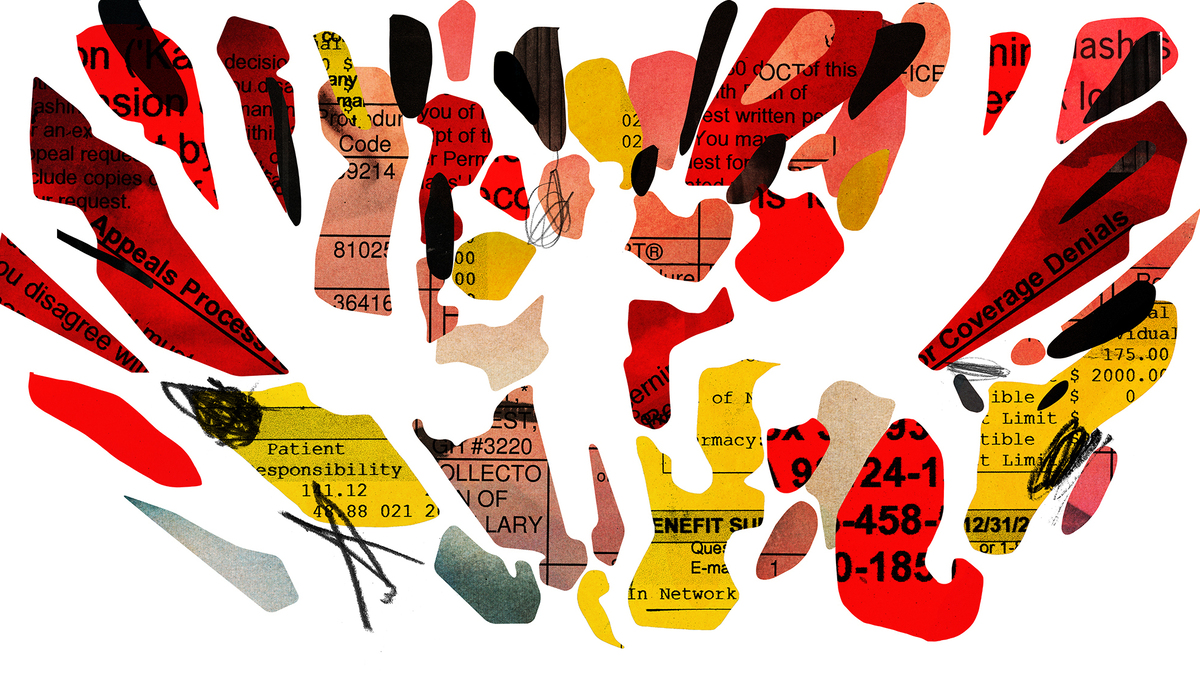
But a little over two months into her stay, just as Rose was starting to feel better, the family’s health insurance – Medical Mutual of Ohio – declined to cover any further treatment.

“I was in my office when we got an email from Rogers that included a copy of the fax denial,” says Rose’s father, Michael. “I was shocked.”

The denial of health insurance coverage for mental health treatment continues to be extremely common, despite federal and state parity laws that are supposed to ensure fairness. But as Rose’s parents discovered, the parity laws are rarely enforced and people with severe mental illness often must rely on their own resources to get care.

(NPR has agreed to use middle names only for the family since this story involves a minor with mental illness.)

A long road to effective care

Rose’s life-threatening depression, anxiety and chronic suicidality consumed her parents’ focus. Michael, a corporate lawyer, took on navigating insurance hurdles and figuring out how to pay for her treatment. Her mother, Rochelle, quit her job as a school counselor, to keep a close eye on her daughter.

She also became Rose’s care coordinator, making appointments, getting her there, researching treatment options. When outpatient treatment didn’t help, Rochelle found residential alternatives for kids with more serious symptoms.

And the family had already spent thousands of dollars on treatments that were unsuccessful in addressing the range of Rose’s symptoms that started when she was 13 years old.

“The vast majority of [providers] do not accept private insurance,” says Michael. “We pay for that on an hourly basis, and it’s added up to tens of thousands of dollars over a period of a couple of years.”

Then, in the summer of 2020, Rochelle stumbled upon an evidence-based form of treatment for suicide that they hadn’t tried yet: Dialectical Behavioral Therapy, or DBT. It’s a form of talk therapy designed specifically for people with chronic suicidality. She learned that Rogers Behavioral Health offered a residential DBT program for adolescent girls. Luckily, they also had a spot open for Rose.

The denial of health insurance coverage for mental health treatment continues to be extremely common, despite federal and state parity laws that are supposed to ensure fairness. But as Rose's parents discovered, the parity laws are rarely enforced and people with severe mental illness often must rely on their own resources to get care.

When Michael and Rochelle met the attending psychiatrist at the program at Rogers, they felt a sense of hope and relief for the first time in two years.

It was “the first connection that I had personally with a therapist who said, ‘I have seen this before. These are the kids that we work with,'” recalls Rochelle.

Hearing that, “my stress levels just dropped,” she says.

DBT is a structured form of treatment which includes individual, group and family therapy (for kids) and teaches people to accept their circumstances, while giving them key skills to help them change their thought patterns and behaviors. The skills help them manage their distress and regulate their emotions.

A large clinical trial published in 2018 in JAMA Psychiatry showed that DBT is more effective in helping teens with repeat suicide attempts and self-harm compared to more general therapeutic approach.

A six-month, outpatient DBT treatment is “sort of the starting point,” for kids with moderate to severe suicidality, says Dr. Vera Feuer, the director of the emergency psychiatry division at Northwell Health in New York. “Usually six months is a decent amount of time to learn the skills, to integrate them.”

However, residential treatment usually yields results faster, says Dr. Stephanie Eken, chief medical officer at Rogers Behavioral Health. “Residential gives results in about three months,” she says, “because it’s a more intense level of care, more treatment around the clock.”

Getting better, then getting denied

About two months into the DBT program, Rose began to show signs of improvement.

“She started connecting with her therapist finally,” says Rochelle. “We’re having good once-a-week family therapy calls, where she’s telling us some of the things that are working for her, and that she’s starting to look at things a little bit differently.”

And most importantly, Rose was starting to talk about wanting to live again, which “we hadn’t heard her do in a couple of years,” Rochelle says.

Michael remembers seeing those changes, too: “That was really the first glimmer of hope that we had seen in probably two years, so we thought we were on the right track.”

But soon, the insurance company wanted to move her to a lower level of care, like a partial hospitalization program.

“It didn’t make sense to me,” says her father Michael. “And more importantly, it made no sense to her treating psychiatrist and the treatment team. They said, ‘it was unworkable, it was extremely dangerous, and would likely lead to a worsening of her symptoms.'”

An internal appeal later filed by Rogers Behavioral Health to Medical Mutual states that discontinuing Rose’s treatment “could interrupt recovery gains” and prove harmful to her.

Medical Mutual of Ohio declined an interview request from NPR. A company spokesperson said in an e-mail statement that their decision to deny further coverage “was made with the guidance of industry-leading, evidence-based guidelines and the review of board-certified physicians trained in the area of medicine” related to Rose’s care.

‘A long history of discriminating’

Families routinely get denied access to mental health coverage, especially when on private insurance, says Ellen Weber, vice president for health initiatives at Legal Action Center, a non-profit that works on improving health equity.

“Private insurance has never treated mental health and substance use services in an equitable, fair way,” she says.

“This goes back to a long history of discriminating against mental illnesses, patients with mental health disorders,” says Meiram Bendat, founder and president of Psych-Appeal, a law firm that helps patients and providers fight denials by insurance companies.

Health insurance policies used to have “limited mental health benefits,” explains Dr. Joseph Parks, a psychiatrist and medical director at the National Council for Mental Wellbeing. “You only got so many days. And when the days were up, the days were up.”

Then in 1998, Congress passed the Mental Health Parity and Addiction Equity Act, which requires insurance companies to cover mental health treatment no differently than how they cover physical health. Several states also have similar laws in place.

So, Parks says, insurance companies were forced to change their contracts and remove previous limitations they had for mental health conditions. But little has changed in practice, he adds.

Insurance companies don’t “know what to do with people that have much longer term needs,” he says.

So, they continue to violate parity laws, says the Legal Action Center’s Weber. And they do this by treating mental health conditions as acute health issues, and not the chronic conditions they really are.

For example, if a suicidal patient is past a suicidal crisis, insurance plans often try to move them to a lower level, and “a much less expensive level of care,” she explains.

And that’s what happened in Rose’s case.

A string of denials and review calls

Michael’s high deductible health plan posed hurdles to Rose’s treatment right from the beginning. For one, they required the treatment to be pre-approved by the insurance company.

Prior-authorizations are widely used by health plans to examine whether a certain drug or treatment plan is medically necessary, a practice that has come under increasing scrutiny in recent years for delaying care and hurting the health of patients. On the mental and behavioral health side, states and the federal government are increasingly requiring health plans to eliminate prior-authorizations to better comply with the federal parity law.

After initially approving Rose’s treatment for a few weeks, Medical Mutual of Ohio declined coverage a few times. However, each time Rogers Behavioral Health appealed that decision on behalf of Rose’s parents and succeeded in extending her treatment.

“Our experience is that Medical Mutual is always looking for any excuse and opportunity to deny coverage at the residential level and urging and insisting that they try something different, something less expensive,” adds Michael.

NPR obtained recordings of a phone call between Rose’s psychiatrist on October 30, 2020, and a reviewer – a physician – from Medical Mutual of Ohio. (NPR is not naming the physicians because neither had permission to speak to NPR, and we could not give them the chance to follow up.)

Listen to tape from Rose’s insurance review

The call began with the Medical Mutual physician suggesting Rose be transitioned to a “lower level” of care – like a partial hospitalization program or virtual DBT sessions that she could do from home. “[It’s] so hard to find the right time to transition to a lower level,” the reviewer said, “but I felt like that this wasn’t a bad time.”

The reviewer repeatedly raises the need to step Rose down to a lower level of care, even as Rose’s psychiatrist stresses that it would be unsafe to send her home, or move her to another program.

“She’s at a point where if she were at home,” he said, “I could expect an attempt, I would expect ongoing self-harm behaviors.”

But the Medical Mutual physician insists on getting an estimated end date for Rose’s treatment, stating that “Medical Mutual’s never approved” such “a long treatment” plan before.

“The insurer was making decisions on what appear to be time-based expectations,” says Psych-Appeal’s Bendat. “In other words, we’ve paid for a month, two months, and we think that your child should either be better by now or attempt and possibly fail at another [lower] level of care that’s less restrictive. Then, if things go awry and your child survives to tell about it, maybe we’ll put that kid again in residential treatment.”

Such treatment time frames imposed by private insurers are a “vestige” of how insurance companies approached mental health care before there were parity laws, he explains.

During the phone call with Rose’s psychiatrist, the insurance company physician also asks: “So when will it go well for her? When will she ever go home?”

This kind of language and approach is discriminatory, says Parks of the National Council for Mental Wellbeing. NPR shared the recording of the calls with Dr. Parks.

“Most of the reviewer’s questions didn’t really reference the patient’s condition,” he says.

Besides, he adds, the reviewer doesn’t use any medical/psychiatric criteria to guide the discussion about Rose’s treatment. “The provider’s saying ‘They need more [time], they’re not doing that well, they’re not ready yet.’ And the reviewer is saying, ‘But they have to go home some day.”

It’s a clear failure to comply with mental health parity, he adds. A patient recovering from a recent heart attack, for example, would never be sent home if they were still having chest pains and shortness of breath.

$40,000 out-of-pocket

When Medical Mutual finally cut off coverage in November, 2020, Michael and Rochelle were faced with a tough choice. They could take their daughter home despite the treatment team saying she wouldn’t be safe at home, or keep her in the program and pay out of pocket.

They chose to pay $1,000 per day to keep their daughter in the program.

“Luckily we could do that,” says Rochelle. “I’m imagining most people just go pick up their kid and try to figure it out at home.”

But in January, when they ran out of funds – Rose’s stay at Rogers had cost them more than $40,000 out-of-pocket – they “fast-forwarded her release,” says Rochelle.

Despite all the progress Rose had made in the program, the transition proved rough on her.

“Two and a half weeks later, we’re back in the emergency department,” says Rochelle, because Rose had once again attempted suicide.

While Rochelle busied herself with watching Rose and connecting her to outpatient care, Michael filed an external appeal with the Ohio Department of Insurance.

In 2022, the department received a total of 18 requests for external reviews related to mental health and substance use treatment, according to a department spokesperson. Eight of those cases were upheld in the company’s favor, 7 were overturned in the consumer’s favor and 3 cases are still pending.

As for Rose’s case, the Ohio Department of Insurance assigned an independent organization called Lumetra Healthcare Solutions to review it. In August 2021, the organization overturned Medical Mutual of Ohio’s denial of coverage for Rose’s treatment at Rogers.

In its report, the reviewer at Lumetra wrote that the insurance company’s denial was “not appropriate,” because all of Rose’s medical records show that she was at high risk for self-harm and suicide.

The report also concluded that Rose’s ongoing treatment at Rogers was medically necessary, and Medical Mutual of Ohio was required to cover the remainder of Rose’s treatment at Rogers Behavioral Health.

“They didn’t pay me,” says Michael. “They paid Rogers, and then I had to go collect from Rogers.”

Michael says he’s relieved that the external review worked in the family’s favor, but it shouldn’t have taken nine months of red tape.

“It just doesn’t seem right the way they were treating me,” he says, “the way I know they’re probably treating other people in similar circumstances, but don’t have the means to pay out of pocket and don’t have the time, energy, knowledge or resources to hold the insurance company accountable.”

Michael and Rochelle still worry about Rose, who’s now 17. She is stable but still struggles.

“She still has a high level of depression and anxiety and high level suicidal ideation,” says Michael. “So it’s sort of day by day, week by week.”

But she’s made significant progress, he adds. Rose currently takes courses, works with animals she loves and even makes plans for the future. And for that, he says, he is grateful.

This story was edited by Diane Webber. Visuals were produced by Meredith Rizzo.

Visuals editor: Meredith Rizzo

RISD Continuing Education Reaches Teen Artists Globally With Online Youth Programming

RISD Continuing Education Reaches Teen Artists Globally With Online Youth Programming

Because 2020, the enhancement of powerful and engaging on line art and structure programming for teenagers has been a aim of Rhode Island School of Style Continuing Education and learning (RISD CE). In addition to on the net programs and certificate courses for grown ups, RISD CE now delivers two formats of on the net engagement especially developed to satisfy the needs and aims of teenager pupils throughout the world.

Teenager artists from anyplace in the world can now take part in classes taught by academics, innovative practitioners, business owners, and business leaders who progress RISD CE’s mission to offer an art and style and design instruction for anyone! Students come with special objectives and are satisfied by instructors who deliver alternatives to extend their worldview and hone important visual communication capabilities relevant to any job route.

RISD CE teenager online courses enable pupils ages 13 to 17 to examine one or far more visible arts and design and style subjects. They go to weekly dwell Zoom conferences, which foster link and local community creating in the on-line house.

Our first dwell class had students pair up to attract blind contour portraits of each individual other when inquiring thoughts about who they had been, in which they lived, likes and dislikes. Afterwards, absolutely everyone shared their portraits and informed us what they had figured out about their drawing companion. The blind contour portraits received everyone laughing and developed a course connection. It undoubtedly established the tone for the relaxation of the session and I could see a marked advancement in scholar conversation.

Bunky Hurter, Manner Illustration instructor

In addition to reside Zoom conferences, learners can count on to evaluate asynchronous study course products, function on jobs independently, and obtain narrative assessments with personalized feedback.

Summer 2023 teenager on the web classes are offered in two sessions from June 25 to August 5.

For higher faculty learners ages 15 to 18 on the lookout for a much more intense working experience, CE provides RISD’s Innovative System On the internet, a yr-round online choice to its residential summer season pre-faculty application. This certification method is for changemakers who want to create their art apply, find out new approaches to collaborate, and working experience the pursuit of artwork and style and design topics in depth. The Advanced Software On the web lets learners the possibility to focus on a passion, reflect on up to date situations, and develop a foreseeable future they’re thrilled about.

Summertime 2023 Innovative Software Online courses are made available in two classes from June 17 to August 13.

RISD CE Summer 2023 is now enrolling!

To understand more, take a look at ce.risd.edu.

Opinion | Teen mental health crisis requires more access to care in schools

Opinion | Teen mental health crisis requires more access to care in schools
(Washington Post staff illustration; iStock)

Comment

Responding to clamoring from parents, and dreadful stories of youth suicide and hospitalizations, leaders in both parties convey an increasing sense of urgency to address epidemic levels of teenage anxiety, depression, loneliness and lashing out. About two dozen governors described teenage mental health as a crisis during their state of the state addresses this year and proposed budgets that would expand treatment options. The need is glaring; the pandemic supercharged trend lines that have grown worse as America’s social fabric has been pulled at the seams and social media has grown ubiquitous.

Leaders across the ideological spectrum are surging resources into expanding access to mental health care for kids, especially those who lack strong family support systems. It’s essential to create sturdy lifelines that students know about and can grab hold of when a crisis develops. Many places are scaling up or replicating programs that show promise. But the nation’s leaders are behind; even as they acknowledge the problem, there is a vast number of difficult-to-solve issues — such as onboarding enough mental health professionals and responding to the nation’s deepening cultural decay — after they have already become major problems. The country’s leaders should make this a long-term commitment, even as federal relief dollars dry up.

The Centers for Disease Control and Prevention’s Youth Risk Behavior Survey shows 42 percent of high school students report persistent feelings of sadness or hopelessness and 22 percent say they seriously considered attempting suicide in 2021. It’s much worse among girls. “It’s an issue that transcends both state and party lines,” said New Jersey Gov. Phil Murphy (D), who has made teen mental health his top priority as chair of the National Governors Association.

IMatterColorado.org offers six free mental health consultations for every student in the state, with the promise of confidentiality. The SafeUT app allows any Utah student to immediately, and anonymously, contact a mental health professional. Children can also report friends struggling with suicidal thoughts or who might bring guns to school. “We know we have saved lives,” said Utah Gov. Spencer Cox (R), who speaks openly about his own struggles with suicidal thoughts in middle school after his parents got divorced. Several other states are looking into requiring student identification cards to include a phone number for children and teenagers to call if they’re in crisis.

Pennsylvania Gov. Josh Shapiro (D) campaigned on putting a mental health counselor in every school, and his new budget calls for $500 million to do it. As attorney general, he launched Safe2Say, an anonymous system for students to report threats of violence. More than 100,000 tips were submitted in its first five years, but 75 percent were from kids reaching out about mental health issues. “Students want someone who can help them,” he said. “They want people to talk to.”

Ohio Gov. Mike DeWine (R) launched a Medicaid managed care program last summer that’s already providing 16,000 children specialized behavioral health care. And Virginia Gov. Glenn Youngkin (R) proposed $230 million to build “a strong and stable behavioral health safety net,” including “greater pre-crisis service capacity in schools.”

Federal funding has made much of this investment possible, including the continuing build-out of the 988 suicide prevention hotline. State and local officials used pandemic relief funds and grants under the American Rescue Plan specifically for teen mental health. The bipartisan gun control bill that passed after last year’s elementary school shooting in Uvalde, Tex., includes $1 billion in grants for K-12 schools to combat mental illness. President Biden’s recent budget proposal calls for $428 million in additional grants.

Even if Congress approves that request, which it should, the federal spigots are starting to slow. Many states are now trying to make more permanent investments with their general funds. Wisconsin Gov. Tony Evers (D) declared 2023 “the year of mental health.” Last year, his state spent $30 million of federal pandemic relief funds to expand school-based mental health services through an initiative he called “Get Kids Ahead.” This year he’s proposing to make that a permanent state program and invest $270 million to ensure every student has access to mental health care. “The state of mental health in Wisconsin is a quiet, burgeoning crisis that I believe will have catastrophic consequences for generations if we don’t treat it with the urgency is requires,” said Mr. Evers.

Combating the teen mental health crisis requires more than money. In neighboring Minnesota, Gov. Tim Walz (D) pushed a ban on conversion therapy as part of putting mental health “front and center.” He said it was vital “to ensure that every LGBTQ student knows they are perfect just the way they are.”

Another problem is that, amid growing demand for their services, mental health professionals are in short supply because of low pay and high burnout. No appointments are available in many places and sometimes insurance won’t cover care. Many kids suffer in silence, and their illness gets worse when it goes untreated.

California, Arizona and South Carolina have increased Medicaid reimbursement rates to incentivize psychologists and others to provide mental health services in schools. Nevada Gov. Joe Lombardo (R) proposes increasing reimbursement rates for anyone providing mental health services in areas of acute need. Governors in states such as Montana and Idaho are talking about generational investments to get more doctors to rural areas. In some cases, telemedicine authorizations will need to be expanded so that psychologists can treat people in places without enough therapists. New Jersey launched a student loan redemption program as an incentive for certified professionals to serve communities that have shortages.

California Gov. Gavin Newsom (D) calls for hiring, training and engaging 40,000 new mental health workers in his state. New York Gov. Kathy Hochul (D) aims to reduce unmet mental health needs among children by half in the next five years. “Our children need preventive services now to stop them from needing intensive services in the future,” she said. New Mexico Gov. Michelle Lujan Grisham (D) speaks in moral terms and calls access to mental health treatment a fundamental right.

Maryland, Iowa and Illinois started programs last year that offer mental health training for staff in schools. North Carolina Gov. Roy Cooper (D) is using state money to expand the availability of a national training program called Youth Mental Health First Aid so adults who work with 12-to-18-year-olds, whether teachers or coaches, can learn how to identify and respond to signs of mental distress and substance abuse. This is a welcome stopgap in rural areas with shortages of psychologists.

Making more counselors available to children is an important step, as are many of the varied ways in which state leaders have responded to the teen mental health crisis. But these will not address all the root causes. It’s fair to expect the severity of this crisis to recede as more time passes post-pandemic. But the nation also needs to look upstream to counter the poisons making youngsters feel so sad, hopeless and inclined to self-harm.

Do TikTok, fentanyl and other opioids deserve a share of the blame? Certainly. But there’s also a toxic sludge of selfishness and entitlement that’s corrosive to the culture. Intolerance, polarization and the demonization of the other fuel disunity in civic life. A study this week showed Americans, driven by young adults under 30, place declining value on patriotism, child-rearing and community involvement. The kids are not alright.

If you or someone you know needs help, visit 988lifeline.org or call or text the Suicide & Crisis Lifeline at 988.

The Post’s View | About the Editorial Board

Editorials represent the views of The Post as an institution, as determined through debate among members of the Editorial Board, based in the Opinions section and separate from the newsroom.

Members of the Editorial Board and areas of focus: Opinion Editor David Shipley; Deputy Opinion Editor Karen Tumulty; Associate Opinion Editor Stephen Stromberg (national politics and policy, legal affairs, energy, the environment, health care); Lee Hockstader (European affairs, based in Paris); David E. Hoffman (global public health); James Hohmann (domestic policy and electoral politics, including the White House, Congress and governors); Charles Lane (foreign affairs, national security, international economics); Heather Long (economics); Associate Editor Ruth Marcus; and Molly Roberts (technology and society).

The teen mental health crisis: a reckoning for Big Tech

The teen mental health crisis: a reckoning for Big Tech

The last minutes of 16-year-old Ian Ezquerra’s life were spent on Snapchat.

Outwardly, the teenager, who had excelled in school and was a member of its swimming team, was a happy young man. But as his social media use increased, so did his anxiety.

His mother, Jennifer Mitchell, was unaware Ian was viewing dangerous content across a variety of platforms that would be unsuitable for adults, let alone impressionable young people.

“There were subtle changes in his behaviour that I didn’t necessarily pick up on at the time. One of these things was him saying something like, ‘I am such a burden,’” says Mitchell, of New Port Richey, Florida.

Help is available

Anyone in the UK affected by the issues raised in this article can contact the Samaritans for free on 116 123

Then, in August 2019, Ian was found dead. The police recorded his death as a suicide, but Mitchell says her son died playing a dark, online challenge pushed his way by powerful algorithms.

Ian’s story adds to the evidence of the worrying decline in the mental health of children. Suicide among those aged between 10 and 19 years old in the US surged by 45.5 per cent between 2010 and 2020, according to the Centers for Disease Control and Prevention. A survey last month from the same government agency found nearly one in three teenage girls had seriously considered taking their own life, up from one in five in 2011.

The reasons for this deterioration in mental wellbeing, however, are less conclusive.

You are seeing a snapshot of an interactive graphic. This is most likely due to being offline or JavaScript being disabled in your browser.


Many parents and legislators put the blame at the door of social media companies who, they say, are developing highly addictive products that expose young people to harmful material that has real-world consequences. Platforms push back, arguing their technology allows people to build relationships and are beneficial for mental health.

But some academics point to a growing body of research that they say is hard to ignore: that the proliferation of smartphones, high-speed internet and social media apps are rewiring children’s brains and driving an increase in eating disorders, depression and anxiety.

“Multiple juries are in. They’re all reaching the same conclusion,” says Jonathan Haidt, a social psychologist and professor at New York University Stern School of Business. “When social media or high-speed internet came in, [studies] all find the same story, which is mental health plummets, especially for girls.”

Other academics argue the evidence is not yet definitive and say the teenage mental health crisis is more nuanced.

A lack of consensus has not alleviated mounting scrutiny on Big Tech. Ian’s family are behind one of 147 product liability lawsuits collectively filed in the US against major social media platforms — Facebook, Instagram, TikTok, Snapchat and YouTube.

The looming litigation compounds increased attention from lawmakers. President Joe Biden has accused the industry of running experiments on “our children for profit” and wants Congress to pass laws preventing companies from collecting personal data on underage users.

On Capitol Hill on Thursday, TikTok CEO Shou Zi Chew faced pressure over the safeguarding of young users. Looking on was the grieving family of 16-year-old Chase Nasca who say the platform exposed their loved one to self-harm videos before his death. “Mr Chew, your company destroyed their lives,” accused one senator.

You are seeing a snapshot of an interactive graphic. This is most likely due to being offline or JavaScript being disabled in your browser.


In the UK, ministers are considering amending an online safety bill to include criminal sanctions — including possible jail time — on social media executives who fail to protect children’s safety.

The stakes for social media companies are high as increased regulation could threaten their ad-driven business models, which rely on a large and captivated young audience to thrive.

‘Depression, eating disorders, self-harm’

Hackensack Meridian Health’s Carrier Clinic in New Jersey, a sprawling campus with a residential mental health unit for teenagers, is on the frontline of this crisis.

Waiting lists have increased over the past three years, exacerbated by the pandemic, leading to months-long delays in accessing beds in out-of-home care units. A nearby hospital experienced a 49 per cent increase in paediatric emergency room psychiatric consultations in 2022 compared with the previous year.

“We are seeing a lot of depression, anxiety, suicidal ideation, eating disorders and self-harm,” says Dr Thomas Ricart, chief of adolescent services at Carrier.

“Kids do come in and talk about bullying on social media and using a lot of social media and its impact on them,” he adds. “There is also the pandemic, an increase in stress in general and better screening for mental health.”

While professionals such as Ricart keep an open mind, in the decades since Facebook launched in 2004, the research exploring the link between social media and mental health is compelling.

Ian Ezquerra and his mother, Jennifer Mitchell
Police recorded the death of Ian Ezquerra, left, as suicide, but his mother, Jennifer Mitchell, blames a dark, online challenge pushed his way by powerful algorithms © Image supplied by family

In January, a report by experts in psychology and neuroscience at the University of North Carolina said teenagers who habitually checked their social media accounts experienced changes in how their brains — which do not fully develop until around 25 years old — responded to the world, including becoming hypersensitive to feedback from their peers.

A review of 68 studies related to the risk of social media use in young people published in August 2022 by the International Journal of Environmental Research and Public Health examined 19 papers dealing with depression, 15 with diet and 15 with psychological problems. The more time adolescents spend online, the higher the levels of depression and other adverse consequences, the report notes, especially in the most vulnerable.

But other researchers dispute the assessment of Haidt and his regular co-author Jean Twenge, professor of psychology at San Diego State University, that there is definitive evidence that social media is the primary cause of the youth mental health crisis.

They highlight a lack of scientific data proving a causal link between the rise in social media use and mental health conditions. Some studies, they say, show teenagers can benefit from using social media, if used in moderation.

“I’m not saying that social media is not part of this [crisis], but we don’t have the evidence yet,” says Dr Amy Orben, leader of the digital mental health group at the University of Cambridge. “It is a lot easier to blame companies than to blame very complex phenomena. But a very complex web of different factors influences mental health.”

Chart showing that rates of suicide among teenagers have climbed steeply since 2010 on both sides of the Atlantic

Researchers wanting to delve deeper into the effects of social media say the answers might be found in closely guarded data held by the companies themselves who use it to improve their algorithms.

“We need the data,” adds Orben. Without it, she says, “there is no real public accountability”.

The addiction playbook

Though social media companies have so far avoided stringent regulation, a day of reckoning is approaching.

Plaintiffs in the personal injury cases filed in the federal court in Oakland, California, will argue that social media companies know their products are damaging children’s mental health and are suppressing that information.

They allege that Meta, the parent company that owns Facebook and Instagram, and its rivals TikTok, Snapchat and YouTube have borrowed heavily from the behavioural and neurobiological techniques used by the tobacco and gambling industries to get children addicted to their products.

These features, which vary platform to platform, include algorithmically generated, endless feeds to keep users scrolling; intermittent variable rewards that manipulate the dopamine delivery mechanism in the brain to intensify use; metrics and graphics to exploit social comparison; incessant notifications that encourage repetitive account checking; inadequate age verification protocols; and deficient tools for parents that create the illusion of control.

“Disconnected ‘likes’ have replaced the intimacy of adolescent friendships. Mindless scrolling has displaced the creativity of play and sport. While presented as ‘social’, defendants’ products have in myriad ways promoted disconnection, disassociation, and a legion of resulting mental and physical harms,” allege the plaintiffs.

Douglas Westwood, one of the parents bringing the lawsuit, says his daughter got hooked on Instagram within months of receiving her first smartphone, for safety purposes, at nine years old.

“I had no idea that a nine-year-old kid could access a social media site. There is supposed to be an age limit, a minimum of 13,” says Westwood. “There’s no verification. There’s no checking.”

The algorithm bombarded the child with harmful images and videos, including those promoting eating disorders, he says. Her mental health worsened and, by 14, she had entered residential care to receive treatment for anorexia.

His daughter, now 17, is recovering, but is still confronted with harmful content, says Westwood, adding that he does not want to stop her using her smartphone because it is how she communicates with her friends.

It is a frustrating catch-22 for parents now that smartphones and social media are so ubiquitous.

“When [social media platforms] worked out how to monetise attention, they went for it with a ruthlessness for which kids are the collateral damage,” says Baroness Beeban Kidron, chair of children’s digital rights charity 5Rights Foundation.

Frances Haugen, a whistleblower and former Facebook worker
Frances Haugen, a former Facebook worker, accused the company of prioritising profit over safety. She says the company does not want to admit that social media is dangerous © John Thys/AFP/Getty Images

Because they are loosely regulated, she argues, platforms are able to get away with more invasive techniques to suck young users in.

Court documents allege some Meta employees are aware of the harmful effects of their products, but either disregarded the information or, in some cases, sought to undermine it.

“No one wakes up thinking they want to maximise the number of times they open Instagram that day,” one Meta employee wrote in 2021, according to the filing. “But that’s exactly what our product teams are trying to do.”

An internal study by Meta conducted around June 2020 found that 500,000 Instagram accounts each day involved “inappropriate interactions with children”. Yet child safety was still not considered a priority, the documents say, prompting one employee to remark that if “we do something here, cool. But if we can do nothing at all, that’s fine too.”

The court filing also alleges that Mark Zuckerberg, Meta’s chief executive, was warned the company was falling behind in addressing wellbeing issues, including excessive use, bullying and harassment. This would increase regulatory risk if left unaddressed, one employee said, according to the court documents.

Many of these concerns were highlighted by whistleblower Frances Haugen, a former Facebook employee who accused the company of prioritising profit over public safety. She says Meta continues to resist calls from public health authorities and researchers to collaborate on understanding the mental health issues associated with Instagram and body image, for example.

“Facebook is scared that if they are first movers and come in with all these safety features around compulsive use, around body image issues and depression, people will say, ‘Wow, Instagram is dangerous. Social media is dangerous,’” she says. “They don’t want to admit it.”

Road to regulation

Haugen is right in that Meta disputes the notion that social media is fuelling the teen mental health crisis.

“Mental health is complex, it’s individualised, it . . . [involves] many factors,” says Antigone Davis, Meta’s global head of safety.

Nevertheless, she acknowledges the need to ensure a “safe and positive experience” for young users, adding that the company had built about 30 tools including parental controls, features that encourage teenagers to take breaks and age-verification technology.

Molly Russell
A coroner ruled last year that social media content on sites such as Instagram was ‘likely’ to have contributed to the death of Molly Russell, who took her own life at the age of 14 © Family handout/PA

Meta says its platforms also remove content related to suicide, self-harm and eating disorders. These policies were enforced more vigorously following the death of 14-year-old British schoolgirl Molly Russell, who took her own life in 2017 after viewing thousands of posts about suicide. Meta has since launched a default setting for under-16s that reduces the amount of sensitive content they see and has paused plans for Instagram Kids, a product for under-13s.

Other social media giants are taking action as the threat of regulation gathers momentum.

Snap, the company behind Snapchat, has introduced parental controls and developed a wellbeing hub for users. Jacqueline Beauchere, Snap’s global head of platform safety, also says that it is different from other apps because it focuses less on passive scrolling: “We aren’t an app that encourages perfection or popularity.”

YouTube says it has also “invested heavily” in child-safe experiences, such as its YouTube Kids app for under-13s, which has parental controls.

TikTok, which has grappled with children accidentally harming or in some cases killing themselves as part of dangerous online viral challenges on its short-form video platform, says it has eliminated this type of content in search results. It also recently announced that the accounts of all users under the age of 18 will automatically be set to a 60-minute daily screen time limit, in addition to parental controls.

“Generally speaking, one of our most important commitments is promoting the safety and wellbeing of teens, and we recognise this work is ongoing,” TikTok says.

The changes have not impressed Jennifer Mitchell, who now campaigns to boost awareness of the dangers posed by social media since her son’s death. Only age restrictions backed up with effective verification will protect children, she says. “We have age restrictions on almost everything here in the US,” Mitchell adds. “But if a child wants to open up their own social media account, there’s no verification and it’s as simple as them clicking a button.”

Antigone Davis
Antigone Davis, global head of safety for Meta, has said that attempts to make social media legally liable for the content posted by users could have ramifications for free speech on the internet © Craig Barritt/Getty Images for Teen Vogue

Others, such as Haidt, believe social media accounts should be completely banned for those under 16 and enforced with better age-verification software, such as Clear, which requires an official document, such as a passport or driving licence.

“We know that they make no effort to keep kids under 13 off [their platforms],” adds Haidt. “And that’s where I think their greatest legal liability is.”

Social media companies dispute this. Meta says it removed 1.7mn Instagram accounts and 4.8mn Facebook profiles in the second half of 2021 for failing to meet minimum age requirements. Snapchat removed 700 underage accounts between April 2021 and April 2022, compared to around 2mn by TikTok, according to data reported by Reuters. Snap says the figures were taken out of context and “misrepresented” its work to keep under-13s off the platform. 

It also remains unclear whether these users simply set up new accounts.

Bipartisan support

What could tip the balance in parents’ favour is the upcoming legal battle taking on the social media giants.

Any ruling which finds the companies liable for deaths and injuries caused to children could force the mass removal of online content and damage revenues.

In 2022, revenues at Meta and Snap grew at their slowest pace since the companies went public in 2012 and 2017 and TikTok slashed its global revenue target by almost $2bn.

The social media companies intend to rely on a 1996 law, known as Section 230, that provides broad immunity from claims over harmful content posted by users. The plaintiffs, however, are arguing that is it the design features of these platforms and not user-generated content that drives addiction.

Meta’s Davis warns that if this shield is removed, it could create “real problems” for the internet with ramifications for free speech.

Gavin Newsom, governor of California
Gavin Newsom, governor of California, signed a bill last year that places stricter requirements on social media platforms to establish the age of users, but this is being challenged in court © Michael Nagle/Bloomberg

Even if the lawsuit does not succeed, it has focused public attention on mental health and internet safety, one of the few political issues with bipartisan support in the US and elsewhere.

California governor Gavin Newsom last September signed a bill called the California Age-Appropriate Design Code Act. It requires social media platforms to establish the age of child users with a “reasonable level of certainty”, among other measures, but is being challenged in court.

Legislators in Minnesota have proposed a bill that would ban social media companies from targeting users under-18 with algorithms that curate content that a user might like or interact with. Each violation would carry a $1,000 penalty.

On Thursday, Utah passed a bill into law that imposes age verification for all users and requires parental consent to use social media for under-18s starting in 2024. Similar proposals are being put forward in states including Texas and Ohio.

Bereaved parents such as Mitchell say they will not stop campaigning until tougher regulation is enforced. “If I can help another child, and another parent from experiencing my horror,” she says. “Then I’ve done what I need to do.”

Anyone in the UK affected by the issues raised in this article can contact the Samaritans for free on 116 123

Video: Capture: who’s looking after the children? | FT Film

Teen mental health is in crisis, study shows. What can parents do?

Teen mental health is in crisis, study shows. What can parents do?

Effects from a current Centers for Illness Manage and Prevention survey increase to the evidence that teenager mental health is in crisis, with particularly about figures bordering teenager girls. 

The study located all-around 1 in 3 substantial university women in the U.S. have very seriously considered trying suicide and extra than 50 {08cd930984ace14b54ef017cfb82c397b10f0f7d5e03e6413ad93bb8e636217f} of teenager girls, 57{08cd930984ace14b54ef017cfb82c397b10f0f7d5e03e6413ad93bb8e636217f}, noted sensation “persistently unhappy or hopeless” — a report high.

By distinction, 14{08cd930984ace14b54ef017cfb82c397b10f0f7d5e03e6413ad93bb8e636217f} of higher college boys informed the 2021 survey that they experienced severely regarded trying suicide, up from 13{08cd930984ace14b54ef017cfb82c397b10f0f7d5e03e6413ad93bb8e636217f} in 2011. 

Among the LGBQ+ learners, shut to 70{08cd930984ace14b54ef017cfb82c397b10f0f7d5e03e6413ad93bb8e636217f} mentioned they experienced persistent emotions of unhappiness or hopelessness during the past year, a lot more than 50{08cd930984ace14b54ef017cfb82c397b10f0f7d5e03e6413ad93bb8e636217f} experienced lousy mental health during the past 30 times and almost 25{08cd930984ace14b54ef017cfb82c397b10f0f7d5e03e6413ad93bb8e636217f} tried suicide in the course of the earlier calendar year.

Alyssa Mairanz, a certified psychological overall health counselor and operator of Empower Your Brain Remedy, claims the numbers are distressing, nonetheless regretably, she “was not stunned.”

“There are a several factors that teenagers these days offer with that more mature generations did not have to offer with,” Mairanz notes, together with social media, which can lead to unsafe comparisons and on the net bullying, as nicely as the influence of the COVID-19 pandemic on establishing minds.

So what can mother and father do to make positive their teenagers are Okay?

Know the line involving typical and not

“There’s so a lot of items that are regular with teenagers that usually are not essentially lead to for problem, like typical moodiness (and) preventing with parents,” Mairanz suggests. “Mother and father really don’t know when it truly is induce for issue and what is actually much more typical, so I think understanding that line is super significant.”

She claims it may perhaps be a signal of something extra major if you see your teenager…

  • is in intense, lengthier-lasting minimal moods
  • is getting to be additional isolated or withdrawn, together with not seeking to socialize or see good friends
  • is not wanting to get out of mattress
  • is participating in high dangerous behaviors, like bodily aggression or intensive compound use

A further indication that typically goes underneath the radar? Higher perfectionism.

“A teen which is genuinely location these very high, unrealistic requirements for themselves in conditions of nearly anything — could be grades, friends, seems,” she claims. “When it can be actually that large, it’s surely a warning indicator. These can typically guide to despair (and) suicidality.”

Speaking about the results of the current study on CBS Information “Key Time,” Dr. Debra Houry, main medical officer at the CDC, mentioned that variations in slumber and appetite can also be an indicator. 

Hear and validate

“When moms and dads are extra validating to their youngster and aim on what they will need compared to what it’s possible the parent is assuming, young people are likely to be much far more open and prepared to arrive to their dad and mom when they’re having difficulties,” Mairanz states.

So, as a substitute of opening a dialogue the intention to offer options, which may perhaps glimpse like this:

  • Responding to an upset teen with, “Oh it is great,” “It truly is not this kind of a huge deal” or “It is really all going to be Alright.”
  • Or expressing, “Let us speak about how we can examine superior” or “Let’s generate far more intense notes” when a youngster does badly on a take a look at.

Mairanz indicates listening and validating, as an alternative.

“Parents don’t essentially even recognize how their response to their young people can have an impression. … But a ton of occasions, the children really just need to have the emotional help. Simply because when they listen to a answer, they hear, ‘OK, I’m not accomplishing enough,’ fairly than, ‘OK, this is a struggle and it is understandable that you’re upset.'”

Houry claims staying as “open up and nonjudgmental as feasible” can help a kid experience far more comfortable coming to their parent.

Keep an eye on social media utilization

Mother and father need to glimpse out for a “authentic codependency” among their kid and their phones, which can glimpse like staying on social media and not getting breaks, Mairanz advises.

“Particularly if it can be impacting their potential to purpose, go to college, do their homework, be with friends… it really is crucial to try out to make absolutely sure teenagers get a split from all of that,” she suggests.

You should not be a stranger to your child’s circles

It can be vital not only to speak to your boy or girl, but to know your child’s friends and their friends’ mom and dad, Houry suggests. 

“That way you happen to be equipped to have an open up interaction with family members all around you, make that aid technique and have a excellent sense of in which your little one is and what they’re up to,” she points out. 

Will not overlook a youngster inquiring for support

If a child asks for experienced enable, don’t brush it off. Specialists say that is a signal to just take motion. 

“At times there is even now a stigma all over remedy, especially with moms and dads since (they) want their small children to be Alright and they take it very personally when we are not,” Mairanz points out. “It is sadly prevalent for moms and dads to be like, ‘You’re great. This is just ordinary teenage stuff, you never will need support.'”

If a child isn’t really comfortable sufficient to talk to for guidance, glance out for symptoms they need skilled enable, including self-hurt, elevated material use, withdrawing from college or a adjust in sociability. 

Make sure you’re Ok far too

When it is crucial to focus on the teenager, Mairanz says it’s also critical for moms and dads to know they will need to emphasis on by themselves. 

“Regardless of whether it has to do with their very own mental wellness concerns or especially close to parenting, youngsters pick up a ton – so if a mother or father is definitely struggling, it can be critical for them to deal with that,” she claims. “Know that aspect of assisting your teen is also encouraging on your own.”


If you or an individual you know is in emotional distress or disaster, you can access the 988 Suicide & Crisis Lifeline by contacting or texting 988. You can also chat with the 988 Suicide & Crisis Lifeline right here. 

For far more information and facts about psychological health care methods and aid, The Nationwide Alliance on Mental Illness (NAMI) HelpLine can be reached Monday as a result of Friday, 10 a.m.–10 p.m. ET, at 1-800-950-NAMI (6264) or electronic mail data@nami.org.

What we know about the fatal police shooting of N.H. teen Mischa Fay

What we know about the fatal police shooting of N.H. teen Mischa Fay

Community

Officers were referred to as to the 17-calendar year-old’s residence many periods last calendar year for mental health aid, records display.

New Hampshire officers reported 17-12 months-aged Mischa Fay died following getting shot by a law enforcement officer in Gilford, a city situated on Lake Winnipesaukee. Jessica Rinaldi/World Staff

Officers with the Gilford Law enforcement Section ended up no strangers to the house on Varney Place Street, positioned in central New Hampshire on Lake Winnipesaukee.

Authorities had received seven emergency phone calls from the Gilford household since February 2022, all from relatives users trying to find psychological overall health help for 17-yr-old Mischa Fay, according to the Harmony Watch.

And when law enforcement were being dispatched to the household as soon as yet again on Jan. 1, 2023, Fay was allegedly armed with a knife.

Minutes later on, the teenager was lifeless New Hampshire officers reported he was shot and killed by an officer. 

Below, what we know so much about the lethal New Year’s Working day shooting of the 17-year-outdated by law enforcement.

What we know about Mischa Fay

Close friends and family are remembering Fay as a walking encyclopedia of all matters “Star Wars” and a devoted hockey player and enthusiast who counted the Merrill Fay Arena — named for his spouse and children — as a 2nd dwelling. His passions also included Odd Al, sizzling sauce, and boating adventures, according to his obituary.

He is survived by his mother and father, Merrill P. Fay and Beth Pataski-Fay grandmother Suzanne Barron sisters Carey Fay Blandford, Gwendolyn Crafts, and Cora Anne Crafts brothers Jeffrey Fay and William Fay as well as quite a few nieces and a nephew. 

“Mischa liked, and was so beloved by many friends, teachers, and coaches…everyone who experienced the privilege of realizing him,” his obituary reads. “Many medical professionals, nurses, and overall health care workers also adored Mischa for the duration of his earlier two yrs of declining wellness.”

Police dispatch logs documented that decrease, the unexpected emergency phone calls relaying times wherever the teenager reportedly refused to take his treatment or acted out of command, according to the Concord Monitor. 

Many times, law enforcement documents suggest Fay was taken to a hospital, WMUR reviews. 

What transpired on Jan. 1? 

Close to 9:52 p.m. on New Year’s Working day, Gilford law enforcement officers responded to Varney Issue Street for a 911 call about a resident armed with a knife, the New Hampshire attorney general’s office environment mentioned in a press release.

Sgt. Douglas Wall and officer Nathan Ayotte encountered Fay inside the dwelling, where by Ayotte discharged his digital taser and Wall fired his gun, the AG’s office environment reported. The officers had system cameras, in accordance to officers, while the footage has not however been publicly produced. 

Fay was taken to a nearby hospital and pronounced useless. An autopsy executed Jan. 3 confirmed he died of a single gunshot wound to the chest, and the main professional medical examiner dominated his fashion of dying a homicide, according to the AG’s office environment. 

No officers or others were bodily hurt through the incident, officers mentioned. 

The two Ayotte and Wall — who are now on leave — had earlier responded to the household and knew of Fay’s psychological wellness heritage, the Watch noted. 

A Gilford Law enforcement Division Fb post from November also implies Ayotte attended a seminar on Brazilian Jiu-Jitsu for legislation enforcement officers, meant to give “more choices to safely and securely and efficiently management resistive subjects” although “reducing personal injury to equally Officers and Suspects.”

“I’m very puzzled as to why a 17-yr-old kid owning some sort of breakdown or one thing going on at the dwelling, then currently being tased, then being shot on best of it — I couldn’t feel it,” Gilford resident Ken Krauss advised WMUR.

What advocates are declaring

Fay’s demise will come amid a heightened focus on New Hampshire’s solution to mental well being products and services.

A 2021 Concord Keep an eye on investigation discovered that a lot more than 60{08cd930984ace14b54ef017cfb82c397b10f0f7d5e03e6413ad93bb8e636217f} of the individuals shot and killed by New Hampshire police in excess of the previous 10 years had a psychological disease.

In recent yrs, the state has taken a number of techniques to reshape how it handles emergency calls for persons in disaster, New Hampshire General public Radio noted. These steps include things like the New Hampshire Rapid Response Obtain Position, which supplies 24/7 disaster aid by means of telephone, chat, and an in-individual cell crisis response team. 

“Addressing the mental wellbeing crisis in our condition is the collective accountability of each individual New Hampshire resident,” the New Hampshire chapter of the National Alliance on Mental Illness mentioned in a assertion pursuing Fay’s dying. “Together, we need to advocate for procedures and guidance to be certain Granite Staters impacted by psychological health issues are ready to obtain methods vital to are living complete lives in their neighborhood — lives that are not reduce limited by way of tragedy or untreated co-morbid conditions. Protecting against such tragic results demands a multi-faceted tactic.”

To that stop, NAMI New Hampshire referred to as for quite a few ways, such as ongoing expenditure in swift reaction and Crisis Intervention Group systems. The firm also urged the condition legislature to set up a Psychological Wellbeing Incident Evaluate Board to assess the psychological overall health areas of lethal force incidents.

What is future?

Quite a few aspects about the sequence of situations that transpired on Varney Point Road Jan. 1 continue to be publicly unknown, which includes how much time elapsed between the firing of the taser and firearm. The legal professional general’s business mentioned an investigation into the correct instances continues to be underway. 

“It is expected that the report pertaining to no matter if Sergeant Wall’s use of fatal pressure was justified will be introduced at the time the investigation is finished,” the AG’s business office mentioned Saturday. “No further more updates are expected right until the report is unveiled.”