Healthy Eating As You Age: Know Your Food Groups

Healthy Eating As You Age: Know Your Food Groups

Image linking to 5 tips for choosing healthier foods as you age infographic

Read and share this infographic to learn about making healthier food choices as you age.

Making smart food choices is an important part of healthy aging. Understanding the different food groups — and how much of each should make up your diet — can help you form a healthy eating pattern over time. This article describes the main food groups and other important nutrients recommended for older adults in the Dietary Guidelines for Americans (PDF, 30.6M). We also provide suggestions for how to fit occasional treats into your healthy eating pattern.

It is important to get the recommended amount of each food group without going over your daily recommended calories. Keep in mind that the amount you should eat to maintain your weight depends on your age, sex, and level of physical activity.

Main food groups

Vegetables

Vegetables come in a wide variety of colors, flavors, and textures. They contain vitamins and minerals, carbohydrates, and are an important source of fiber. The vegetable food group includes dark green vegetables, red and orange vegetables, starchy vegetables, and legumes (beans and peas).

Dark green vegetables include broccoli, collard greens, spinach, and kale. Red and orange vegetables include acorn squash, carrots, pumpkin, tomato, and sweet potato. Starchy vegetables include corn, green peas, and white potatoes. Other vegetables include eggplant, beets, cauliflower, Brussels sprouts, celery, artichokes, green beans, and onions. Legumes include black beans, garbanzo beans (chickpeas), kidney beans, soybeans, and tofu. Legumes can also be counted in the protein foods group.

1/2 cup-equivalent of vegetables equals:

See more foods in the vegetable group.

Fruits

Fruits bring color, flavor, and important nutrients to your diet. There are so many choices — citrus fruits like oranges and grapefruits; different kinds of berries; fruits that grow on trees, such as apricots, cherries, peaches, and mangoes; and others like figs, grapes, and pineapples.

According to the Dietary Guidelines (PDF, 30.6M), older Americans generally do not eat enough fruit. Adding more fruit to your diet can have significant benefits for overall health. Fruits, like vegetables, contain carbohydrates and provide extra fiber that helps keep your digestive system moving. For even more fiber, eat fruits with the skin on — just make sure you wash all fruits thoroughly before eating. Although 100{08cd930984ace14b54ef017cfb82c397b10f0f7d5e03e6413ad93bb8e636217f} fruit juice also counts toward this category, at least half of the fruits you eat should be whole fruits. When purchasing frozen, canned, or dried fruit, choose options that are lowest in added sugars.

1/2 cup-equivalent of fruit equals:

See more foods in the fruit group.

Grains

Any food made from wheat, rye, rice, oats, cornmeal, barley, or other cereal grain is a grain product. This includes bread and pasta, breakfast cereal, grits, tortillas, and even popcorn. Grains — along with fruits, vegetables, and dairy — contain carbohydrates, the body’s main source of energy.

Read food labels to find grain choices that are low in saturated fat and added sugar. Be especially wary of options labeled “low-fat,” which can be high in added sugar.

At least half the grain foods you eat should be whole grains. Whole grains provide iron and many B vitamins, and they have fiber, too. Examples of whole grains include whole wheat, whole oats, whole bulgur (also known as cracked wheat), and whole cornmeal.

Some grain products are refined, which gives them a finer texture and a longer shelf life but removes fiber and nutrients. Most refined grains are enriched, which means that some nutrients are added back after processing. Examples of refined grain products include white flour, degermed cornmeal, white bread, and white rice.

1 ounce-equivalent of grain equals:

See more foods in the grain group.

Protein foods

Proteins are often called the body’s building blocks. They are used to build and repair tissues, and also help your body fight infection. Your body uses extra protein for energy. Older adults should try to eat a variety of nutrient-dense proteins. Choose lean (low-fat) meats and poultry. Keep in mind that you can also get protein from seafood, eggs, beans, nuts, seeds, and soy products. Protein from plant sources tends to be lower in saturated fat, contains no cholesterol, and provides fiber and other health-promoting nutrients. Plant sources of protein, such as nuts and seeds, have different nutritional value than plant-based meat alternatives, which can be heavily processed and high in sodium.

The Dietary Guidelines (PDF, 30.6M) recommend that you eat 8 to 10 ounces per week of a variety of seafood, not only for the protein but also because seafood contains omega-3 fatty acids, such as EPA and DHA, which are good for your heart. Seafoods that are higher in EPA and DHA include salmon, anchovies, and trout. These seafoods are also lower in mercury, which can be harmful, than other types of seafood.

1 ounce-equivalent equals:

See more foods in the protein group.

Dairy

Consuming dairy helps older adults maintain strong bones and provides several vital nutrients, including calcium, potassium, and vitamin D. For your heart health, pick from the many low-fat or fat-free choices in the dairy group. These give you important vitamins and minerals, with less fat. Certain fortified dairy alternatives can provide similar nutritional content to dairy.

1 cup-equivalent of dairy equals:

See more foods in the dairy group.

Other foods

Some foods are not in any of the main food groups. These include oils, which can be eaten regularly as part of a healthy diet, as well as unhealthy fats, sugars, and calories from drinks, which should only be consumed occasionally. There is no recommended daily intake amount in cups or ounces for these products. Limiting the calories you consume from this category can help keep your healthy eating habits on track.

Oils & solid fats

Oils are high in calories, but they are also an important source of nutrients like vitamin E. For older adults, the daily allowance of oils ranges from 5 to 8 teaspoons, depending on activity level. Oils contain monounsaturated and polyunsaturated fats, which are healthy fats that give you energy and help the body absorb certain vitamins.

Measuring your daily oils can be tricky — knowing what you add while cooking or baking is one thing, but oil is naturally a part of some foods.

Teaspoons of oil:

  • Half a medium avocado has three teaspoons of oil
    1/2 medium avocado has 3 teaspoons of oil
  • Four large ripe olives have half teaspoon of oil
    4 large ripe olives have 1/2 teaspoon of oil
  • Tablespoon of peanut butter has two teaspoons of oil
    1 tablespoon of peanut butter has 2 teaspoons of oil

See more oil equivalents.

In general, try to use oils instead of solid fats, such as butter or lard, which are high in saturated fat. Saturated fats occur naturally in some foods, but they are also added to foods such as baked goods and potato chips. To lower the saturated fat in your diet, eat low-fat or fat-free dairy products, choose cuts of meat with less fat, and remove the skin from chicken. Reading the Nutrition Facts label can help you keep track of how much saturated fat you consume.

Added sugars

three donuts with frosting and sprinklesLimit the consumption of foods high in added sugar, which include sweetened cereals, highly processed snack foods such as cookies and cakes, dairy desserts, and many items marketed as low-fat. Read the ingredient list to see if the food you are eating has added sugar. Some key words to look for: brown sugar, corn sweetener, corn syrup, dextrose, fructose, and high-fructose corn syrup.

Beverages

lattes on wooden table with plantsAlthough many beverages can be part of a healthy eating pattern, some add calories without adding nutritional value and you should avoid them. Beverages that are calorie-free — especially water — or that contribute beneficial nutrients, such as fat-free and low-fat milk and 100{08cd930984ace14b54ef017cfb82c397b10f0f7d5e03e6413ad93bb8e636217f} juice, should be the primary beverages you consume.

Coffee and tea. Drinking coffee or tea barely provides any calories unless you add sugar or cream, which are not nutrient-dense and should be consumed in moderation. Be cautious when ordering drinks from coffee shops because these are often loaded with extra sugars and fats.

Sweetened beverages. Examples of beverages that often have added sugars are soda, fruit drinks, sports drinks, energy drinks, and sweetened waters. Most sweetened beverages do not contribute to meeting food group goals and often contain a high number of calories.

Alcohol. Alcohol is not nutrient-dense and is not part of the healthy eating patterns recommended in the Dietary Guidelines. If you consume alcohol, do so in moderation, defined as one drink or less per day for women and two drinks or less per day for men.

Calories from sugars, saturated fats, and drinks can add up quickly. As these foods provide no nutritional benefit, they should only be consumed on occasion and in limited amounts.

Read about this topic in Spanish. Lea sobre este tema en español.

For more information on healthy eating

This content is provided by the NIH National Institute on Aging (NIA). NIA scientists and other experts review this content to ensure it is accurate and up to date.

Inspire Medical Systems: Sleep Apnea Equipment Specialist Looks Like A Buy (NYSE:INSP)

Inspire Medical Systems: Sleep Apnea Equipment Specialist Looks Like A Buy (NYSE:INSP)

Business on Wall Street in Manhattan

Pgiam/iStock via Getty Images

This article’s primary focus is on Inspire Medical Systems, Inc. (NYSE:INSP)

Investment Portfolio Discipline Summary

“Blockdesk’s Standard Performance Comparison fund invests in equities whenever Market-Maker hedging activity forecasts that 80{08cd930984ace14b54ef017cfb82c397b10f0f7d5e03e6413ad93bb8e636217f} or more of the near-coming price

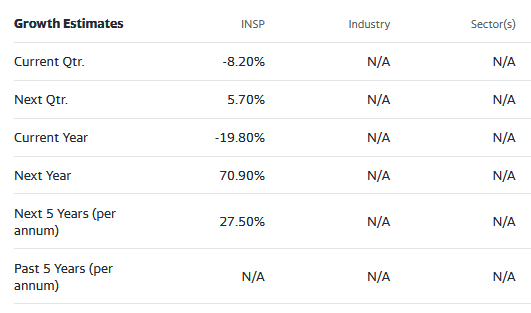
street analyst estimates

Yahoo Finance

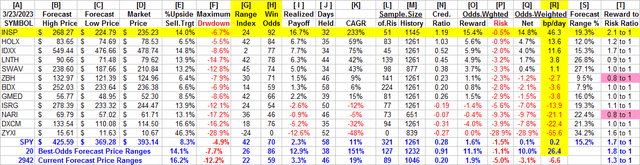
MM hedging implied forecasts

blockdesk.com

detailed comparative data

blockdesk.com

trends of daily updated forecasts

blockdesk.com

Online learning at Central Community College on the move

Online learning at Central Community College on the move

Where by is online finding out headed at Central Community Faculty?

Even Candace Walton, CCC’s vice president of innovation and instruction, is confounded.

“I really do not even know in which to get commenced.”

She then mentions employing artificial intelligence (AI).

“It can be a minimal frightening, but it also could be a very little enjoyable, relying on how we as shoppers pick to interact.”

Artificial intelligence can be easy (facial recognition on an Apple iphone), or can have additional advanced jobs – even understanding on its have, in a way, Walton discussed.

“You commence to speak about some of these synthetic intelligences that are understanding from their very own action and sort of escalating from just one activity to staying capable to trial and mistake to strengthen its personal processes.

People today are also reading…

&#13

CNN stories that Google’s new AI chatbot, Bard, was identified as out for an inaccurate response in a demo last thirty day period.

&#13

&#13

“There’s a quite real probable that artificial intelligence is heading to transform the way that a whole lot of educators, even from K- 12 to all the way by way of increased ed, (approach) teaching and discovering.”

Ways to use AI as an educational software is in its infancy, but Walton claimed some instructors at CCC are mulling over how they can use it for instruction.

“Our college are actively conversing about how chatbots and artificial intelligence can be built-in into their curriculum, instead than attempting to combat versus the technological know-how,” she mentioned. “I obtain (that) extremely refreshing due to the fact it seems like a fight we just can’t get.”

Chatbots, Walton claimed, are starting to be normally utilized for client service concerns. By inquiring the person a sequence of concerns, preferably a chatbot can identify a alternative to the issue or ask for.

Working with artificial intelligence in training has its pitfalls some have expressed educational dishonesty issues.

“Students could pick out to cheat or be dishonest in their perform,” Walton stated. “Or we as educators can select to flip the script and you can train college students how to critically consider about employing synthetic intelligence, relatively than working with their have techniques to do creating, and so forth.”

Walton mentioned the faculty ideas to confront probable dishonesty head-on.

“Our school are leaning in quite difficult on attempting to figure out how they may well integrate that into some of the creating routines and ethics discussions, just to make sure our learners are pupils of the environment and realize why studying and education is significant and why they’re in school.”

Employing AI like chatbots in online understanding is a far cry from when CCC begun its on-line finding out choices in the early 2000s.

At that time, college students logged in to a class and figured out by a basic (but at that time, hefty) desktop pc.

“You perhaps never ever at any time had to action foot on campus to do that studying,” Walton stated. “That was groundbreaking in its time.”

Now, new technologies and realizations about finding out by itself has shaped – and reshaped – on the internet schooling at CCC.

Central Community Higher education makes use of the interface WebEx, which includes video clip conferencing, display sharing, electronic whiteboards, breakout rooms for compact teams and other characteristics.

Central Community College just lately went a stage further more, piloting WebEx assembly equipment as an on the net program supply solution.

“Instead of a bunch of students in our place, we have figured out how to have learners even now come to campus,” Walton said. “They can choose a course in a WebEx place, on your own, side by facet by facet with students getting courses from distinctive instructors across the campus.”

All those learners would not essentially be taking the exact course.

“It’s delivered from a tiny cubicle. I like to consider of the old libraries,” Walton discussed. “We did about a year and a 50 {08cd930984ace14b54ef017cfb82c397b10f0f7d5e03e6413ad93bb8e636217f} of piloting with some school who are however utilizing that know-how, without having us shifting the pilot totally ahead.”

Online studying supply moves quickly – often awkwardly so, Walton mentioned. Still, she included, it “seems to be the most adaptable option for people. (On the web mastering) is a safe and sound and acceptable way to get their education and learning devoid of disrupting the other issues in their fast paced lives.”

WebEx devices have sprouted up at CCC, but AI has not but germinated.

“Just like all good innovations, it is heading to begin out a small all over the location,” Walton said. “Eventually a most effective exercise will appear with each other.”

Jessica Votipka is the education reporter at the Grand Island Independent. She can be reached at 308-381-5420.

Harnessing health technology assessment for universal health coverage

Harnessing health technology assessment for universal health coverage

The second Worldwide Symposium on Well being Know-how Evaluation (ISHTA) 2023 was held in New Delhi on 10 March 2023. Structured by Wellness Technologies Assessment in India, Office of Health and fitness Exploration, Ministry of Wellbeing and Family members Welfare (MoHFW), Govt of India (GoI), in collaboration with WHO India Region Business and Centre for Worldwide Growth, the symposium’s concept for this year was ‘Affordability, availability and accessibility of health care technologies by means of evidence created by Health Technological innovation Evaluation (HTA) for Common Wellbeing Coverage’.

Harnessing health technology assessment for universal health coverage

Honorable Vice President of India Shri Jagdeep Dhankhar lights the lamp with Union Minister of Health and Spouse and children Welfare Dr Mansukh Mandaviya at the inauguration of ISHTA 2023 (© WHO India)

In his handle, Honorable Vice President of India Shri Jagdeep Dhankar said that is encouraging the business and scientific communities to discover and formulate modern, expense productive and frugal systems thus boosting the Make in India initiative.

Union Minister of Health and fitness and Family Welfare Dr Mansukh Mandaviya claimed, “HTA is an important system for precedence setting in the country to reach our purpose of supplying equitable, superior high quality wellness care solutions in a price tag-powerful way.” Prof V. K. Paul, Member NITI Aayog, GoI, famous that together with HTA as portion of healthcare decision-generating activities will accelerate movement towards equitable and affordable health care for all.

Congratulating the ministry for their motivation to strengthening proof-informed selection-generating in healthcare in the region by health engineering evaluation, Dr Roderico H Ofrin, WHO Representative to India, explained, “It is critical to have continuing thrust on innovation and foster community creation to build enabling landscape for innovators, and researchers for translational analysis from bench to bedside.”

The symposium was attended by Dr Rajiv Bahl, Secretary, Department of Overall health Analysis Dr Roli Singh, Further Secretary, and Mission Director Countrywide Health Mission, MoHFW Director Common, Indian Council of Clinical Investigation and Dr Javier Guzman, Director, Middle for World Advancement, and delegates from 23 nations. Dr Bahl introduced the ‘Policy Briefs (quantity 2)” report containing plan briefs of HTA reports performed in India in the concluding session.

A ‘Market Place’ at the symposium showcased HTA recommendations executed by the national and condition governments, such as ABR hearing screening unit for neonates, sickle mobile diagnostic kits, basic safety engineered syringes, moveable ECG, Cy-Tb for TB prognosis and neonatal resuscitators. 


The challenges are rising and so is the church’s response

The challenges are rising and so is the church’s response

Editor’s observe • This short article discusses suicide. If you or folks you know are at possibility of self-damage, call or textual content the 988 Suicide and Disaster Lifeline, or chat at 988Lifeline.org.

It was an regular working day in an Armenian city 3 a long time back when Latter-working day Saint missionary Jaxon Washburn quickly felt defeat by a form of existential dread and a terrifying imagined:

“I really do not want to be listed here any longer.”

And by right here, he intended alive.

Washburn experienced professional the ordinary stresses and tensions that come with the rigors of missionary lifestyle in The Church of Jesus Christ of Latter-day Saints — discovering a language, finding together with “companions” (assigned partners) with whom he had profound variations and debates, educating the theology to total strangers — but only once just before experienced he experienced this overpowering death would like. It frightened him so severely he referred to as the volunteer therapist assigned to his situation, who recommended he meet up with with his mission president a few several hours away.

Within just a week, Washburn was again in the United States, possessing served much less than 9 months of a two-12 months assignment.

Working with many situations like Washburn’s — and lots of other psychological health and fitness traumas — is the new fact for Latter-day Saint mission presidents and their wives.

(Courtesy image) Jaxon Washburn though serving his Latter-day Saint mission in Armenia.

And it has upped the ante of expectations put on these leaders, all of whom are volunteers, with several drawn from the company globe, exactly where they excelled in product sales, finance, administration and organizational actions.

Mission presidents are wholly responsible for the security, welfare, results and spiritual advancement of their young fees, and thus are in a profound posture to educate and rework their ranks with terms of wisdom. Indeed, these shepherds can have a lifelong imprint on the missionaries in their assigned flock.

Outside of doling out religious guidance and trying to keep companion conflicts to a bare minimum, these Latter-working day Saint leaders will have to detect and tackle an array of fashionable mental wellbeing requirements.

For a lot of the faith’s history, any young enlistees in “God’s army” who could not get out of mattress to go proselytizing have been labeled lazy. People who feared approaching unfamiliar people on the avenue, on buses or in their properties were viewed as cowards. People who went to extremes in their obedience have been praised as leaders. And people who came household early have been dealt with as failures.

Like the rest of culture, however, the Utah-based faith now grapples with the truth that some of these conditions are signs and symptoms of mental health issues — every little thing from depression and anxiousness to the religiously obsessive habits regarded as scrupulosity.

These afflictions have risen substantially amid millennials — which incorporates today’s school students and the armed forces — and the COVID-19 pandemic only designed them worse.

These trends have in the same way plagued the church’s volunteer drive of extra than 50,000 evangelizers between ages 18 and 25 across the world.

Whether or not they are reporting their challenges much more overtly than earlier generations or enduring a better degree of mental well being concerns, shockingly large figures of missionaries, by some estimates, serving in the 400-in addition missions have famous mental wellness diagnoses or remedies on their programs to serve.

Individuals serving from the U.S. and Europe, insiders say, have a tendency to report their mental wellbeing demands much more than missionaries coming from other countries. The latter may possibly be hesitant to set a name on what they are emotion owing to cultural issues, but the figures are soaring throughout the board.

As a result, the church has tailored its methods for ministering.

Alternatively than evaluating missionary psychological well being centered on a individual diagnosis, the church’s approach is all about development — intellectual, social, physical, psychological and non secular, says Nathan Gibbons, a Spouse and children Expert services adviser to the missionary office.

“We not heading to say, ‘Well, that is identified as melancholy with suicide ideation. So you are heading residence,’” Gibbons suggests in an job interview. “We want to emphasis far more on what is going to finest add to this person’s advancement.”

The primary intention, he states, is to keep missionaries “safe, practical and escalating.”

(The Church of Jesus Christ of Latter-working day Saints)
Nathan Gibbons, a Family Solutions adviser to the missionary division.

These times, mission presidents have a great deal of support undertaking that.

Each mission has an assigned psychological health and fitness experienced, who is on simply call for any emergency or ongoing aid. Occasionally that therapist develops a nearer, much more compassionate partnership with missionaries than their religious leader.

Mission presidents can attract on the tips of their “mission well being council,” a multidisciplinary group composed of specialists in many regions who can assemble other methods.

Even so, a mission’s structured days, its exacting expectations, the strain of perfectionism and removal of all interruptions, can strip some youthful proselytizers of the coping mechanisms they created in high college — listening to new music, using a walk, sleeping all day, solitary hiking.

None of those avenues is readily available to them anymore, Gibbons acknowledges. “The mission alone can be a annoying environment.”

Development involves “stress and lodging,” the Relatives Solutions adviser states. “Growth doesn’t manifest in a vacuum, you know, without having some difficulty. And if the target is to assist these younger persons with some lifetime skills, with maturity, we recognize there is heading to be problem that will come from it.”

Cora Longhurst

Philadelphia Mission, May possibly 2022-September 2022

(Courtesy image) Cora Longhurst, shown at Like Park, served her Latter-working day Saint mission in Philadelphia.

Considering that I was 16, I have been in remedy and dealt with a number of mental health difficulties on and off all through the earlier 4 many years, which includes melancholy, anxiousness, attention-deficit/hyperactivity problem, sleeplessness and anorexia. When I submitted my [mission] papers, I was open and sincere about all of these troubles, but thought I experienced almost everything beneath management and would be equipped to manage any difficulties with relieve should challenges occur in the subject. However, practically as quickly as I arrived in Pennsylvania, I commenced to feel fairly depressed and when I experimented with to suppress what I was experience, soon after about 3½ months, I was no more time ready to overlook my psychological health and fitness. By this time, I experienced also stopped having, was frequently nervous, and obtaining a excellent night’s snooze was rare. It didn’t enable that the female leaders consistently commented on sisters’ pounds. I ultimately questioned for assistance just one P-Working day [preparation day so missionaries can attend to personal chores] and was emergency-transferred property on a overall health launch by the conclude of that week.

Given that then, it has felt like God has disappeared from my lifetime. I experience like I have tried out every little thing: temple services, church attendance, provider, personal study, shelling out time in character, etcetera., anything at all I could in purchase to really feel that enjoy and relationship again, but absolutely nothing has labored. I am not giving up, but it is very discouraging and frequently leaves me experience like I have unsuccessful God in some way.

(Courtesy photo) Cora Longhurst, proven in Susquehanna, Pa., served her Latter-day Saint mission in Philadelphia.

‘It’s a brain disease’

Mental health “is not a persona flaw it is a mind sickness,” says Christena Huntsman Durham, vice president of the Huntsman Mental Health Foundation. “My sister died of a drug overdose. She was not a negative individual, she had a poor ailment.”

When a person has diabetic issues, “no a person suggests that’s the perform of Satan,” she states. “Until we seem at these conditions like we seem at heart condition — with adore and empathy — there will however be stigma.”

Durham is passionate about ending the stigma involved with mental disease.

Previous October, the basis released a 10-calendar year advert campaign to “free the entire world from the stigma that prospects to greater charges of psychological ailment, substance use and suicide.”

(Francisco Kjolseth | The Salt Lake Tribune) Christena Huntsman Durham, center, listens to a speech by her brother Jon on the University of Utah campus in 2019. Durham is performing to take out the stigma encompassing mental sickness.

The shame “keeps men and women from searching for the treatment they will need, foremost to improved charges of suicide and compound use ailments,” the foundation states in its launch. “Stigma has led to an underfunded mental overall health program, and frequently these with the most significant needs tumble by way of the cracks.”

She and Dr. Mark Rapaport, CEO of the Huntsman Health-related Health and fitness Institute in Salt Lake Metropolis, satisfied past thirty day period with Latter-working day Saint apostles, women’s leaders and other basic authorities to spell out the psychological overall health demands of today’s youthful members.

“The complexity of the planet our young children stay in now includes both the advantages but also the incredible problems of social media for kids,” Rapaport says. In pre-internet times, “you would be bullied at college by people you see all the time. Now it’s 24/7 and commonly by people today you really don’t know.”

TikTok and Instagram offer you a fantasy globe that “seems to be great,” the psychiatrist suggests. “That creates a serious problem for lots of young ones, whose life are significantly from perfect.”

(University of Utah Health) Dr. Mark Rapaport, CEO of the Huntsman Mental Well being Institute.

Then arrived the pandemic, which “exposed little ones and older people to social isolation,” he states. “They saw individuals get ill and die. Their feeling of the world currently being a risk-free area and experience in management around their life was really broken.”

That was compounded with the reality that youthful men and women coming of age through COVID-19 missed out on a whole lot of “normal, psychological-social progress with youth groups, college things to do and other substantial college opportunities,” Rapaport says, “and they have not experienced the exact maturing activities. You experienced kids who ended up ninth graders but performing like seventh graders.”

When these youthful people go on missions at 18 or 19, he claims, they are “like strangers in a strange land.”

The nationally renowned innovator on psychological well being praised the church for its willingness to address these worries.

He pointed to the results of SafeUT, a suicide prevention application and a “system of intervention” that is staffed round the clock to assist any individual who is emotion bullied, desperate or hopeless.

Past 12 months, Safe UT counted “a million discussions,” Rapaport claims. “It saved a lifetime a day.”

With its wide resources and worldwide community, the church could replicate this application globally, he told them. “Family Services has the community, and the foundation would share the know-how and layout of the application.”

The Latter-working day Saint leaders’ reaction to Rapaport’s presentation was “gratifying and amazing,” he suggests. “It was crystal clear that the management of the church and women’s teams had been very involved about their younger men and women and really open to listening and discovering.”

Michael Skaggs

Las Vegas, March 2018-June 2018

Church headquarters service mission, July 2018-February 2020

(Courtesy image) Michael Skaggs in Rexburg, Idaho.

I went out possessing interest deficit-dysfunction and Asperger’s, which produced a pink flag with the church about my ability to serve entire time. Thanks to this, they sent me on a two-transfer mission to Vegas, four hrs away from my house. I had zero Missionary Instruction Centre encounter and was mainly despatched out blind. I struggled a good deal. I cried a great deal throughout my research for the reason that I felt like a failure.

At the end of the two transfers, I was told that they did not consider that I could keep on in a ordinary proselytizing mission, but there was a special mission I could go to — the only comprehensive-time nonteaching mission — in the Salt Lake Metropolis Headquarters Mission. I wasn’t as well fond of the strategy. We experienced a mission president, experienced to have curfew, be with our companion 24/7, serving in the Relatives Background Library, Church Historical past Library and Joseph Smith Memorial Making.

I felt out of place and had bouts of despair, but it was by no means formally diagnosed. I frequently needed to go household. I would cry every single day and slumber in the course of lunch and supper. I didn’t have a filter and so I said a lot of silly matters and bought in arguments with other elders.

I went to [the church’s] Family Companies and observed a counselor, and then bought place on two prescription drugs to stabilize my temper and support with stress. Thankfully, my mission president wished to give me the opportunity to change and do improved. He experienced a big adore for me and cared about me. I was ready to entire the whole two yrs. I was extremely grateful for him. It hardly ever afflicted my religion, but it did make me comprehend that missions aren’t for everybody and, it’s Ok to not go on a mission due to mental overall health.

The services choice

Each and every missionary is on a “growth curve,” claims Gibbons, the Family members Solutions social employee, and “the steepness of the expansion curve is various for everybody.”

Those who are “growing and purposeful will continue on in their assignment,” he claims. “But if the progress curve flattens exactly where they commence to drop, then we work — with any luck , in tandem with leaders and dad and mom — to try out to support them transition to a support mission.”

Gibbons is emphatic on this level: “It’s not a return home it’s a transfer to a service mission.”

Youthful applicants can not just select the support choice rather than a teaching mission at the outset, he says, “but they can choose for it if training results in being too burdensome.”

An “intervention” may well be “the greatest way to describe the initial step,” he states. Being on the mission could include things like some counseling and perhaps even drugs, if that is probable and wanted.

If, just after a time, which is even now not operating, then the volunteers can transfer to a support mission.

“There’s a complete process that the mission presidents are skilled on, about how to have that dialogue both with the missionary and the mother and father,” Gibbons says. “The mission overall health council satisfies often to make guaranteed everybody’s counseling collectively to concentrate on the missionary’s progress and what might be finest.”

Any choice about a service mission transfer “isn’t just coming from one particular human being,” he states. “It’s the entire workforce.”

The hope is that all persons who wish to serve — no issue their troubles — will be made available a way to do that.

The church has completed “an fantastic occupation with mission presidents, offering them resources to enable with these difficulties,” says Richard Ferre, a Salt Lake Town psychiatrist who has labored with numerous Latter-working day Saint missionaries. “More and extra region healthcare advisers are turning into substantially a lot more conversant with psychological well being troubles, and the church has psychiatrists on call in every element of the earth.”

The mission health councils, Ferre suggests, have proved a “dramatic achievements in aiding presidents understand and grow.”

For missionaries who transferred to a service mission, whether or not serving in a temple or working in the group, he says, “their restoration is settled a lot a lot more fast than if they occur dwelling with no structured prospect for continued company.”

This mix of preaching and serving usually means providing a balm in the here and now, Ferre claims, as nicely as pleasure in the hereafter.

Jaxon Washburn did not transition to a support mission but returned house to Arizona to heal himself.

Those months in Armenia, he claims nowadays, were being still some of the finest times of his daily life, transforming his long term and his faith without end.

Editor’s notice • This story is readily available to Salt Lake Tribune subscribers only. Thank you for supporting regional journalism. Also, Christena Huntsman Durham is a sister of Paul Huntsman, chair of the nonprofit Salt Lake Tribune’s board of directors.

Medicaid Unwinding in Kansas – Kansas Health Institute

Medicaid Unwinding in Kansas – Kansas Health Institute

Federal legislation tied to the nationwide COVID-19 public wellness crisis (PHE), initially declared on January 29, 2020, and renewed for 90 times a twelfth time on January 11, 2023, incentivized states to retain eligibility for Medicaid enrollees during the COVID-19 pandemic by growing federal funding for Medicaid applications. In response, the Condition of Kansas, and all other states, delayed motion on once-a-year reviews, ensuring constant Medicaid coverage for the duration of the pandemic. This policy has resulted in a file 536,222 individuals – 18.3 p.c of the Kansas inhabitants – enrolled in Medicaid and the Children’s Well being Insurance plan Plan (CHIP), collectively recognised as KanCare, as of December 2022.

The federal Consolidated Appropriations Act (CAA) 2023, handed in December 2022, decouples the federal funding for preserving Medicaid eligibility from the COVID-19 PHE.  Current guidance from the Centers for Medicare and Medicaid Services (CMS) gives states up to 12 months starting up April 1, 2023, to initiate opinions to redetermine eligibility for all Medicaid enrollees. Kansas will be required to process all eligibility casework for KanCare (Kansas Medicaid) that was not acted on through the PHE. This course of action is identified as unwinding.

Some KanCare Enrollees are Anticipated to Shed Coverage Coverage

The ongoing protection requirement was put in area in March 2020. Just before then, 403,521 persons were enrolled in KanCare on average each thirty day period – 132,701 (24.7 p.c) less folks than have been enrolled in December 2022. As eligibility redeterminations resume, lots of of these Kansans might not be mindful of the prerequisites or could be unable to complete the specifications to sustain protection, or they may well no for a longer time be eligible for Medicaid coverage, and are at danger of turning into uninsured.

Some KanCare Enrollees are at Bigger Chance of Disenrollment

A lot of KanCare enrollees could be topic to churn – the temporary loss of Medicaid coverage in which enrollees are disenrolled and then re-enroll in just a short period of time. Lots of Medicaid enrollees knowledge repeated variations in profits or conditions which make them briefly ineligible for protection. Some also drop protection through the renewal system simply because they really don’t submit necessary paperwork in a well timed manner. Quite a few might practical experience limitations to enrollment, including administrative concerns (e.g., incomplete enrollment forms) and conversation boundaries. Particular Kansans could be at increased possibility of losing coverage during unwinding, like folks from racial and ethnic minority groups, especially Hispanic or Latino people, youthful older people, and folks with disabilities.

Exploration by the Assistant Secretary for Setting up and Analysis (ASPE) suggests that, across the country, kids and young older people, as properly as Latino and Black persons, will be disproportionately impacted through unwinding. They obtain that small children are far more likely to be afflicted by churn and younger grownups (age 18 to 34) are far more most likely to no longer be suitable.

In addition, ASPE uncovered that Latino individuals comprise around one-quarter of people predicted to be ineligible for Medicaid and about one particular-3rd of those predicted to knowledge churn, when Black men and women comprise 14 p.c of all those predicted to drop Medicaid eligibility and 15 per cent of those predicted to experience churn. People today with money among 138 p.c and 250 p.c of the federal poverty amount (FPL) comprised almost 40 p.c of people predicted to be ineligible for Medicaid, even though those with earnings fewer than 100 percent FPL comprise over fifty percent of those predicted to working experience churn.

Some KanCare Enrollees Live in Regions Wherever the Risk of Disenrollment is Increased

In 2022, the Local community Treatment Community of Kansas commissioned the Kansas Wellness Institute (KHI) to research Medicaid enrollment in the course of the pandemic and detect neighborhoods that may be most at possibility of disenrollment after annual assessments and eligibility redeterminations resume. Making use of enrollment facts offered by the Kansas Section of Health and fitness and Surroundings (KDHE), KHI determined neighborhoods exactly where KanCare enrollees may perhaps be at better threat of disenrollment at the time unwinding starts. Two requirements were employed to examine neighborhoods: 1) surplus development in coverage, and 2) churn.

  • New enrollees in neighborhoods in which KanCare enrollment grew much more speedily all through the pandemic than ahead of the pandemic are assumed to be at increased danger of disenrollment at the time unwinding starts.
  • New enrollees in neighborhoods that have professional bigger prices of churn, wherever individuals re-enrolled in Medicaid inside of just one year following staying disenrolled all through an eligibility redetermination, are assumed to be at a greater threat of remaining disenrolled after unwinding starts.

To decide places in Kansas with a bigger danger of disenrollment, KHI analyzed knowledge from February 2020 to June 2022. For the duration of that timeframe, there had been 97,977 new KanCare enrollees statewide, about fifty percent (53.3 {08cd930984ace14b54ef017cfb82c397b10f0f7d5e03e6413ad93bb8e636217f}) of them residing in neighborhoods at bigger threat of disenrollment. When enrollees across the point out will be influenced by unwinding, enrollees residing in these spots are more likely to be impacted. Figure 1 reveals the distribution by KDHE location of the enrollment boost and how a lot of of those new enrollees are at higher threat of disenrollment as soon as unwinding commences. Most new enrollees, like all those at higher hazard of disenrollment, are in Northeast Kansas and South Central Kansas, the most populous places of the point out. When much less in variety, there also was a significant improve in new enrollees in Southwest Kansas (28.1 per cent).

KHI also done this assessment at the county degree and identified that Sedgwick County experienced the most new enrollees, such as these who are at a better possibility of disenrollment. For the total evaluation, remember to see Improve in KanCare Enrollment by County, February 2020 – June 2022.