Therapy by AI holds promise and challenges : Shots

Therapy by AI holds promise and challenges : Shots
Some companies and researchers think smart computers might eventually help with provider shortages in mental health, and some consumers are already turning to chatbots to build "emotional resilience."

Just a year ago, Chukurah Ali had fulfilled a dream of owning her own bakery — Coco’s Desserts in St. Louis, Mo. — which specialized in the sort of custom-made ornate wedding cakes often featured in baking show competitions. Ali, a single mom, supported her daughter and mother by baking recipes she learned from her beloved grandmother.

But last February, all that fell apart, after a car accident left Ali hobbled by injury, from head to knee. “I could barely talk, I could barely move,” she says, sobbing. “I felt like I was worthless because I could barely provide for my family.”

As darkness and depression engulfed Ali, help seemed out of reach; she couldn’t find an available therapist, nor could she get there without a car, or pay for it. She had no health insurance, after having to shut down her bakery.

So her orthopedist suggested a mental-health app called Wysa. Its chatbot-only service is free, though it also offers teletherapy services with a human for a fee ranging from $15 to $30 a week; that fee is sometimes covered by insurance. The chatbot, which Wysa co-founder Ramakant Vempati describes as a “friendly” and “empathetic” tool, asks questions like, “How are you feeling?” or “What’s bothering you?” The computer then analyzes the words and phrases in the answers to deliver supportive messages, or advice about managing chronic pain, for example, or grief — all served up from a database of responses that have been prewritten by a psychologist trained in cognitive behavioral therapy.

That is how Ali found herself on a new frontier of technology and mental health. Advances in artificial intelligence — such as Chat GPT — are increasingly being looked to as a way to help screen for, or support, people who dealing with isolation, or mild depression or anxiety. Human emotions are tracked, analyzed and responded to, using machine learning that tries to monitor a patient’s mood, or mimic a human therapist’s interactions with a patient. It’s an area garnering lots of interest, in part because of its potential to overcome the common kinds of financial and logistical barriers to care, such as those Ali faced.

Potential pitfalls and risks of chatbot therapy

There is, of course, still plenty of debate and skepticism about the capacity of machines to read or respond accurately to the whole spectrum of human emotion — and the potential pitfalls of when the approach fails. (Controversy flared up on social media recently over a canceled experiment involving chatbot-assisted therapeutic messages.)

“The hype and promise is way ahead of the research that shows its effectiveness,” says Serife Tekin, a philosophy professor and researcher in mental health ethics at the University of Texas San Antonio. Algorithms are still not at a point where they can mimic the complexities of human emotion, let alone emulate empathetic care, she says.

Tekin says there’s a risk that teenagers, for example, might attempt AI-driven therapy, find it lacking, then refuse the real thing with a human being. “My worry is they will turn away from other mental health interventions saying, ‘Oh well, I already tried this and it didn’t work,’ ” she says.

But proponents of chatbot therapy say the approach may also be the only realistic and affordable way to address a gaping worldwide need for more mental health care, at a time when there are simply not enough professionals to help all the people who could benefit.

Someone dealing with stress in a family relationship, for example, might benefit from a reminder to meditate. Or apps that encourage forms of journaling might boost a user’s confidence by pointing when out where they make progress.

Proponents call the chatbot a ‘guided self-help ally’

It’s best thought of as a “guided self-help ally,” says Athena Robinson, chief clinical officer for Woebot Health, an AI-driven chatbot service. “Woebot listens to the user’s inputs in the moment through text-based messaging to understand if they want to work on a particular problem,” Robinson says, then offers a variety of tools to choose from, based on methods scientifically proven to be effective.

Many people will not embrace opening up to a robot.

Chukurah Ali says it felt silly to her too, initially. “I’m like, ‘OK, I’m talking to a bot, it’s not gonna do nothing; I want to talk to a therapist,” Ali says, then adds, as if she still cannot believe it herself: “But that bot helped!”

At a practical level, she says, the chatbot was extremely easy and accessible. Confined to her bed, she could text it at 3 a.m.

“How are you feeling today?” the chatbot would ask.

“I’m not feeling it,” Ali says she sometimes would respond.

The chatbot would then suggest things that might soothe her, or take her mind off the pain — like deep breathing, listening to calming music, or trying a simple exercise she could do in bed. Ali says things the chatbot said reminded her of the in-person therapy she did years earlier. “It’s not a person, but, it makes you feel like it’s a person,” she says, “because it’s asking you all the right questions.”

Technology has gotten good at identifying and labeling emotions fairly accurately, based on motion and facial expressions, a person’s online activity, phrasing and vocal tone, says Rosalind Picard, director of MIT’s Affective Computing Research Group. “We know we can elicit the feeling that the AI cares for you,” she says. But, because all AI systems actually do is respond based on a series of inputs, people interacting with the systems often find that longer conversations ultimately feel empty, sterile and superficial.

While AI may not fully simulate one-on-one individual counseling, its proponents say there are plenty of other existing and future uses where it could be used to support or improve human counseling.

AI might improve mental health services in other ways

“What I’m talking about in terms of the future of AI is not just helping doctors and [health] systems to get better, but helping to do more prevention on the front end,” Picard says, by reading early signals of stress, for example, then offering suggestions to bolster a person’s resilience. Picard, for example, is looking at various ways technology might flag a patient’s worsening mood — using data collected from motion sensors on the body, activity on apps, or posts on social media.

Technology might also help improve the efficacy of treatment by notifying therapists when patients skip medications, or by keeping detailed notes about a patient’s tone or behavior during sessions.

Maybe the most controversial applications of AI in the therapy realm are the chatbots that interact directly with patients like Chukurah Ali.

What’s the risk?

Chatbots may not appeal to everyone, or could be misused or mistaken. Skeptics point to instances where computers misunderstood users, and generated potentially damaging messages.

But research also shows some people interacting with these chatbots actually prefer the machines; they feel less stigma in asking for help, knowing there’s no human at the other end.

Ali says that as odd as it might sound to some people, after nearly a year, she still relies on her chatbot.

“I think the most I talked to that bot was like 7 times a day,” she says, laughing. She says that rather than replacing her human health care providers, the chatbot has helped lift her spirits enough so she keeps those appointments. Because of the steady coaching by her chatbot, she says, she’s more likely to get up and go to a physical therapy appointment, instead of canceling it because she feels blue.

That’s precisely why Ali’s doctor, Washington University orthopedist Abby Cheng, suggested she use the app. Cheng treats physical ailments, but says almost always the mental health challenges that accompany those problems hold people back in recovery. Addressing the mental-health challenge, in turn, is complicated because patients often run into a lack of therapists, transportation, insurance, time or money, says Cheng, who is conducting her own studies based on patients’ use of the Wysa app.

“In order to address this huge mental health crisis we have in our nation — and even globally — I think digital treatments and AI can play a role in that, and at least fill some of that gap in the shortage of providers and resources that people have,” Cheng says.

Not meant for crisis intervention

But getting to such a future will require navigating thorny issues like the need for regulation, protecting patient privacy and issues of legal liability. Who bears responsibility if the technology goes wrong?

Many similar apps on the market, including those from Woebot or Pyx Health, repeatedly warn users that they are not designed to intervene in acute crisis situations. And even AI’s proponents argue computers aren’t ready, and may never be ready, to replace human therapists — especially for handling people in crisis.

“We have not reached a point where, in an affordable, scalable way, AI can understand every sort of response that a human might give, particularly those in crisis,” says Cindy Jordan, CEO of Pyx Health, which has an app designed to communicate with people who feel chronically lonely.

Jordan says Pyx’s goal is to broaden access to care — the service is now offered in 62 U.S. markets and is paid for by Medicaid and Medicare. But she also balances that against worries that the chatbot might respond to a suicidal person, ” ‘Oh, I’m sorry to hear that.’ Or worse, ‘I don’t understand you.’ ” That makes her nervous, she says, so as a backup, Pyx staffs a call center with people who call users when the system flags them as potentially in crisis.

Woebot, a text-based mental health service, warns users up front about the limitations of its service, and warnings that it should not be used for crisis intervention or management. If a user’s text indicates a severe problem, the service will refer patients to other therapeutic or emergency resources.

Cross-cultural research on effectiveness of chatbot therapy is still sparse

Athena Robinson, chief clinical officer for Woebot, says such disclosures are critical. Also, she says, “it is imperative that what’s available to the public is clinically and rigorously tested,” she says. Data using Woebot, she says, has been published in peer-reviewed scientific journals. And some of its applications, including for post-partum depression and substance use disorder, are part of ongoing clinical research studies. The company continues to test its products’ effectiveness in addressing mental health conditions for things like post-partum depression, or substance use disorder.

But in the U.S. and elsewhere, there is no clear regulatory approval process for such services before they go to market. (Last year Wysa did receive a designation that allows it to work with Food and Drug Administration on the further development of its product.)

It’s important that clinical studies — especially those that cut across different countries and ethnicities — continue to be done to hone the technology’s intelligence and its ability to read different cultures and personalities, says Aniket Bera, an associate professor of computer science at Purdue.

“Mental-health related problems are heavily individualized problems,” Bera says, yet the available data on chatbot therapy is heavily weighted toward white males. That bias, he says, makes the technology more likely to misunderstand cultural cues from people like him, who grew up in India, for example.

“I don’t know if it will ever be equal to an empathetic human,” Bera says, but “I guess that part of my life’s journey is to come close.”

And, in the meantime, for people like Chukurah Ali, the technology is already a welcome stand-in. She says she has recommended the Wysa app to many of her friends. She says she also finds herself passing along advice she’s picked up from the app, asking friends, “Oh, what you gonna do today to make you feel better? How about you try this today?”

It isn’t just the technology that is trying to act human, she says, and laughs. She’s now begun mimicking the technology.

Identifying the challenges of online education from the perspective of University of Medical Sciences Students in the COVID-19 pandemic: a Q-methodology-based study | BMC Medical Education

Identifying the challenges of online education from the perspective of University of Medical Sciences Students in the COVID-19 pandemic: a Q-methodology-based study | BMC Medical Education

This cross-sectional review was performed employing the Q methodology in the course of the pursuing 6 techniques using Barry and Proops system [19].

Phase 1 and 2: defining the concourse

At this stage, a concourse area was shaped with the identification of the subject or thought of the review. The offered views on the issue raised for the concourse can be formed from a review of texts and industry experts in this discipline [19].

In this research, the matter and strategy for the concourse were the difficulties of on the net education and learning in the course of the COVID-19 pandemic. The concourse bundled a collection of varied materials related to the exploration matter that was mentioned between learners. The learners (P-established) who also experienced contributed earlier to the growth of the initial established of statements. 30-1 learners participated in semi-structured interviews, and we experimented with to discover their subjectivity about the investigation subject applying the Q method [20].

In this examine, the concourse (sample of people today) bundled pupils of the University of Medical Sciences (paramedical pupils) who had enough details about on-line instruction during the COVID-19 pandemic.

Phase 3: screening and choice of statements (Q-sample)

In the course of the semi-structured interviews with 31 learners, 70 statements have been extracted about the perceived difficulties of on the net schooling. The Q merchandise ended up selected extremely carefully so that merchandise did not overlap, and at the very same time, no standpoint must be missing. Hence, the choice method requires the most time and hard work of all the techniques of the Q methodology. Thus, analysis team removed equivalent unrelated, and ambiguous statements from the Q set. Last but not least, 50 statements were being selected.

Stage 4: selected P-established

Learners who participated in the concourse (interviews) ended up chosen as a sample of folks to take part in sorting in the Q review (P-set). In the current examine, students had been chosen by purposive sampling to include students who had an instructional, experienced, experimental connection or former awareness about the topic of review. This collection of samples built the contributors with additional diverse mentalities enter the study. It is proposed that in Q research, the selection of members to sort statements ought to be less than the variety of statements all around the research matter [21]. In the existing examine, the number of participants who ranked the problems of on the web education and learning plans was 31 (Table 1).

Desk 1 The Q-established statements and variable arrays in the study of issues on the net education and learning among pupils

Stage 5: Q-sort

At this stage, the ordinary distribution table in the form of a Likert scale from − 5 to + 5 was made offline. Guidelines on distributing the expressions on the typical distribution table have been supplied. In the very first stage, the function of the review is the amount of statements selected by means of the job interview. In the next phase, put the statements in three columns: “I agree”, “I have no opinion,” and “I disagree. In the 3rd stage, the statements (obligatory) are distributed in the standard Likert distribution diagram (− 5 to 5+), describing the motive for choosing the two finishes of the Likert scale from their issue of view and finally moving into the demographic facts. Therefore, in Q, the sorting process is subjective [19]. In other words and phrases, sorting merchandise in the regular distribution allow for just about every participant to current their internal point of view by way of sorting.

Phase 6: evaluation and interpretation of things

Students’ data obtained from Q sorting ended up entered into PQ-Method computer software edition 2.35. The approach of assessment and interpretation was performed in 3 phases: (a) identification of aspects, (b) conversion of elements into element arrays (c) interpretation of factors applying issue arrays.

  1. A)

    Factor Identification

The extraction of variables in PQ-Technique software was completed by way of the pursuing sequential ways: (a) principal ingredient analysis, (b) identification of latent variables, (c) varimax rotation and evaluation of loading factors for specific values higher than 1.00, d) estimation of the percentage of variance discussed by the determined things and (e) differentiation of interpretable elements with at minimum two correlated Q forms [22].

  1. B)

    Convert component to element arrays

The correlation among each and every Q sort and a person identified variable indicates the degree of conversation amongst the Q kinds and the discovered variables [19, 23]. The handbook flagging in PQ-Approach software was applied for this examine. The correlation coefficients of at minimum .364 have been thought of as the slice-off stage (the absolute value of the variable load is increased than ((frac2.58sqrtN)). That aspect load was 99{08cd930984ace14b54ef017cfb82c397b10f0f7d5e03e6413ad93bb8e636217f} significant, respectively, and the worth of N was equivalent to the selection of Q statements (N = 50). Sorted for recognized aspects [24]. Specs specified on a aspect are applied to build a element array for that issue. The component array signifies the sorting of that element (position of look at) applying z-scores. The issue array for every single variable decided the diploma to which each and every expression was in the spectrum, so a a lot more correct interpretation of each individual issue (subjectivity) was attained according to the placement of every expression. (P-value< 0.05 vs. 0.01) is also determined from the Z score to distinguish expressions [25].

  1. III)

    Factor interpretation using factor arrays

Distinct Q expressions were identified, and factors were interpreted textually. The defining expressions for a factor were those that had a rating value of “+ 5”, “+ 4”, “4-,” 5- “in factor arrays that had different scores (P < 0.05) in a given factor Compared to their scores on other factors, the post-P-set interview was conducted at the end of Q sorting to confirm the diagnosis and interpretation of item subgroups among the identified factors.

Duke Global Health Institute director talks current public health challenges, equitable solutions

Duke Global Health Institute director talks current public health challenges, equitable solutions

The Duke Workplace of Worldwide Affairs, Duke Worldwide Wellbeing Institute, and the University of Drugs hosted a conversation this week centered close to the international well being worries we currently deal with.

The event highlighted speakers A. Eugene Washington, chancellor for wellbeing affairs at Duke College and president and chief govt officer of the Duke University Wellness Technique, and Chris Beyrer, director of the Duke World Wellbeing Institute and professor of medicine. 

In the course of his job, Beyrer served as president of the International AIDS Culture, an advisor to the U.S. President’s Unexpected emergency Approach for AIDS Reduction and the HIV Vaccine Trials Network, between other corporations. 

When the COVID-19 pandemic happened, Beyrer pivoted to enable operate vaccine trials. He at the moment serves as a scientific liaison to the COVID-19 Vaccine Avoidance Community.

Modern day conflict and climate transform  

The globe inhabitants will achieve 8 billion individuals this 7 days, according to Beyrer. The populace growth signifies accomplishment in reducing infant mortality and raising lifetime expectancy, but overpopulation offers a new set of wellness-related issues, he said.

“Eight billion men and women simply cannot dwell on this planet in the way that we are at the moment exploiting its sources, we will exhaust Earth’s ability to maintain our societies. And which is a functionality both of the overconsumption that is going on, but also these incredible inequalities, which have been sharply rising,” Beyrer stated. 

Beyrer emphasised that more privileged people have a ethical obligation to mitigate the inequitable impact of overpopulation and overconsumption. 

“The weather disaster is also a justice disaster, a social justice crisis. And it is really a moral concern,” he mentioned. 

Beyrer also highlighted that devastating fashionable conflicts, in particular the war in Ukraine, present troubles for public wellbeing. 

“We have extra displaced men and women with what’s been occurring with Russia and Ukraine, and a range of other conflicts which now have above 100 million internally or externally displaced men and women,” Beyrer reported. 

In accordance to Beyrer, conflict-driven displacement and local weather-driven migration are incentivizing appropriate-wing, populist and anti-immigrant governments. Beyrer warned that the guidelines offered by these governments are not likely to provide extended-expression solutions to present day public health complications. 

In this landscape, a single of the largest difficulties of community wellness is staying apolitical and retaining scientific objectivity, Beyrer explained. Nevertheless, community overall health officers will have to advocate for difficulties of equity, which some construe as “choosing sides” and undermining scientific objectivity. 

Fairness in COVID-19 vaccine trials

Beyrer mentioned the great importance of the government’s investments in infrastructure and health care pros in direction of establishing the COVID-19 vaccine. 

In his get the job done in COVID-19 vaccine trials, Beyrer advocated for which include racially and ethnically assorted exam subjects that corresponded with the population. He also ensured that at the very least a quarter of people today in the trials ended up over the age of 65, “because that is who’s definitely obtaining unwell with COVID.” 

Beyrer argued that variety was a healthcare, not political, issue. 

“If we do not reach fairness, we’re likely to have a lot more challenges with hesitancy and distrust,” he reported. 

Monkeypox  

Pursuing the rollout of the monkeypox vaccine, fees of monkeypox are lowering. But the best fees of monkeypox are between Black and Latinx gay or bisexual gentlemen, and the most at-risk populations were vaccinated at lower premiums than their lower-possibility counterparts.

Beyrer argued that lessen vaccination fees among the at-possibility populations can be a failure of general public health messaging.

“Very often this is a failure of our community wellness technique, this kind of as it is to equitably distribute and get details out and attain communities that are reduced resourced and have lower access to health information and facts,” he explained.  

Duke’s role 

Among the the community overall health problems posed by weather transform, war, COVID-19 and monkeypox, Beyrer believes that Duke and other academic institutions can play a central part in addressing these challenges. 

In unique, Beyrer hopes that the College can work towards producing sustainable remedies that prioritize the requirements of certain populations. 

“The important concept for what we need to have to function on is the intersections between health and worldwide health and fitness work that we do and sustainability — sustainable livelihoods and sustainable societies,” he stated.   


Zoe Spicer
| Staff Reporter

Zoe Spicer is a Trinity sophomore and a employees reporter of The Chronicle’s 118th quantity.

Artificial Intelligence in Health Care: Benefits and Challenges of Machine Learning Technologies for Medical Diagnostics

Artificial Intelligence in Health Care: Benefits and Challenges of Machine Learning Technologies for Medical Diagnostics

What GAO Found

Several machine learning (ML) technologies are available in the U.S. to assist with the diagnostic process. The resulting benefits include earlier detection of diseases; more consistent analysis of medical data; and increased access to care, particularly for underserved populations. GAO identified a variety of ML-based technologies for five selected diseases — certain cancers, diabetic retinopathy, Alzheimer’s disease, heart disease, and COVID-19 —with most technologies relying on data from imaging such as x-rays or magnetic resonance imaging (MRI). However, these ML technologies have generally not been widely adopted.

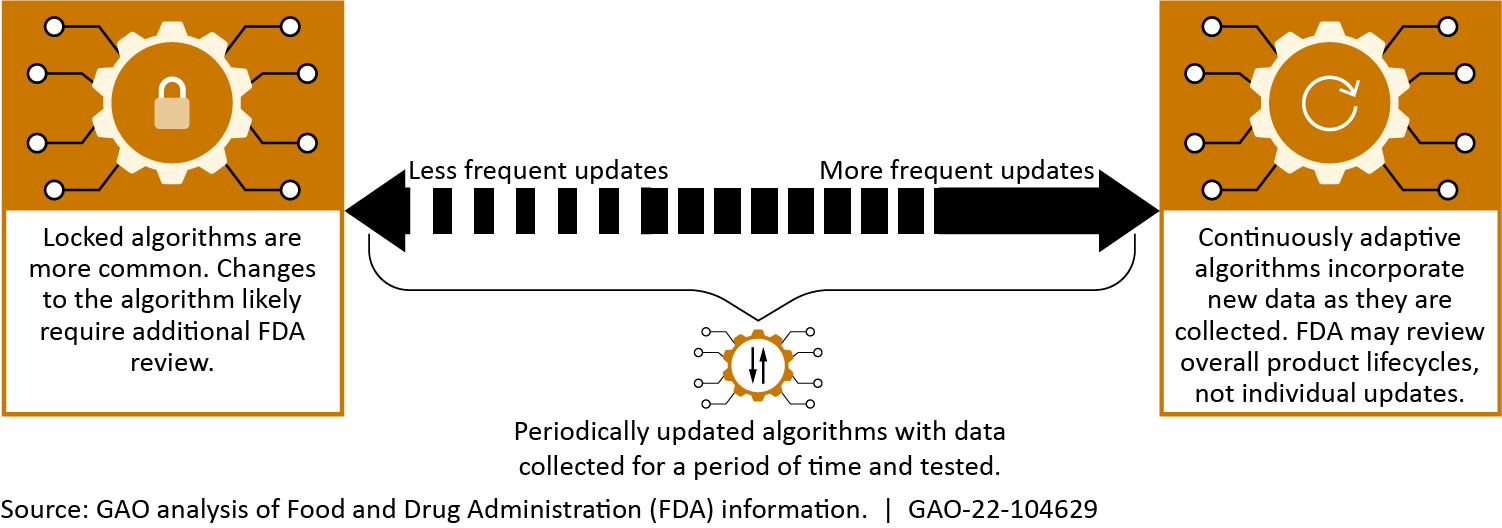
Academic, government, and private sector researchers are working to expand the capabilities of ML-based medical diagnostic technologies. In addition, GAO identified three broader emerging approaches—autonomous, adaptive, and consumer-oriented ML-diagnostics—that can be applied to diagnose a variety of diseases. These advances could enhance medical professionals’ capabilities and improve patient treatments but also have certain limitations. For example, adaptive technologies may improve accuracy by incorporating additional data to update themselves, but automatic incorporation of low-quality data may lead to inconsistent or poorer algorithmic performance.

Spectrum of adaptive algorithms

We identified several challenges affecting the development and adoption of ML in medical diagnostics:

  • Demonstrating real-world performance across diverse clinical settings and in rigorous studies.
  • Meeting clinical needs, such as developing technologies that integrate into clinical workflows.
  • Addressing regulatory gaps, such as providing clear guidance for the development of adaptive algorithms.

These challenges affect various stakeholders including technology developers, medical providers, and patients, and may slow the development and adoption of these technologies.

GAO developed three policy options that could help address these challenges or enhance the benefits of ML diagnostic technologies. These policy options identify possible actions by policymakers, which include Congress, federal agencies, state and local governments, academic and research institutions, and industry. See below for a summary of the policy options and relevant opportunities and considerations.

Policy Options to Help Address Challenges or Enhance Benefits of ML Diagnostic Technologies

  Opportunities Considerations

Evaluation (report
page 28)

Policymakers could create incentives, guidance, or policies to encourage or require the evaluation of ML diagnostic technologies across a range of deployment conditions and demographics representative of the intended use.

This policy option could help address the challenge of demonstrating real world performance.

  • Stakeholders could better understand the performance of these technologies across diverse conditions and help to identify biases, limitations, and opportunities for improvement.
  • Could inform providers’ adoption decisions, potentially leading to increased adoption by enhancing trust.
  • Information from evaluations can help inform the decisions of policymakers, such as decisions about regulatory requirements.
  • May be time-intensive, which could delay the movement of these technologies into the marketplace, potentially affecting patients and professionals who could benefit from these technologies.
  • More rigorous evaluation will likely lead to extra costs, such as direct costs for funding the studies. Developers may not be incentivized to conduct these evaluations if it could show their products in a negative light, so policymakers could consider whether evaluations should be conducted or reviewed by independent parties, according to industry officials.

Data Access (report
page 29)

Policymakers could develop or expand access to high-quality medical data to develop and test ML medical diagnostic technologies. Examples include standards for collecting and sharing data, creating data commons, or using incentives to encourage data sharing.

This policy option could help address the challenge of demonstrating real world performance.

  • Developing or expanding access to high-quality datasets could help facilitate training and testing ML technologies across diverse and representative conditions. This could improve the technologies’ performance and generalizability, help developers understand their performance and areas for improvement, and help to build trust and adoption in these technologies.
  • Expanding access could enable developers to save time in the development process, which could shorten the time it takes for these technologies to be available for adoption.
  • Entities that own data may be reluctant to share them for a number of reasons. For example, these entities may consider their data valuable or proprietary. Some entities may also be concerned about the privacy of their patients and the intended use and security of their data.
  • Data sharing mechanisms may be of limited use to researchers and developers depending on the quality and interoperability of these data, and curating and storing data could be expensive and may require public and private resources.

Collaboration (report
page 30)

Policymakers could promote collaboration among developers, providers, and regulators in the development and adoption of ML diagnostic technologies. For example, policymakers could convene multidisciplinary experts together in the design and development of these technologies through workshops and conferences.

This policy option could help address the challenges of meeting medical needs and addressing regulatory gaps.

  • Collaboration between ML developers and providers could help ensure that the technologies address clinical needs. For example, collaboration between developers and medical professionals could help developers create ML technologies that integrate into medical professionals’ workflows, and minimize time, effort, and disruption.
  • Collaboration among developers and medical providers could help in the creation and access of ML ready data, according to NIH officials.
  • As previously reported, providers may not have time to both collaborate with developers and treat patients; however, organizations can provide protected time for employees to engage in innovation activities such as collaboration. 
  • If developers only collaborate with providers in specific settings, their technologies may not be usable across a range of conditions and settings, such as across different patient types or technology systems.

Source: GAO. | GAO-22-104629

Why GAO Did This Study

Diagnostic errors affect more than 12 million Americans each year, with aggregate costs likely in excess of $100 billion, according to a report by the Society to Improve Diagnosis in Medicine. ML, a subfield of artificial intelligence, has emerged as a powerful tool for solving complex problems in diverse domains, including medical diagnostics. However, challenges to the development and use of machine learning technologies in medical diagnostics raise technological, economic, and regulatory questions.

GAO was asked to conduct a technology assessment on the current and emerging uses of machine learning in medical diagnostics, as well as the challenges and policy implications of these technologies. This report discusses (1) currently available ML medical diagnostic technologies for five selected diseases, (2) emerging ML medical diagnostic technologies, (3) challenges affecting the development and adoption of ML technologies for medical diagnosis, and (4) policy options to help address these challenges.

GAO assessed available and emerging ML technologies; interviewed stakeholders from government, industry, and academia; convened a meeting of experts in collaboration with the National Academy of Medicine; and reviewed reports and scientific literature. GAO is identifying policy options in this report.

For more information, contact Karen L. Howard at (202) 512-6888 or howardk@gao.gov.