Does therapy homework really help?

Does therapy homework really help?

When I found myself on a therapist’s couch in 2017, I held waiting for the authentic function to start. I experienced begun treatment for the reason that I preferred to “fix” my lifetime — my stress and anxiety, my interactions — and preferred someone who was wiser than me to convey to me how to do that. My purely natural orientation toward uncomfortable emotions is to acquire motion, because that’s easier than wading by them. I feared I’d drown in all individuals tough feelings if I fully stepped into their swirling waters.

My therapist would kindly faucet the brakes just about every time I experienced that pleading “What need to I do?” search in my eyes. I desired things to modify, and promptly. Thankfully, this therapist was far more intrigued in guiding me toward my have feelings and patterns and understanding in which they arrived from.

These early therapy days came to mind when a reader, who questioned to stay anonymous, asked this query: “Is a therapist just a harmless space to discuss about your problems, or can you hope to make goals and be specified ‘homework’ or guidance on how to realize much better psychological wellness? I am asking yourself if a lifestyle mentor is a additional ideal selection than a therapist for influencing change in my lifetime.”

At the conclude of the day, which is why 99{08cd930984ace14b54ef017cfb82c397b10f0f7d5e03e6413ad93bb8e636217f} of us go to treatment: to impact adjust in our life. But how can that modify be set in movement with the assistance of a experienced?

My pet ate my treatment research

I’m going to tackle the dilemma of research initially.

The limited answer is certainly — research is completely a issue in treatment. In reality, most therapists invite purchasers to total selected duties concerning treatment sessions, mentioned Jesse Owen, a counseling psychology professor at the University of Denver who reports the system and results of psychotherapy.

“The authentic operate of remedy, other than the courage to be vulnerable in classes, is to do anything to alter your everyday living outside of the 50 minutes we invest with each other each individual 7 days,” Owen told me.

And it can have actual payoffs: Research suggests that incorporating research into psychotherapy enhances its success, and that consumers who persistently adhere to via with assignments are likely to have better psychological overall health outcomes.

The homework you acquire will rely on your therapist’s method. For instance, clinicians who use Cognitive Behavioral Therapy (CBT) — which focuses on altering the way you consider — may possibly request you to retain monitor of your views, emotions and behaviors that arise in circumstances that are stressful or upsetting. Then, in the therapy place, you and the therapist can occur up with a lot more handy approaches to answer in all those circumstances in the long run. CBT is arguably the most research-major type of treatment, Owen stated.

Others could possibly suggest workbooks that you can do with each other, constantly with the gentle caveat that it’s up to you to total the get the job done.

Ann Kelley, a psychologist in Austin, Texas, and the co-host of Therapist Uncensored, a podcast (that I adore!) about attachment and relational science, claimed her research is all about broadening her clients’ consciousness of by themselves and these close to them.

Let’s say that you are someone who is frightened of conflict and has a challenging time voicing your thoughts and needs in personal relationships. Kelley could possibly talk to you to test to talk far more specifically with your spouse that 7 days. Later on, you and Kelley could discuss what you noticed in individuals times (like: “I was worried to demise to do that!” or “It truly felt genuinely great to convey to my husband or wife how I actually felt”).

With specific partners, Kelley may possibly question them to go house, glimpse every single other in the eyes, maintain their gaze and inquire each individual other vital issues. Generally, people are shocked that they can not make sustained eye speak to with their associate with out having genuinely anxious. If your therapist has a far more psychodynamic strategy, you would in all probability explore why you have that response. (Fast take note: For some neurodivergent individuals, we know this work out may not be practical and appreciate your readership.)

“It’s all about getting new data about by yourself,” Kelley stated, “about currently being in a place of deep curiosity in its place of figuring out.”

Men and women can (typically unintentionally) solution treatment in a passive way, Kelley explained. They clearly show up for an hour every single 7 days following not thinking about or implementing what they talked over with their therapist the 7 days prior. Homework is one particular way to assure you’re obtaining the most out of remedy due to the fact it shifts what you uncovered from an intellectual understanding to lived knowledge.

If your therapist hasn’t provided you homework and which is a little something you’d like, Kelley suggests inquiring your therapist for strategies you can deepen what you figured out in in between sessions.

A different form of conversation

Our reader also questioned whether or not they can hope “guidance” in therapy, which I interpreted as “advice.”

Typically when we’re actually opening up, it is to a greatest good friend who, with permission (ideally), can give some tips. Treatment is a substantially diverse dynamic.

The career of a psychotherapist is to manual men and women toward self-consciousness, but most are properly trained to keep away from tips-supplying, Owen reported. There are a few explanations for this. Individuals are more most likely to metabolize insights they on their own found in the caverns of their unconscious, however a therapist may well have been keeping the flashlight. “Generally, suggestions doesn’t do as significantly as [asking] open-ended thoughts and exploring the further that means of matters,” Owen reported. Therapists also really don’t want to give bad suggestions, or dictate what a customer should do because of power differentials in the remedy partnership.

If a shopper asks for advice, a therapist could share much more normal feelings or persuade a consumer to feel about what patterns are contributing to the issue.

“As significantly as we would like folks to acquire guidance — try to eat healthful, slumber, drink fewer — folks really do not hear until they are seriously in contact with their individual motivations for psychological overall health,” Kelley mentioned. “Our task is to enable people today want to make significant shifts, not notify them how to do it.”

As a long run therapist myself, I’m reflecting on what form of opinions I have discovered most valuable in remedy.

The therapists I’ve labored with have by no means explicitly instructed me what to do — like when I have asked no matter whether I really should go away a romantic relationship or a career — but did mirror back again to me insights I’d been forming with their help.

At the time, after describing a series of distressing conflicts with an ex-husband or wife, my therapist flat out explained, “I don’t like this for you.” I didn’t like it possibly, but I was not ready to absolutely confess that to myself. When my therapist acknowledged that how I was getting handled (as I was describing it) wasn’t Alright, it opened the door for me to do the exact.

This worked for me only due to the fact I’d been viewing this therapist for a though and I trusted her. But it ought to also be famous that this remark genuinely did influence the way I noticed my partnership — just one explanation therapists tread with caution when offering these types of commentary.

Place me in, mentor

And finally, this reader would like to know no matter if performing with a existence mentor may be a better alternative.

The two therapists and life coaches offer you aid and steerage, but there are notable variances:

  • A life mentor will help you improve specific skills, like trouble-fixing and corporation, and retains you accountable for reaching foreseeable future objectives.
  • Therapists are properly trained in much more in-depth psychological exploration and can help you get to the root of styles that are keeping you back again.
  • Compared with therapists who are held accountable by a licensing board, everyday living coaching is not controlled by the government, and there’s not substantially empirical analysis still on its success, Owen explained.

Even now, there are numerous good life coaches out there. Kelley refers customers to coaches when they need to have assistance making expertise in a unique location, like obtaining a distinct career, or doing work on time management for folks living with ADHD.

“If you’re self-aware and have to have a self confidence enhance or assistance with intention setting, a lifestyle coach can be a fantastic match,” wrote wellness journalist Kaitlin Vogel in this Psych Central piece I advise if you’d like more details on lifetime coaching.

See you next week,

Laura

If what you acquired these days from these gurus spoke to you or you’d like to tell us about your personal ordeals, please electronic mail us and allow us know if it is Alright to share your ideas with the greater Team Treatment local community. The e-mail GroupTherapy@latimes.com receives suitable to our group. As generally, obtain us on Instagram at @latimesforyourmind, wherever we’ll continue this dialogue.

See preceding editions below. To look at this publication in your browser, click on listed here.

Taking pleasure in this e-newsletter? Take into account subscribing to the Los Angeles Times

Your guidance assists us produce the information that matters most. Turn into a subscriber.

A lot more perspectives on today’s matter & other methods

Psychoanalyst and psychologist Nancy McWilliams talks about what actually works in therapy in this episode of Therapist Uncensored.

Completely ready to start your treatment journey? The Periods place together a detailed list of low-value psychological health methods in Los Angeles and Orange counties, including therapy, support groups and meditation classes.

How to support folks in psychosis — from Occasions contributor Erica Crompton, who’s seasoned it firsthand.

Other attention-grabbing things

“What if the get rid of for our current mental wellbeing crisis is not far more psychological health and fitness care?” asks UCLA professor Danielle Carr in this assumed-provoking New York Times op-ed. She tends to make the place that the medicalization of the problem puts the target on the personal at the expenditure of reforming methods and constructions that developed it in the initial location.

Renowned dependancy expert Gabor Maté talks about the outcome that toxic society has on our minds and bodies in this wonderful interview on the Better Practice podcast. Maté’s new reserve, “The Myth of Regular,” arrived out before this month.

Ladies are doing extra compensated operate, but the bulk of family labor even now falls to them — and analysis reveals it usually takes a toll on psychological very well-staying.

Group Remedy is for informational purposes only and is not a substitute for professional mental overall health information, diagnosis or cure. We motivate you to request the information of a psychological wellbeing professional or other competent overall health provider with any thoughts or fears you could have about your psychological wellbeing.


ATI Physical Therapy, Inc.’s (NYSE:ATIP) 12{08cd930984ace14b54ef017cfb82c397b10f0f7d5e03e6413ad93bb8e636217f} loss last week hit both individual investors who own 64{08cd930984ace14b54ef017cfb82c397b10f0f7d5e03e6413ad93bb8e636217f} as well as institutions

ATI Physical Therapy, Inc.’s (NYSE:ATIP) 12{08cd930984ace14b54ef017cfb82c397b10f0f7d5e03e6413ad93bb8e636217f} loss last week hit both individual investors who own 64{08cd930984ace14b54ef017cfb82c397b10f0f7d5e03e6413ad93bb8e636217f} as well as institutions

To get a perception of who is definitely in manage of ATI Bodily Treatment, Inc. (NYSE:ATIP), it is vital to comprehend the possession construction of the company. We can see that personal fairness corporations very own the lion’s share in the firm with 64{08cd930984ace14b54ef017cfb82c397b10f0f7d5e03e6413ad93bb8e636217f} ownership. Set yet another way, the team faces the utmost upside prospective (or downside chance).

Though institutions who have 24{08cd930984ace14b54ef017cfb82c397b10f0f7d5e03e6413ad93bb8e636217f} arrived beneath tension after sector cap dropped to US$222m previous 7 days,private equity corporations took the most losses.

In the chart under, we zoom in on the various ownership groups of ATI Bodily Treatment.

ATI Physical Therapy, Inc.’s (NYSE:ATIP) 12{08cd930984ace14b54ef017cfb82c397b10f0f7d5e03e6413ad93bb8e636217f} loss last week hit both individual investors who own 64{08cd930984ace14b54ef017cfb82c397b10f0f7d5e03e6413ad93bb8e636217f} as well as institutions
NYSE:ATIP Possession Breakdown September 23rd 2022

What Does The Institutional Ownership Convey to Us About ATI Physical Therapy?

Lots of institutions measure their efficiency in opposition to an index that approximates the community current market. So they generally spend additional interest to firms that are bundled in important indices.

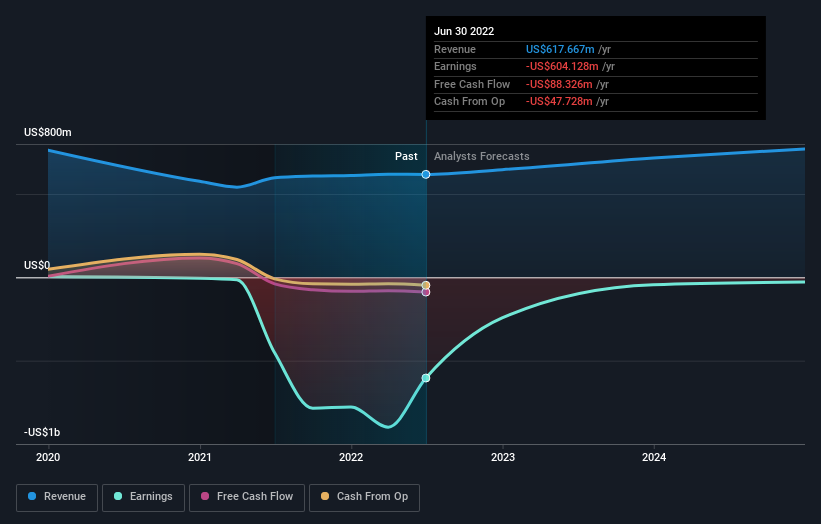
ATI Actual physical Therapy now has establishments on the share registry. In truth, they individual a respectable stake in the firm. This implies the analysts functioning for those people institutions have seemed at the stock and they like it. But just like everyone else, they could be erroneous. It is not unheard of to see a huge share selling price drop if two massive institutional buyers attempt to market out of a inventory at the exact time. So it is really worth checking the past earnings trajectory of ATI Physical Therapy, (down below). Of course, preserve in mind that there are other factors to take into consideration, much too.

earnings-and-revenue-growth
NYSE:ATIP Earnings and Revenue Expansion September 23rd 2022

ATI Actual physical Remedy is not owned by hedge cash. The firm’s largest shareholder is Arrival Intercontinental Corporation, with ownership of 56{08cd930984ace14b54ef017cfb82c397b10f0f7d5e03e6413ad93bb8e636217f}. This indicates that they have the greater part desire regulate of the long run of the enterprise. In comparison, the second and 3rd largest shareholders keep about 7.7{08cd930984ace14b54ef017cfb82c397b10f0f7d5e03e6413ad93bb8e636217f} and 4.7{08cd930984ace14b54ef017cfb82c397b10f0f7d5e03e6413ad93bb8e636217f} of the inventory.

Though studying institutional possession for a organization can incorporate price to your analysis, it is also a very good observe to research analyst suggestions to get a deeper realize of a stock’s envisioned effectiveness. Pretty a handful of analysts address the inventory, so you could search into forecast growth pretty quickly.

Insider Possession Of ATI Physical Therapy

When the exact definition of an insider can be subjective, just about everyone considers board customers to be insiders. The business administration respond to to the board and the latter really should depict the interests of shareholders. Notably, in some cases prime-degree professionals are on the board by themselves.

Most take into account insider possession a beneficial since it can indicate the board is effectively aligned with other shareholders. Nonetheless, on some occasions way too considerably electric power is concentrated in just this group.

Our most recent knowledge signifies that insiders individual considerably less than 1{08cd930984ace14b54ef017cfb82c397b10f0f7d5e03e6413ad93bb8e636217f} of ATI Bodily Treatment, Inc.. It appears to be the board users have no a lot more than US$1.5m well worth of shares in the US$222m enterprise. Many investors in more compact organizations prefer to see the board a lot more heavily invested. You can click on right here to see if those people insiders have been shopping for or selling.

Common Public Possession

The basic public, who are typically individual traders, hold a 12{08cd930984ace14b54ef017cfb82c397b10f0f7d5e03e6413ad93bb8e636217f} stake in ATI Physical Therapy. Whilst this team can’t always get in touch with the pictures, it can undoubtedly have a real affect on how the corporation is operate.

Private Equity Ownership

With an ownership of 64{08cd930984ace14b54ef017cfb82c397b10f0f7d5e03e6413ad93bb8e636217f}, non-public equity corporations are in a posture to engage in a function in shaping corporate strategy with a aim on worth generation. Some may like this, simply because non-public equity are sometimes activists who maintain administration accountable. But other moments, private fairness is selling out, having getting the corporation community.

Future Actions:

It really is normally truly worth thinking about the various teams who personal shares in a organization. But to understand ATI Physical Therapy better, we have to have to consider a lot of other factors. Be informed that ATI Bodily Remedy is exhibiting 4 warning indications in our expenditure investigation , and 1 of individuals is possibly critical…

In the end the long term is most vital. You can obtain this free report on analyst forecasts for the firm.

NB: Figures in this posting are calculated using facts from the past twelve months, which refer to the 12-month time period ending on the previous day of the thirty day period the monetary assertion is dated. This may well not be steady with complete yr annual report figures.

Have feedback on this post? Anxious about the content? Get in touch with us immediately. Alternatively, e mail editorial-workforce (at) simplywallst.com.

This report by Basically Wall St is standard in mother nature. We give commentary based on historical info and analyst forecasts only applying an impartial methodology and our articles are not supposed to be economical information. It does not constitute a recommendation to invest in or sell any stock, and does not consider account of your targets, or your money problem. We intention to bring you long-time period concentrated assessment pushed by fundamental info. Take note that our examination might not element in the most recent cost-sensitive corporation bulletins or qualitative content. Simply just Wall St has no posture in any shares pointed out.

The views and thoughts expressed herein are the views and opinions of the writer and do not essentially mirror people of Nasdaq, Inc.

Striveworks and Cipher Skin Partner to Provide Deeper Analytics for Physical Therapy Patients

Striveworks and Cipher Skin Partner to Provide Deeper Analytics for Physical Therapy Patients

AUSTIN, Texas., Sept. 22, 2022 /PRNewswire/ — Striveworks and Cipher Skin are excited to announce a partnership that will bring real-time AI/ML products to rehabilitation and bodily remedy people. The integration between Striveworks, a corporation specializing in AI and MLOps, and Cipher Skin, the hardware-enabled monitoring platform that enables versatile, hybrid restoration for musculoskeletal care, will unlock customized analytics in rehabilitation that allow details-driven evaluations and remarkably productive procedure programs.

“Movement and exercise are two of the most critical metrics for bodily rehabilitation,” claimed Phillip Bogdanovich, founder and CEO at Cipher Skin. “For too extended, acquiring this knowledge has been qualitative, imprecise, and demanded prolonged in-individual visits. As a result of our system, we can seize authentic-time dynamic motion and biometrics wirelessly, from anywhere. Striveworks’ Chariot platform provides us the future piece in that price chain—personalized analytics to make perception of this data and generate knowledgeable care pathways.” 

Cipher Skin’s Biosleeve technological know-how captures gapless biometric and motion information, translating it into immediate, actionable insights. This facts can be speedily ingested into Chariot, Striveworks’ MLOps system. Immediately after models are skilled and deployed in Chariot, the patent-pending Chariot Data Lineage program guarantees that products keep on being absolutely auditable and reproducible. Facts entrepreneurs preserve whole command over delicate knowledge during the ML lifecycle, making sure individualized results in a HIPAA-compliant manner.

Striveworks CEO Jim Rebesco reported, “If the knowledge-centric model of AI has taught us nearly anything, it really is that businesses that lead the way in the fidelity and accuracy of info are the ones that will earn the race to setting up scalable, performant analytics that drive outcomes. We’re thrilled to lover with Cipher Pores and skin to empower quantitative, customized analytics in the rehabilitation place.”

Electronic transformation in hugely controlled environments rests on the ability to securely and responsibly build, deploy, keep track of and audit styles designed on sensitive details. The partnership involving Striveworks and Cipher Pores and skin will improve the selection and shipping of facts in rehab therapy as section of Cipher Skin’s target on providing hybrid physical treatment. Advisors from Meta and Banner Wellness have not too long ago joined Cipher Pores and skin to support travel bigger good quality, results-dependent treatment.

Striveworks is a pioneer in operational knowledge science for nationwide stability and other extremely controlled areas. Striveworks’ flagship MLOps system is Chariot, constructed to address the “Day 3” dilemma of design remediation. Started in 2018, Striveworks was highlighted as an exemplar in the Countrywide Protection Commission for AI 2020 Last Report. For far more information and facts visit www.striveworks.com.

About Cipher Skin

Cipher Skin is a Components-enabled checking platform that enables adaptable, hybrid recovery for musculoskeletal care. Founded in 2017, Cipher Skin’s patented technological innovation is a network of

sensors that captures gapless biometric and motion knowledge and interprets it as a result of proprietary software program to deliver instantaneous, visualized data and diagnostics. By connecting in-clinic rehab therapy with at-dwelling care by means of ongoing client progress checking, practitioners can monitor specific outcomes, supply affected individual-centered treatment, and optimize clinic revenue. To study a lot more check out cipherskin.com.

Media Get in touch with:
Tracy Shank
805-874-2650
[email protected]

Supply Striveworks, Inc.

Unsupervised Home Exercises Versus Formal Physical Therapy After Primary Total Hip Arthroplasty: A Systematic Review

Unsupervised Home Exercises Versus Formal Physical Therapy After Primary Total Hip Arthroplasty: A Systematic Review

Formal physical therapy (PT) after total joint arthroplasty (TJA) is commonly recommended and is often thought to be indispensable to favorable patient outcomes [1,2]. In contrast to the modern era, these surgeries were performed on older, less active patients with more severe diseases and deformities [3]. These earlier surgeries were more extensive, and weight bearing was often limited postoperatively [4,5]. Modern total hip arthroplasty (THA), however, is characterized by a younger, more active patient population along with dramatic advances in pain control and rapid recovery [4,5]. Despite the changing landscape, formal PT has maintained its status amongst providers and patients as an integral component to improving outcomes [2,6].

Several studies over the past few years have demonstrated that formal PT, whether inpatient or outpatient, may not have any benefit over home-based unsupervised exercise programs [7-9]. While this has led to a shift away from formal PT utilization by some, there are no guidelines to assist in determining which patients may benefit [7]. Reducing the routine use of formal PT to only those patients for whom it is warranted may offer several benefits. The responsibility of copays and transportation is often placed on the patient and, for many, can be a significant burden [10,11]. Additionally, with the increased interest in alternative healthcare models, the focus has shifted to finding methods to reduce episode-of-care costs [12,13]. The costs associated with formal PT after discharge are not trivial, comprising up to 8{08cd930984ace14b54ef017cfb82c397b10f0f7d5e03e6413ad93bb8e636217f} of total costs for TJA episodes of care [9].

The goal of this review was to assess the existing literature comparing outcomes of primary THA patients undergoing formal supervised PT to those with unsupervised home exercise programs through a systematic review and meta-analysis of randomized controlled trials (RCTs). To avoid intervention bias towards supervised home programs, we chose to only include studies that explicitly described unsupervised home exercise regimens. The primary aim was to assess changes in lower extremity strength (LES), aerobic capacity, and patient-reported physical outcome and quality of life (QoL) scores at zero to six months and six months to one year.

This systematic review and meta-analysis were conducted in accordance with the PRISMA (Preferred Reporting Items for Systematic Reviews and Meta-Analyses) guidelines and were registered in the PROSPERO International Prospective Register of Systematic Reviews (PROSPERO Identifier CRD42021228071).

Inclusion criteria

This review considered all English-language RCTs that compared objective measures and patient-reported outcomes (PROs) from patients with formal postoperative PT or supervised exercise programs to those with unsupervised home exercise interventions (defined as an explicitly stated form of home exercise program to be performed without direct supervision of a health professional). This also included written exercise instructions, video programs demonstrating exercises, or phone applications containing directions for exercises). The time period of interventions was limited to the period between discharge from hospitalization and six months postoperatively. Studies involving comparisons between only supervised cohorts, unsupervised cohorts, or without clear delineation of what each exercise intervention consists of were excluded, as were those involving preoperative exercise programs as the primary intervention.

Search strategy and study screening

With the assistance of an informationist, an electronic search was conducted of all published literature from database inception to December 14, 2020 from the following databases: PubMed, EMBASE, Web of Science, Scopus, Cochrane Library, and ClinicalTrials.gov. MeSH and Emtree terms were used alongside free text to enhance search sensitivity. Studies were screened based on titles and abstracts initially, with relevant studies subjected to full-text review. All screening was performed independently by two authors (YPC and HH). All disagreements were resolved through discussion, with input from the senior author (CAD) on an as-needed basis.

Quality appraisal

The Cochrane Risk of Bias Tool 2.0 was utilized to assess the five domains of potential bias: randomization process, deviations from intended intervention, missing outcome data, outcome measurement, and selection of reported results. The result for each domain was assigned risk scores of “low,” “some concern,” or “high.” A risk of bias assessment was made for each outcome measurement. The GRADE (Grading of Recommendations Assessment, Development, and Evaluation) system was utilized to appraise the quality of evidence included in this meta-analysis to ensure the reliability of its results.

Data extraction and statistical analysis

Data extraction was performed manually by three reviewers (YPC, HH, and ZW). Extracted descriptive variables included journal, year, and country of publication, number of cases, age, gender, body mass index, inclusion criteria, follow-up, type of intervention, time from discharge to intervention initiation, and intervention length. The outcomes of interest in this study changed from baseline data in LES (measured with a timed up-and-go test (TUG), sit-to-stand test, or hip abduction strength as measured by a dynamometer), aerobic capacity, and patient-reported physical function and QoL. Each outcome measure was divided into short-term recovery (<6 months from surgery; if multiple time points were observed <6 months from surgery, the closest one to the three-month postoperative point was chosen) and long-term recovery (≥6 months from surgery; if multiple time points were observed ≥6 months from surgery, the closest one to the one-year postoperative point was chosen) windows. Changes from baseline values were collected in the form of a mean and standard deviation (SD). When not available for change from baseline scores, they were imputed using previously established methods from the Cochrane Handbook for Systematic Reviews of Interventions [14]. For studies involving more than one outcome measure for each of the above categories, only one outcome measure was included. Outcome measures were pooled for meta-analysis if there were at least three studies with reported results. All the outcomes in this study consisted of continuous variables. Effect sizes were assessed using random effect models to calculate standardized mean differences (SMD) and 95{08cd930984ace14b54ef017cfb82c397b10f0f7d5e03e6413ad93bb8e636217f} confidence intervals (CI). Heterogeneity was tested using the I2 statistic. All meta-analysis calculations and subsequent forest plots were generated using Review Manager Software Version 5.4.1 (Copenhagen: The Nordic Cochrane Center, The Cochrane Collaboration, 2020).

Characteristics of included studies

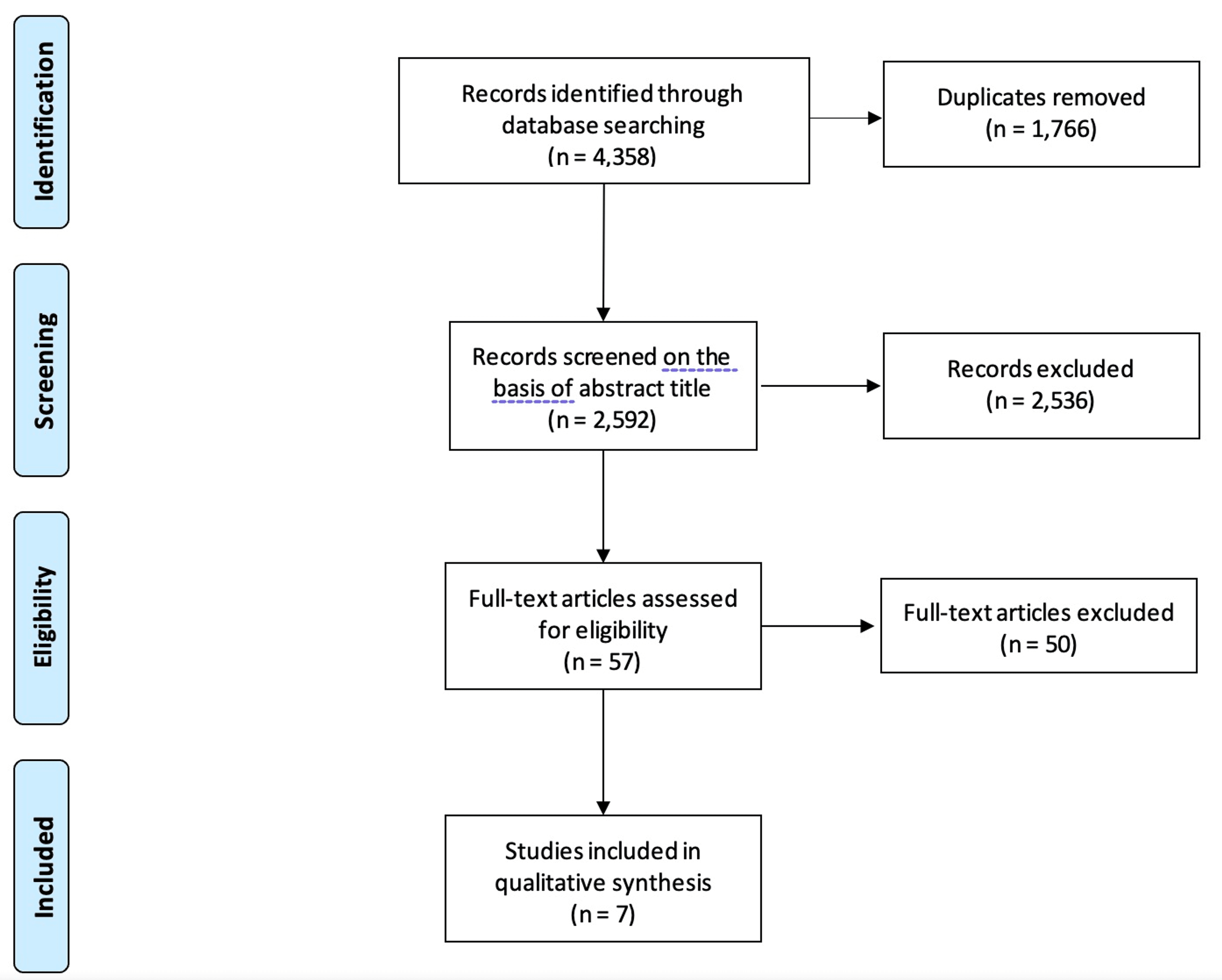
A total of 4,358 citations were identified (Figure 1). After removing 1,766 duplicate citations, a total of 2,592 studies were assessed for eligibility based on title and abstract. Fifty-seven studies were eligible for full-text review. Ultimately, seven studies (n=398 cases) were included in this review.

A descriptive summary of the included studies can be found in Tables 1–2. All studies were performed within the last ten years, except for one conducted in 2008 [15]. Three of the seven studies began their intervention programs upon discharge; two in the first week after surgery, one six weeks after, and one program at 12 weeks postoperatively. The mean program length was 8.0 ± 2.8 weeks. Six studies reported outcomes in the short-term period, and five reported outcomes in the long-term period.

References Country N Mean Age (years) {08cd930984ace14b54ef017cfb82c397b10f0f7d5e03e6413ad93bb8e636217f} Female Mean BMI (kg/m2) Inclusion/exclusion
Austin et al. [7] USA 108 62 44 29 Inclusion: age 18-80 years, primary unilateral THA for OA. Exclusion: inflammatory or post-traumatic arthritis, history of septic arthritis, revision or conversion THA, patients requiring discharge to skilled facility.
Beaupre et al. [8] Canada 21 53 52 NR Inclusion: age <65 years, primary unilateral THA with lateral approach. Exclusion: history of developmental dysplasia of the hip.
Coulter et al. [16] Australia 95 64a 58 NR Inclusion: age > 18 years, primary elective THA, patient lives locally. Exclusion: metastatic disease, pathologic fractures, infection, acute trauma, revision THA, inability to provide informed consent, UCLA scale < 2 preoperatively, unable to bear weight postoperatively, requiring inpatient rehabilitation postoperatively.
Galea et al. [15] Australia 23 68 30 29 Inclusion: primary THA for OA, ability to walk 45 minutes independently with mobility aid, independence in sit to stand transfer, adequately comprehends written/verbal instructions. Exclusion: uncontrolled systemic disease, pre-existing neurologic/other orthopedic condition affecting walking, more than four weeks physiotherapy postoperatively, revision surgery or significant postoperative complications
Mikkelsen et al. [17] Denmark 62 65 42 29 Inclusion: primary unilateral THA for OA, preoperative HOOS ADL < 67, age > 18 years, live within 30 km from hospital, willing to participate. Exclusion: BMI > 35, pre-planned supervised rehabilitation, pre-planned contralateral THA within six months, inability to speak or read Danish, mental or physical conditions impeding intervention
Monaghan et al. [18] Ireland 63 68 32 27 Inclusion: primary THA for OA, age > 50 years, able to read/understand English, willing to participate. Exclusion: medical instability, underlying terminal disease, suspicion of infection following THA
Okoro et al. [19] United Kingdom 26 64 58 NR Inclusion: unilateral THA for OA via posterior approach with 26/28/32 mm femoral head, joint affected is only arthritic joint, no evidence of inflammatory arthropathy. Exclusion: dementia, neurological impairment, cancer or other muscle wasting illness, unstable chronic or terminal illness, any co-morbid disease that contraindicates resistance training
Total   398 64 46b 29c  
References Cohorts Time from discharge to start Program length (weeks) Outcomes assessed Follow-Up Findings
Austin et al. [7] C: 10 weeks unsupervised home exercise based on manual. I: 2 weeks in-home PT followed by 8 weeks outpatient PT 2-3x per week. Upon discharge 10 HHS, WOMAC, SF-36 Physical and Mental 1 month, 6-12 months No significant difference in any of measured outcomes
Beaupre et al. [8] C: home exercise instructions for 4-6 weeks. I: outpatient rehabilitation 2x per week for 3 months. 6 weeks postoperatively 12 WOMAC, SF-36, 6MWT, gait analysis 4 months, 12 months No significant difference in any of measured outcomes
Coulter et al. [16] C: continue exercises from hospital at home, gradually increasing number of repetitions. I: supervised program 1x per week involving circuit exercises for 4 weeks. Upon discharge 4 WOMAC, SF-36, TUG, UCLA activity index 5 weeks, 12 weeks, 26 weeks No significant difference in any of measured outcomes
Galea et al. [15] C: illustrated guide of prescribed home exercises. I: 45 minute sessions 2x per week in supervised rehabilitation center-based program. First week after surgery 8 TUG, stair climb performance, 6MWT, WOMAC 8 weeks C: with faster TUG. No significant difference in other measures.
Mikkelsen et al. [17] C: home-based exercises done 7x per week. I: home-based exercises done 5x per week with additional supervised resistance training sessions 2x per week. First week after surgery 10 Leg extension power, isometric hip muscle strength, STS, stair climb, 20 minute walking speed, HOOS 6 monthsb I: with larger increase in maximal walking speed and stair climb performance. No significant difference in other measures
Monaghan et al. [18] C: postoperative home exercise booklet, advised to walk daily with crutches until review at 6 weeks. I: 35 minute class 2x per week for 6 weeks, no additional home exercises. 12 weeks postoperatively 6 WOMAC, VAS, 6MWT, SF-12, hip abduction strength 18 weeks I: with better improvement in 6MWT, WOMAC function, and SF-12 Physical. No significant differences in WOMAC pain or stiffness, SF-12 mental health score, VAS, or hip abduction strength
Okoro et al. [19] C: unsupervised home exercises. I: weekly PT sessions for 6 weeks. Upon discharge 6 Maximum voluntary contraction of operated leg quad, STS, TUG, stair climb, 6MWT, lean mass of operative leg (DEXA) 6 weeks, 6 months, 9-12 months No significant difference in any of measured outcomes
Total     8a      

Data synthesis and meta-analysis

Summaries for all outcome assessments are summarized in Table 3. No meta-analysis was conducted for long-term aerobic capacity as there were fewer than three studies with available data.

Outcome Risk of bias Directness of evidence Heterogeneity Precision Publication bias Overall quality
LE strength short term No downgrade No downgrade. No evidence of indirectness. I2 = 66{08cd930984ace14b54ef017cfb82c397b10f0f7d5e03e6413ad93bb8e636217f}, moderate heterogeneity. Downgraded one level Rated down one level. Moderate imprecision. No assessment of publication bias conducted. Low
LE strength long term Downgraded by one level. Limitation primarily in selection of reported result. No downgrade. No evidence of indirectness. I2 = 22{08cd930984ace14b54ef017cfb82c397b10f0f7d5e03e6413ad93bb8e636217f}, low heterogeneity Rated down one level. Moderate imprecision. No assessment of publication bias conducted. Low
Aerobic capacity short term No downgrade No downgrade. No evidence of indirectness. I2 = 12{08cd930984ace14b54ef017cfb82c397b10f0f7d5e03e6413ad93bb8e636217f}, low heterogeneity Rated down two levels. Significant imprecision. Very wide confidence interval. Well underneath suggested sample size. No assessment of publication bias conducted. Low
Self-reported physical outcome short term Downgraded by one level. Limitation primarily in measurement of outcome. No downgrade. No evidence of indirectness. No downgrade. I2 = 0{08cd930984ace14b54ef017cfb82c397b10f0f7d5e03e6413ad93bb8e636217f}, low heterogeneity Rated down one level. Moderate imprecision. No assessment of publication bias conducted. Low
Self-reported physical outcome long term Downgraded by one level. Limitation primarily in measurement of outcome. No downgrade. No evidence of indirectness. I2 = 0{08cd930984ace14b54ef017cfb82c397b10f0f7d5e03e6413ad93bb8e636217f}, low heterogeneity Rated down one level. Moderate imprecision. No assessment of publication bias conducted. Low
Self-reported QoL short term Downgraded by one level. Limitation primarily in measurement of outcome. No downgrade. No evidence of indirectness. I2 = 0{08cd930984ace14b54ef017cfb82c397b10f0f7d5e03e6413ad93bb8e636217f}, low heterogeneity Rated down one level. Moderate imprecision. No assessment of publication bias conducted. Low
Self-reported QoL long term Downgraded by one level. Limitation primarily in measurement of outcome. No downgrade. No evidence of indirectness. I2 = 0{08cd930984ace14b54ef017cfb82c397b10f0f7d5e03e6413ad93bb8e636217f}, low heterogeneity Rated down one level. Moderate imprecision. No assessment of publication bias conducted. Low

Short-Term Outcomes

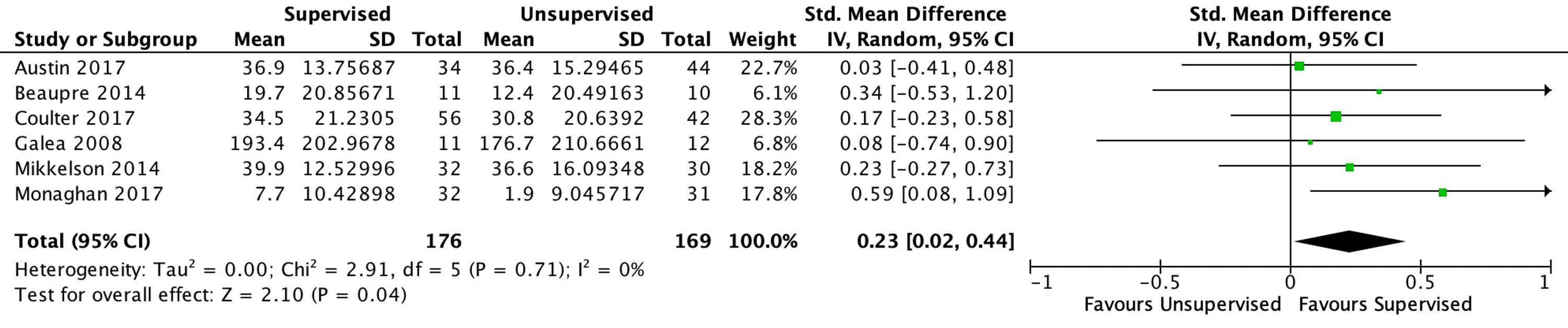
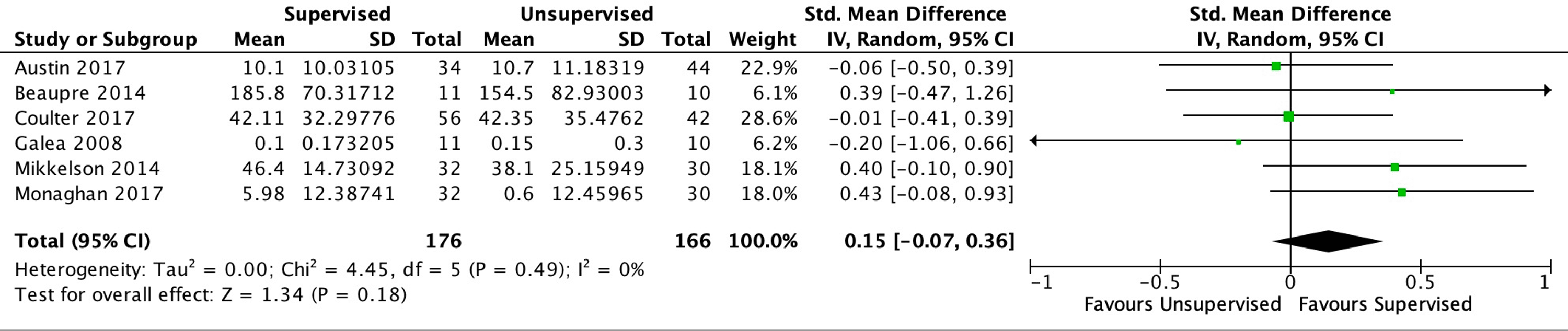
Of the six studies included in the short-term outcome analysis, five found both interventions to be equivocal. One study found a statistically significant difference in physical function scores favoring the supervised cohort but was unable to determine if this difference was clinically significant. Based on five studies and a low level of certainty, no differences in short-term LES were found (SMD −0.04 [−0.50, 0.41]; I2=66{08cd930984ace14b54ef017cfb82c397b10f0f7d5e03e6413ad93bb8e636217f}; p=0.85) (Figure 2). There was no significant difference in short-term aerobic capacity based on three studies and a low level of certainty (SMD −0.50 [−36.88, 35.89]; I2=12{08cd930984ace14b54ef017cfb82c397b10f0f7d5e03e6413ad93bb8e636217f}; p=0.98) (Figure 3). Compared with unsupervised home exercise, the supervised exercise regimen was associated with improved self-reported physical function outcome scores based on six studies and a low level of certainty (SMD 0.23 [95{08cd930984ace14b54ef017cfb82c397b10f0f7d5e03e6413ad93bb8e636217f} CI, 0.02-0.44]; I2=0{08cd930984ace14b54ef017cfb82c397b10f0f7d5e03e6413ad93bb8e636217f}; p=0.04) (Figure 4). According to Cohen’s work [20,21], an SMD of 0.23 is considered a small effect size. No differences were found between the two cohorts with regard to short-term QoL scores based on six studies and a low level of certainty (SMD 0.15 [−0.07, 0.36]; I2=0{08cd930984ace14b54ef017cfb82c397b10f0f7d5e03e6413ad93bb8e636217f}; p=0.18) (Figure 5).

Long-Term Outcomes

No long-term outcome differences were identified between the unsupervised and supervised cohorts in this study. There was no significant difference observed with regards to long-term LES, based on four studies and a low level of certainty (SMD −0.19 [−0.52, 0.13]; I2=22{08cd930984ace14b54ef017cfb82c397b10f0f7d5e03e6413ad93bb8e636217f}; p=0.24) (Figure 6). Similarly, no differences were observed with regards to long-term patient-reported physical outcome scores, based on four studies and a low level of certainty (SMD 0.11 [−0.13, 0.36]; I2=0{08cd930984ace14b54ef017cfb82c397b10f0f7d5e03e6413ad93bb8e636217f}; p=0.37) (Figure 7), or long-term QoL scores based on four studies and a low level of certainty (SMD 0.19 [−0.06, 0.43]; I2=0{08cd930984ace14b54ef017cfb82c397b10f0f7d5e03e6413ad93bb8e636217f}; p=0.14) (Figure 8).

Risk of bias

The results of the quality appraisal are summarized in risk of bias summary plots in the appendices (Appendix Figures 9–15). The self-reported scores all had a high risk of bias, primarily due to bias in outcome measurement (Table 3). All outcomes were rated as low-quality evidence (Table 4). The primary reasons for the downgrade in quality were the risk of bias and imprecision. Publication bias was not assessed as there were fewer than 10 studies involved in each outcome.

Outcome Supervised participants (n) Unsupervised participants (n) SMD/MD (95{08cd930984ace14b54ef017cfb82c397b10f0f7d5e03e6413ad93bb8e636217f} CI) Risk of bias Certainty of evidence
LE strength short term 142 (5) 121 (5) −0.04 (−0.50, 0.41)a Some concerns Low ⨁⨁◯◯
LE strength long term 112 (4) 95 (4) −0.19 (−0.52, 0.13)a High Low ⨁⨁◯◯
Aerobic capacity short term 54 (3) 49 (3) −0.50 (−36.88, 35.89)b Some concerns Low ⨁⨁◯◯
Self-reported physical outcome short term 176 (6) 169 (6) 0.23 (0.02, 0.44) a High Low ⨁⨁◯◯
Self-reported physical outcome long term 133 (4) 126 (4) 0.11 (−0.13, 0.36)a High Low ⨁⨁◯◯
Self-reported QoL short term 176 (6) 166 (6) 0.15 (−0.07, 0.36)a High Low ⨁⨁◯◯
Self-reported QoL long term 133 (4) 126 (4) 0.19 (−0.06, 0.43)a High Low ⨁⨁◯◯

Discussion

Despite the historical emphasis on the importance of formal PT as a critical intervention after THA, this meta-analysis fails to demonstrate any benefit for PT over unsupervised home exercises aside from a small increase in short-term self-reported physical function scores. No significant differences were found with regards to short- and long-term changes from baseline for LES, aerobic capacity, and self-reported QoL scores, as well as long-term self-reported physical outcome scores. The results of our meta-analysis suggest that arthroplasty providers should question the routine use of formal PT for all primary THA patients.

Other reviews conducted on formal PT programs following THA provide mixed results. Reviews conducted by Lowe et. al. [22] and Wijnen et. al. [23] did not perform a meta-analysis of physical function due to considerable variation in their included studies and were unable to provide a definitive conclusion; however, the latter reported an association with increased hip abductor muscle strength. A review conducted by Fatoye et al. [24] including RCTs and retrospective cohorts found that formal PT improved both physical function scores and hip abduction strength, but did not differentiate between short- or long-term follow-up points (follow-up ranged from 2 weeks to 12 months). Finally, Sauressig et al. [25] similarly conducted a meta-analysis and found no differences in self-reported physical function at 4 weeks, 12 weeks, 26 weeks, and one year.

An important aspect of the current review separating it from these prior studies is the use of a clearly defined home exercise regimen, postoperative instructions, or a booklet on discharge as inclusion criteria, excluding those studies that did not specify any form of intervention for their control groups. This is important to ensure a low-cost, standardized control group to allow providers to understand the true effect of trained therapist-led PT for their patients. Without this aspect, studies with controls consisting of no intervention could potentially be included in this review, which could bias results toward the formal therapy groups and may not reflect the current state of most practices.

Although postoperative rehabilitation has long been linked to a successful outcome following THA, the use of supervised PT has several drawbacks. Copay affordability, scheduling outpatient appointments, and arranging transportation have been demonstrated to be legitimate barriers to accessibility to outpatient PT for THA patients after discharge [10,11]. PT exercises can also be painful, as one of the most commonly asked questions regarding PT in the postoperative period after THA is about pain expectations [26]. Additionally, Yayac et al. demonstrated that TJA patients who underwent supervised PT had a significantly higher readmission rate than those who were discharged with self-directed home exercise regimens [9]. After controlling for patient demographics and comorbidities, they found that patients who had supervised home PT were over three times more likely to be readmitted in the 90-day postoperative period. Finally, the added cost associated with it must be considered. Yayac et al. [9] analyzed costs and outcomes in their retrospective study; while no clinically significant difference was found between function or quality of life between groups at two years, they concluded that formal therapy costs included 8{08cd930984ace14b54ef017cfb82c397b10f0f7d5e03e6413ad93bb8e636217f} of a 90-day episode of care costs for those receiving supervised home PT and outpatient PT and 3{08cd930984ace14b54ef017cfb82c397b10f0f7d5e03e6413ad93bb8e636217f} for those receiving supervised home PT only [9]. The results of the current study highlight the need to re-examine the application of routine PT following primary THA, especially with post-discharge costs accounting for up to 36{08cd930984ace14b54ef017cfb82c397b10f0f7d5e03e6413ad93bb8e636217f} of total costs in the bundle payments for TJA [27]. This is particularly salient in the context of a younger patient population, improvements in pain management, and emphasis on early mobilization postoperatively.

The difference between the short-term, self-reported physical outcome scores we observed between supervised and unsupervised groups was largely driven by the findings of the study conducted by Monaghan et al. [18]. This RCT involving an exercise intervention consisting of land- and aquatic-based therapy performed between 12 and 18 weeks after surgery differed from the other studies in this review as it was the only one to include an aquatic component. Additionally, while they found a statistically significant relationship between their formal exercise intervention and improved Western Ontario and McMaster Universities Arthritis Index (WOMAC) scores, they were unable to state whether this translated to a clinically significant difference – an issue that has been raised with the use of WOMAC scores in other literature [28,29]. Our meta-analysis reported an effect size of 0.23, falling under the category of small effect size as described by Cohen [20,21]. However, this was the only measure demonstrating a difference between the two interventions with regard to short-term outcomes and was likely driven by a single study. In the three studies that analyzed data at 12 months, no significant differences were found in any of the assessed outcomes between the two groups [7,8,19]. At the six-month time point, Mikkelson et al. [17] found a larger increase in maximal walking speed and stair climb performance in the formal therapy group, while Johnsson et al. [30] reported increased intermediate-to-moderate pain at six months in the home exercise group. Two other studies at the six-month mark found no significant differences in physical or mental outcomes between home exercise and formal PT groups.

Our results are limited by the number of studies and the quality of their respective data included in the meta-analysis. An important aspect to consider is the included patient population of each included study. Eligibility criteria may have preselected healthier and more motivated patients. In light of this, deconditioned patients with substantial functional deficits or medical comorbidities may still benefit from supervised PT. Additionally, there was substantial heterogeneity of exercise regimens across studies, including aspects such as methodology and duration of therapy, reflecting the likely variation in PT programs at different institutions. Furthermore, relying on patient-reported outcomes can be flawed, particularly in RCTs in which patients know they will be assigned to either supervised or unsupervised cohorts. It is likely that many patients in the intervention groups may be subject to bias – their assignment to formal PT protocols may influence and potentially inflate the supervised PT cohort self-reported outcome scores. The measurement of LES was also subject to variability as the studies assessing it used different methodologies to determine it. Additionally, within the unsupervised cohorts, we were unable to assess the degree of compliance; however, the intention-to-treat approach taken by most of these studies is likely to replicate true scenarios. Finally, previous studies have noted an 18-31{08cd930984ace14b54ef017cfb82c397b10f0f7d5e03e6413ad93bb8e636217f} cross-over rate from self-directed exercise to formal supervised therapy in total joint arthroplasty populations [7,31]. We were unable to account for patients who required crossover in our study – outcomes for these patients would be an area of interest in future studies. The strengths of this study include the narrow inclusion criteria, such as the inclusion of only RCTs or that the unsupervised cohorts must have clearly delineated instructions or booklets given to them, to allow for stronger conclusions than previous reviews on this subject.

Belonging Runs Deep Among Physical Therapy Students, Faculty, and Staff

Belonging Runs Deep Among Physical Therapy Students, Faculty, and Staff

From supporting fellow learners through the COVID-19 pandemic to managing the Boston Marathon in honor of his mom and one of his professors, Jacob Notinger’s experience in the Health practitioner of Bodily Therapy (DPT) software exemplifies the neighborhood and connections the system promotes.

Smiling male student after running a marathon
Jacob Notinger following finishing the Boston Marathon (Contributed image)

Notinger ‘20, ‘23 (CAHNR) navigated an unconventional get started to his graduate experiments finding a supportive group alongside the way. When Notinger started the DPT plan in Slide 2020, the COVID-19 pandemic had compelled courses that were generally incredibly fingers-on to a digital setting.

Inspite of the problems this offered for the new college students, the encounter bonded the 2020 cohort, Notinger suggests.

“The simple fact that it was COVID was a whirlwind for my total class,” Notinger says. “It finished up bringing us with each other much more than everything.”

This previous April, Notinger ran the Boston Marathon and was sponsored by the Dana Farber Most cancers Institute, raising $10,000 for the organization.

He ran in honor of his mom, who is fighting cancer, as well as a member of his UConn “family,” professor Deborah Bubela, who is a cancer survivor. Notinger experienced his fellow DPT pupils indicator a shirt for Bubela, which he took throughout the end line.

“It was a single of the nicest things everyone has at any time finished for me,” Bubela says. “And he did that. He has the greater photograph of goodness. He’s definitely an altruistic and supplying young guy, like so lots of of the pupils in this application.”

Tiny Group, Massive Bond

Just about every cohort in the DPT software incorporates about 30 learners. This modest dimension assists foster meaningful connections among school and students, states Laurie Devaney, affiliate professor and DPT director.

“Our plan is not about levels of competition, it is about supporting all people to realize success,” Devaney claims. “When [our students] go out in the entire world it’s essential to not appear at the person up coming to you as levels of competition, but as a person on the similar staff.”

As an undergraduate, Notinger worked intently with Devaney on research related to get the job done by kinesiology department head, Lindsay DiStefano. The review when compared students’ skills to complete simple athletics tasks, like throwing or catching a ball, with their perception of how well they could full that process.

Notinger’s constructive undergraduate experience functioning with Devaney and other faculty and personnel encouraged him to continue to be at UConn for his graduate research.

He and the other member of the close-knit scholar cohort were being capable to resume in-man or woman research for their next calendar year in the application. Coming into their 3rd year, the DPT pupils will just take on a collection of internships all around the place.

“We really feel like we’re all set, even however it’s been a roundabout highway,” Notinger suggests.

Notinger is commencing with a clinical rotation at an outpatient facility in Massachusetts. In January, he will total a specialized internship at the Seattle Children’s Hospital, a very sought posture at the nationally renowned medical center, doing work with adolescent athletes recovering from accidents.

Notinger constantly knew he wanted to review drugs, but wasn’t positive what industry. By his sophomore year, he had made the decision to pursue a occupation in physical therapy, recalling his personal experiences in actual physical remedy from his time as a student athlete.

“I usually preferred the fingers-on part of it, and how you can assist individuals and you can see advancements,” Notinger says.

Producing a Variance, Just one Mile at a Time

Bubela claims Notinger exemplifies the type of scholar the UConn DPT system celebrates: a single who is motivated by a want to assistance many others.

“All our students do this [work] to help other folks and to make a variance in the entire world,” Bubela claims. “Jacob has surely shown that in several ways.”

When Notinger suggests his marathon time was barely document-shattering, he was happy to have finished, with cheers from his spouse and children and DPT supporters all along the way.

Stick to UConn CAHNR on social media