An institute promising to change better education’s influence on a main problem dealing with the state and the place has taken a essential phase toward that goal.
The University of Oregon declared Tuesday the very first executive director for its new Ballmer Institute for Children’s Behavioral Well being.
Katie McLaughlin is the UO Ballmer Institute’s new executive director.
University of Oregon / OPB
Katie McLaughlin, a Harvard College professor and medical psychologist, will consider the helm of the institute in August. UO expects to welcome its initial undergraduate pupils to a new Portland campus this slide.
“I am passionate about establishing strategies to support the wellbeing of little ones and adolescents and making certain that families have the resources they need to have to thrive,” McLaughlin mentioned in a statement. “The vision of the Ballmer Institute — to promote the behavioral well being and wellness of young children and adolescents by the early detection and prevention of mental well being difficulties — is profoundly resonant for me. The Ballmer Institute will present an unprecedented platform to encourage innovation in youth behavioral well being at a moment when new approaches to intervention and provider shipping and delivery are desperately required.”
The new institute was made achievable by a far more than $425 million donation very last year from Steve and Connie Ballmer of Ballmer Team Philanthropy. Steve Ballmer is a previous CEO of Microsoft, and Connie Ballmer is a UO alumna and previous trustee.
Oregon and the place as a complete are suffering from an acute scarcity of providers and suppliers in mental and behavioral health and fitness. The Ballmer Institute’s selecting of McLaughlin will come as leaders throughout regulation enforcement, education and housing are contacting for elevated concentrate on enhancing behavioral health care in the condition. Gov. Tina Kotek and Oregon legislators have designed the situation one particular of a couple key priorities this legislative session.
McLaughlin is presently Director of the Stress and Progress Laboratory at Harvard.
“She is one particular of the most consequential and influential psychologists operating in the region of baby behavioral health and fitness proper now,” Janet Woodruff-Borden, UO’s acting provost and govt vice president, claimed of McLaughlin in a assertion. “So that enables us to rapidly go the Ballmer Institute design – perfected in Oregon — and then to be the vanguard for the relaxation of the place.”
The institute will attribute a new undergraduate little one behavioral overall health significant which the college expects to graduate much more than 200 students per year, after it is completely up and functioning.
According to UO, the method will be the initial of its kind at the bachelor’s degree.
The college expects software graduates to complement existing behavioral wellbeing pros, these types of as psychologists and social employees, by filling careers such as behavioral well being aides and scenario managers. The diploma can also be a stepping stone for graduate applications in spots such as university counseling and nursing, according to UO.
The new undergraduate degree software guarantees to contain partnerships with Portland General public Educational facilities and other faculty districts as nicely as wellness care vendors. College officers want those people settings to support give learners additional than 700 several hours of in-the-subject working experience as element of their training.
“… The Ballmer Institute is developing an fully new workforce and undergraduate application to tackle the requires of small children and households. Possibilities like this for real procedure transform not often crop up,” McLaughlin explained in a statement.
The institute is technically up and operating presently, beneath an interim director. It began this slide featuring a remote, a few-course, graduate-stage certification for K-12 educators on children’s behavioral well being.
The institute will be housed generally at a new UO Portland campus, positioned at the previous Concordia University campus in Northeast Portland.
Together with the Ballmer Institute, the new campus will also be property to applications that are at present in Portland’s Outdated Town, together with some of UO’s master’s applications in journalism, organization and architecture.
Hartford HealthCare has announced the formation of its Digestive Health Institute, the health system’s seventh and newest institute.

The Digestive Health Institute is a fully integrated model of care focused on the management of all digestive diseases and disorders, ranging from essential preventative screening to the most complex care for advanced diseases. The Institute offers coordinated, personalized and convenient care across Hartford HealthCare’s acute care hospitals, surgery and endoscopy centers and neighborhood locations throughout Connecticut.

 > Link with the Digestive Health Institute

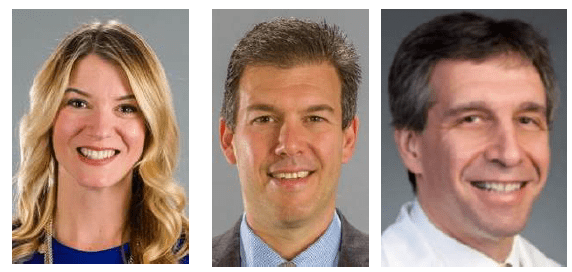
 From remaining to appropriate: Vice President of Functions Lindsey Meehan, PA-C, Brett Schipper, MD, a surgical oncologist, Jeffrey Nestler, MD, a gastroenterologist.

Led by Jeffrey Nestler, MD, a gastroenterologist, Brett Schipper, MD, a surgical oncologist, and Vice President of Functions Lindsey Meehan, PA-C, the Hartford Healthcare Digestive Health Institute promotes medical professional collaboration throughout a number of specialties like gastroenterology, surgical and medical excess weight decline, normal and colorectal surgical procedures, elaborate hernia and belly main health, hepatopancreaticobiliary surgical procedures, GI oncology, diet, behavioral health and other individuals.

“Building on the collaboration that has presently taken spot about the previous numerous several years by several colleagues, our digestive health and fitness expert services have developed a lot more robust, obtainable and normal across our technique of treatment,” claimed Hartford Healthcare President and Chief Executive Officer Jeffrey Flaks.
“Together, this staff will proceed to advance the institute’s plans and companies for a wide array of digestive conditions.”

With a sharp target on excellence and innovation, the Institute also presents the most highly developed diagnostic and therapeutic interventions readily available and adheres to optimum countrywide requirements for top quality and protection throughout the overall health program.

The Digestive Well being Institute joins Hartford HealthCare’s existing world-course institutes: Behavioral Overall health, Cancer, Coronary heart & Vascular, Neuroscience, Orthopedic, and Urology and Kidney. Considering that launching its institute model in 2014, Hartford Health care has productively extended expertise deeply into our communities, creating constantly increased high-quality and increased accessibility to sub-specialty treatment throughout the health and fitness system.
Spectrum Wellness Education and learning and Training Institute (SETI), a licensed continuing education company for human provider industry experts, will provide two new digital trainings beginning in January.
Enrollment is now open to all New York point out human provider gurus looking for experienced advancement and ongoing training trainings. All classes are now virtual. SETI is accredited in New York point out to supply point out accepted continuing education and learning units (CEUs), specialist development, talent and technique enhancement.
These trainings are all virtual and introduced are living (not prerecorded). The systems are:
•Coping With Customer Loss, Wednesday, Jan. 25, 9 a.m. to 12:30 p.m.: Organizers explained, “This interactive coaching delivers distinct perspectives and models of the grief and decline method, significantly with regards to client reduction in the behavioral wellness setting. It is an opportunity to explore healthier coping expertise and to normalize ideas and inner thoughts about grief.”
Contributors are necessary to use video clip and audio. Attendees will generate 3. CEUs (LMSW/LCSW, LMHC, CASAC). Jaymee Caplan, LMHC, is the trainer. The charge is $50. Register listed here: https://shswny.regfox.com/coping-with-consumer-decline.
•Foundations of Trauma Therapy, Monday, Feb. 27, 9 a.m. to 4:30 p.m.: Organizers explained, “This is the to start with in a new collection about trauma. It’s a detailed overview of ideal techniques and new exploration in doing the job with customers who experienced trauma. Matters involve the neurobiology of trauma and an introduction to evidenced primarily based treatment method modalities.”
Caplan is a credentialed, experienced human companies professional who attracts from the hottest investigated-dependent discovering and her doing the job encounter. Pros who are not trying to find CEUs can get hold of SETI for a discounted price. Sign-up on the web and evaluate facts at www.shswny.org/trainings.
A press launch mentioned, “SETI was created to deliver exceptional training to all behavioral wellbeing pros trying to find higher-high quality, study-primarily based training to variety their medical, operational and professional information and abilities.
“Spectrum Health and fitness and Human Providers is a certified neighborhood behavioral wellness center (CCBHC) supplying mental health, addiction, rehabilitation, treatment coordination, housing and crisis companies in locations all through Western New York. Spectrum Overall health encourages hope, empowerment and self-outlined improvements to older people, youngsters and people as they recuperate from behavioral and/or addiction-relevant ailments. Pay a visit to www.shswny.org for far more details.”
Good quality On the web Education and learning Group Inc. Announces Alter
To Government Management
TORONTO, ON, December 22, 2022 / High quality On-line Instruction Group Inc. (OTC PINK:QOEG), (the “Business”), a world wide provider of top-edge on the net schooling, these days announces the appointment of Mr. William Wai-Hung Tam as its Chief Economical Officer, successful, December 22, 2022.
Mr. Tam previously served as Chief Economical Officer and other senior management roles in a variety of providers in the semi-conductor market including QiSiL Intercontinental Restricted, Energetic-Semi Intercontinental Inc., and Exar Corporation. Mr. Tam has above 20 yrs specialist encounter in monetary management, fiscal setting up and examination, audit and inside control for US multi-countrywide companies and begin-ups in North The usa locations and Asia Pacific.
“I am fired up to have William join our gifted workforce as the CFO, doing work cohesively collectively in the new period of our expansion” said Edward Wu, Chief Executive Officer of QOEG.
About Good quality Online Training Team, Inc.
Good quality Online Education Team, Inc. (“QOEG”), based in Canada, is a primary e-Studying corporation that delivers thorough on line English classes to students about the globe. The Enterprise is a pioneer and market leader in offering serious-time on the internet tiny group lessons. Our students obtain noticeable and quantifiable benefits by our shipping and delivery of quality education from our passionate team of academics and educating assistants, centered in North The us, South Africa and the Philippines. With our AI system, we have combined Instruction and Entertainment (“Edu-tainment”) as section of our teaching approach. It is our mission to acquire self esteem in our college students so they can arrive at their objectives through an pleasing nevertheless successful discovering experience! For additional information and facts, please pay a visit to: www.qualityonline.training
Secure Harbor Statement
Risk-free Harbor Assertion Information in this press release may incorporate ‘forward-searching statements. Statements describing targets or aims or the Company’s foreseeable future programs are also ahead-searching statements and are subject matter to hazards and uncertainties, which include the financial overall performance of the Corporation and current market valuations of its stock, which could lead to true effects to vary materially from people expected. Ahead-on the lookout statements in this information launch are created pursuant to the ‘Safe Harbor’ provisions of the United States Non-public Securities Litigation Reform Act of 1995. Traders are cautioned that such forward-searching statements include dangers and uncertainties, including, without the need of limitation, pitfalls relating to the capacity to shut transactions currently being contemplated, hazards linked to profits, acceptance of Top quality On-line Schooling Team Inc.’s merchandise, improved ranges of competitiveness, alterations, dependence on mental house rights and other risks specific from time to time in High quality On the internet Training Group Inc., periodic studies submitted with the regulatory authorities.
CONTACTS:
Excellent On the internet Instruction Group Inc. XuYe Wu, CEO Contactus@qoeg.ca
Mayor Issues Directive Clarifying Responsibility to Provide Care When SMI Prevents Someone From Meeting Their Basic Needs
Mayor Announces 11-Point Mental Health Legislative Agenda for Upcoming Session in Albany
NYC to Launch Tele-Consult Line to Provide First Responders in Field With Direct Access to Clinicians
NEW YORK – New York City Mayor Eric Adams today announced a new pathway forward to address the ongoing crisis of individuals experiencing severe mental illnesses left untreated and unsheltered in New York City’s streets and subways. In a public address, Mayor Adams detailed a compassionate new vision to tackle this crisis, beginning with a directive being issued immediately to city agencies and contractors involved in evaluating and providing care to individuals in psychiatric crisis so that more people in need of help receive it. Mayor Adams also laid out an 11-point legislative agenda that will be among his top priorities in Albany during the upcoming legislative session. The agenda takes aim at gaps in New York State’s Mental Hygiene Law that intensify the city’s challenges in meeting the needs of its most vulnerable residents with severe mental illness. Finally, Mayor Adams announced new clinical co-response teams deployed in New York City’s subways to respond to those with serious mental health issues, as well as an enhanced training in partnership with New York State for all first responders to compassionately care for those in crisis.
“As a city, we have a moral obligation to support our fellow New Yorkers and stop the decades-long practice of turning a blind eye towards those suffering from severe mental illness, especially those who pose a risk of harm to themselves,” said Mayor Adams. “It is not acceptable for us to see someone who clearly needs help and walk past them. For too long, there has been a gray area where policy, law, and accountability have been unclear, and this has allowed people in desperate need to slip through the cracks. This culture of uncertainty has led to untold suffering and deep frustration, but we cannot and will not allow it to continue. Today, we are making a clear statement to our fellow New Yorkers that, by leading with compassion and care, we can do much more to help those among us in a severe mental health crisis, even when they are unable to, by no fault of their own, recognize their own needs. This is our moral mandate as a city and we will not fail to deliver for our most vulnerable.”
In accordance with state law and court precedent, Mayor Adams’ directive clarifies that outreach workers, city-operated hospitals, and first responders have the legal authority to provide care to New Yorkers when severe mental illness prevents them from meeting their own basic human needs to the extent that they are a danger to themselves. The directive — issued by Mayor Adams today — seeks to dispel a persistent myth that the legal standard for involuntary intervention requires an “overt act” demonstrating that the person is violent, suicidal, or engaging in outrageously dangerous behavior likely to result in imminent harm.
Mayor Adams also announced today that the city is developing a tele-consult line to provide police officers in the field with direct access to clinicians. This new tele-consult line will provide critical clinical advice to police officers when dealing with individuals in distress and ensure a compassionate response for those suffering with untreated serious mental illness.
Measures in Mayor Adams’ legislative agenda announced today include:
Making the law explicit that a person requires care when their mental illness prevents them from meeting their own basic needs;
Mandating that hospital clinicians consider a range of factors when assessing a patient’s need for involuntary admission or retention, including known treatment history and current ability to adhere to outpatient treatment;
Requiring hospitals to screen all psychiatric patients prior to discharge for their need to receive “assisted outpatient treatment” (court-ordered care under “Kendra’s Law”);
Allowing a broader range of trained mental health professionals to perform evaluations and community removals of individuals in crisis; and
Requiring hospitals to notify known community providers when their clients are admitted or released and collaborate with community providers in preparing patients for discharge.
Ahead of the winter months — when homelessness typically increases on subways due to the cold weather — the Adams administration has begun deploying subway clinical co-response teams, made up of joint patrols of the New York City Department of Health and Mental Hygiene (DOHMH) and the New York City Police Department (NYPD), to patrol high-traffic subway stations and respond with a clinician-led approach to those appearing to have serious mental health issues.
Finally, in partnership with New York State, the city will also provide comprehensive training to all clinicians, outreach workers, and first responders to ensure compassionate care that potentially could include involuntary removals when interacting with individuals in distress suffering from severe mental illnesses. The city will be rolling out this training immediately.
“With this announcement, we are bolstering our strategies to get people who are in danger due to untreated severe mental illness the help they need,” said Deputy Mayor for Health and Human Services Anne Williams-Isom. “We are adding layers of additional support for our first responders to work with clinical specialists in the moment and at the time it is needed, and we are pursuing all other areas for assistance: Health, social services, legal, and legislative. Thank you to our teams across government working to see that this is a coordinated, whole-of-government effort.”
“You can’t effectively have public safety without adequate mental health care — the two go hand-in-hand,” said Deputy Mayor for Public Safety Philip Banks III. “For too long, public safety personnel’s hands have been tied in getting those in need care before they hurt themselves or others. These directives and proposals are a common-sense way to clear those impediments and get help for those who need it most.”
“The NYPD works day and night to improve the quality of life of all New Yorkers, especially our city’s most vulnerable populations,” said New York City Police Department (NYPD) Commissioner Keechant L. Sewell. “This is a longstanding and very complex issue. And we will continue to work closely with our many partners to ensure that everyone has access to the services they require. This deserves the full support and attention of our collective efforts.”
“Responding to New Yorkers in need is the mission of the Fire Department, and we are proud to partner with Mayor Adams in addressing this critical public safety issue,” said Fire Department of the City of New York (FDNY) Commissioner Laura Kavanagh. “Our mission is simple: To be there for all New Yorkers when they need help and provide critical mental health care.”
“People living with serious mental illness deserve to live their lives with dignity, respect, and free from discrimination and stigma,” said DOHMH Commissioner Dr. Ashwin Vasan. “As a city, this work — at the intersection of public safety and mental illness — represents part of the larger strategy, which is centered on providing everyone living with serious mental illness the basic building blocks of recovery: Health care, a home, and a community. We know that focusing on these pillars will reduce the number of people we see in need on our streets and in our subways to begin with, and is consistent with Mayor Adams’ focus on balancing prevention and intervention. The city is galvanized to address the broader issue of supporting people with serious mental illness to improve health, prevent suffering and isolation, and improve their quality of life. In the coming weeks, we’ll be turning to trusted community groups to inform a comprehensive vision aimed at improving access to care and housing and reducing social isolation.”
“We are proud of our cross-agency partnership with the city’s Health Department, Health + Hospitals, NYPD, and FDNY-EMS to develop these new protocols and trainings” said Mayor’s Office of Community Mental Health (OCMH) Director Eva Wong. “Helping our fellow New Yorkers most in need get connected to care is a top priority for OCMH. These new protocols and trainings will ensure that agencies and systems responsible for connecting our community members with severe mental illnesses to treatments are working in unison to get them the support they need and deserve. We look forward to continuing our work with city and state agencies as we partner to bring compassionate care to all New Yorkers.”
“With today’s announcement, Mayor Adams has reaffirmed his commitment to meeting the concurrent crises of untreated mental illness and unsheltered homelessness head on,” said New York City Department of Social Services (DSS) Commissioner Gary P. Jenkins. “As part of the Subway Safety Plan, DSS-DHS outreach staff and our partners are making great strides to connect New Yorkers experiencing homelessness in the subways to critical shelter services. This new plan builds on existing efforts like these to more efficiently and effectively engage New Yorkers experiencing mental health crises and ensure they receive the services they often desperately need. We commend the mayor for continuing to lead on this issue and assembling the resources necessary to support our neighbors in need.”
“The city has a moral obligation to assist homeless New Yorkers suffering from untreated severe mental illness who are unable to meet their basic needs to such an extent that they are a danger to themselves,” said New York City Corporation Counsel Sylvia Hinds-Radix. “The mayor’s comprehensive plan demonstrates this administration’s commitment to using every tool at its disposal to ensure outreach workers, city-operated hospitals, and first responders are able to provide the necessary care that these individuals so desperately need.”
“As the largest provider of behavioral health care in New York City, NYC Health + Hospitals plays a critical role in the serious mental illness continuum of care,” said Mitchell Katz, MD, president and CEO, NYC Health + Hospitals (H+H). “We will work with our partners in the city and state to ensure that our patients receive the highest quality of care. I want to thank Mayor Adams for his commitment to New Yorkers in need.”
“Today’s announcement reaffirms Mayor Adams’ commitment to addressing the needs of some of the most vulnerable New Yorkers,” said Mayor’s Office of Criminal Justice Director Deanna Logan. “Investment in public health solutions, including mental health treatment, is critical to keeping New Yorkers safe. Necessary solutions like those outlined today will result in safer, healthier communities for all.”
Since taking office in January, the Adams administration has made significant investments to address the severe mental health crisis afflicting New Yorkers and connect individuals suffering from untreated severe mental illness to care. In February, Mayor Adams rolled out the “Subway Safety Plan” to connect people experiencing homelessness on the subway to shelter. Since that launch, the city has effectively connected more than 3,000 people experiencing homelessness, some of whom are also in mental health crisis, to shelters and safe havens.
Mayor Adams has also doubled down on investments in community supports for those living with serious mental illnesses, including investing in the expansion of the city’s clubhouse program. Clubhouses follow an evidence-based model of psychiatric rehabilitation: A one-stop treatment facility that helps people with severe mental illnesses through their recovery by providing peer support, access to services, employment and educational opportunities, socialization, and recreation in a safe, restorative, and structured setting. DOHMH is expanding the capacity at some of the most successful clubhouses, with the goal of engaging 500 more members this fiscal year. The Adams administration also launched CONNECT: Continuous Engagement between Community and Clinic Treatment earlier this year as a new model of mental health treatment that focuses on holistic care, including for people experiencing severe mental illness.
Mayor Adams’ address, as prepared for delivery, can be found below:
Good morning, New York City. I want to talk to you about a crisis we see all around us: People with severe and untreated mental illness who live out in the open, on the streets, in our subways, in danger and in need.
We see them every day, and our city workers are familiar with their stories. The man standing all day on the street across from the building he was evicted from 25 years ago, waiting to be let in. The shadow-boxer on the street corner in Midtown, mumbling to himself as he jabs at an invisible adversary. The unresponsive man unable to get off the train at the end of the line without assistance from our mobile crisis team.
These New Yorkers and hundreds of others like them are in urgent need of treatment, yet often refuse it when offered. The very nature of their illnesses keeps them from realizing they need intervention and support. Without that intervention, they remain lost and isolated from society, tormented by delusions and disordered thinking. They cycle in and out of hospitals and jails.
But New Yorkers rightly expect our city to help them. And help them we will.
For the past eleven months, my team and I have studied the challenge of severe mental illness in the streets of our city. We have spoken to those who suffer from it and the experts who treat it. We have analyzed data gathered by our outreach teams. We have worked across many agencies, and we have consulted with our partners at the state level.
I want to update you on the results of these efforts and lay out the next phase of our plan to address this urgent and complex challenge.
My administration is determined to do more to assist people with mental illness, especially those with untreated psychotic disorders who pose a risk of harm to themselves, even if they are not an imminent threat to the public. It is not acceptable for us to see someone who clearly needs help and walk past.
For too long, there has been a gray area where policy, law, and accountability have not been clear, and this has allowed people in need to slip through the cracks. This culture of uncertainty has led to untold suffering and deep frustration. It cannot continue.
We need to change that culture and clarify our expectations. No more walking by or looking away. No more passing the buck.
Going forward, we will focus on action, care, and compassion. If severe mental illness is causing someone to be unsheltered and a danger to themselves, we have a moral obligation to help them get the treatment and care they need.
Today, we are embarking on a long-term strategy to help more of those suffering from severe and untreated mental illness find their way to treatment and recovery. It begins with an immediate shift in how we interpret our obligation to those in need and calls upon our outreach workers to take deeper actions and more intensive engagements.
We can no longer deny the reality that untreated psychosis can be a cruel and all-consuming condition that often requires involuntary intervention, supervised medical treatment, and long-term care. We will change the culture from the top down and take every action to get care to those who need it.
To do this, we will need significant help from our partners in Albany. I want to thank Governor Hochul for her support on this issue. Thanks to her leadership, we have greater resources and a stronger commitment to making progress on one of the most enduring challenges facing our city. She has been an excellent partner in our efforts, and I look forward to working with her and the State Legislature to address the longstanding gaps in our state Mental Hygiene Law.
To begin that process, our team has developed an 11-point legislative agenda to address those gaps, and getting it enacted will be a major priority for us in 2023. This agenda is already available online and to the public. But even as we move forward on that agenda, there is much we can do now by properly interpreting and carrying out existing law.
Job one is to make it universally understood by our outreach workers, hospital staff, and police officers that New York law already allows us to intervene when mental illness prevents a person from meeting their basic human needs, causing them to be a danger to themselves. This policy has been confirmed in written guidance from our state Office of Mental Health.
Yet a common misunderstanding persists that we cannot provide involuntary assistance unless the person is violent, suicidal, or presenting a risk of imminent harm. This myth must be put to rest. Going forward, we will make every effort to assist those who are suffering from mental illness and whose illness is endangering them by preventing them from meeting their basic human needs.
And let me be clear: We will continue to do all we can to persuade those in need of help to accept services voluntarily. But we will not abandon them if those efforts cannot overcome the person’s unawareness of their own illness. In short, we are confirming that a person’s “inability to meet basic needs,” to the extent that it poses a risk of harm, is part of the standard for mental health interventions.
And we will accomplish this in five specific ways.
First, we have issued a new directive to our Department of Health and Mental Hygiene mobile crisis teams, FDNY-EMS, and the NYPD. This directive lays out an expedited, step-by-step process for involuntarily transporting a person experiencing a mental health crisis to a hospital for evaluation. It explicitly states that it is appropriate to use this process when a person refuses voluntary assistance and it appears that they are suffering from mental illness and are a danger to themselves due to an inability to meet their basic needs. We believe this is the first time that a mayoral administration has given this direction on the “basic needs” standard in official guidance.
Second, our mobile crisis teams and police officers will receive enhanced training on how to assist those in mental health crisis. There will be a new focus on the need to intervene in situations where an individual appears to be suffering from mental illness and in danger due to an inability to meet their basic needs. This will include an in-depth discussion of what “inability to meet basic needs” means and an array of options to consider before resorting to involuntary removal.
The first training to incorporate this new focus took place this morning, and we will soon roll it out to all current members of the mobile crisis teams and the NYPD.
Third, we will be launching a hotline staffed by clinicians from our H+H hospitals that will provide guidance to police officers who encounter individuals in psychiatric crisis. State law already authorizes a police officer to make a judgment call to have a person involuntarily removed to a hospital. But many officers feel uneasy using this authority when they have any doubt that the person in crisis meets the criteria. The hotline will allow an officer to describe what they are seeing to a clinical professional, or even use video calling, to get an expert opinion on what options may be available.
Fourth, we will develop a special cadre of clinicians paired with NYPD officers dedicated to the difficult work of getting New Yorkers in crisis into care. These specialized intervention teams will have the training, expertise, and sensitivity to ensure that those in need are safely transported to a hospital for evaluation.
Fifth, we will work to have the “basic needs” standard for involuntary intervention explicitly written into state law. This is point number one in our 11-point legislative agenda that I mentioned earlier. State law already gives us the scope and authority to help those who are unable to meet their own needs. But to have it clearly spelled out in legislation will help dispel the misconception that we must wait for a threatening, violent, or suicidal act to get those in crisis the help they need. We will also seek a common-sense expansion of the criteria that a hospital doctor considers in deciding whether or not to discharge a psychiatric patient.
All too often, a person enters a hospital in crisis and gets discharged prematurely because their current behavior is no longer as alarming as it was when they were admitted. The law should require hospital evaluators to consider not just how the person is acting at the moment of evaluation but also their treatment history, recent behavior in the community, and whether they are ready to adhere to outpatient treatment.
Our agenda also calls for allowing a broader range of licensed mental health professionals to staff our mobile crisis teams and perform these evaluations. This will help us get more outreach teams on the ground and enable hospital psychiatrists to spend more time providing medical care directly to patients.
We will also seek changes in the law to improve communication between inpatient and outpatient treatment providers, allowing better continuity of care and discharge planning. And we will look to extend the reach of one of our most successful programs — “assisted outpatient treatment” — also known as “Kendra’s Law.”
When used, Kendra’s Law has been shown to help those with severe mental illness avoid repeat hospitalization and arrest. But we know that many who stand to benefit from this approach are not finding their way into the program. To remedy that, hospitals must be required to screen all psychiatric patients for Kendra’s Law eligibility.
These relatively simple changes to the law will have an outsized impact. They will strengthen our mental health laws and incorporate what we’ve learned through experience. And they will do so without threatening anyone’s civil or legal rights.
This plan represents a major shift in how we care for our fellow New Yorkers in crisis, even as we build on improvements we have already made over the past 11 months. It is the logical extension of what we have been doing from day one of this administration to repair our broken mental health system. That includes the Subway Safety Plan that put more outreach workers and police officers on the trains and platforms, and increased investment into drop-in centers, safe havens, stabilization beds, and Street Health Outreach and Wellness vans. The result so far has been over 3,000 New Yorkers connected with care, support, and shelter.
Our city also implemented the B-HEARD pilot program, which deploys social workers and EMTs to respond to nonviolent mental health 911 calls, and we have worked with the Sanitation Department to remove illegal encampments throughout the city, many of them extremely dangerous for those living there.
We want all New Yorkers to have access to a safe place to live, and we are working to expand the supply of supportive and low-barrier housing. We are also piloting innovative models to connect people in shelter with the services they need to succeed — including Medicaid Home- and Community-Based Services, which includes mental health care, socialization, and connection to housing.
We will be enrolling appropriate people living in shelter into specialized, Medicaid-managed long-term care plans. This will offer them enhanced services with the goal of stabilizing their medical conditions, increasing connection to health care services, reducing hospitalizations, and increasing access to community housing.
We are adding more Support and Connection Centers and increasing investment in other community support options. And we have launched our CONNECT program, which offers continuous engagement between clinical and community partners. We are also exploring ways to use Medicaid funding to provide services to people in shelter, including those with severe mental illness. There is a huge role for the federal government to play here.
All of these efforts are based on our core conviction that people with severe mental illness deserve care, community, and treatment in the least restrictive setting possible. Some may see the policy shift announced today as a departure from that goal. But let me be clear: When we hospitalize those in crisis, it will be with a sense of mission to help them heal and prepare them for an appropriate community placement.
We can’t just stabilize people for a few days and send them back out into the city. We must build a continuum of care that helps patients transition into step-down programs and eventually into supportive housing.
But nobody should think decades of dysfunction can be changed overnight. The longest journey begins with a single step, and we can’t wait another day to take this one. We must lead with a sense of purpose and conviction, not get lost in a wilderness of bureaucracy and fear. We must train, teach, and empower our city workforce to get help to those who need it — and know that our city supports them in this effort. We must build out a system that will bring people into care, alleviate their pain, keep them from harming themselves or others, and get them treatment and support they need in the long term.
Those suffering from severe mental illness have more than a right to exist or survive. They have a right to health care, housing, and treatment. A right to dignity and respect. A right to safety and security. And above all, a right to hope. Hope for treatment, community, and healing. Hope that their future will be safe and that their illness can be managed. But that hope starts with a spark of engagement on our part, followed by a strong and supportive program of help and housing.
We owe our brothers and sisters that much. And, in helping them, we will also be protecting the rights of every New Yorker to live, work, thrive, and be safe.
WASHINGTON, December 22, 2022–(Business WIRE)–ECFC, the main nonprofit corporation marketing preference in reward options, will shut the 12 months in praise of the pending legislation for a further extension permitting pre-deductible protection of telehealth products and services in a higher-deductible health and fitness approach (HDHP). ECFC also announced now the election of new board users.
“ECFC applauds Congress in its exertion to prolong ongoing overall flexibility for telehealth less than HSA-qualified wellbeing programs,” said Christa Day, Government Director at ECFC. “This will be an incredibly optimistic stage for companies and American employees.”
Before this week, the Senate Appropriations Committee introduced the textual content of the omnibus bill that would fund the federal federal government and which has other legislative provisions. The omnibus invoice contains a provision advocated by ECFC that would prolong a provision enabling pre-deductible coverage of telehealth solutions in a large-deductible health strategy (HDHP) right up until the stop of calendar year 2024. Along with numerous ECFC member businesses, marketplace companies and health care companies, ECFC has been inquiring Congress to lengthen this adaptability as part of a yr-end legislative package.
A group letter signed by ECFC and dozens of sector companies describes that overall health coverage is provided prospectively and, hence, this make any difference should be resolved before 2023. The letter focuses on the importance of telehealth for enhancing obtain to mental well being treatment and material use dysfunction remedy, noting that “enabling companies and health and fitness strategies to keep on featuring these critical providers pre-deductible enhances affordability and expands obtain.”
ECFC Board of Director Appointments
ECFC board appointments incorporate three newly elected board associates: Colleen Boyle, John Rownd, and Barb Van Zomeren.
Boyle is Manager of Healthcare Company Development at Mastercard. Rownd is Vice President, Item Location Leader, Reimbursement Accounts and Health care Cards at Fidelity. Van Zomeren is Senior Vice President of ERISA at Ascensus.
In addition, the ECFC board of administrators has 3 new people today replacing earlier board members at present member organizations: Itamar Romanini at Health and fitness-E Commerce, Sarah Faye Pierce at Paychex, and Heather Ruff at Fiserv.
“We want to congratulate our newly elected board of director associates,” continued Day. “We search ahead to benefiting from their counsel during the year and bringing anyone alongside one another at our once-a-year convention in March.”
ECFC is a primary non-profit group committed to protecting and growing personnel advantage applications on a tax-advantaged basis. ECFC represents and promotes personnel gain courses by means of efficient lobbying and presents instruction and awareness to users, payment practitioners, nationwide opinion leaders and the normal community to support advance healthcare consumerism. ECFC, which was founded in 1981 as the Employers Council on Versatile Payment, is the solitary group that focuses its initiatives on preserving, safeguarding and defending the tax-advantaged systems now obtainable to performing people via employer program sponsors. For additional info, check out https://ecfc.org/.